
Durham, England - June 17th to 19th, 2025
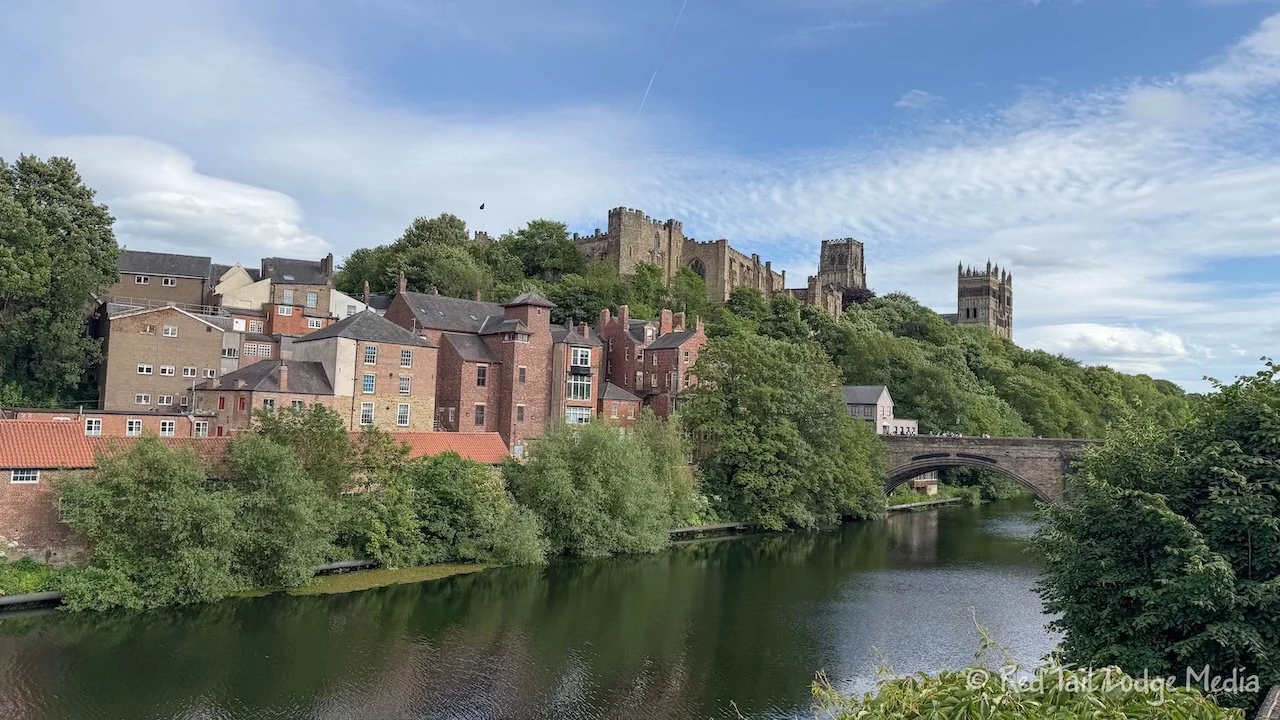
Durham is a nice, small college town in northeast England. It was a great base for exploring a couple of attractions in the area, the Beamish Museum and Hadrian’s Wall. The Beamish Museum is a very large open air museum. Hadrian’s Wall is an old Roman wall that stretched east and west across England.
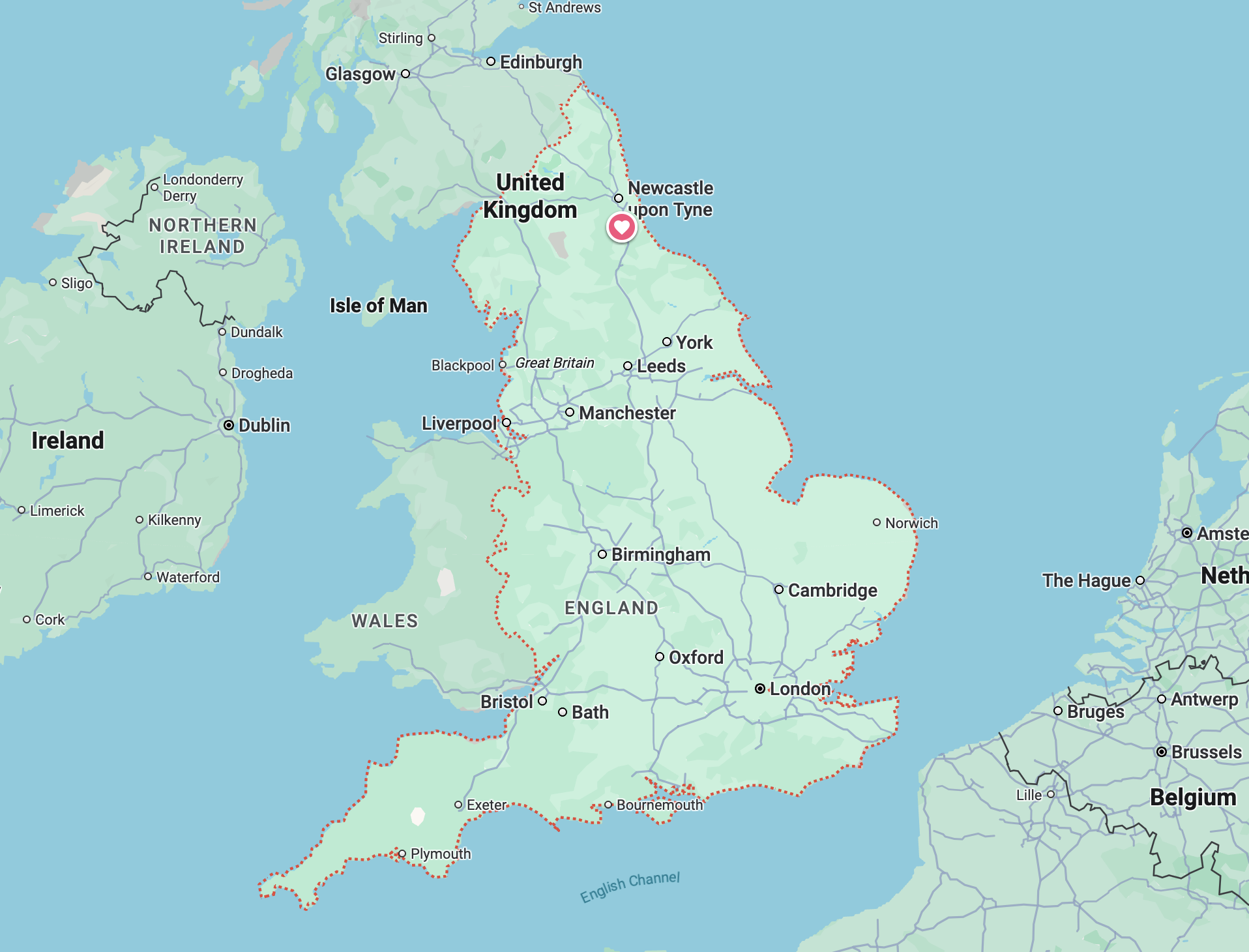
Tuesday was a travel day from Edinburgh in Scotland to Durham in England. We took the A1 down along the coast. The highway passes by the Lindisfarne National Nature Reserve and the Northumberland Coast National Landscape. However, you can’t see much from the highway. In Lindisfarne National Nature Reserve, there is a causeway over to Holy Island. The causeway is only passable during low tide, so check the charts if you plan to drive to the island.
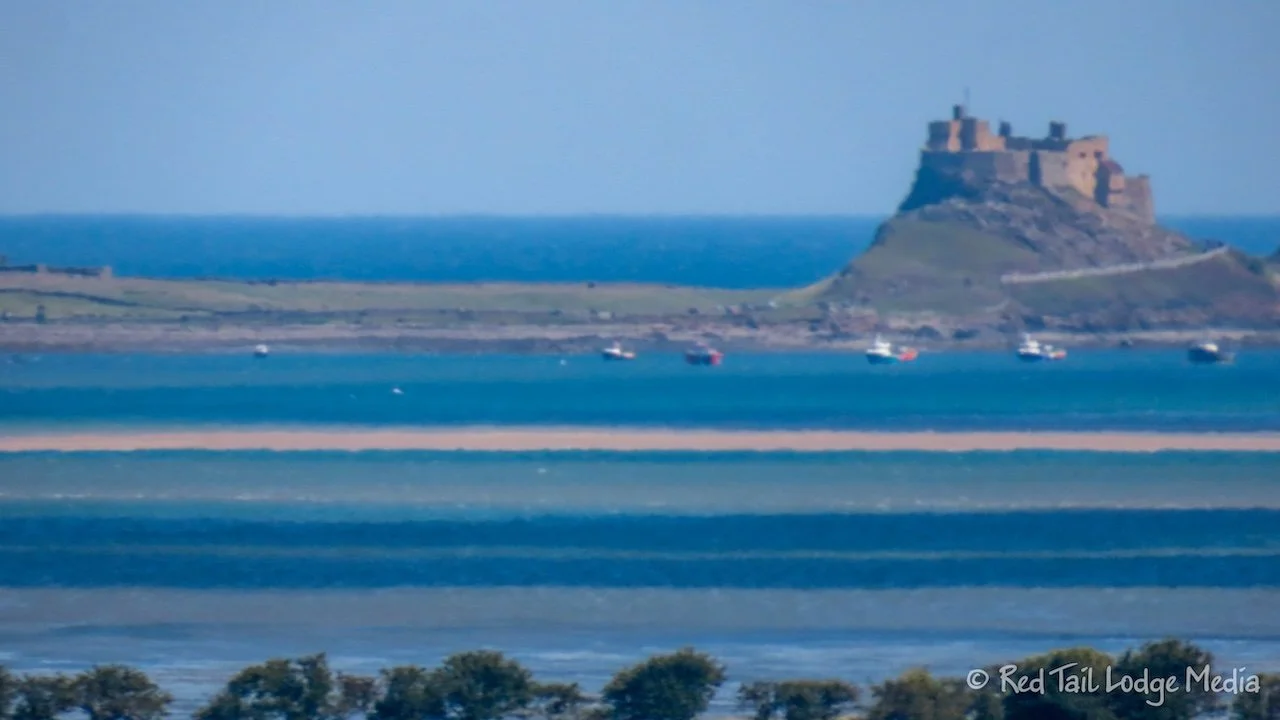
We caught a glimpse of Lindisfarne Castle, which sits at one end of the island. It looks like the island would be a great place to walk around, but we did not stop. We were still tired from all of the walking we did the day before in Edinburgh (Edinburgh, Scotland - June 13th to 16th, 2025).
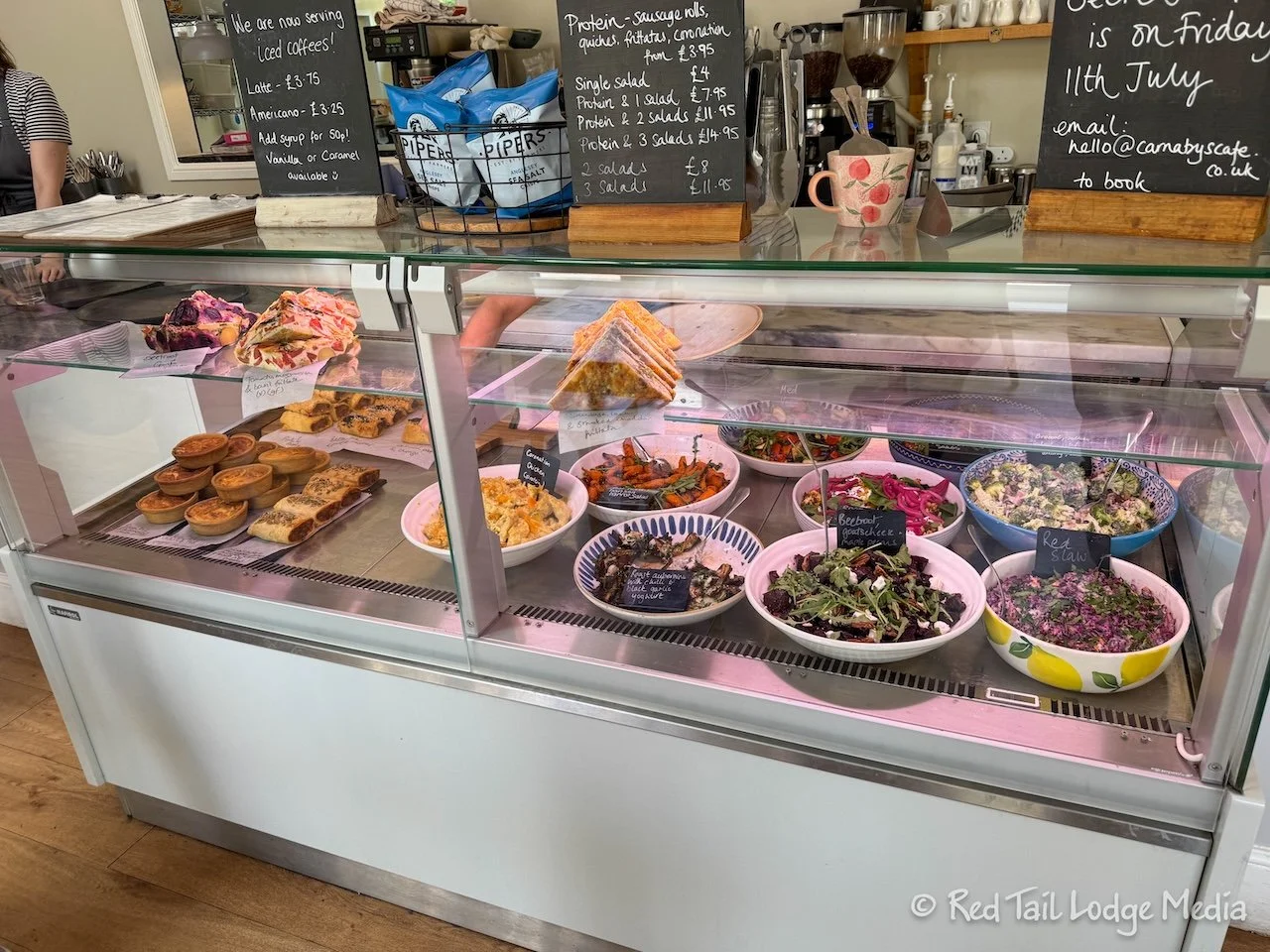
Our only stop during our drive was at Carnaby’s Cafe in Brownieside. It was right off the highway. It was in a modern-looking building, but the food was wonderful. There were a variety of lovely salads along with sausage rolls, quiches, frittatas, and coronation chicken. Keith had the pork chorizo and red pepper sausage roll while Ann had the beetroot (beet) and goat cheese frittata. We both paired those with broccoli salad. The food was delicious and it was refreshing to get our fill of vegetables.
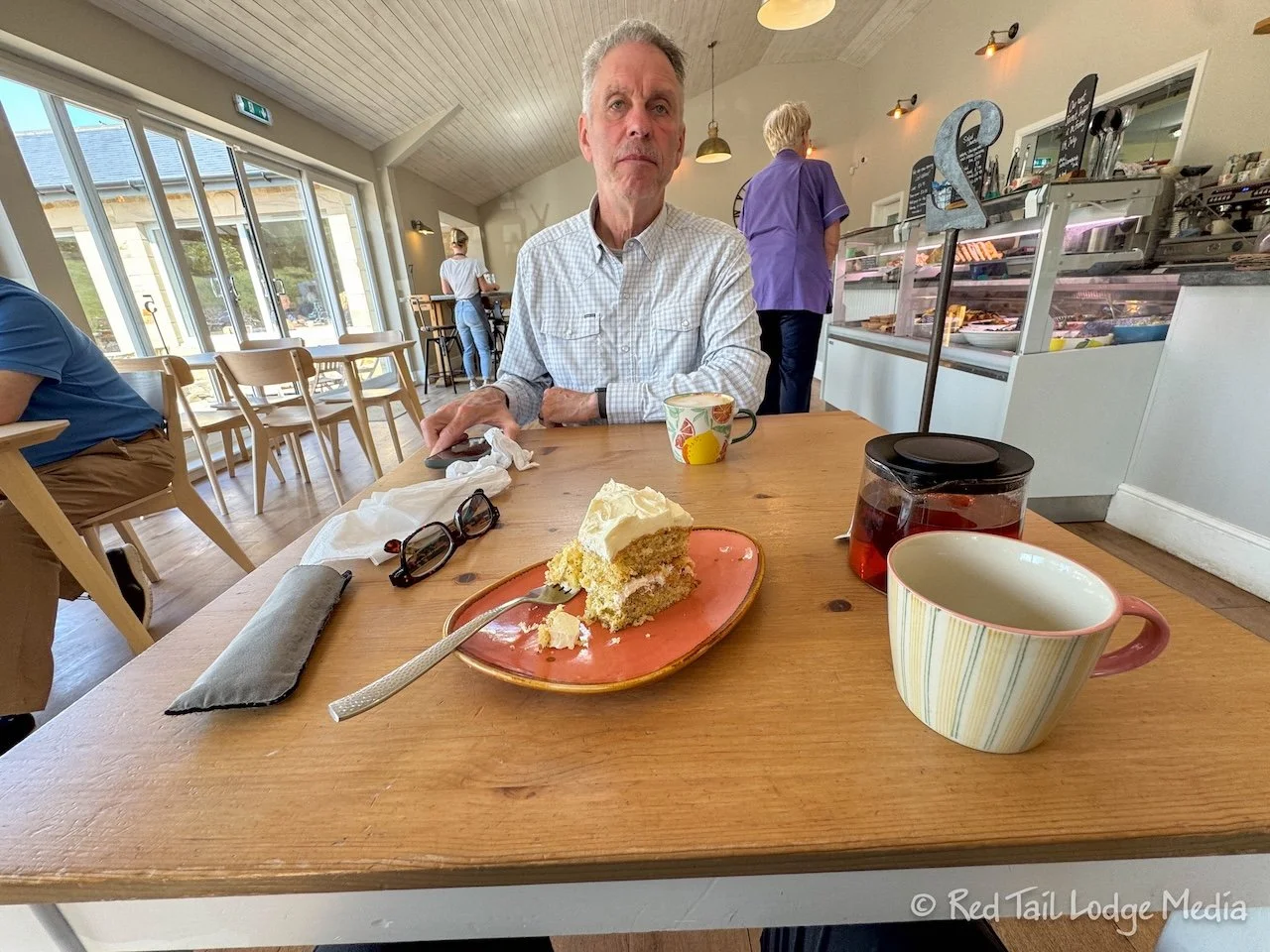
We couldn’t check into our hotel in Durham until 2 pm, so we had about another hour to kill. So, while we were at Carnaby’s Cafe, Ann grabbed her laptop and we hung out for an hour. We ordered a couple of hot drinks and Ann tried the lemon, white chocolate, and poppy seed cake. Tasty.
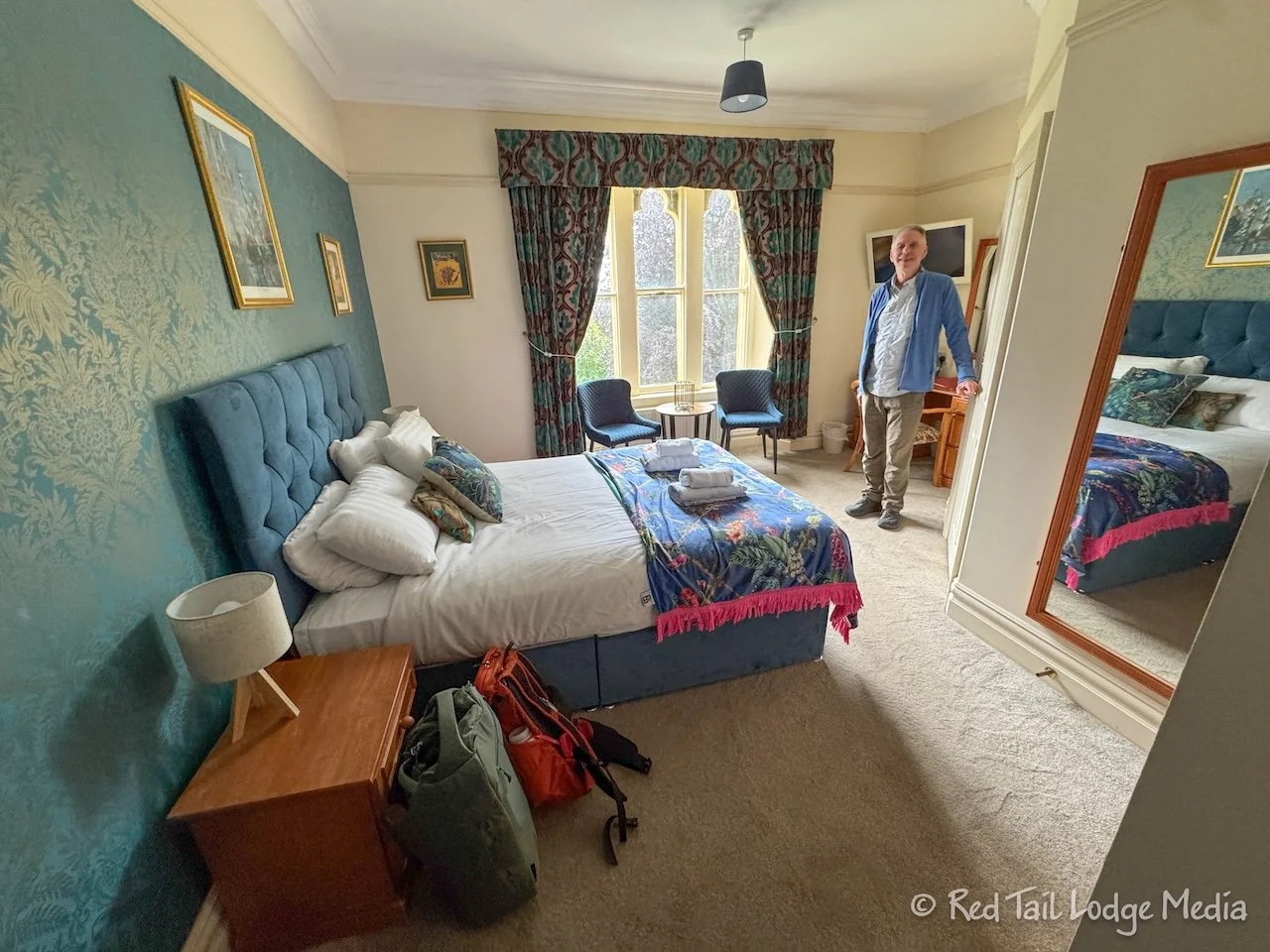
Farnley Tower Hotel was our lodging for the next three nights. It is located in a residential area, just a half mile from the downtown area. After relaxing in our room for a little while after checking in, we took a walk into town.
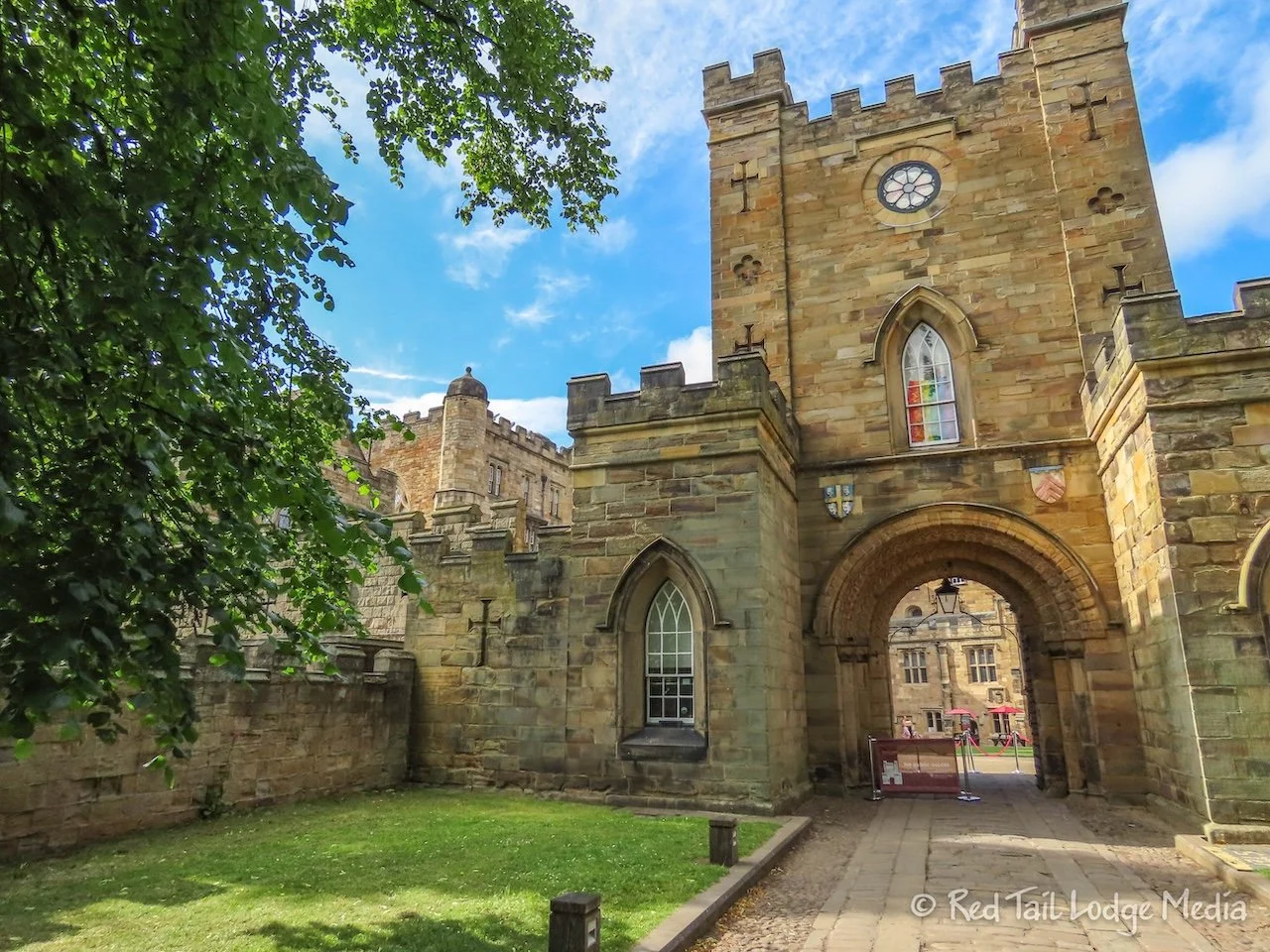
Durham is a small town with a castle and cathedral up on a hill. The downtown area sits below the castle, along the River Wear. The castle is used as a resident hall for students of Durham University. Occasionally, there are guided and self-guided tours of the castle in the summer, but we couldn’t find any current information on them. Perhaps there weren’t any tours while we were there. A sign in front of the entrance to the castle read “no public access”.
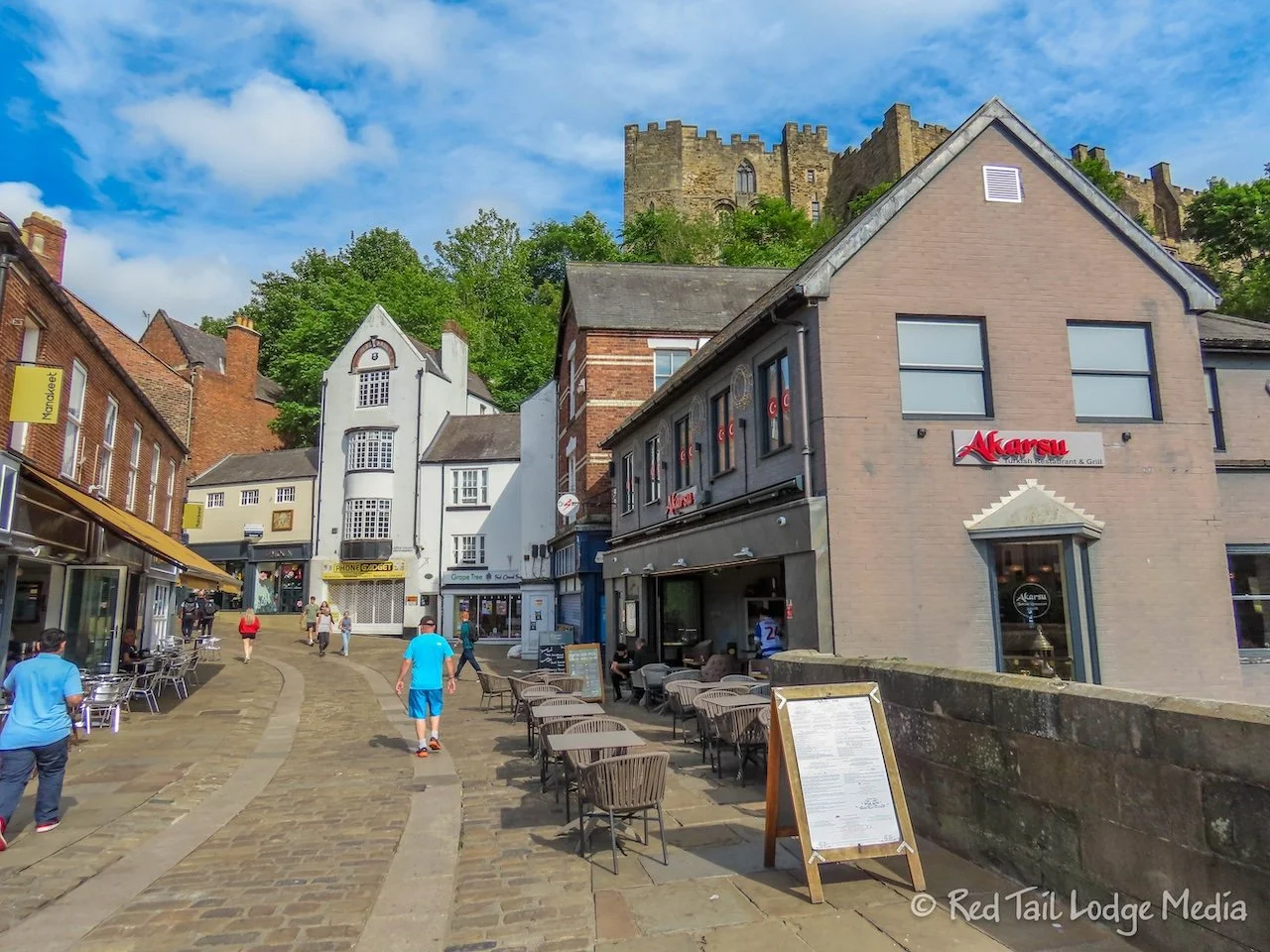
For dinner, we stopped at Akarsu Turkish Restaurant & Grill, which sits right on the river. Ann had the Kuzu Shish (grilled lamb), while Keith had the Karisik Shish (grilled lamb and chicken). Both of our dishes came with rice, salad, chilli, and garlic sauce.
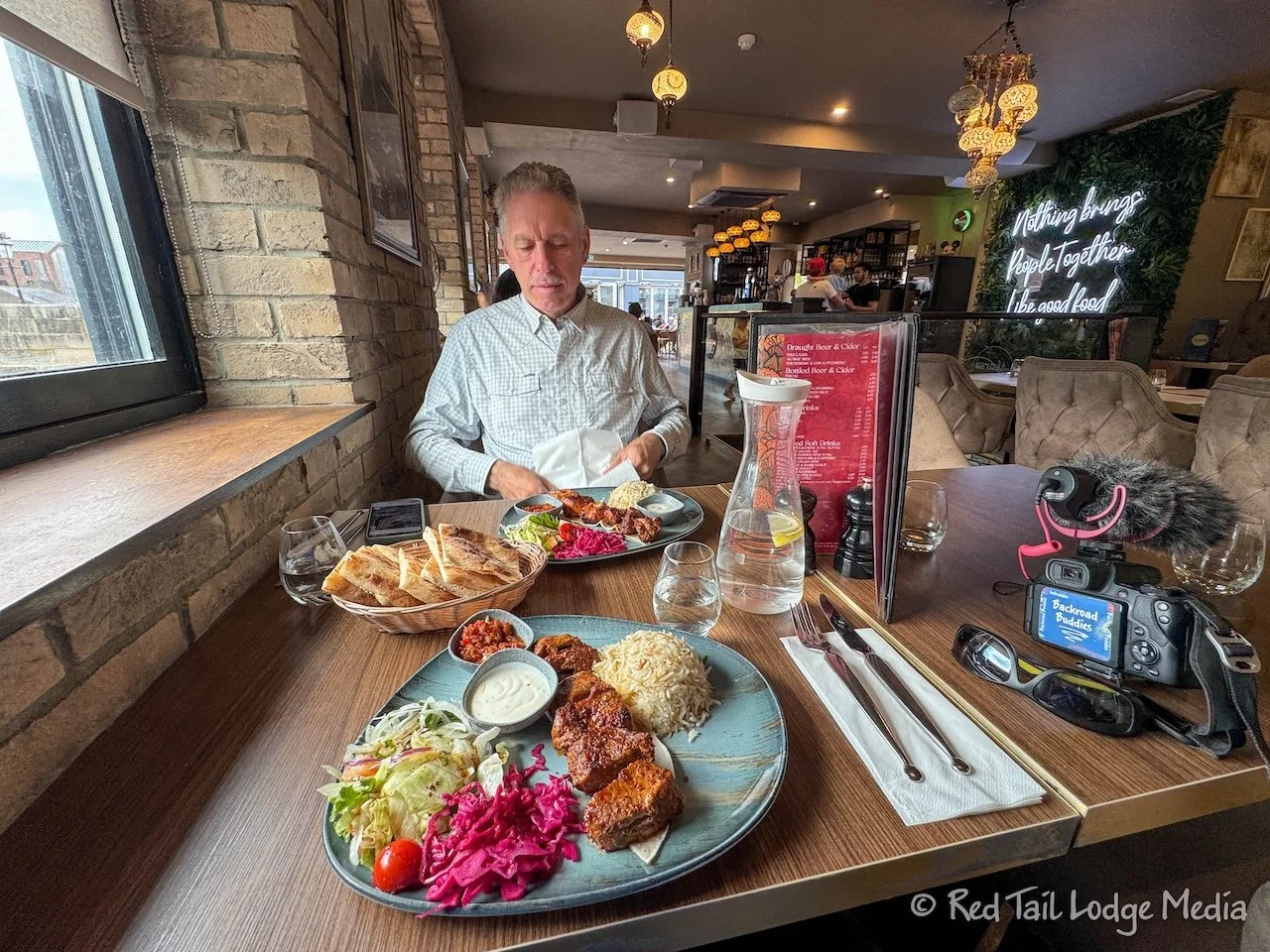
We also split an order of Turkish bread. Our meals were very good and very filling. We probably could have skipped the bread and still had enough food. The bread was tasty, but we couldn’t finish it all.
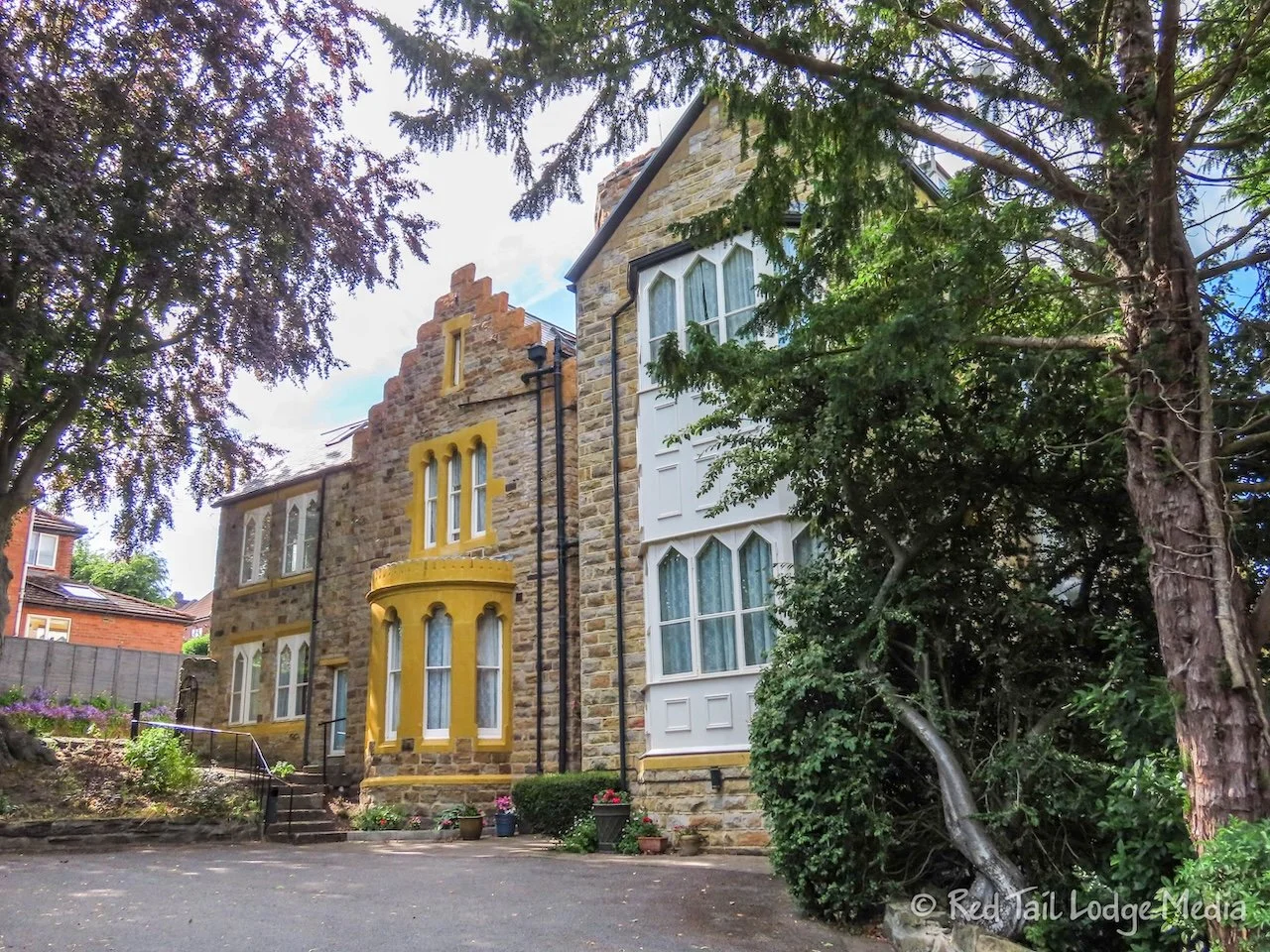
Although our hotel was not far away, it was uphill from town, a very steep uphill climb from town. The temperatures were in the 20’s Celsius (70’s Fahrenheit) and we were sweating by the time we returned to the hotel. Most places in Europe do not have air-conditioning, so we opened up the window to try to get more air flow in the room. Europeans also don’t use screens on their windows, but somehow, there doesn’t seem to be as many bugs. However, a little later in the evening, a bee did come into our room, but we were able to shoo it back out again. We’ve had our windows open in many of the places we’ve stayed so far, and this is the first time an insect or bird came in. We’re surprised it doesn’t happen more often, especially with all of the pigeons around. You would think one would try to fly in.
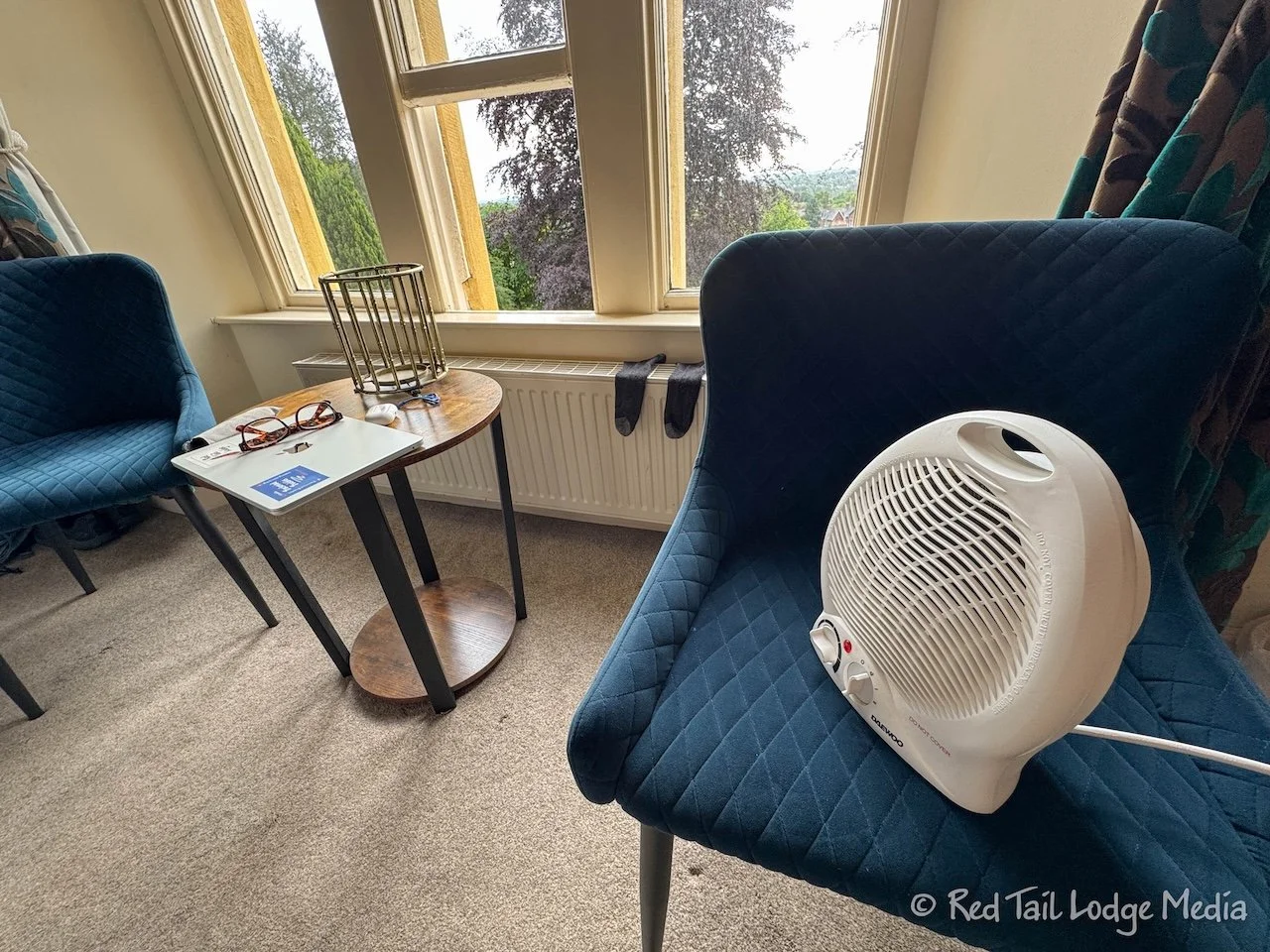
It was still warm in our room when we were ready to go to bed. We found a small fan in the closet. It was hard to locate the fan where we wanted it in the room because there were a limited number of electrical outlets. But we managed to locate it so it was directed towards the bed. Ann fell asleep rather quickly, but it took Keith awhile to get comfortable.
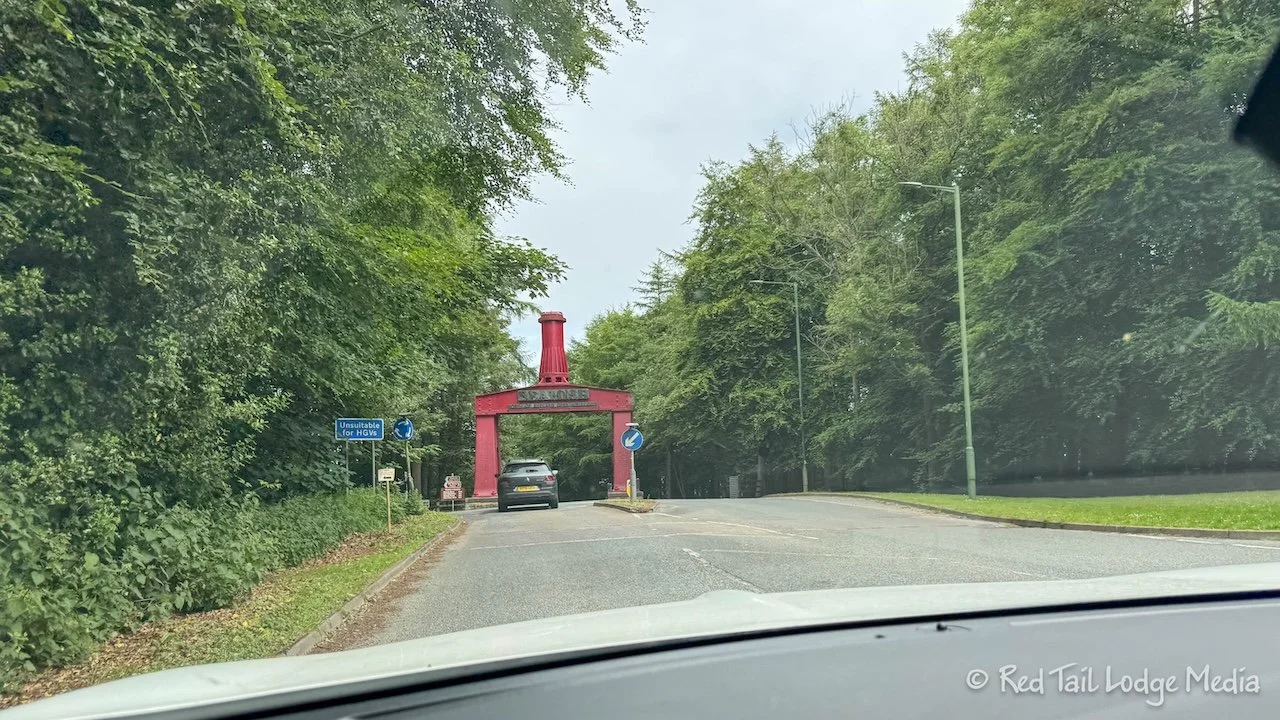
We spent most of Wednesday at the Beamish Museum. It was about a 25 minute drive north from where we were staying in Durham. The museum is an open-air museum, about life in northeast England during the 1820’s, 1900’s, 1940’s and 1950’s. We arrived when it opened at 10 am and spent the day exploring most of it. The single day ticket cost the same as the annual pass, 25 GBP per senior. We bought the single day anyway, since we knew we couldn’t return any time that year. Hopefully, it will save a small amount of resources by not issuing us a pass.

Beamish is 350 acres and it was about a mile and a half around the main loop. There were vintage buses and an electric tram you could ride if you didn’t want to walk from one area to the next.
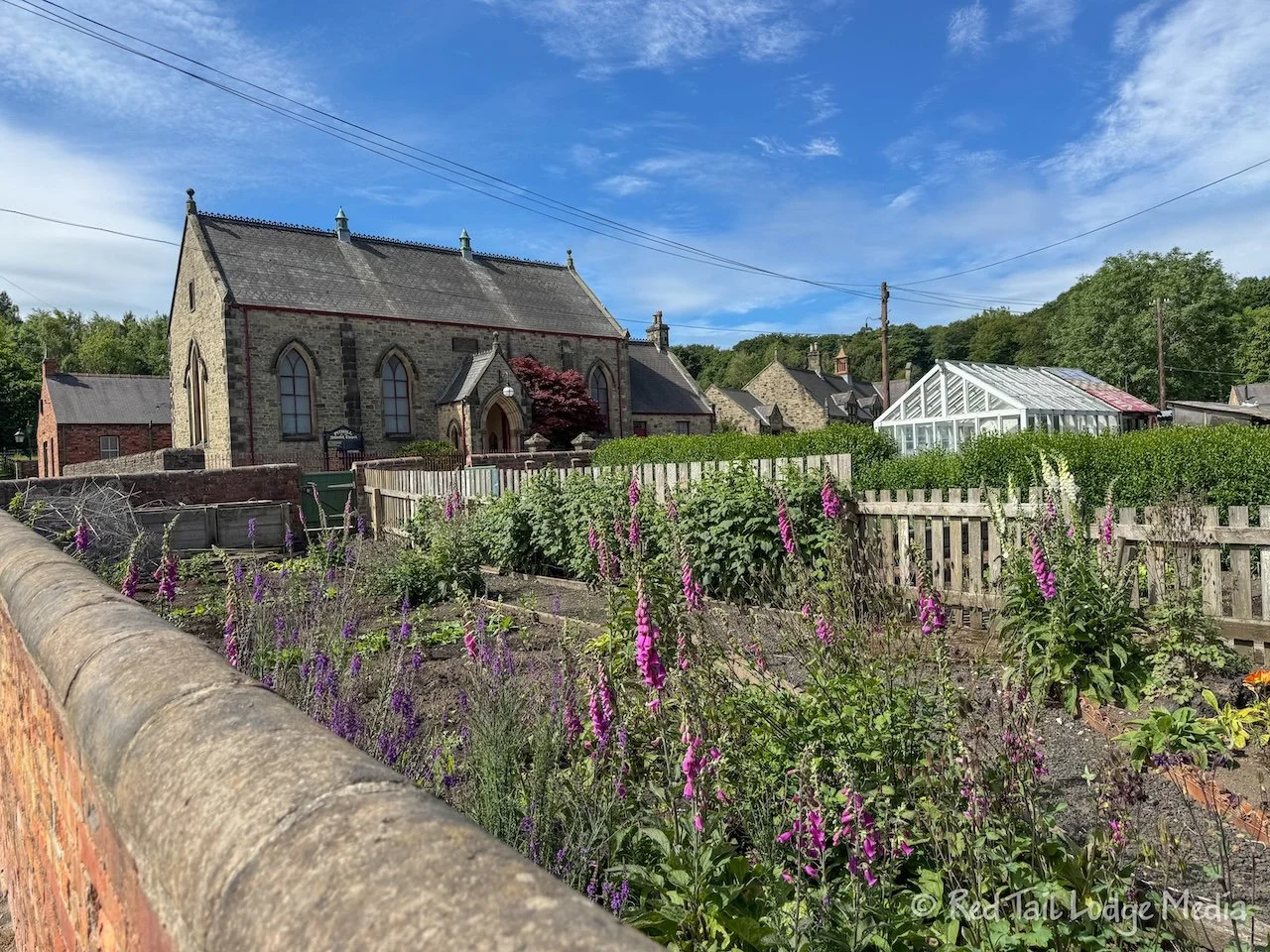
The museum opened in 1972. Initially, it only included the Drift Mine, the Pockerley Old Hall and the 1940’s Farm. Since then, it has added the 1900’s Colliery (coal mine along with the buildings and equipment associated with it), the 1900’s Pit Village (where the miners lived), the 1820’s Landscape, The Transport Depot & Workshops, the Rowley Station, the Fairground, the 1900’s Town, the 1950’s Farm, and the 1950’s Town.
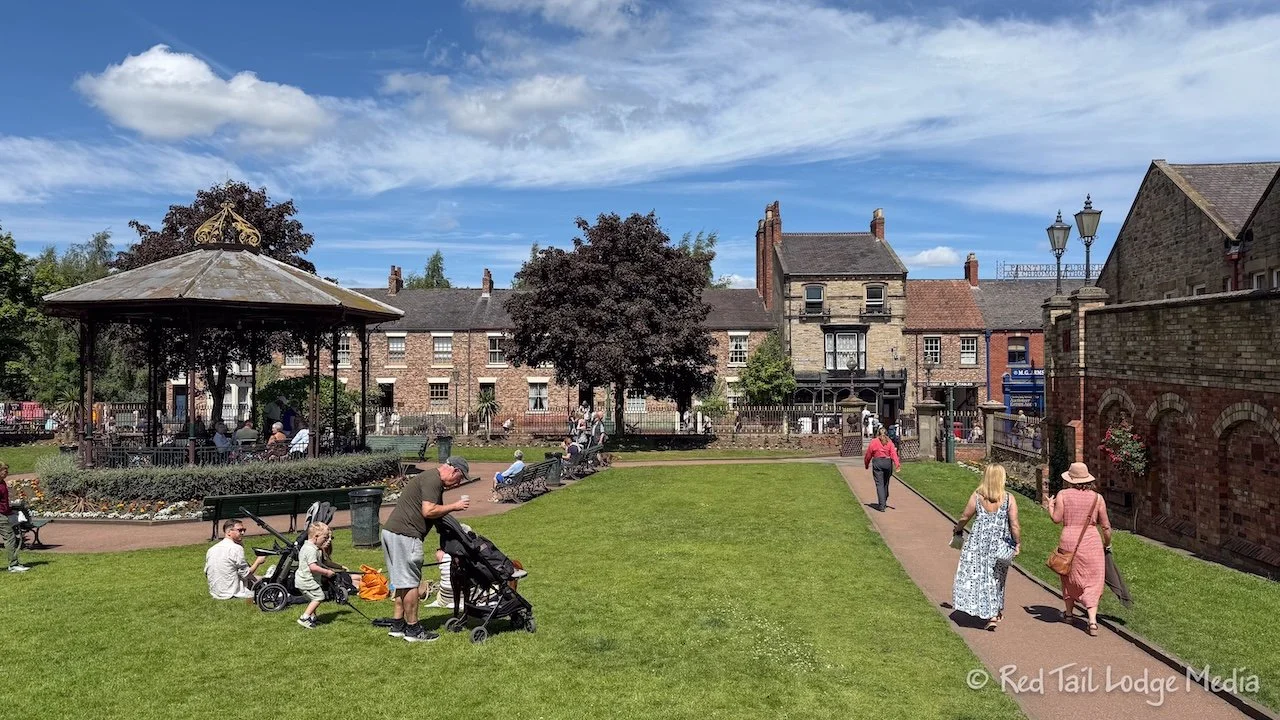
We were hoping the place wouldn’t be very busy on a Wednesday, but there seemed to be a lot of school groups that day. It was a large place, so the crowds were only an issue for going inside some of the popular buildings. It was interesting to watch the very knowledgeable interpretative staff engage all of the kids. Ann had a little giggle as she overheard one of the staff members leading a group of kids past the ice cream stand. The woman stopped and said “There is a war going on. You have never seen a banana and you are lucky to get an orange. There is no ice cream.”
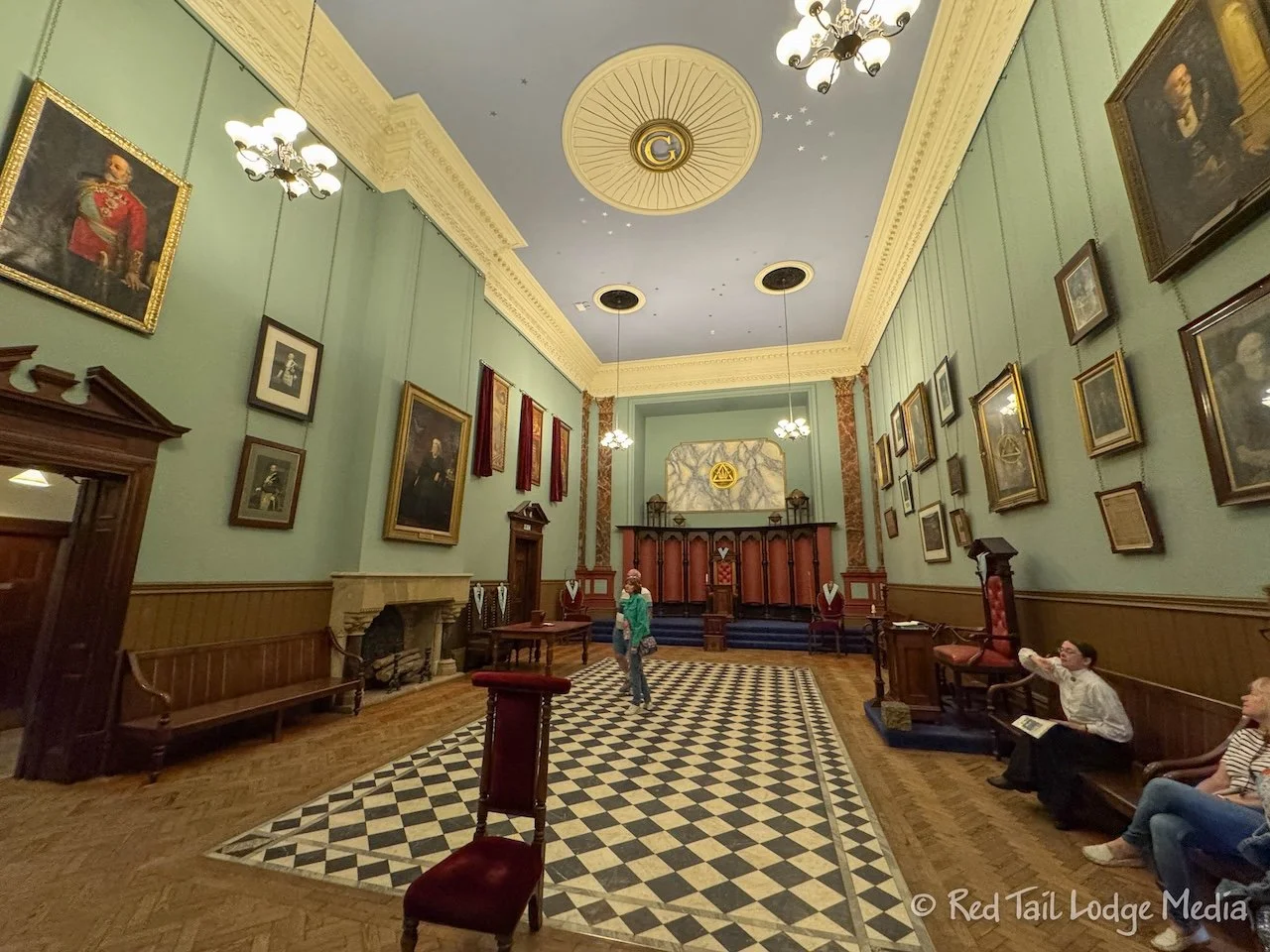
Some of the buildings are original to the property. Others were moved to the property. And the remaining buildings were reconstructed. For example, the Masonic Hall in the 1900’s had its original façade moved to the site, but the rest of the building had to be reconstructed, as the original building was not in good enough condition to save.
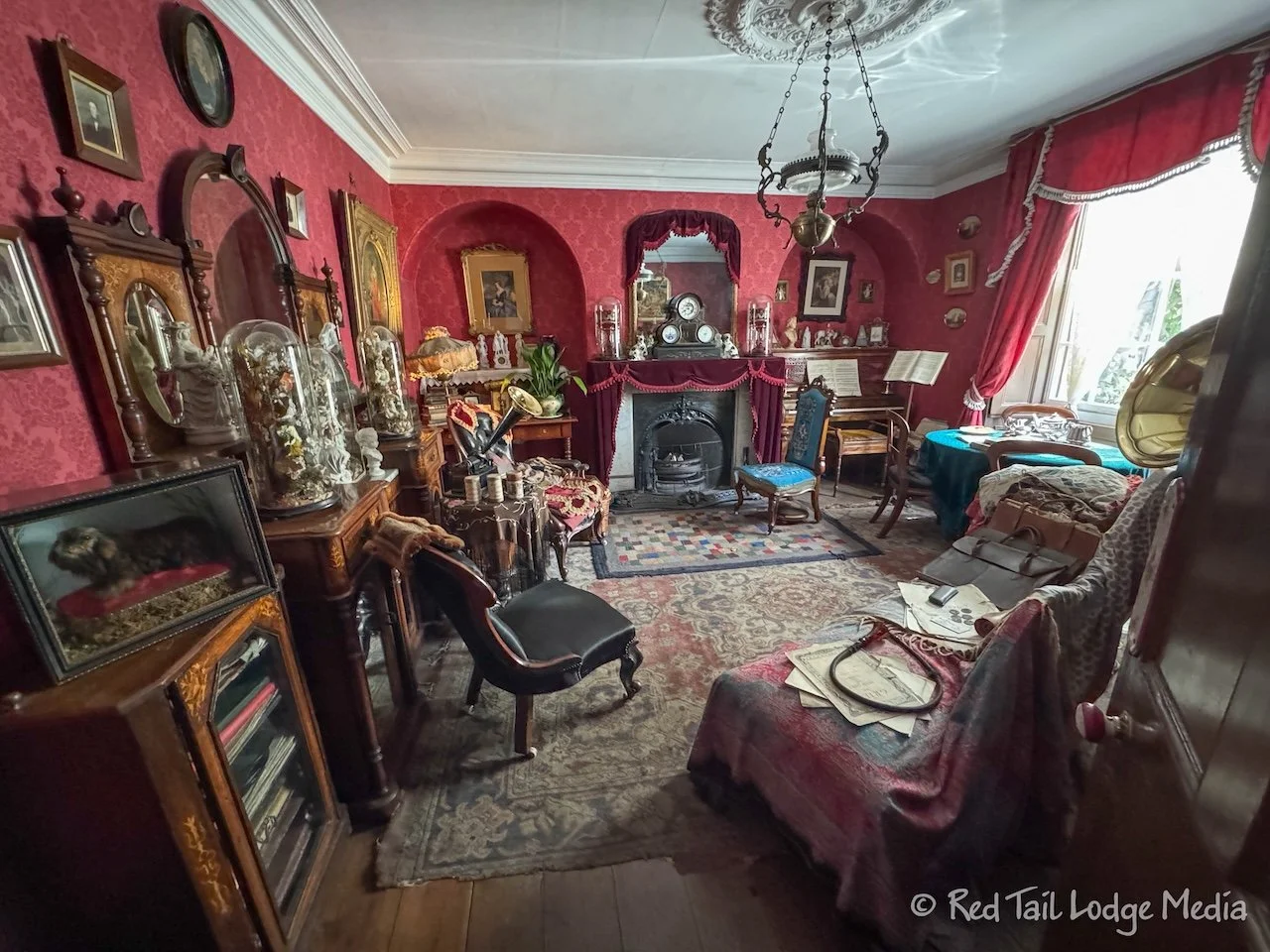
We were impressed by all of the original artifacts inside the buildings. The sheer quantity, variety, and condition of the all of the items was amazing. The museum started collecting artifacts back in 1958, storing them until they had enough to open the museum.
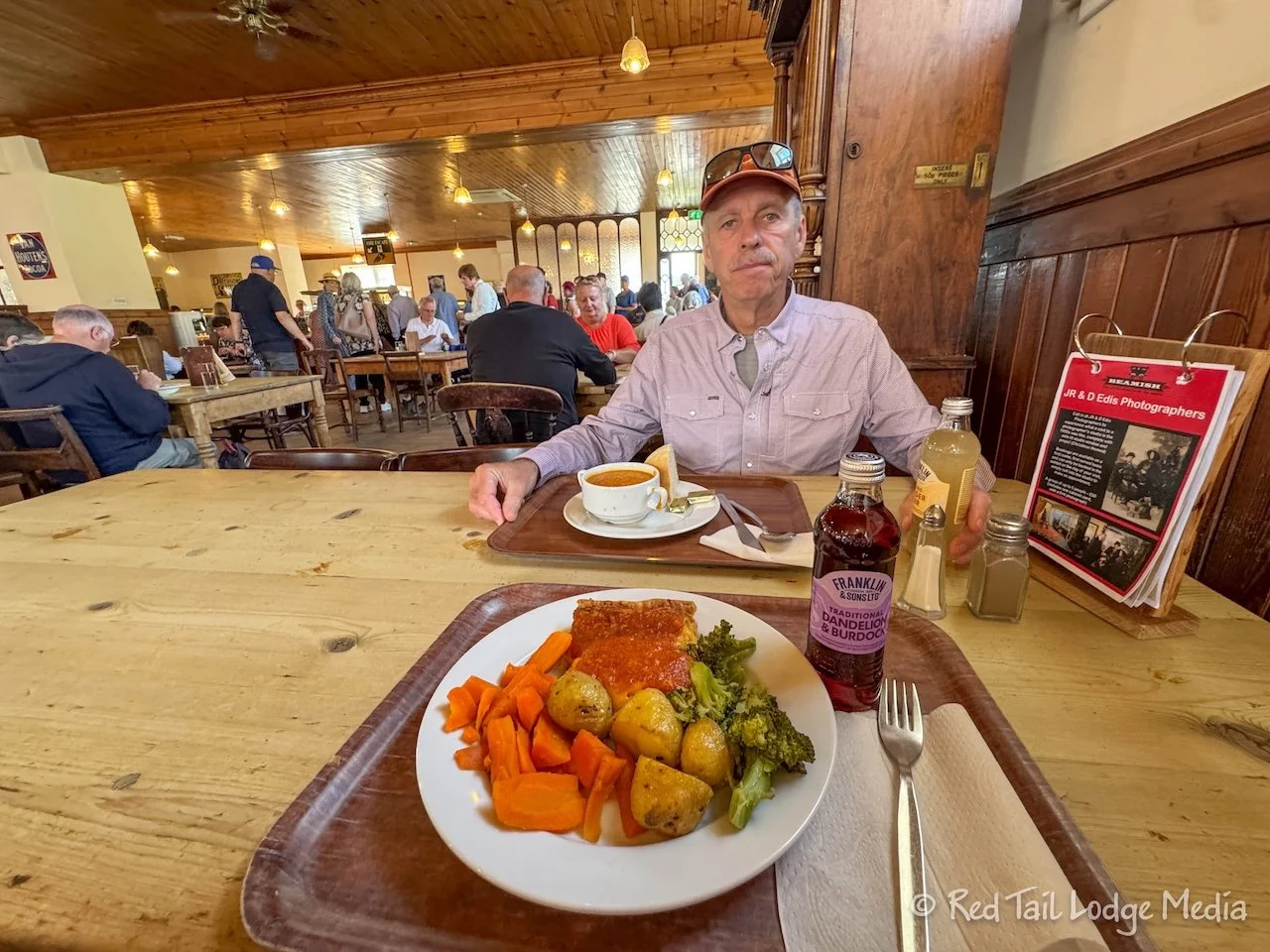
By noon, we were barely half way around the loop, even skipping a few things along the way. We stopped at the 1900’s Town Tea Rooms for lunch. Keith had the carrot and coriander soup, while Ann tried the panhaggarty pie. The pie is a traditional north east England dish with potatoes, onions, and cheese backed in a pastry crust. Ann appreciated the cooked vegetables they served with it on the side, carrots and broccoli. However, she thought the roasted potatoes on the side were a little redundant with the pie already containing lots of potatoes. It was a very filling meal. To wash down the food, Ann tried the Franklin and Sons Dandelion and Burdock. It was a pretty tasty drink.
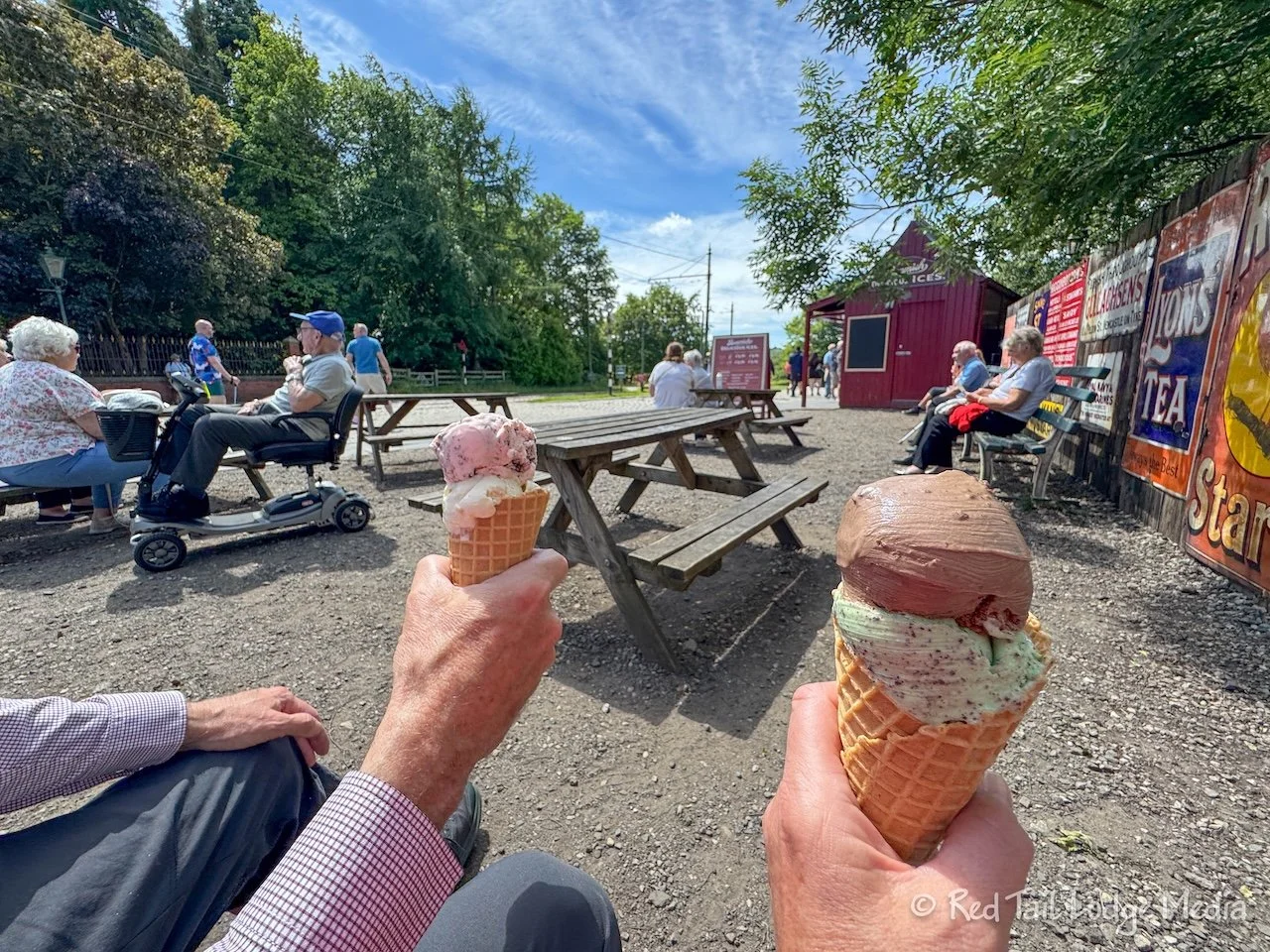
After we wandered through the buildings in the 1900’s Town, we got some ice cream cones from the Delicious Ices stand. Ann had the mint chocolate cream and the chocolate fudge. Keith tried the cinder toffee and the Turkish delight. We’ve never had Turkish delight before. It was an interesting combination of flavors that may have included nuts, citrus, rosewater, and mint. When Ann tasted it, the predominant flavor for her was roses. She’s never tasted roses before, but has smelled plenty of them.
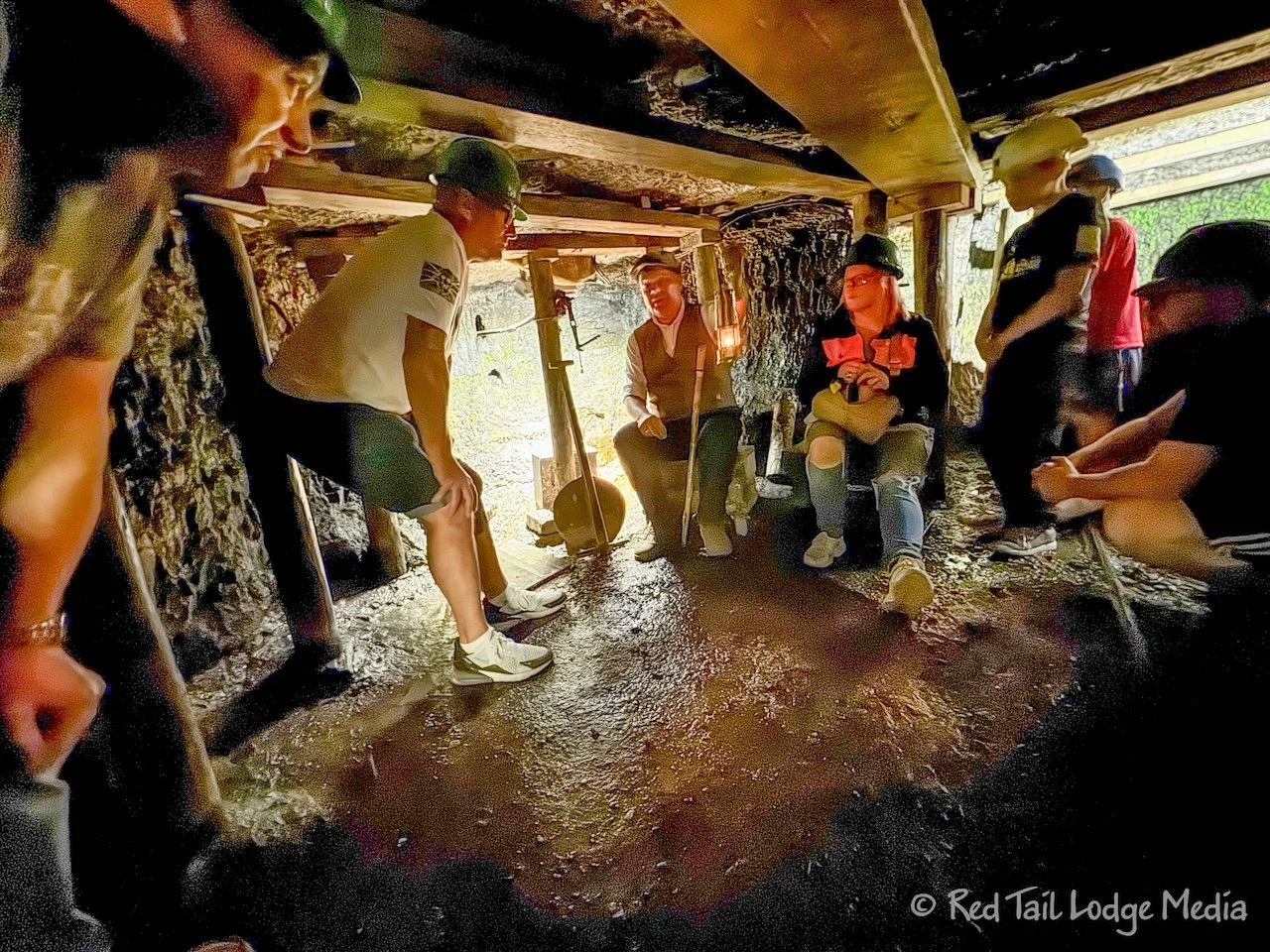
As we made our way around the loop, we ended our visit by taking a short tour of the Mahogany Drift Mine. Coal mining was the predominant occupation in North East England during the 1900’s. The Mahogany Drift Mine opened in 1855. Luckily, the tour was only about 15 minutes long and they gave us hard hats. That was about as long as Ann could last bent over in the mine, as the minimum clearance in the mine was only 4 foot six inches, the maximum height of the ponies they used in the mine.
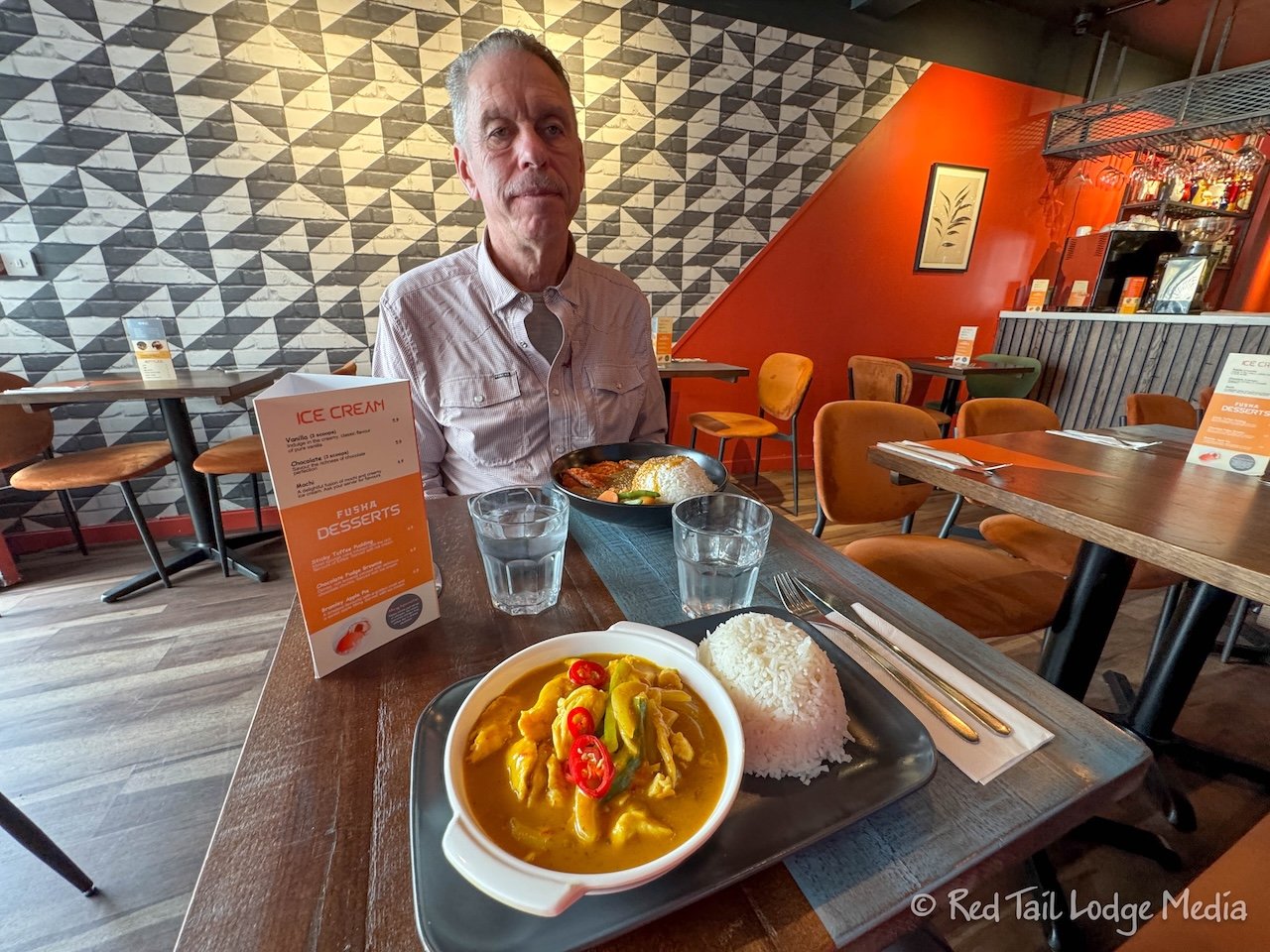
After returning to Durham, we walked into town for dinner. This time we ate at the Fusha, an Asian fusion restaurant. Ann had the peanut satay chicken while Keith had the chicken katsu. It was a nice change. Since we had a filling lunch and ice cream earlier, we skipped dessert that evening.
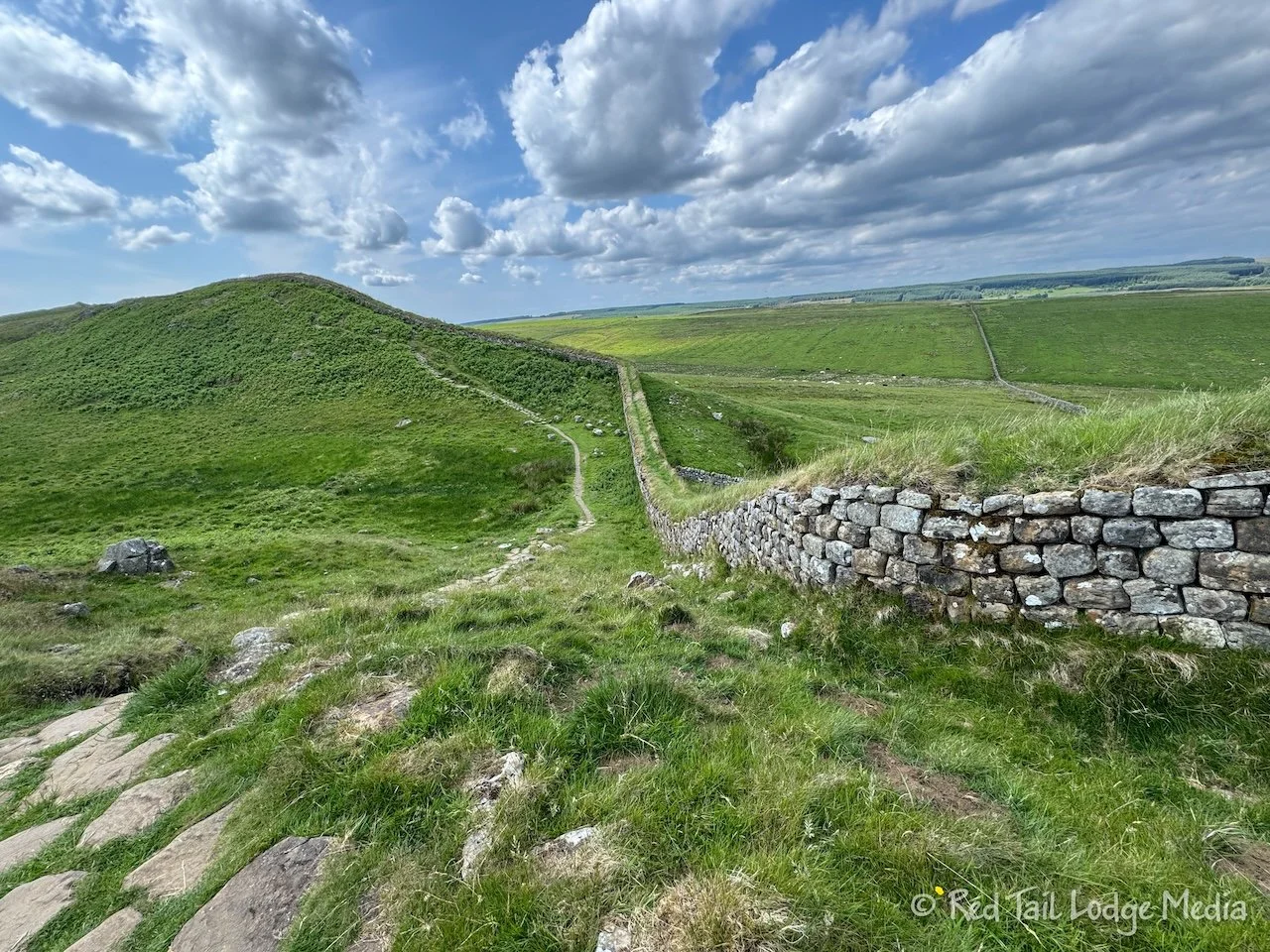
Thursday was all about Hadrian’s Wall. The stone wall was built starting in 122 AD to protect the Roman Empire south of it. Experts believe the wall was 12 to 15 feet tall (3.7 to 4.5 meters) and about 8 feet wide (2.4 meters). The wall had cut stone on the outsides, but had rubble filling in the middle between the outsides. Not much of the wall remains, as after the fall of the Roman Empire, the stone was taken from the wall to be used as building materials for local structures.
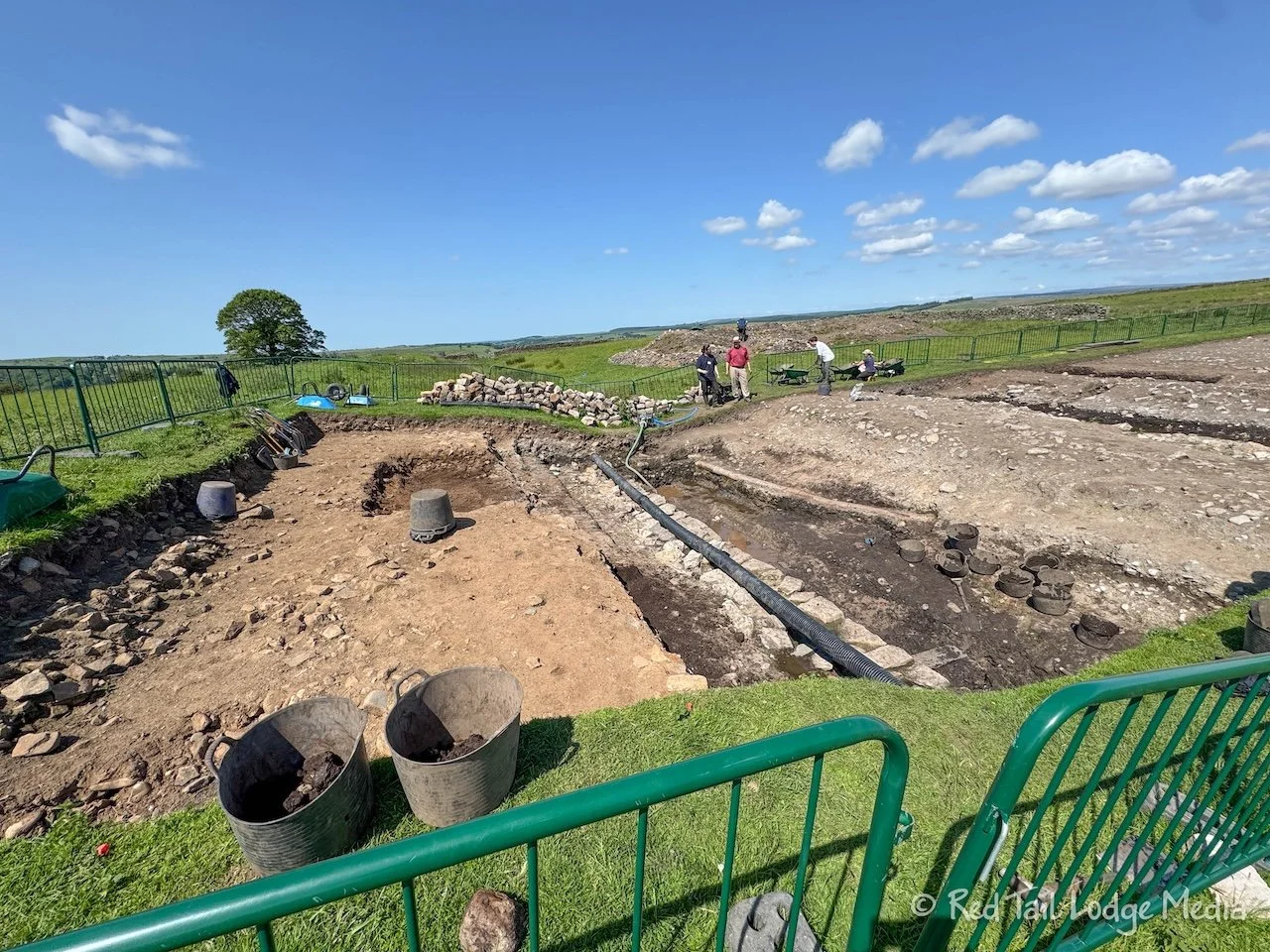
We started our exploration of the wall at the Roman Army Museum near the remains of the Roman Fort of Magna. The museum gave us a good understanding of the timeline of the Roman Empire and how the Roman soldiers dominated. The twenty minute film was worth the time. Behind the museum, archeologists are actively excavating the Magna Roman Fort.
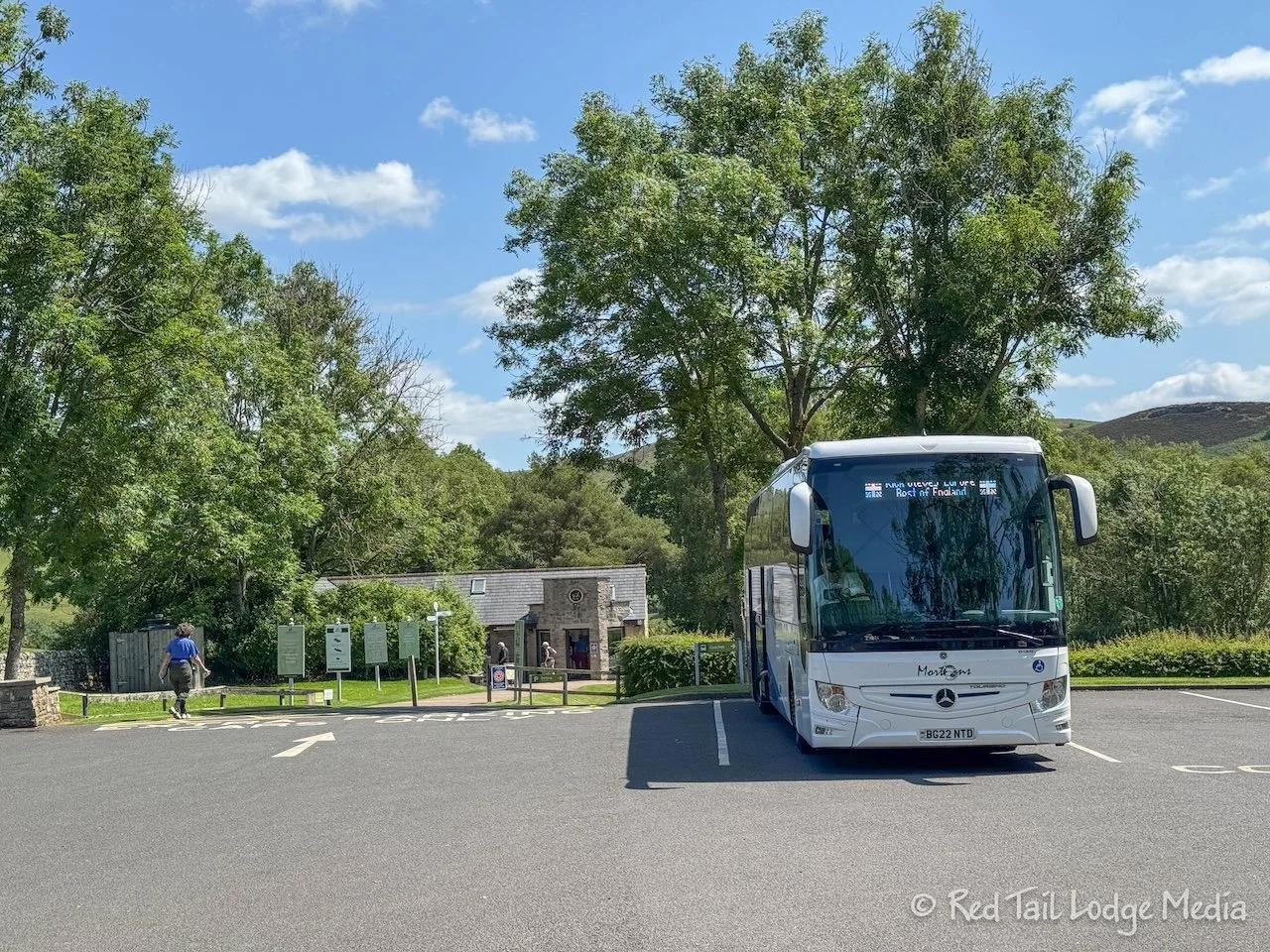
From there, we drove over to the Roman Vindolanda Fort & Museum. It is managed by the Vindolanda Charitable Trust, which also manages the Roman Army Museum. We had bought a combination ticket to visit both sites, costing us 40 GBP in total for the two of us.
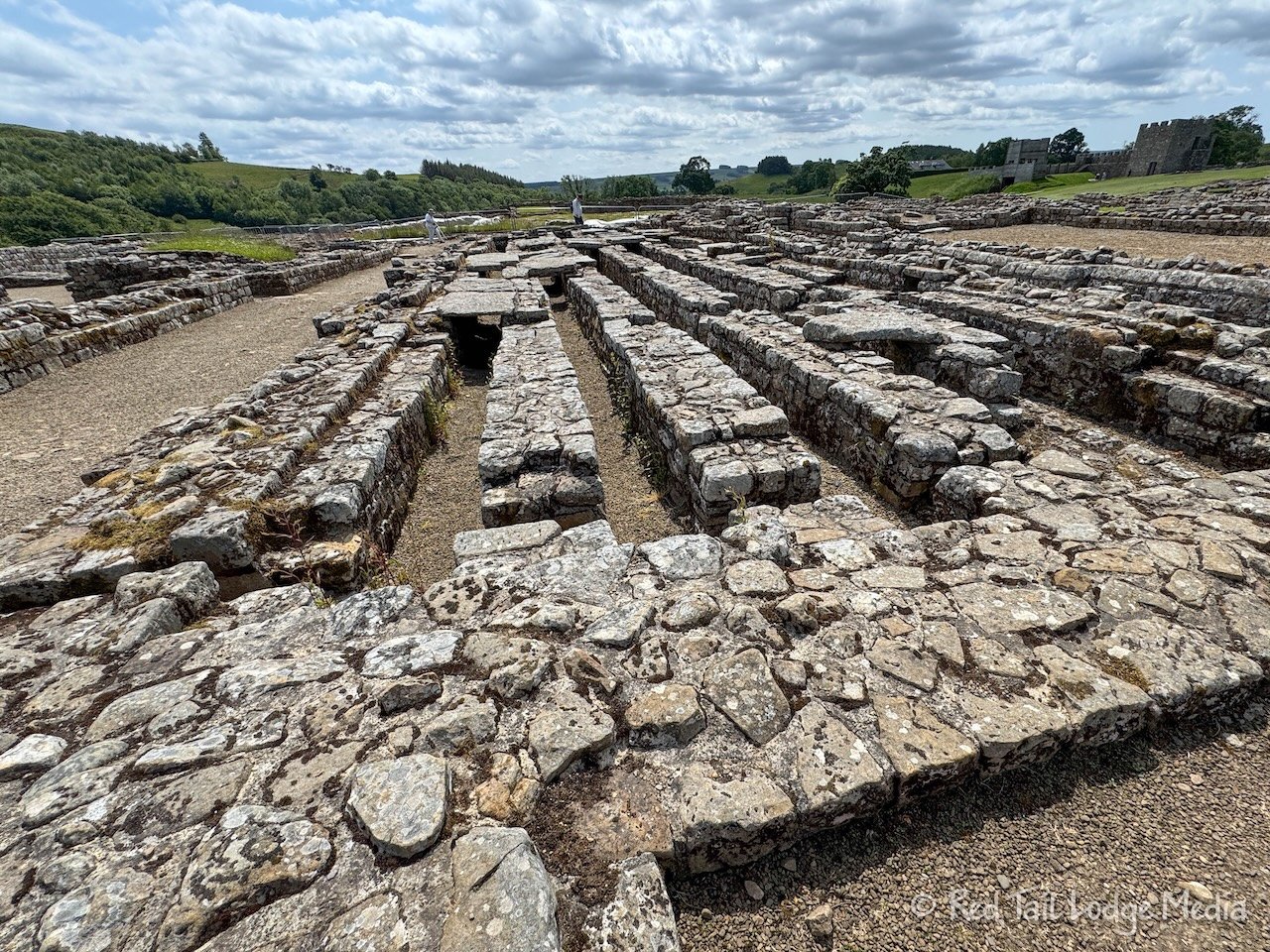
Vindolanda is much more extensive than the Roman Army Museum. We arrived just in time to go on a 40 minute guided tour, which was included with our admission fee. The tour explained what life was like at the fort. There were actually ten different forts as the fort was demolished and completely rebuilt at least nine times. The first fort predates Hadrian’s Wall. The Romans occupied the fort from 85 AD to 370 AD.
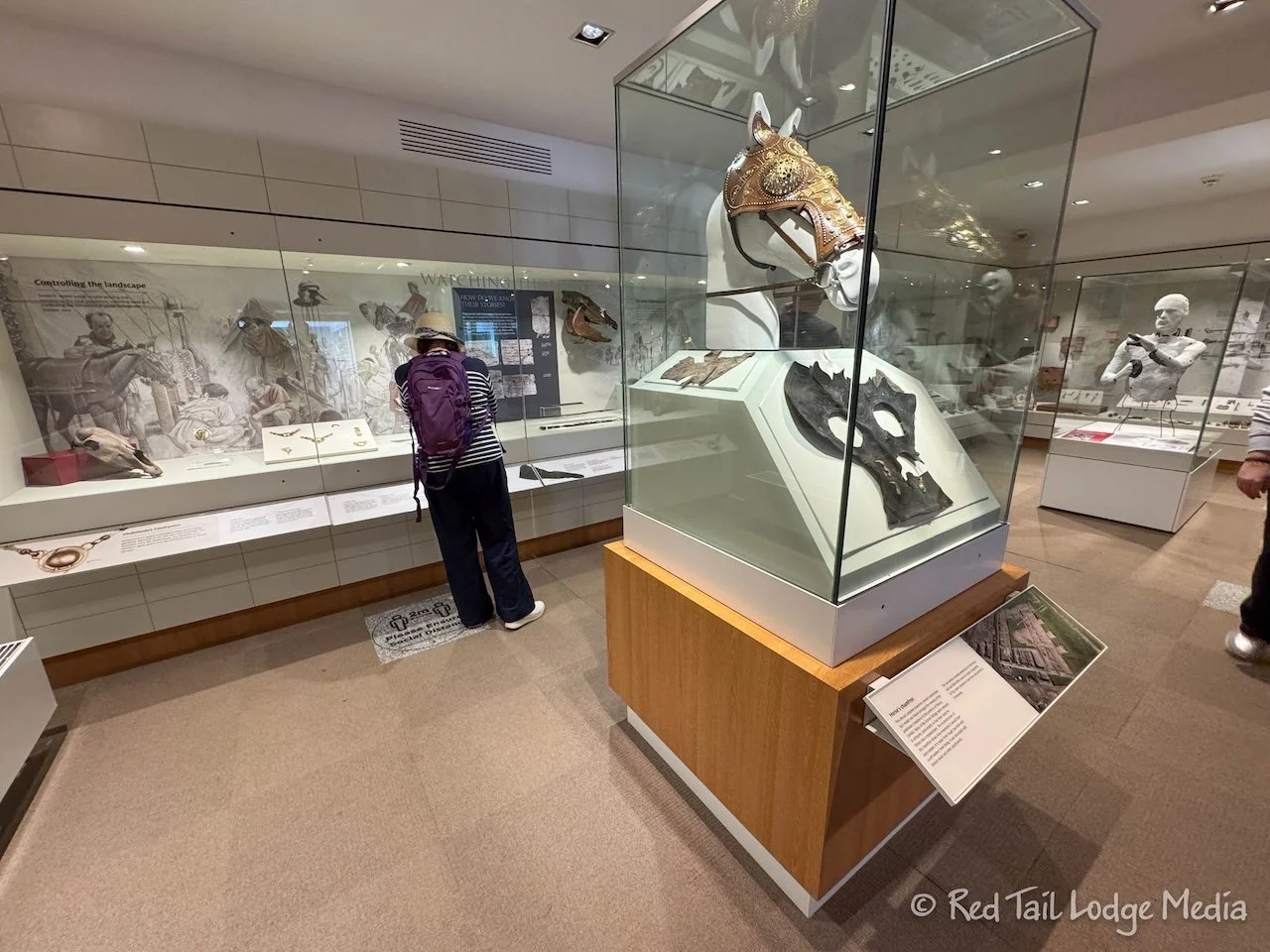
Vindolanda is also an active archeological site and it has been for many years, since the 1930’s. It is amazing the volume, variety, and great condition of the artifacts that have been dug up there. Many of the items are on display inside the museum. They include things such as leather shoes, jewelry, armory, everyday tools, pottery, bones, and writing tablets.
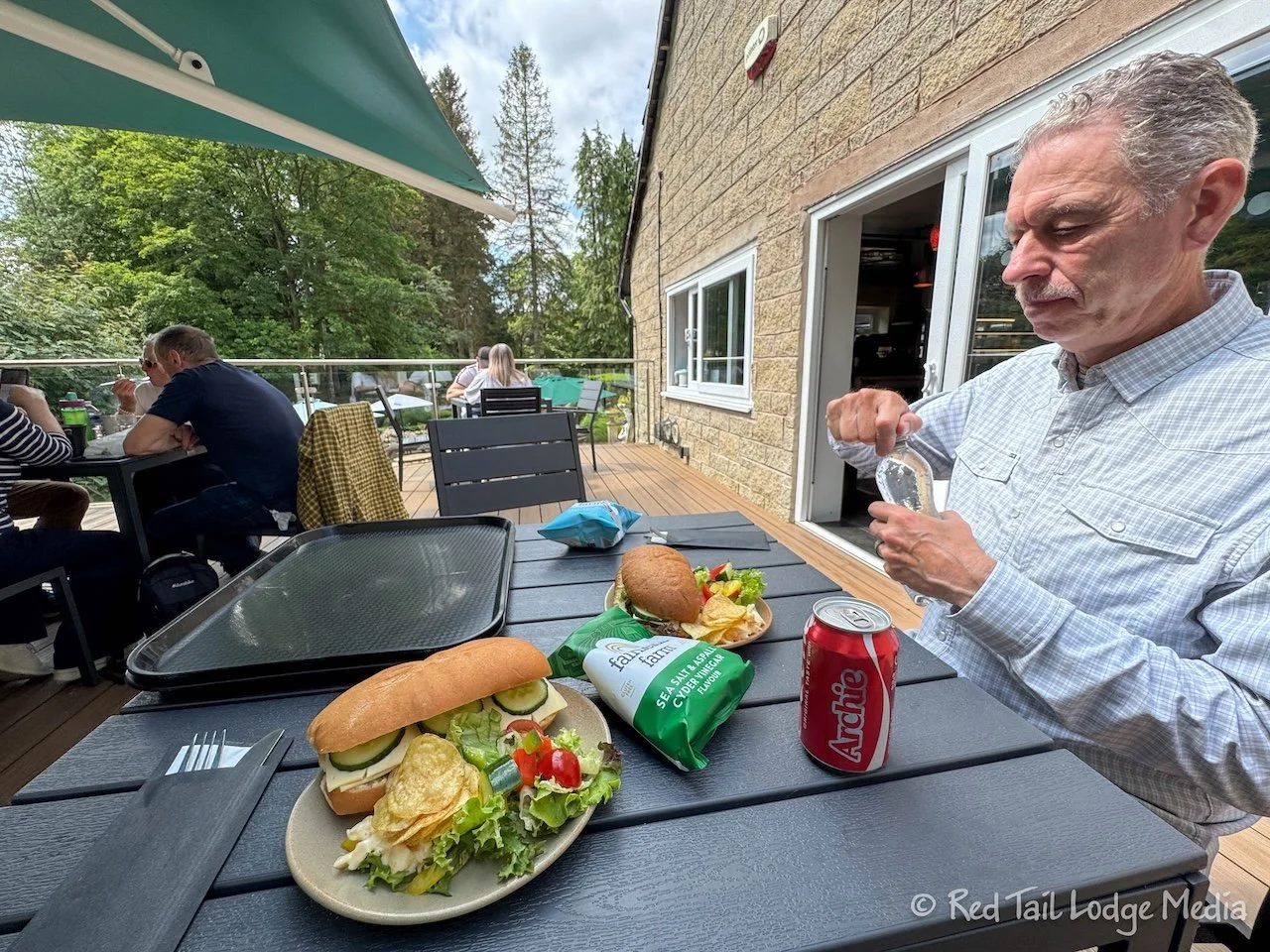
After the guided tour, we stopped in the cafe at Vindolanda for lunch. We both had the cheese salad sandwich with a side salad. The sandwich was cheese topped with greens, cucumbers, and tomatoes. As is typical in England, the salad came undressed, but there was also a small serving of coleslaw with it, which was over-dressed, so they balanced each other out.
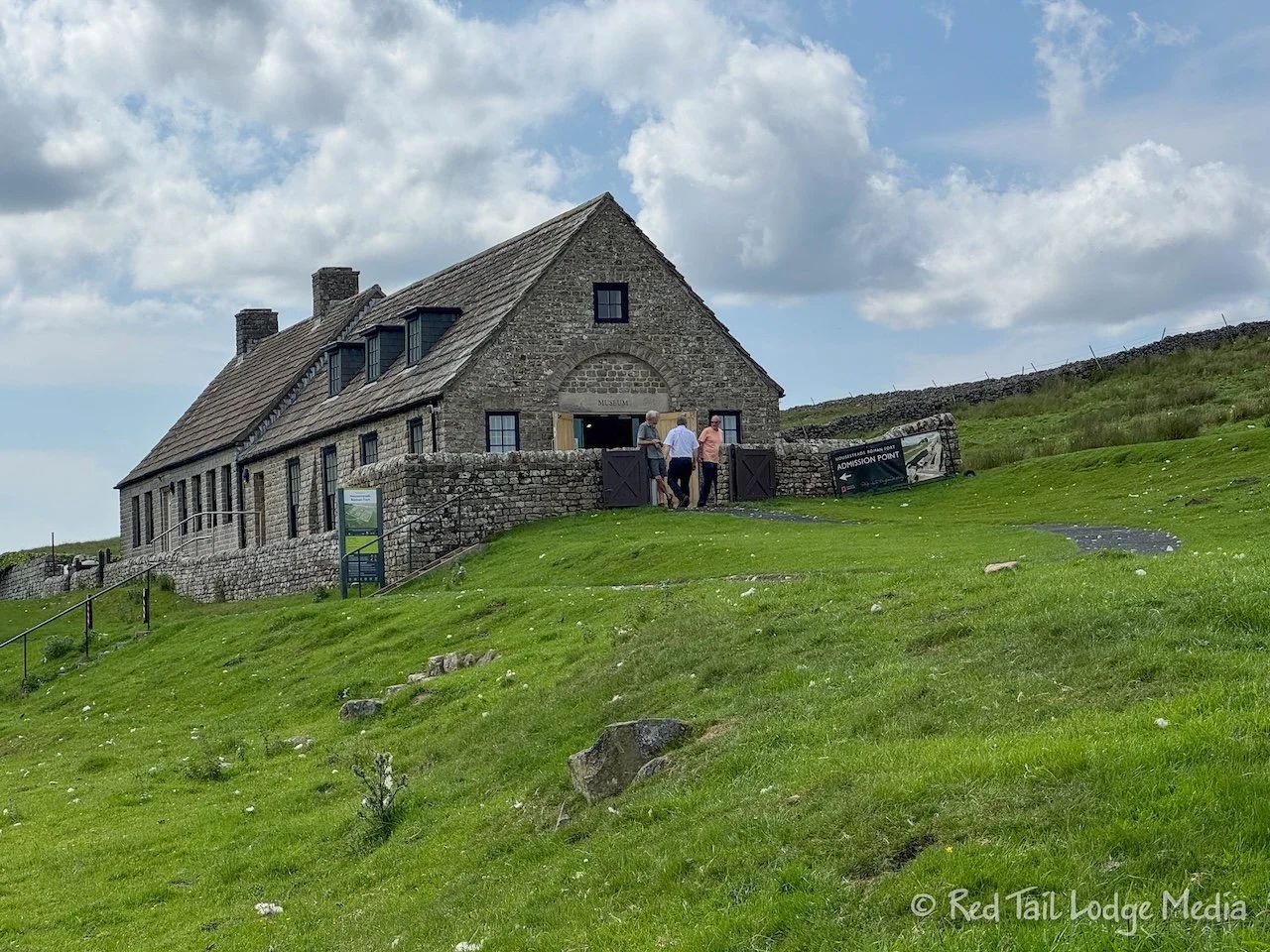
Then we drove over to Housesteads Roman Fort. Housesteads is a fort on Hadrian’s Wall, while the others were a couple of miles from the wall. The site is maintained jointly by the National Trust and English Heritage. However, our National Trust membership did not get us free parking, so we had to pay 5 GBP for three hours. Our membership did provide free admission to the fort ruins, but, since we already visited the Vindolanda Fort, we skipped the Housesteads fort. What we wanted to see were the remains of Hadrian’s Wall, which did not require an admission fee.
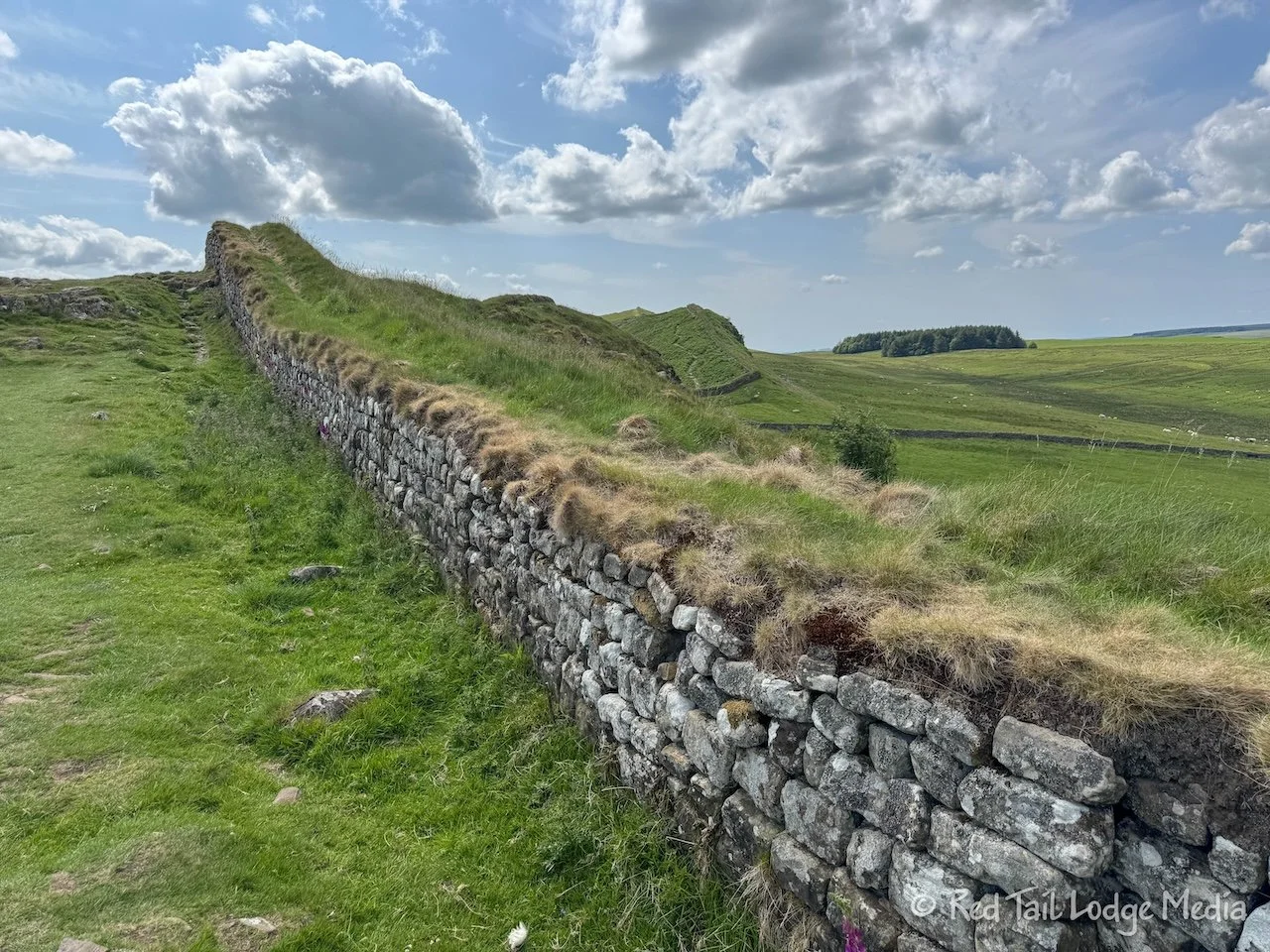
From the car park (parking lot), it was about half a mile walk up to the wall. Heading west, we walked a short distance on top of the wall, or what remained of it. Then walked along the south side of the wall. Not far from Housesteads are the remains of Milecastle #37 along the wall. We didn’t continue much further until we turned around, only covering about half a mile along the wall.
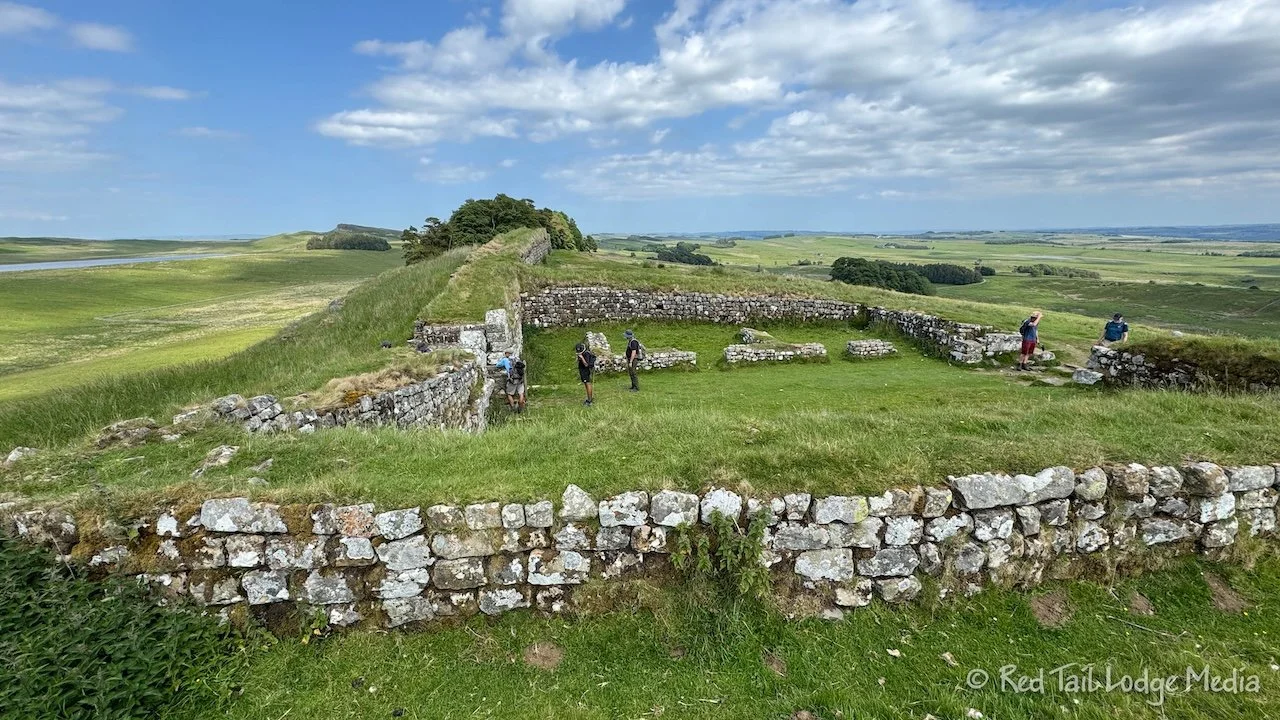
Since all we really wanted to see was the wall, we should have parked at the Steel Rigg Car Park and walked a mile to Sycamore Gap. Even though the iconic 150 year old Sycamore tree was chopped down in an act of vandalism back in 2023, Milecastle #39 is just before the gap.

When we returned to the Visitor Centre, we stopped in the café for much needed drinks and a restroom break. Then it was about an hour’s drive back to Durham, even though it was only 45 miles (71 kilometers). Driving in the UK is more stressful than driving in the States. To get back to Durham, it was a lot of turns and roundabouts with a section of a single track road thrown in. Since we never could get our phones hooked up to Apple Car Play, Ann had to keep Google Maps on her phone in her hand and help Keith navigate. Some of the roundabouts were tricky, in that there were more than four exits on them. Without a visual on the car screen, Ann had to let Keith know when to exit, as signage was sometimes hard to follow.
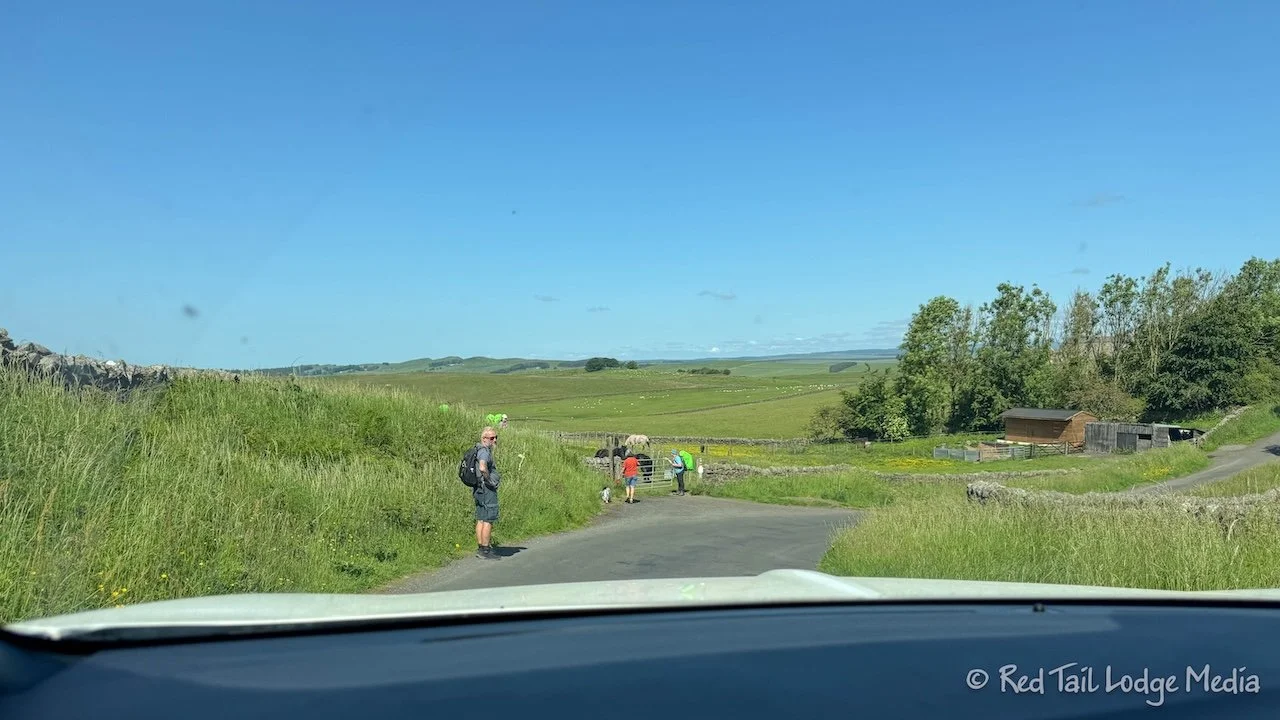
In addition to turning off the lane assist, which we found more dangerous than useful, we also turned off auto-stop. While waiting to enter a roundabout, Keith found waiting for the engine to turn back on was too much of a delay when trying to pull out into traffic, so we turned that off as well. At least that button was a simple push to deactivate, instead of the push, then push and hold, to deactivate lane-assist. Of course, both of those reactivate every time you turn the car off. We were returning the rental car the following day and we were ready to not drive anymore this travel season.
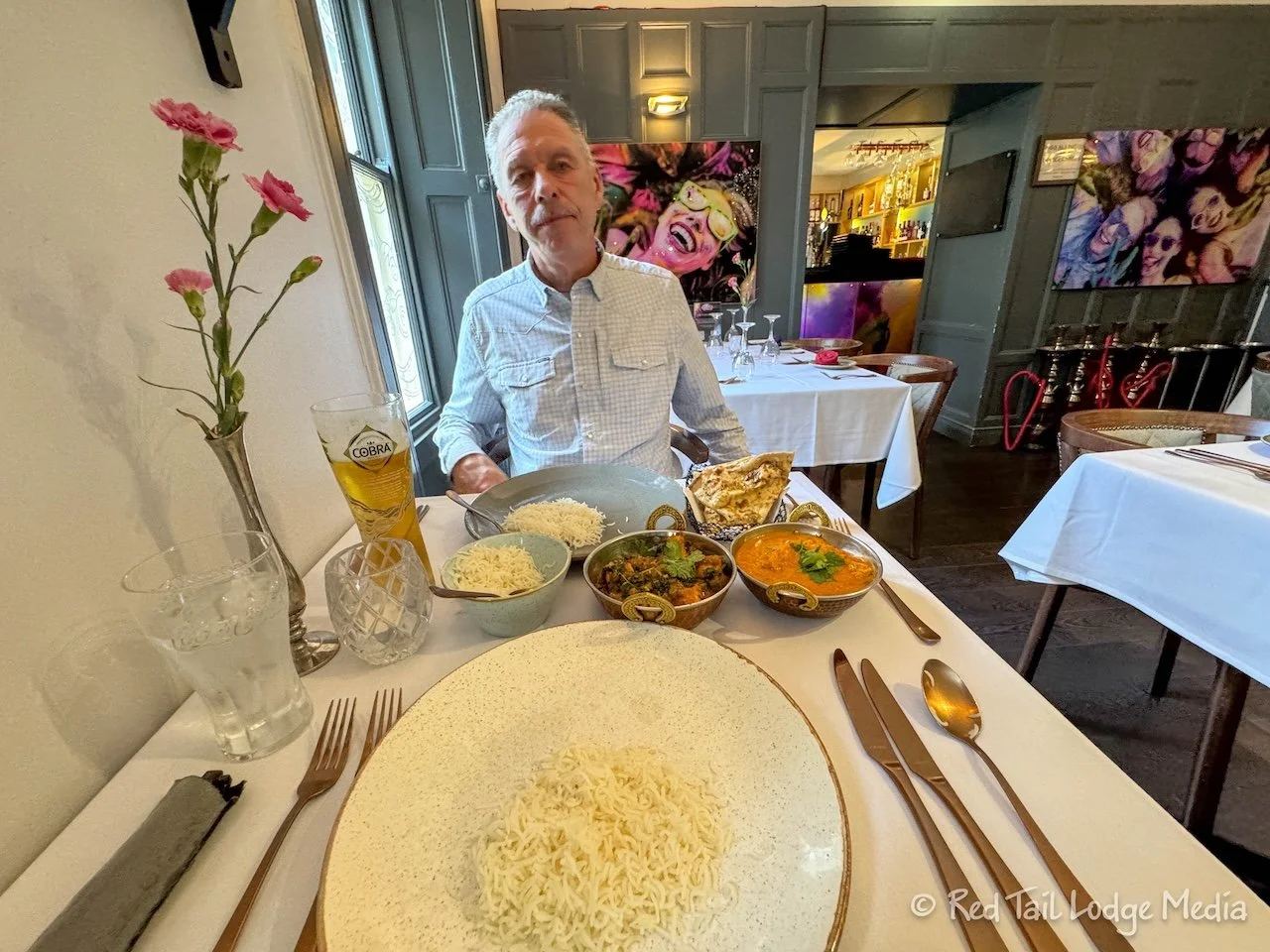
For dinner, we ate at the Holi and Bhang Indian Restaurant located right in Farnley Tower. That way, we didn’t have to walk downhill into town (or uphill to return). The restaurant was not busy, but the food was delicious. It was the best Indian food we’ve had so far this season. Ann ordered the Murgh Moille (chicken in a tomato, yogurt, and coconut sauce) while Keith had the Hariyali Murgh (chicken with spinach). We also ordered a side of garlic naan. This time we could really taste the garlic. Ann loved it, but Keith, who is not a big fan of garlic, did not care for it.
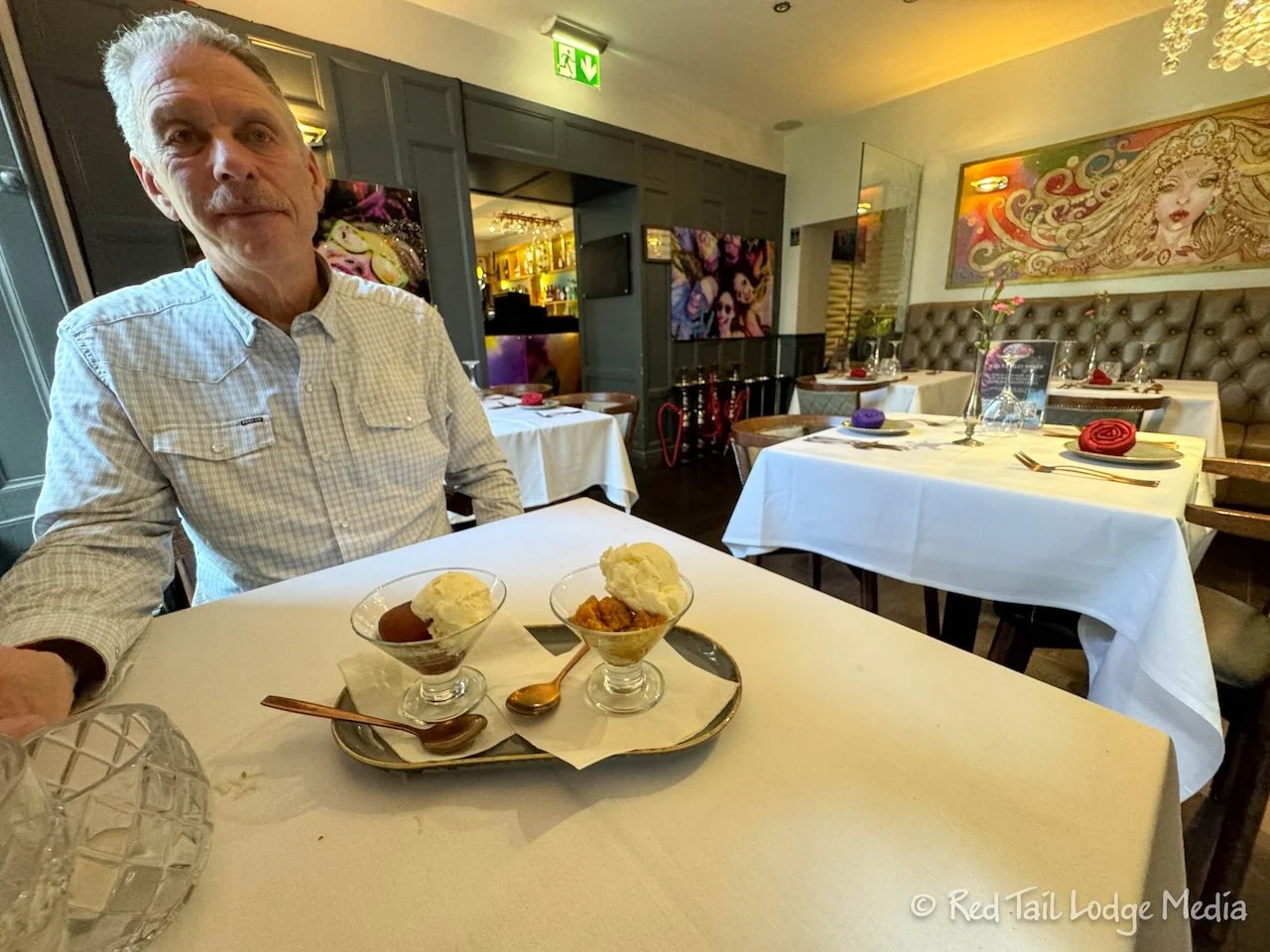
For dessert, Ann ordered the Gajarella while Keith ate the Gulab Jamun. Keith’s had Gulab Jamun before. It’s a traditional Indian doughnut soaked in saffron syrup. It was served hot with a scoop of vanilla ice cream. The Gajarella was a nice dessert of carrots, nuts, and cardamom, also served hot with ice cream. We were both very happy with our selections.
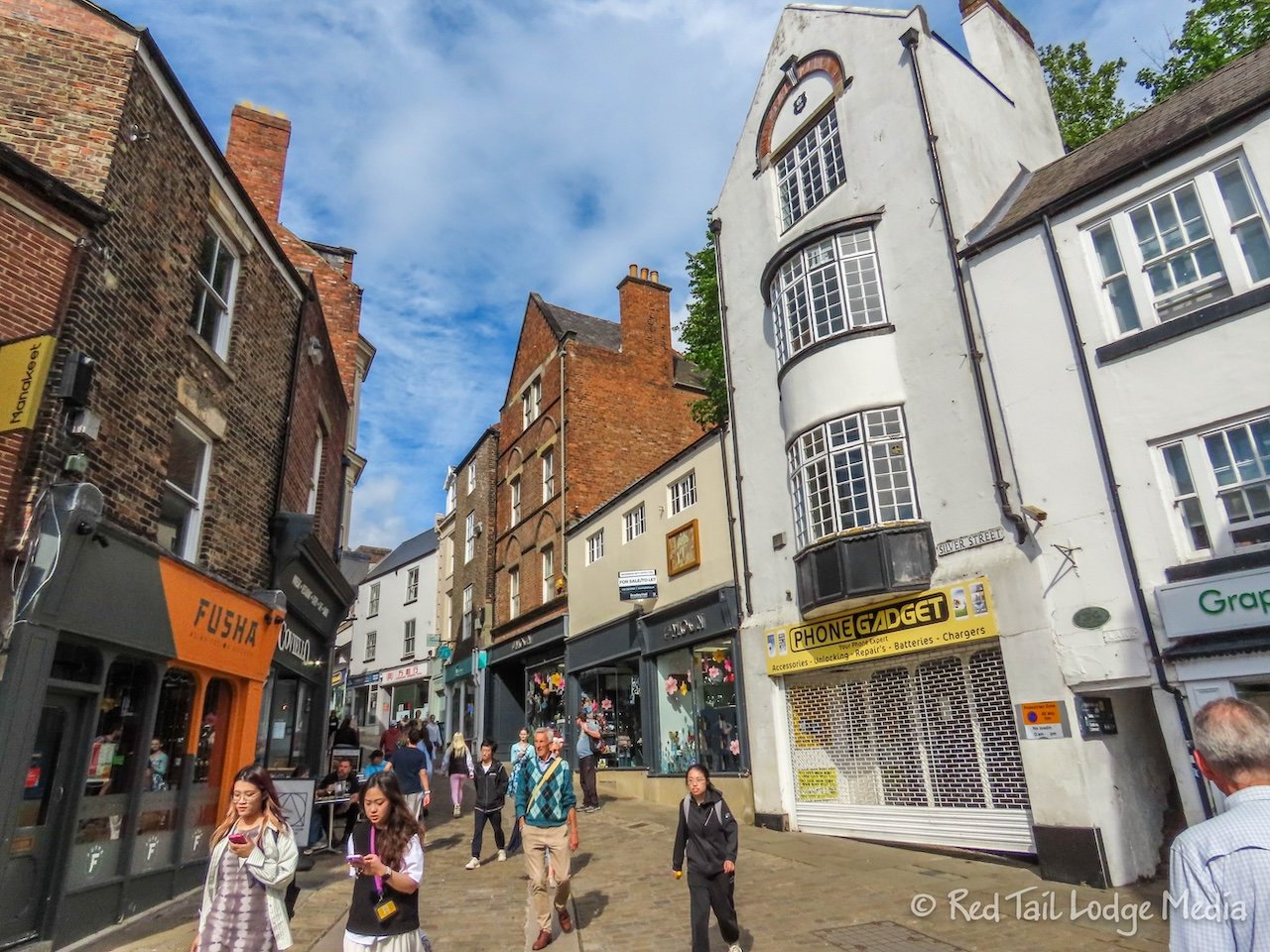
Durham provided everything we needed, from a lovely place to sleep, wonderful restaurants, and a cute town to stroll around. And the attractions we wanted to see were within driving distance of the town. It was a great way to end our last days with a rental car for the season. We were looking forward to seeing what the next stages of our trip had in store for us.
Check out our related video: Durham, England
(Ann)