
Packing for the Tour du Mont Blanc
The Tour du Mont Blanc (TMB) is a 165 kilometer (103 mile) hiking trail through France, Italy, and Switzerland. We planned to take 21 days to complete the TMB, staying in mountain huts and hotels along the route. It was part of our almost seven month trip to Europe. We already made a post about all of the gear that we carried with us to Europe (Packing for Europe). This post covers exactly what we carried on our backs and what we stored in Chamonix while we were on the TMB. Hopefully it will give you ideas about what you want to pack or not pack for hiking the TMB or any other long distance trail.
4. Backpack Top Pouch - Ziplock Bag 1
5. Backpack Top Pouch - Ziplock Bag 2
6. Backpack Top Pouch - Food for the day
8. Backpack Top Underside Pouch
9. Backpack Main Compartment - Medium Blue Compression Cube
10. Backpack Main Compartment - Toiletry Kit
11. Backpack Main Compartment - Medium Green Compression Cube
12. Backpack Main Compartment - Small Orange Compression Cube
13. Backpack Main Compartment - Small Black Compression Cube
14. Backpack Main Compartment - Laptop Bag
16. Backpack Bottom Compartment
17. Backpack Rain Cover Compartment
18. Backpack Front Pouch - Other
20. Sojourn Luggage - Medium Orange Compression Cube
21. Sojourn Luggage - Medium Gray Non-compression Cube
1. Our backpacks
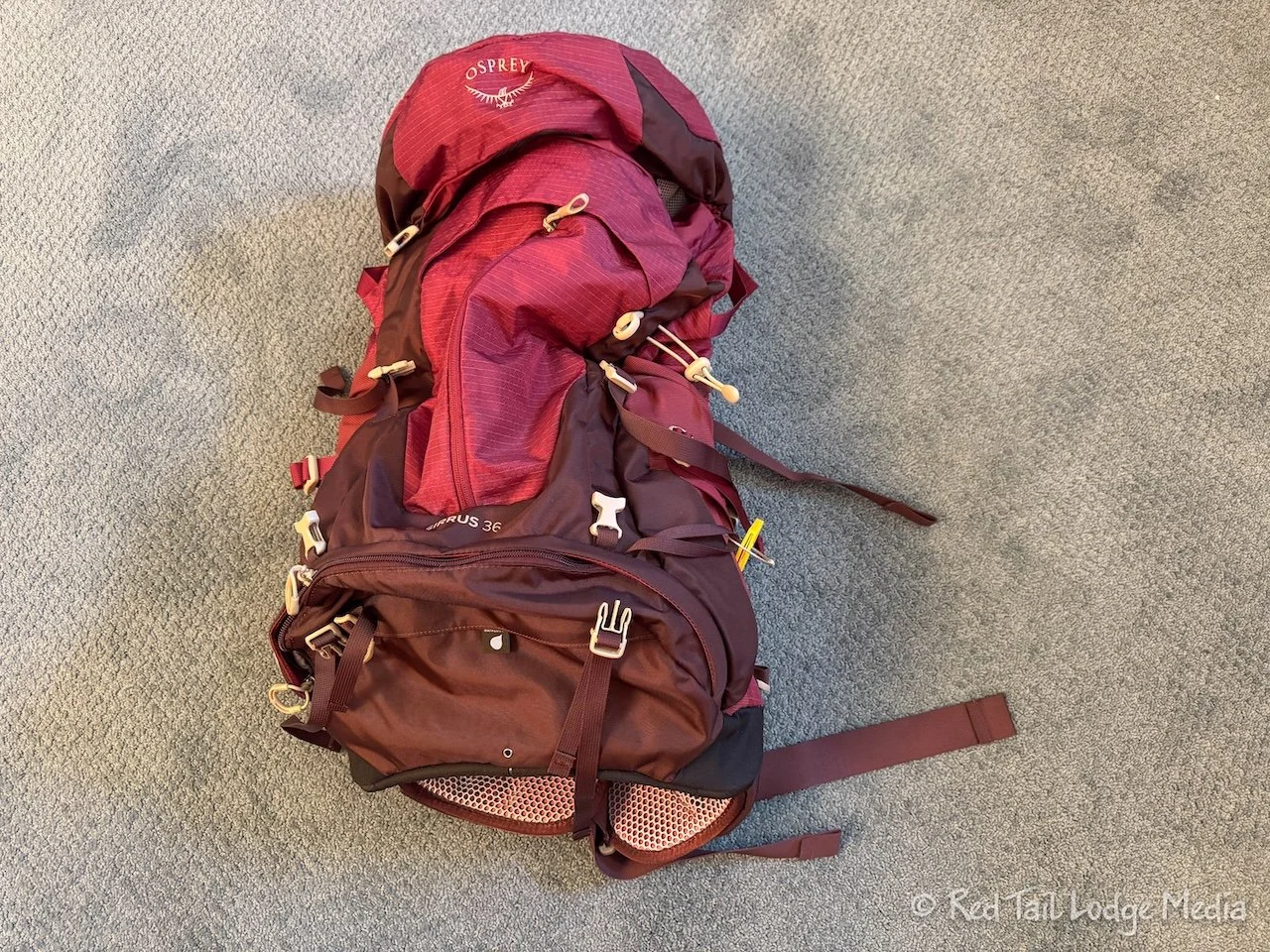
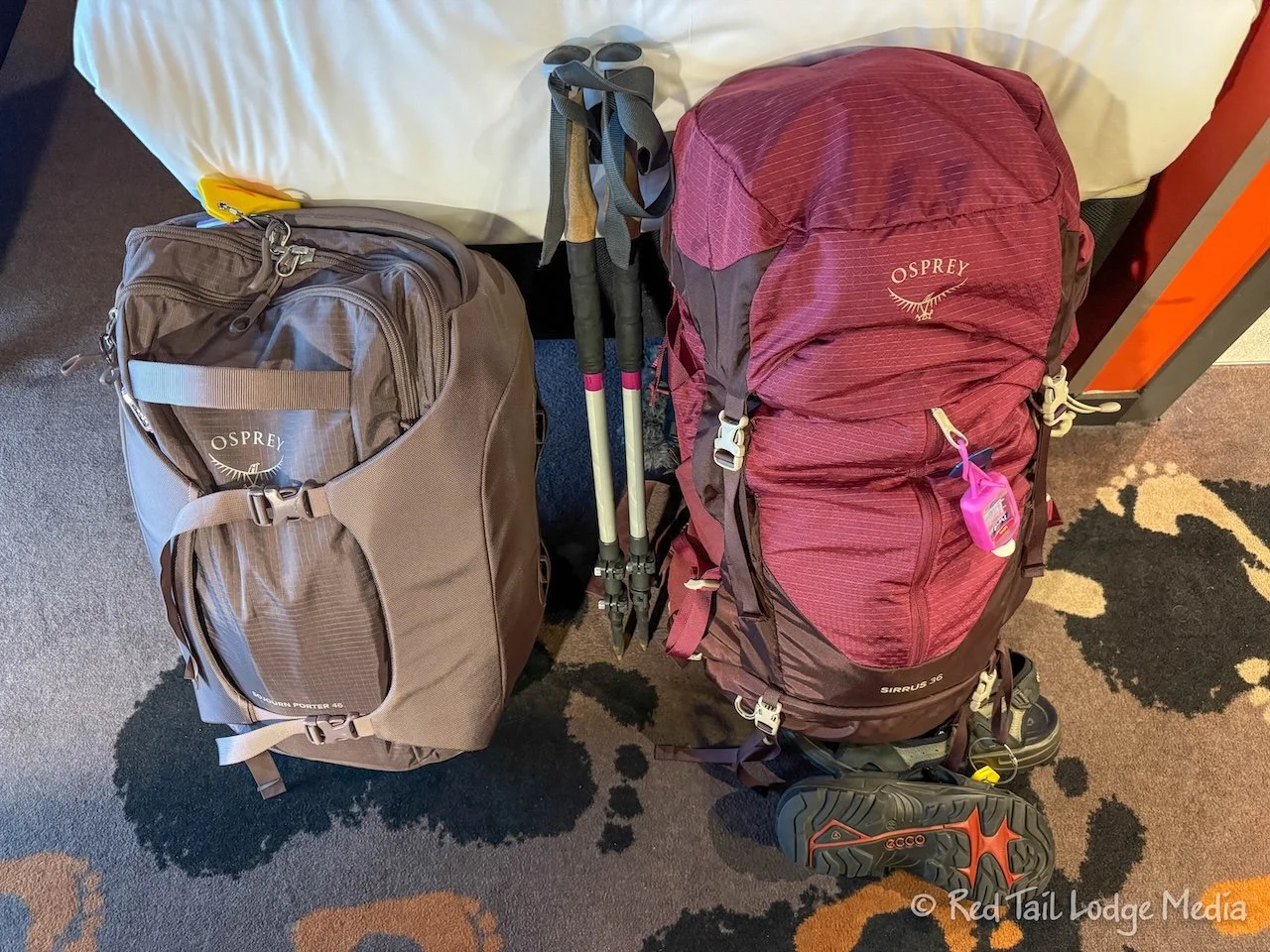
Ann carried her Osprey Sirrus 36 liter backpack (paid link) on trail. Keith used his old Osprey Stratos 36 liter backpack, which is very similar to the Osprey Sirrus. We used our Osprey Sojourn Porter 46 liter luggage bags to store the items we were not taking on trail with us.
2. What we wore while hiking
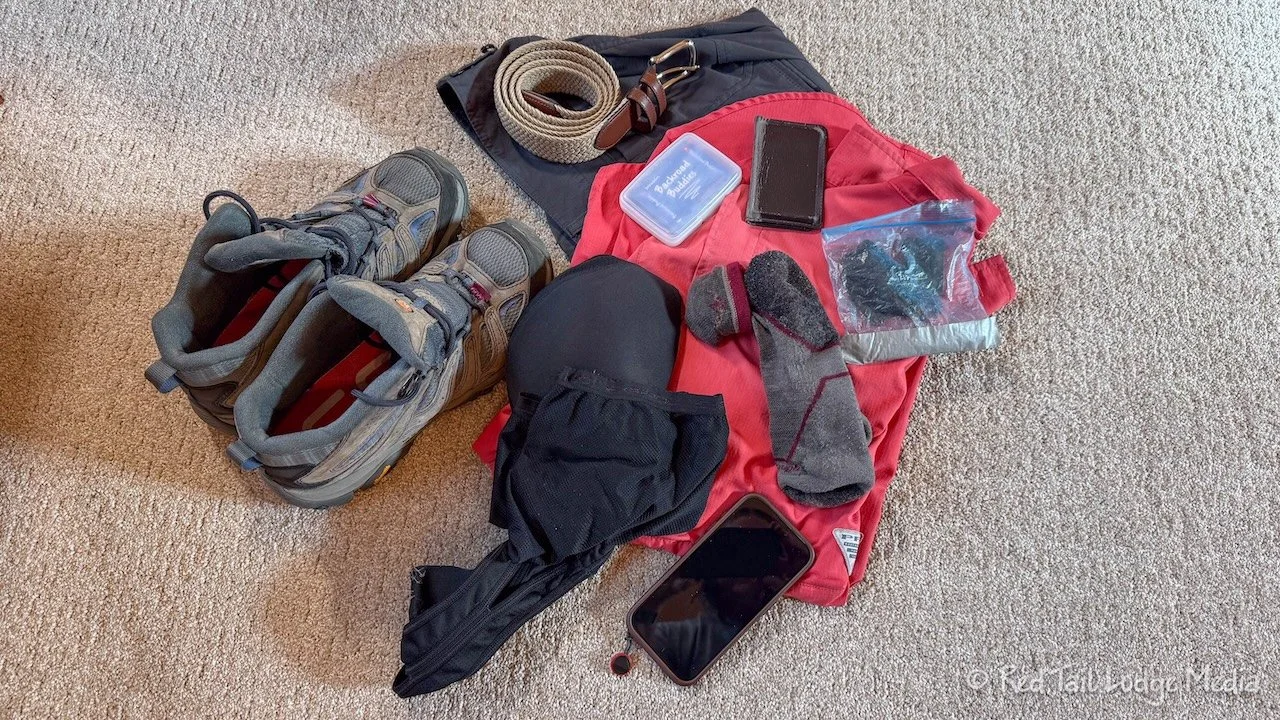
Of course, what we were wearing did not need to be packed into our backpacks. Ann wore her hiking pants with a belt, hiking shirt, hiking socks, underwear, and sports bra in addition to her hiking boots, sunglasses, and a bandana around her neck. Keith wore a merino wool t-shirt under his hiking shirt and his Altra trail runners instead of his hiking boots. He had already sent his hiking boots home with our daughter back when she spent time in London with us a few weeks prior to the TMB. Ann kept her wallet in one of zippered pants pockets along with her Backroad Buddies stickers. Her wallet contained her driver’s license, some cash, a credit card, and an ATM card. In another zippered pocket, she stored her phone. In an open pocket was a ziplock bag containing a lens cloth (for her camera and sunglasses), spare camera battery, and a dongle for attaching her camera to a wrist strap. We also were usually wearing a hat, sunglasses, and our hiking sun gloves. We each had a pair of trekking poles that we used every day and only rarely had strapped to our packs.
3. Attached to our backpacks
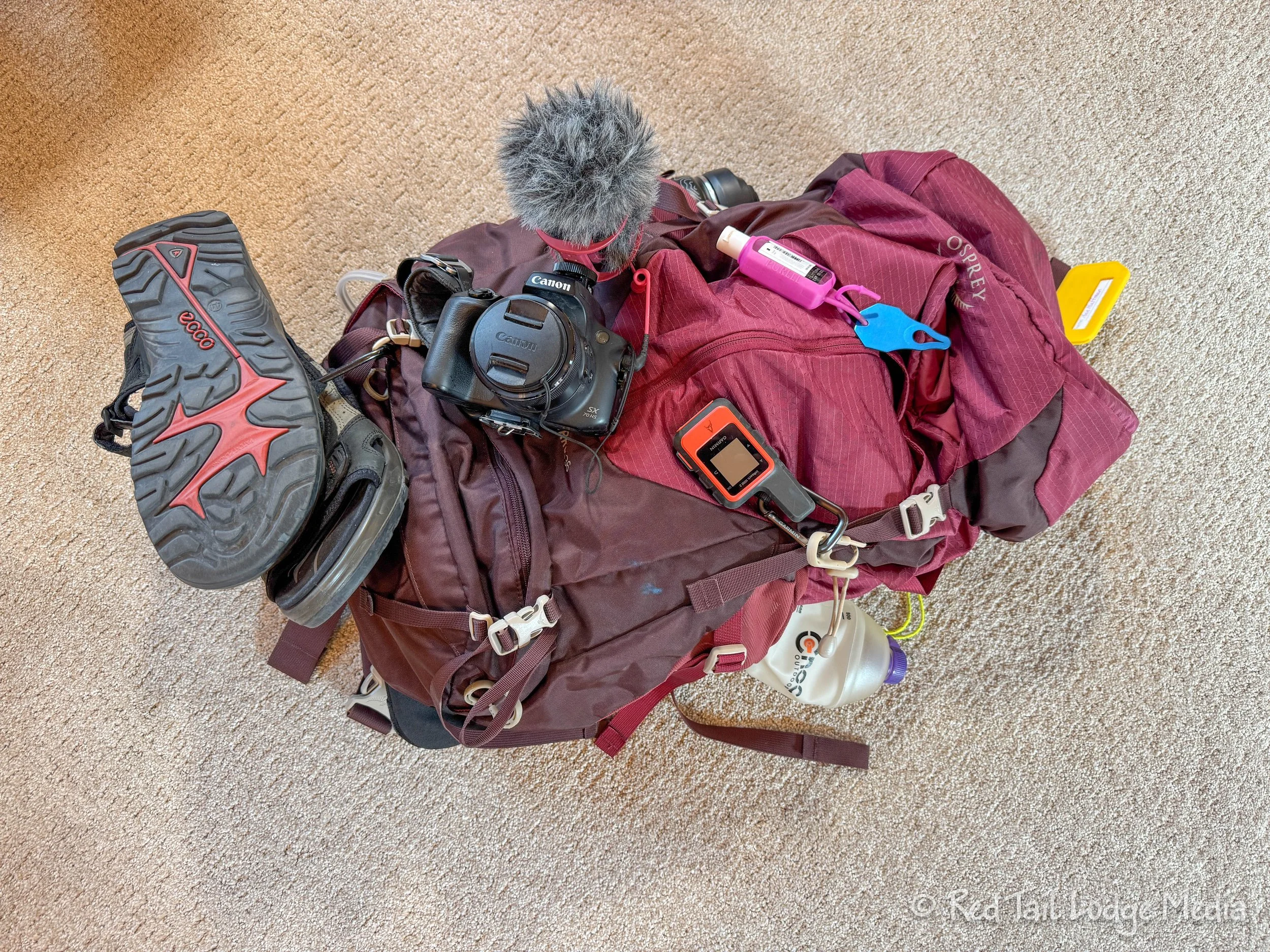
Attached to Ann’s backpack were a few items. These included Ann’s Garmin InReach device (paid link), the Peak Design clip for attaching her Powershot camera, a small container of hand sanitizer, a tick remover (paid link), and her Teva sandals along with a brightly colored luggage tag. Of course, Ann’s Canon Powershot SX70 HS Camera (paid link) was attached to the Peak Design clip, unless it was in her hand, taking pictures of the gorgeous scenery around us. Ann kept her water bottle in one side pouch and a collapsible water bottle (Cnoc) in the other. Keith decided he didn’t like the Cnoc collapsible bottle, so he just bought a plastic bottle of water that he reused for the whole TMB. The Cnoc bottle was hard to drink out of, but Ann just used it to refill her other water bottle. She wanted a collapsible one in case she needed to use it to filter water through her Sawyer squeeze. The Teva sandals were for wearing at our lodging in the evening, since most places don’t allow hiking boots to be worn inside. Some places provide crocs that you can borrow while you are there. Keith carried his own Garmin InReach, hand sanitizer, and tick remover, but did not carry any camera gear except for his iPhone. Instead of Teva sandals, he carried a light weight pair of water shoes. Despite the added weight, Ann prefers her Tevas for more arch support since she’s had issues with planter fasciitus in the past.
4. Backpack Top Pouch - Ziplock Bag 1
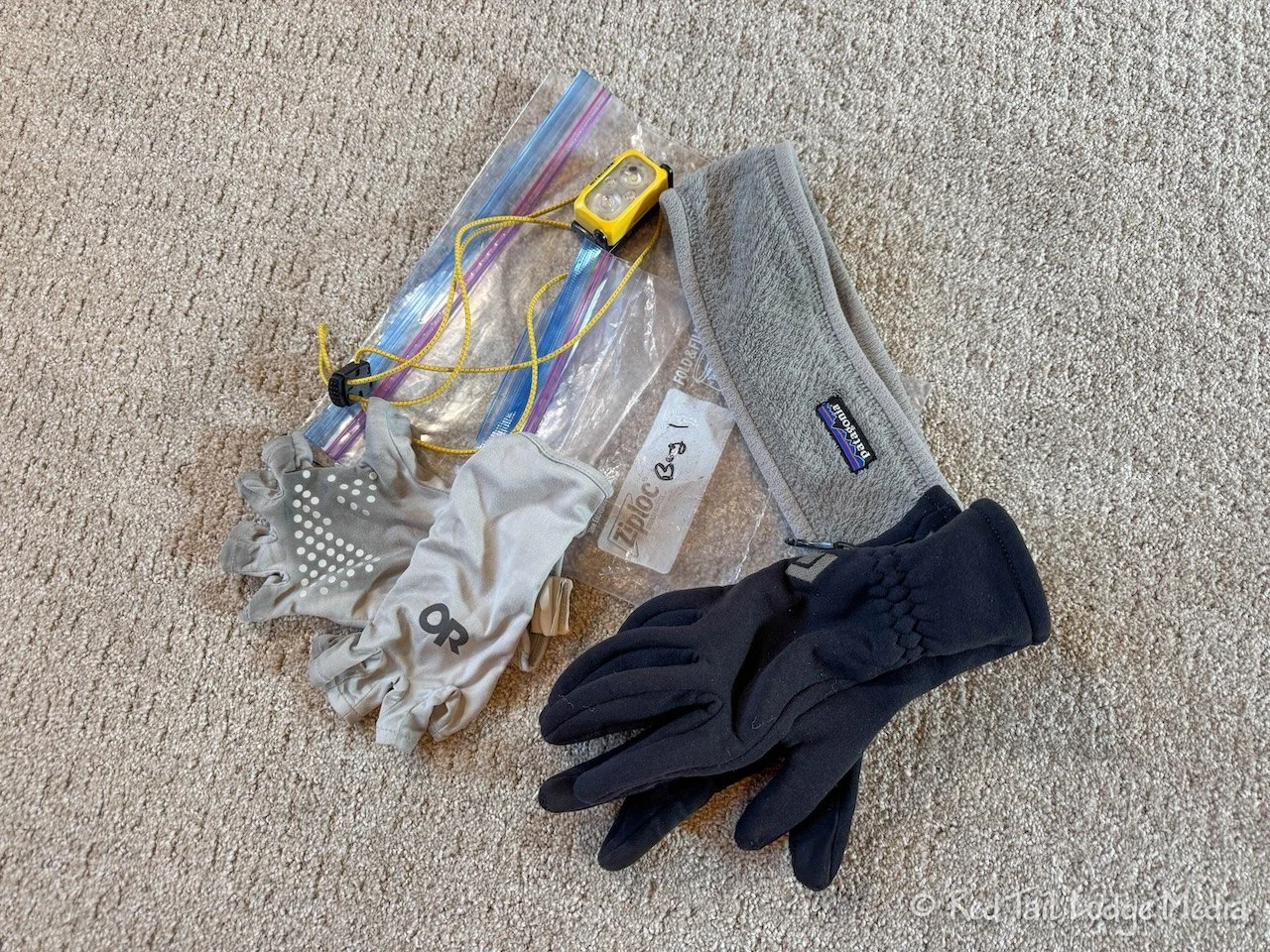
In the ziplock that Ann labeled Bag 1, she had warm gloves, sun gloves, a warm headband, a ziplock bag to protect her Powershot camera, and a rechargeable headlamp (paid link). The ziplock bag kept these items dry. Ann was normally wearing her sun gloves.
5. Backpack Top Pouch - Ziplock Bag 2
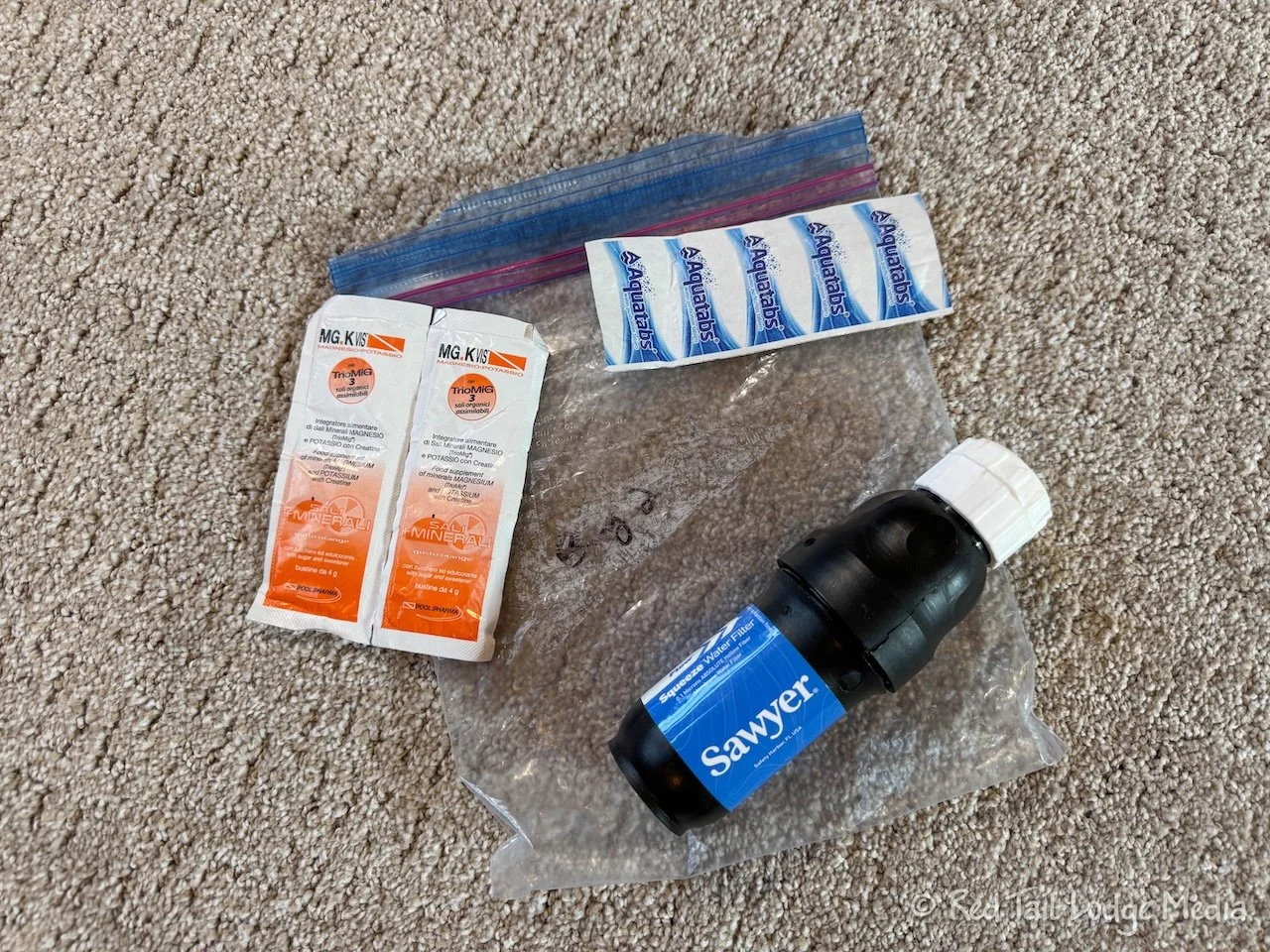
In ziplock Bag 2, was Ann’s hydration items. These included electrolyte tablets, water filter, and water purification tablets. The water filter fits onto the Cnoc collapsible bottle for filtering water. She can either drink it directly from the filter while it is on the bottle, or squeeze it into her main water bottle. The ziplock bag kept these items clean and dry.
6. Backpack Top Pouch - Food for the day
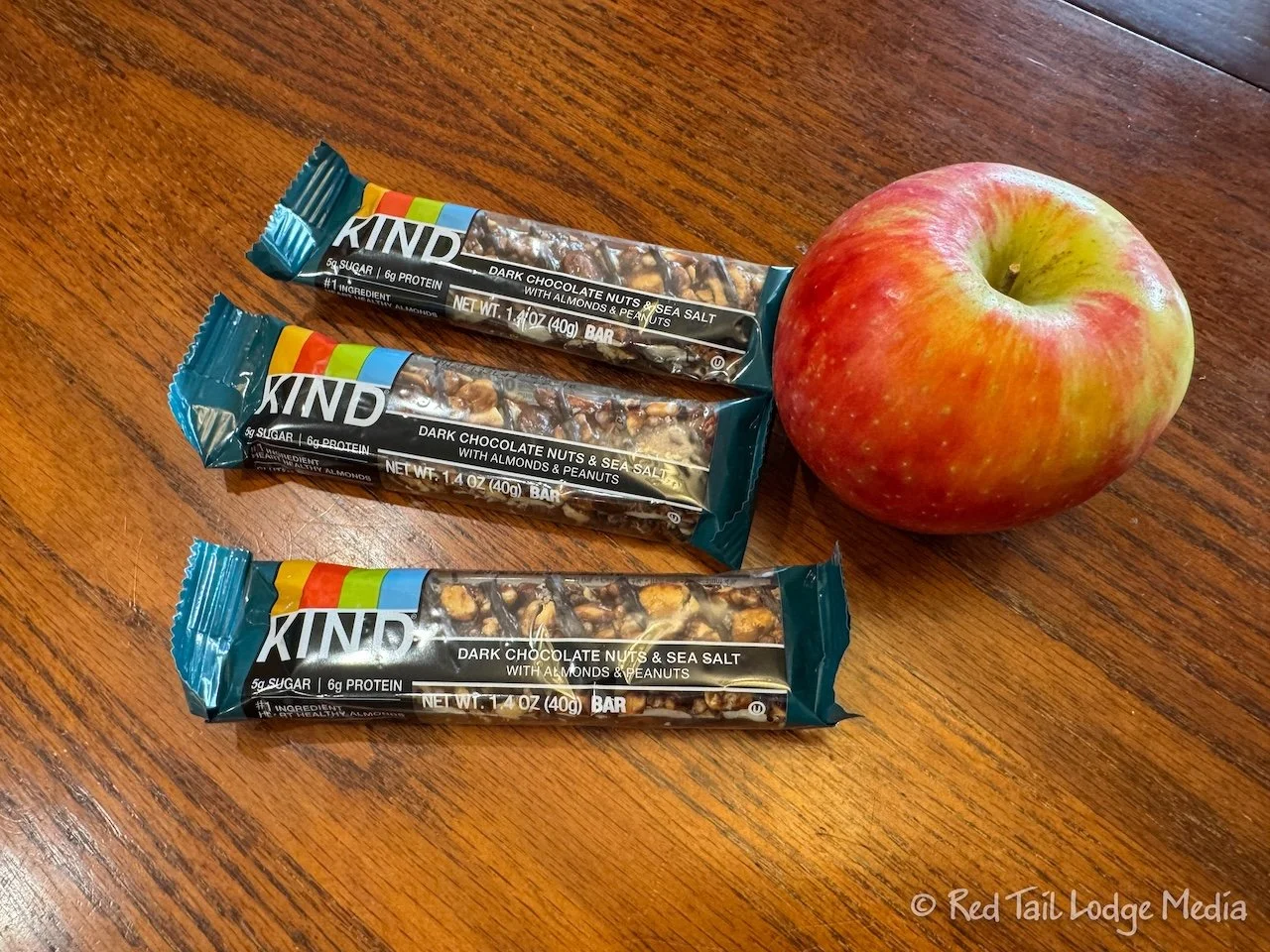
We normally had half-board at most of the places we stayed, so we only needed to carry food for lunch and snacks. There were usually plenty of places to buy food for the trail, including buying a sack lunch from our lodging place. Our food was usually something that would keep because we would sometimes stop at a restaurant or mountain hut for lunch, so we would then save our trail food for the following day. Typical items that we carried with us were granola or energy bars, apples, Landjaeger (semi-dried sausage, similar to jerky), and nuts.
7. Backpack Top Pouch - Other
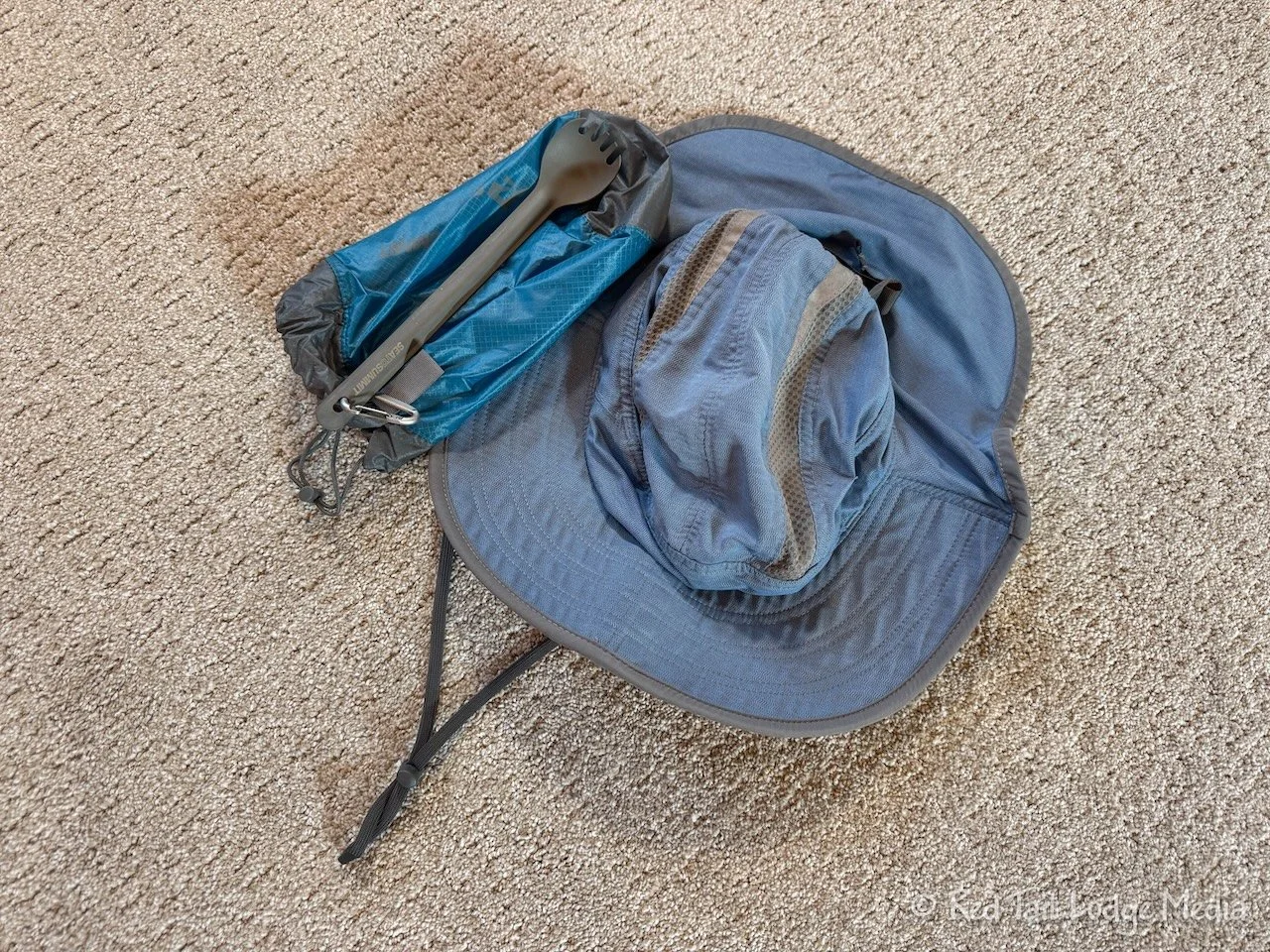
The other items in the top pouch were a backpacking spork (paid link) and a hat. The spork was in case we bought food, especially from a grocery store, that needed a utensil in order to eat it. Ann normally wore the hat.
8. Backpack Top Underside Pouch
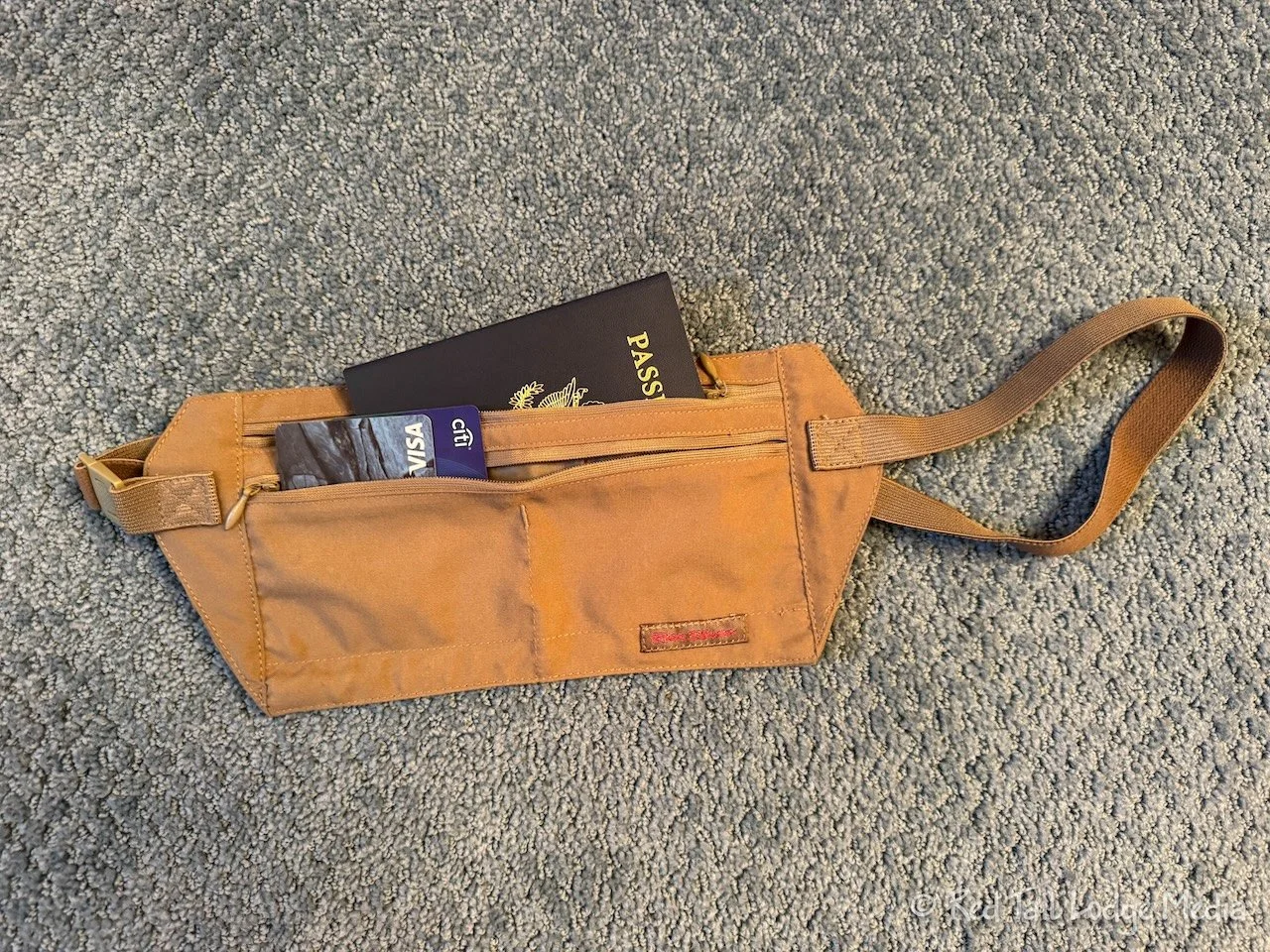
On the underside of the top pouch is a little zippered compartment. Ann used it to store her money belt. Inside the money belt was her passport, spare cash, a spare credit card, and a spare ATM card. The money belt was inside a ziplock bag to keep it dry.
9. Backpack Main Compartment - Medium Blue Compression Cube
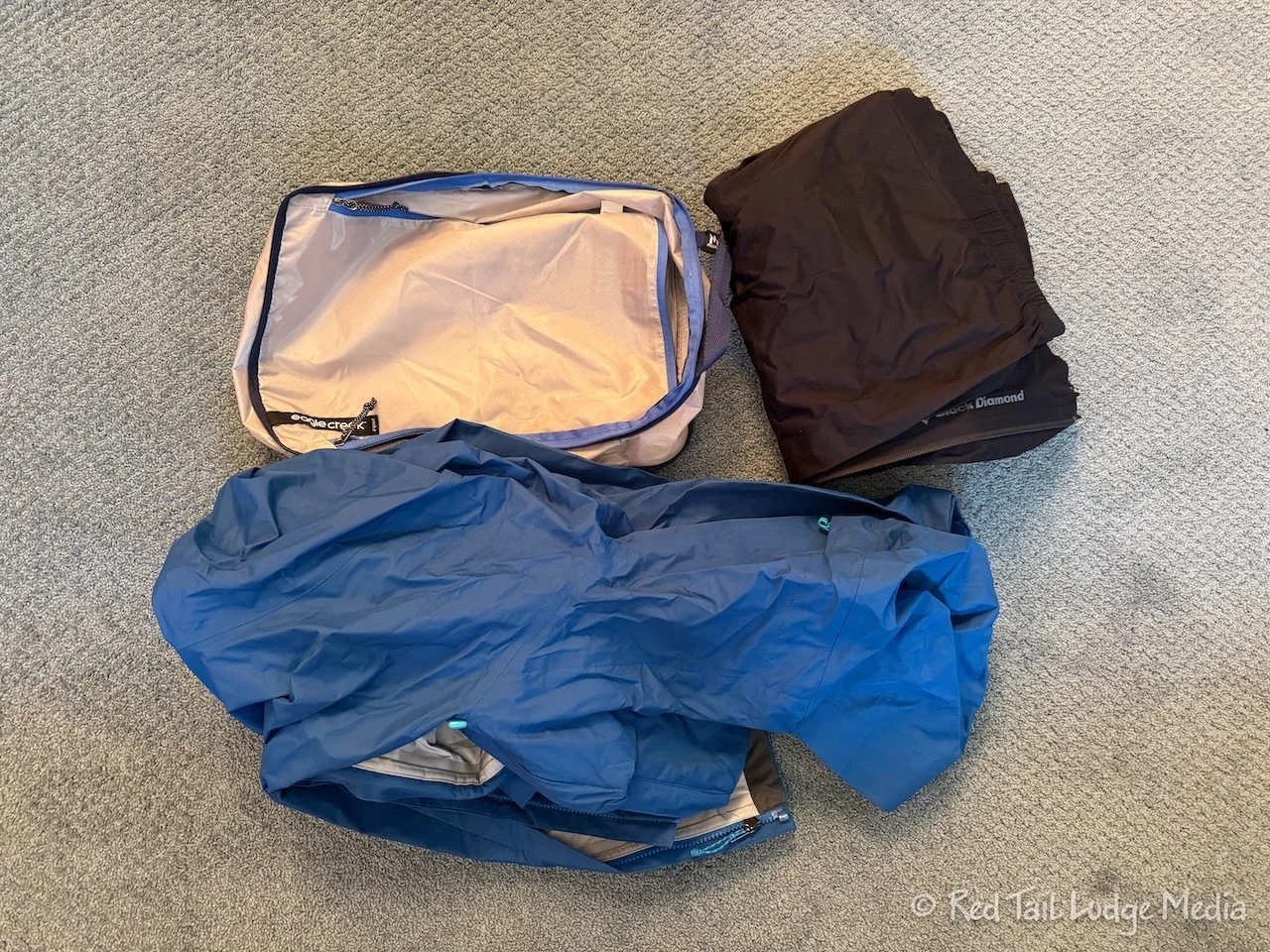
Inside the medium blue compression cube is Ann’s rain gear, both a high quality rain jacket and pants. Ann bought the Patagonia Torrentshell 3L rain jacket and Black Diamond Stormline Stretch rain pants. This was the only item in the main compartment that Ann did not keep inside the trash compactor bag, since the rain gear didn’t need to be protected from moisture. Everything else went inside the large bag to stay dry (instead of using a backpack rain cover).
10. Backpack Main Compartment - Toiletry Kit
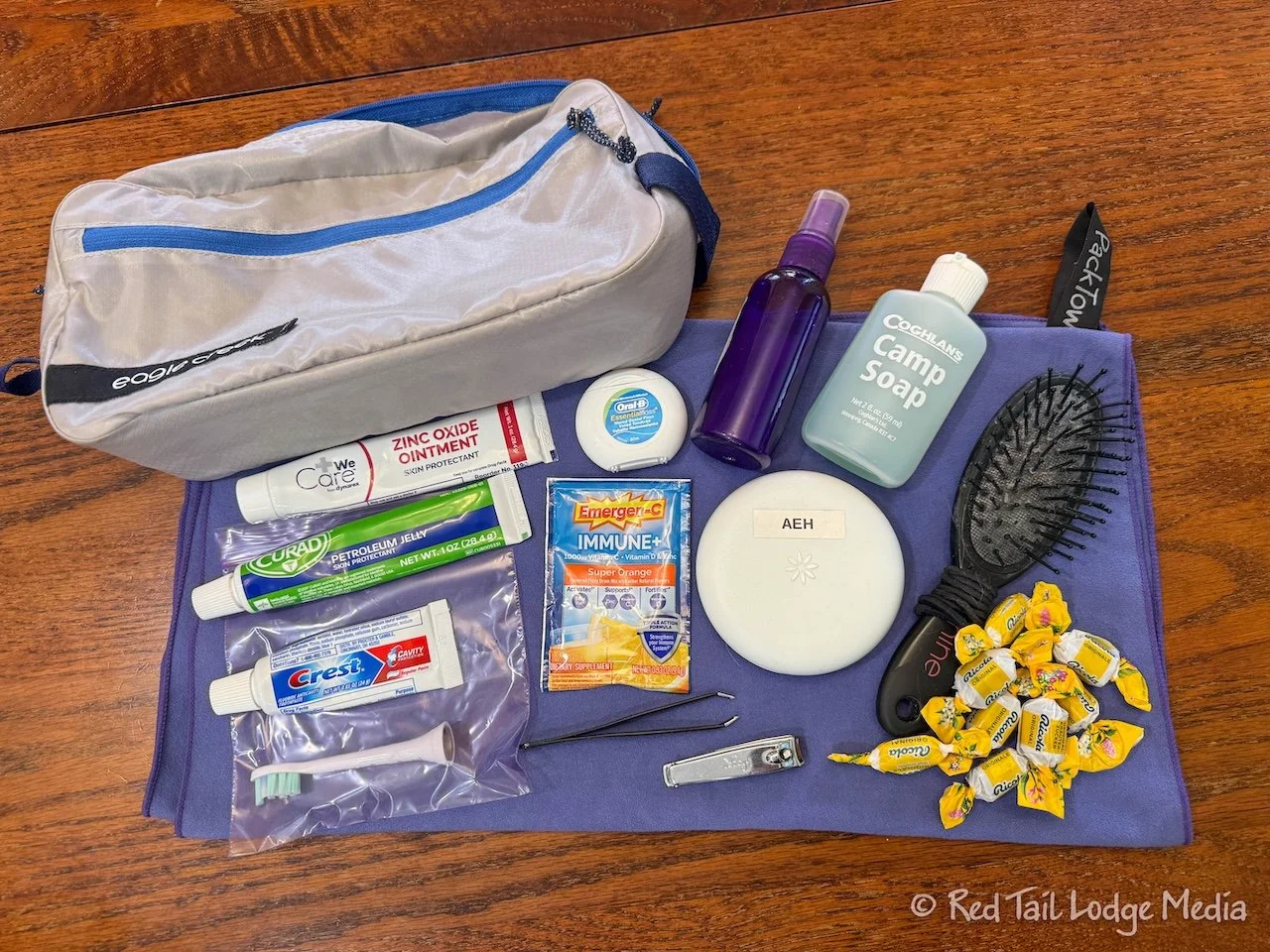
Ann’s toiletry kit included a 2 oz bottle of Campsuds, dental floss, a spray bottle of rubbing alcohol, a small ziplock bag containing the head of her small electric toothbrush, a hair brush, hair bands, retainers and case, a small tube of toothpaste, tweezers, nail clippers, a 1 oz tube of petroleum jelly, a 1 oz tube of zinc oxide, and a camp towel. Since Ann was recovering from a cold, she also added some immune boost tablets along with some Ricola cough drops. The Campsuds were for hand washing clothes, washing her body, and washing her spork utensil. The rubbing alcohol is what Ann used for deodorant, cleaning her laptop screen, cleaning glasses, and could be used to disinfect wounds. The petroleum jelly was for preventing chaffing and the zinc oxide is for quickly healing any chaffing that might occur. After having some bad chaffing on the Appalachian Trail (Day Three on the Appalachian Trail - July 31, 2019), Ann doesn’t travel without these two items. To save a little weight, Ann only brought the head to her electric toothbrush and used it as a small regular toothbrush. The camp towel was needed since many of the places we stayed did not provide towels.
11. Backpack Main Compartment - Medium Green Compression Cube
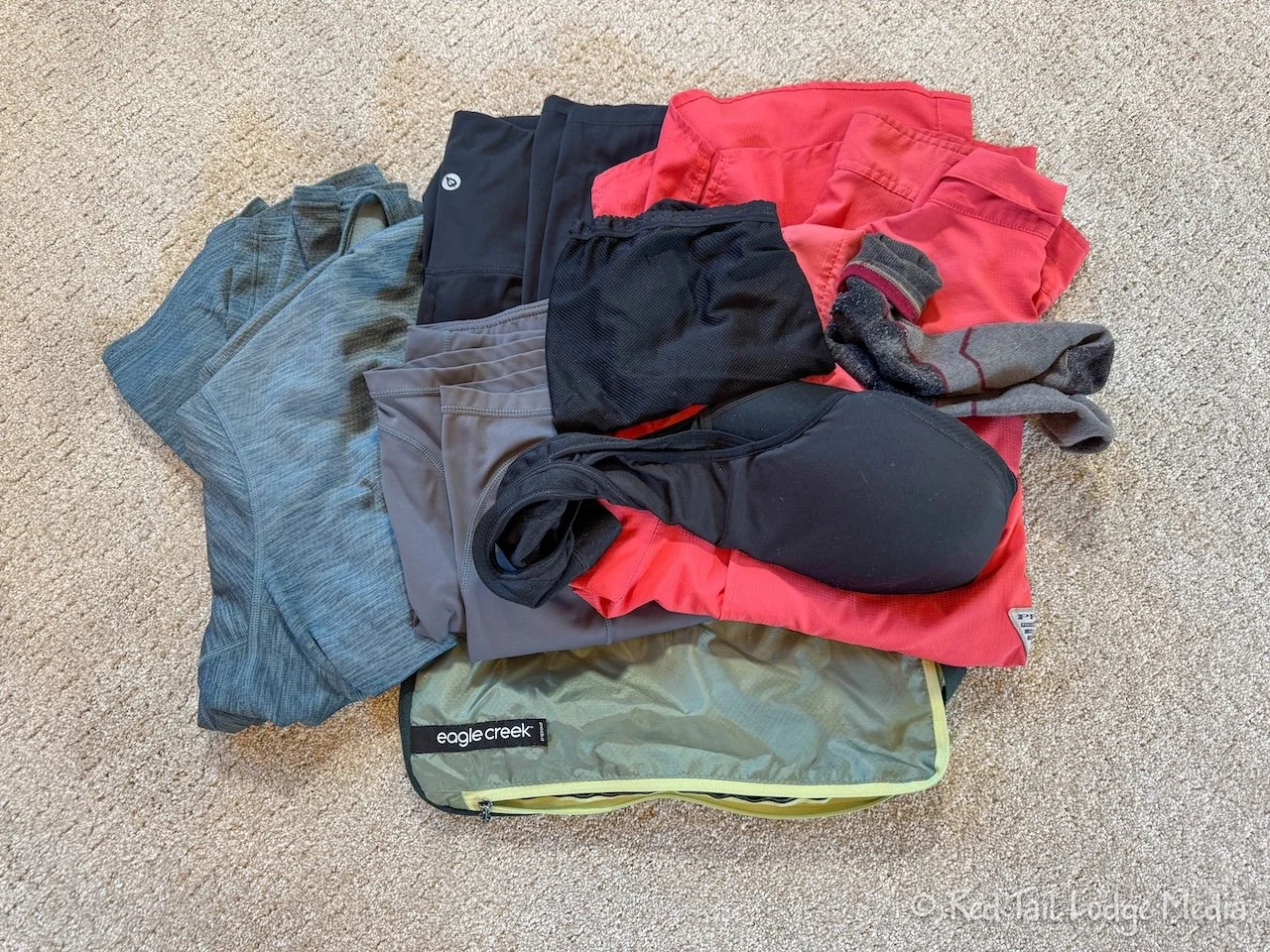
The medium green compression cube contained Ann’s spare set of clothes. These included a hiking shirt, a sports bra, one pair of underwear, one pair of hiking socks, a pair of leggings, a warm top layer, and a pair of spandex shorts. She hand washed her hiking shirt, bra, underwear, and socks almost every evening, changing into her clean set of clothing which she wore hiking the following day. The leggings were used as a warm layer under her hiking pants, or just something to lounge in at the end of the day to allow her one pair of hiking pants to air out or dry, if it needed washing. The spandex shorts were used under her hiking pants when hot spots started, to prevent further chaffing.
12. Backpack Main Compartment - Small Orange Compression Cube
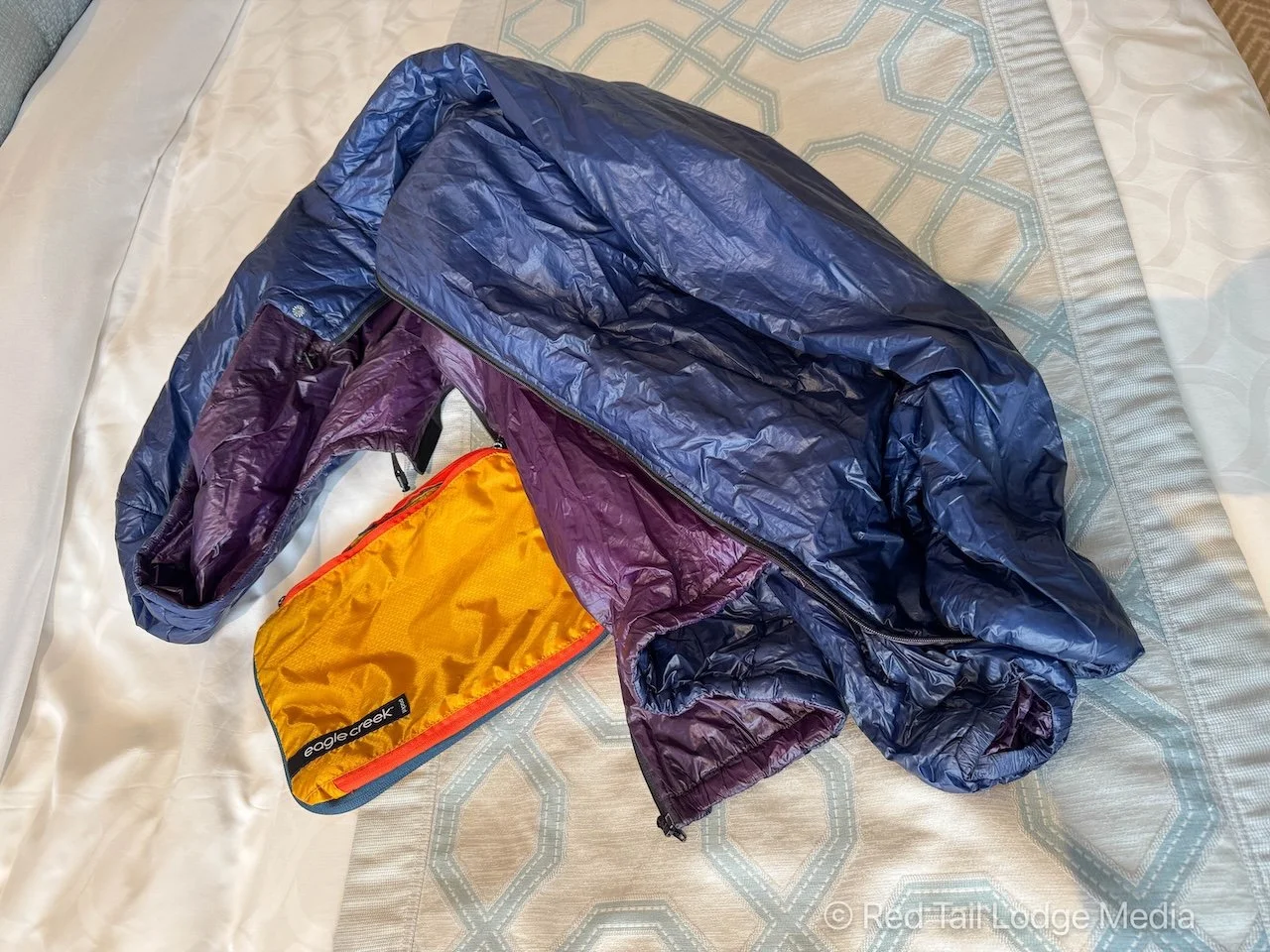
The small orange compression cube held Ann’s puffy coat. It’s amazing how small the coat compresses down. However, she usually tried to take it out every day or two since it is not good to keep the jacket compressed for long periods of time.
13. Backpack Main Compartment - Small Black Compression Cube
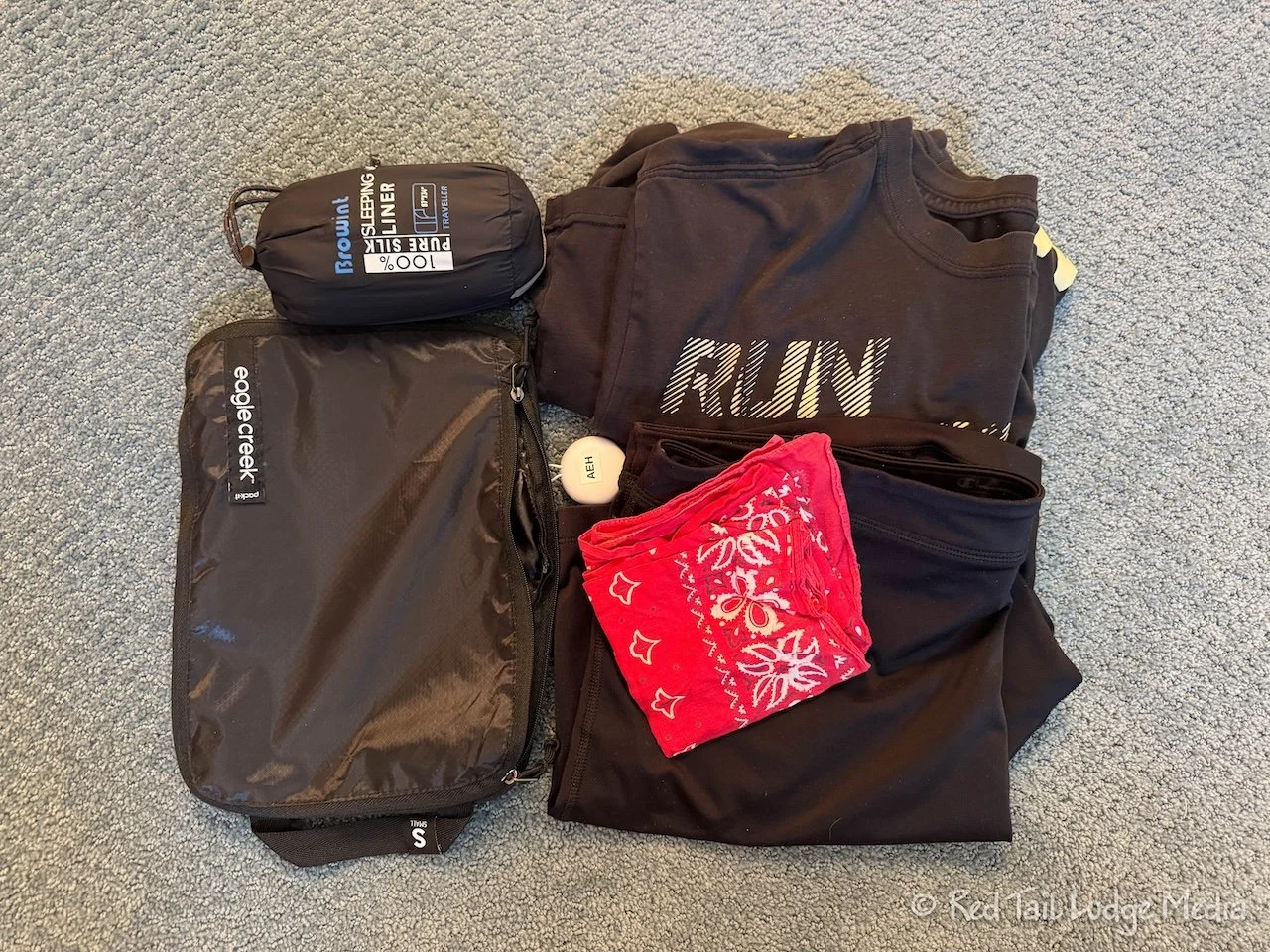
The small black compression cube contained the items needed at night. These were a t-shirt and spandex shorts to sleep in, earplugs (paid link), another bandana, and a sleeping bag liner (paid link). Even though Ann already had a pair of spandex shorts packed, she wanted to make sure she had a clean, dry pair to sleep in. We stayed in shared rooms for some of the mountain huts on the TMB, so the ear plugs were intended to be used in case other people were snoring. The bandana was for using as a wash cloth in the mountain huts. Although the mountain huts provide pillows and blankets, they require guests to bring their own sleeping bag liners. This helps prevent the spread of bed bugs, as the mountain huts don’t have the resources to wash all the sheets every day.
14. Backpack Main Compartment - Laptop Bag
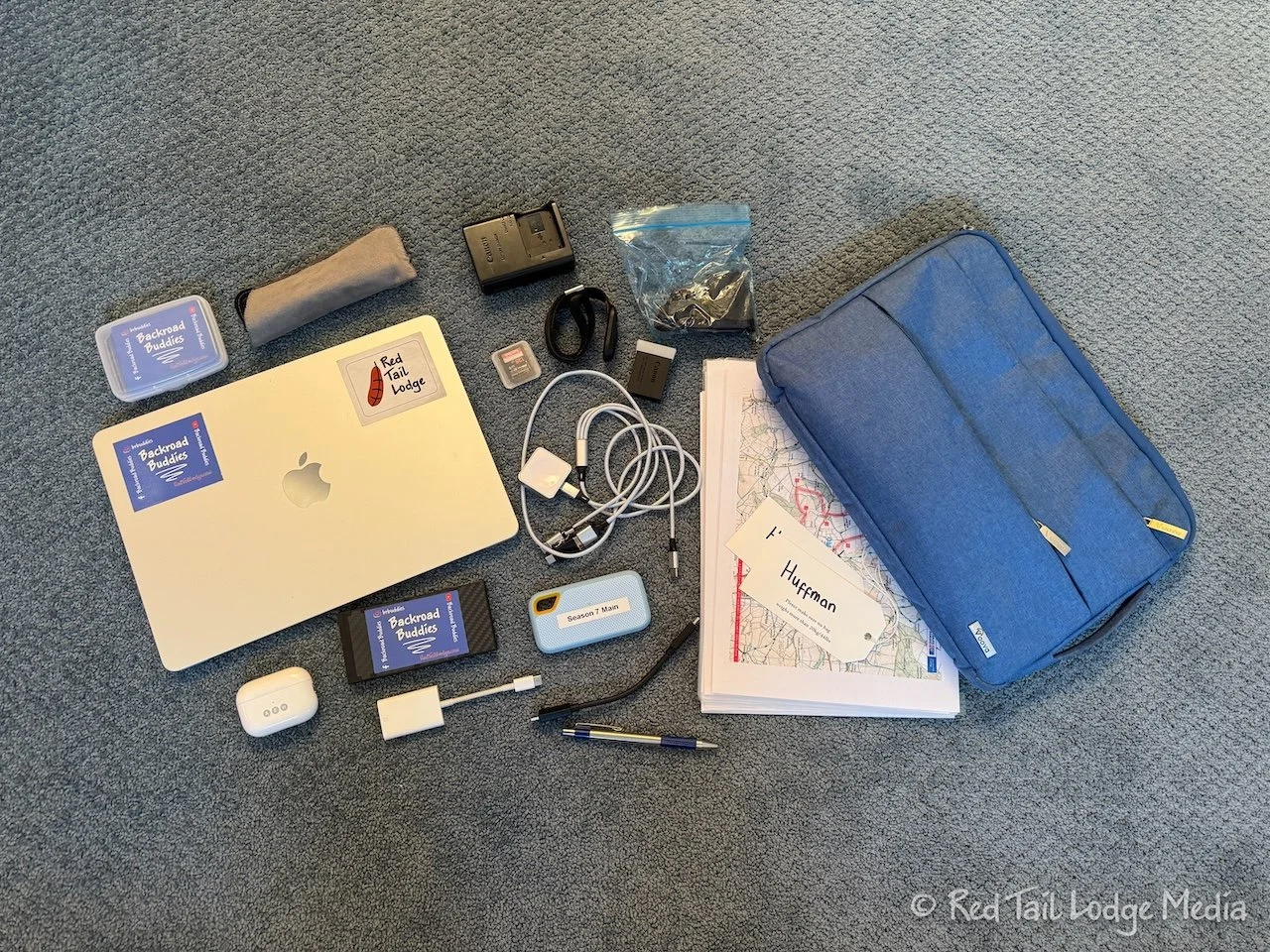
Ann’s laptop bag contained her electronics and paperwork. Besides her 13.6 inch MacBook Air, she had her Canon camera battery charger, a spare Canon camera battery, a spare SD card, an SD card reader, earbuds, SSD external drive (paid link), a portable charger (a Nitecore Energy Brick NB10000 - paid link), a pen, reading glasses, a single recharging cord with a three-way splitter (paid link), and a small watch charger (paid link). The charging cord is USB-C to USB-C with a USB adapter on the one end. The SSD drive is where Ann stored her photos and videos.
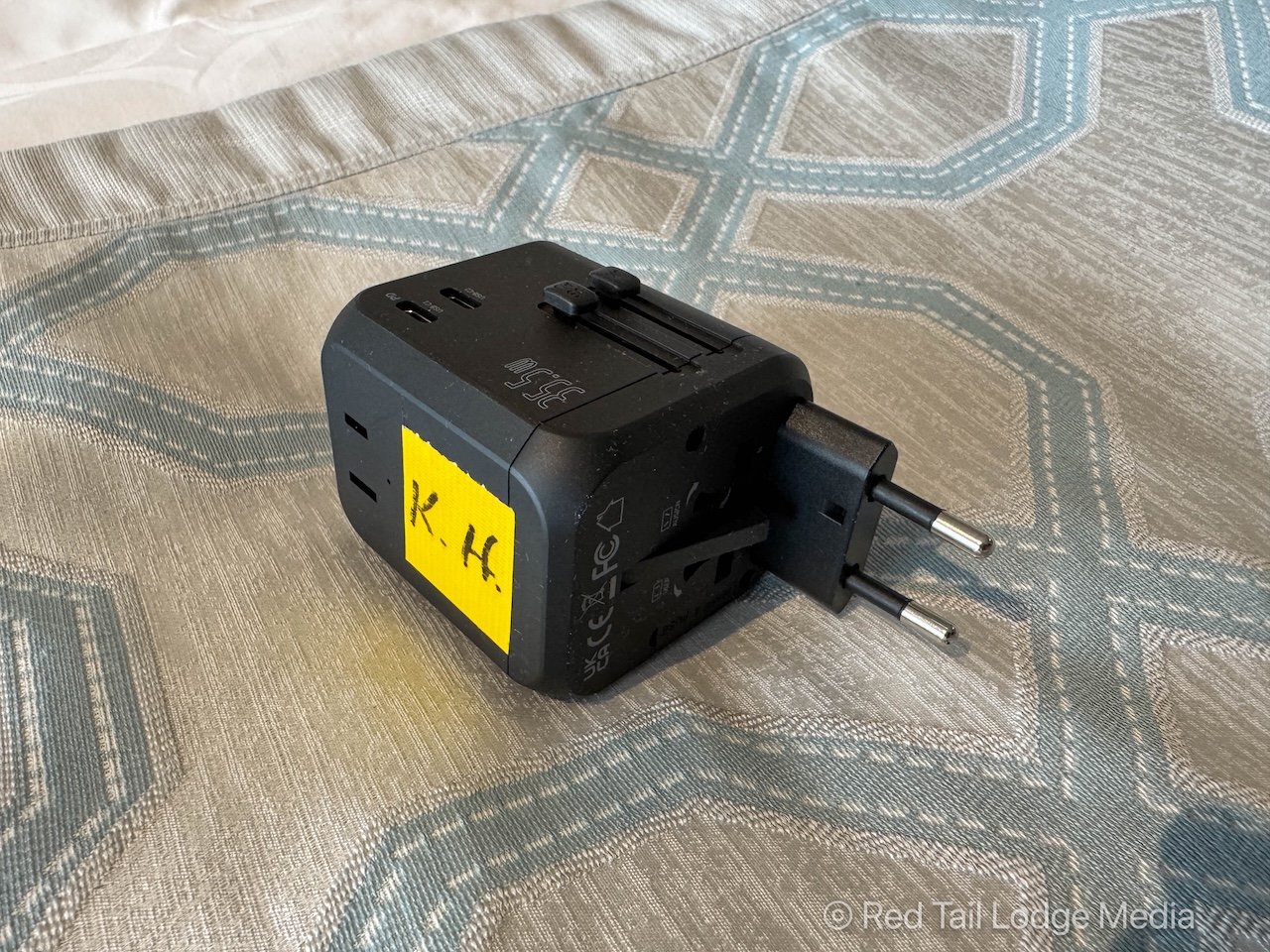
All of our electronics use USB-C, including the watch charger. Keith is carrying the universal plug adapter (paid link) so we can plug into American, UK, and European electrical outlets.
15. Backpack Hip Belt Pockets
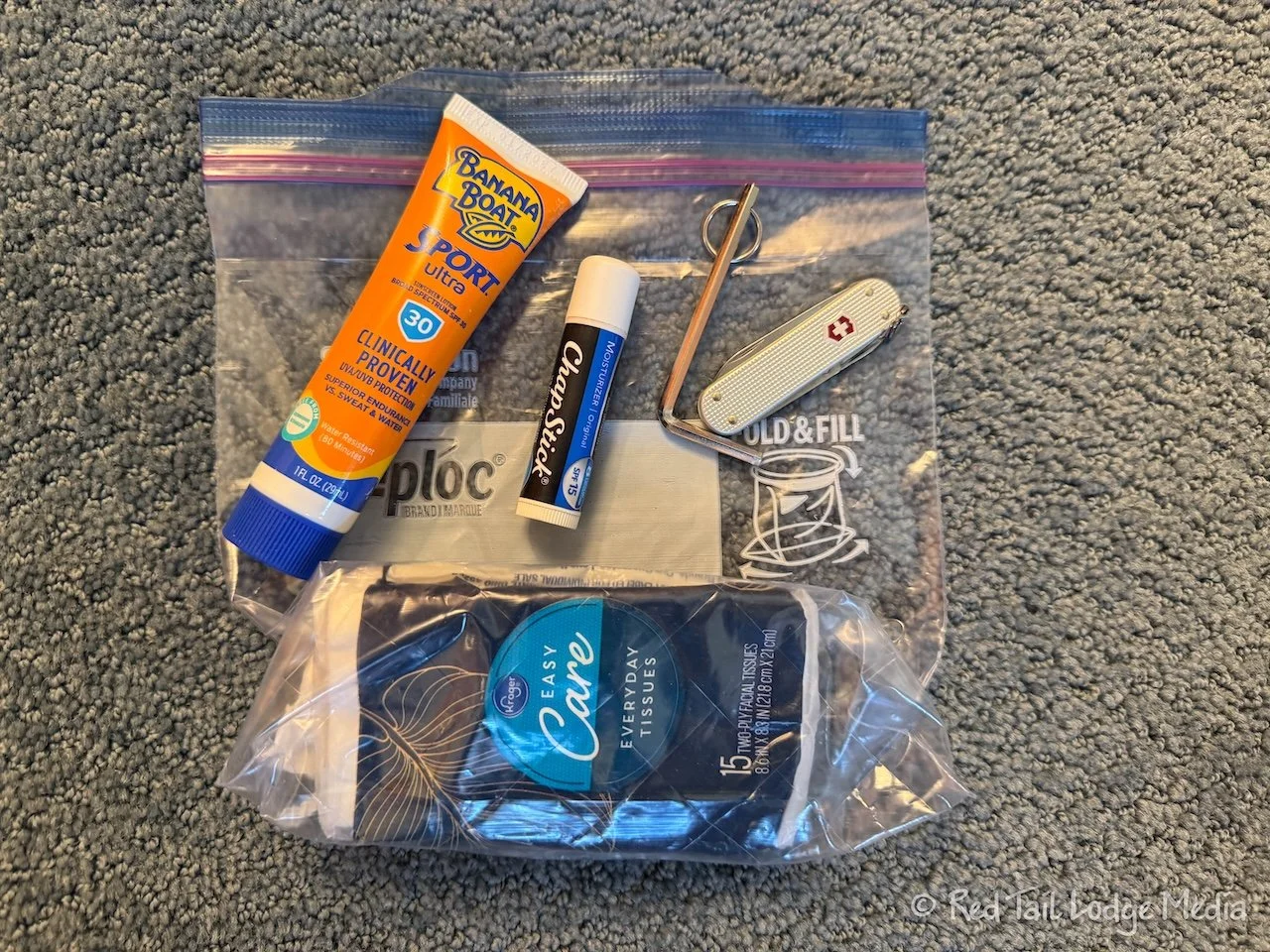
In the hip belts of the backpack are sunscreen, chapstick, a small pocket knife (paid link), an Allen wrench, a Peak Design wrist strap (paid link), and a small package of tissues. The Allen wrench was for adjusting the Peak Design camera clip on the strap of her backpack. The tissues are inside of a ziplock bag just to make sure they stay dry. The wrist strap is for securely attaching her phone or camera to her wrist, in case there were instances where she was concerned about dropping them.
16. Backpack Bottom Compartment
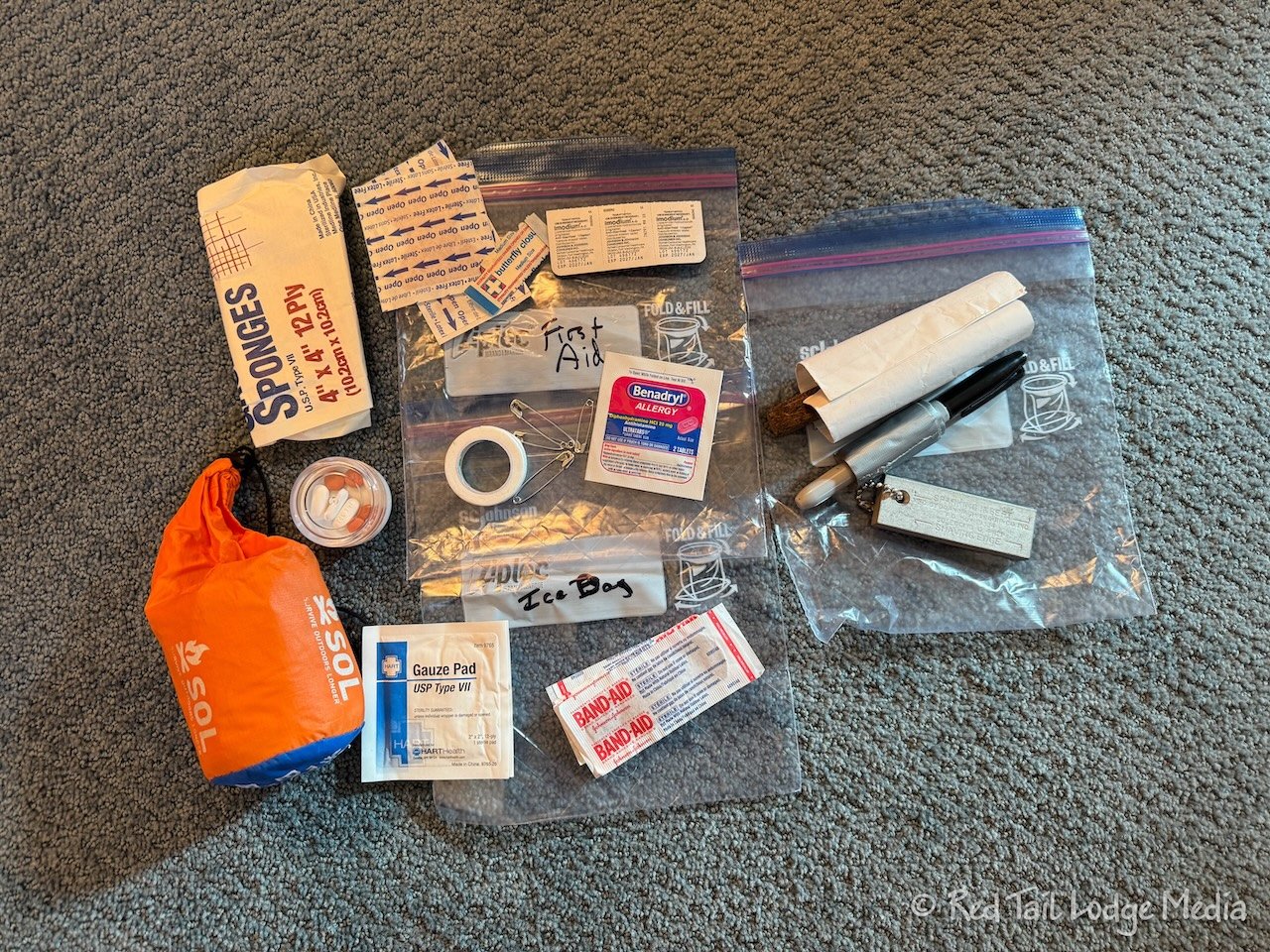
In the backpack bottom compartment, Ann kept a first aid kit and an emergency bivvy (paid link). Since Ann was hoping not to need to access these items very often, having them in the bottom compartment was out of the way, but still handy when the need to use them arose. Instead of buying a first aid kit, she created her own, putting the items inside a ziplock bag. The items include a 4x4 inch sterile pad, band-aids and butterfly closures, anti-diarrhea tablets, antihistamine, first aid tape, pain reliever (both acetaminophen and ibuprofen), safety pins, a spare ziplock back to use as an ice bag, a sharpie with duct tape wrapped around it, paper (in case we need to leave a note), a fire starter stick, and a sparker (for starting a fire). The emergency bivvy is small and fits inside a small drawstring bag.
17. Backpack Rain Cover Compartment
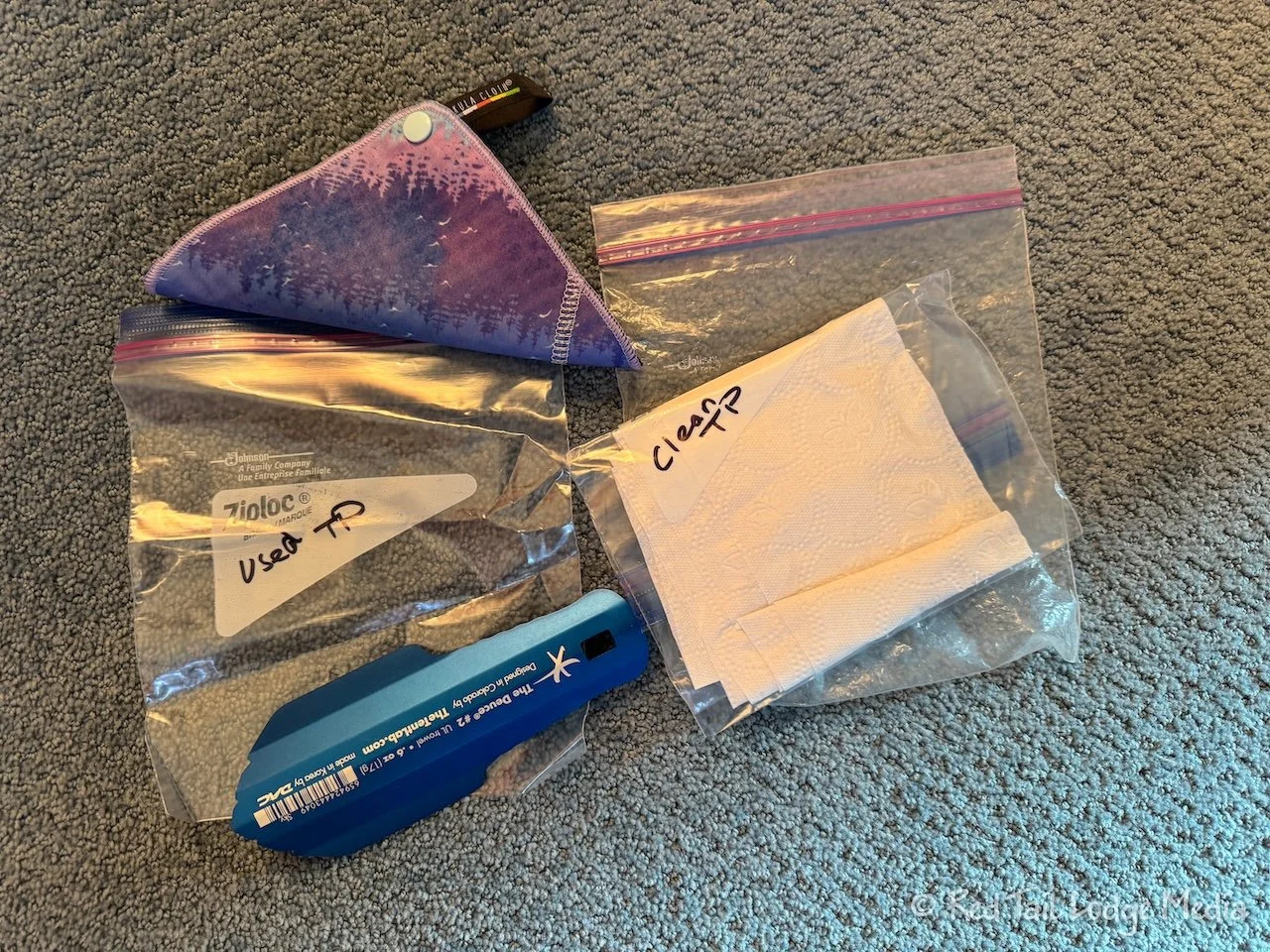
In the rain cover compartment, inside a ziplock bag, were the necessities in case Ann needed to use the great outdoors as a bathroom. Inside the ziplock bag was a small, lightweight shovel (paid link), a small amount of toilet paper, a pee cloth, and another ziplock bag for dirty TP. She could use the pee cloth, which would attach to the outside of the pack after use to dry until she reaches a place to wash it, but that won’t work for number two. Keeping the toilet bag in the rain cover compartment keeps it as far away from our other gear as possible, so as not to contaminate anything.
Backpack Front Pouch - Other
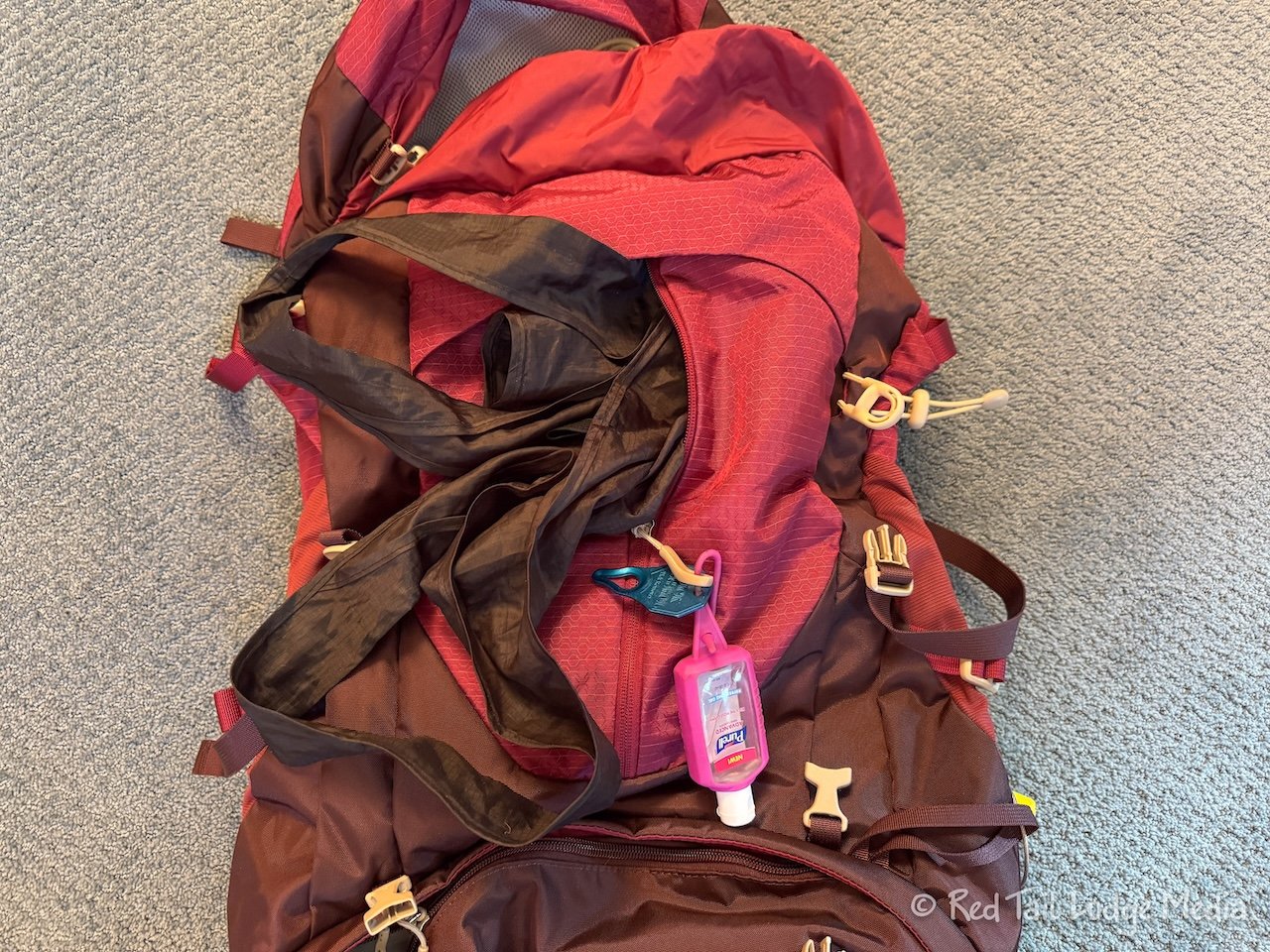
In the slim pouch on the front of the backpack, Ann stored a small reusable nylon grocery bag. This came in handy for stopping at stores along the way and for carrying items to the showers at our lodging, since we didn’t always stay at places with private bathrooms.
19. Keith's Additional Items
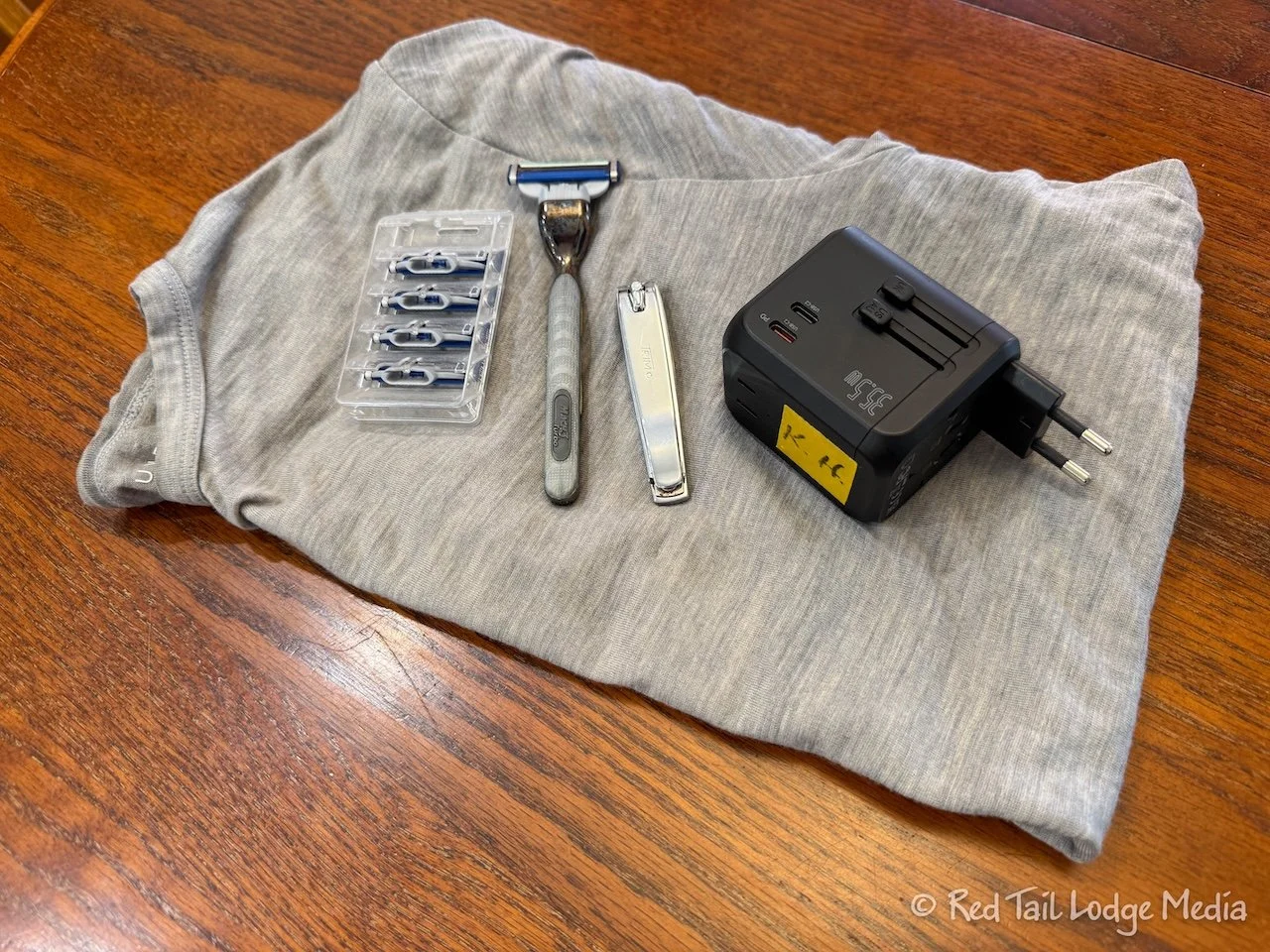
Keith did not carry a laptop or any of the camera gear that Ann was carrying, but he did carry a few items that Ann didn’t. In addition to his merino wool t-shirts, he had some additional medications that he needed, the toe nail clippers, a razor with spare blades, and a universal electrical adapter. There were enough connections on the universal adapter that we could both use it at the same time.
20. Sojourn Luggage - Medium Orange Compression Cube
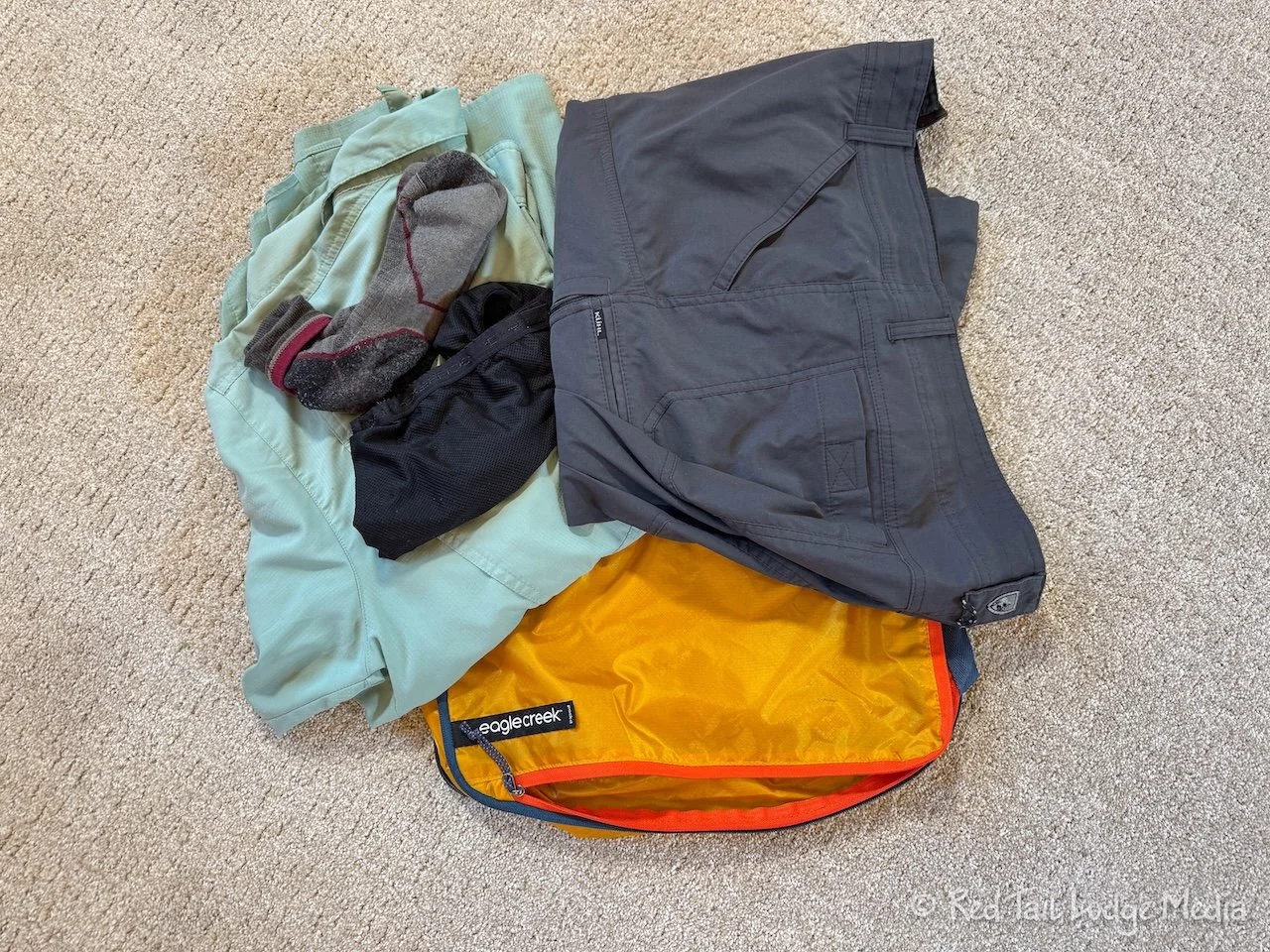
There were not a lot of items that we left behind in Chamonix, but every gram or ounce we could remove from our backs was appreciated. In the medium orange compression cube was Ann’s spare clothes. These included a pair of hiking pants, a pair of hiking socks, a hiking shirt, and a few pairs of underwear.
21. Sojourn Luggage - Medium Gray Non-compression Cube
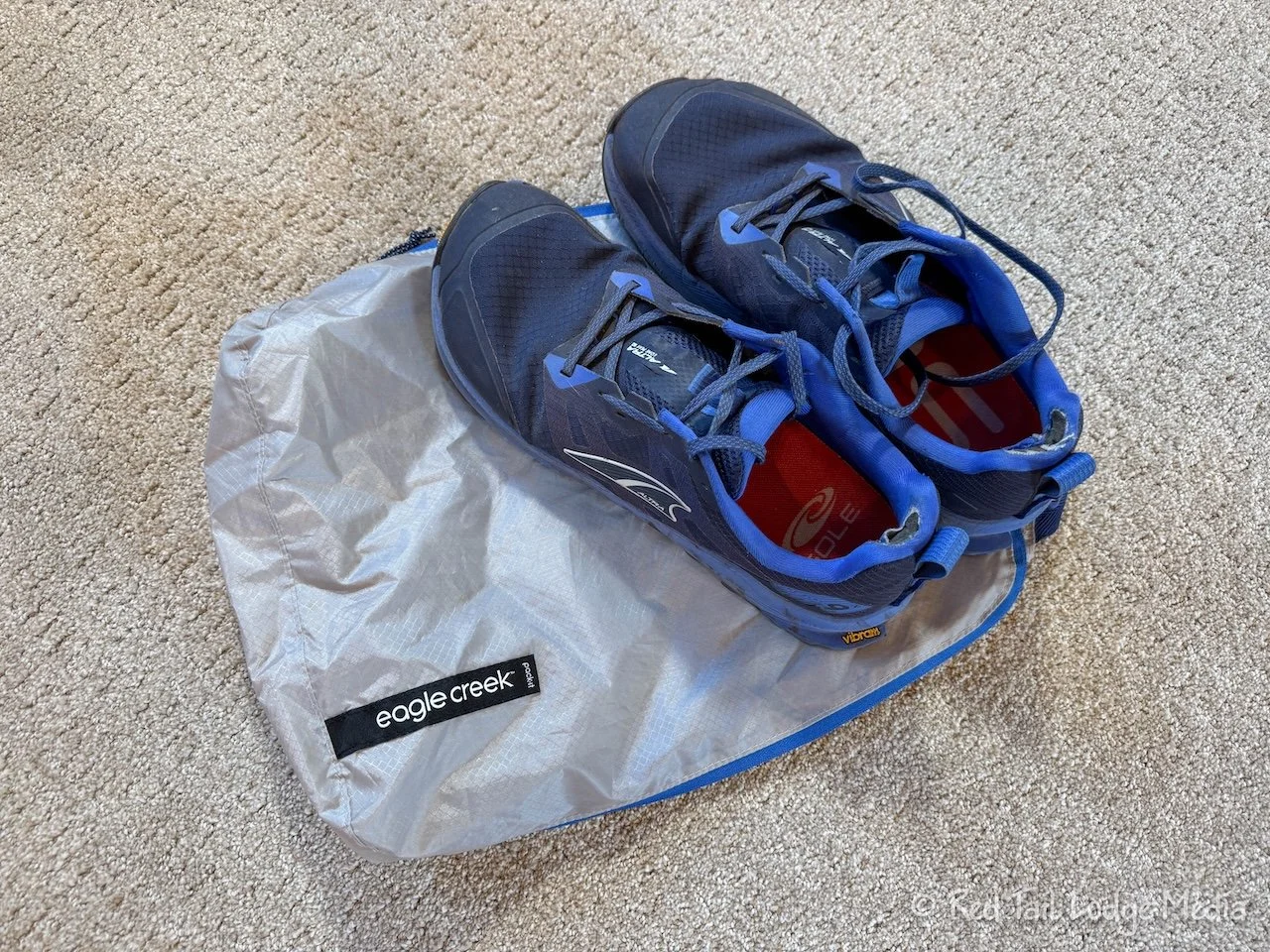
In the medium gray non-compression cube, Ann stored her Altra Lone Peak trail runners, as she hike the TMB in her hiking boots.
22. Sojourn Luggage - Medium Black Compression Cube
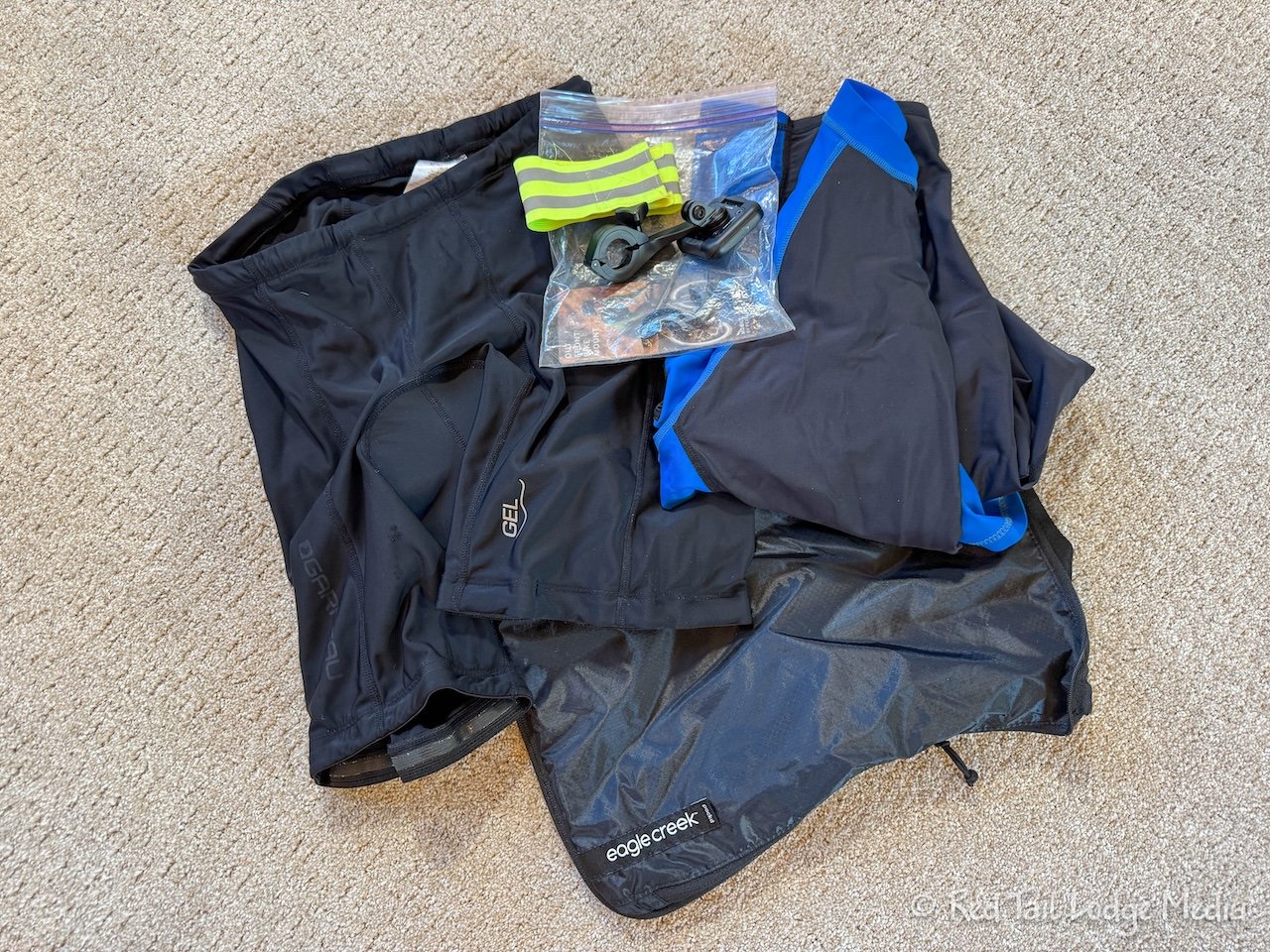
In the medium black compression cube was spare gear that wasn’t needed for the TMB. These things included her swim suit, her padded bike shorts, a phone mount for attaching to bike handlebars, and a leg strap to keep her pants leg out of the bike chain.
23. Sojourn Luggage - Other
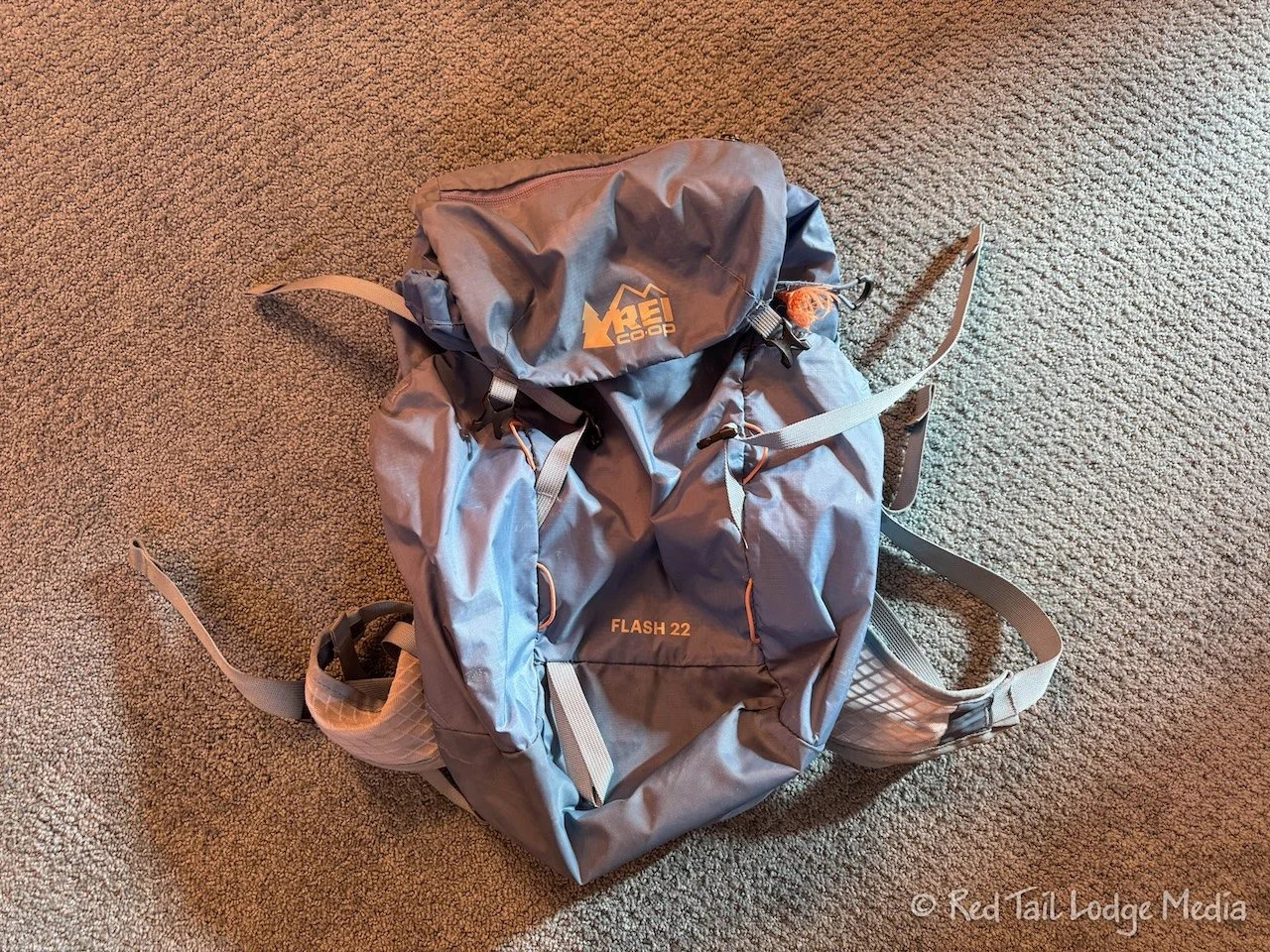
Other items left behind included spare immune boost medication, a large bottle of sun block, half a box of tissues, an umbrellas (that we had picked up in Ireland - Kilkenny, Ireland - April 22nd to 25th, 2025) and Ann’s REI Flashpack 22 liter that she uses for a day pack. In addition, she put an Apple AirTag (paid link) in one of the small compartments of the Sojourn Luggage just in case the luggage gets misplaced while we were on trail.
24. Pack Weight
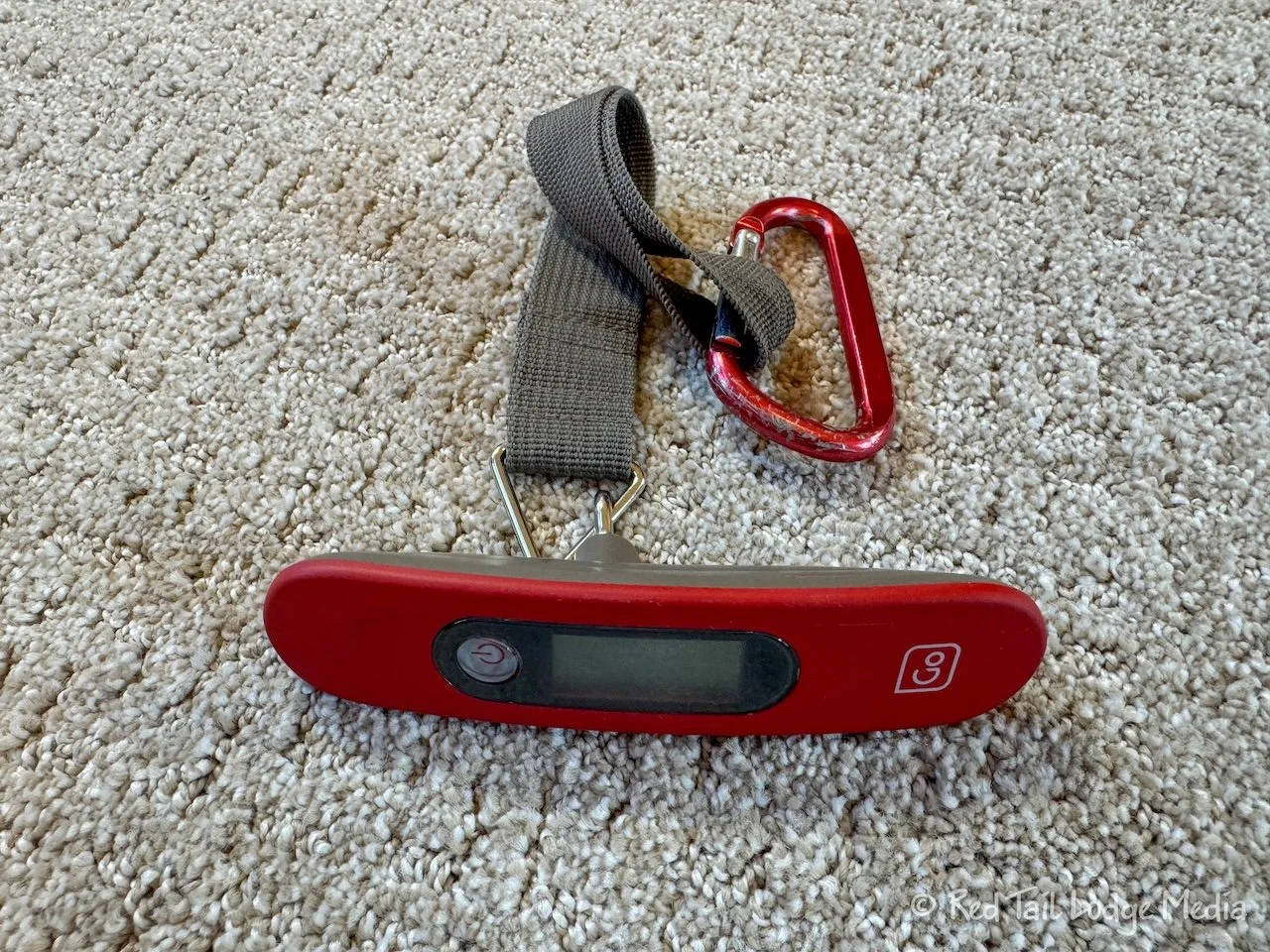
We didn’t weight our backpacks the day before starting the TMB, but we had test weighed them at home before we left for Europe. Ann’s total gear for Europe weighed in at about 16 kilogram (35 to 36 pounds). She paired that down to between 10 and 11 kilograms (23 to 24 pounds) as a base weight. That would go up to 12 to 13 kilograms (27 to 28 pounds) with both water bottles full of water and some trail food. Since Keith did not carry a laptop nor a camera along with all of the associated gear nor heavy Teva sandals, his luggage came in lighter. His total for Europe was about 13 kilograms (28 to 29 pounds) and his TMB base pack weight was only about 8 kilograms (between 17 and 18 pounds).
Note that we were not tent camping and not cooking our own meals along the route. So a backpacking tent, sleeping bag and pad, and backpacking cooking gear were not needed. All of that would add a significant amount of weight and probably require a larger backpack.
25. Retrospective
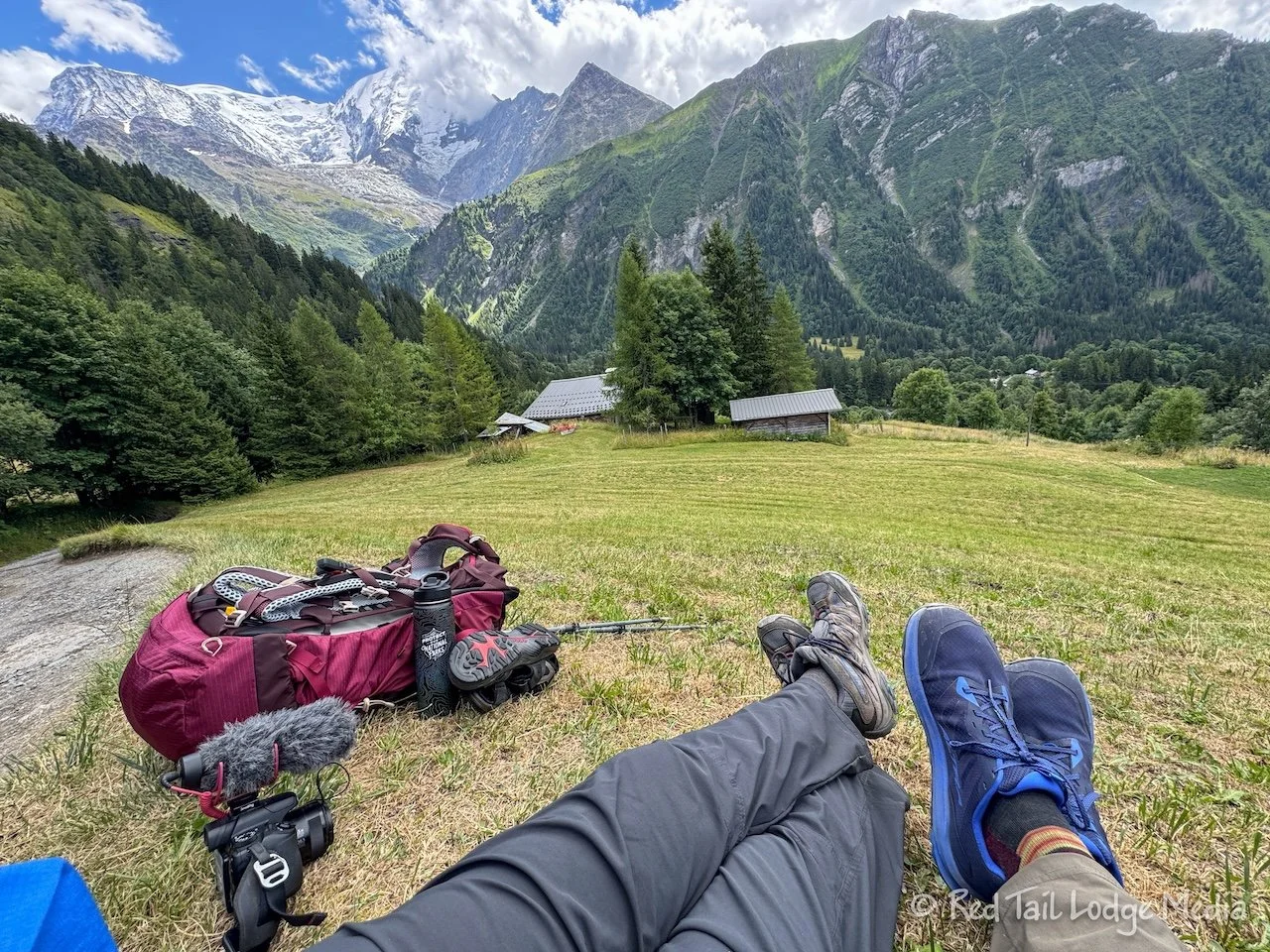
We were pretty happy with our selection of items that we carried on the TMB. We used most of the items that we took with us, and the things we didn’t use were safety items that we really don’t want to use, but want with us for peace of mind. The items we didn’t use were our toilet items for going in the woods, water filtering or purification, most of our first aid kit (other than a few Band-Aids/plasters), our tick removers, and our emergency bivvy.
The only items we can think of that we might not bring the next time are the ear plugs and an extra bandana. Keith couldn’t sleep with the earplugs we brought as he didn’t find them comfortable and he thought it didn’t make that much of a difference at blocking out the sound. So Ann didn’t even try wearing hers. Ann wore one bandana around her neck every day and also used that same one to wash up with in the evening, as it needed to be washed anyway. A spare bandana was not needed.
Most people would not carry a laptop with them on trail. That was Ann’s “luxury item”. She likes to offload all her pictures and video from her camera and our phones every day and back them up on SSD drives. She also uses the laptop to write daily journal entries that become our blog posts. And she is always working on the next video and blog post, even while we were on trail. So the extra weight was worth it to her. Most people would not agree.
We hope you found this post interesting and helped you decide what to pack on your next long distance hiking trip. Enjoy your next adventure and stay safe!
Check out our related video: Packing for the Tour du Mont Blanc
(Ann)