
Rhine Cruise Day 3: Cologne, Germany - July 5th, 2025
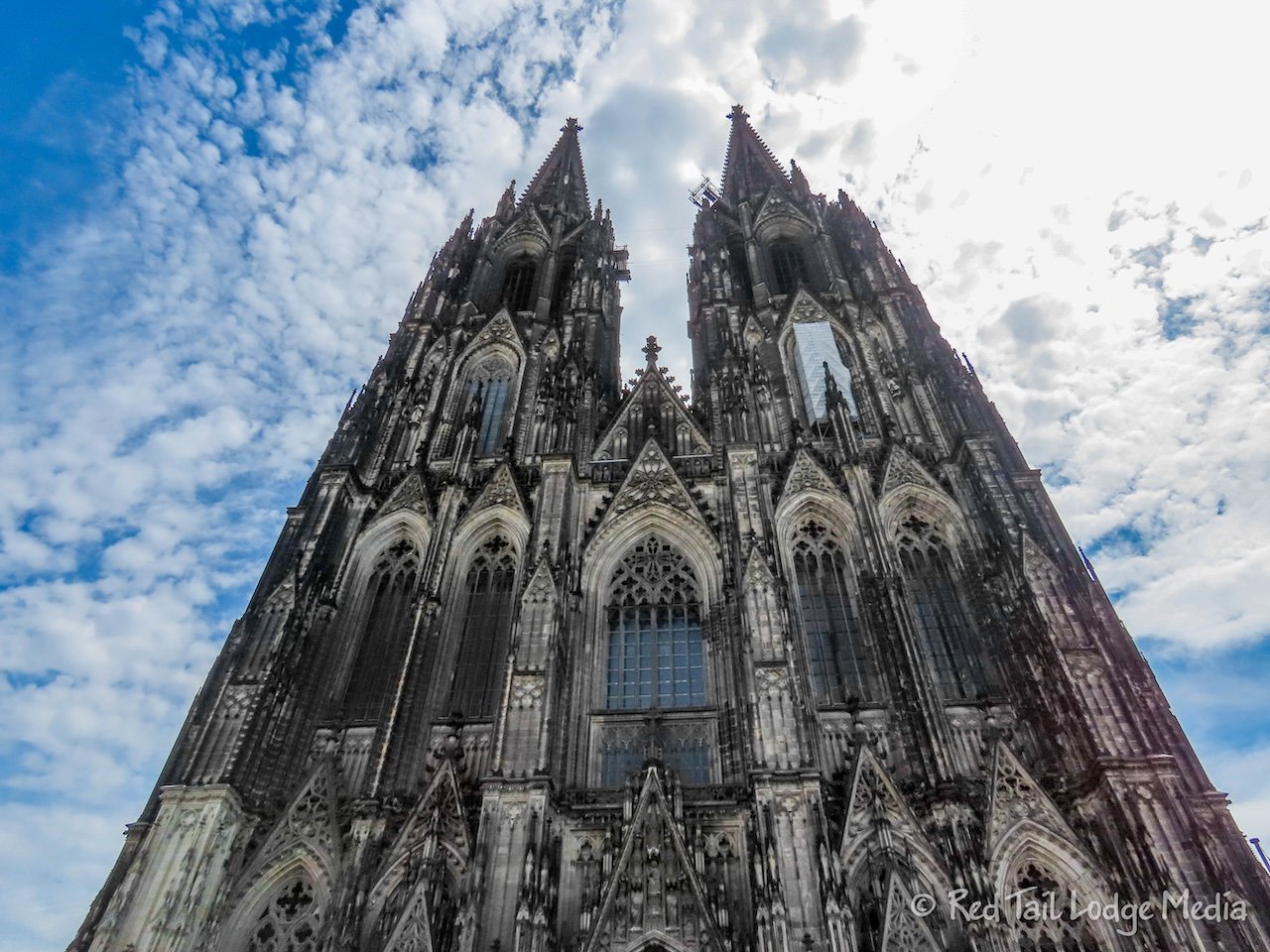
We took the Viking Rhine Getaway cruise from Amsterdam in the Netherlands to Basel in Switzerland. This post covers Day 3, as we stopped to explore Cologne, Germany (Köln, Deutschland).
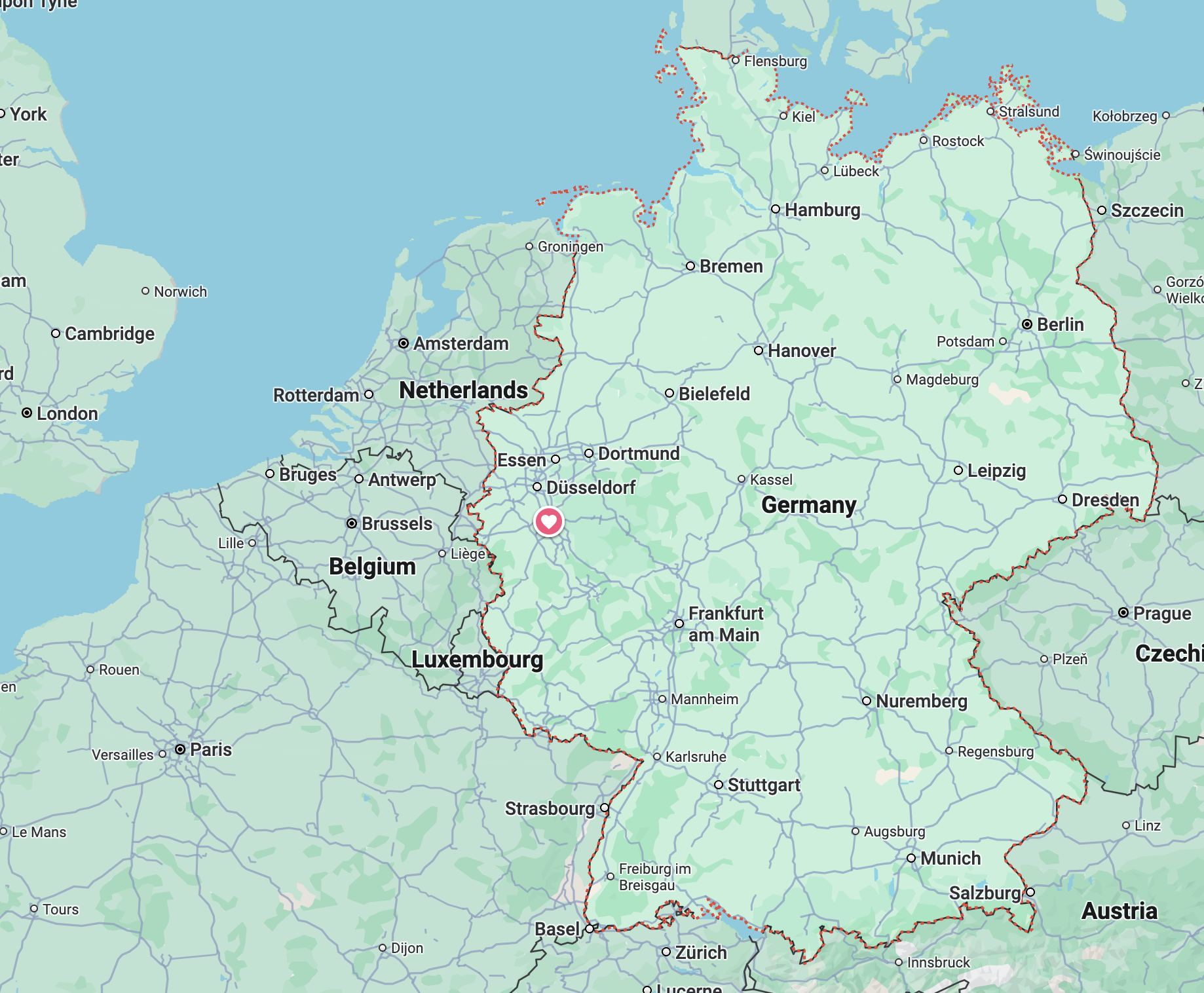
Saturday, we visited Cologne. We were a little behind schedule, not reaching our dock in Cologne to almost 11 am. We went on the included walking tour which lasted about an hour.
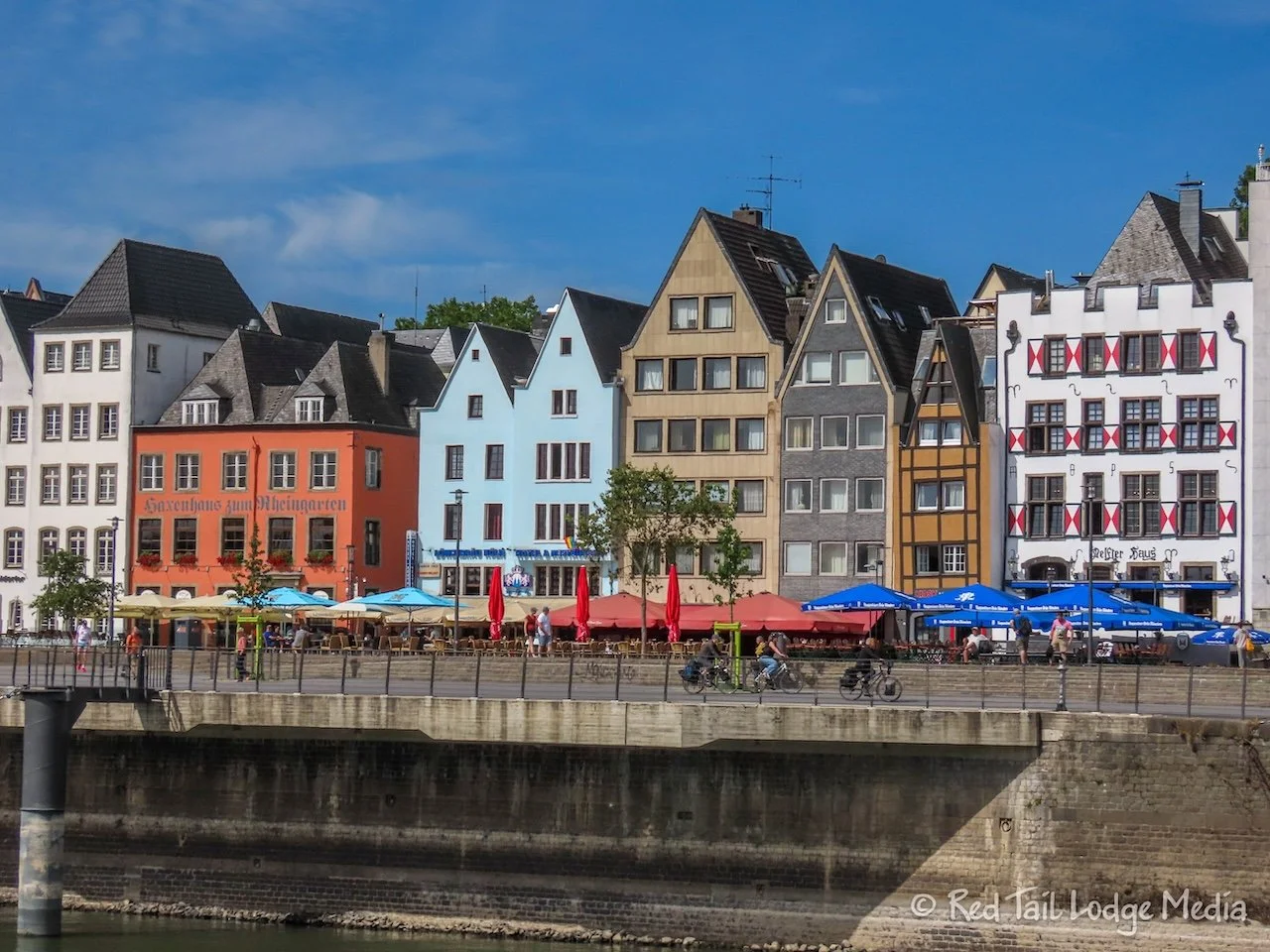
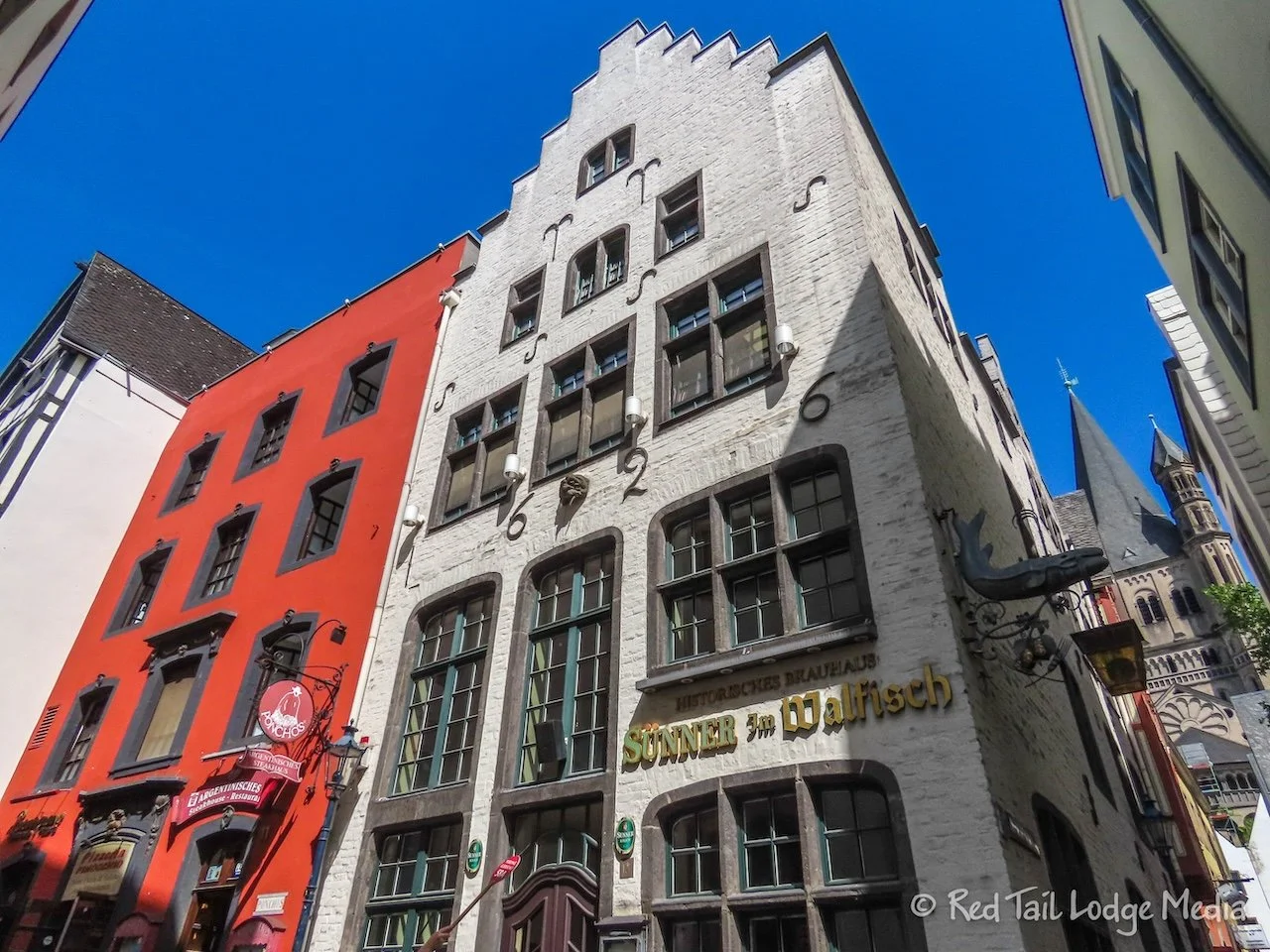
Cologne was heavily bombed during World War II, so very few old buildings survived, except for the cathedral, which was used by the bomber pilots as a visual landmark for guidance. Very few of the old buildings were restored, as the people of Cologne decided to build back in a more modern style.
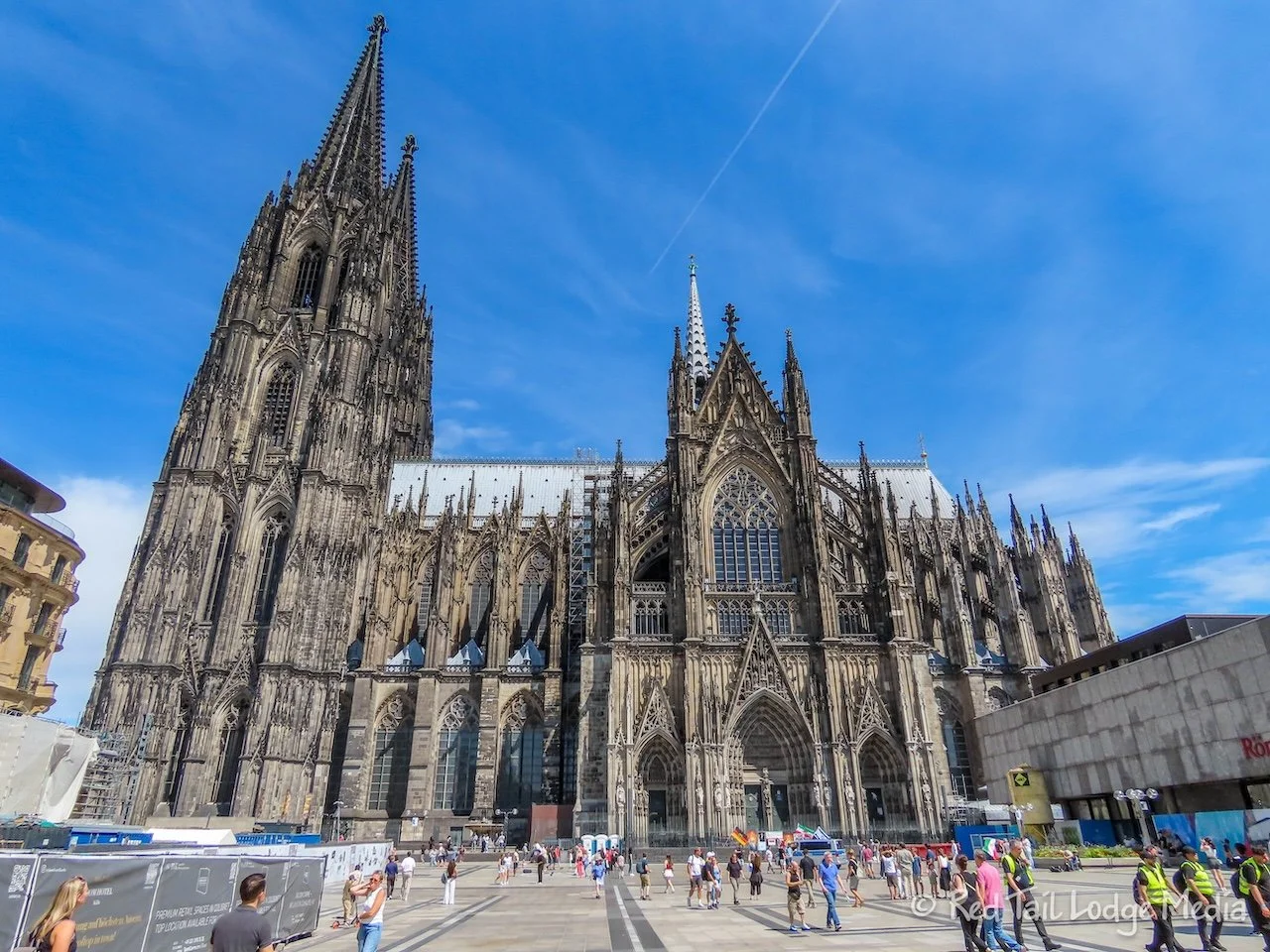
Our tour guide walked us along the river and around the old town, ending the tour outside the Cologne Cathedral (Kölner Dom). Then we were on our own. We didn’t have to be back on the ship until 6:45 pm.
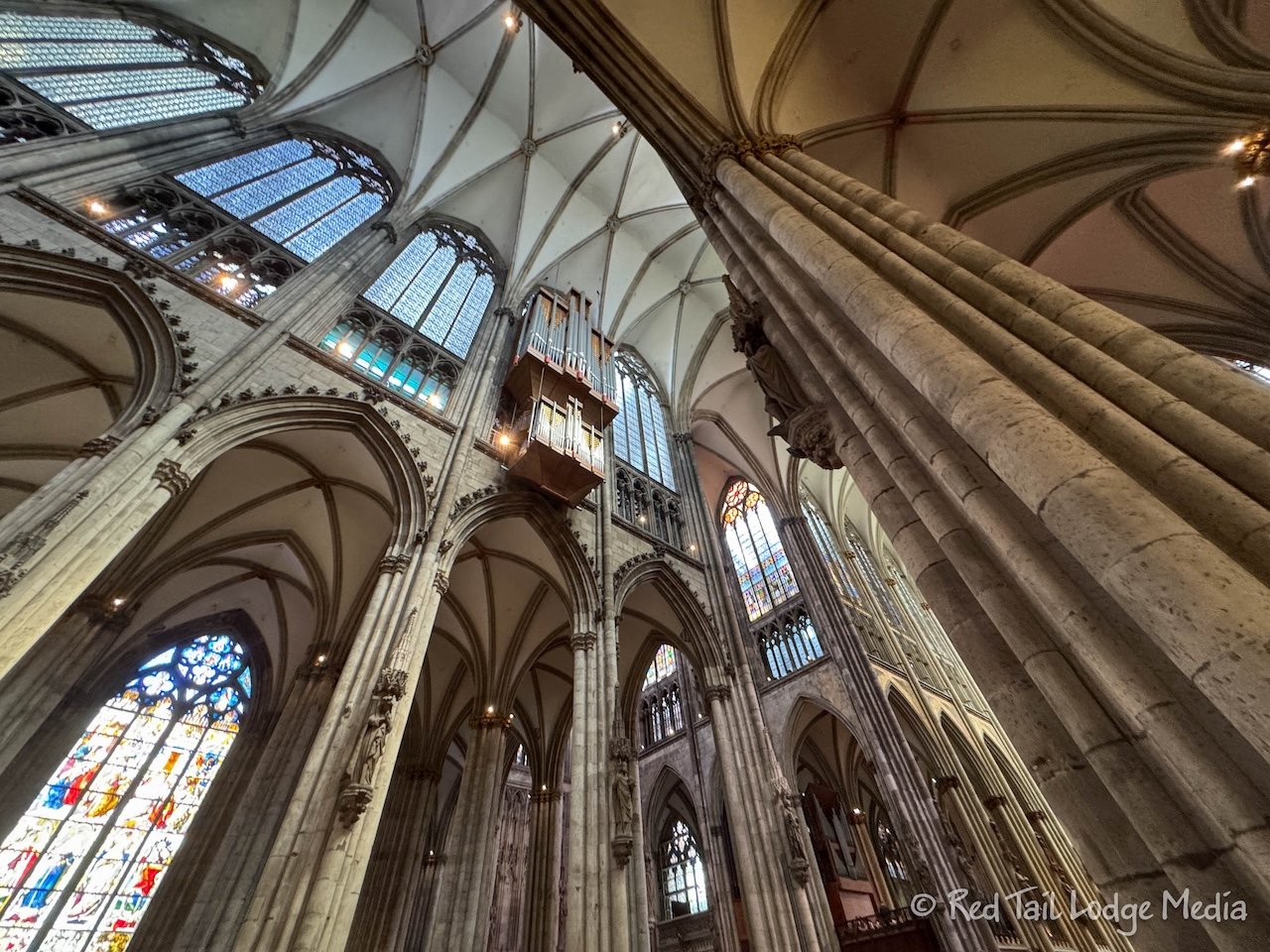
We went inside the cathedral. There was no admission fee, but they did take donations. Some of the old stained glass windows have been restored, while others were replaced with more modern glass. The bones of the Three Kings sit in a decorative gold box behind the alter.
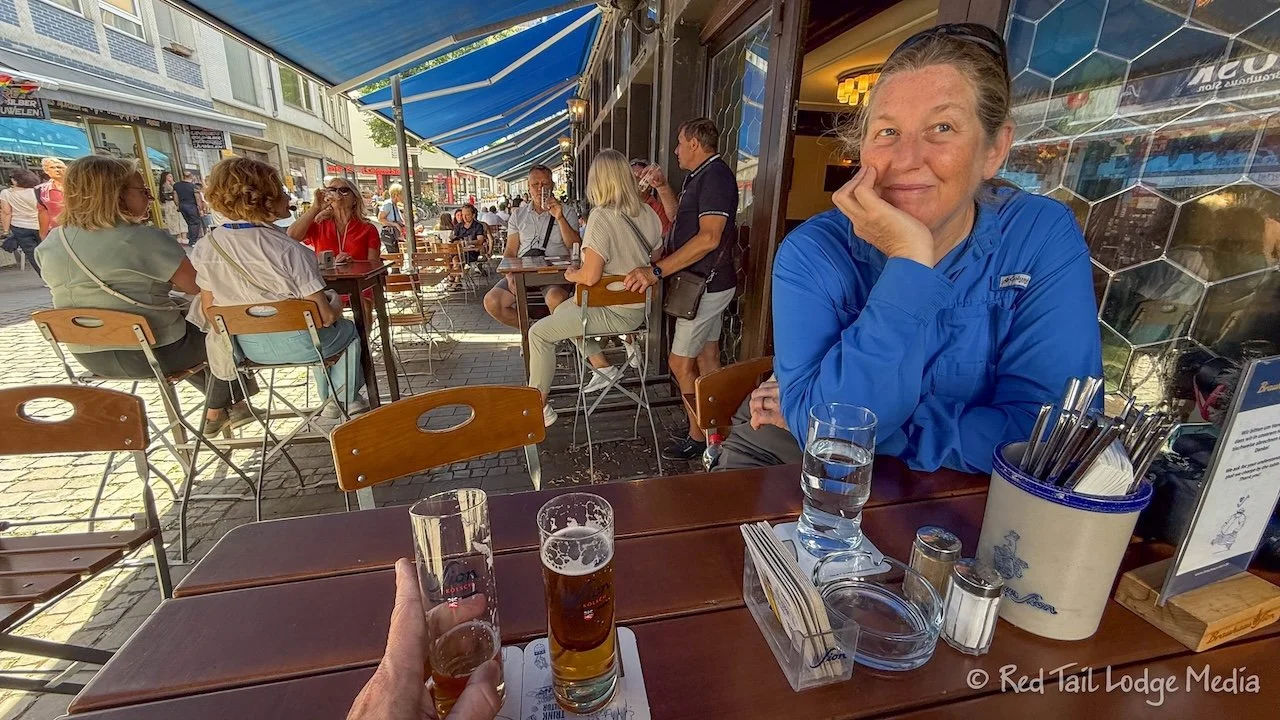
We strolled over to one of the beer halls that our tour guide took us past, Brauhaus Sion. Each beer hall in Cologne has their own version of Kölsch beer. We sat down at an outside table and the waiter came along and plopped down two beers on our table without us even ordering them. The beer is served in 200 ml traditional Stange glasses. Ann didn’t want a beer, but Keith quickly agreed to drink hers. Our guide had warned us that the beer halls will automatically bring you another beer when your glass is empty unless you put a coaster over the top of the glass when you finish it.
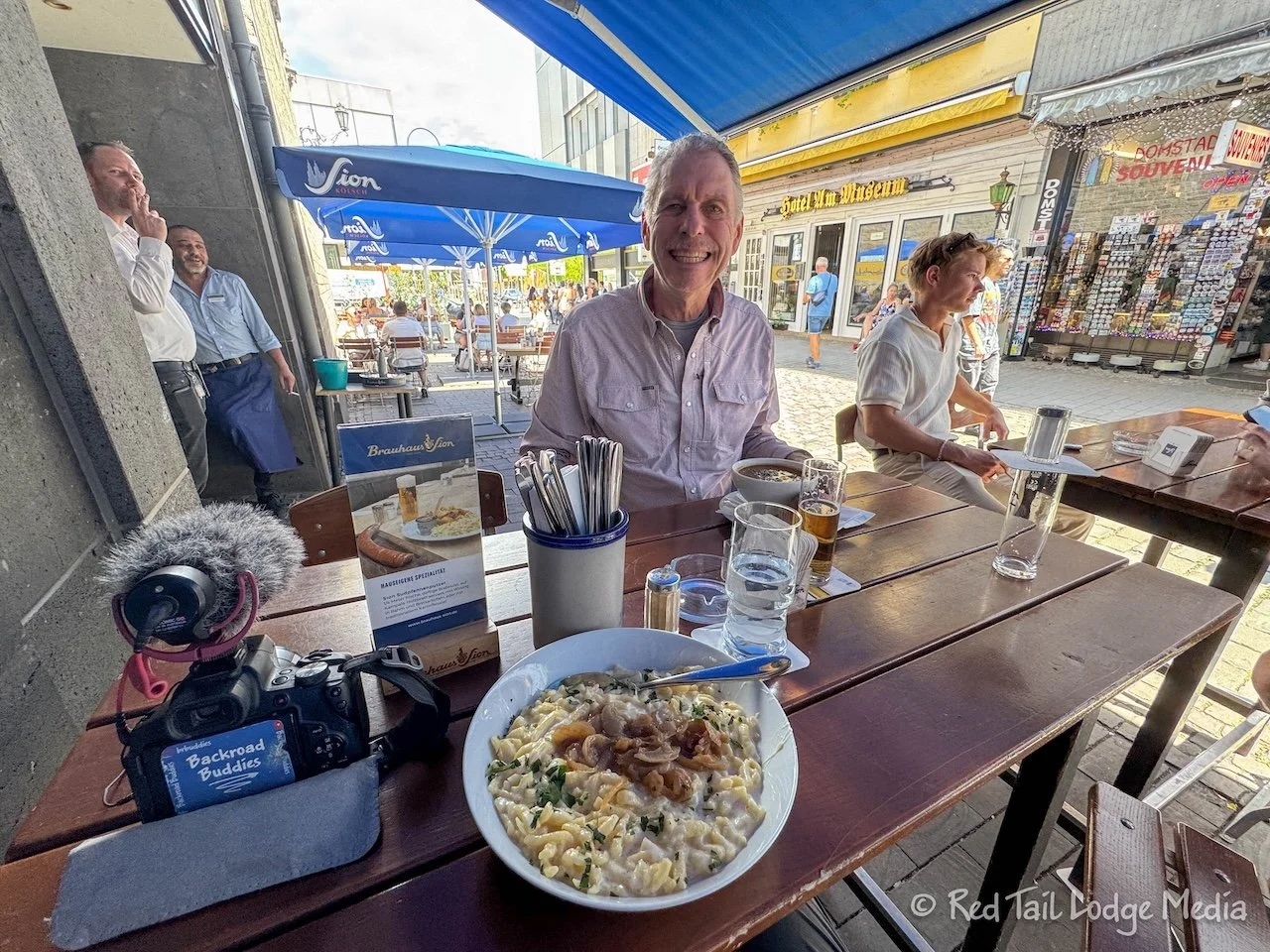
Although wurst (sausages) are the popular tourist item to eat, we opted for some of our favorite dishes from when we lived in Germany back around 1990. Ann ordered the Käsespätzle while Keith had the Gulaschsuppe (goulash soup). Käsespätzle is a southern German dish with spätzle dumplings baked with a Swiss cheese and topped with browned onions. So sort of like mac and cheese, but much better. Before we left, Keith managed to drink three glasses of Sion Kölsch, but that was about the same as having one pint of beer.
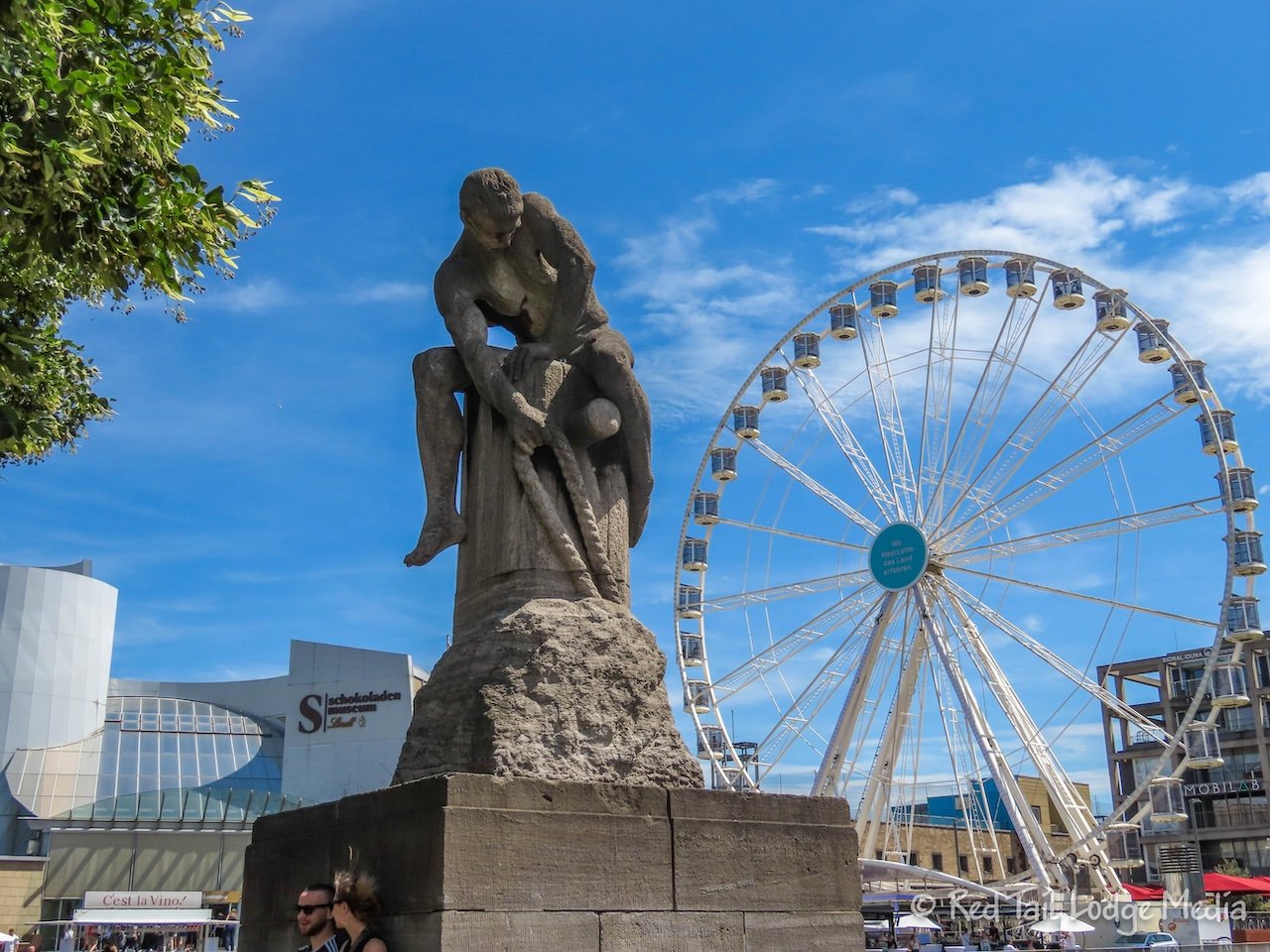
After our lunch, we wandered over to the Chocolate Museum. We didn’t go into the museum, but just visited the shop. We were a little disappointed as we were expecting chocolate that was made in Germany. We didn’t realize the museum is owned by Lindt, a Swiss company. There was some chocolate in the shops from companies other than Lindt, but not much, and none from Germany. So we didn’t buy anything.
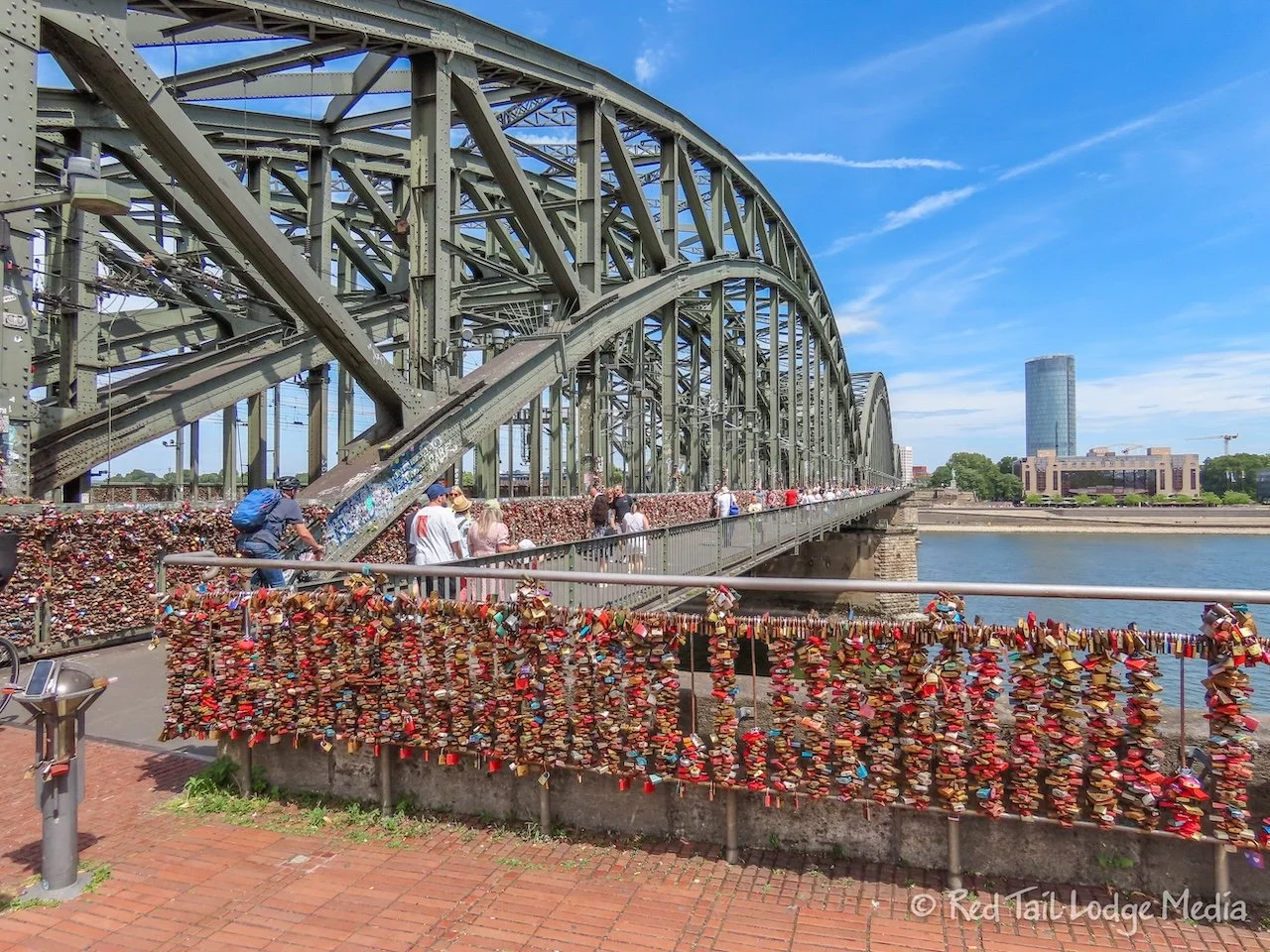
From there, we walked along the river over to the Hohenzollern Bridge (Hohenzollernbrücke) and crossed over to the other side. The bridge is a railroad and pedestrian bridge. It has become a Love Lock bridge, with layers of locks attached to the railings all along the bridge. The Love Lock tradition started over 100 years ago in Serbia, where lovers would write their names on padlocks, attach the locks to a bridge, and throw the key into the river below, signifying their love was forever. Since around the year 2000, love lock bridges have spread around the world. In some places, the authorities have removed the locks due to concerns about the additional weight of the locks, such as the Ha’penny Bridge in Dublin (Dublin, Ireland - April 17th to 21st and May 16th to 17th, 2025).
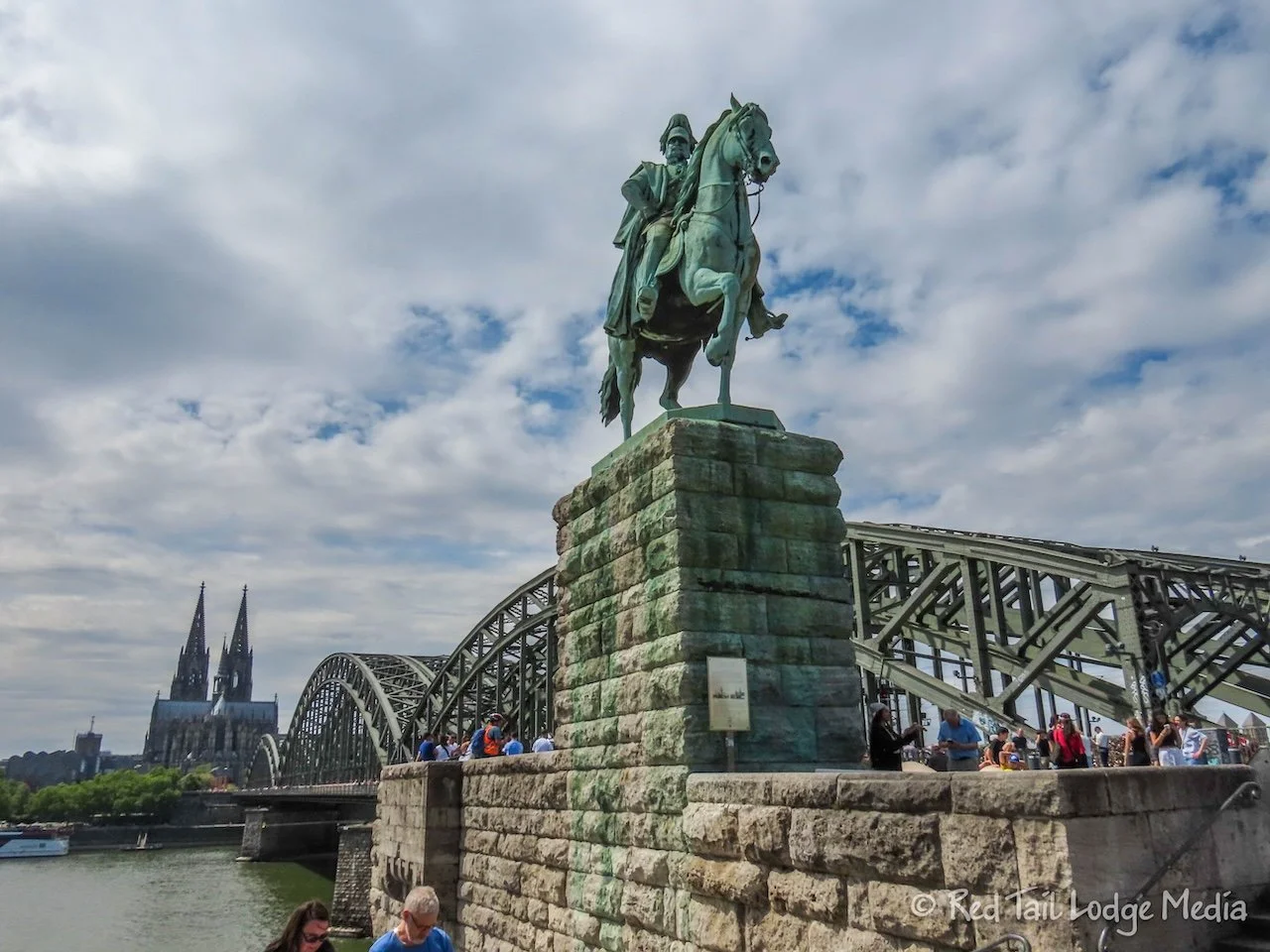
Flanking the sides at each end of the Hohenzollern Bridge are four statues of Prussian kings and German Emporors on horseback. The statues include Friedrich Wilheml IV, Wilhelm I, Friedrich III, and Wilhelm II.
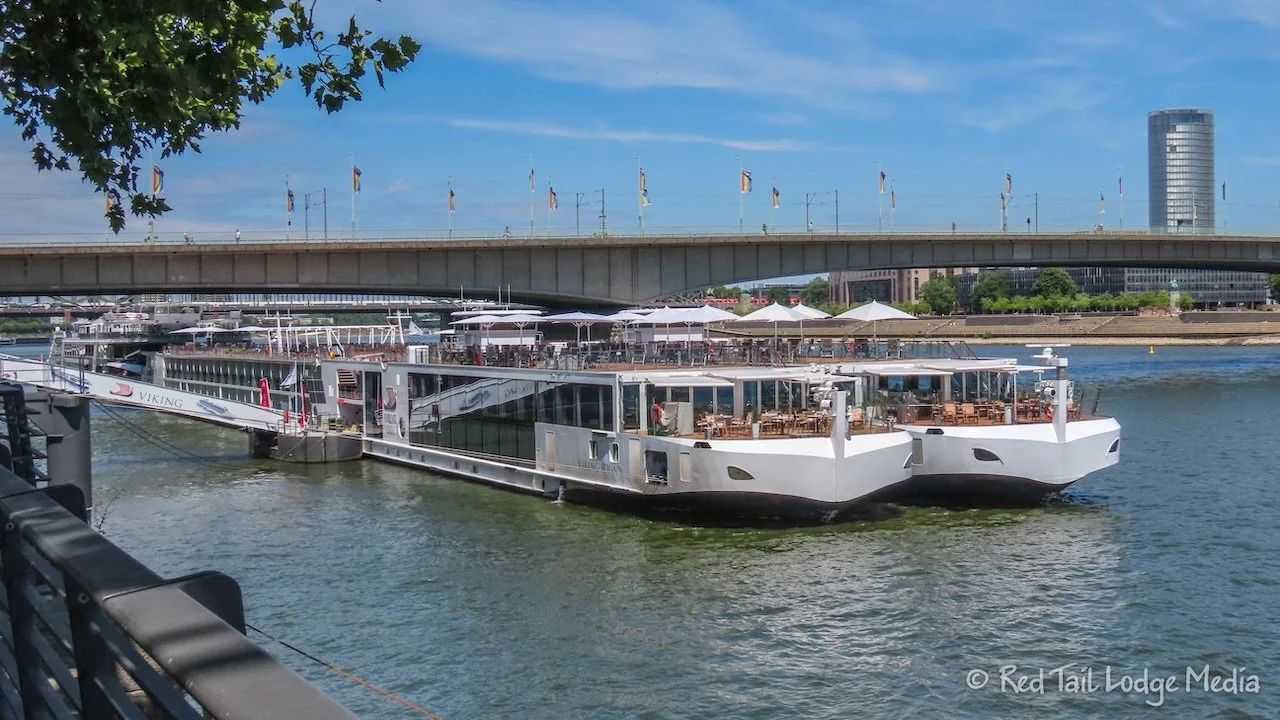
Then we headed back to the ship. Since we were double-docked with another Viking ship, we had to walk through the other ship to reach ours. We wondered what would happen if we tried to scan our room keys on the wrong ship, but we didn’t test it out.
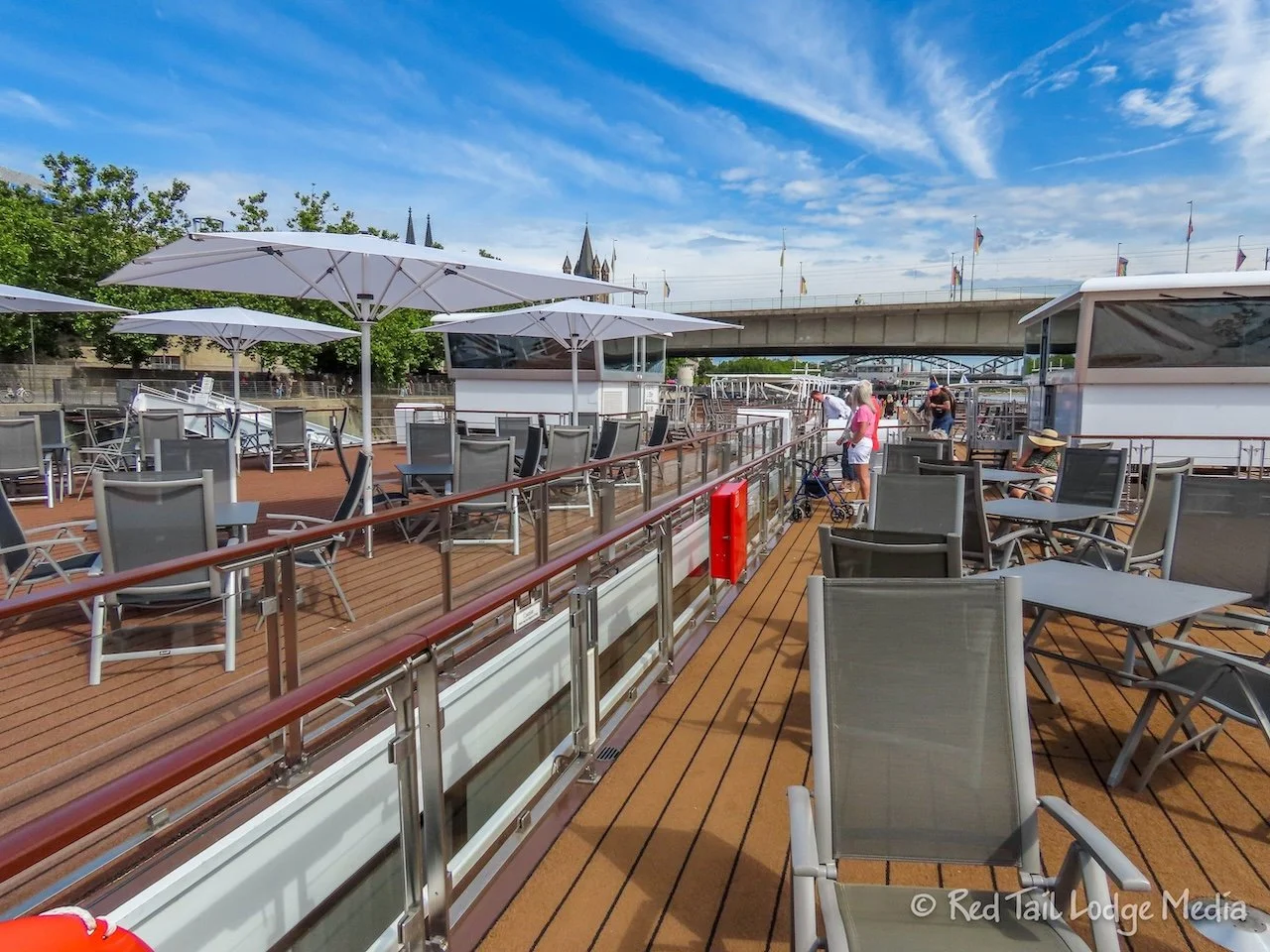
At 4:30 pm, we headed to the Lounge to listen to a lecture on Germany with such topics as salaries, taxes, housing prices, and education. The lecture was rather interesting.
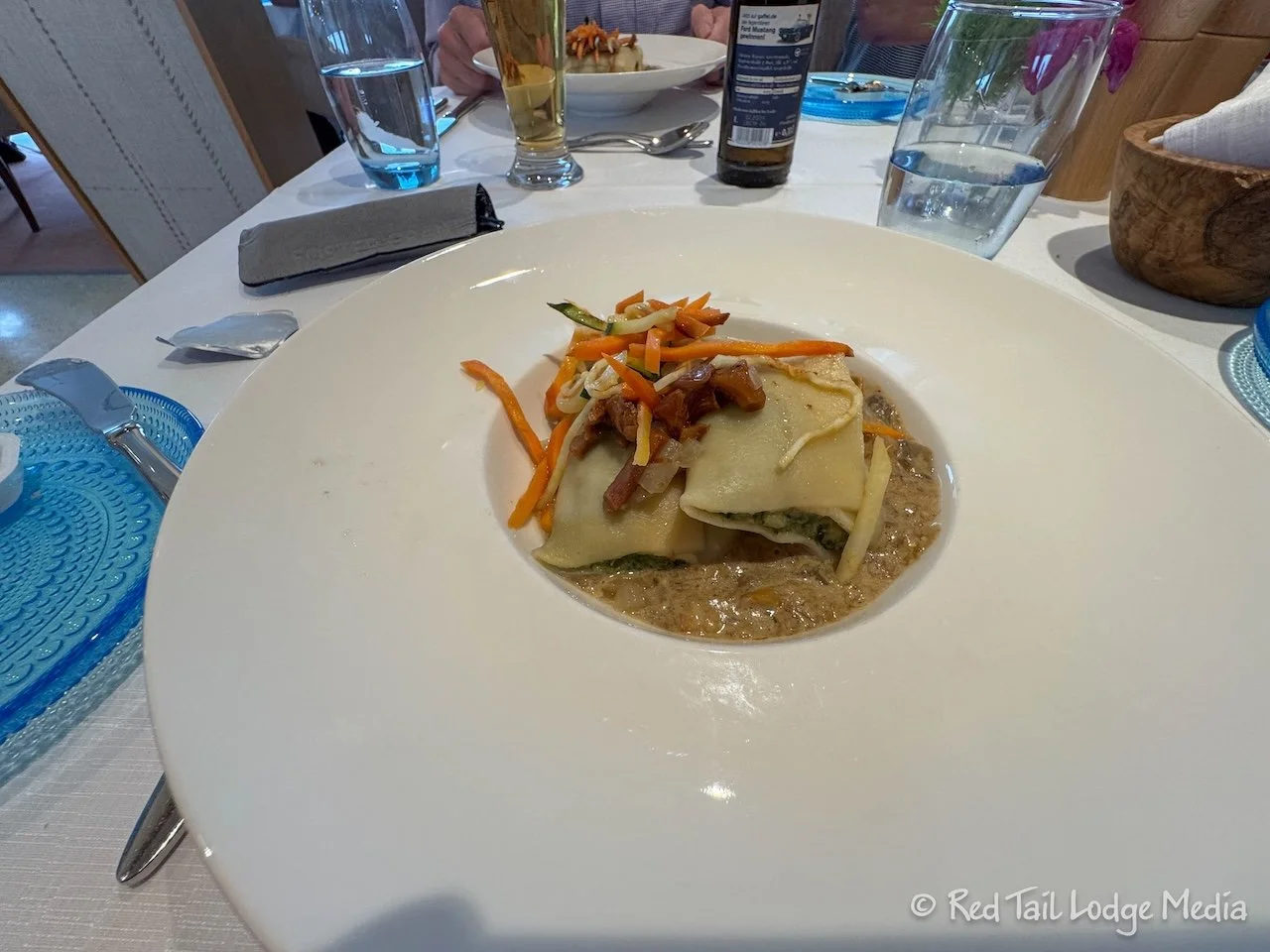
The daily port talk was at 6 pm with dinner following at 7 pm. For dinner, we had cheese soup and Schwäbische Maultaschen. Swabia (Schwaben) is the southwest area of Germany. It was where we lived for a couple of years back around 1990. Maultaschen, which translates to mouth bags or pockets, is similar to ravioli, as it is square sheets of pasta dough usually filled with minced meat. Viking’s version was filled with spinach and covered with a mushroom sauce. Very tasty.
After dinner, at 9 pm, was a musical concert by cello player and piano player duo. They mostly played classical pieces, but mixed it up with a few jazz tunes. They were very talented.
We don’t really think of ourselves as cruisers, but it was nice to not have to research a place ourselves, plan out an itinerary, or decide where to eat. And we still had time to wander around town on our own. It was a welcomed change of pace for us as Viking took care of most of the details.
Check out our related video: Rhine Cruise Day 3: Cologne, Germany
(Ann)