
Dead Horse Ranch State Park, Arizona - January 31st to February 2nd, 2026
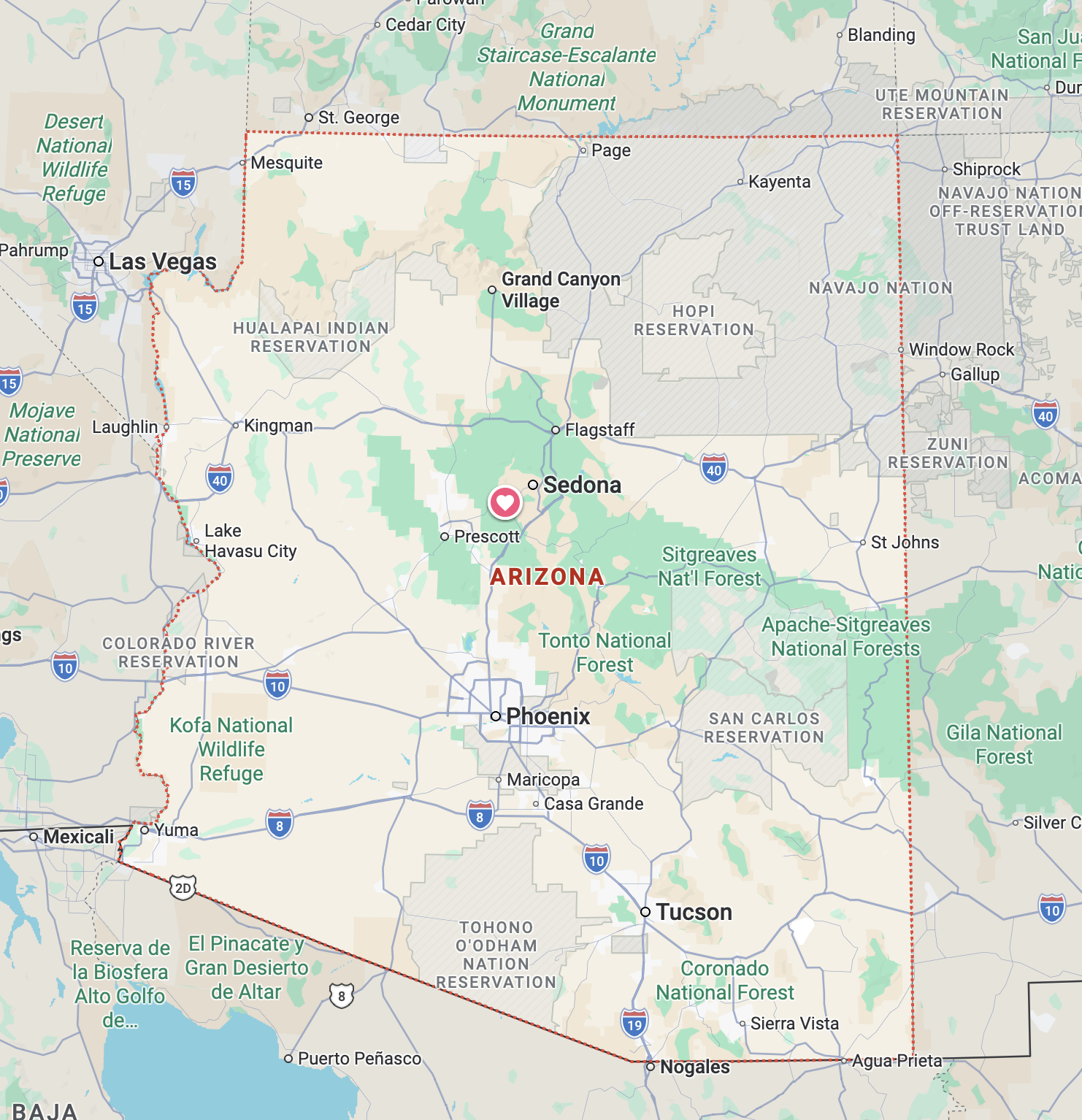
Our friends, Dave and Sandy, invited us to join them on a two week camping trip down to Arizona at the end of January and beginning of February. This is the second post of that trip, from Goosenecks State Park in Utah to Dead Horse Ranch State Park in Arizona, including stops at Monument Valley, Montezuma Well, and Montezuma Castle.
When we arrived at Goosenecks State Park in Utah late on Friday, it was starting to get dark which meant our views out over the San Juan River were starting to fade. So before we left on Saturday morning, we walked about a mile out to the point.
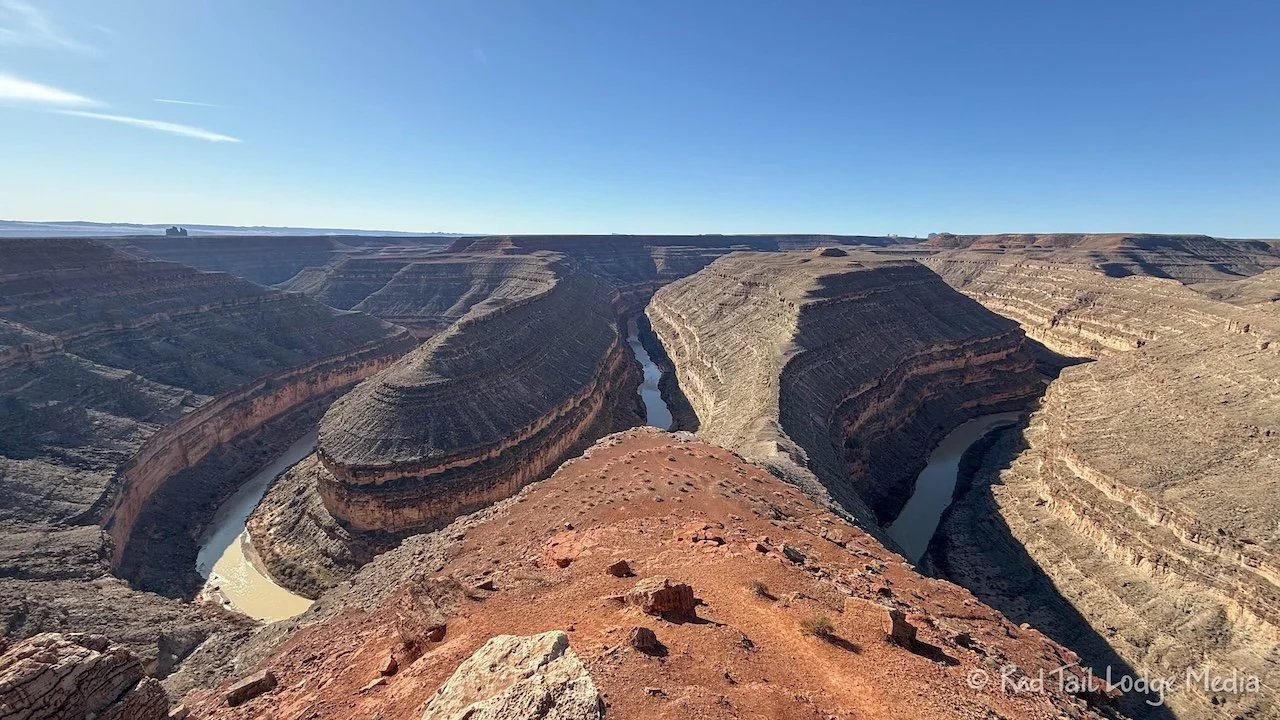
The sun was just starting to reach the San Juan River below when we left. The river is very interesting here. It lies about 1000 feet below the canyon cliffs, as it winds back and forth around four switch backs, creating a very dramatic landscape.
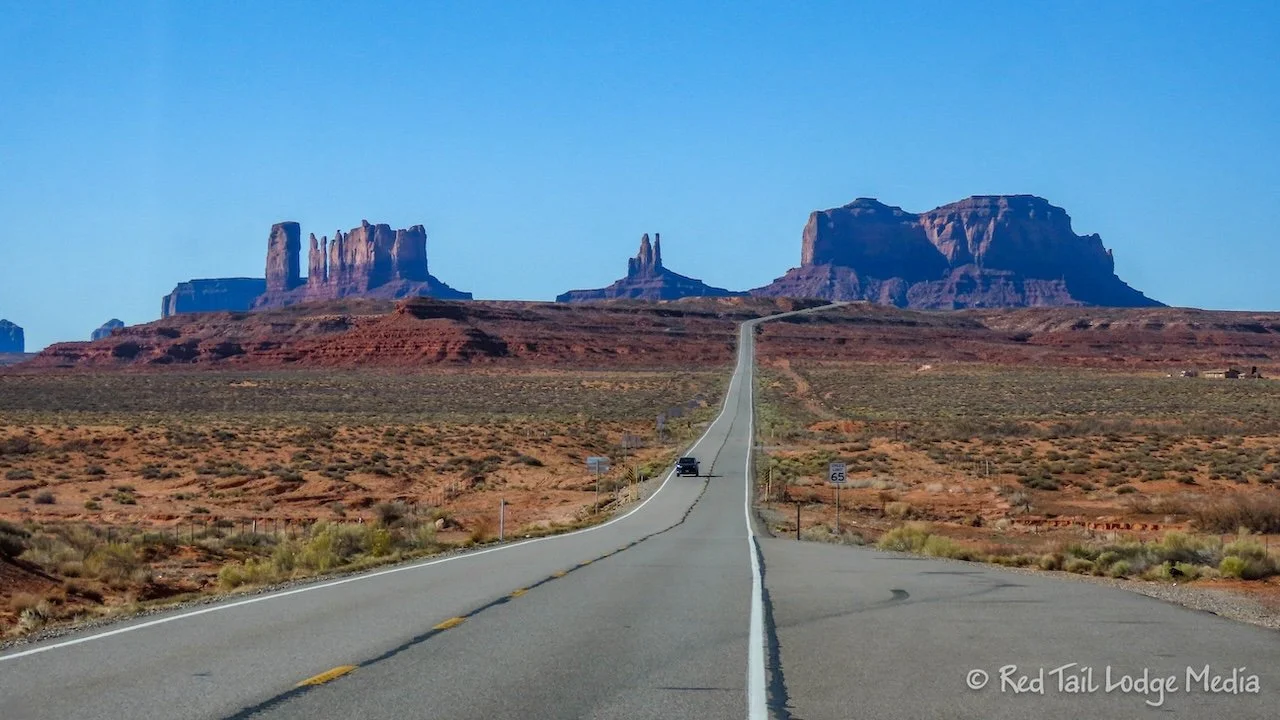
Then we started driving towards Sedona, Arizona. Along the way, we stopped at the Monument Valley Tribal Park Visitor Center. It was $10 per person to enter the park. They informed us right away at the gate that RV’s were not allowed on the 17 mile loop drive through the park. If you are in a vehicle that is allowed to go on the drive, they say to allow about 1.5 to 2 hours to complete the loop. However, we could pay for a guided tour. The guided tours last anywhere from 2.5 to 3.5 hours.
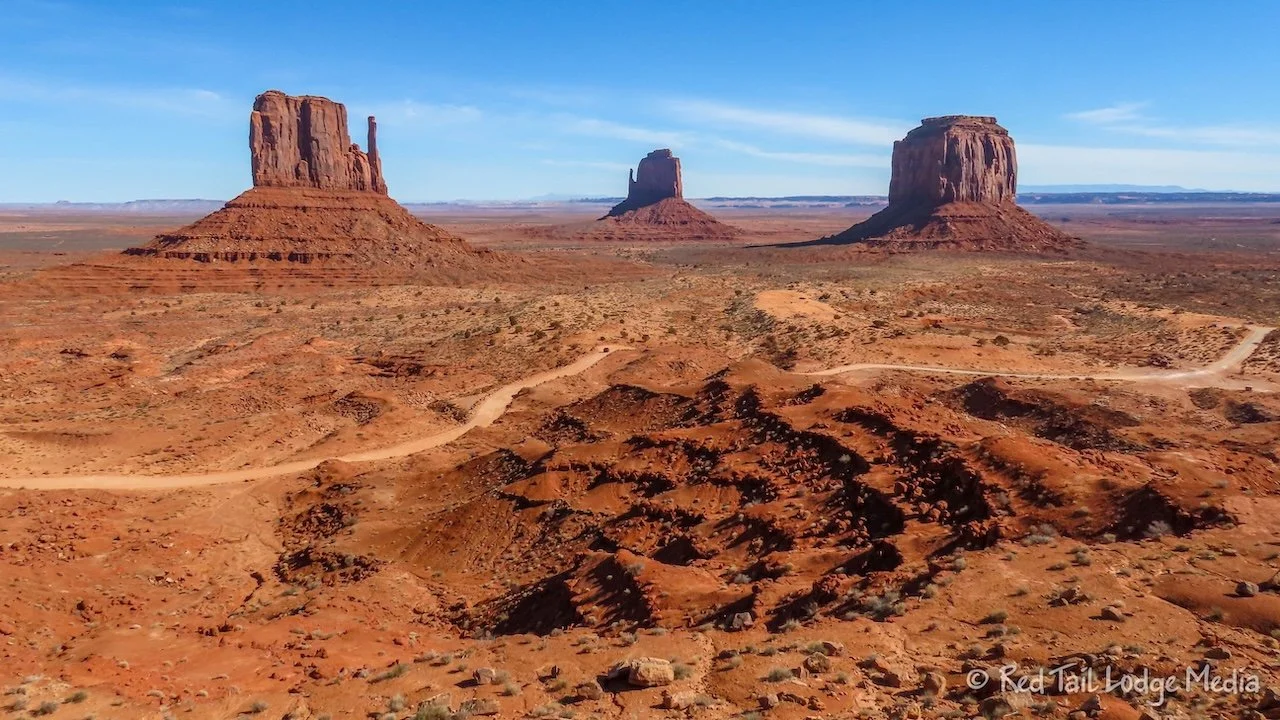
Since we still had another four hours to drive that day, we decided just to visit the museum and enjoy the views from the Visitor Center.
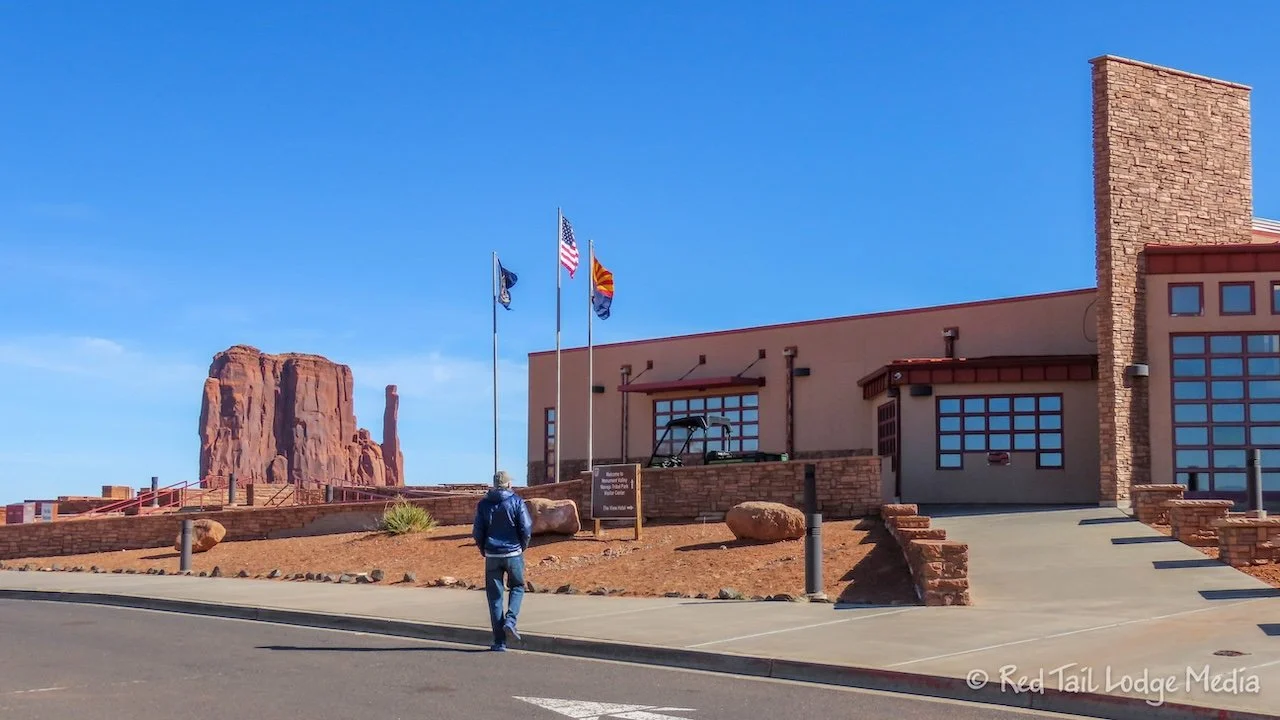
After we parked, we grabbed some lunch out of our rigs and carried it over to some picnic tables near the parking lot. A dog followed us and begged for food. But, after we made it clear that we were not sharing, the dog left us alone. We remembered that many Native Americans let their dogs roam free.
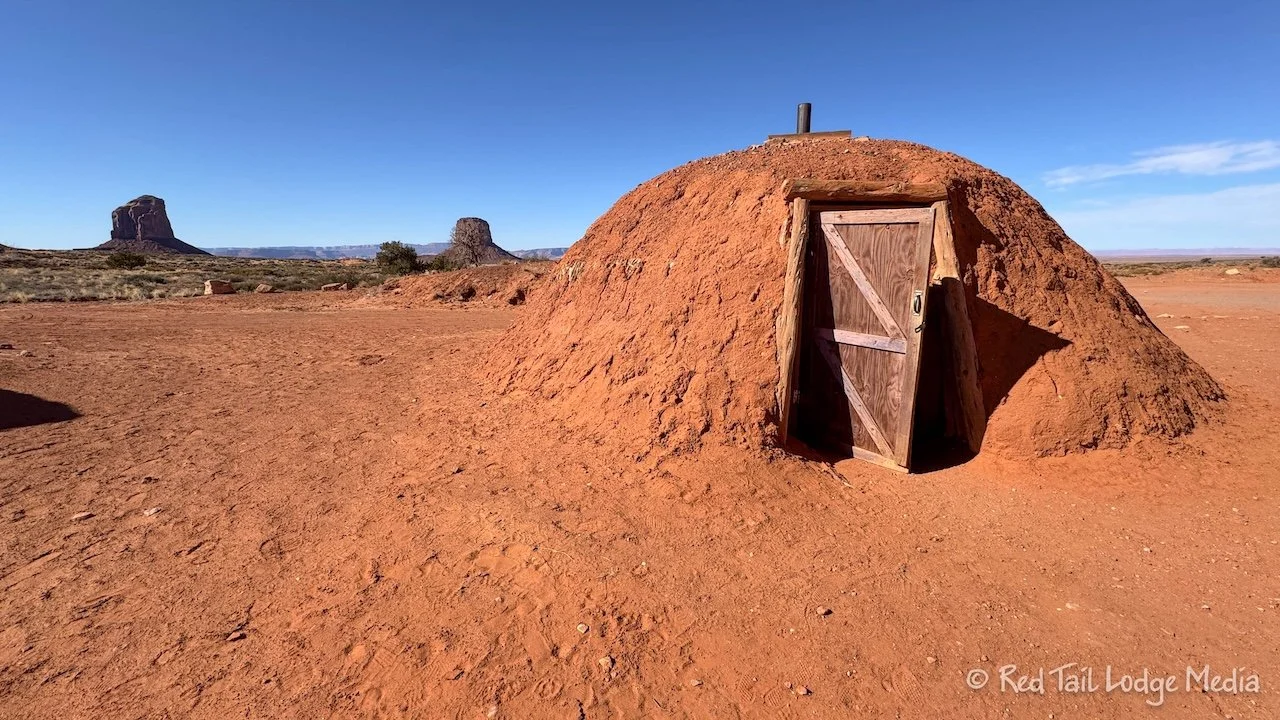
Near the picnic tables were two Hogans. A hogan is a traditional dwelling of the Navajo. One of the hogans was open so you could peak inside. It is a wooden structure covered with packed dirt.
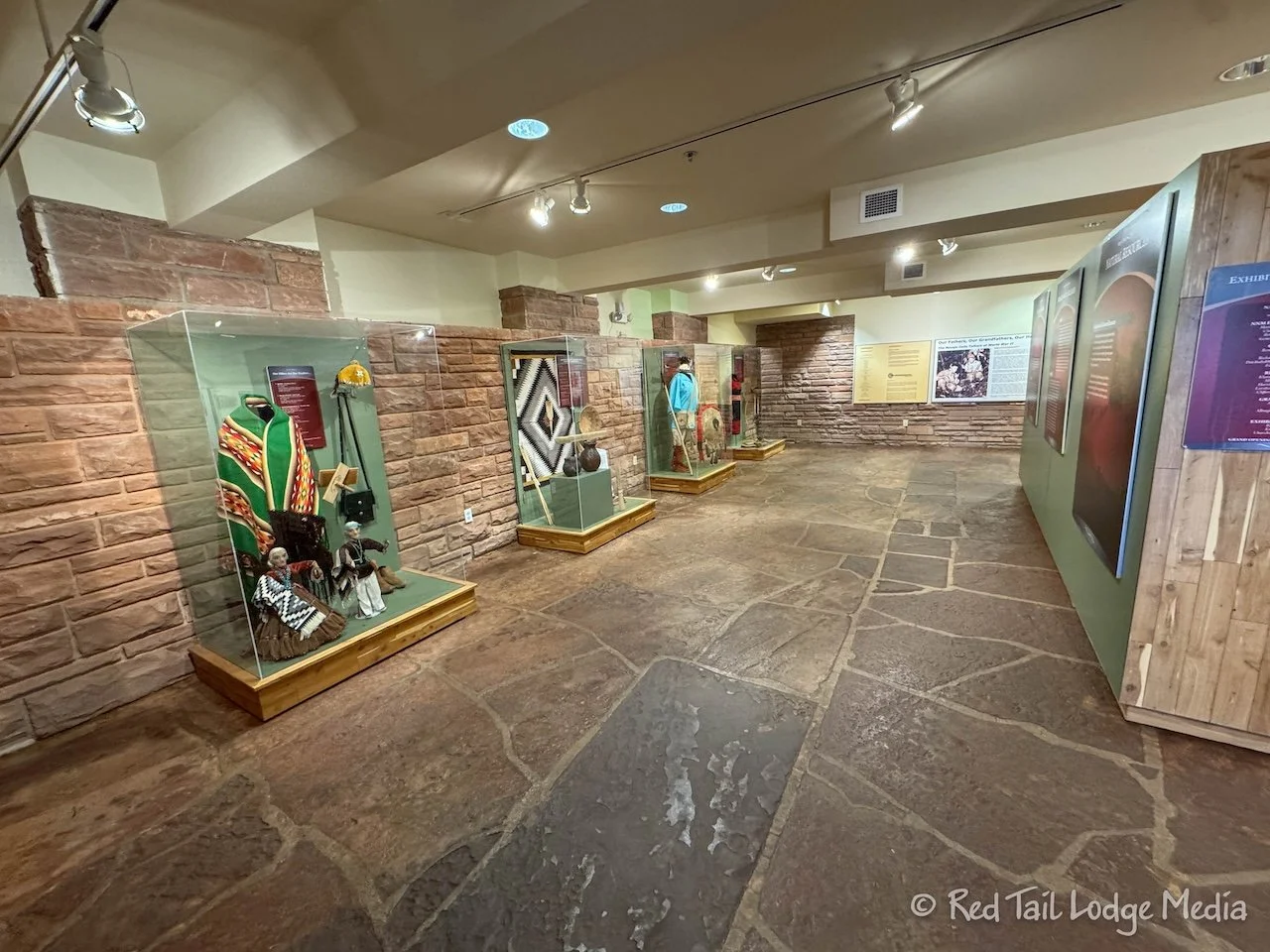
Inside the museum, there were displays of traditional clothing along with informational displays about the Navajo code talkers and other aspects and stories about the Navajo. Besides the museum, there was a large gift shop with a nice selection of high quality items, a hotel, and a restaurant.
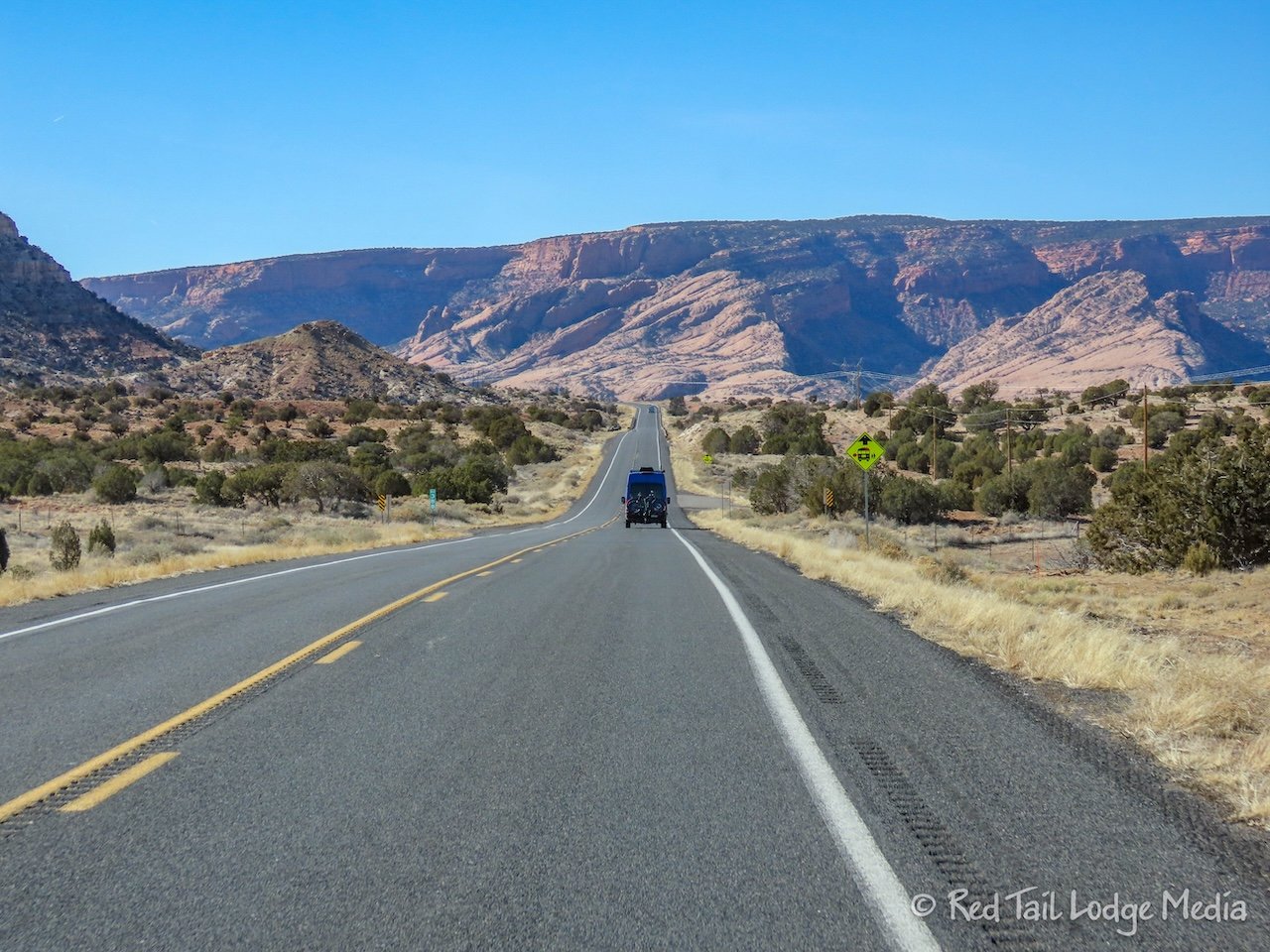
We only broke up the remainder of the drive that day with a gas stop in Tuba City and a rest area just before reaching Sedona. Our destination for the day was Dead Horse Ranch State Park. We had reservations for two nights at the campground.
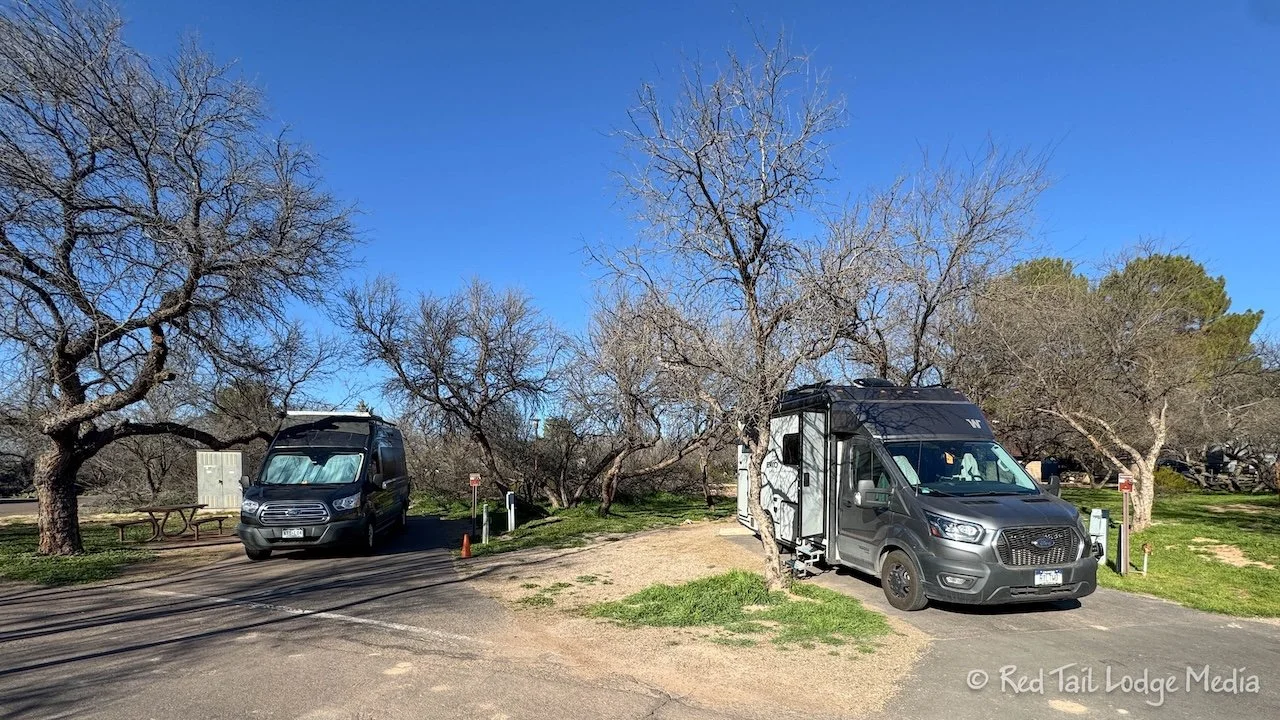
We arrived around dinner time. It was warm enough outside that we could enjoy our dinner together outside on a picnic table. After dinner, Ann made apple brownies in our Omnia Oven (paid link) to share with our friends. It was a nice way to end the day.
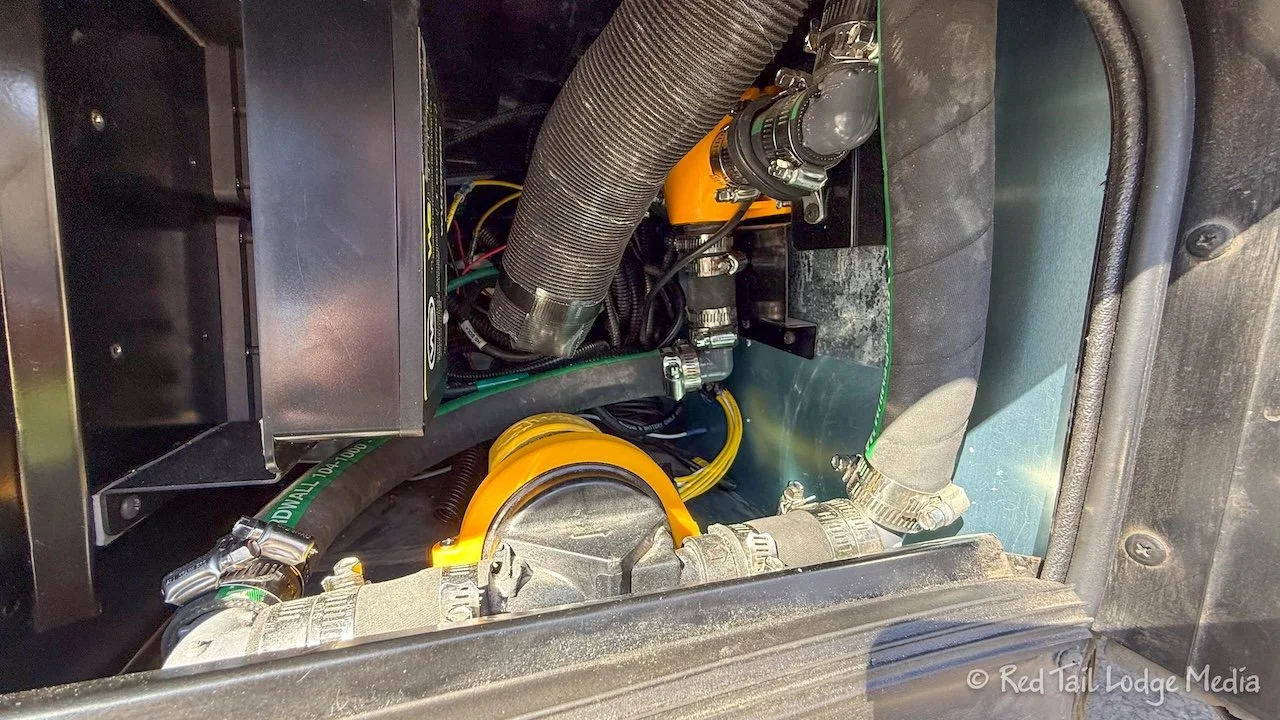
Saturday night, the “Whale Gulper” was running every 12 minutes, all through the night. It kept Keith awake, but Ann slept through it. The gulper is the pump that pumps the gray water from the shower and bathroom sink up to the gray tank, since those drains sit lower than the tank. Keith got up in the middle of the night to try to get it to stop. He tried pouring a large amount of water down the sink and shower drains. Then he tried pouring very warm water down the drains. He then tried pulling various fuses from the panel under the fridge. There was one labeled HVAC which he didn’t want to pull because he didn’t want the furnace to turn off. He even threw on some clothes, went outside, and tried to find the inline fuse for the pump inside the battery compartment, where the gulper pump was located, but he couldn’t find it. He finally gave up and just tried to sleep through it.
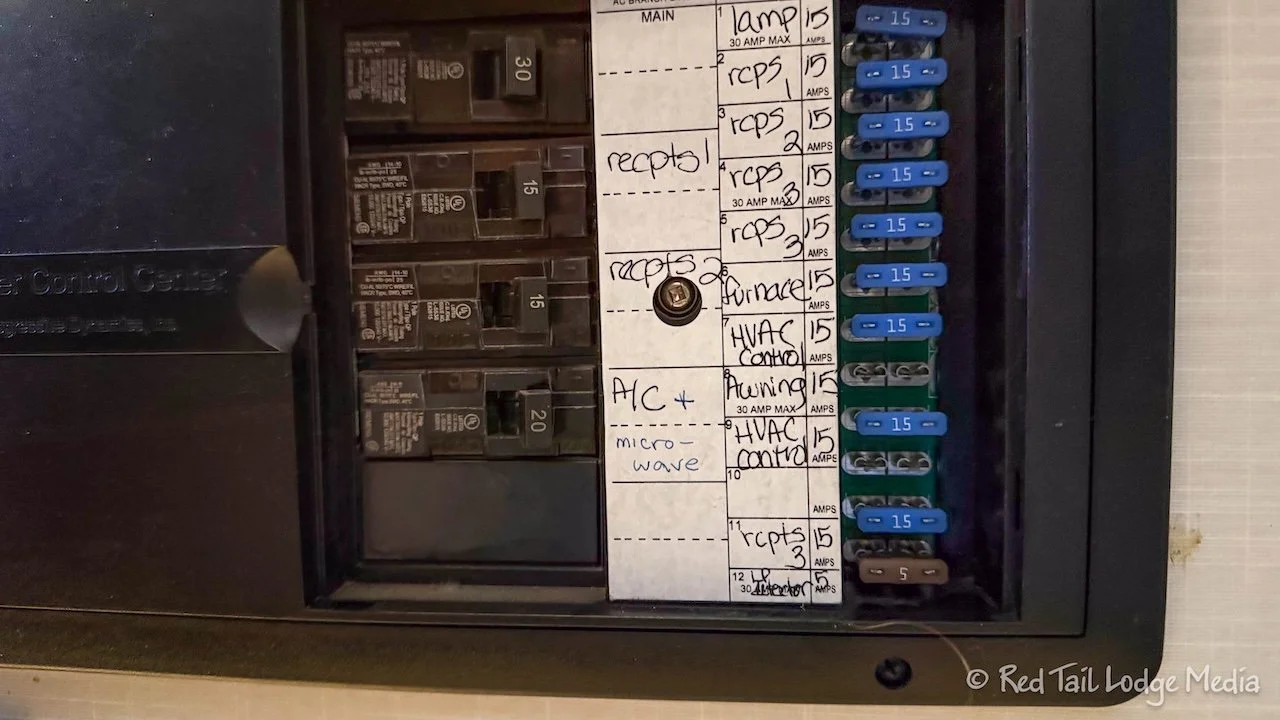
Sunday, Ann, Dave and Sandy went on a hike while Keith stayed behind at camp to try to figure out the issue with the pump. He emailed the pump manufacturer and posted the issue in the Winnebago EKKO Facebook group. Keith read the owner’s manual of the pump, identified all the water lines coming into and out of the pump along with locating the inline fuse. He also determined which fuse in the fuse panel controlled the pump. Of course, it was one of the two fuses HVAC.
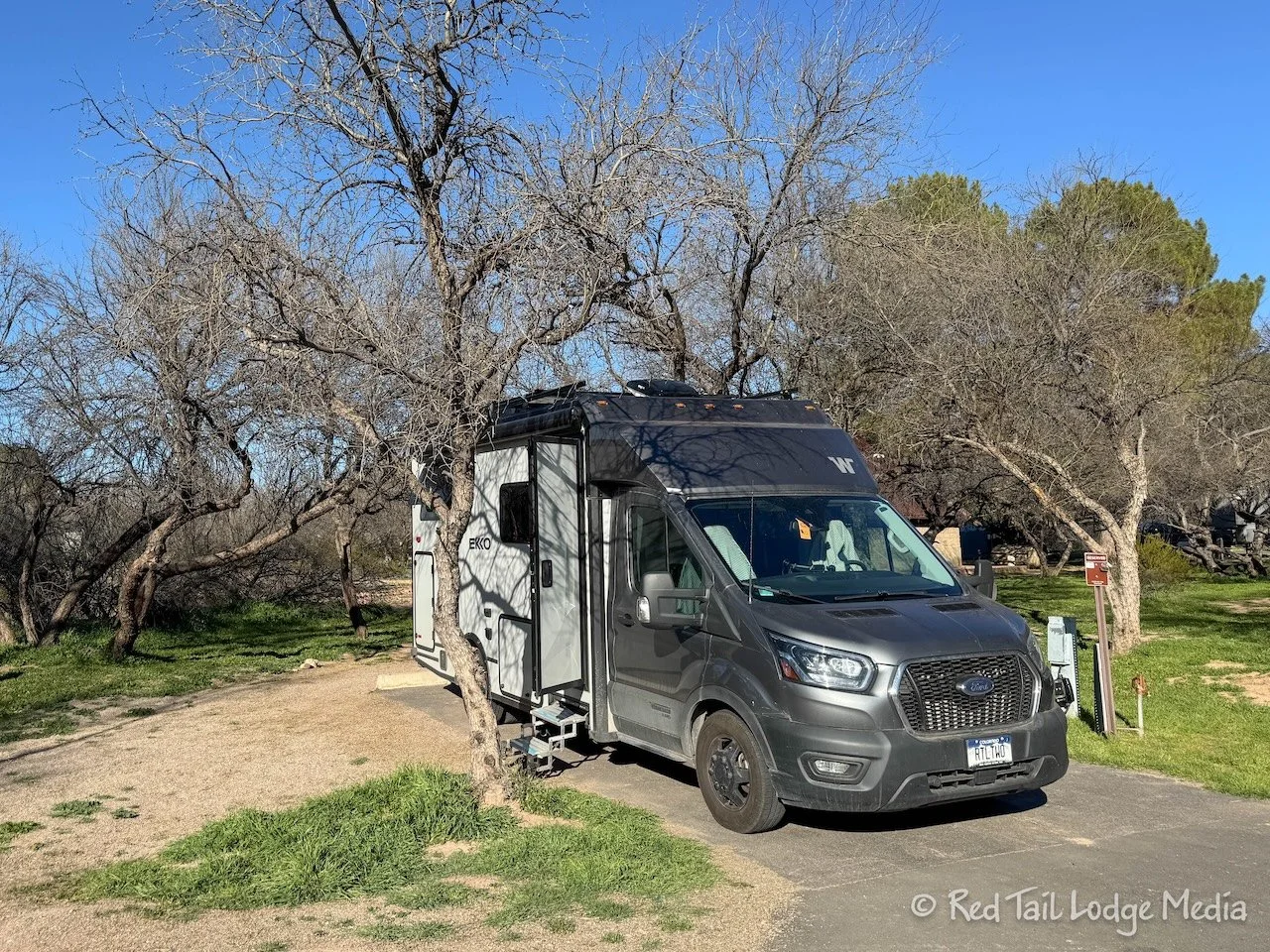
No one in the Facebook group had the same problem as us. Their issues with the pump were either the pump stopped working altogether or it would run continuously and not shut off. No one reported having the pump turn on at regular intervals. The manufacturer gave us some instructions on some things to look for, most of them required taking the pump apart. We decided to wait until we got back home at the end of our two week trip before diving that deep. In the meantime, we can just pull the fuse to allow Keith to sleep. To find out how the gulper issue was resolved, see Mod Thirty Two in the More EKKO Mods for Season Eight post.
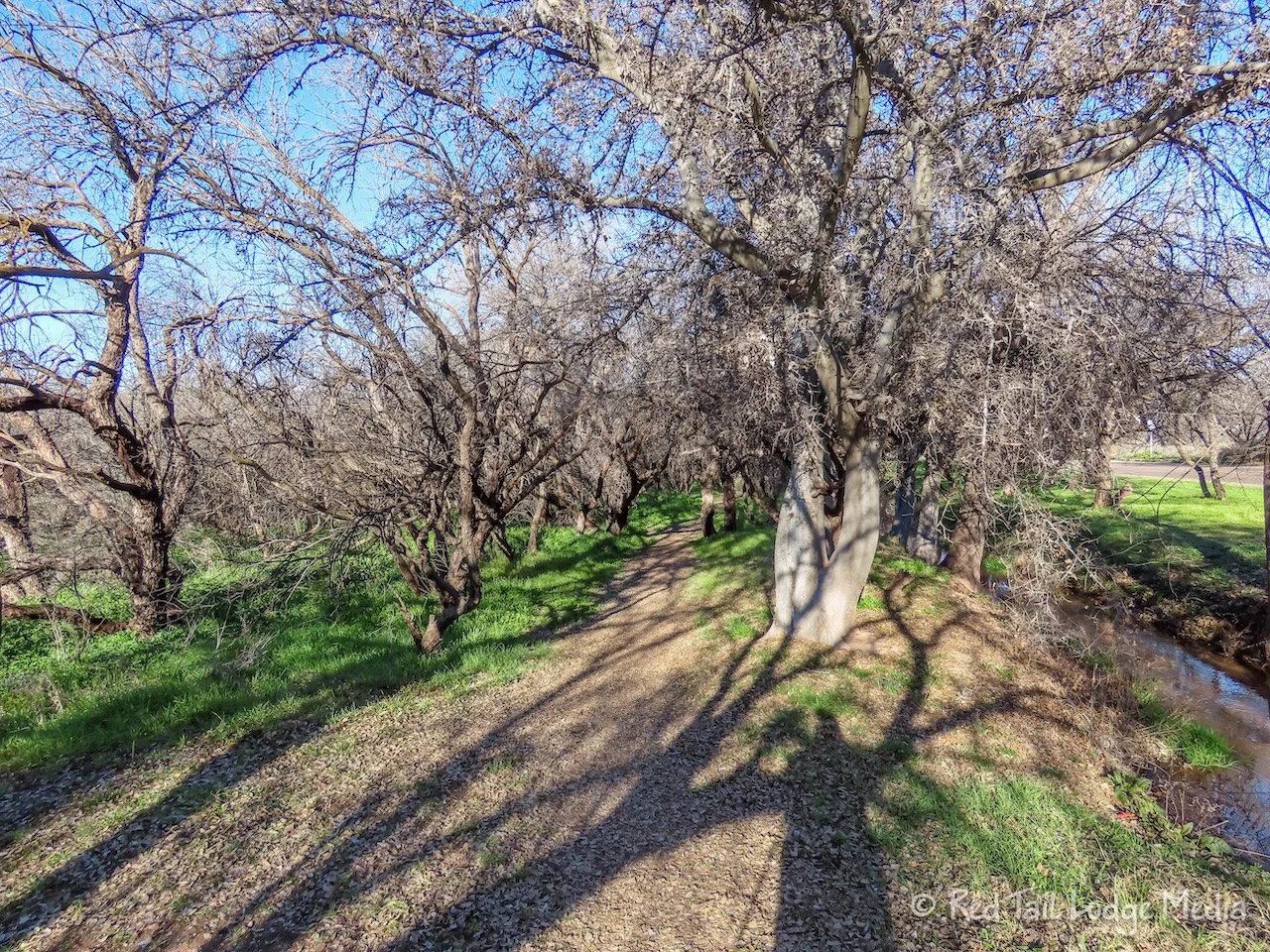
The rest of us hiked from the campground up to Tuzigoot National Monument, which lies on the north side of the state park. We started out following the HD trail, which followed a ditch or canal. It was a very pleasant trail, mostly shaded by a canopy of short trees with lush green vegetation covering the ground. The trail then followed the Verde River for a little ways.
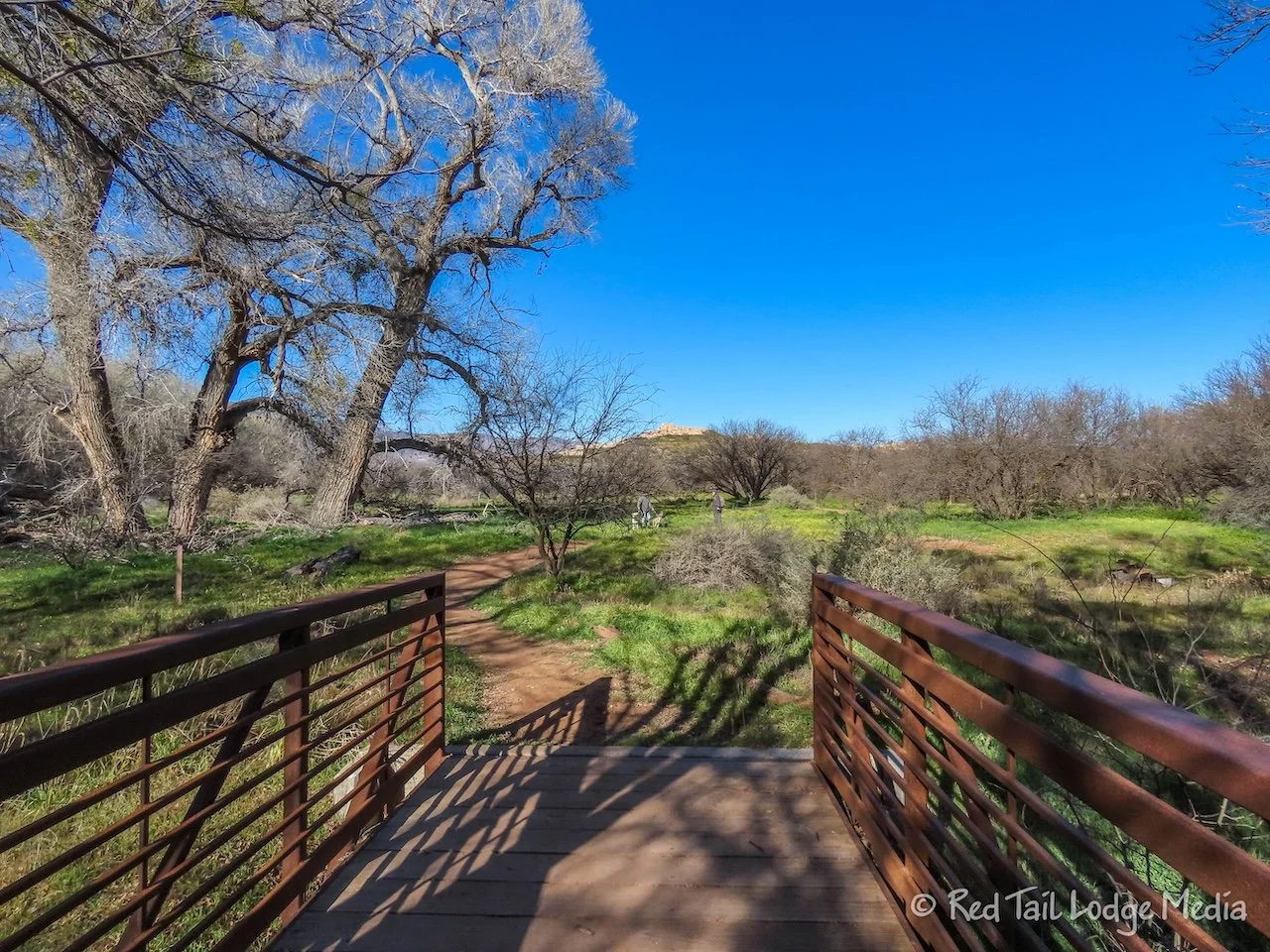
It was unclear from our maps and AllTrails which exact route to take to reach the National Monument. The trail to the west led over to the road which went up to the Visitor’s Center. However, AllTrails showed the trail in red. We weren’t quite sure what that meant, but we eventually found out. There were no trespassing signs posted along that section of trail.
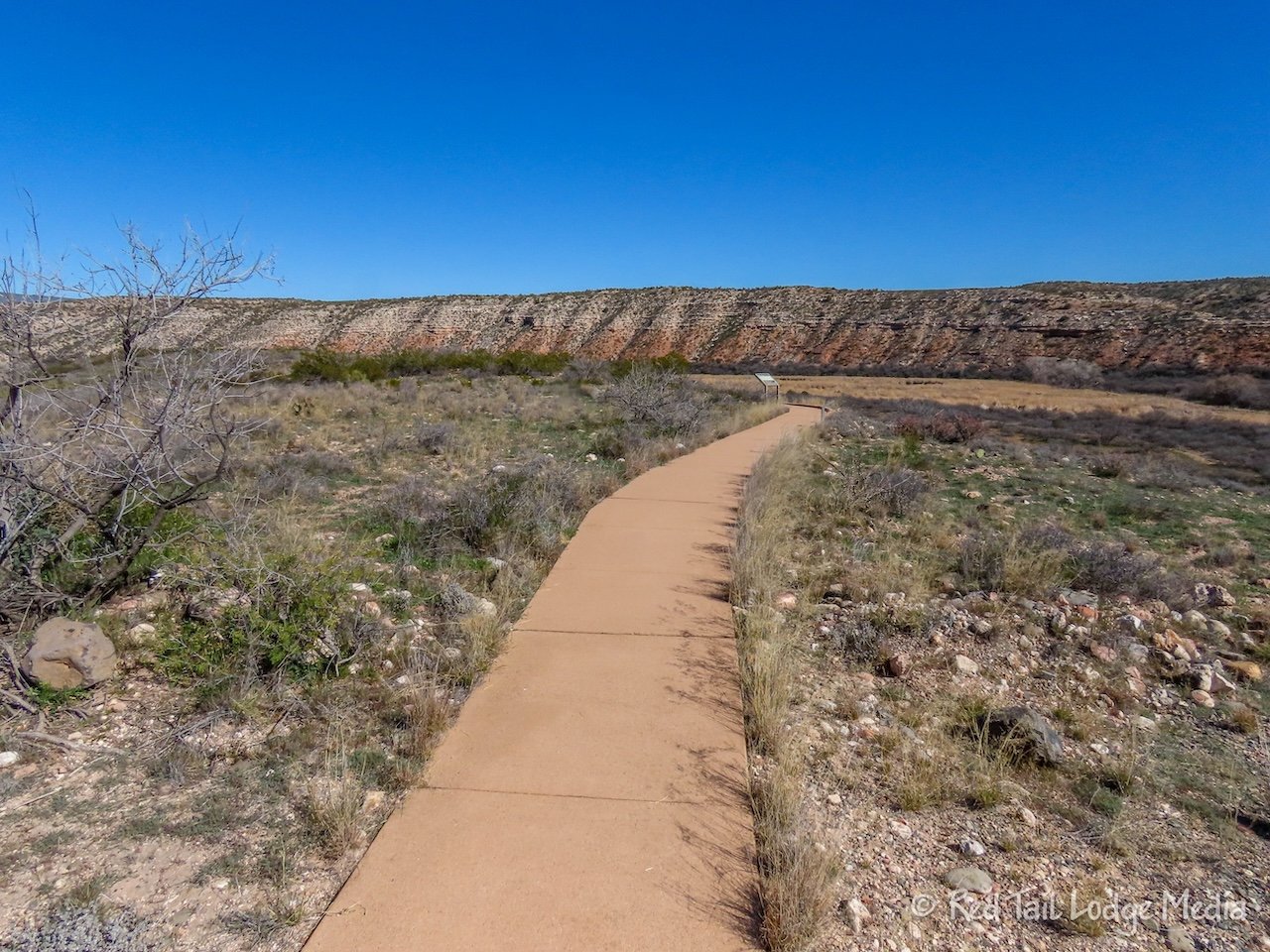
The trail that turned to the east went along the west side of the Tavasci Marsh. From there you can turn onto the W. Tuzigoot Road which is a dirt road leading up to the paved marsh overlook trail. Turning left onto the paved trail brings you right up to the visitor center. That would be the route we would recommend taking.
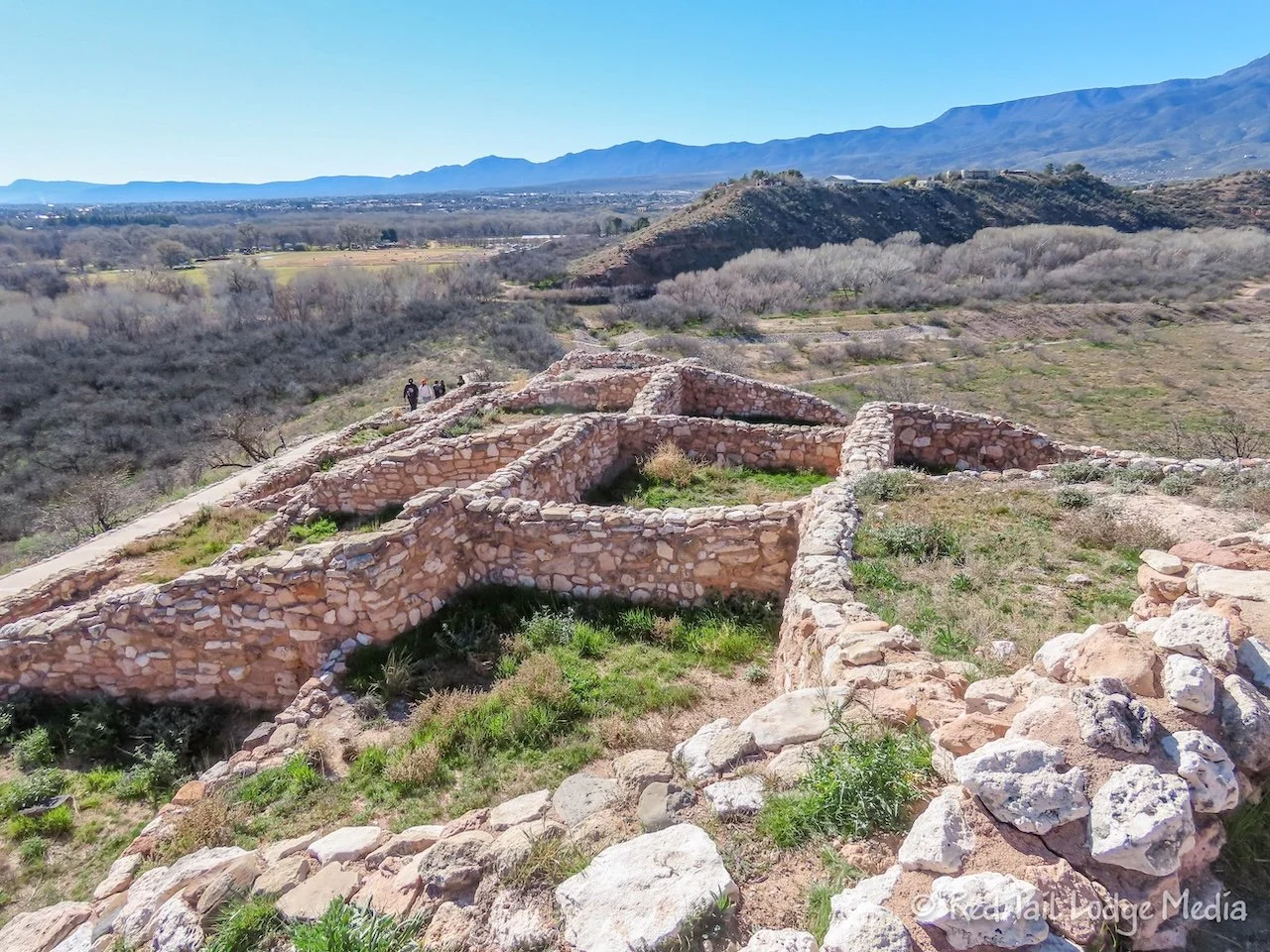
Tuzigoot National Monument is a hilltop pueblo of the Sinagua people. It was occupied from about 1000 through the late 1300’s, for about 400 years. The site was excavated in the 1930’s and walls were reconstructed from the rubble.
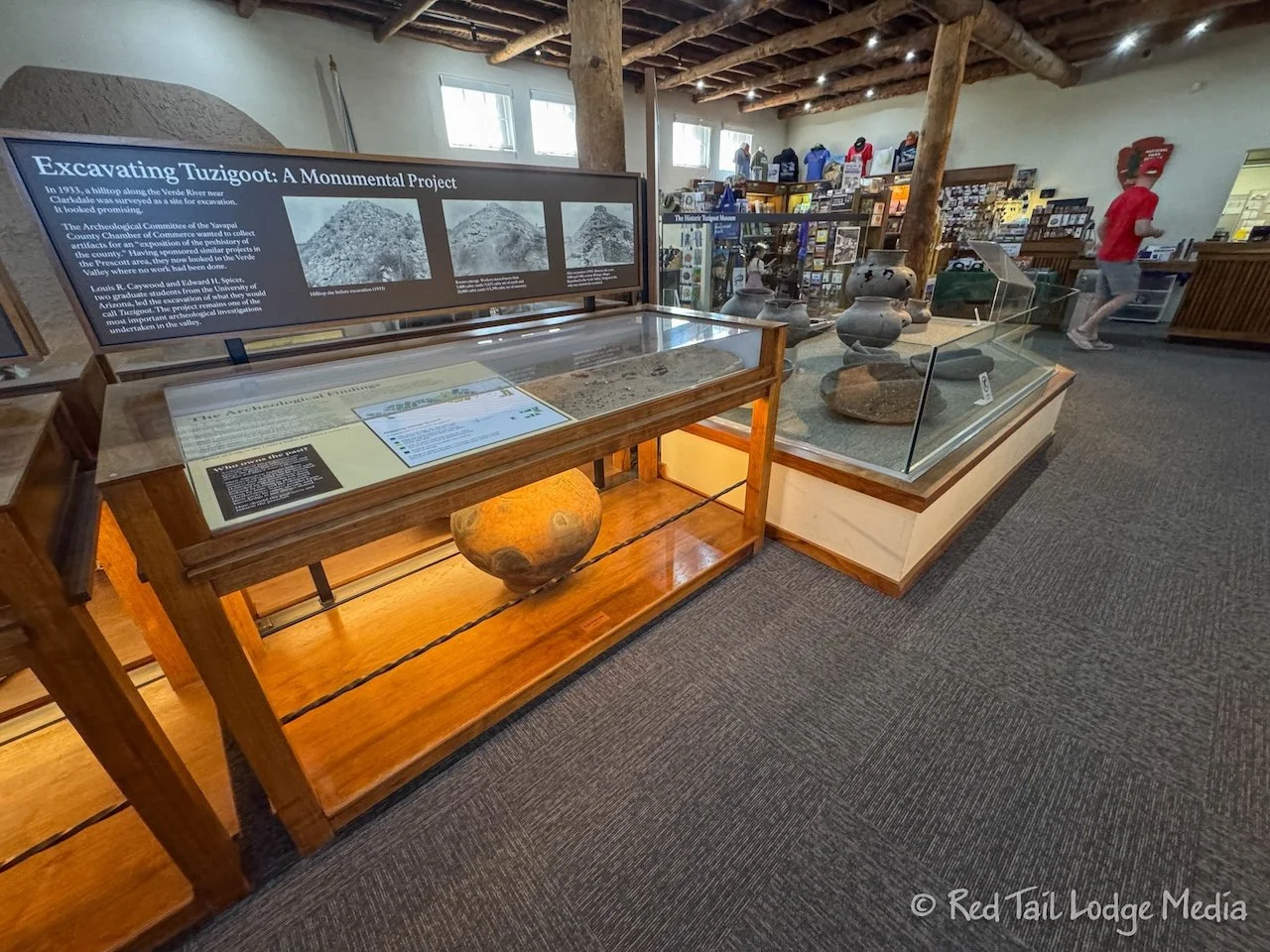
Many of the artifacts uncovered by the excavations are on display inside the visitor center’s museum. We were impressed by the size of some of the pottery, which stood several feet tall. Also inside the museum were several videos. One of them demonstrated how axes were made.
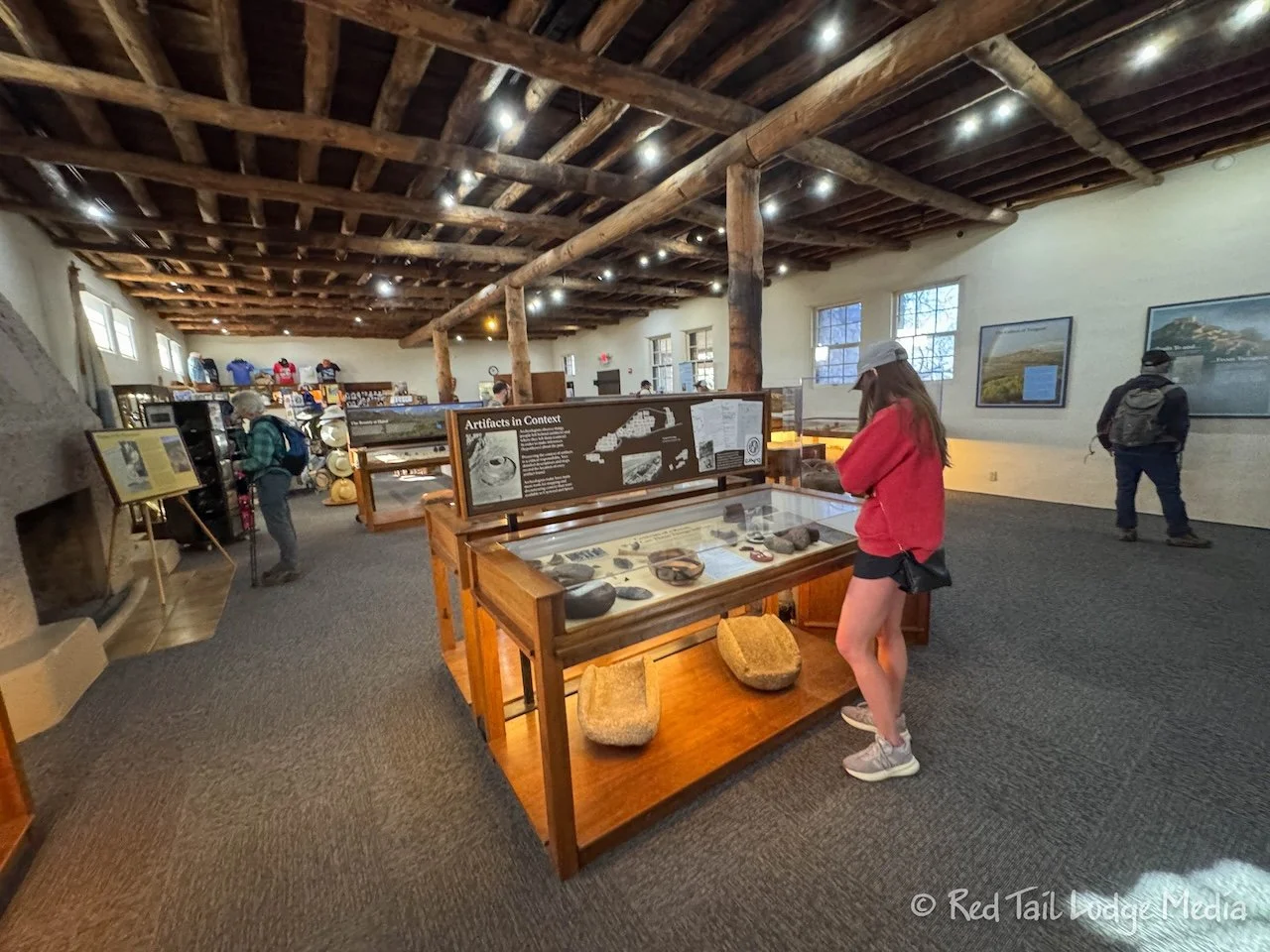
We had reminded ourselves the night before that we needed to bring along our national park passes. Keith immediately put his in his wallet, but the rest of us forgot. Of course, Keith was not with us, so we had to pay $10 per person to enter the Tuzigoot National Monument. That’s OK, we don’t mind supporting the National Park Service.
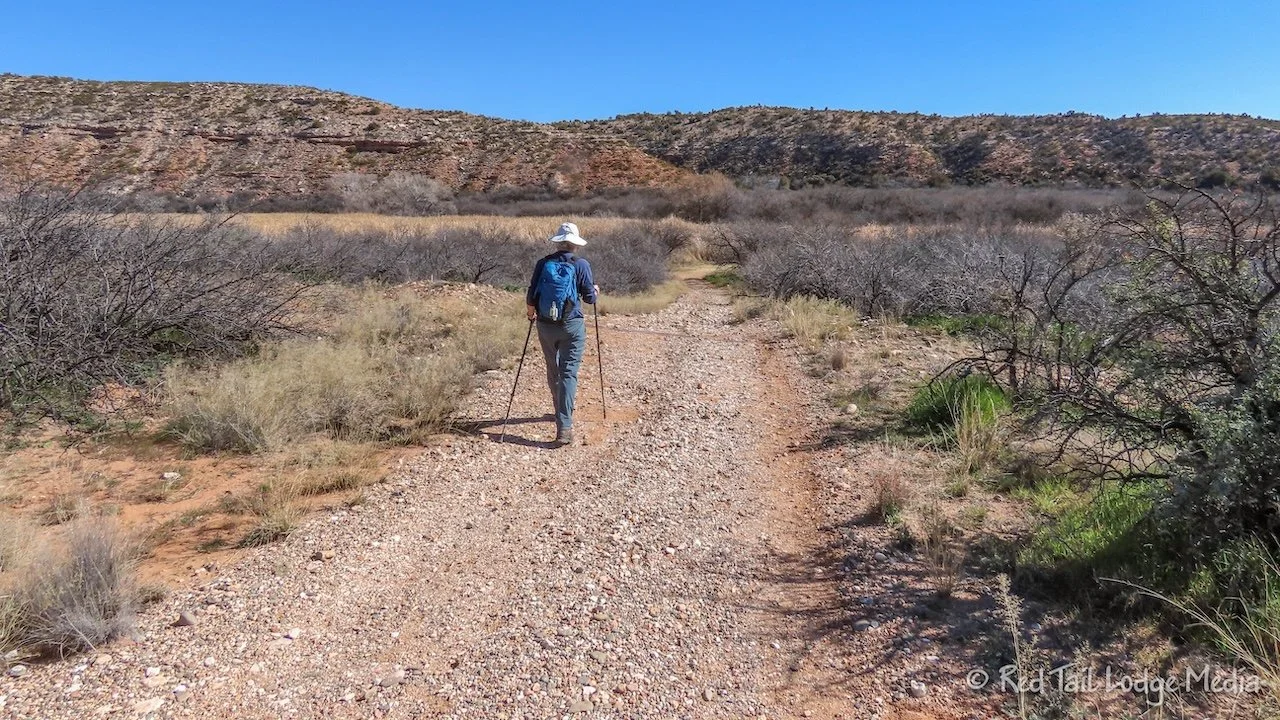
By the time we returned to the campground, we had covered about five and a half miles, with an elevation gain of 250 feet which we completed in just under four hours. We counted it as hike number 3 of our 52 Hike Challenge for 2026, even though Keith was not with us.
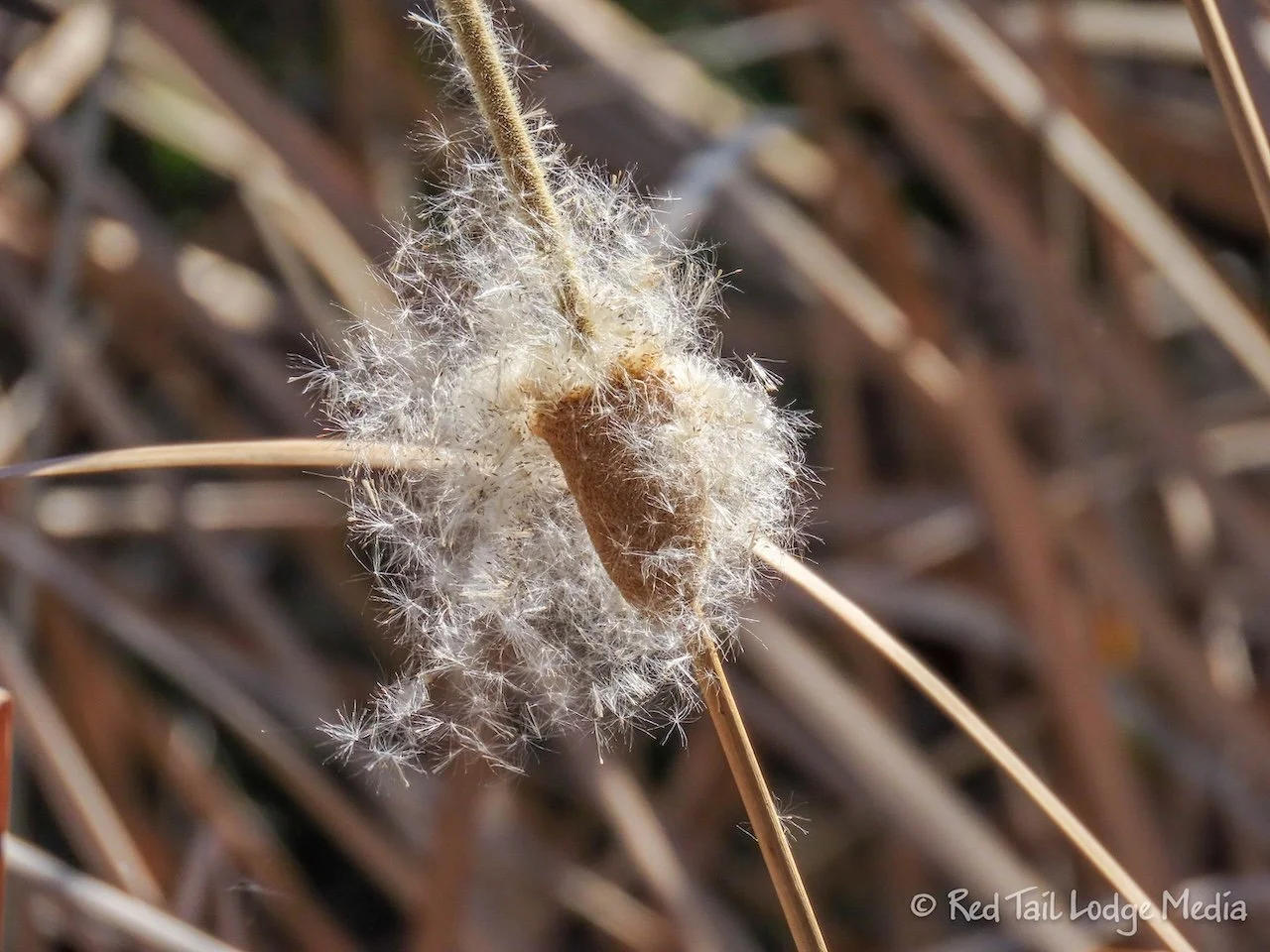
In the afternoon, Dave went for a mountain bike ride while the rest of us just hung out at camp. E-bikes are only allowed on pavement inside of Dead Horse Ranch State Park. Keith and Ann only have e-bikes and Sandy didn’t feel like going for a ride.
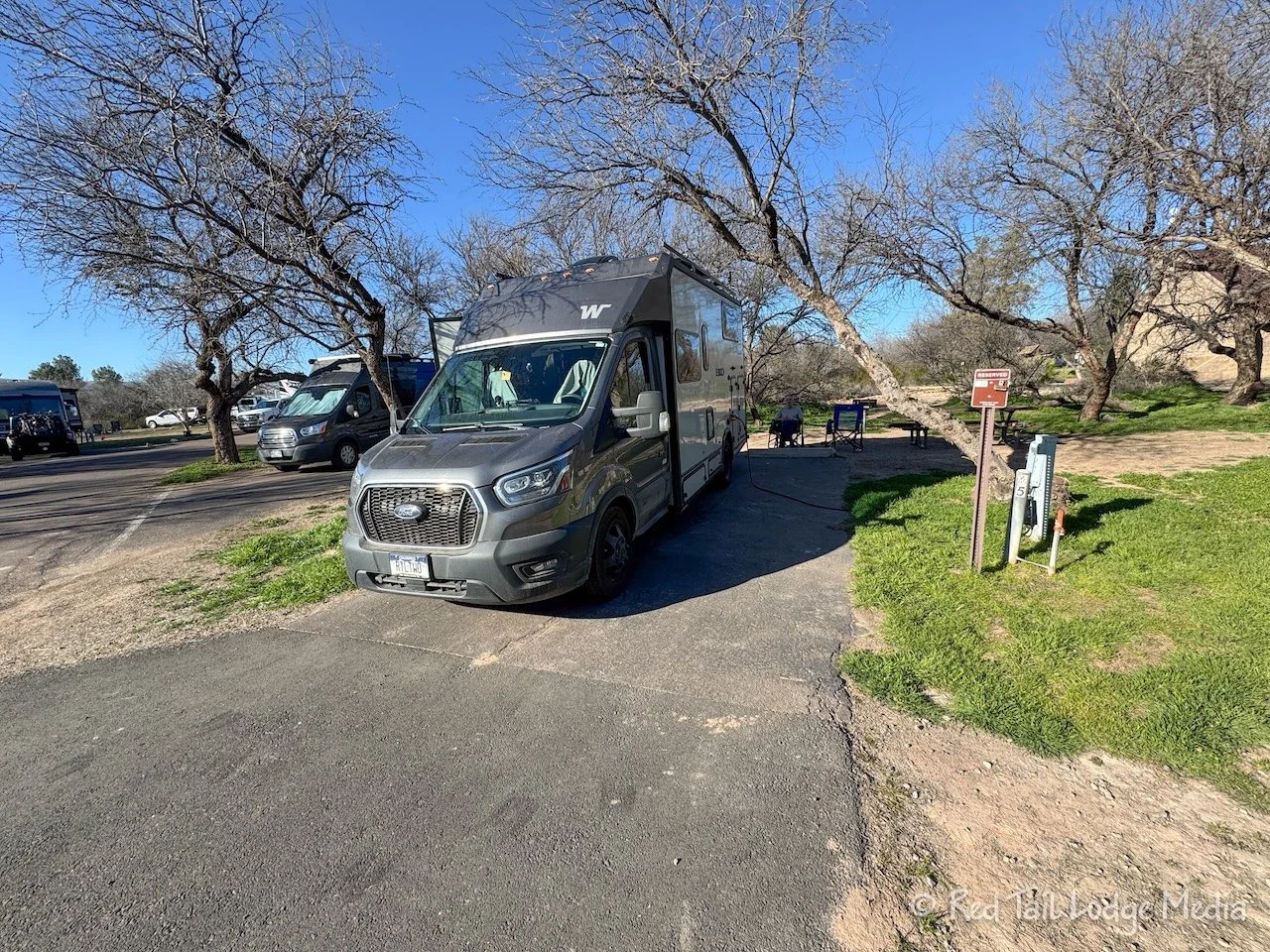
It was a lovely day to just hang out. The temperatures crossed into the 70’s. We cooked outside in the evening and enjoyed our meals outside on the picnic table.
Monday was a travel day from Dead Horse Ranch State Park down to McDowell Mountain Regional Park near Scottsdale. It was about a two hour drive, so we spent most of the day north of Camp Verde before heading south.
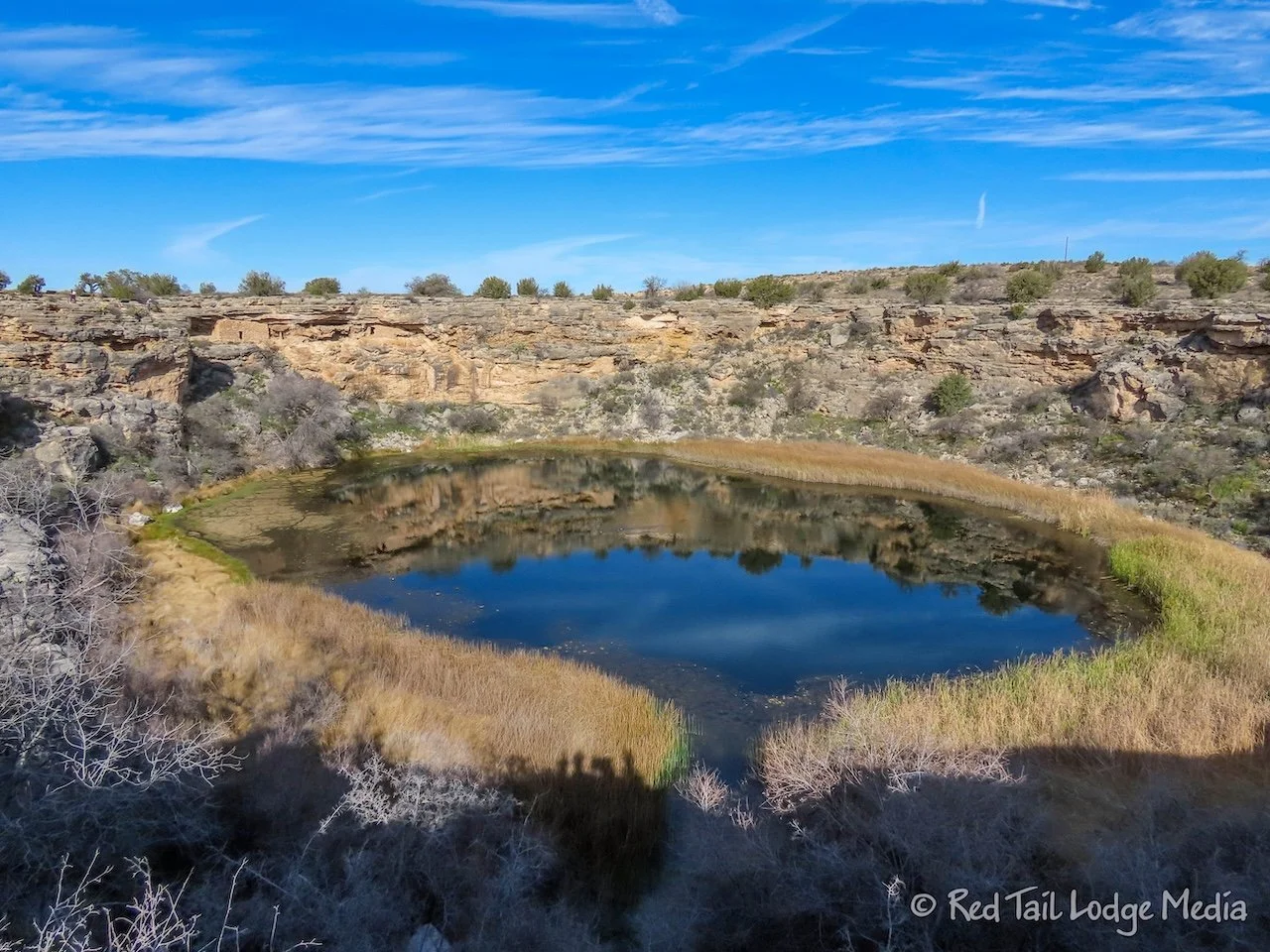
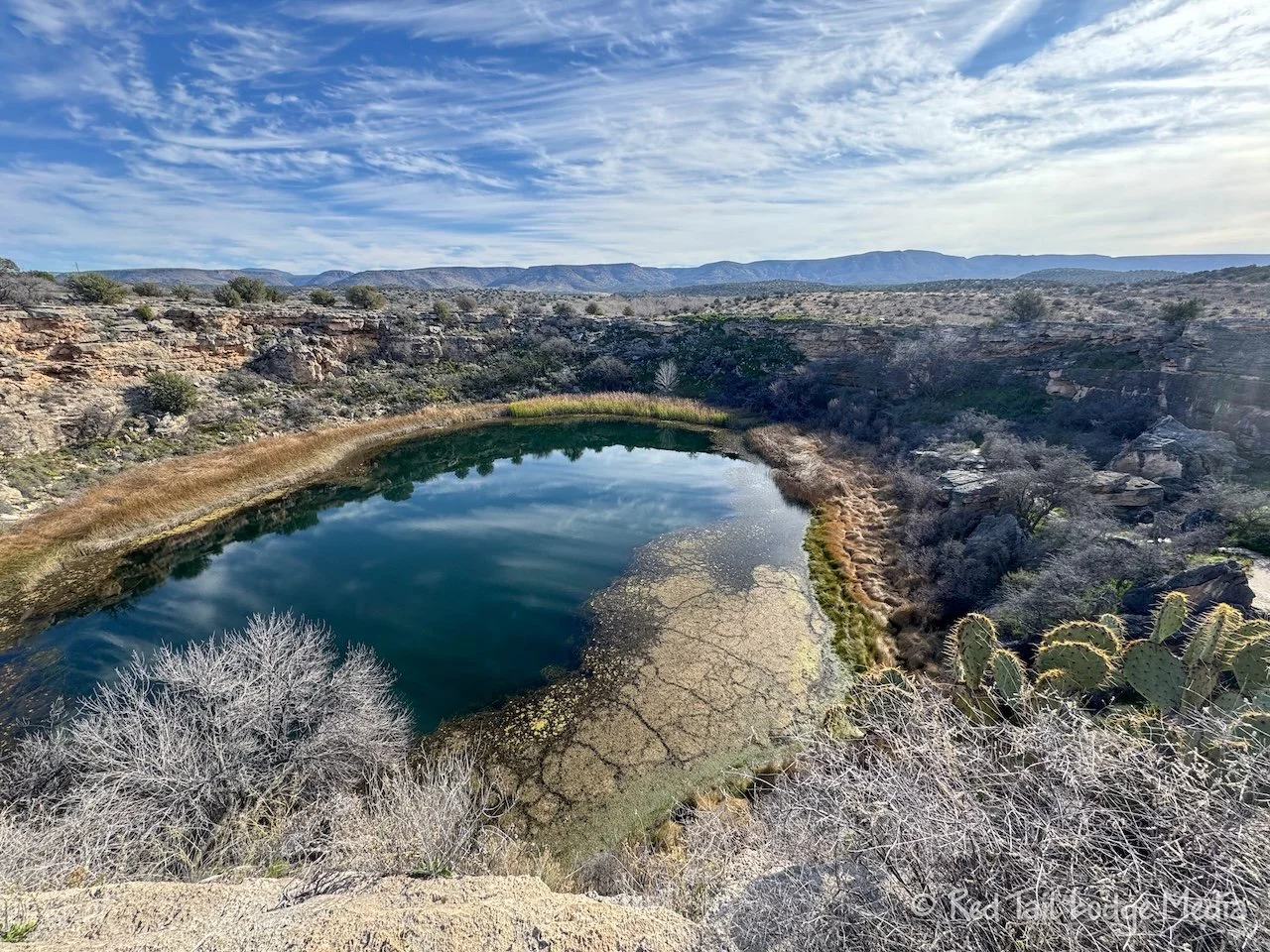
The first place on our agenda was Montezuma Well National Monument. Montezuma Well is a natural spring at the bottom of a round canyon. The water flows out through a narrow cave. One thousand years ago, people channeled the water flowing out of the cave into an irrigation canal that stretched for miles. From 1050 and into the 1100’s, people built pit houses down near the edges of the spring, in the cliffs surrounding the spring, and later on top of the canyon rim.
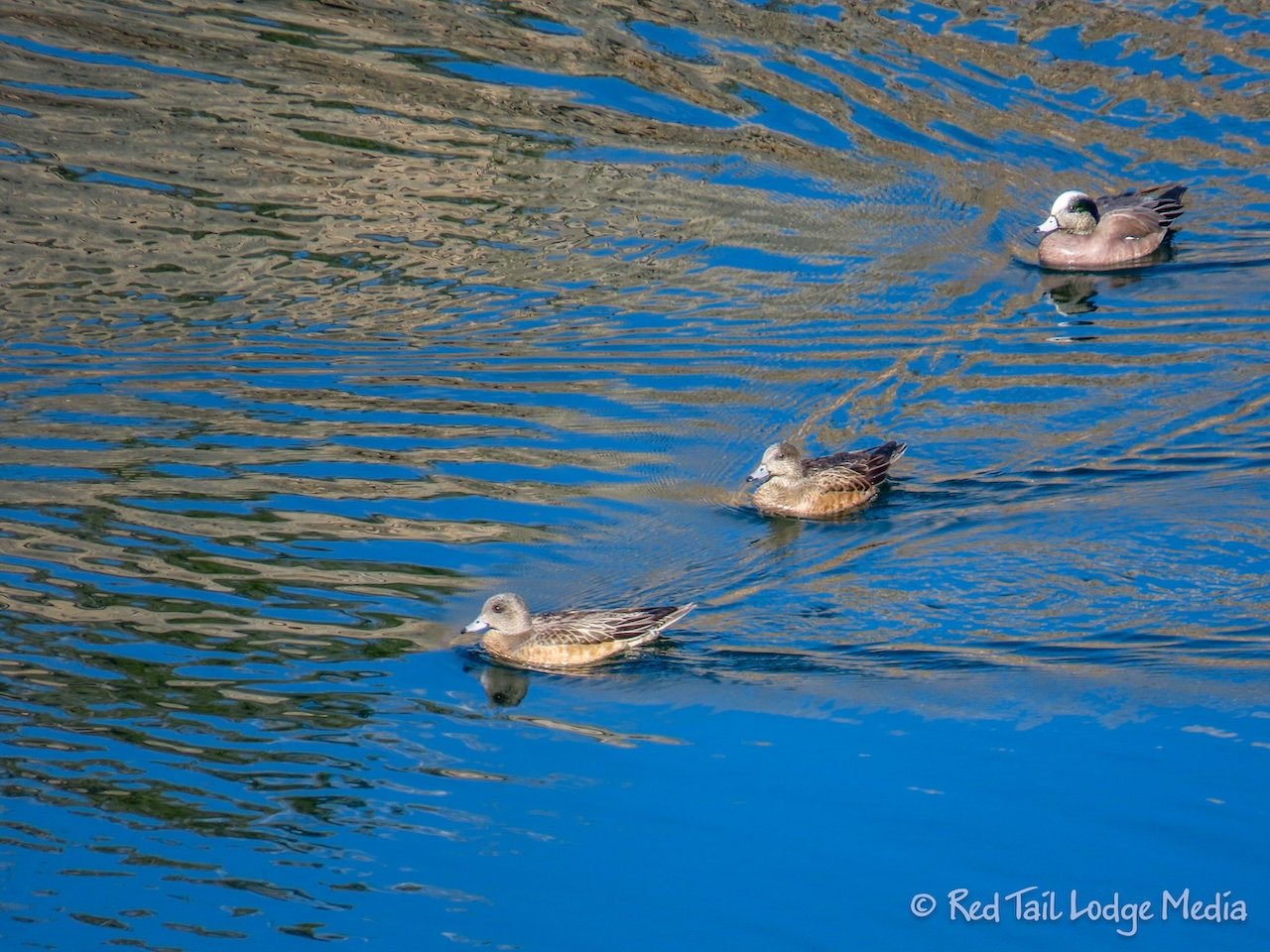
The ecosystem of the well is rather unique. The water of the spring contains high levels of arsenic and carbon dioxide, so no fish live in the water, but there are other forms of life that do. These include a small amphipod, leeches, a water scorpion, the Montezuma Well spring snail, and a unique, single-celled diatom.
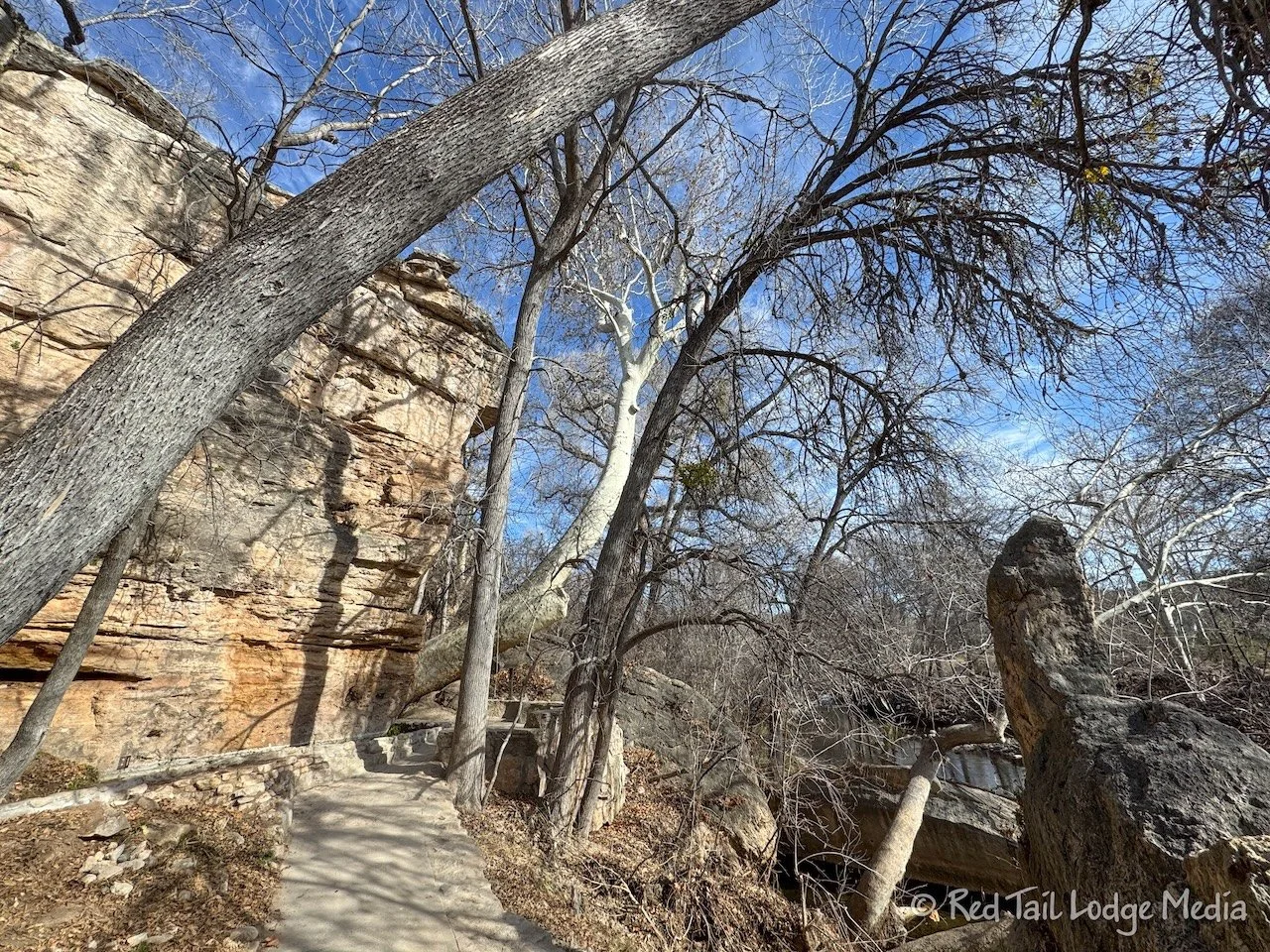
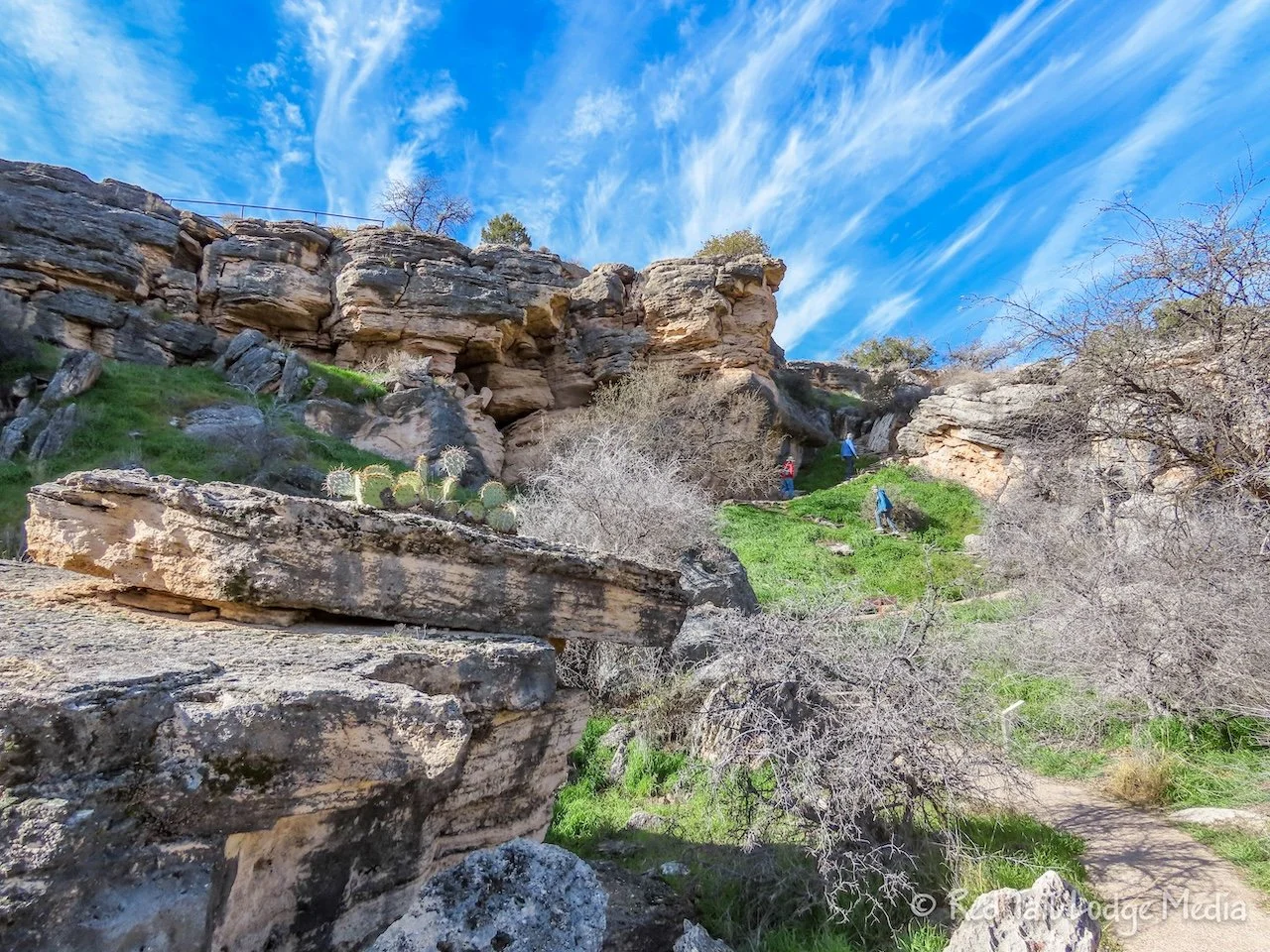
The rim of the well is a short walk up from the parking lot. From the rim, you can see some of the cliff dwellings and the water below. A short trail takes you down to the water’s edge and to where the flow of the water disappears into the rock. Another trail follows the rim a little ways before descending down the outside of the well and over to where the water emerges from the cave. This trail also follows alongside the canal for a short distance.
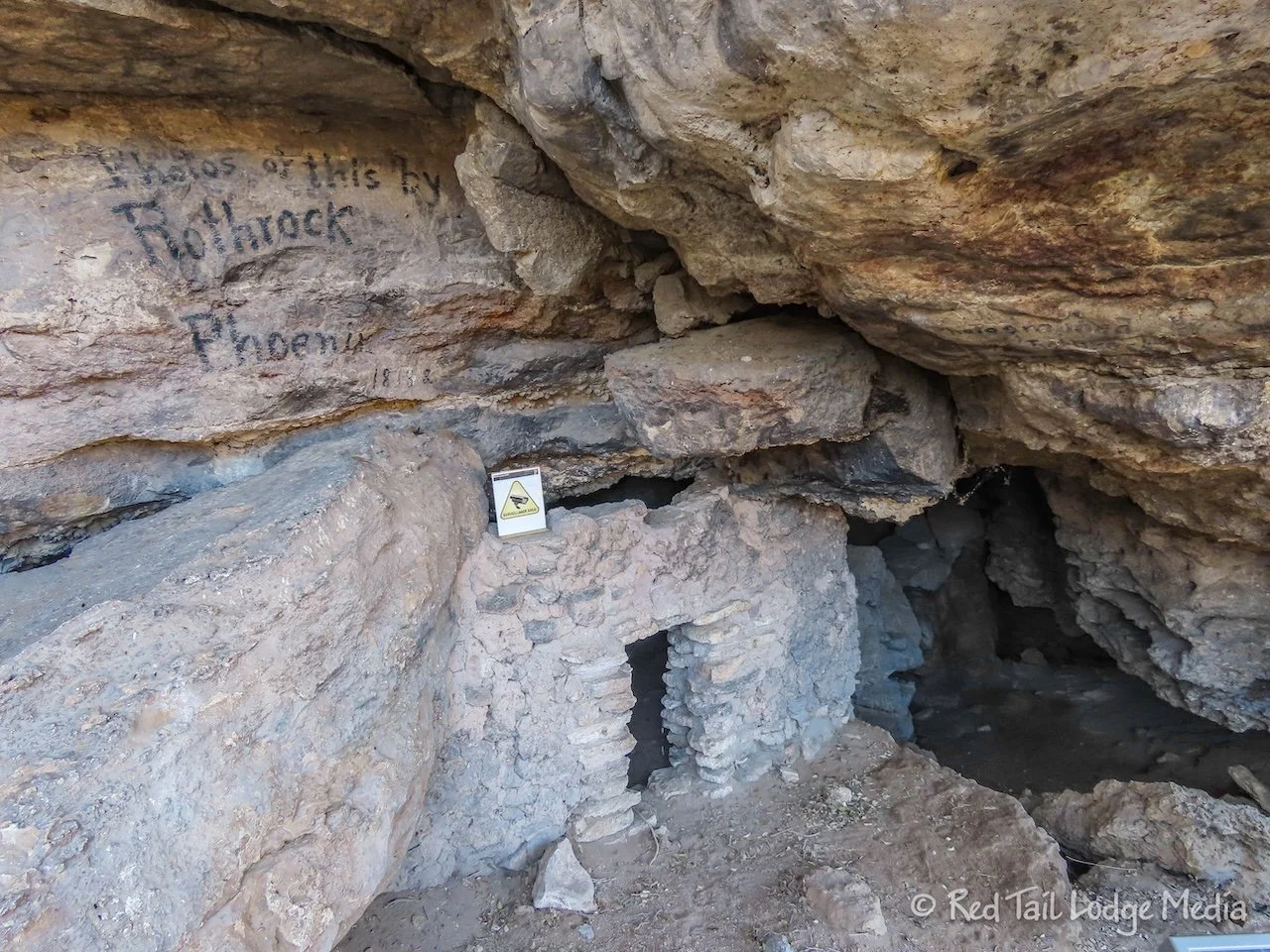
It was a very fascinating place and there was no entry fee to visit. Two volunteers were there, providing us with wonderful information and answering our questions. One of the volunteers mentioned that the Crane Petroglyphs were worth visiting and were just a few miles down the road. The petroglyphs were only open four days a week, Friday through Monday. Since it was Monday, we decided to go there next.
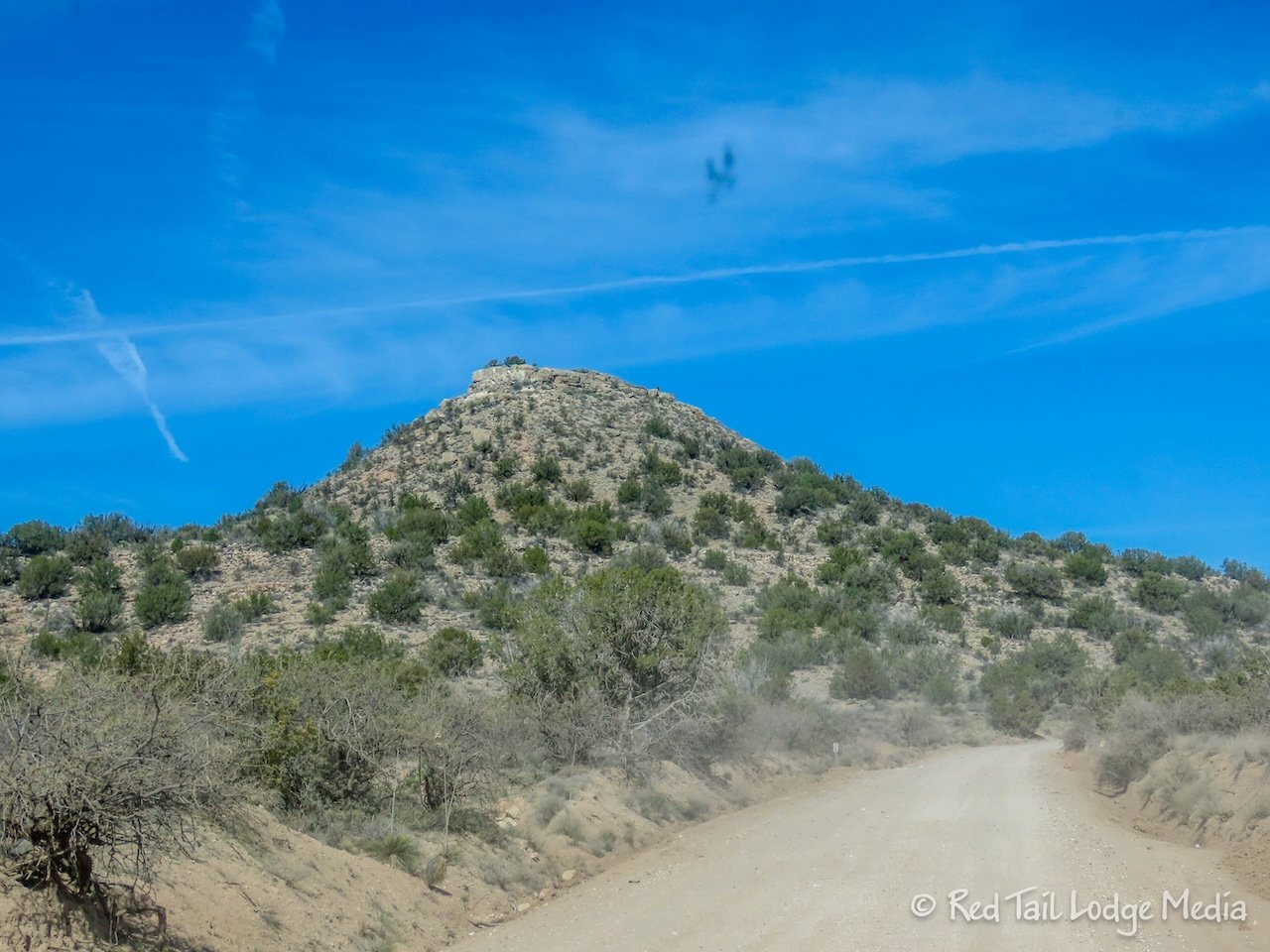
To get to the petroglyphs from Montezuma Well, the fastest route was on a dirt road for several miles. It wasn’t too bad as long as we kept our speed down. Luckily, we didn’t have to go back the same way when we left the petroglyphs.
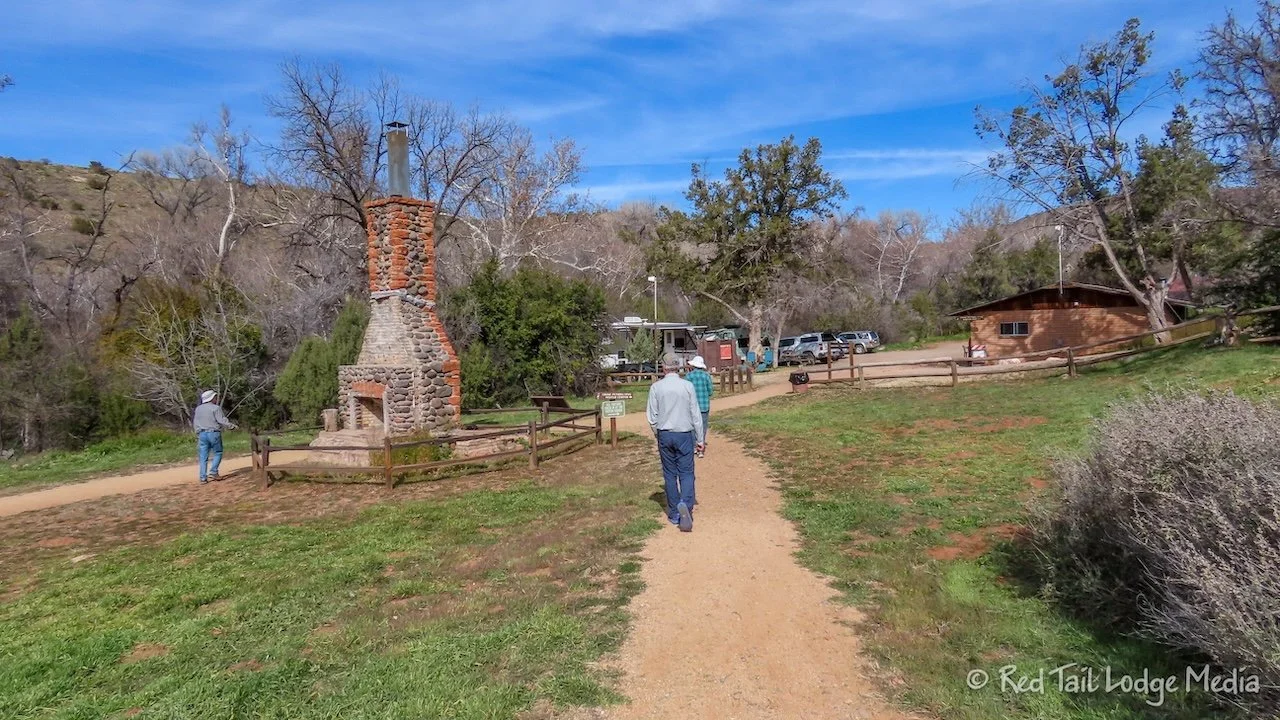
The Crane Petroglyph Heritage Site is run by the National Forest Service. It used to be known as the V Bar V Heritage Site, named after the ranch that used to be on the land. There is a fee to visit the petroglyphs, but our National Park passes (America the Beautiful) were accepted there. After displaying our passes in our vehicles, we walked down to the visitor center to check in.
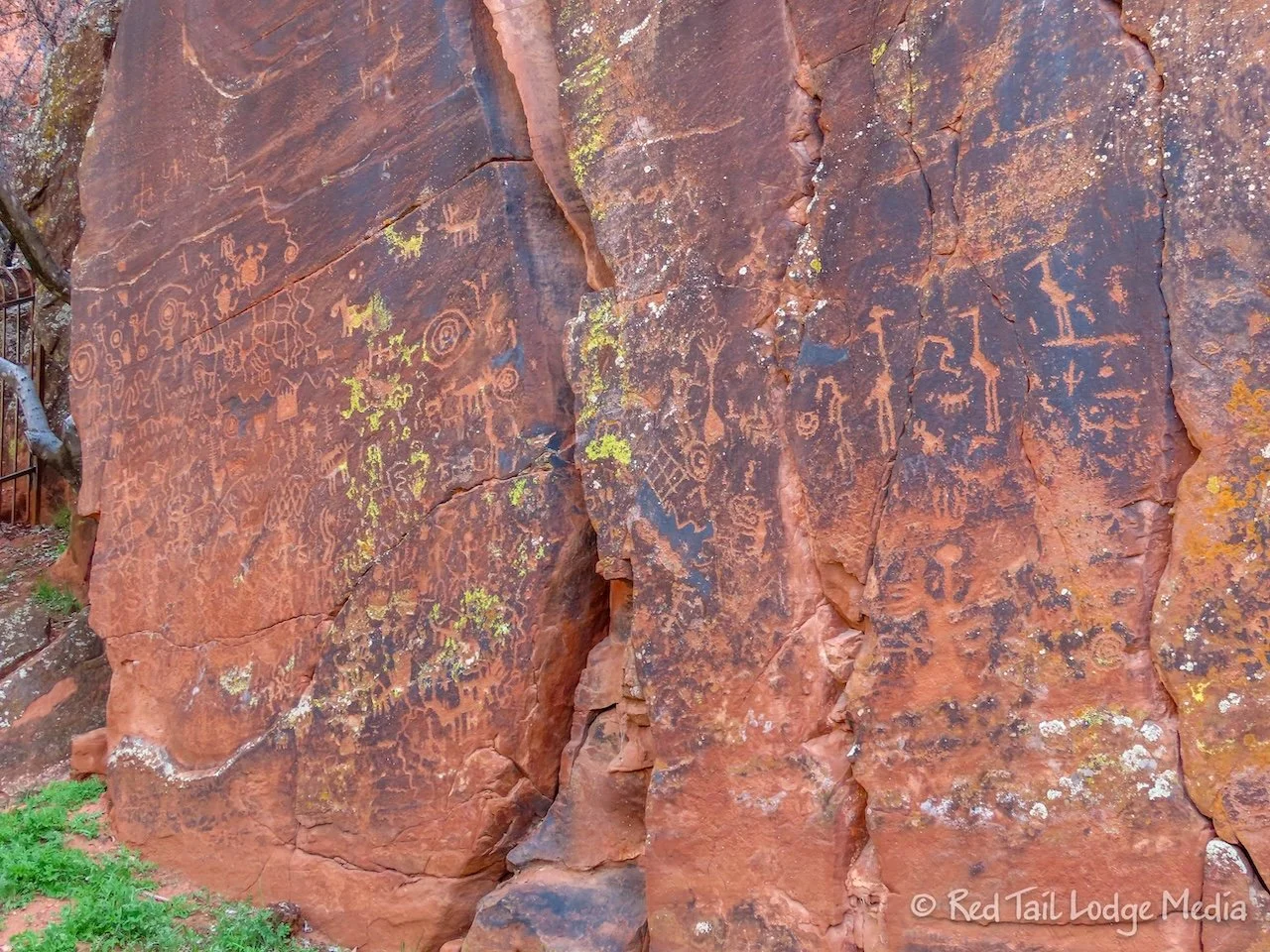
After briefly checking out the few displays inside the visitor center, we followed the path over to the petroglyphs. A volunteer at the petroglyph panel provided us with a wealth of information. The panel displays over 1000 different glyphs. Some of the rocks line up to form a calendar, to let the people know when to plant and harvest their crops.
From there, we headed over to Montezuma Castle National Monument. The Castle and Well are two different units of the same national monument. Unlike the Well, the Castle is a fee area. Instead of displaying our passes in our vehicles, Montezuma Castle requires you to show your pass to the cashier inside the Visitor Center. It would be nice if all of the federal agencies and parks would either be consistent with where you must show your pass or have clear signage so that you know whether to leave the pass in your vehicle or take it with you. It would prevent visitors from returning to their vehicles to either leave their passes or to retrieve them.
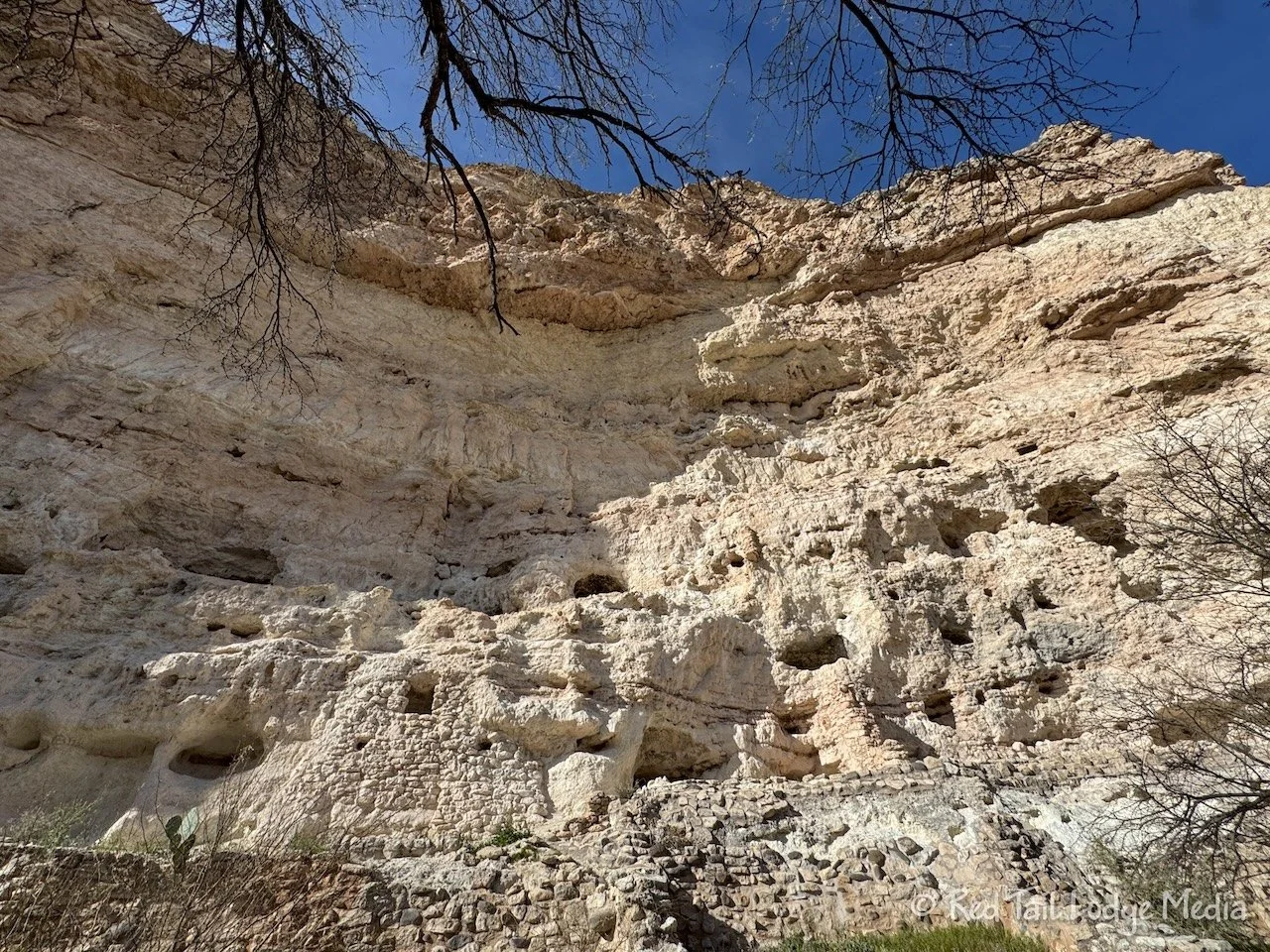
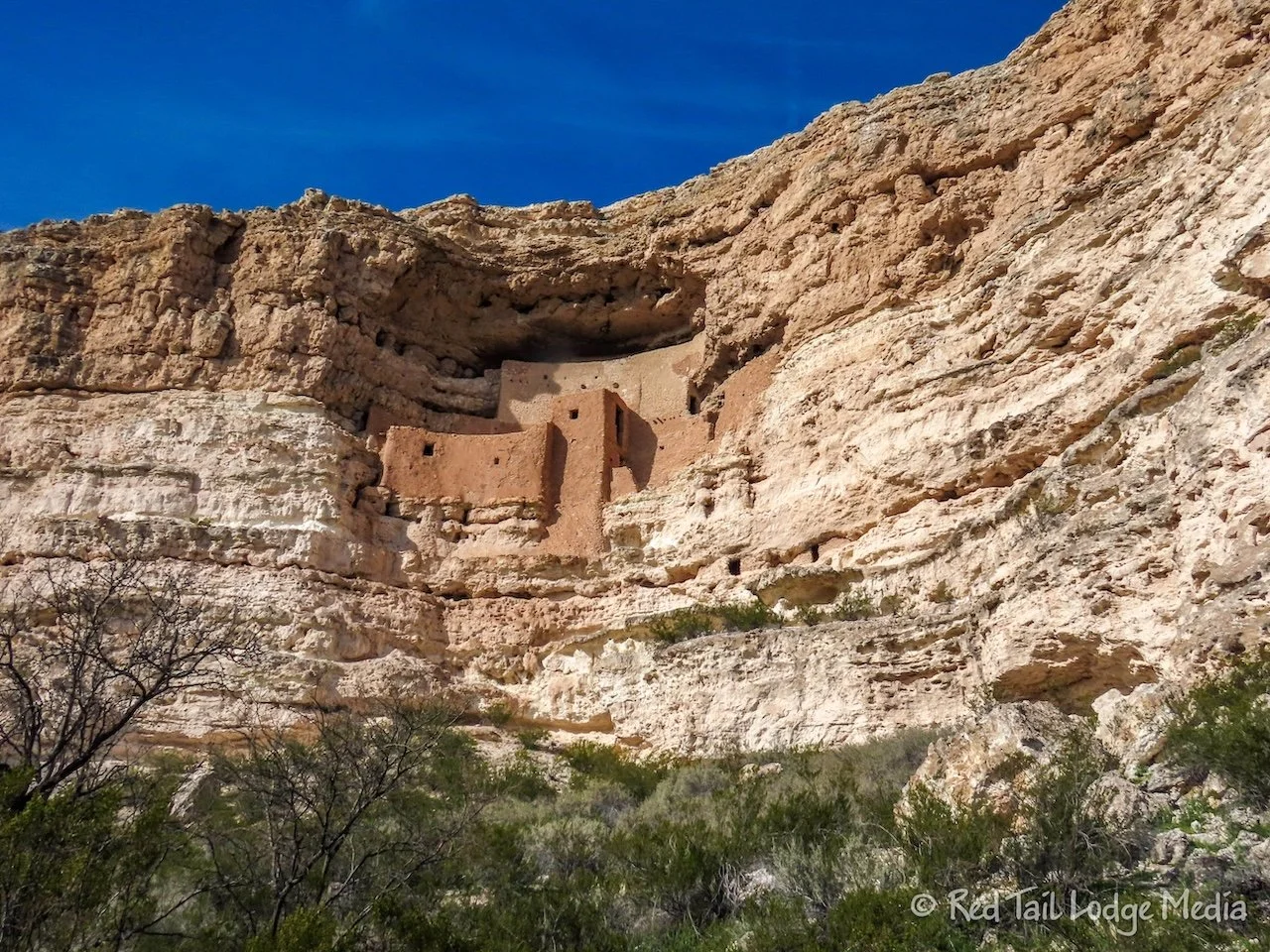
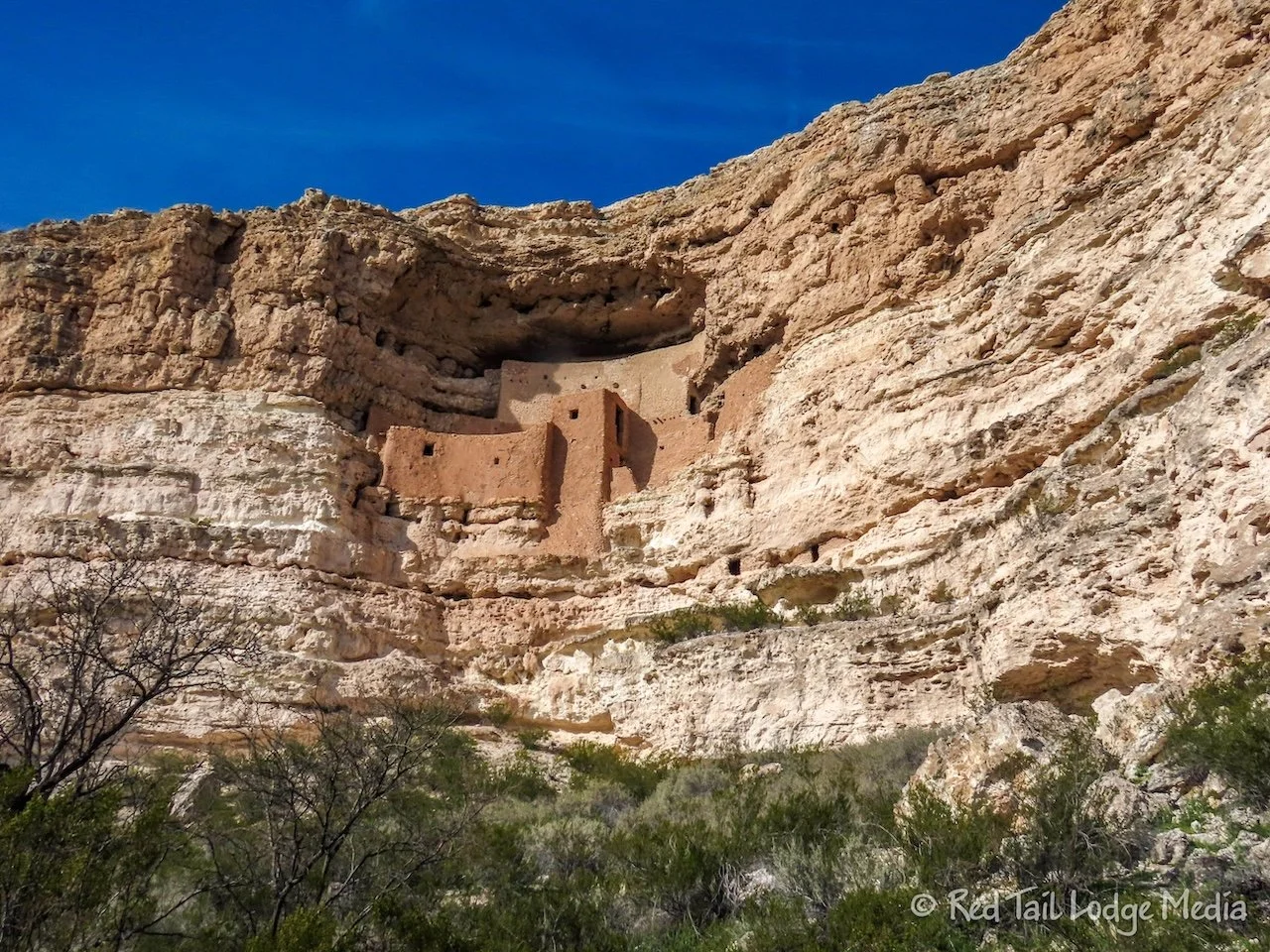
Montezuma Castle is a well preserved cliff dwelling from 1125. It was occupied until about 1395. The structure sits about 90 feet up the cliff in a well protected alcove. A little further down the canyon is where another dwelling used to be, perhaps even larger than the first. However, there is evidence that the structure was destroyed in a fire in the late 1300’s.
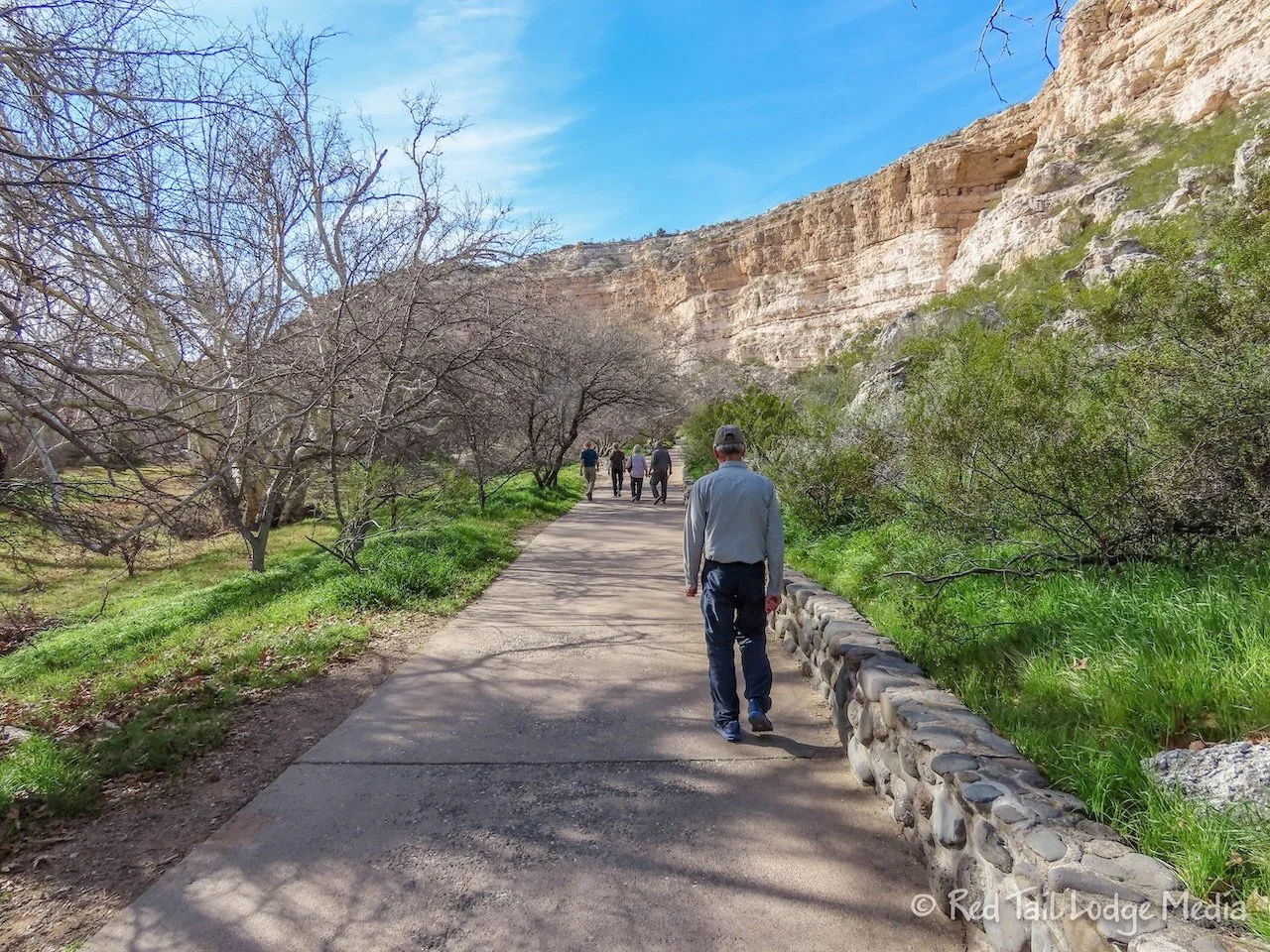
When we arrived at Montezuma Castle, there was another Winnebago EKKO parked in the lot. We met the owners, Joel and Terry, and chatted with them for a while. We love meeting other EKKO owners and swapping stories and mods.
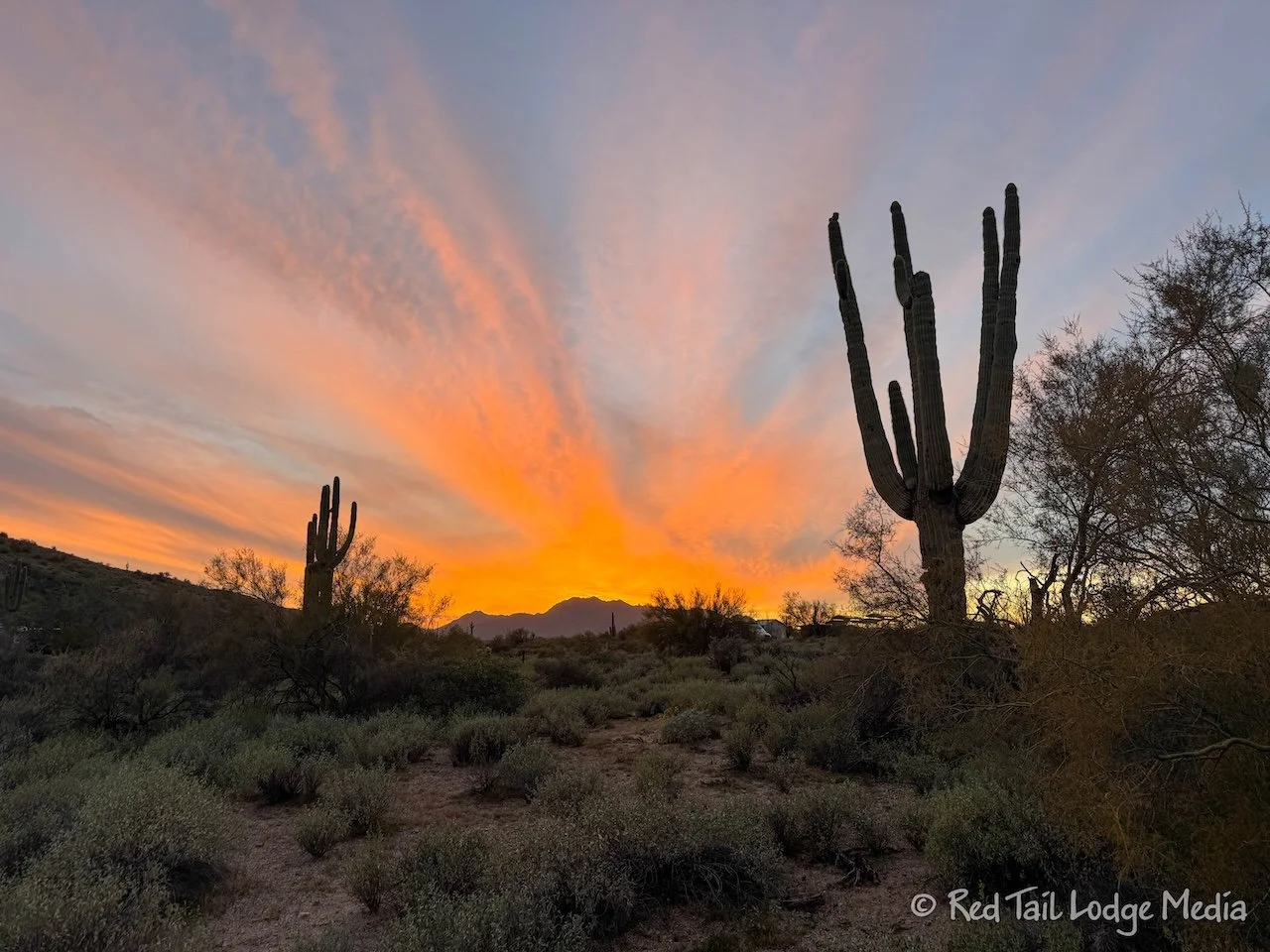
By the time we left Montezuma Castle, it was 3:30 pm and we still had a two hour drive left. So the sun was setting as we set up camp and made dinner. Just like the previous evening at Dead Horse Ranch State Park, we could hear coyotes howling in the darkness.
In three days, we sure packed a lot in. It was a great adventure so far. Now we’ll be staying at McDowell Mountain Regional Park for five nights, so we should have more time to relax.
Check out our related video: Dead Horse Ranch State Park, Arizona
(Ann)