
Dolomites, Italy - August 23rd to 25th, 2025
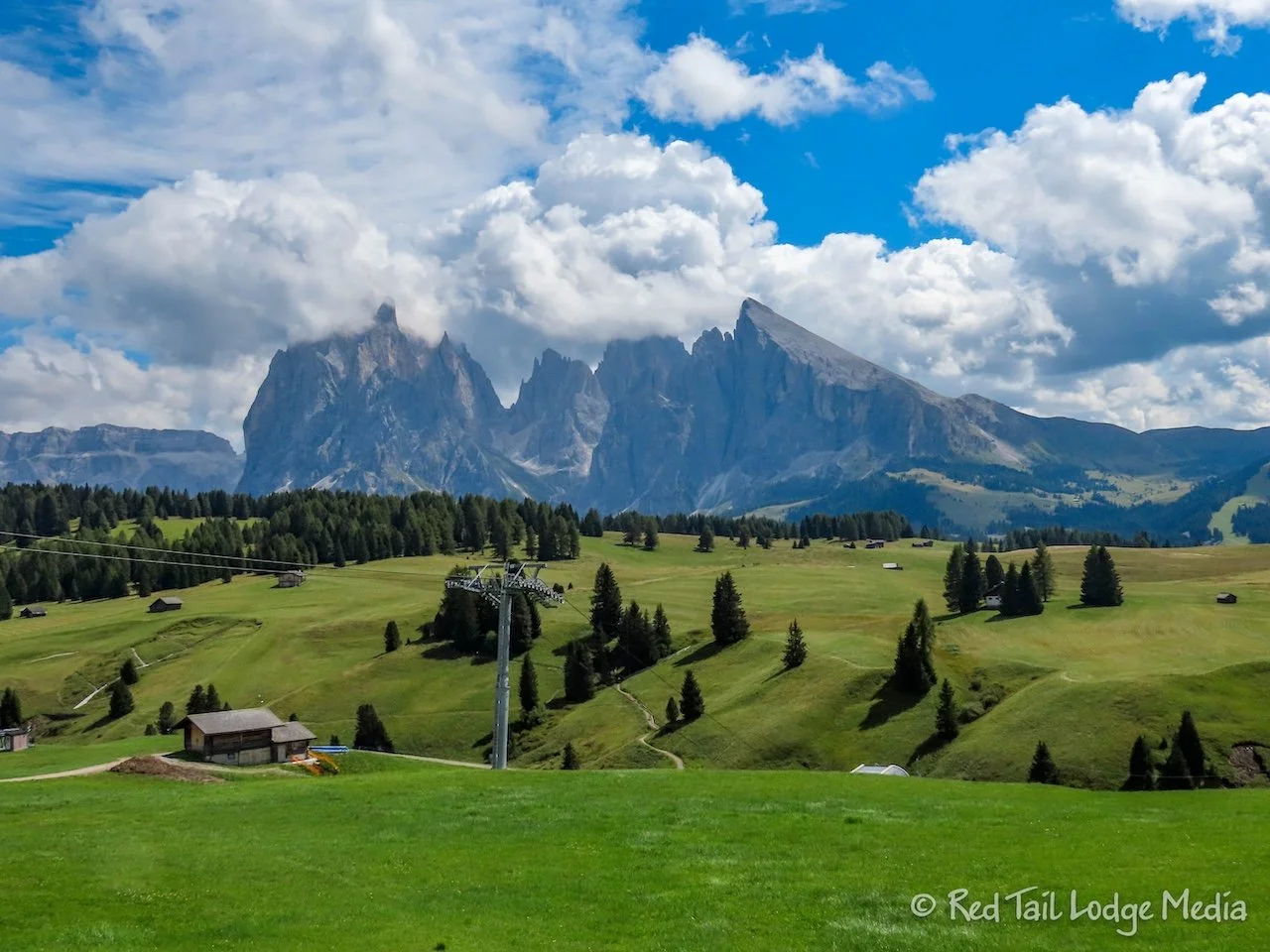
The Dolomites is a mountain range in northern Italy. It is in the German-speaking area of the country. We stayed in the village of Castelrotto, also known as Kastelruth in German. From there, it was a short bus and gondola ride up to Compatsch (Compaccio), where we had access to quite a few different hiking trails in an area called Alpe di Siusi, which is a large, high-altitude meadow.
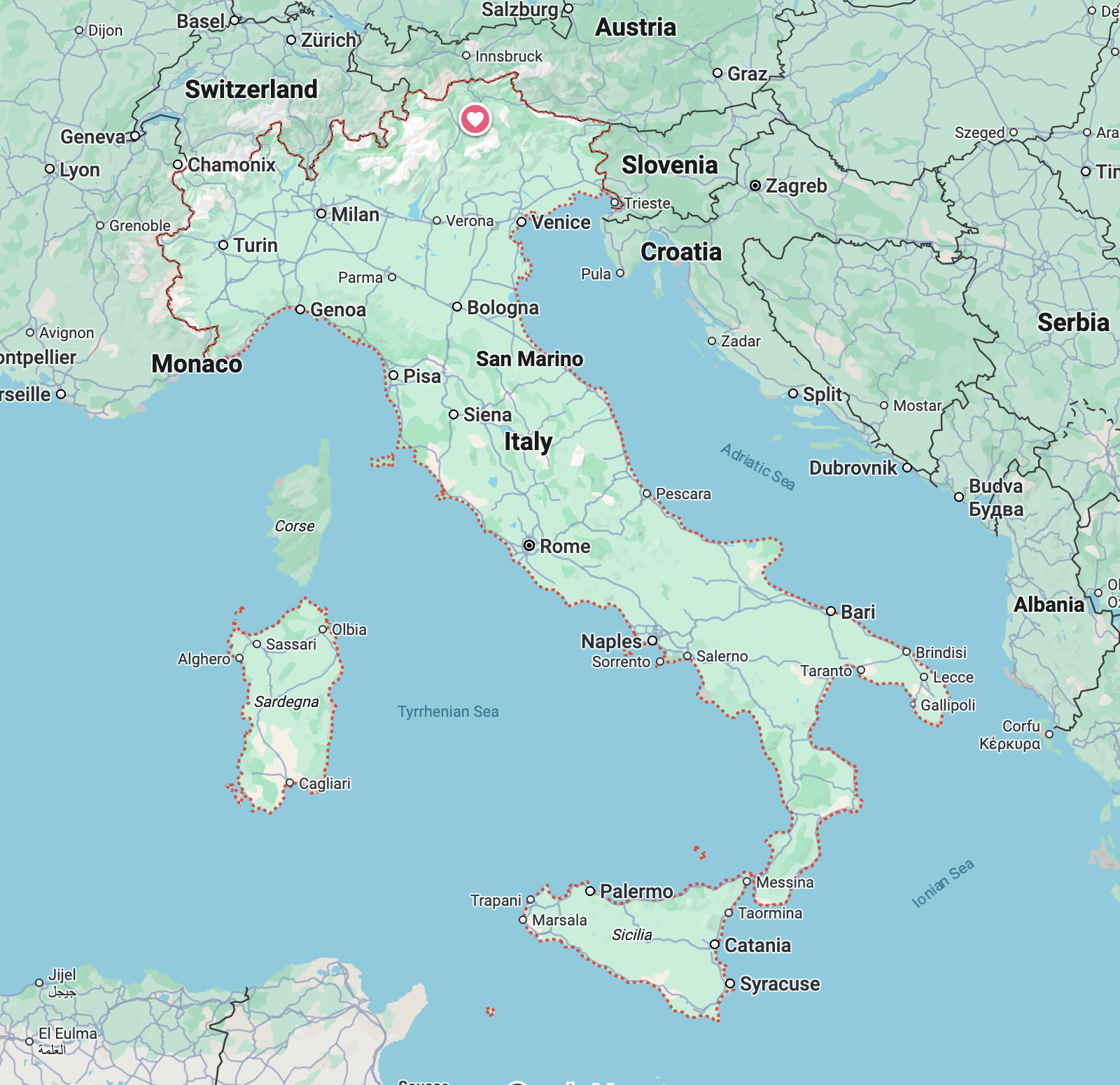
Saturday was a long travel day, from Vernazza to Kastelruth (Castelrotto), both in Italy. At least we didn’t have to start early.
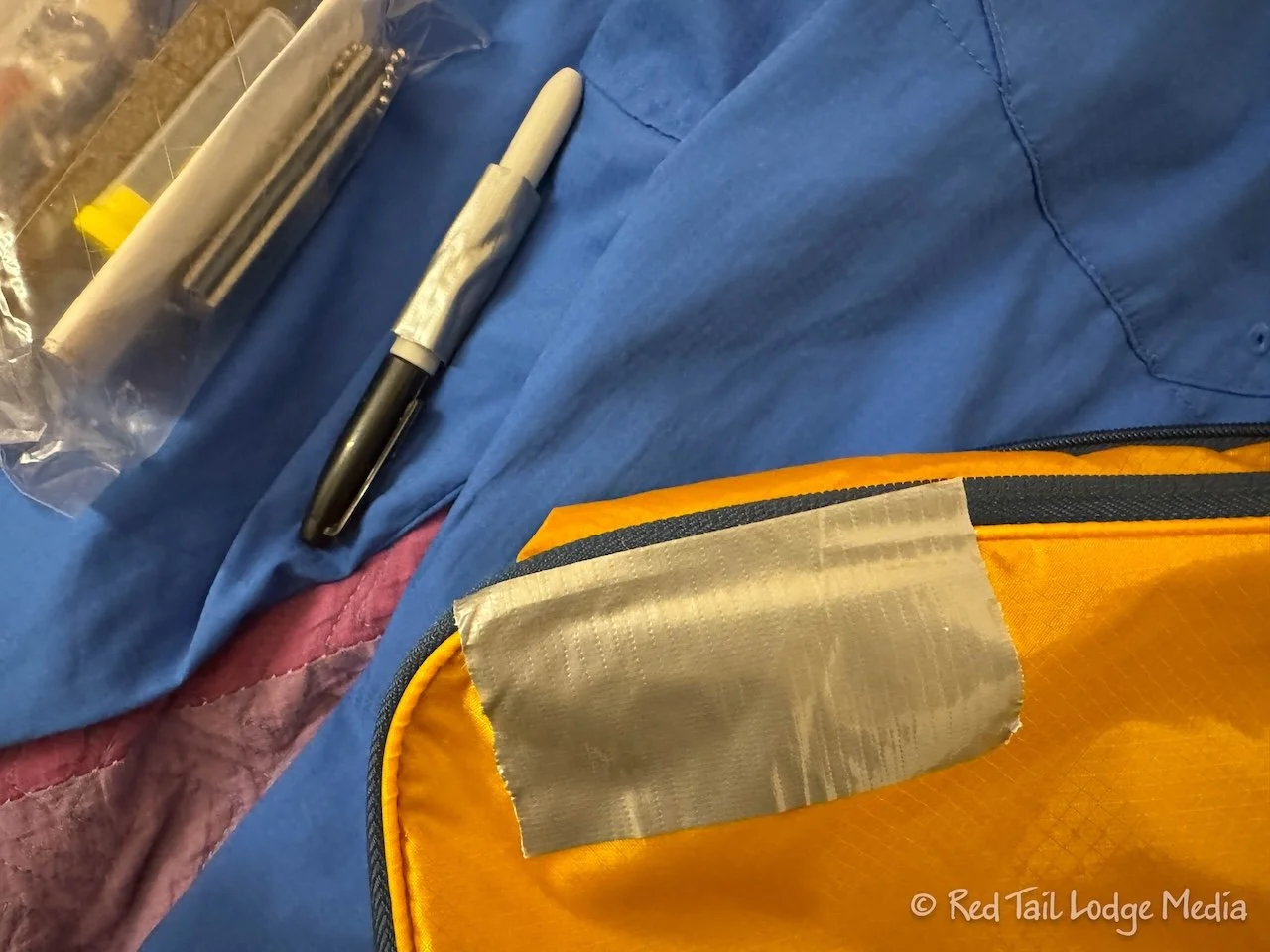
We had to check out of our room in Vernazza by 10 am. While we were packing up, Ann repaired the packing cube that she stores her puffy coat in. It is a compression cube and the puffy coat puts quite a bit of pressure on it, so one of the seams started splitting open. A little duct tape from Ann’s first aid kit fixed it easily. Hopefully it will hold.
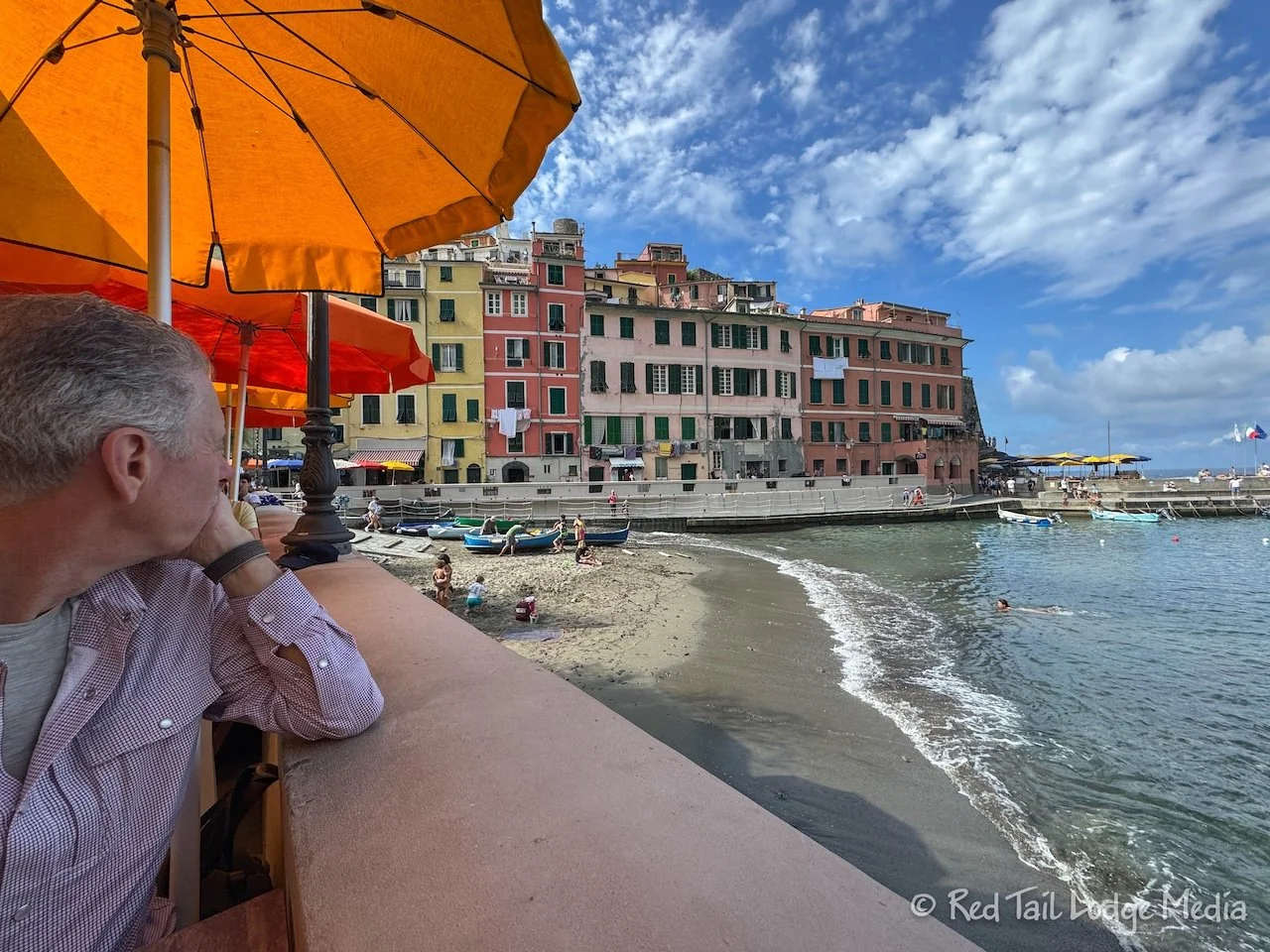
Our first train didn’t leave Vernazza until 11:26 am, so we had some time to kill before heading over to the train station. We sat down at an outside table in the piazza, next to the harbor, at Ananasso Bar. Keith had a double cappuccino while Ann had a fresh squeezed orange juice. As we sat there, we watched the men start to put the boats back into the water from the piazza, where they had stored them the last three days while the sea was too rough.
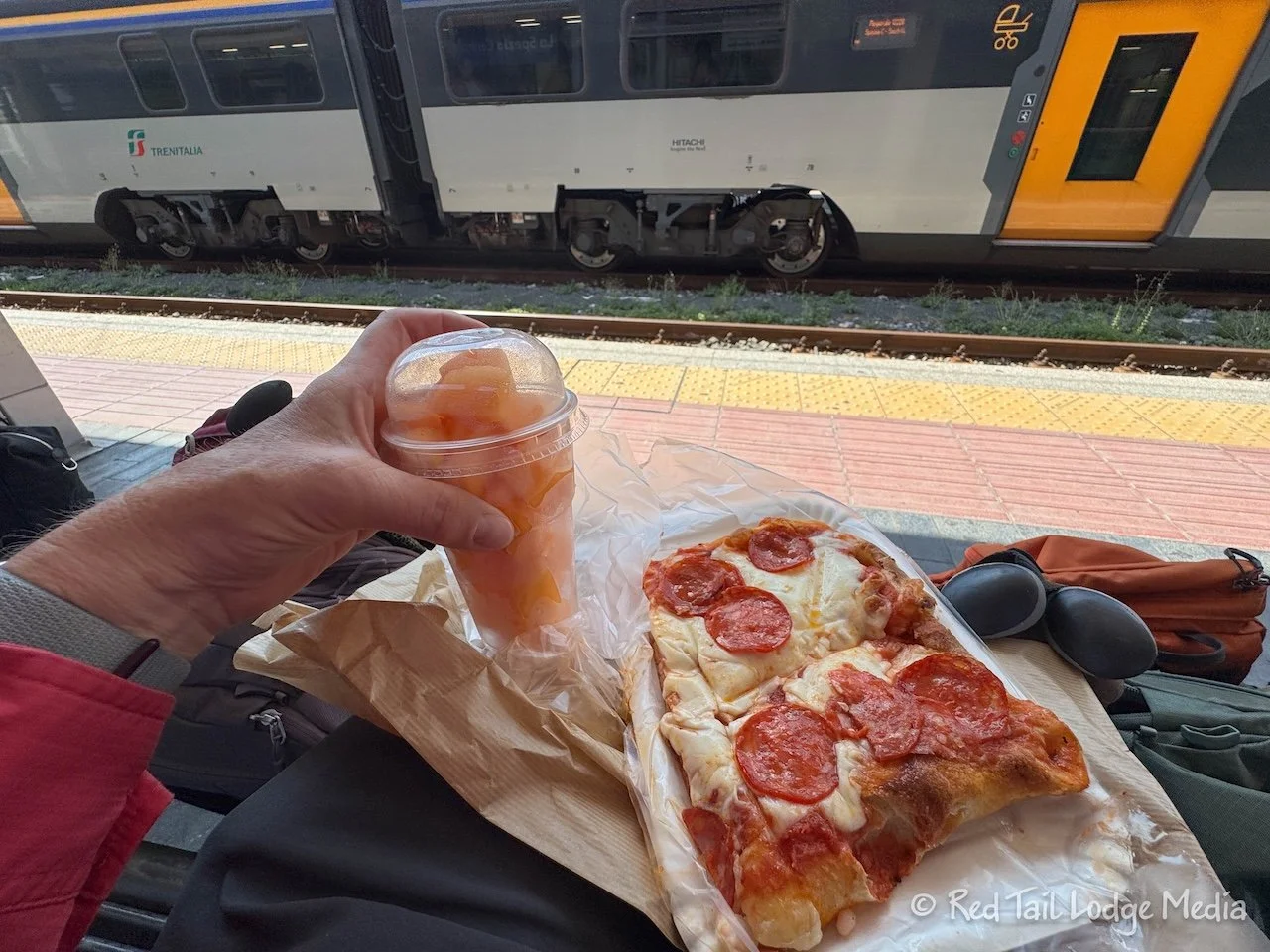
Our first train left Vernazza about 10 minutes late, but managed to arrive in La Spezia only 7 minutes late. However, we still had about an hour before our second train, which was plenty of time to go into the La Spezia train station and pick up some lunch. It was just two pieces of pizza, a cup of melon which we split, and a couple of drinks. But it was better than only eating the snack food we had packed.
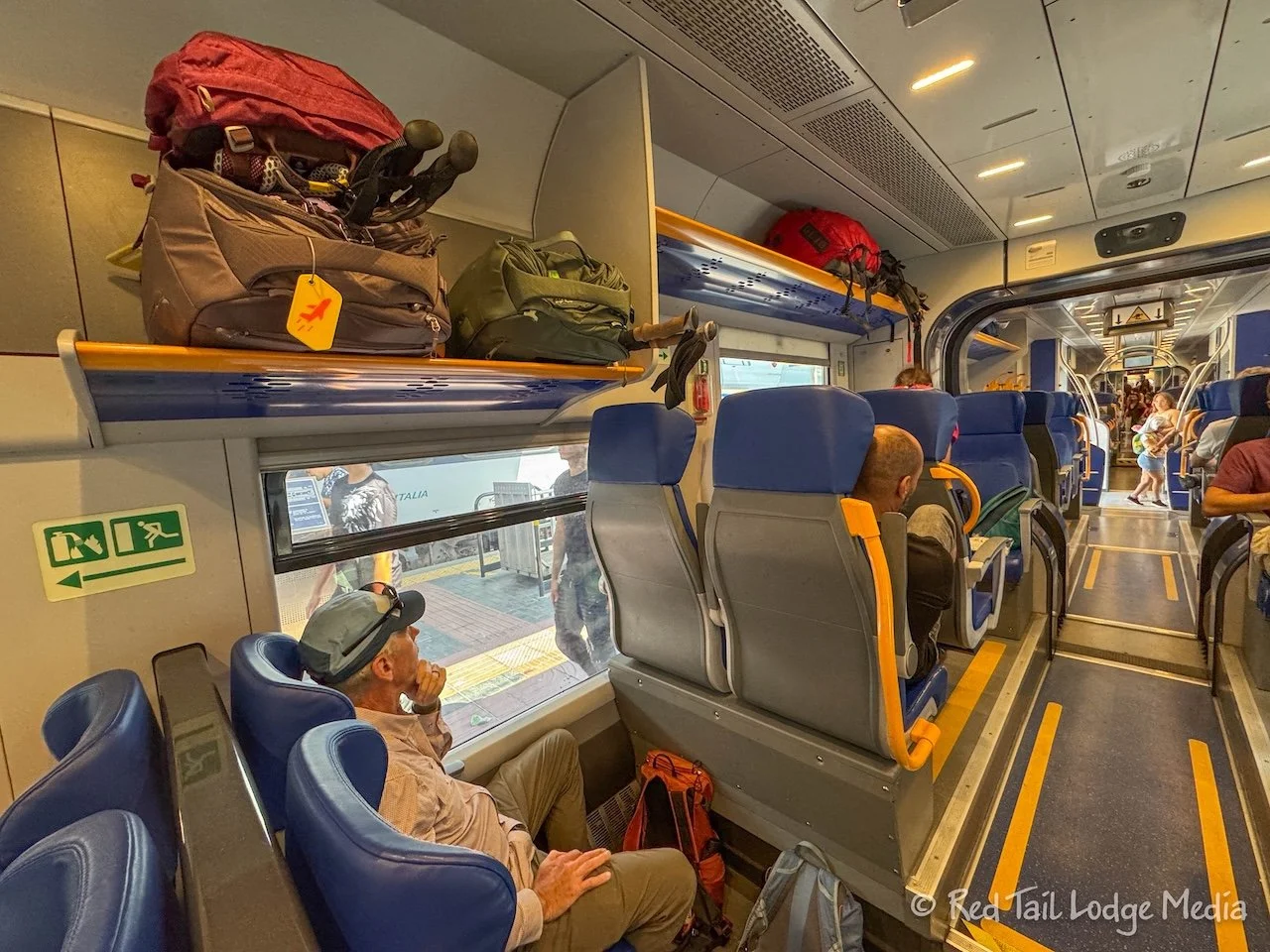
The second train took about two hours to get us from La Spezia to Parma. It was another regional train. Keith managed to snag us a couple of seats with lots of leg room, so it was a pretty comfortable ride.
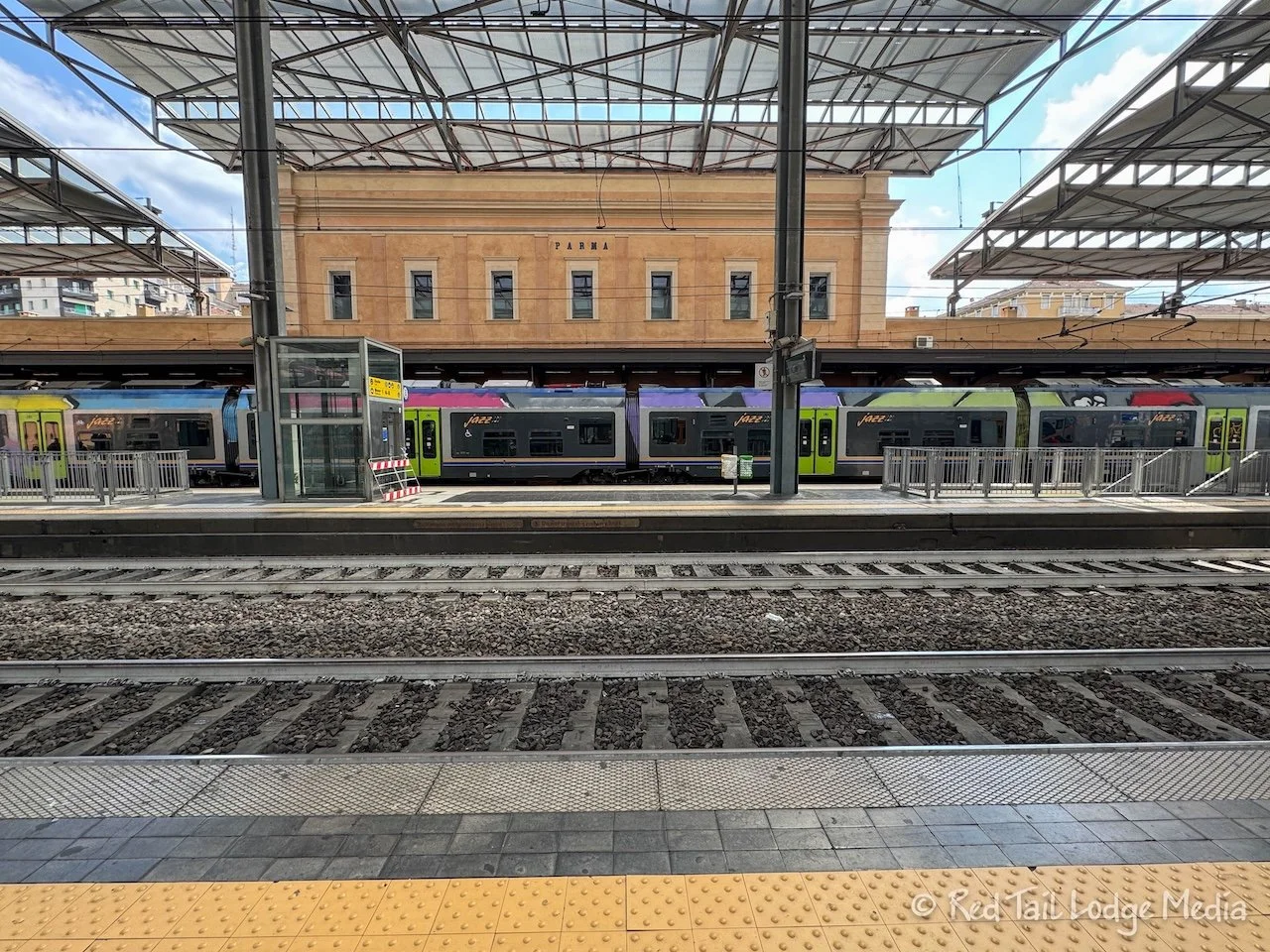
In Parma, we only had 13 minutes to transfer to our third train, but that was plenty of time to get to the right platform. The third regional train took less than an hour to reach Bologna. In Bologna, we had half an hour to catch our next train, which gave us enough time to go into the train station and buy a couple more drinks. We had water bottles with us, but it’s nice to mix it up and make sure we don’t run out of our water.
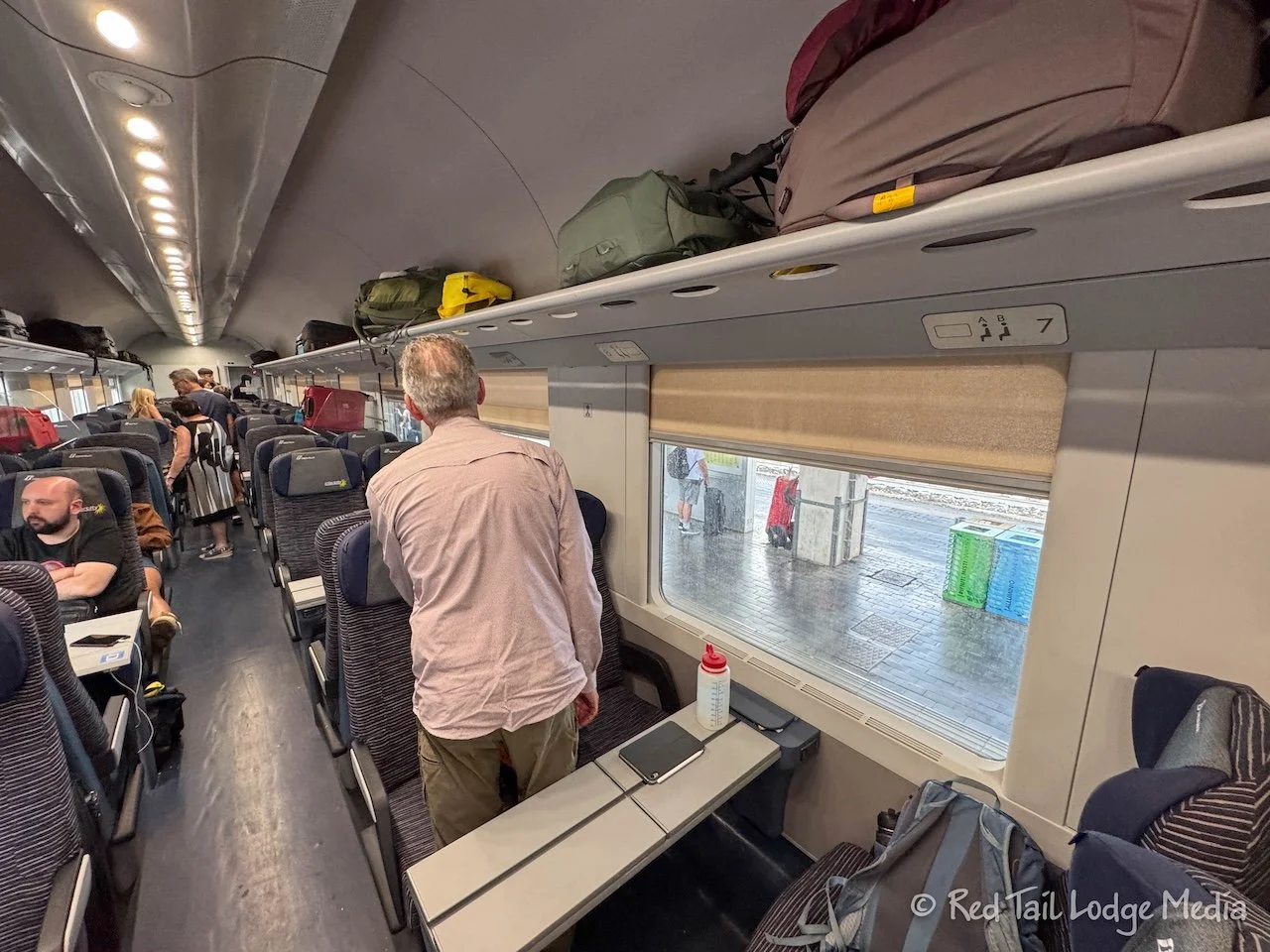
The fourth and final train was an Inter-city train from Bologna to Bozen (Bolzano). We had reserved window seats. The train started out pretty full, but then thinned out at some of the stops along the way. This was our longest train ride for the day, about three and a half hours.
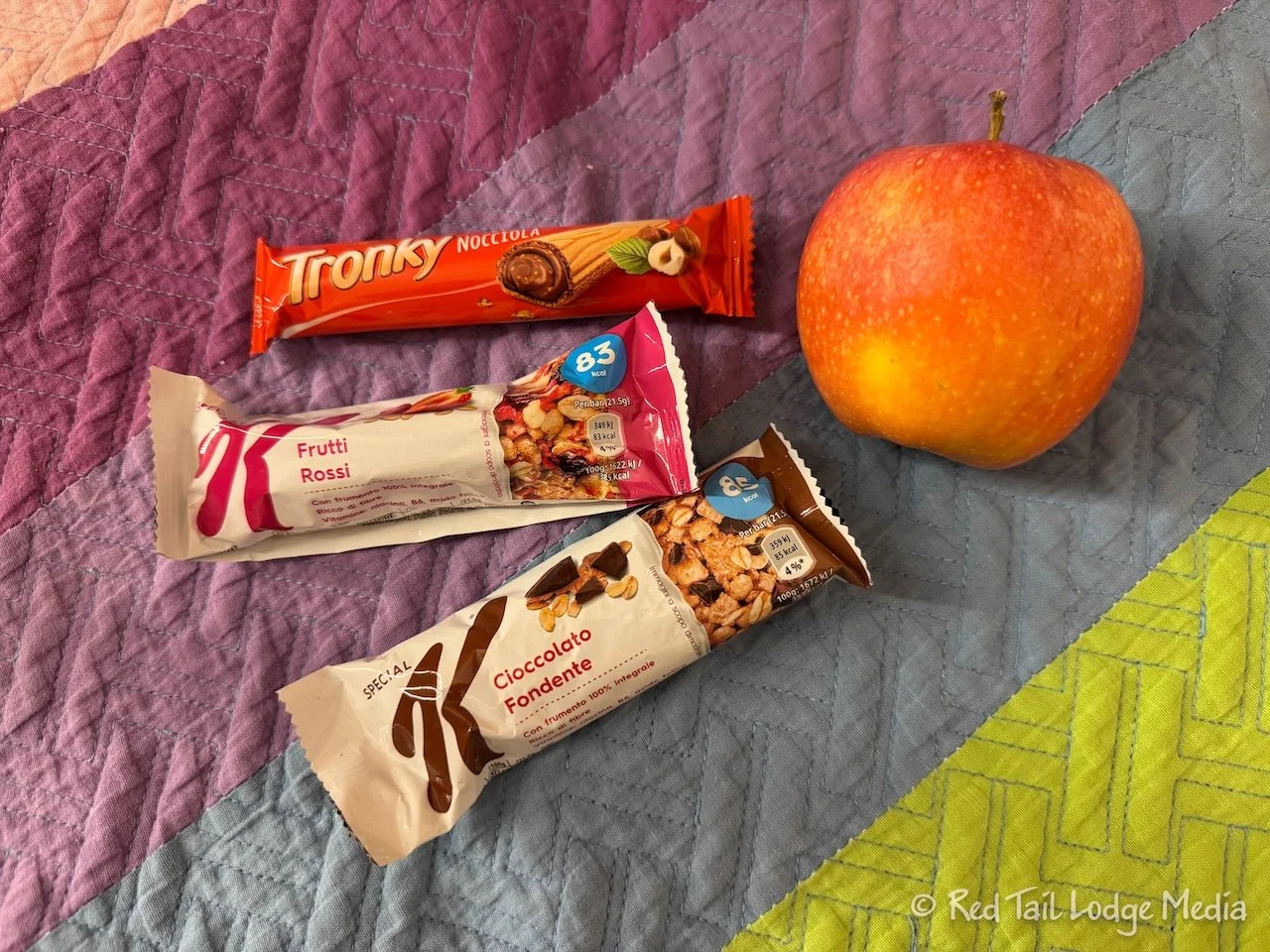
During the long ride, we ate all of the food we packed with us for dinner. It wasn’t the best dinner we’ve ever had, but we didn’t go hungry. It was mainly cereal bars and apples along with a few cashews.
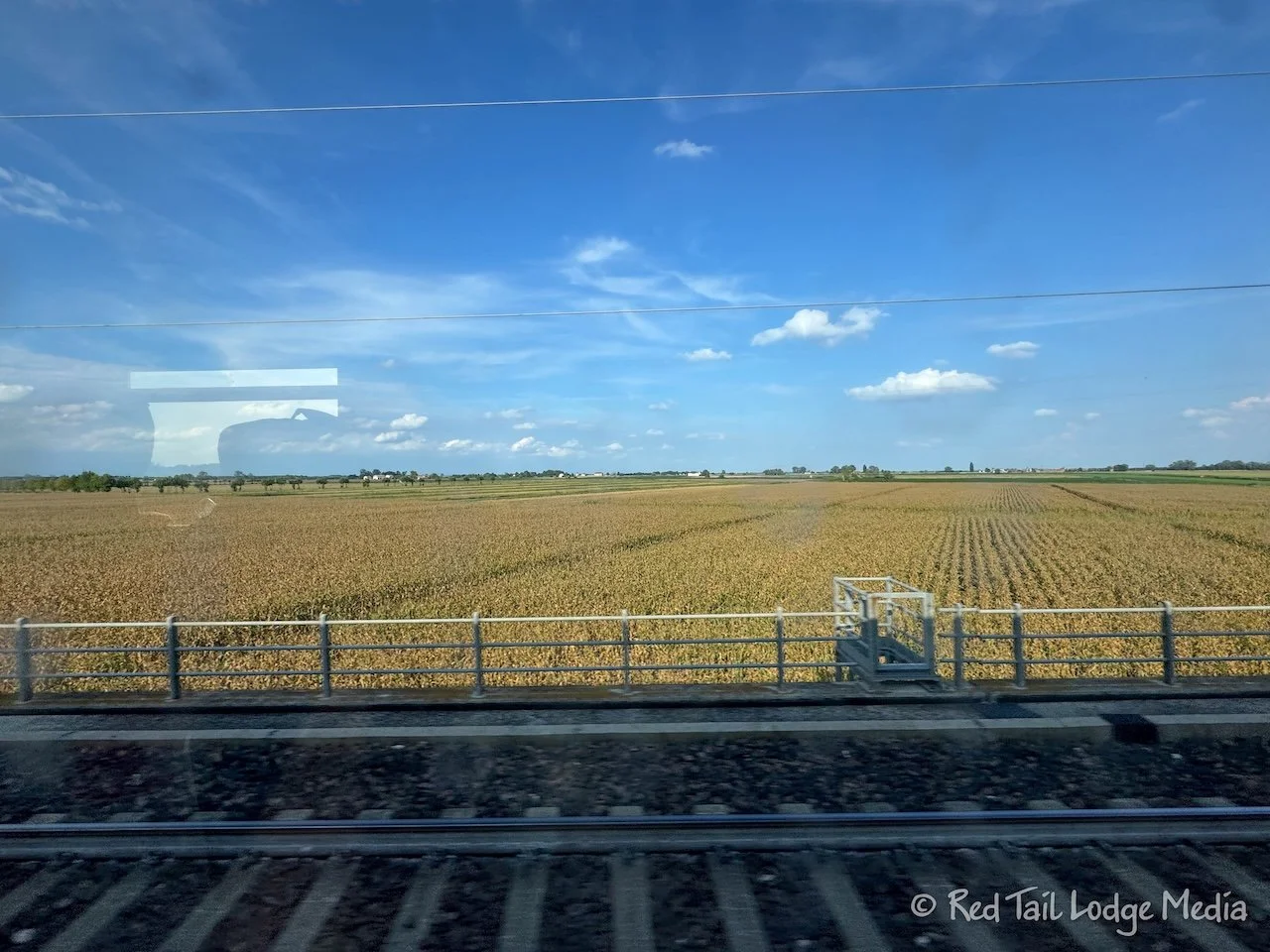
We were thankful that we arrived in Bozen on time, around 8:30 pm. We still had a bus to catch to reach Kastelruth. We thought we were going to be catching the 170 bus right at the train station, but when we went to the bus stop, we didn’t see the 170 bus listed on the display for 9:10 pm, only the 10:10 pm one. We didn’t want to wait that long! Google Maps instructed us to walk about a quarter of a mile up the road to the next bus stop and catch the 170 bus from there at 9:14 pm. So we trusted it and walked up to the next bus stop.
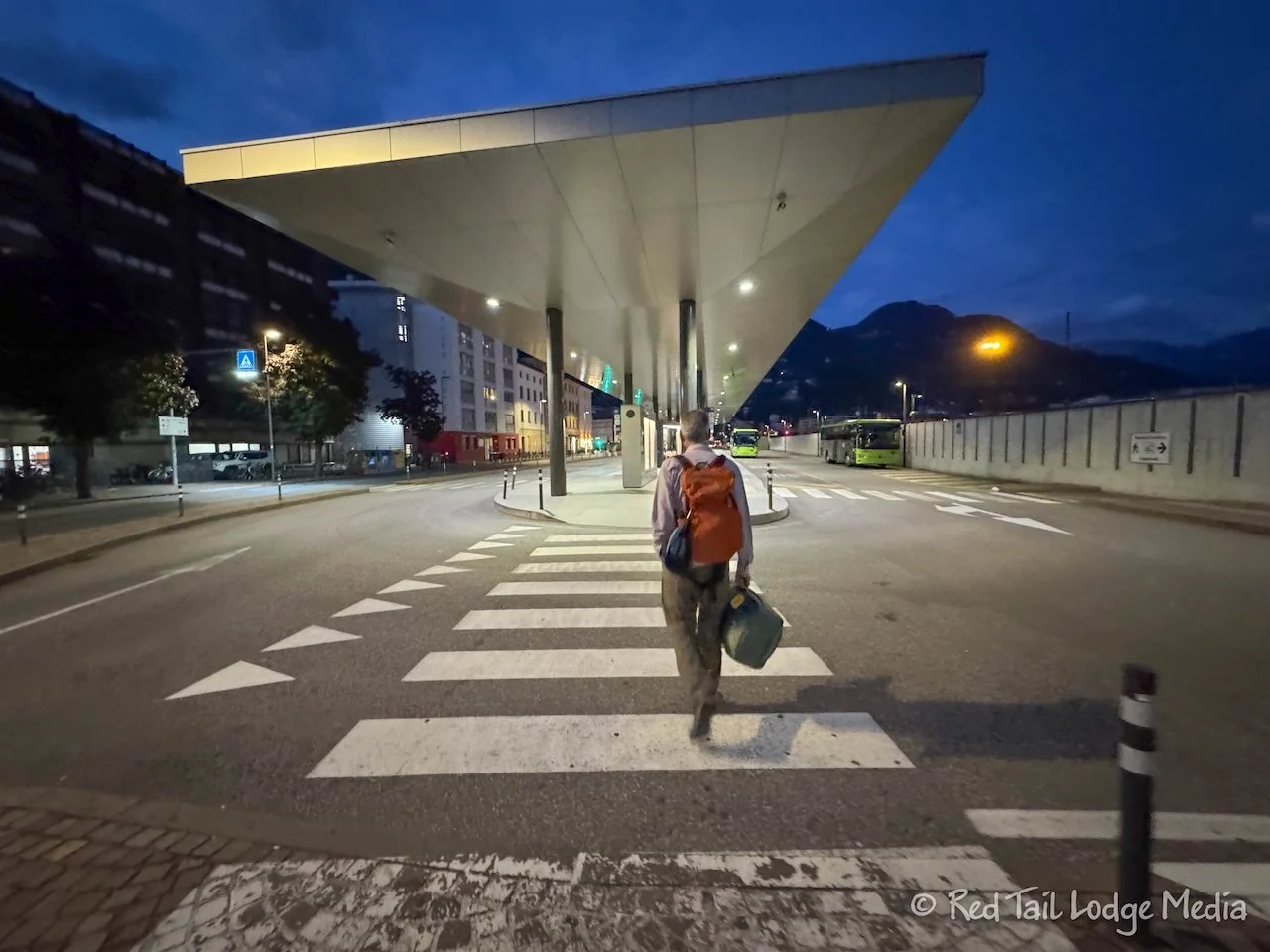
There were two gentlemen waiting there for a bus. We asked one of the if they spoke English, “no” was the answer. “Deutsch?” “Ja”. We asked him in German about the 170 bus. He was under the same understanding, as well as the other gentleman who spoke some English. So we all waited and hoped the bus would show up, which it did. Yay!
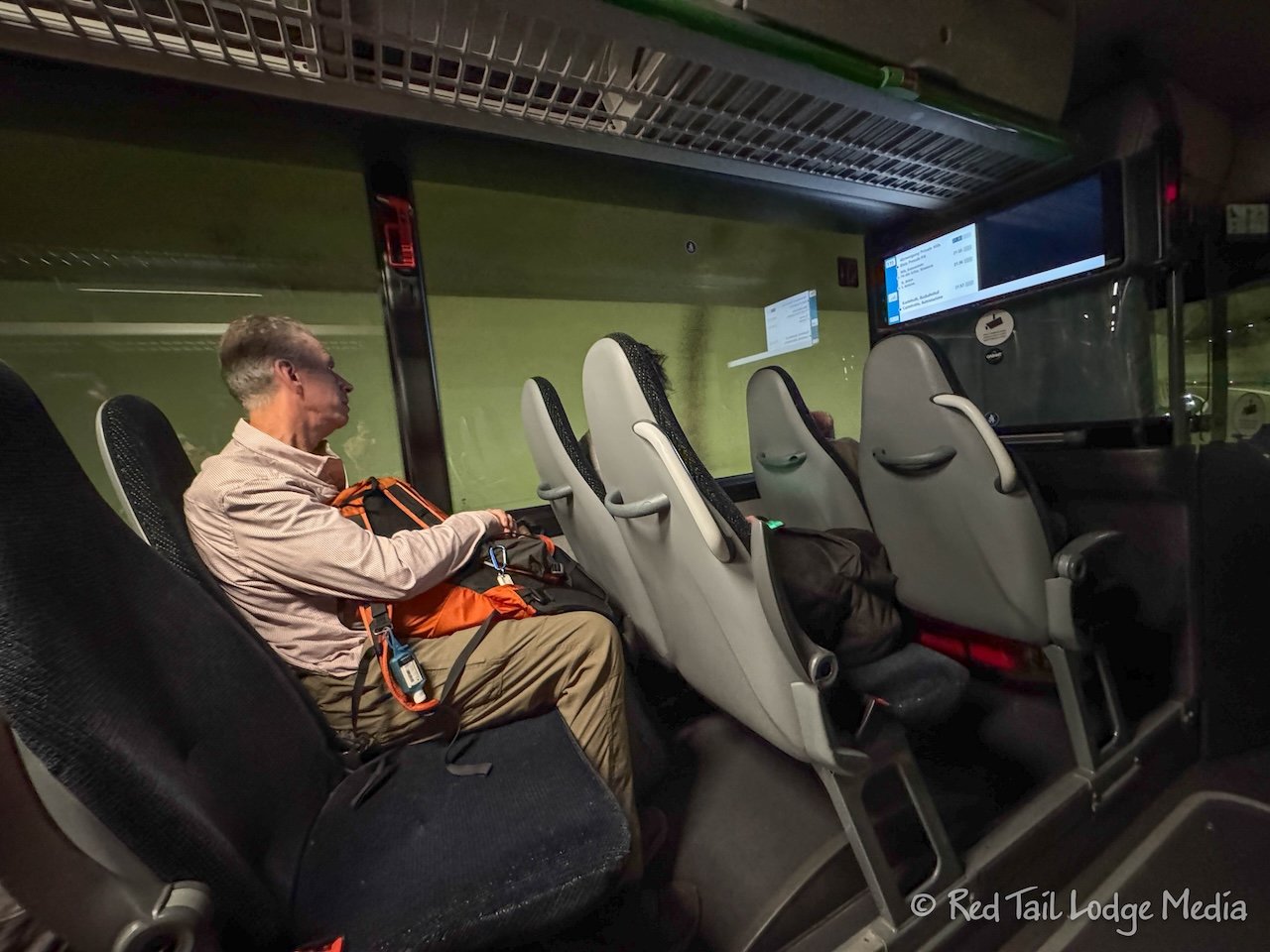
The bus was pretty full, so we had to put our luggage on our laps. It was over a half hour ride to Kastelruth. In the town just before Kastelruth, called Siusi, about 25 to 30 people got on the bus. It was standing room only. It turned out that Kastelruth was having their Dorffest (Festa del paese) or village festival that weekend. It seemed like the group of people who got on were going to join the party with a DJ which was going on from 8:30 pm to 2 am.
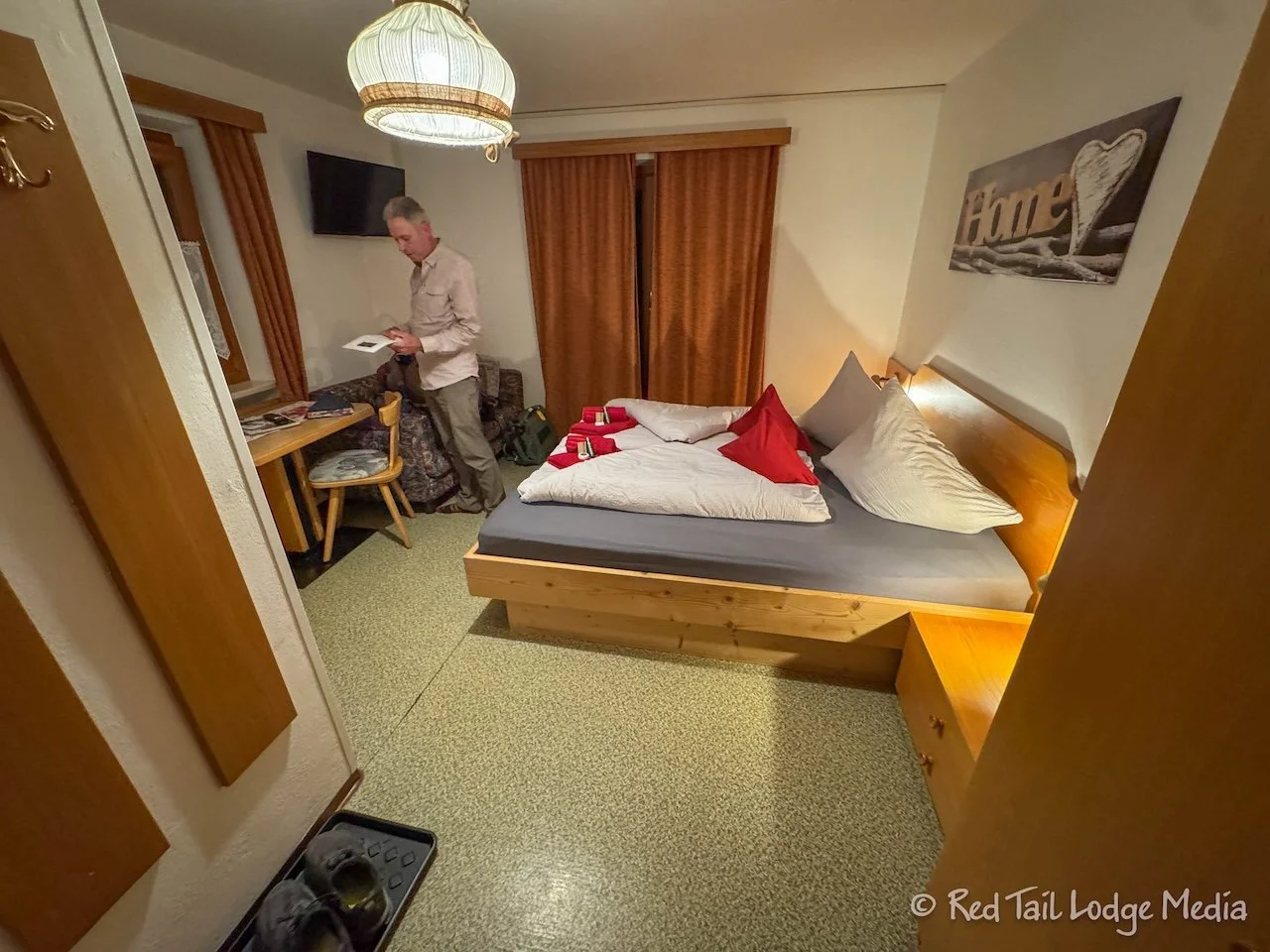
Our lodging for the next three nights was at Garni Lantschner, a small, family run B&B. We felt bad about arriving so late at night, but we had been emailing them our progress. Thankfully, all the trains were pretty much on time and we didn’t miss any connections. We had a hard time finding good connections from Vernazza and this was the best combination we could find at the time we were making reservations. We don’t like arriving at our destination so late in the day.
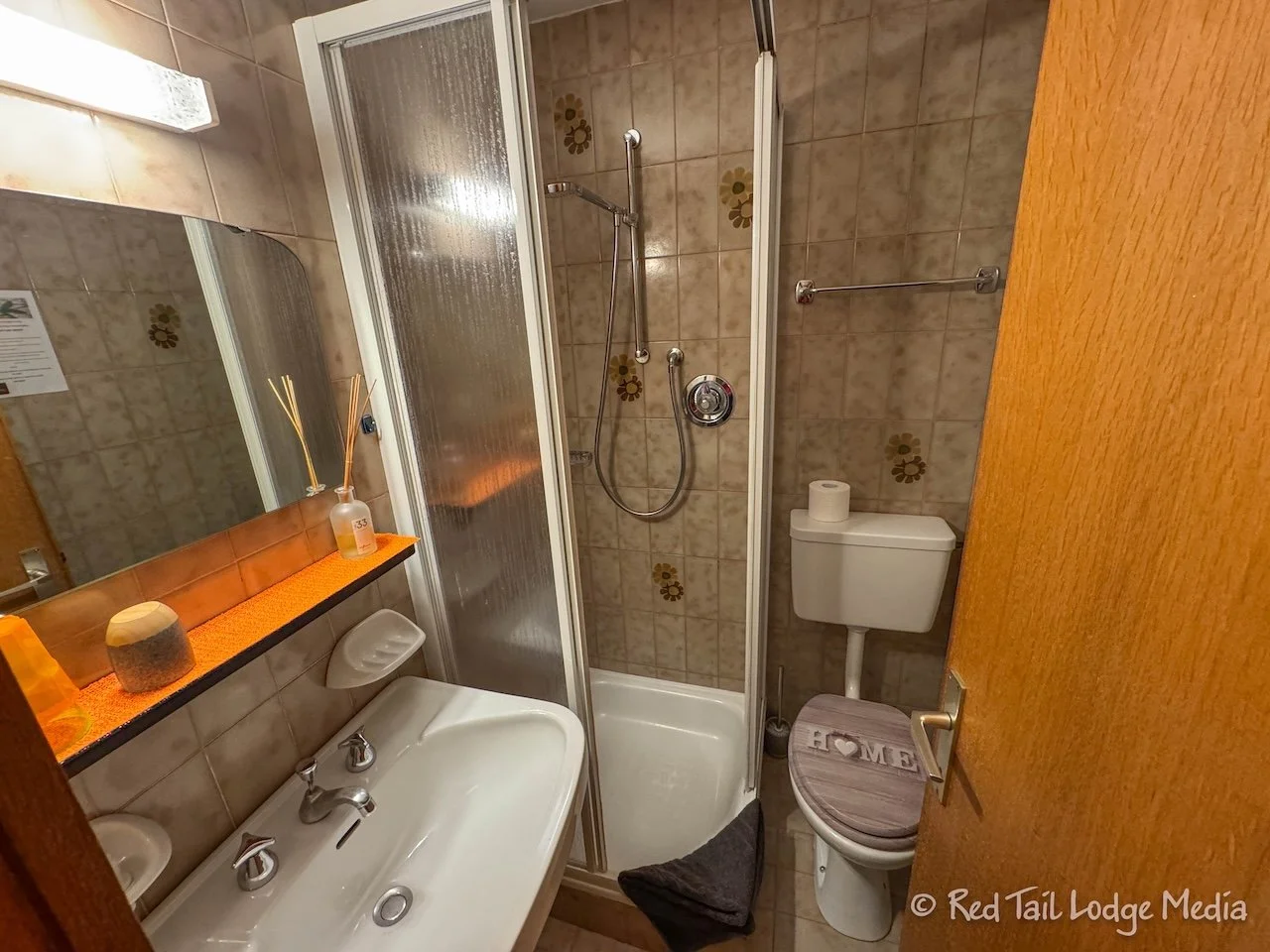
Our hosts were gracious and left a key out for us so we could check ourselves in when we arrived. There was a fridge in the hallway which was stocked with drinks, so Keith was able to buy and drink a beer before going to bed.
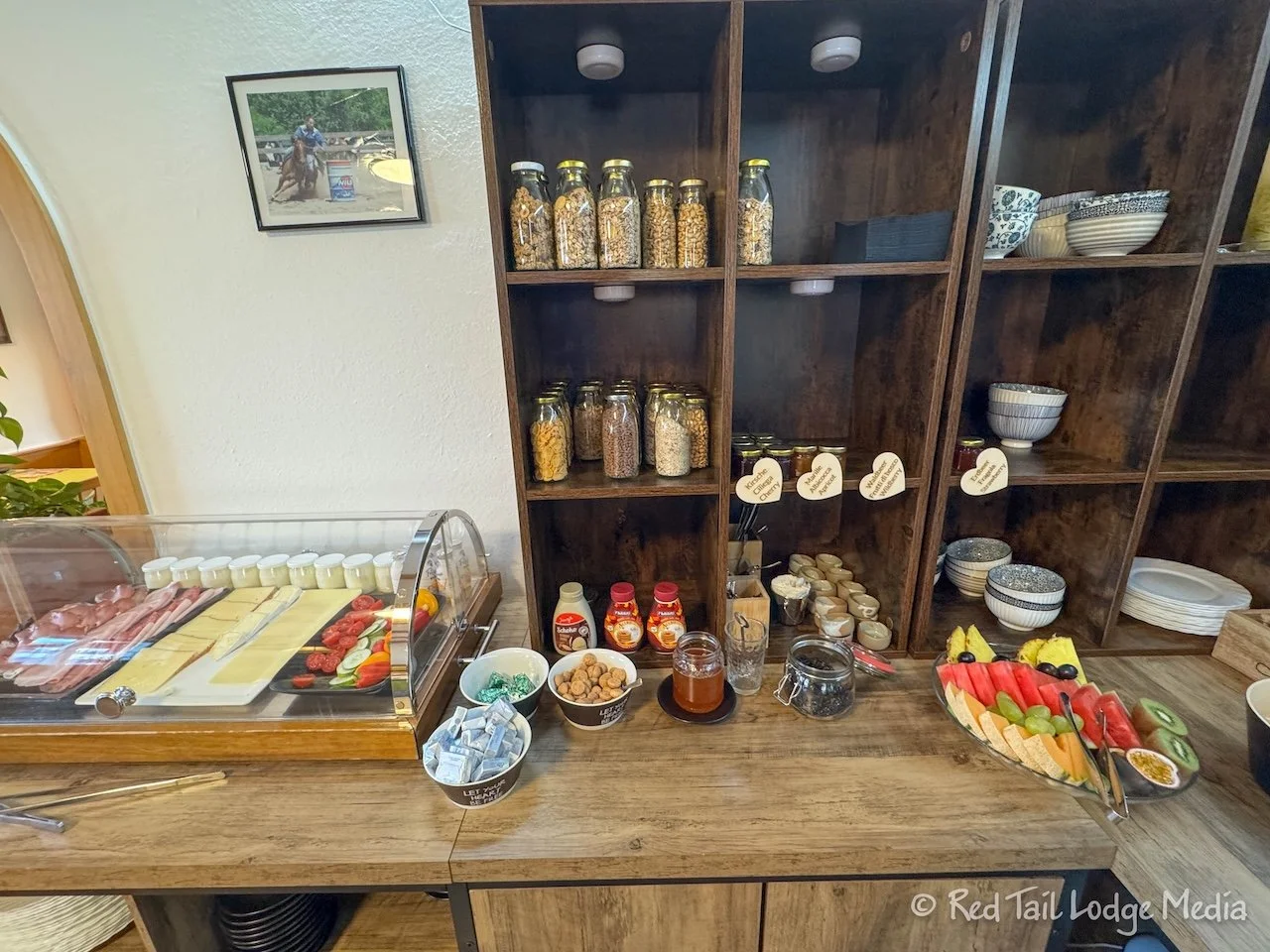
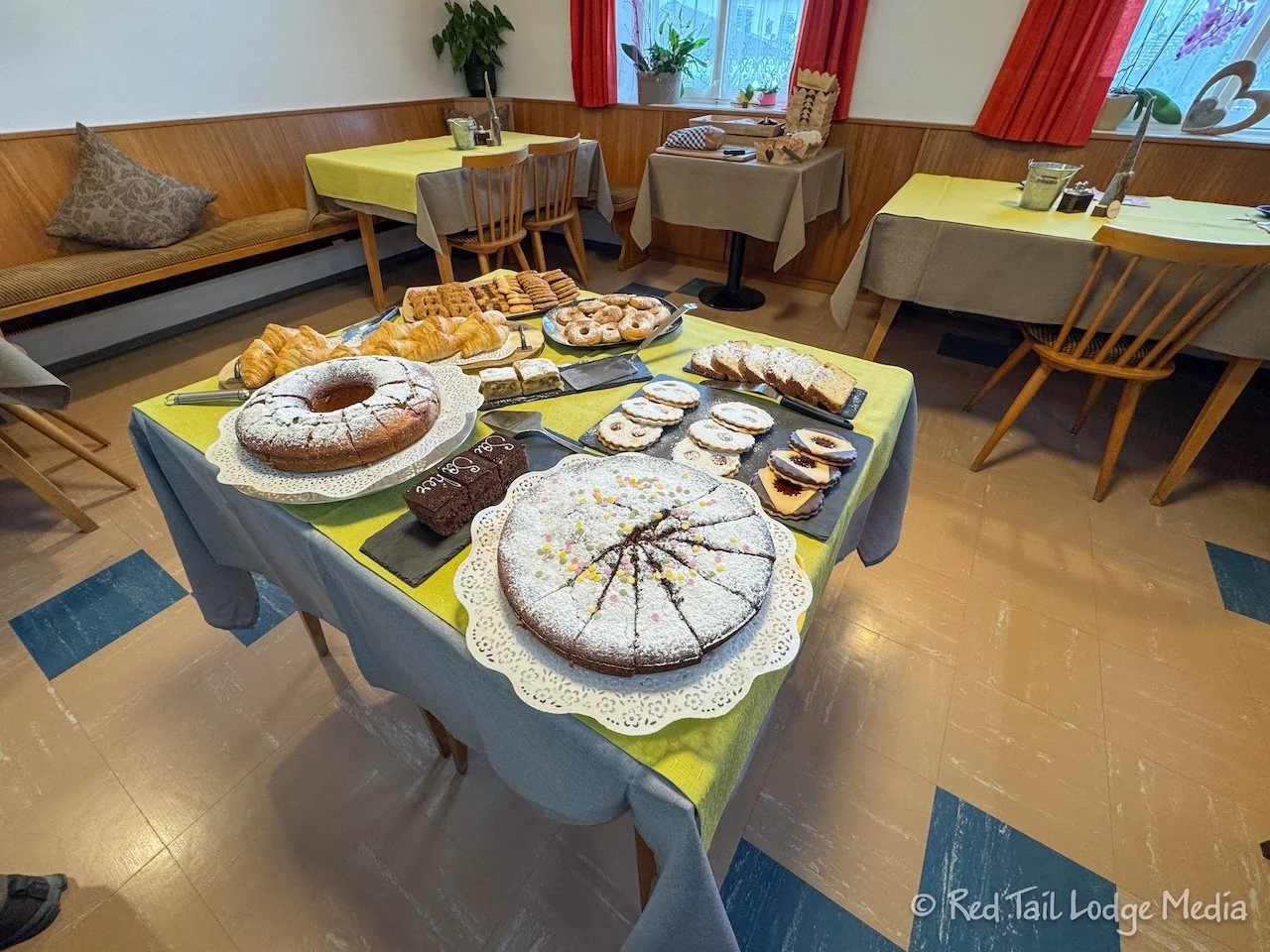
Garni Lantschner is a lovely B&B. It is cutely decorated and there are some nice little details that make you feel welcomed and taken care of. Besides the stocked fridge in the hallway, there were hiking maps, and a little piece of wood engraved with your name to identify your table at breakfast. Breakfast is a wonderful buffet, with the normal items like cold cuts, cheeses, breads, rolls, tomatoes, cucumbers, yogurt, cereals, fresh fruit, coffee, tea, and fruit juice. But there were also some sweet treats, like cake and apple rings coated and fried.
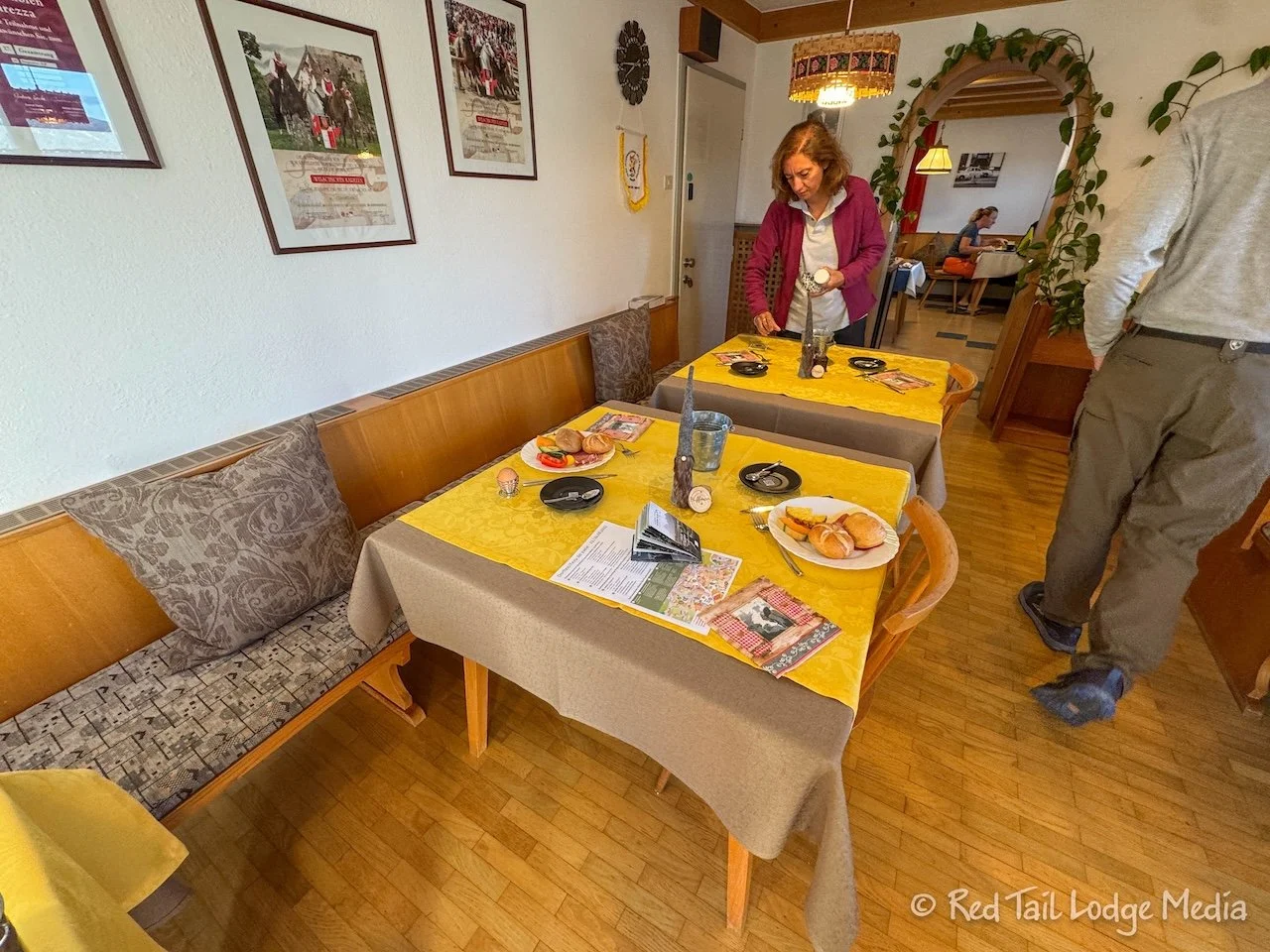
Patti, the owner of Garni Lantschner, has only been operating the B&B since May of 2024, but she is doing a wonderful job. The Lantschner was built in 1963. At breakfast, she gave us a bus guest pass that was valid for the length of our stay. Had we known she was going to do that, we probably would not have bought a three day Südtirol Mobilcard. At least we can use the guest pass on the day we leave to take the bus back to Bozen.
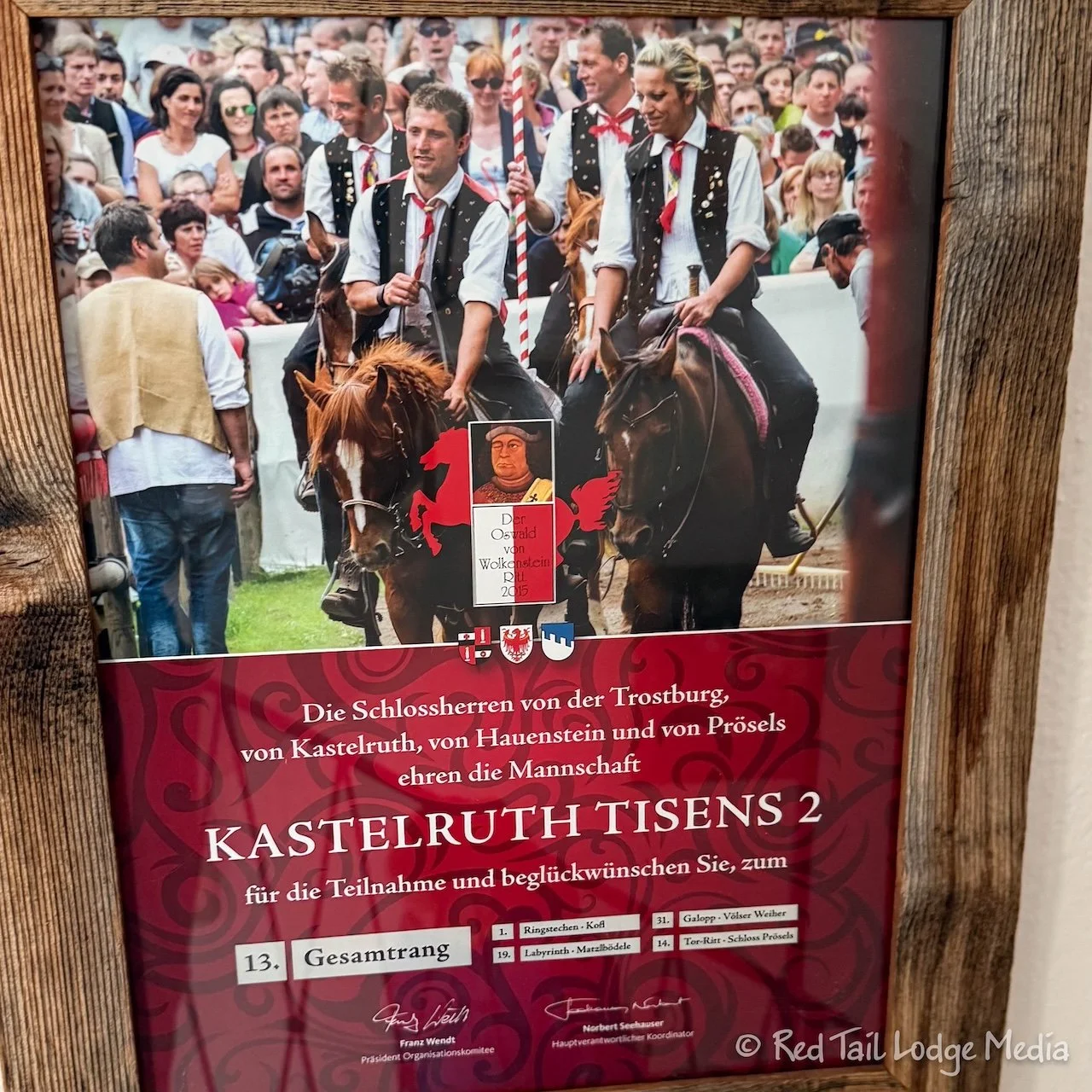
Patti competes in horse riding tournaments, including Der Oswald von Wolkenstein Ritt. There are pictures around the breakfast room from her competitions. The tournaments include centuries-old events, such as Ringstechen (ring jousting), Labyrinth, Galopp mit Hindernissen (gallop with obstacles), and Torritt (somewhat similar to a slalom course).
The area we were in, the Dolomites, is a German-speaking area of Italy. We had actually heard quite a few tourists in the Cinque Terre speaking German, but here in the Dolomites, German seems to be the default language, although you do hear Italian being spoken as well. At breakfast, Patti was excited to learn that we could speak German. She speaks German and Italian, but feels her English is not all that great. We thought her English was just fine, as it was probably better than our German, but we were happy to speak German.
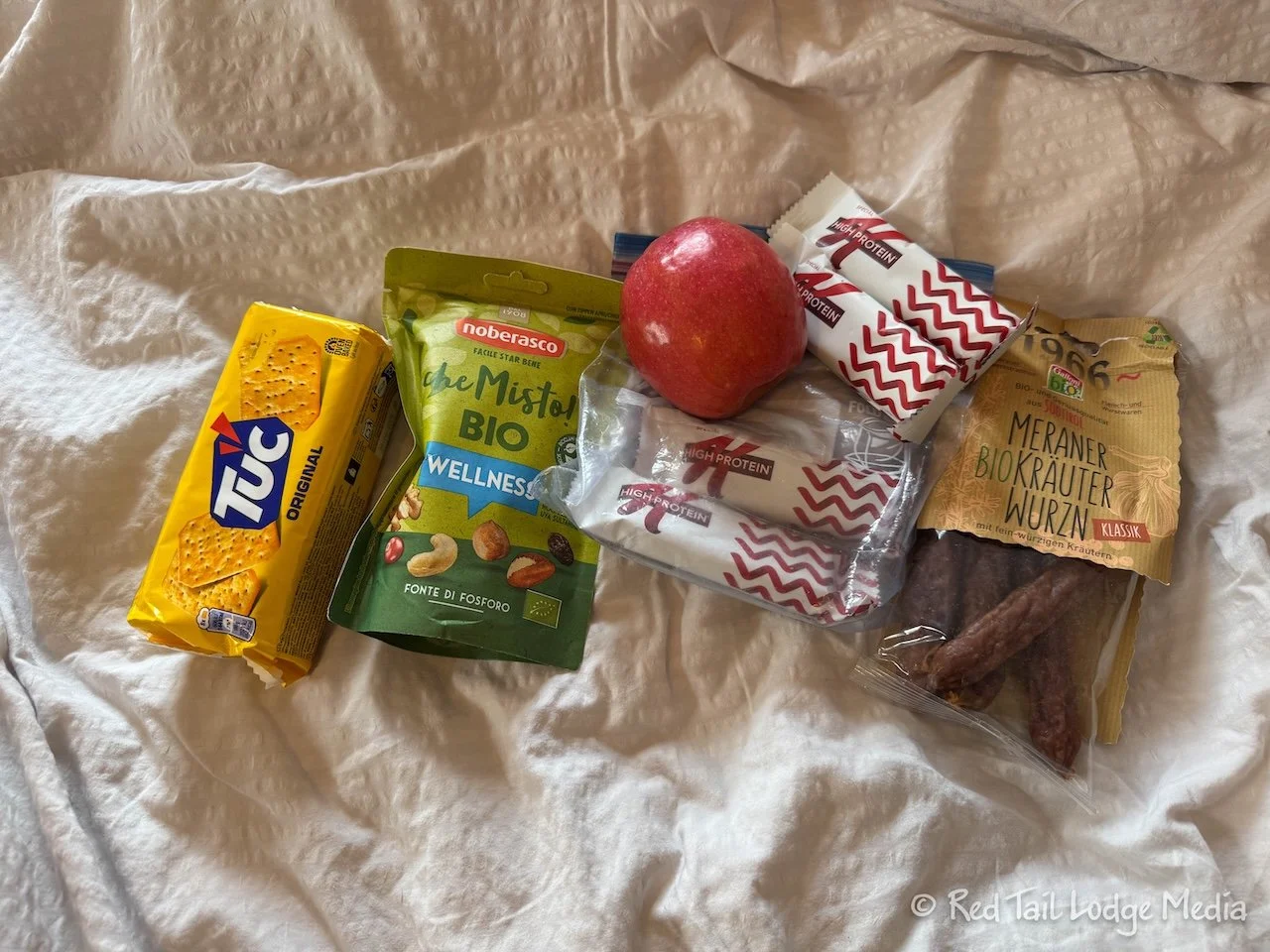
After breakfast, we got ready for a hike. First we stopped at the grocery store to pick up some food for the trail. It was the largest store we’ve been to in a while so it took us a little bit of time to wander the whole store and find what we were looking for.
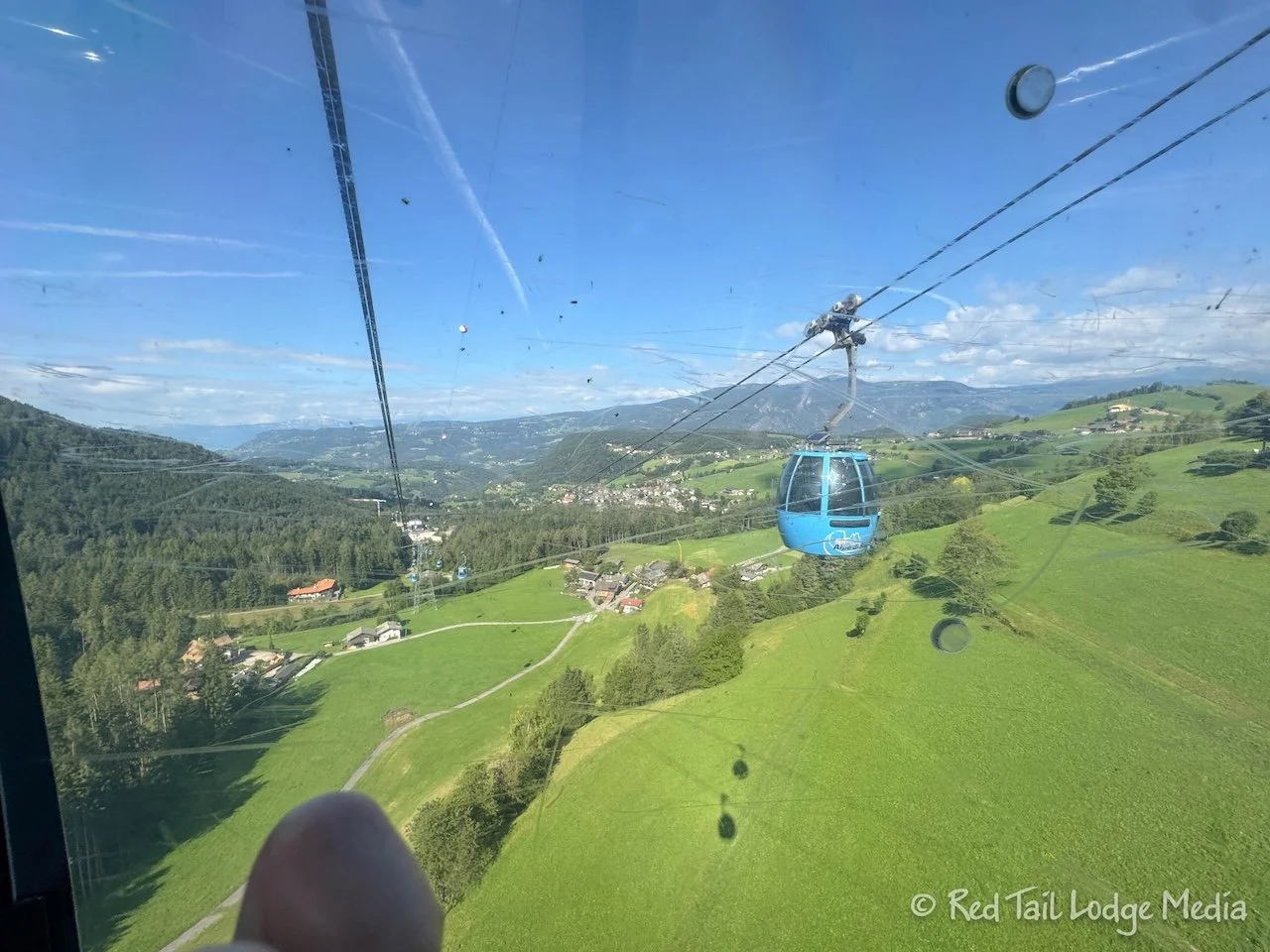
We caught the bus back to the town of Siusi where we took the gondola up to Compatsch. The hike we picked out started in Compatsch. The bus ride was covered by our Mobilcard, but the gondola was not. The gondola was a little pricey, 28.50 euros per person. Keith tried to get a senior ticket, but they checked his driver’s license and said his birth year needed to be 1959, which confused us a little. The age limit was 65, but either that was the age you had to be at the end of the previous year, or they read his birthdate wrong, thinking it was day/month/year instead of month/day/year.
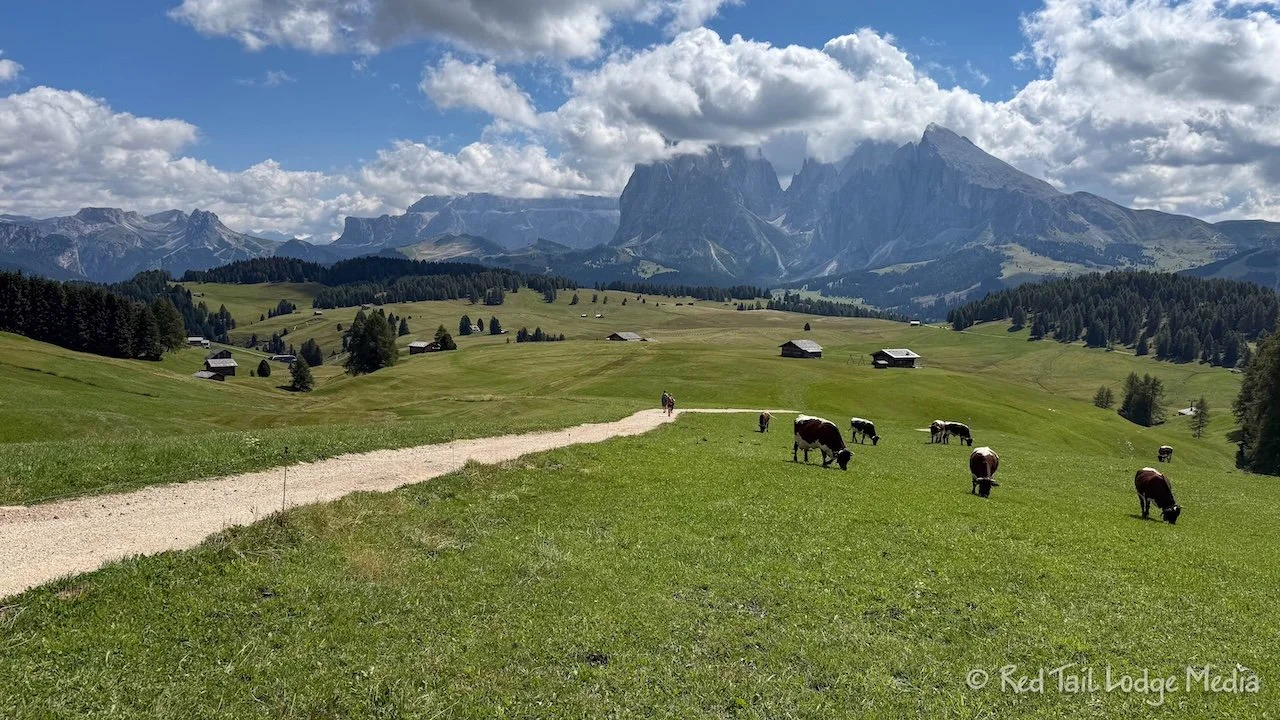
In AllTrails, the hike was called Monte Piz - Belvedere Alpe Di Siusi via Compatsch. It started right from the top gondola station, heading east. The route was a lolly-pop. It went through some wide-open green pasture land which dominates the high plateau, surrounded by jagged mountain peaks. We went by several hotels and restaurants along the way.
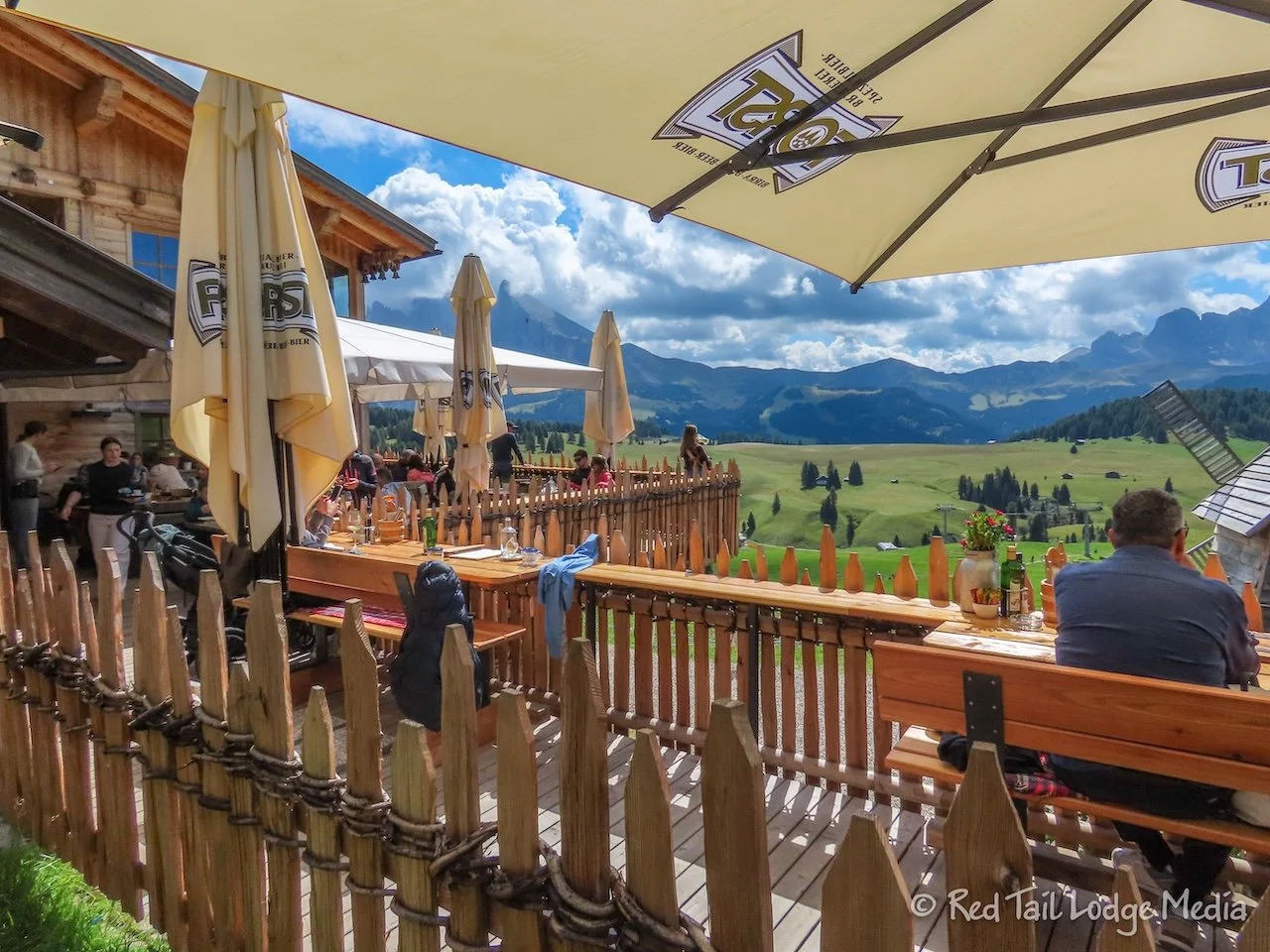
At the far end of the loop of the lolly-pop, we stopped at Schgaguler Hut. We had to wait a few minutes for a table, and were seated at a table with a German couple. We weren’t sure if they wanted to carry on a conversation with us, so we didn’t try.
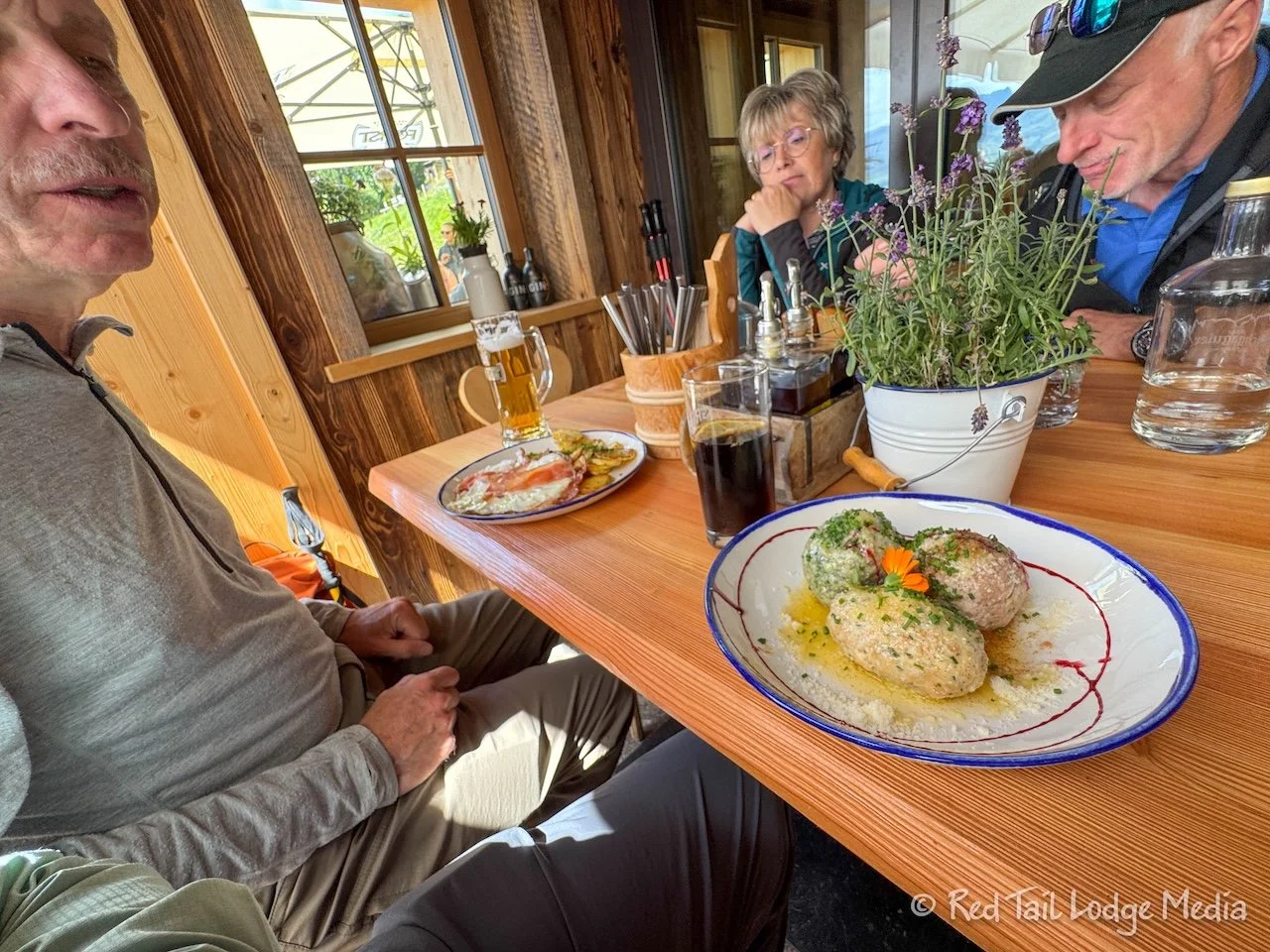
Ann ordered the gemischte Knödeln (mixed dumplings) with a cola, while Keith ordered the eggs, bacon, and potatoes along with a beer. Knödeln is a popular Geman dish, but these were a little different. One was filled with spinach, another with beets, and the third with cheese. They were served in some browned butter. They were delicious, but very filling.
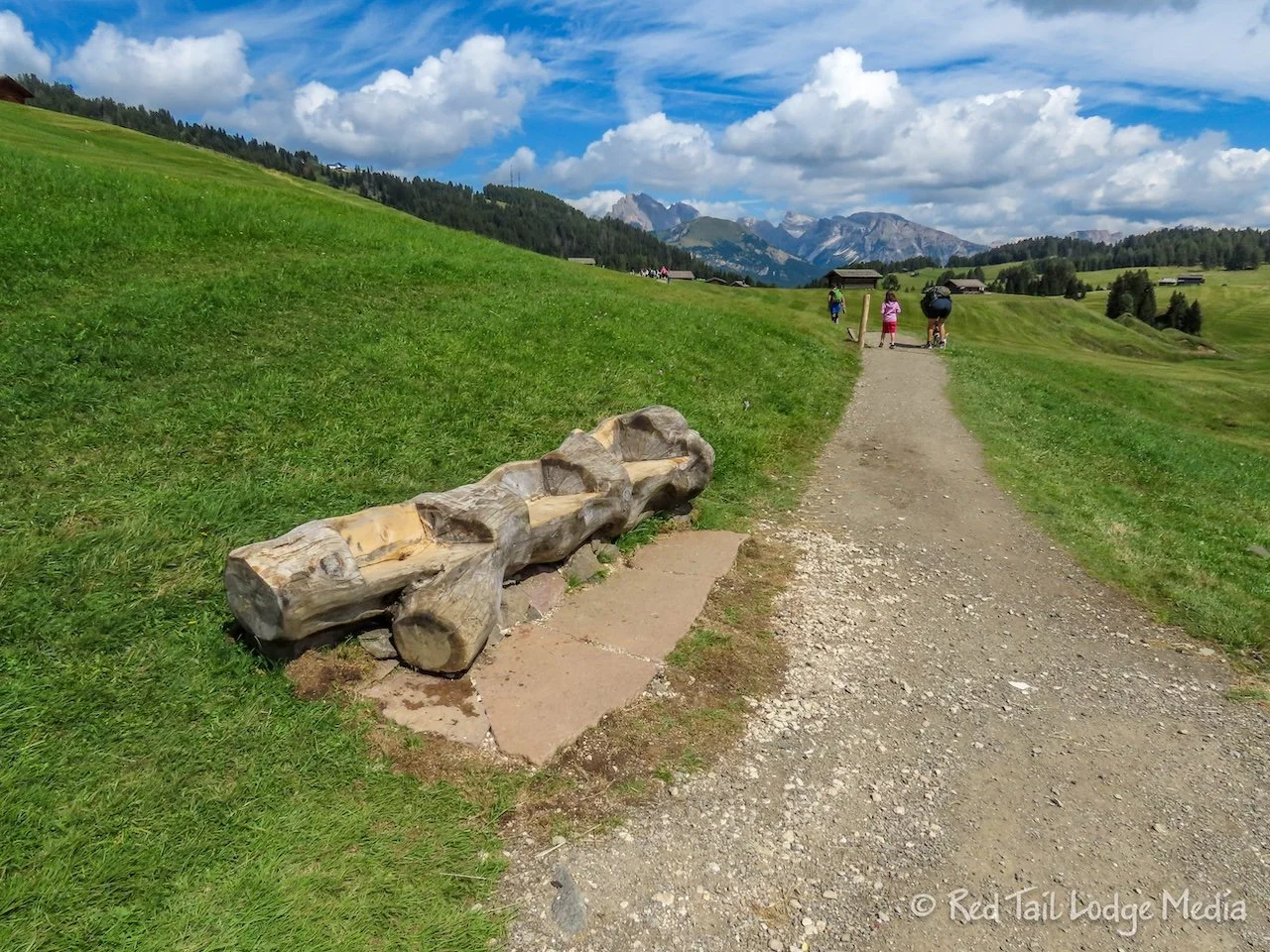
The trail seemed more like a walk or stroll instead of a hike. It was mostly on a paved road, with sections of gravel road and dirt trail mixed in. There were a lot of people on the trails, but not overwhelmingly so.
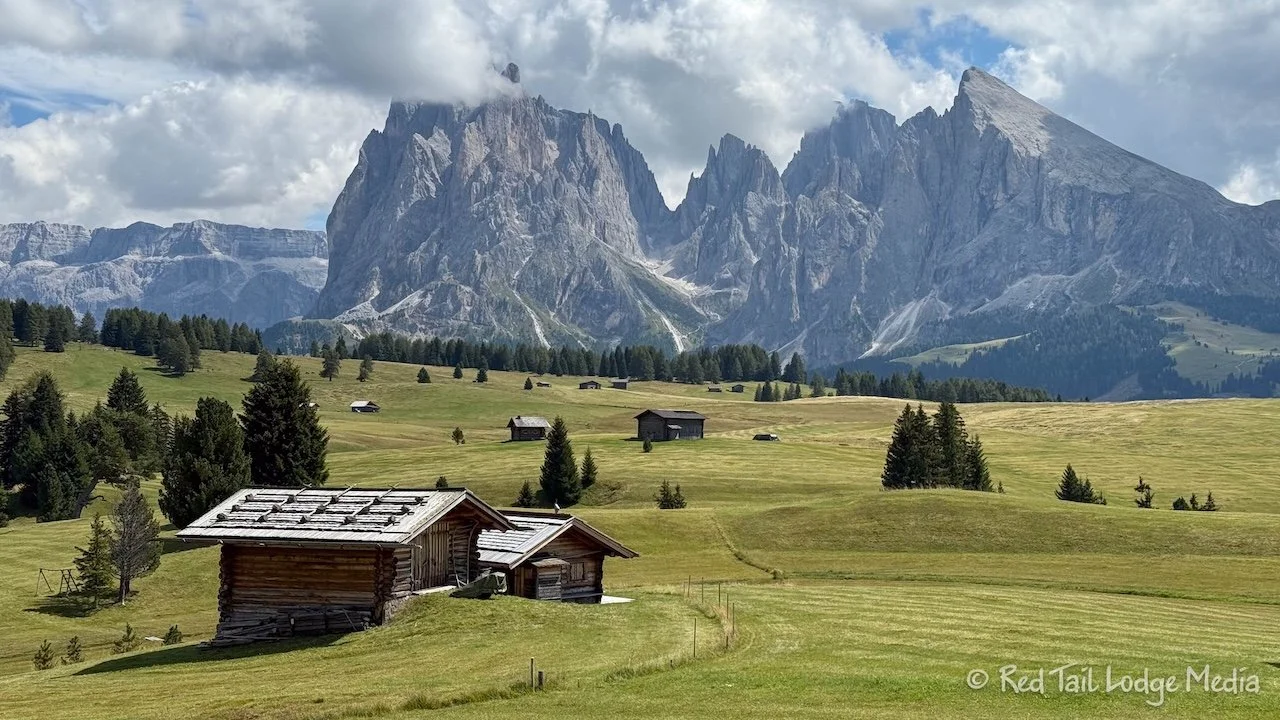
By the time we returned to Compatsch, we had covered 11.9 kilometers (7.4 miles) with an elevation gain of 352 meters (1155 feet), which we completed in four hours and 25 minutes, including our stop for lunch. It was hike number 51 of our 52 Hike Challenge for 2025.
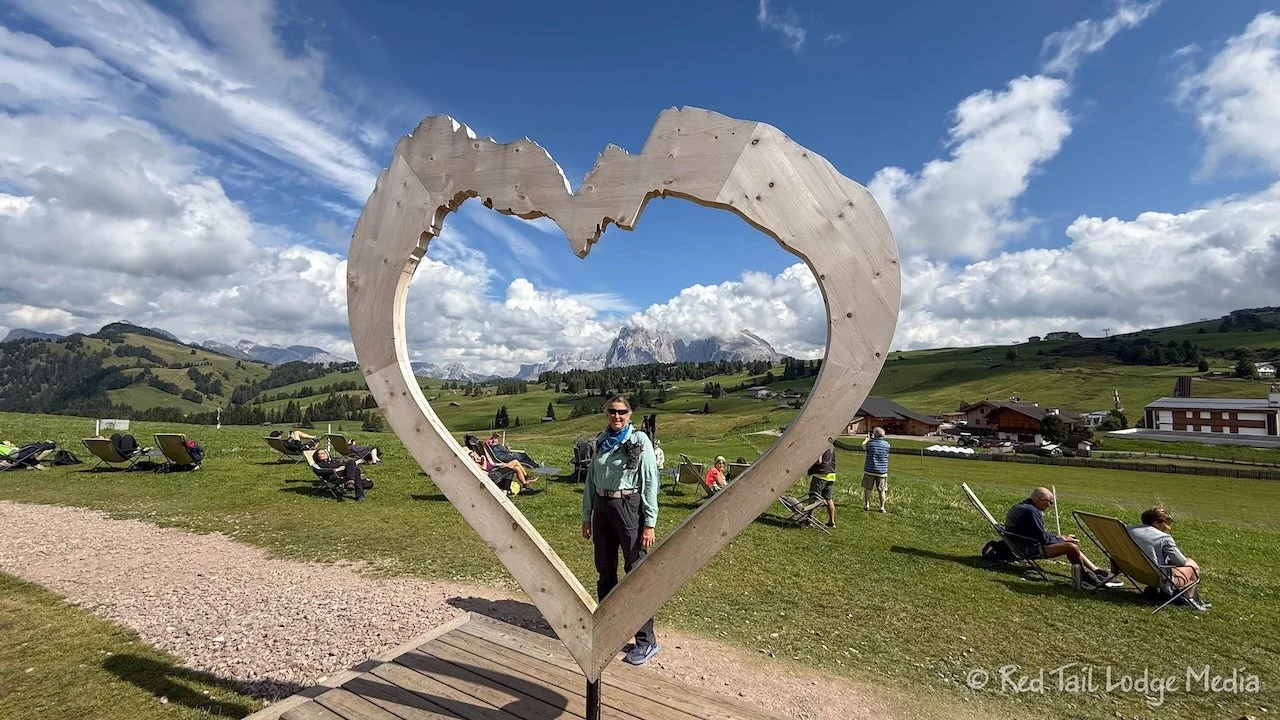
After our hike, we sat down at the Nordic Bar in Compatsch for a couple of colas. Then we took the gondola and bus back to Kastelruth. It was a little after 4 pm by the time we returned to our hotel. After dropping off our backpacks and freshening up a little bit, we headed back out to check out the village of Kastelruth and the remaining activities of the Dorffest.
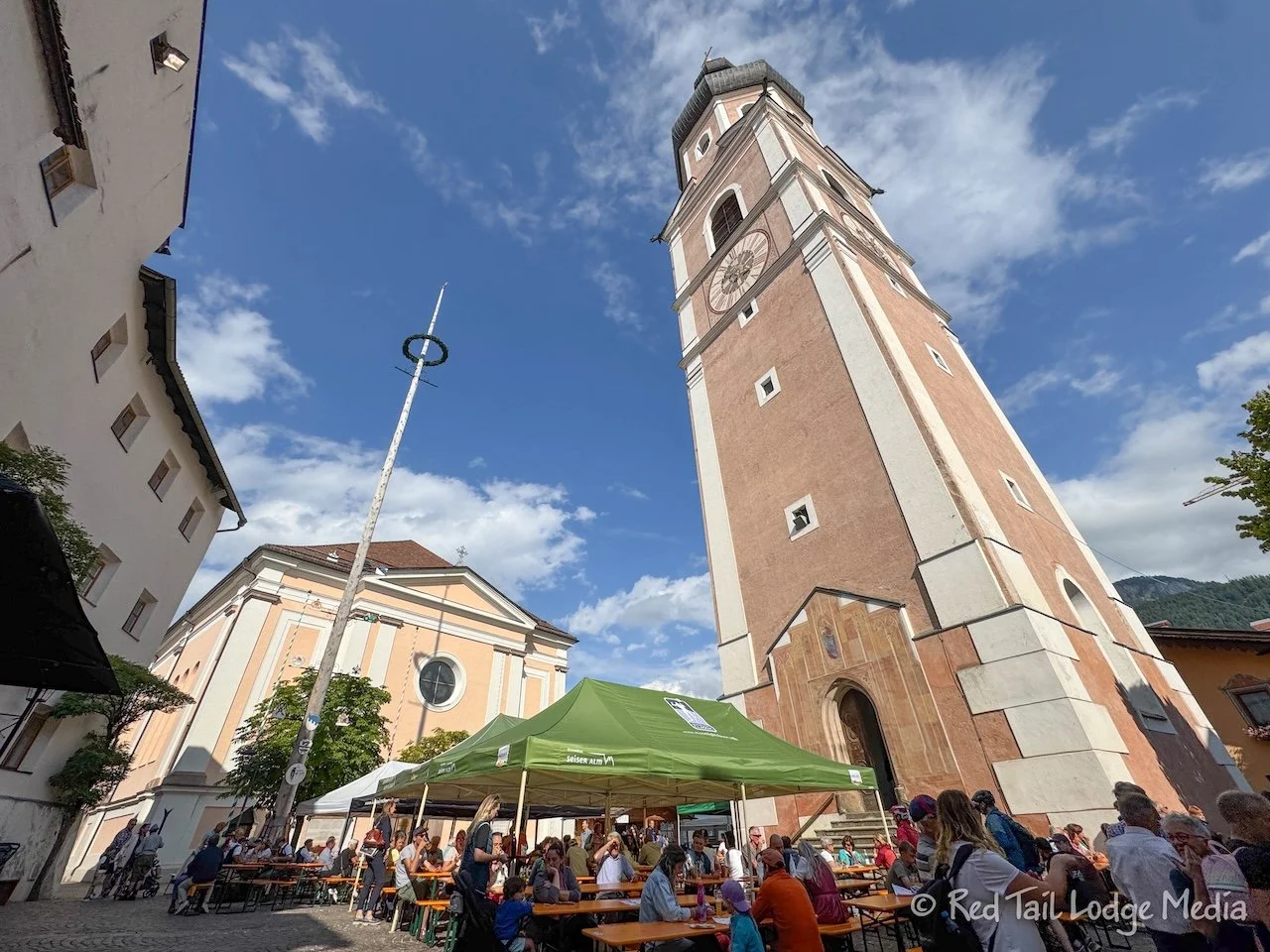
There were several areas around town with tables, food booths, drink booths, and some performance stages. It looked like the festival was winding down, as many of the booths looked like they were closing. After wandering around for a little while, we found an area, over by the Schulhof (school yard) that seemed to be still pretty active. There was a Musikkapelle playing, just finishing up their last songs as we arrived. There were a lot of tables in front of the bandstand and servers were taking food and drink orders at the tables. We decided to sit down, order some food, and wait for the next Musikkapelle, which was scheduled to start within the hour.
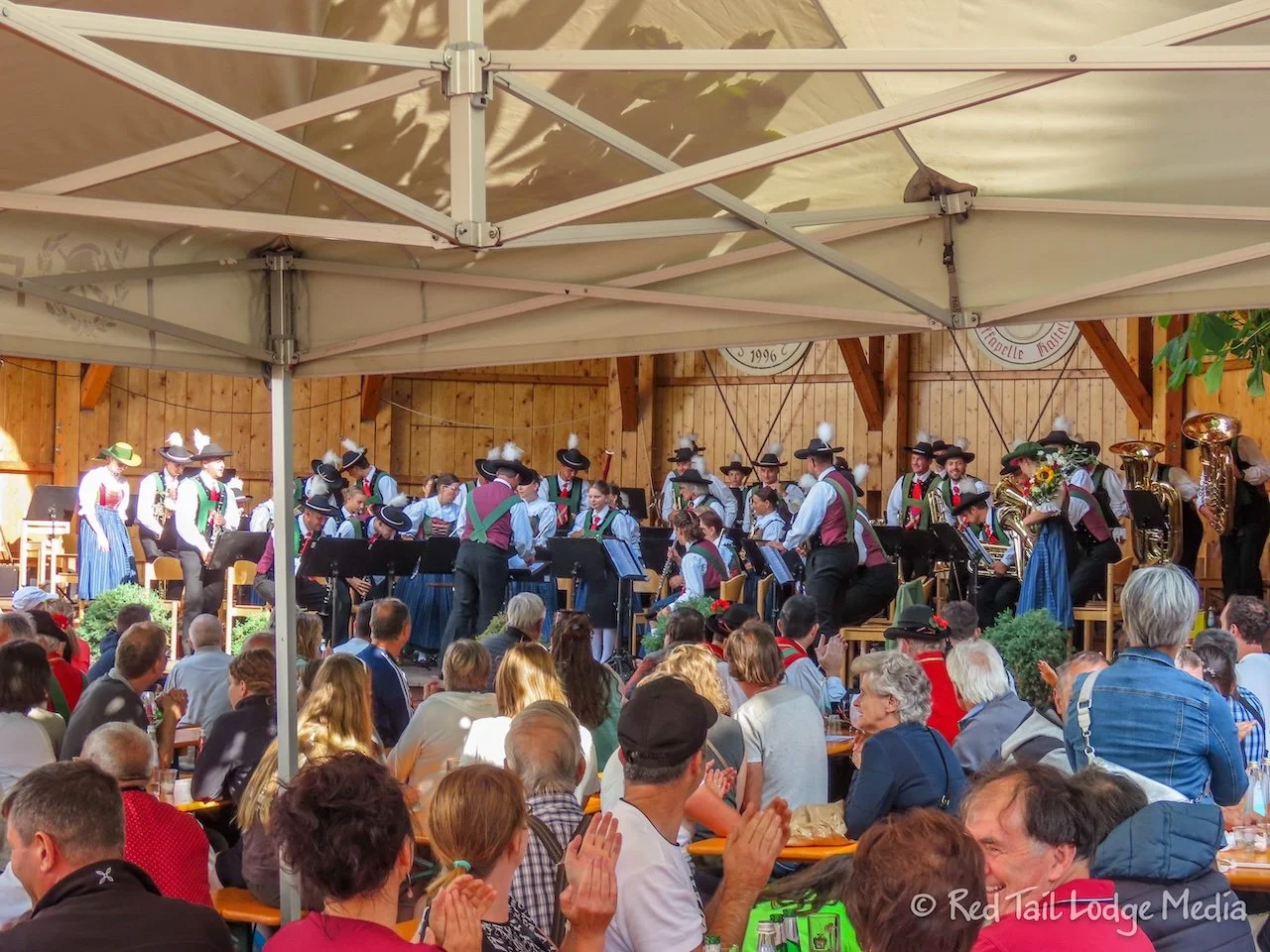
A Musikkapelle is a traditional band in Südtirol (South Tyrol). The bands are mostly brass and play mostly marches, although they also play waltzes and contemporary music. There are over 200 bands in Südtirol as nearly every village has a Musikkapelle. Even though each band’s traditional costume is unique and different from the others, they are very similar to one another.
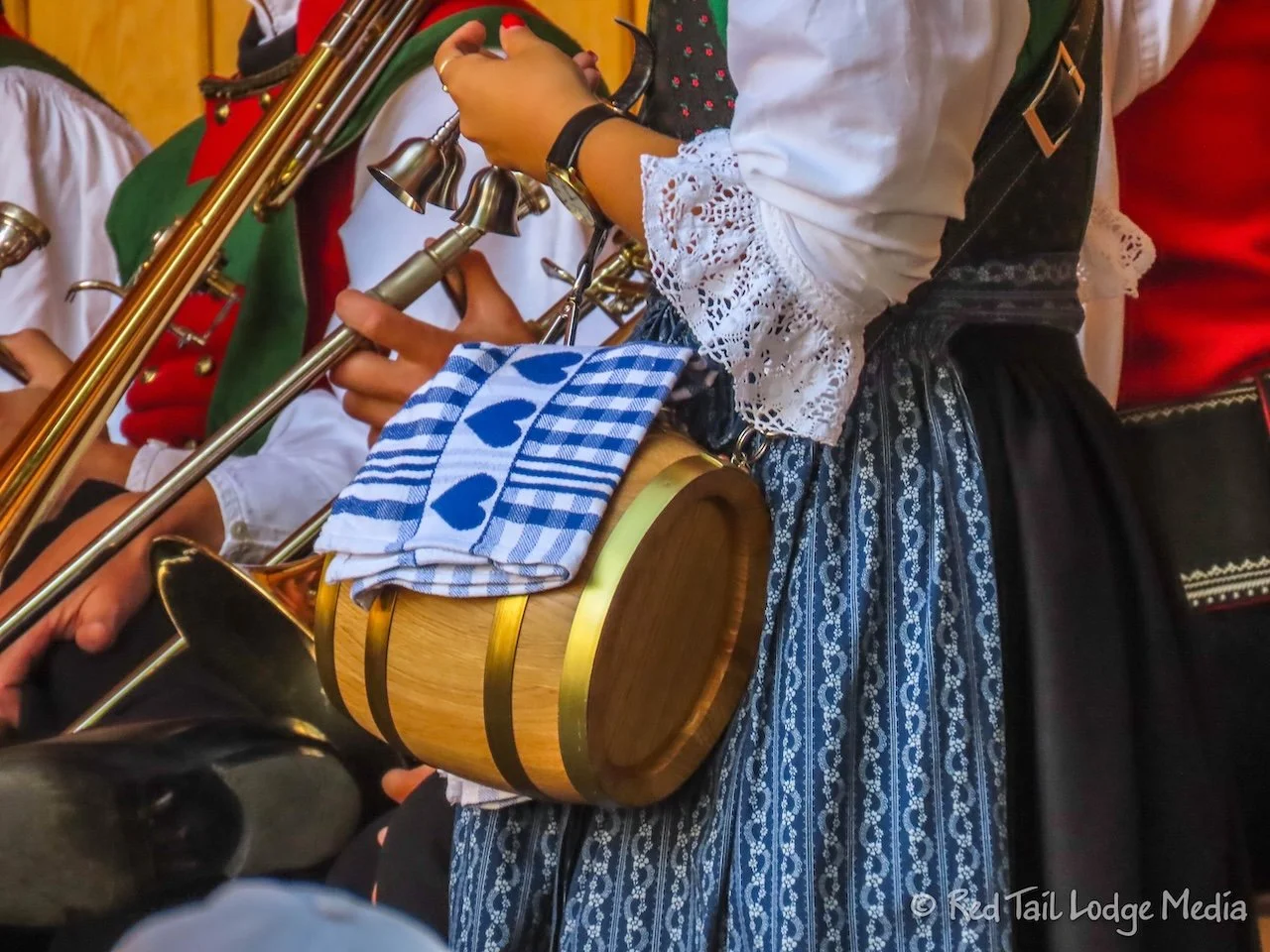
A couple of women associated with the band would walk around selling shots of schnapps, which we assumed was raising money for the band. They were carrying a wooden cask filled with the schnapps along with a handful of small metal goblets to use as shot glasses. A towel that was draped over the cask was used to wipe out the goblets between customers.
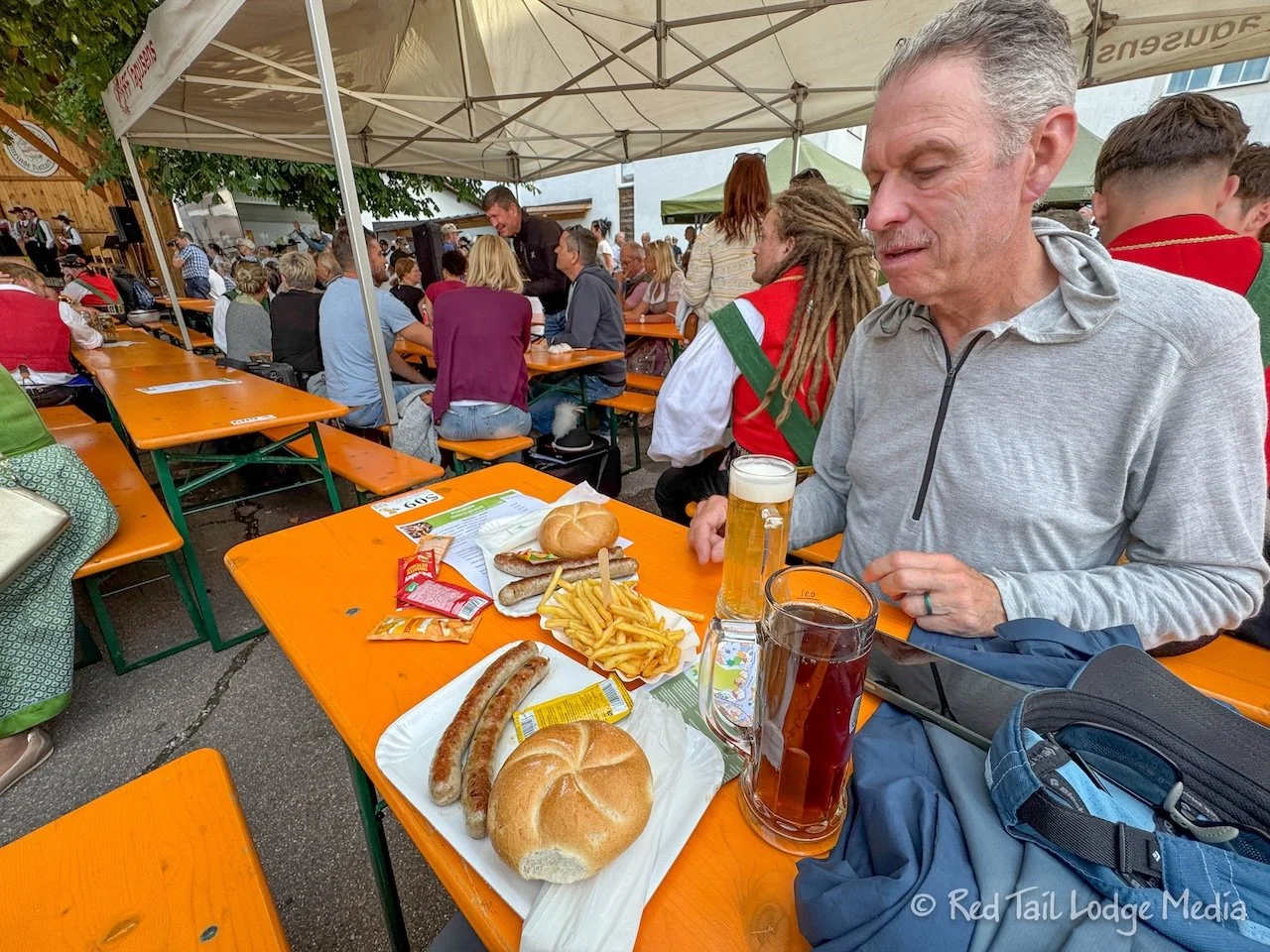
We both ordered bratwurst with a roll and split an order of fries. To drink, Keith had a Radler while Ann drank a Spezi. A Radler is a mixture of beer and lemonade or fruity soda. A Spezi is a mixture of cola and orange soda or lemonade. We drank our fair share of Radler and Spezi when we lived in Germany for a couple of years several decades ago. They brought back good memories for us.
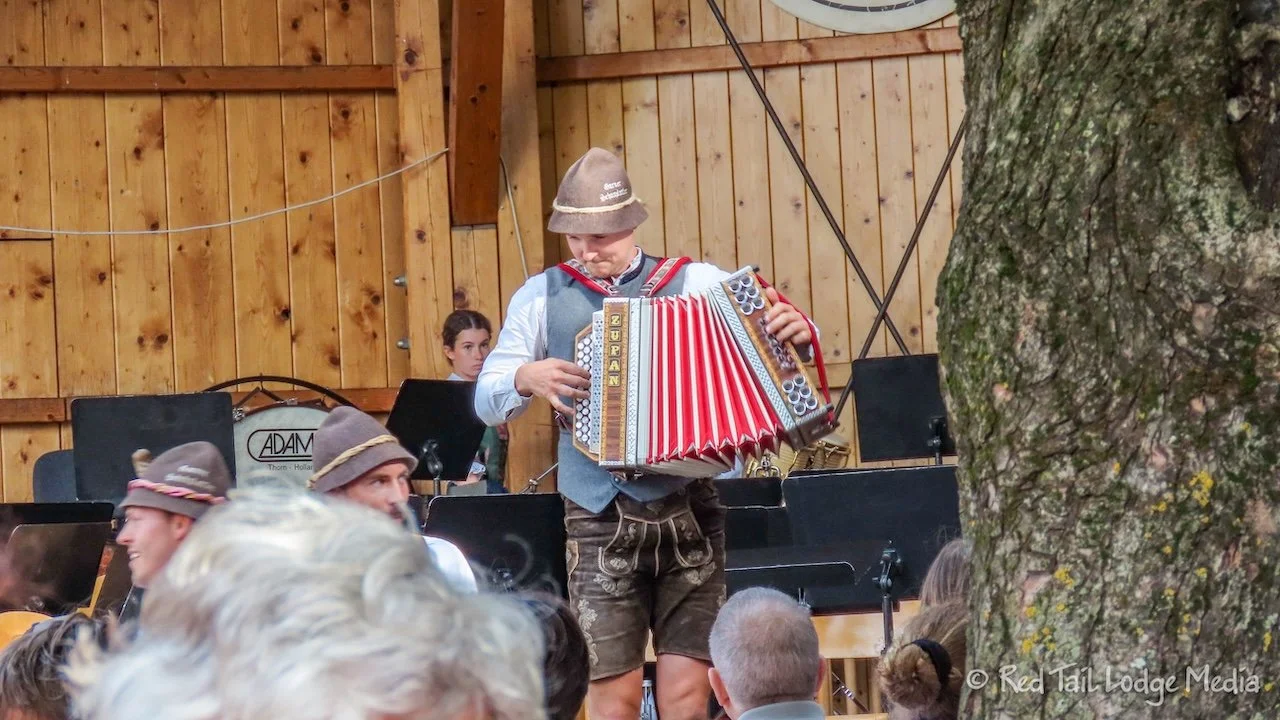
In between the two Musikkapelle, a group of men performed some Schuhplatln. Schuhplatln is a traditional folk dance of Südtirol, where there is jumping, yodeling, and striking their thighs, knees, and feet, along with stamping their feet. One of the men played the accordion, which provided the music for the dancers. At one point, the men held a wooden platform in their hands while one of the others danced on top of it. Then they would hoist the platform into the air, sending the man on top up into the air and hopefully landing back on the platform. A couple of times it seemed like he may fall off, but they all seemed to help him from falling over the side.
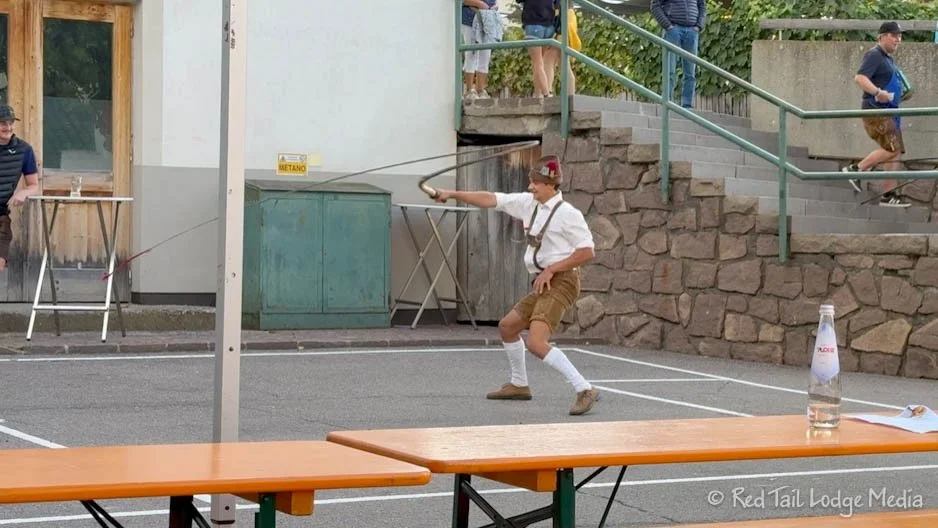
Later that evening, as the Musikkapelle paused for a moment, the Schuhplatln group got a whip out and started cracking it. It was amazing how loud a whip is.
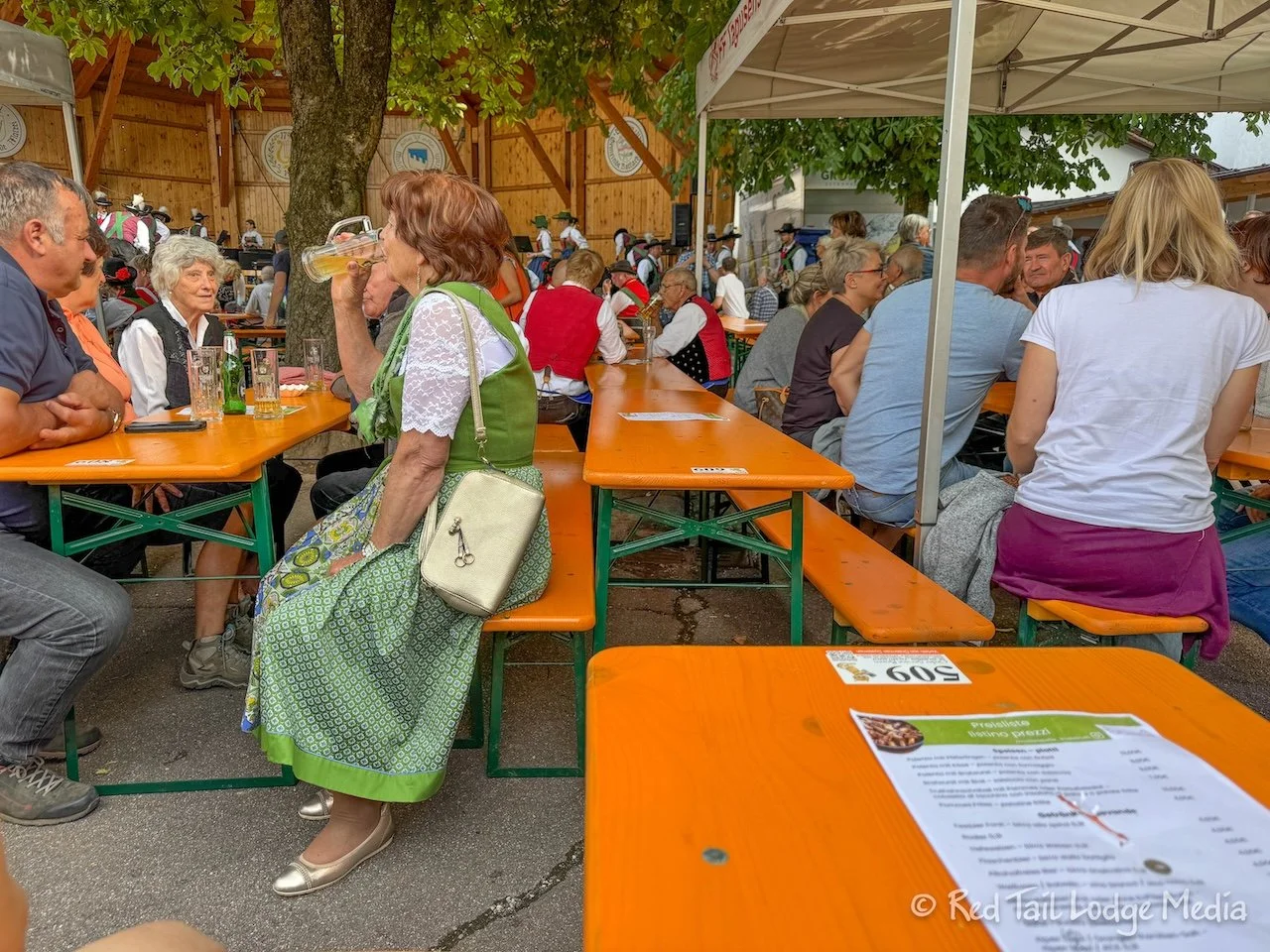
We finished our food and drink, then ordered another round of drinks so we could stay longer to listen to the music. It seemed like the first Musikkapelle hung around while the second one played. They seemed to know the words to some of the songs and sung along. They would also get the crowd to clap along to some of the songs and keep the place lively. We stayed for a couple of hours. It was like a warm up for the Oktoberfest, which we would be attending in a few weeks.
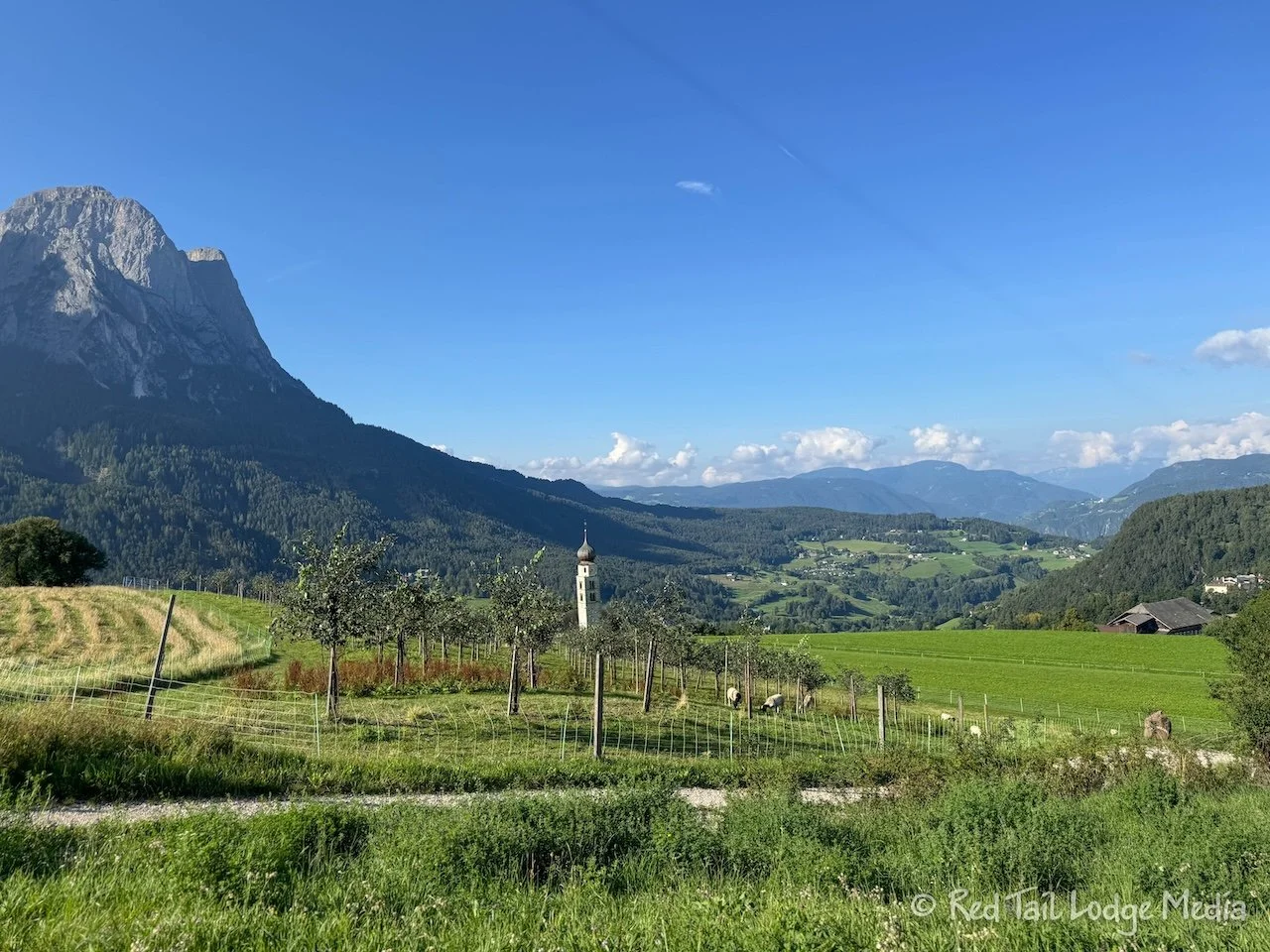
Monday we went on another hike. We got a little earlier of a start this time. After a nice breakfast, we took Bus 10 up to Compatsch. We decided we would take the bus instead of the gondola, hoping to save a little money. But Bus 10 is not run by the Südtirol network, but by Silbernagl, and it costs the same as the gondola, 28.50 euros. The bus driver only took cash. Luckily, we had enough cash on us. He said that the ticket would get us back on either the bus or the gondola. So much for trying to save money!
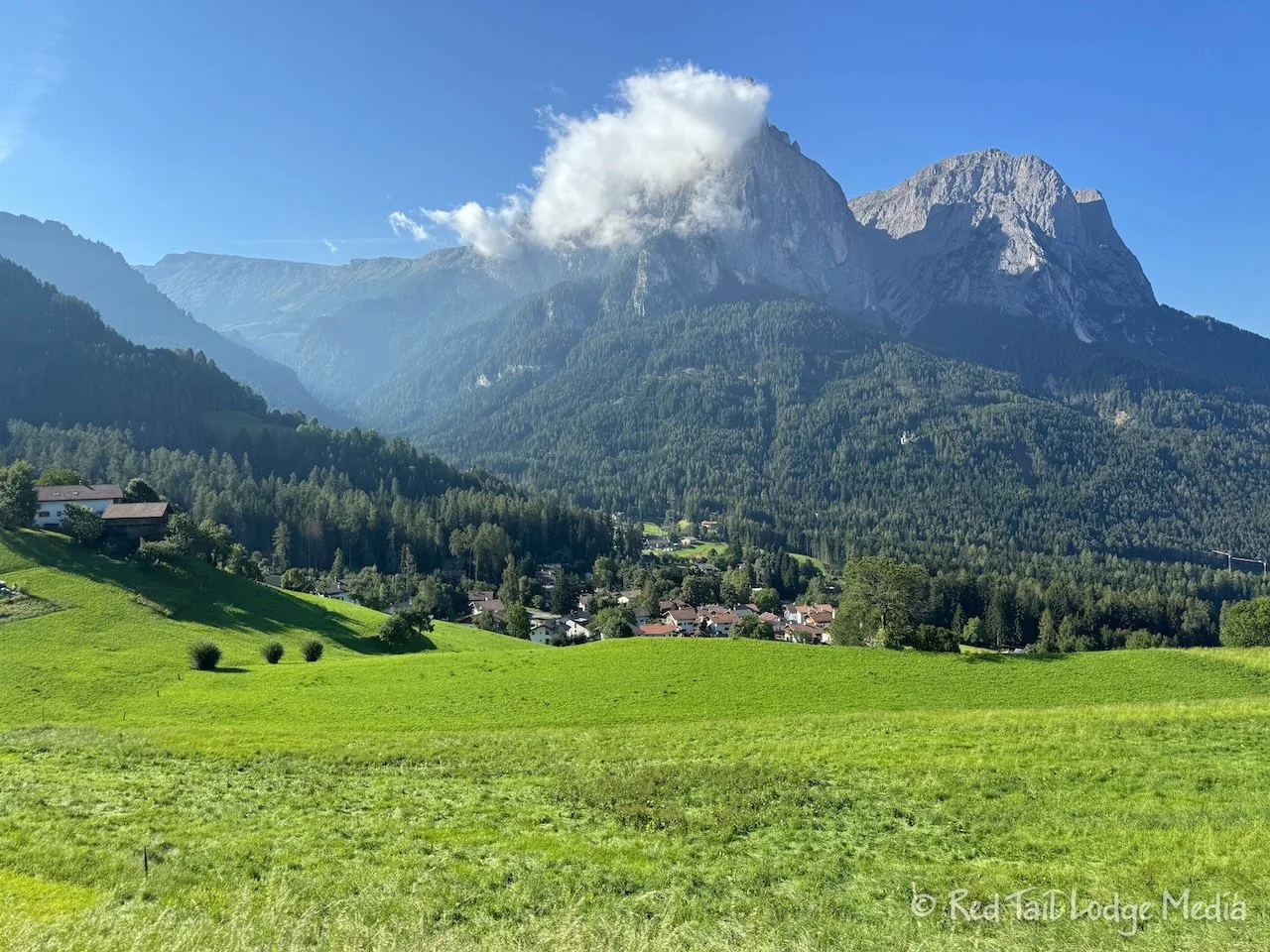
There was an advantage to taking the bus. It was direct from Kastelruth to Compatsch, so we didn’t have to switch from bus to the gondola in Siusi. The windows on the bus were clean, unlike the scratched windows on the gondola, so it was easier to take nice pictures along the way.
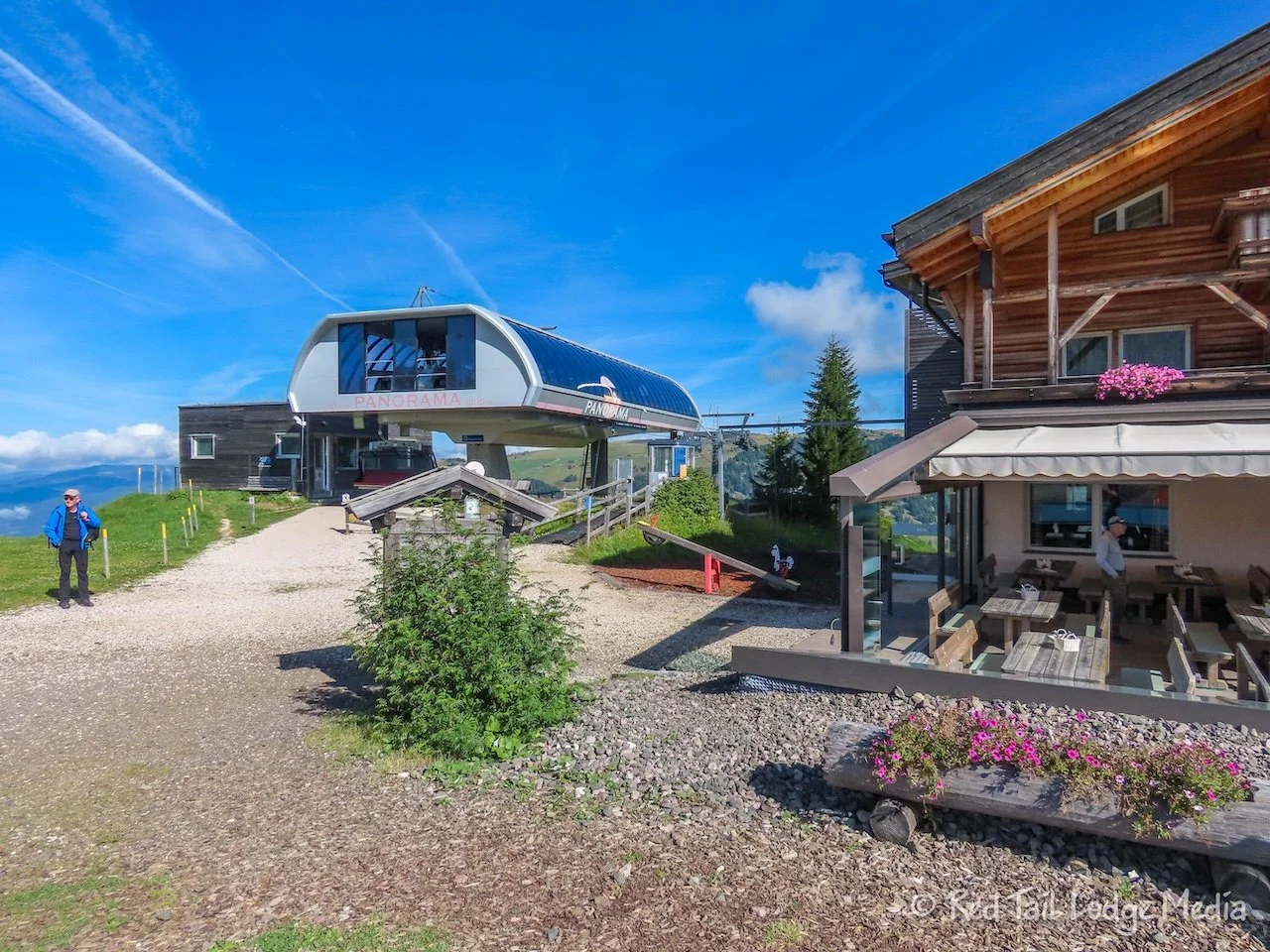
The hike we picked out started at the Alpenhotel Panorama. We could have walked up the road from Compatsch, but we decided to save some steps and elevation gain by taking the Panorama chair lift. Of course, that cost more money. It was 8 euros per adult for going up or 12 euros per adult for a round trip. We opted for the round trip.
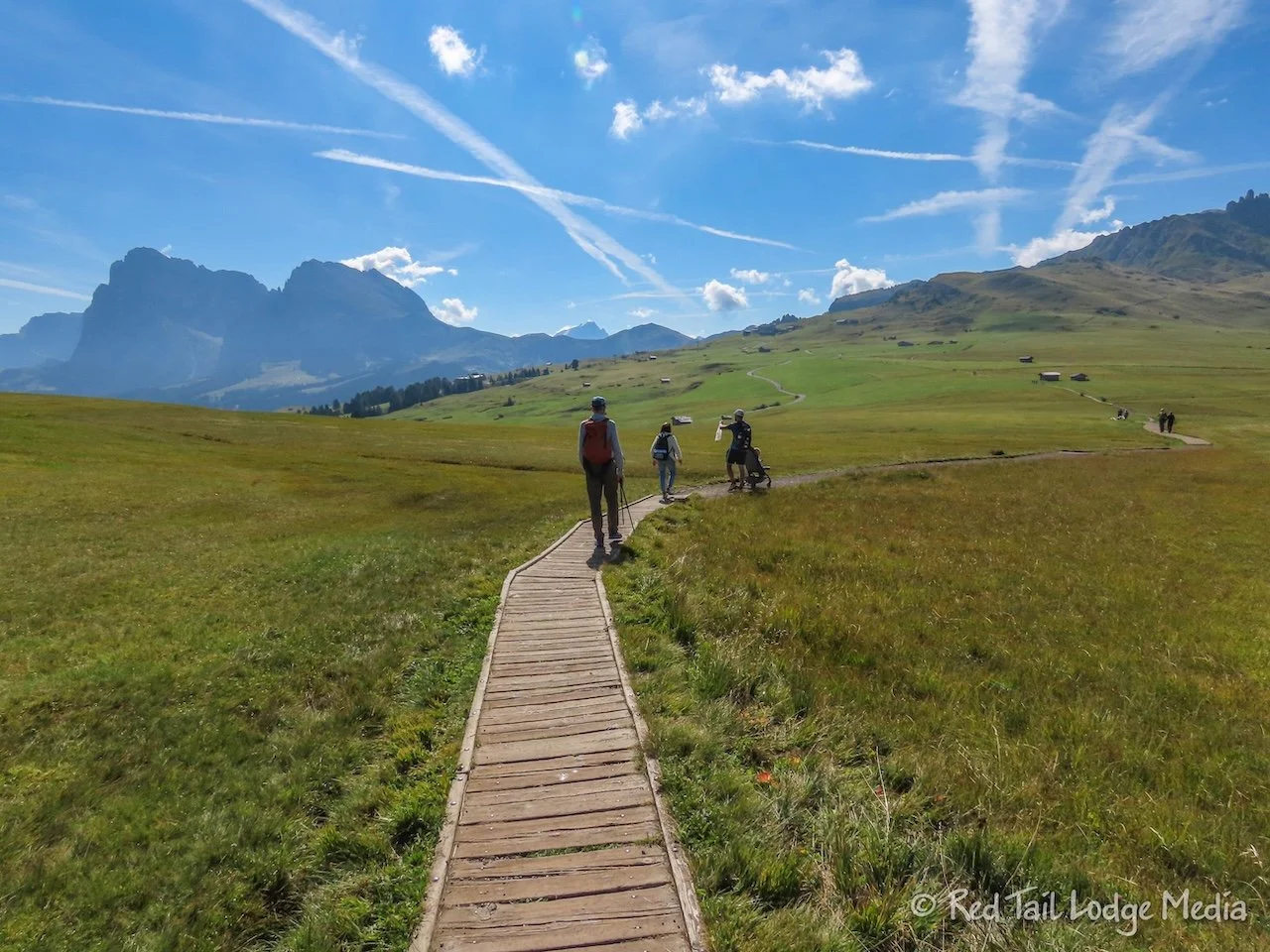
The route in AllTrails was called Alpenhotel Panorama - Rifugio Alpe di Tires. From the Alpenhotel Panorama, the trail headed south. It started out across the meadow, through a boggy area, so there were long sections of boardwalk and paved stone. Then the trail turned into dirt and rocks as we approached the tall, spiky ridge line.
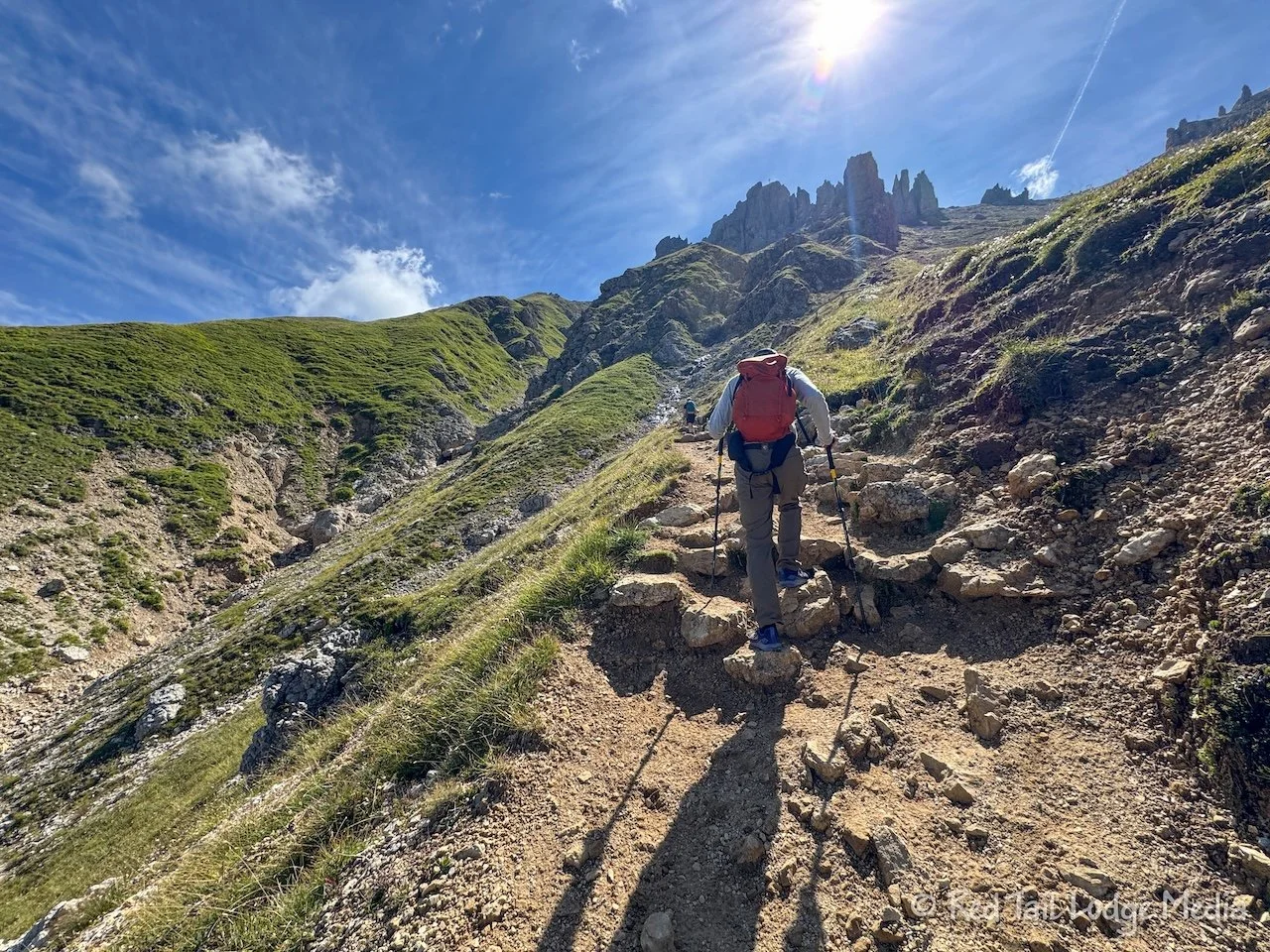
A steep, long set of switchbacks led us up to the pass along the ridge line. Now this felt like a real hike. The views back out over the meadow kept getting better the higher we got, with mountain peaks in the distance coming into sight. In a little over 0.8 kilometers (half a mile), we gained about 300 meters (1000 feet).
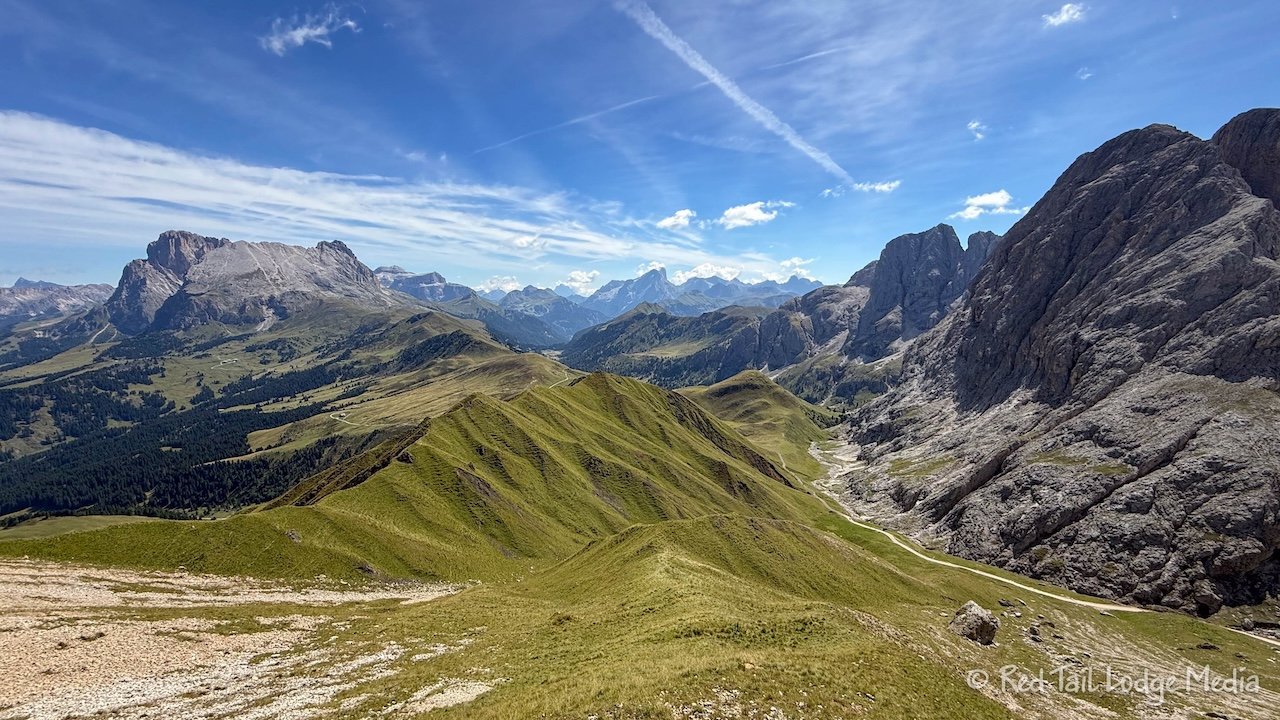
When we reached the top, the views out beyond the other side of the ridge were stunning. It was definitely worth all the effort to reach the pass. After taking in the views for a few minutes, our route continued along the back side of the ridge, over to Rifugio Alpe di Tires (Tierser Alpl Schutzhaus). It was slow going to reach the Schutzhaus, not because the terrain was difficult, but because we couldn’t take our eyes off the gorgeous scenery and Ann couldn’t stop taking pictures.
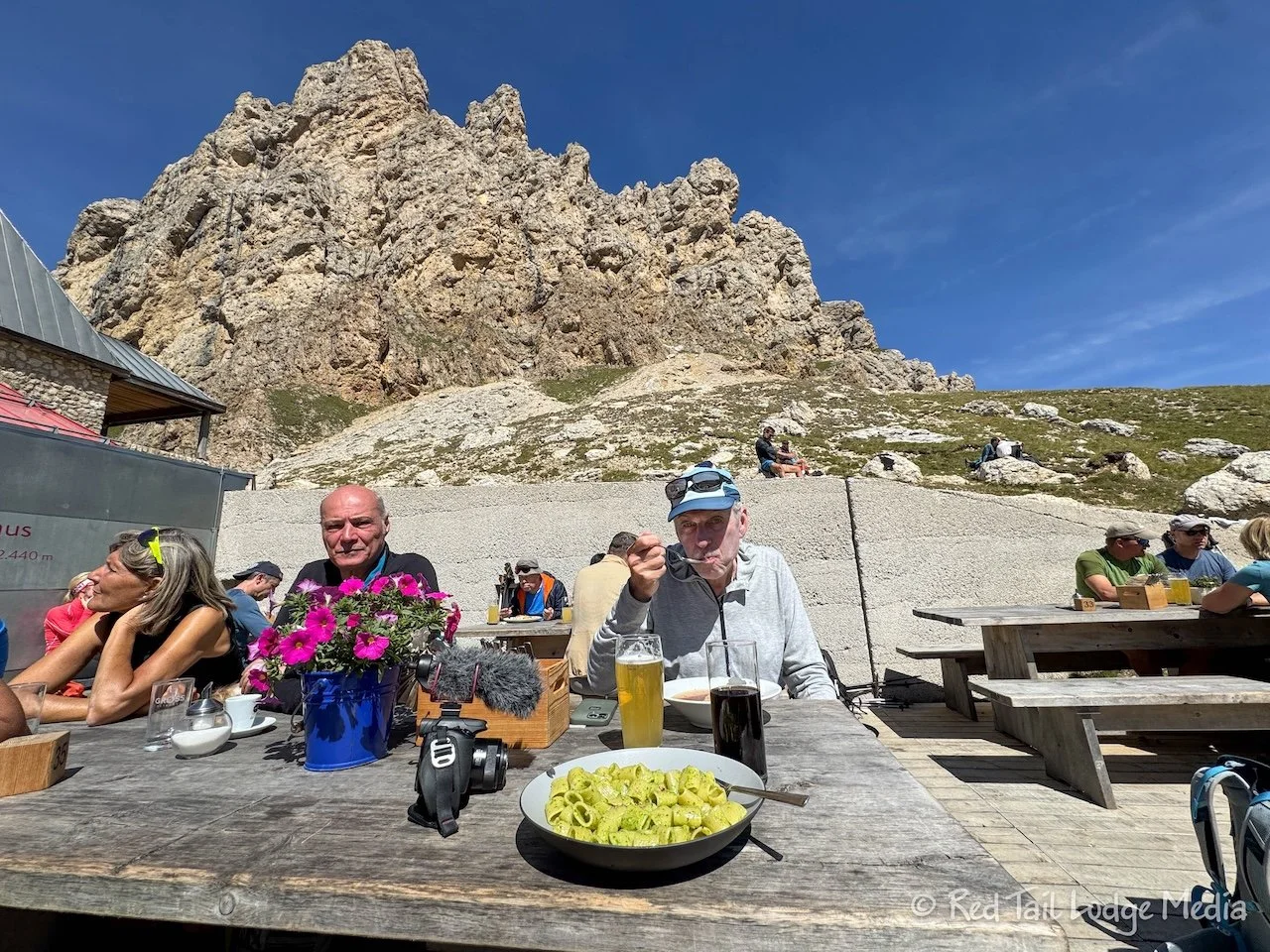
We sat at an outside table at the Schutzhaus and ordered lunch. Keith had the Knödelsuppe while Ann had the pesto pasta. The Knödelsuppe is broth with large dumplings. The dumplings were similar to the ones Ann had the day before, but these were flavored with Speck (bacon).
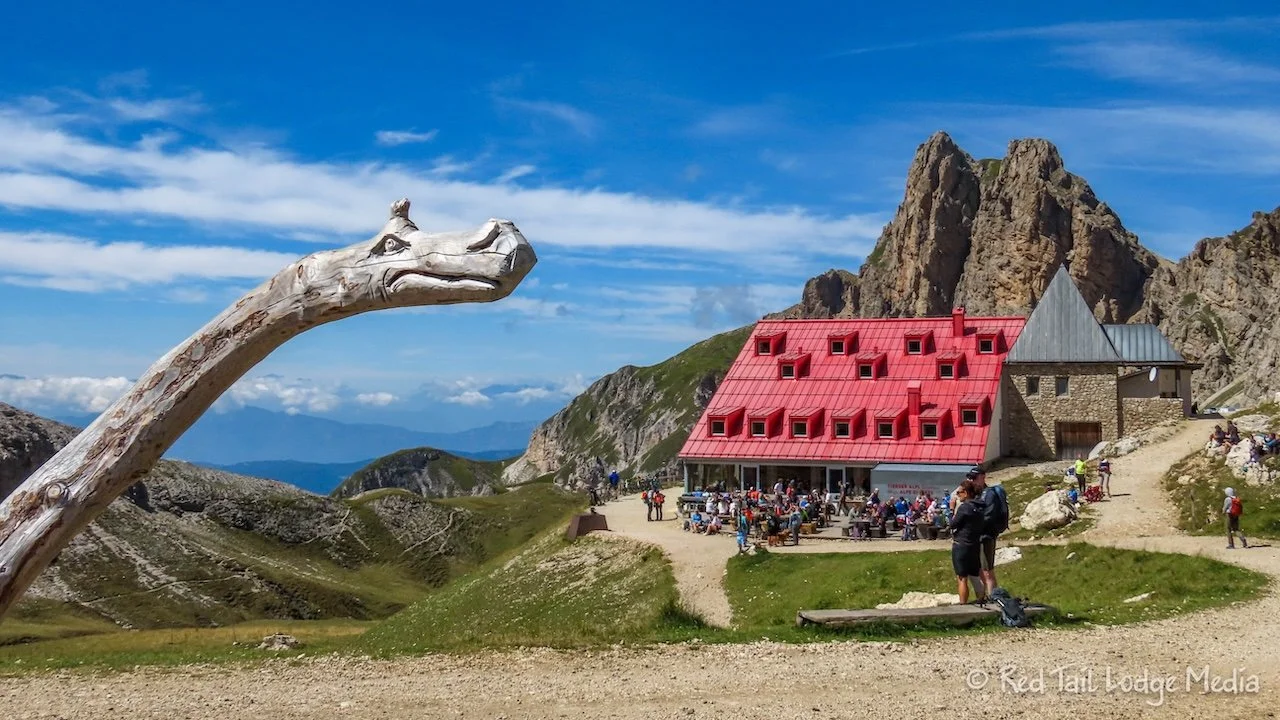
The Schutzhaus was our turnaround point. Now that the steep climb was over, it was a relatively easy hike back, as it was mostly downhill. We are so glad we went on this hike, because we enjoyed it so much more than the hike the day before.
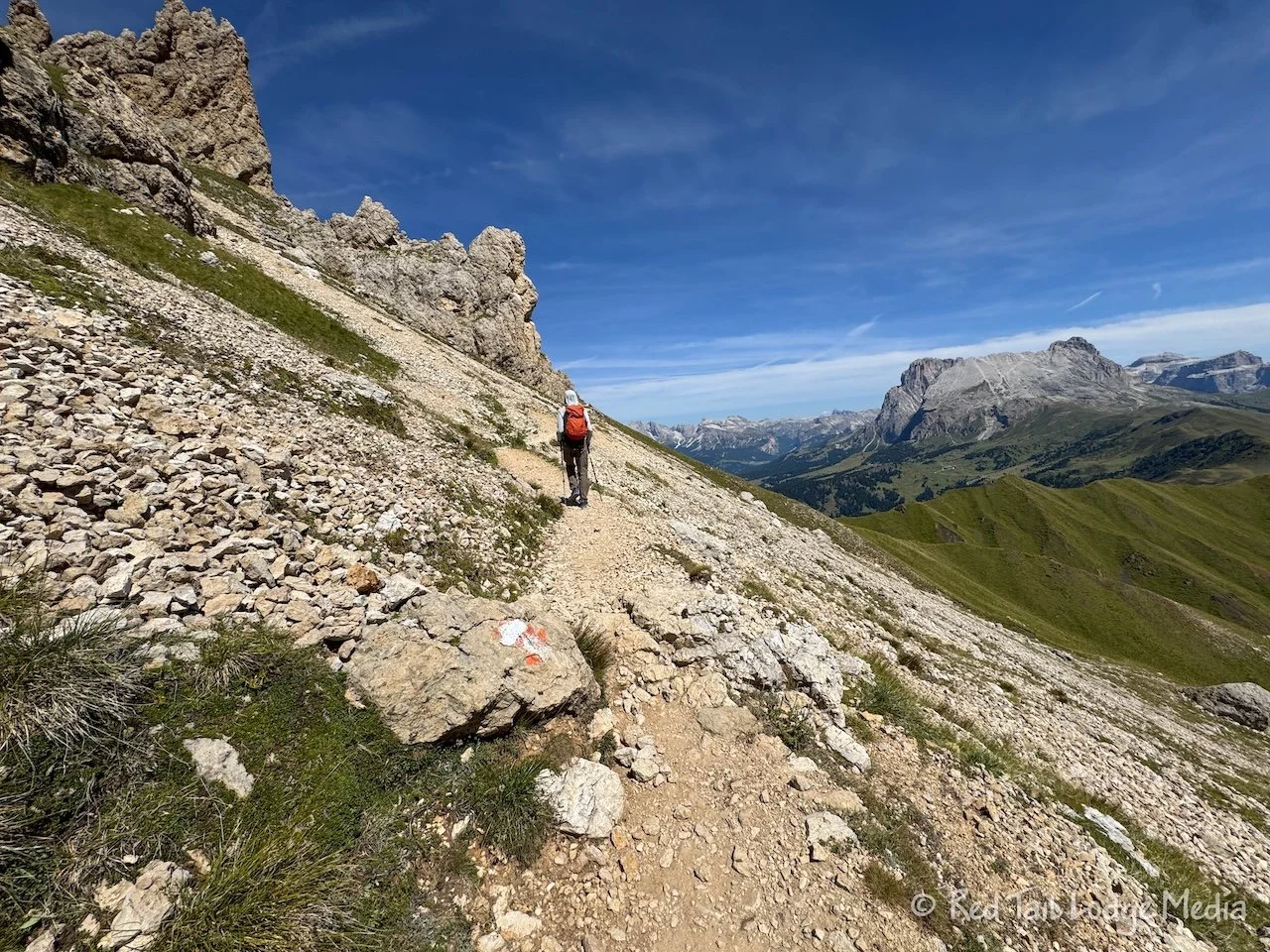
Upon returning to the Alpenhotel Panorama, we covered 9.8 kilometers (6.1 miles) with a total elevation gain of 594 meters (1949 feet) which took us almost five hours to complete, including our time having lunch. It was hike 52 of our 52 Hike Challenge for 2025. We completed the challenge! It was a great hike to end on.
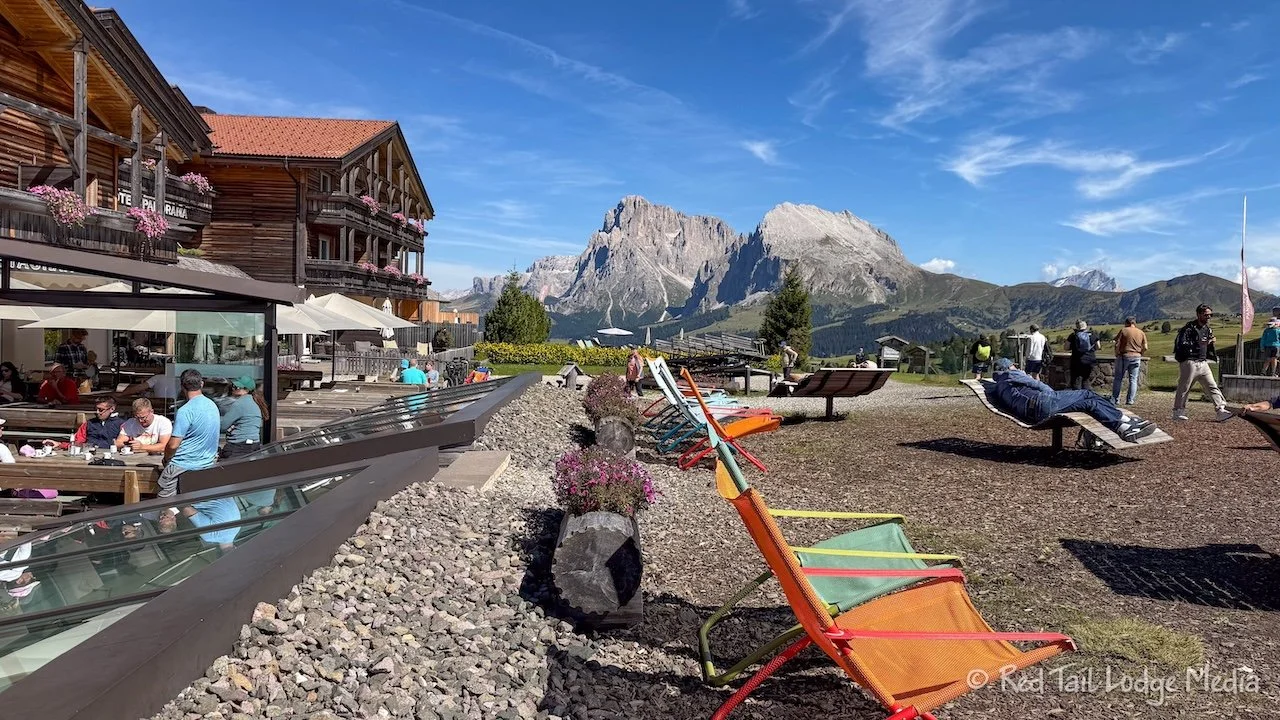
From the Alpenhotel Panorama, it was a chair lift ride down, then a bus ride to get back to Kastelruth. We reached our B&B around 3:30 pm. That gave us plenty of time to get our showers in and wash our clothes before dinner. We wanted to wash our clothing early enough in the day so it could dry before we needed pack up in the morning.
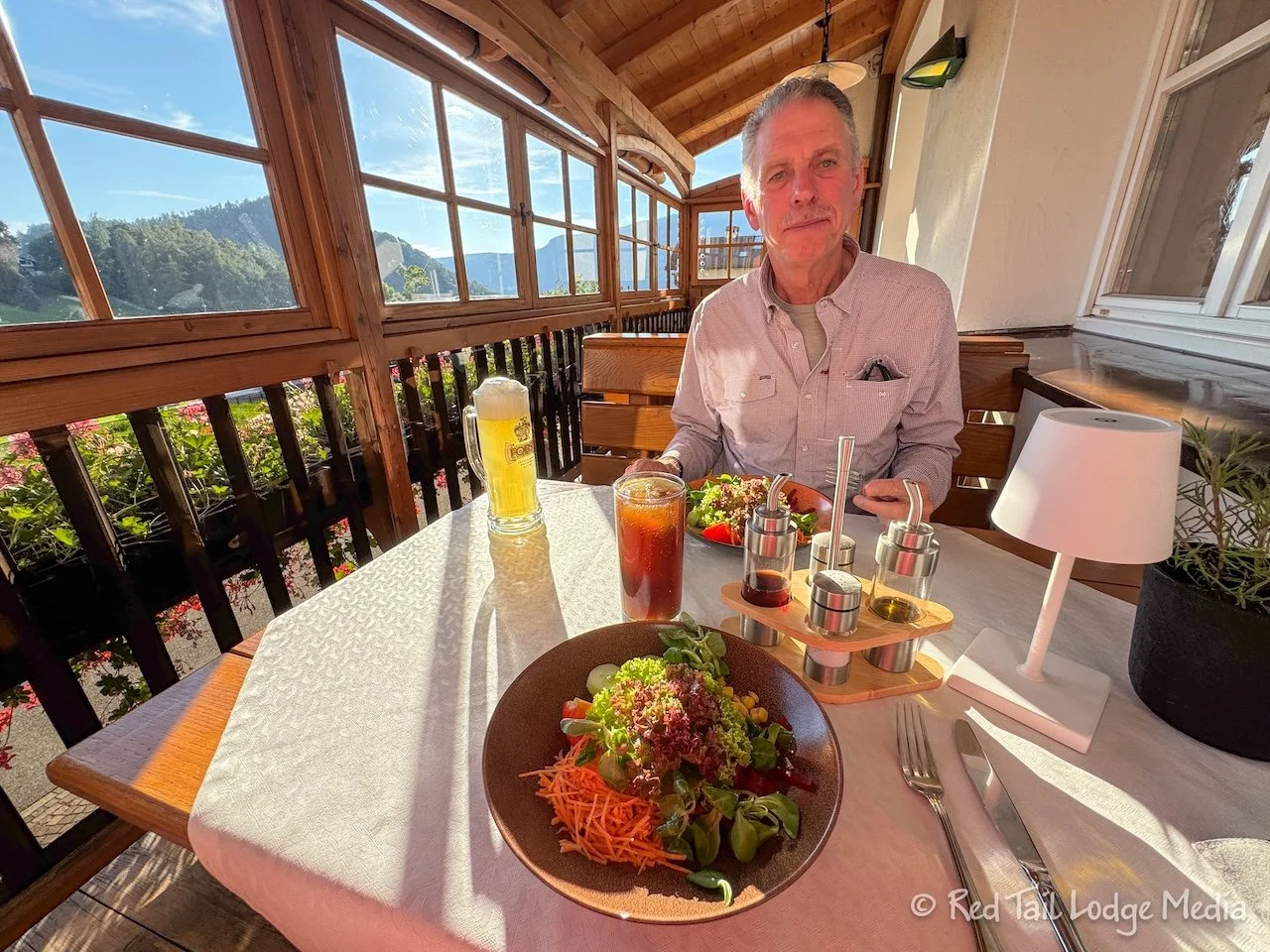
For dinner, we walked over to Restaurant Saalstuben in town. We both started out with a gemischte Salad (mixed salad). We miss the mixed salads from Germany. Instead of all of the ingredients being “tossed” together, like salads normally are in the States, a gemischte Salad has little separate piles of ingredients. Sometimes those little piles are salads in and of themselves, like cucumber salad or potato salad. That was not the case this time, as our salads consisted of grated carrots, beets, cucumbers, tomatoes, lettuce, and corn. They were served with oil and vinegar that we could add ourselves for a dressing.
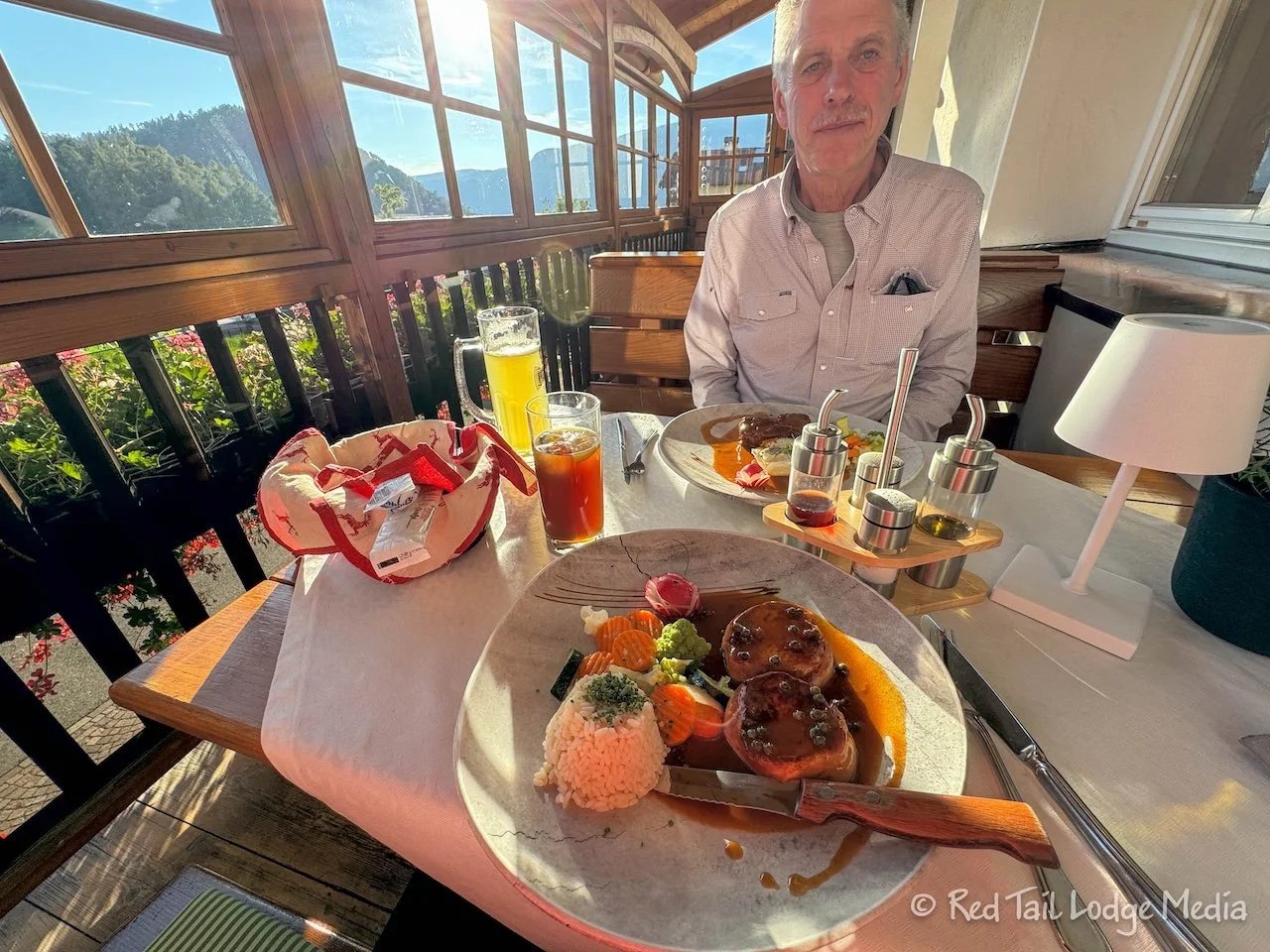
For our main, Keith had the veal cheek (Kalbswange) with vegetables and mashed potatoes while Ann had the pork filet (Schweinefilet) with pepper corn sauce, vegetables, and rice. For dessert, Keith had crème brûlée while Ann ordered the Heiße Liebe (hot love). The Heiße Liebe was vanilla ice cream with hot raspberry sauce and whipped cream. Everything tasted wonderful and we left feeling very satisfied.
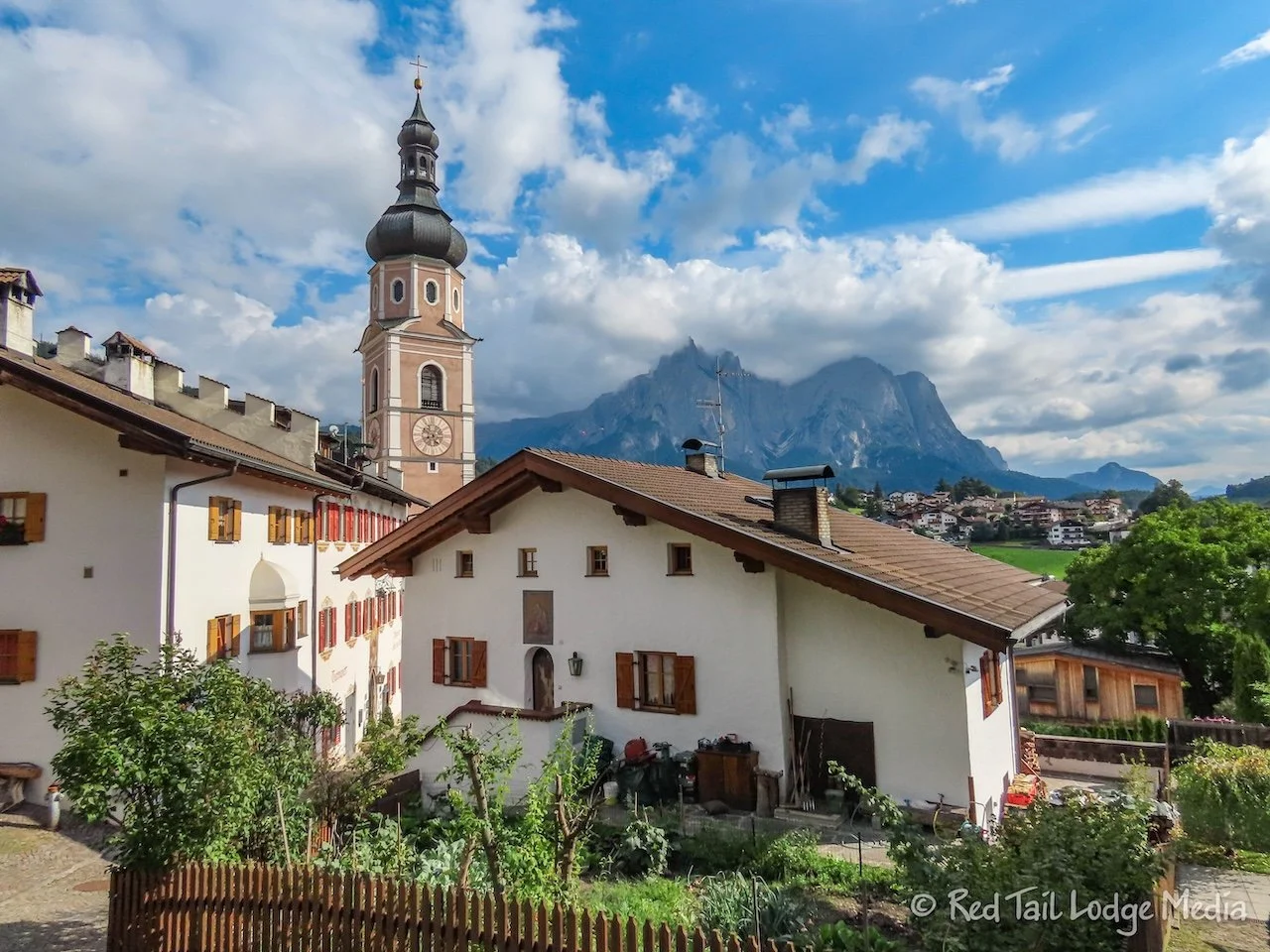
We only explored a small section of the Dolomites, but what we saw was gorgeous. The village of Kastelruth was the icing on the cake. We enjoyed the village festival almost more than the Oktoberfest, as the village festival was much more intimate with less tourists.
Check out our related video: Dolomites, Italy
(Ann)