
Salzburg, Austria - August 26th to 29th, 2025
Salzburg Austria is known by many Americans as the setting for the Sound of Music movie, but more Europeans know it for its wonderful old architecture and its music. Salzburg is the birthplace of Wolfgang Amadeus Mozart. The Salzburger Dom (Salzburg Cathedral) dominates the old town center with its Baroque architecture. The Hohensalzburg fortress overlooks the city from on top of the mountain of Mönchsberg. We had visited Salzburg once before, over 35 years ago. Back then, we took the Sound of Music tour, but this time, we chose to explore more of the real character of Salzburg, wandering the streets of the historic old town, enjoying the beer gardens, trying the local foods, and attending some musical concerts.
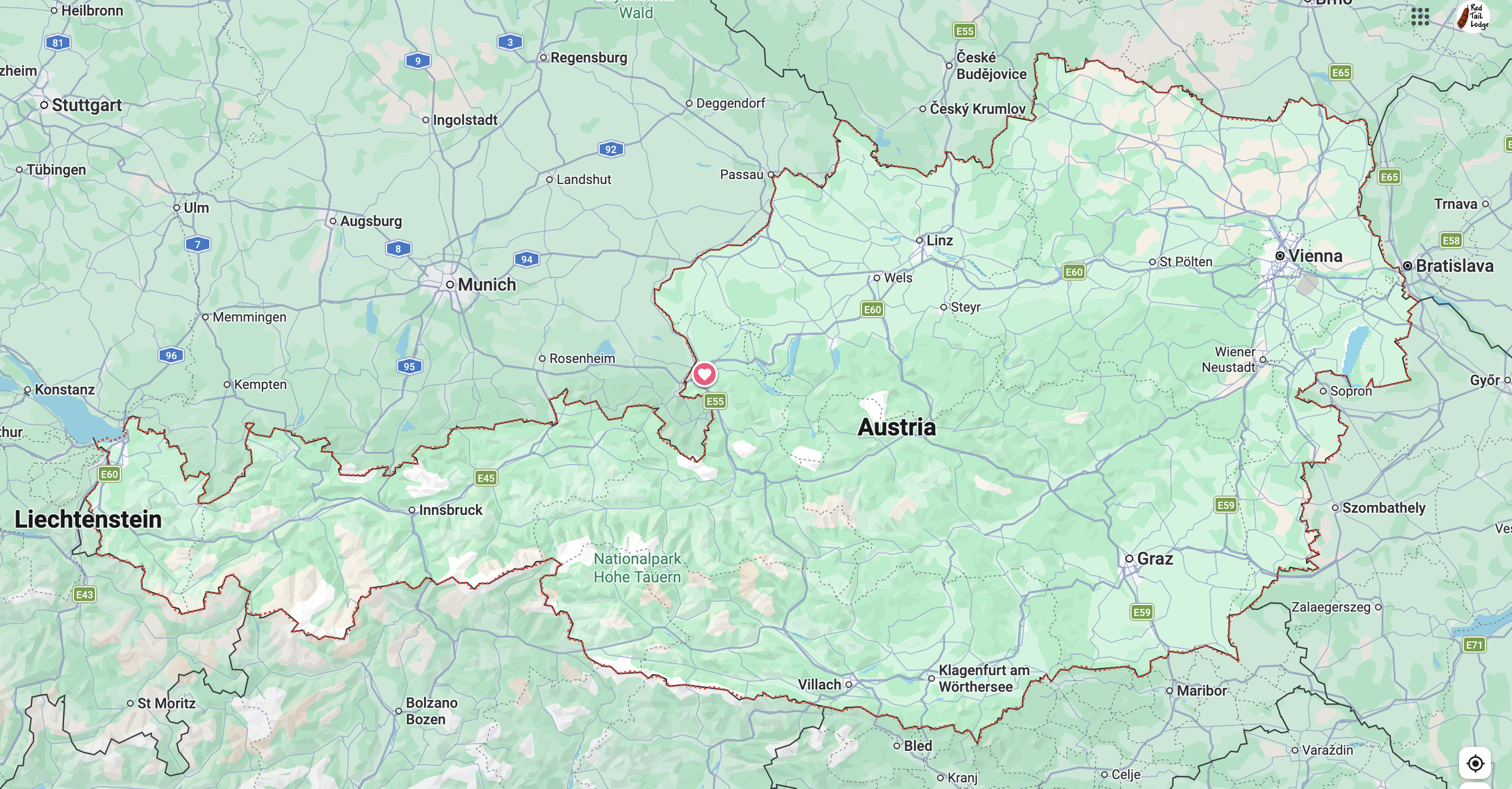
Tuesday was a travel day, which should have been much easier than the previous travel day. It turned out to be a little more complicated than planned, but still better than some of our other travel days through Italy.
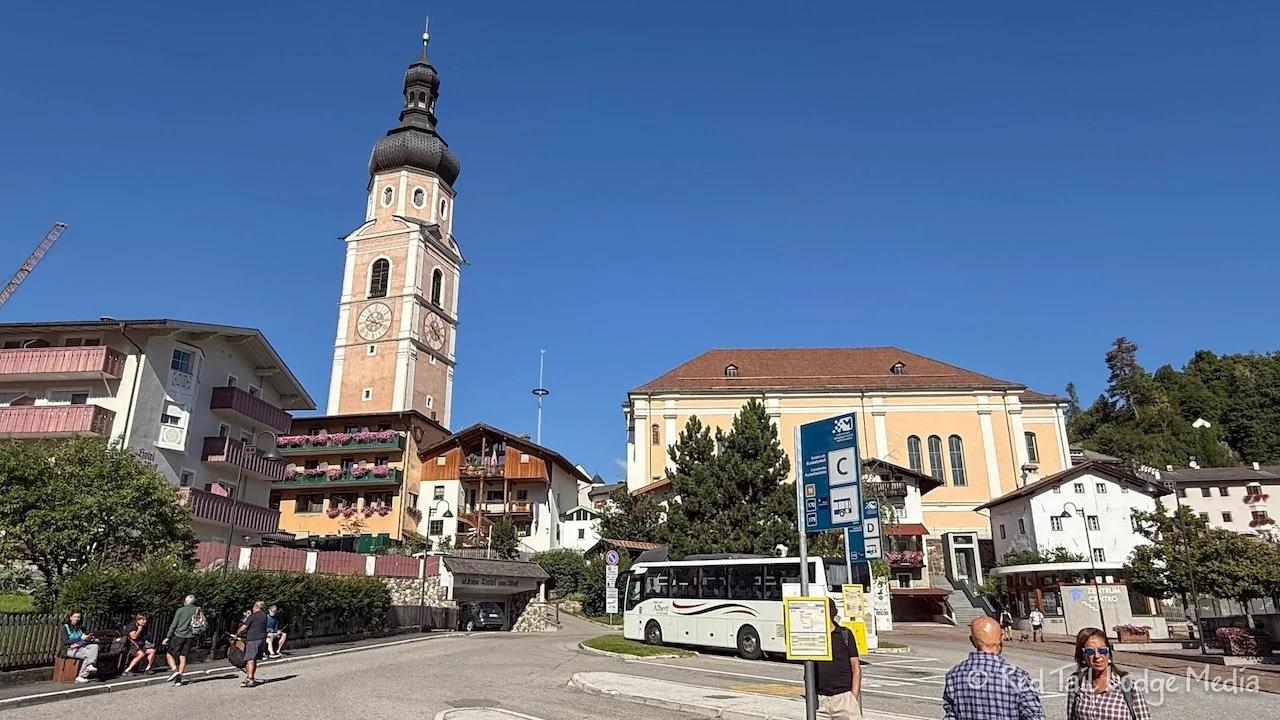
We were going from Kastelruth in Italy to Salzburg in Austria. Thankfully, we didn’t have to leave early, so we took our time at breakfast before checking out of Garni Lantschner before 10 am. We asked Patti if we could leave our hiking poles so her guests could use them. We didn’t need them anymore for Europe and didn’t want to keep hauling them around and figure out how to fly them home, as they didn’t fit inside our luggage. We didn’t want any money for them, but Patti insisted on giving us a discount on our room. We don’t know if she accepted credit cards, because we already decided to pay her in cash so she wouldn’t have any credit card fees.
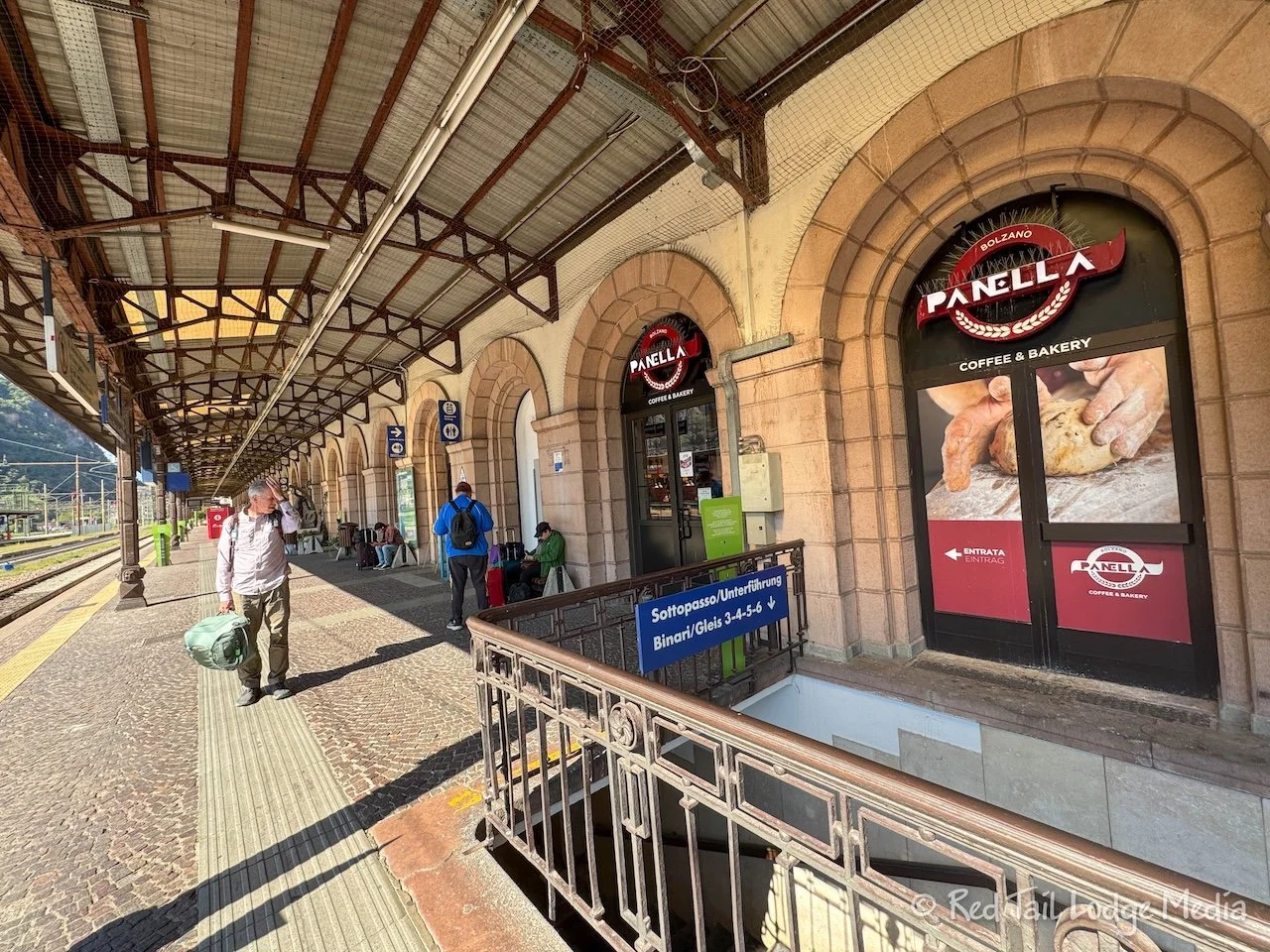
We walked over to the Busbahnhof (bus station) and caught the 10 am bus to Bozen (Bolzano). That meant we arrived before 11 am. Our first train wasn’t until 12:36 pm, so we had some time to kill at the train station. We grabbed a table inside Panella, a coffee shop and bakery inside the train station. Keith sipped on a cappuccino while Ann drank a Coke.
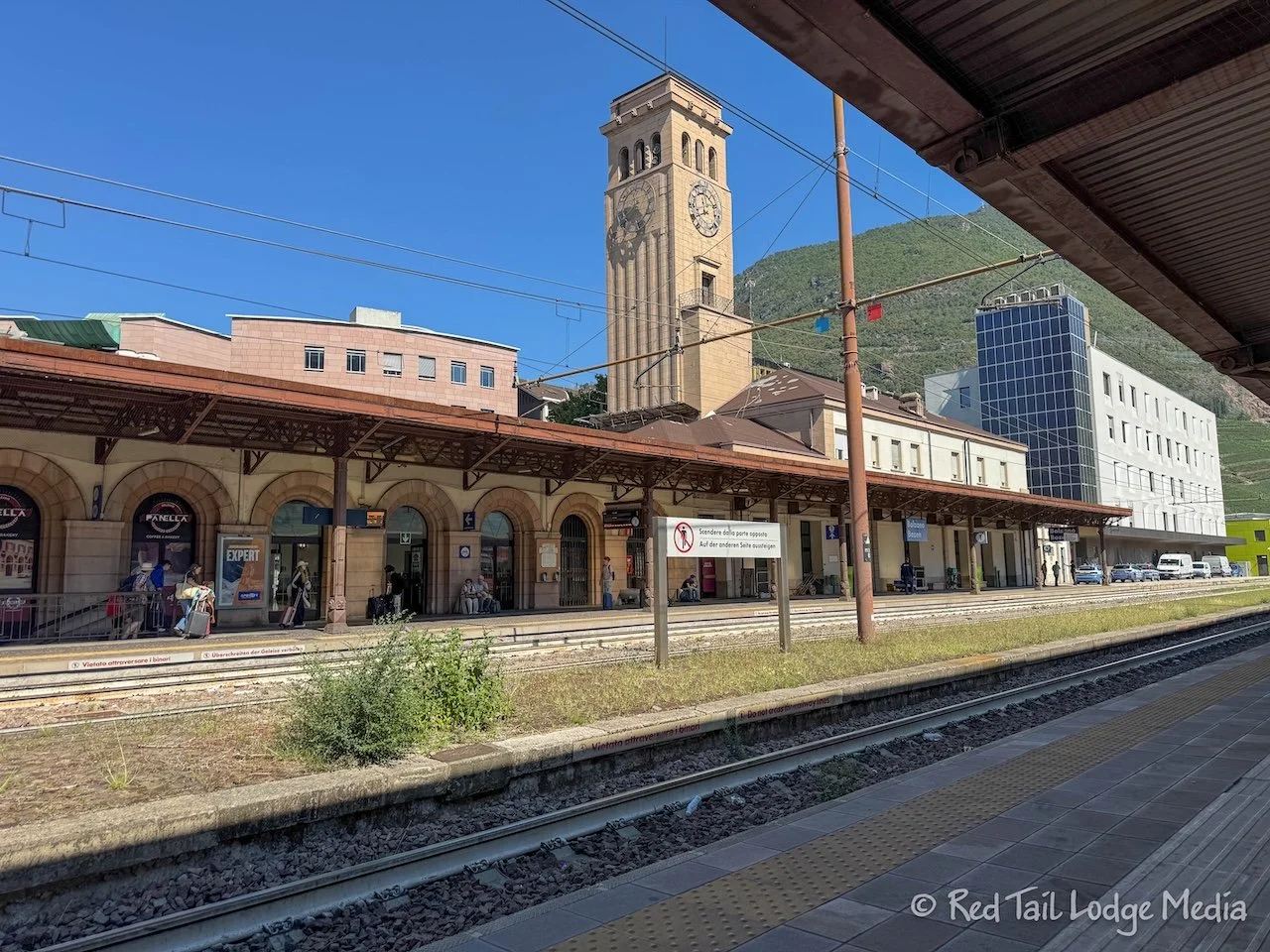
When the benches opened up on the train platform, we walked over there and sat there for a while. It turned out to be a longer while than planned. We watched the board as our train was reported to be 5 minutes late, then 10 minutes, then 15. It finally showed up 25 minutes late, but our Eurail app was saying that the train should make up some time before reaching Wörgl, where we needed to catch a connection. Our connection time was only 31 minutes, so it would be tight.
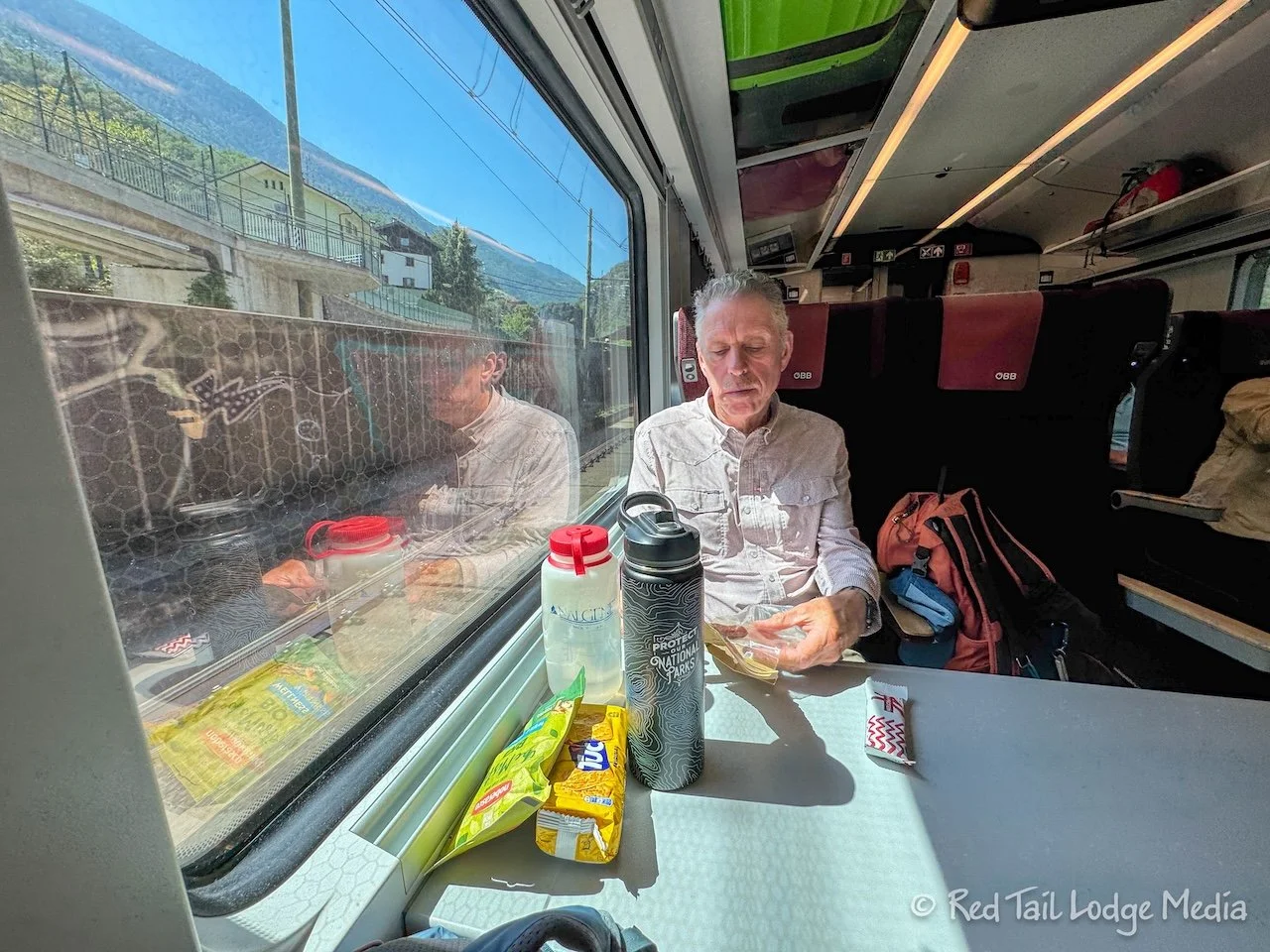
The train from Bozen to Wörgl was an ÖBB (Österreichische Bundesbahnen) Railjet train. We had seat reservations for two window seats with a table, so we were pretty comfortable despite the train being rather full. During the ride, we pulled out our snack food that we had packed and ate it for lunch.
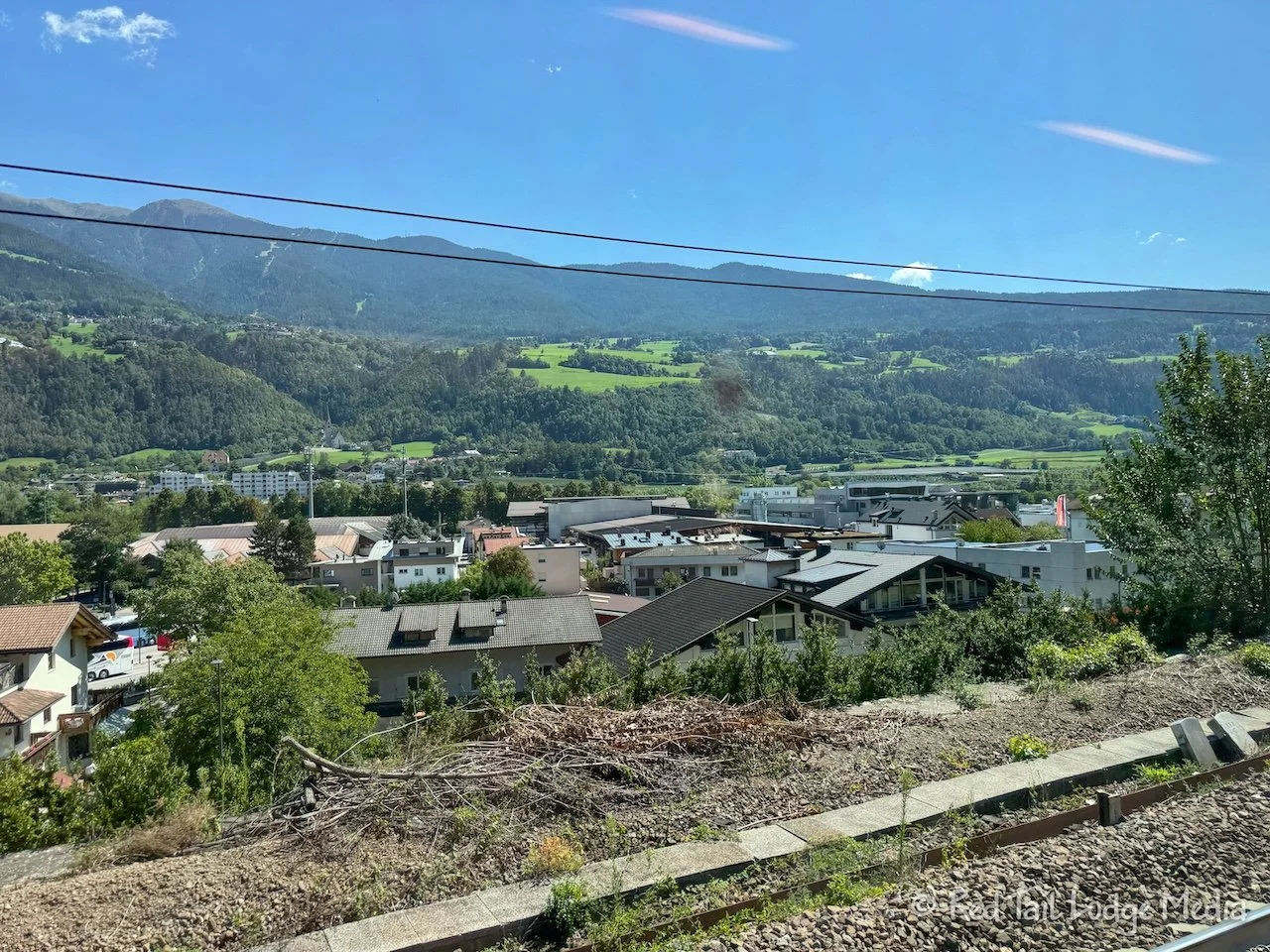
It was supposed to be a two hour and 40 minute train ride. However, instead of making up time on our way to Wörgl, we lost time. Apparently our train was having some technical issues and they stopped longer at one of the stations to check out the issue. By the time we reached Wörgl, we were 35 minutes late and missed our connection.
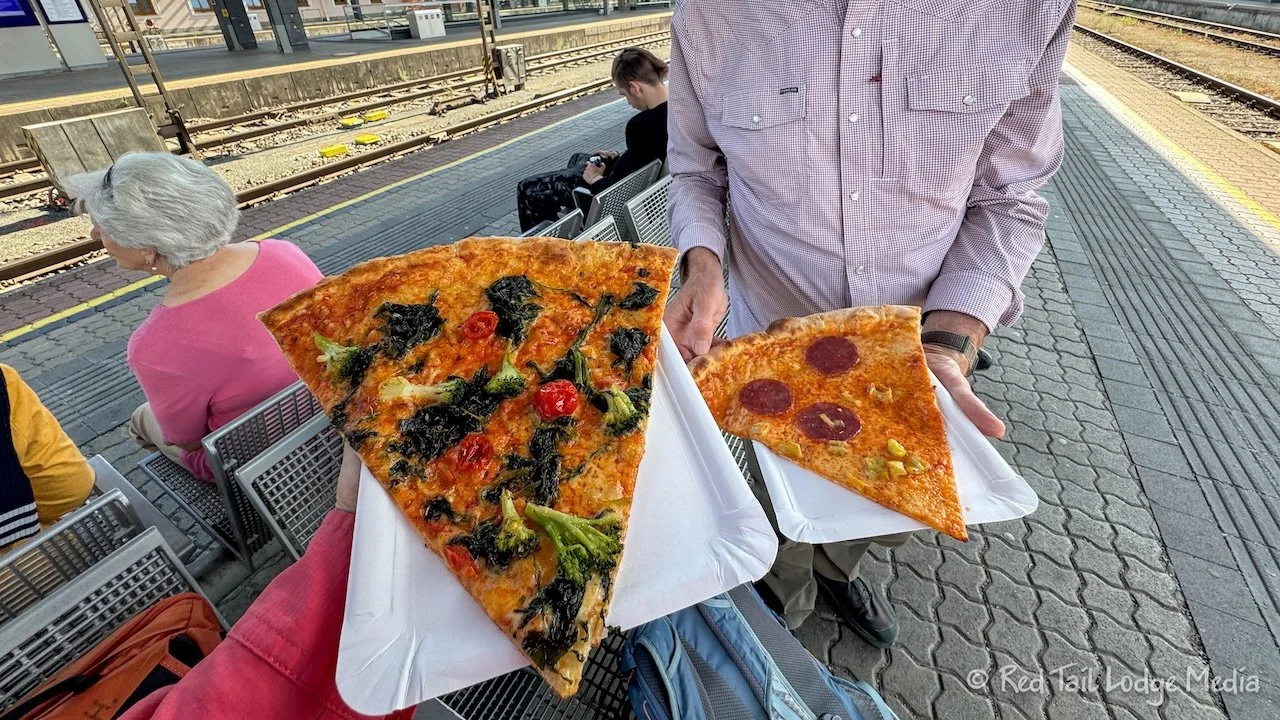
It wasn’t too big of a deal, since there was another train an hour later. However, we had seat reservations on our original connection to Salzburg and seat reservations were recommended for the later train. We took our chances that there would be seats available on the train. It wasn’t too hard to remove the original train from our Eurail pass in the phone app and add the new train. We were originally hoping to have dinner in Salzburg, but since we would be arriving one hour later and we had an hour to kill in Wörgl, we went into the train station and bought a couple of slices of pizza and drinks for an early dinner.
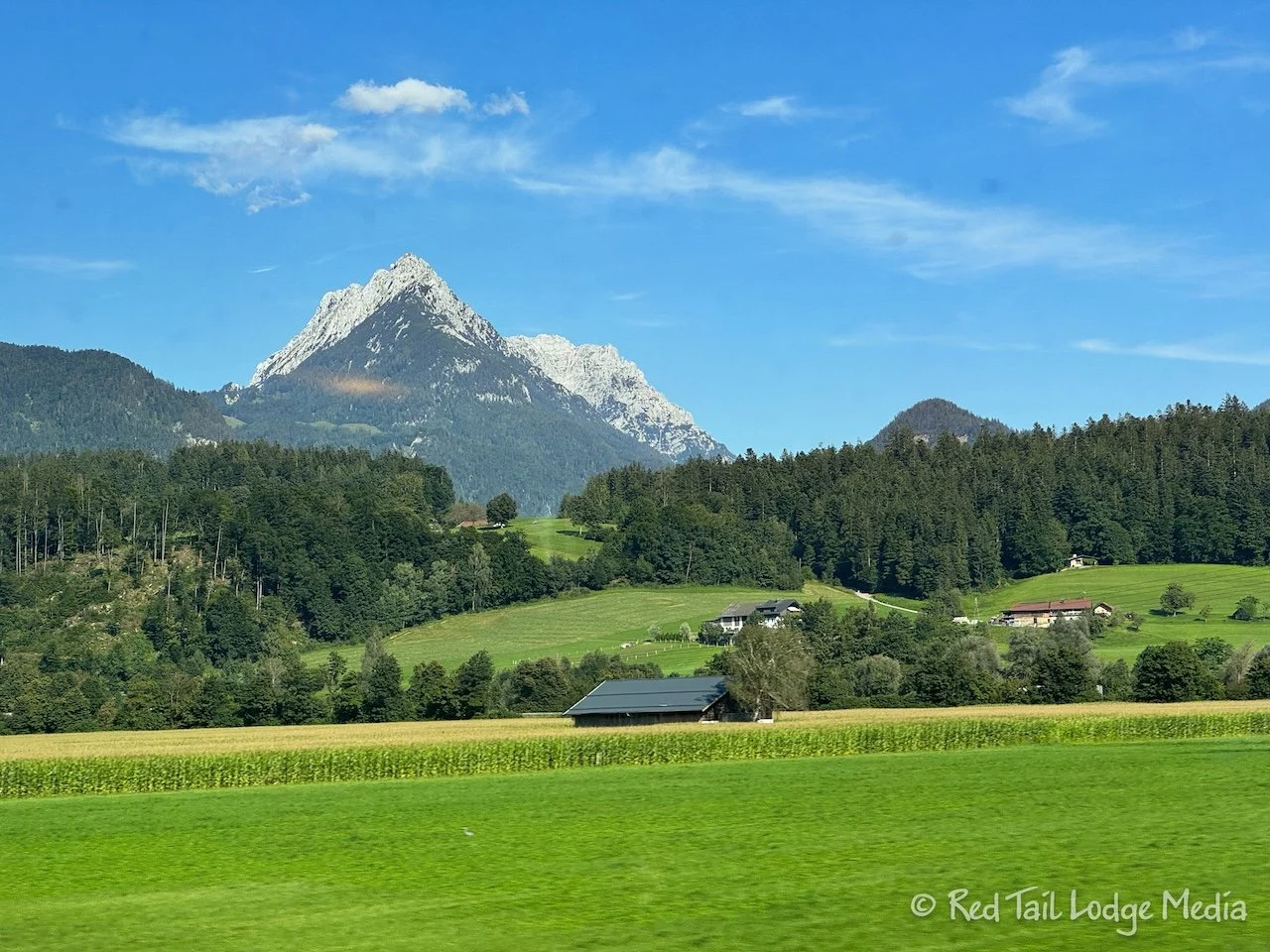
The next train arrived on time and took us to Salzburg, arriving on the scheduled time. It was an hour and 20 minute ride. When we boarded the train, there were quite a few open seats, but they were all labeled “ggf. reserviert”. We had to look up what that meant. It stands for “gegebenenfalls reserviert” or “possibly reserved”. It means that someone could have reserved the seat at the last minute. It is OK to take that seat, but you have to give it up if someone shows up with a seat reservation. So we sat down. There was only one stop between Wörgl and Salzburg and no one got on board to claim our seats, so everything worked out OK.
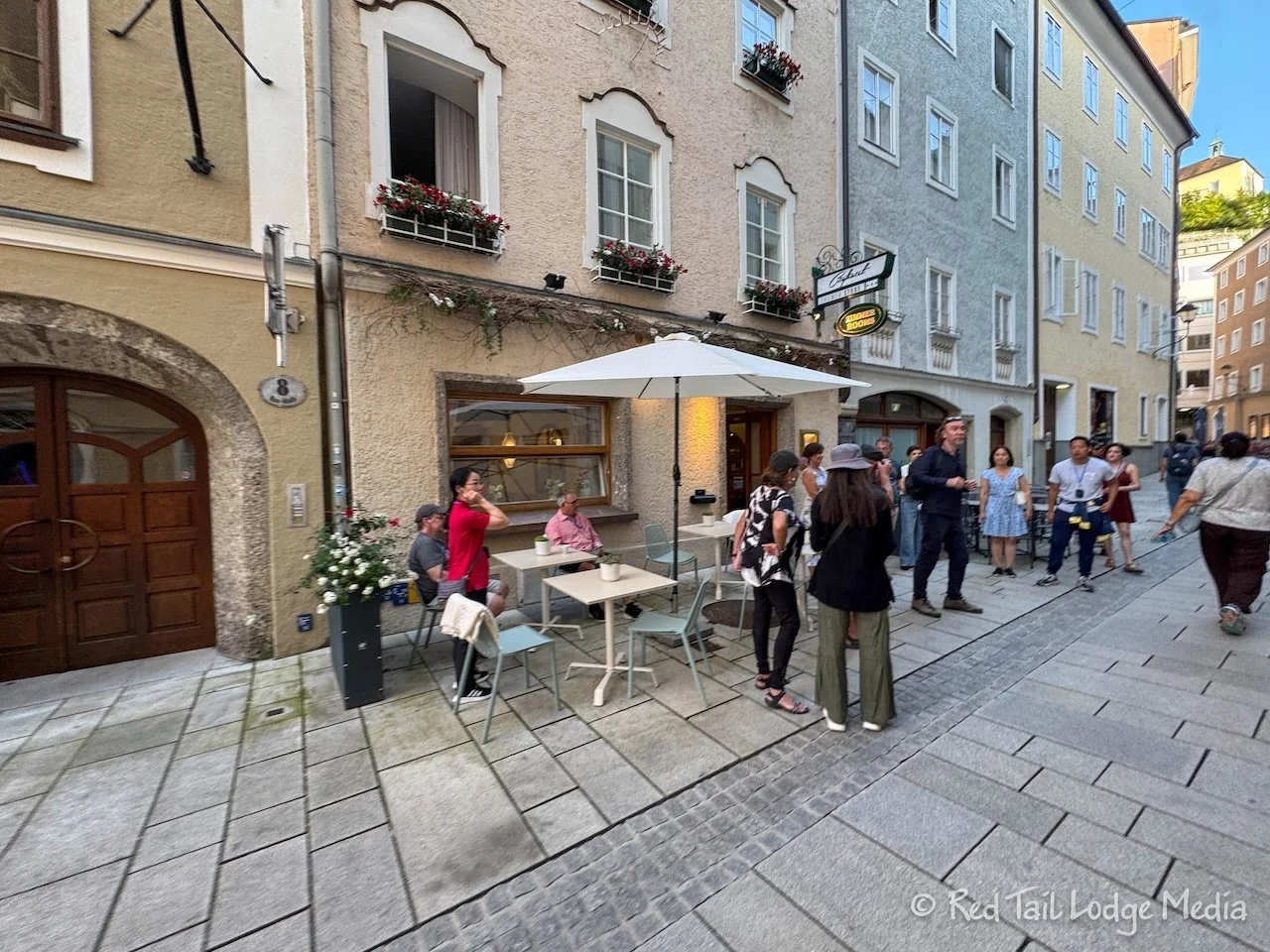
Our hotel in Salzburg, Hotel Trumer Stube, was only about a 15 walk from the train station. When we arrived, they offered to upgrade us to an apartment for no extra charge, which was just a block away. We still could walk over to the hotel and have breakfast. They had a large tour group staying at the hotel, so they thought we would enjoy more space and it would be a little quieter since we were staying for four nights. We decided to take it without checking out the hotel rooms.
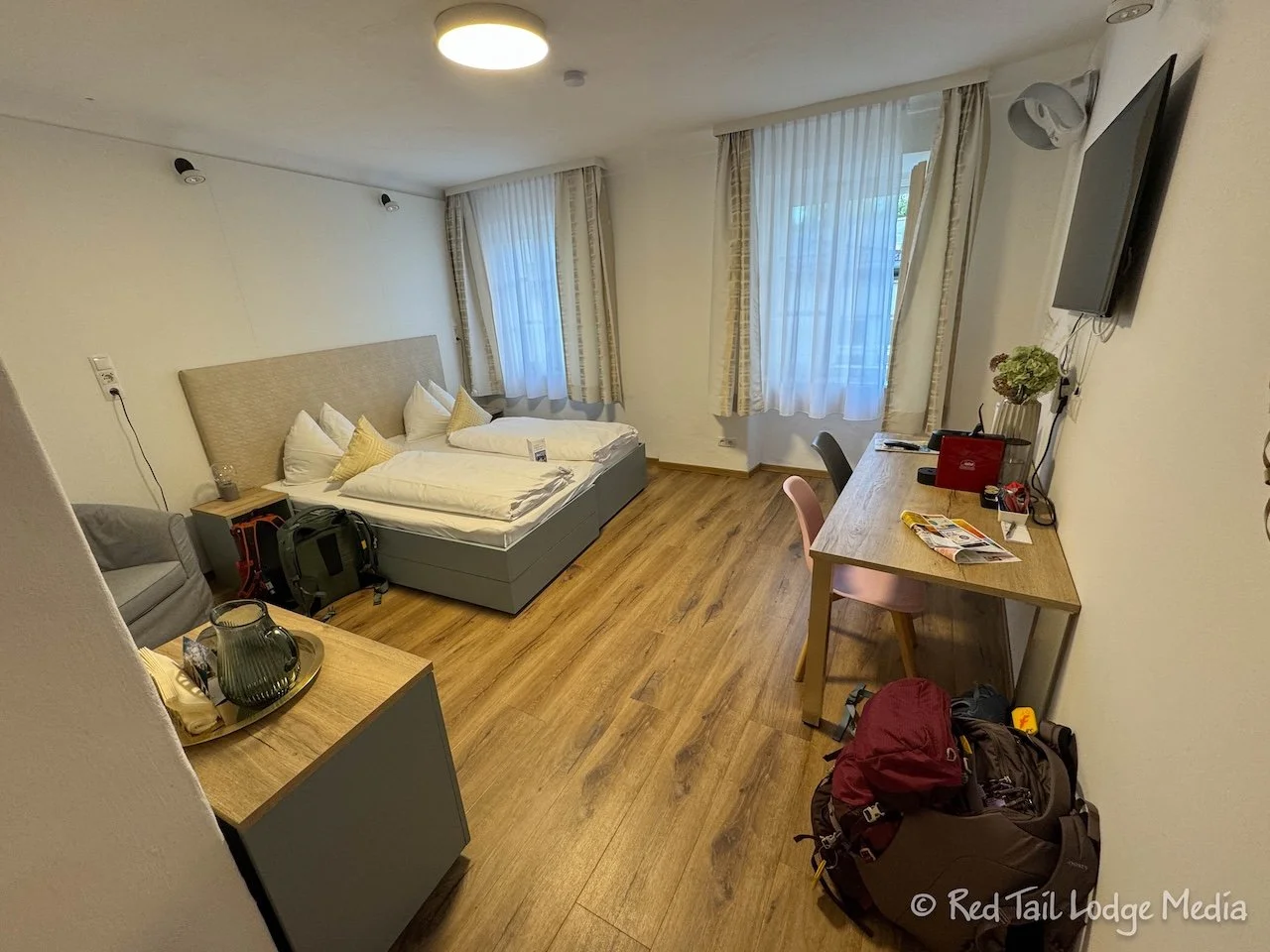
It was more space than we needed and had a little kitchenette with a fridge and dishes (but no means of cooking). We don’t know what the hotel room looked like, but we were happy with the apartment.
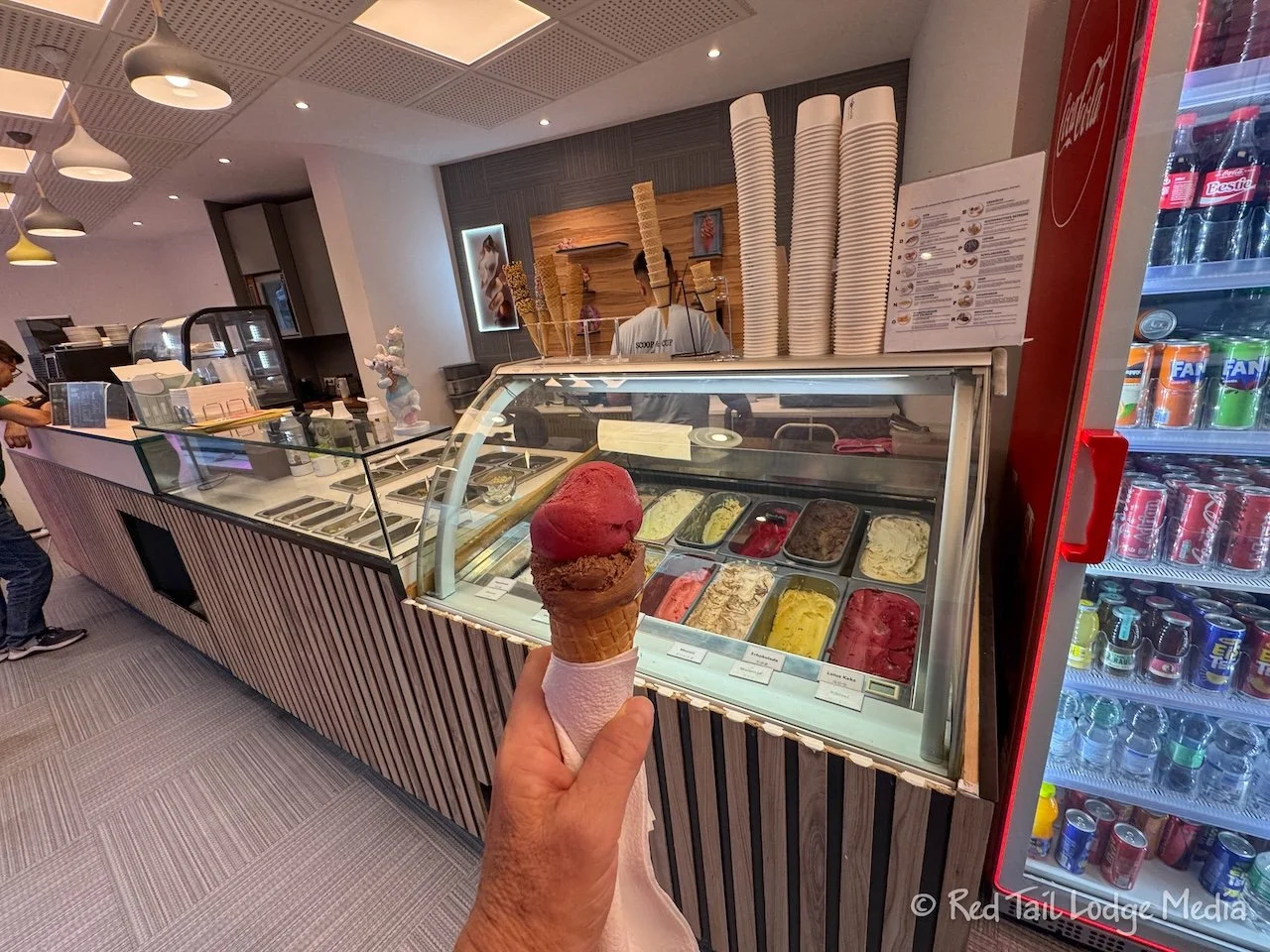
After dropping off our luggage, we headed out in search of an ice cream shop. We ended up at a place called Scoop & Cup. Ann had a cone with chocolate and ribisel (currant) while Keith had a chocolate milkshake. It wasn’t our favorite ice cream, but it was a nice way to finish off the day.
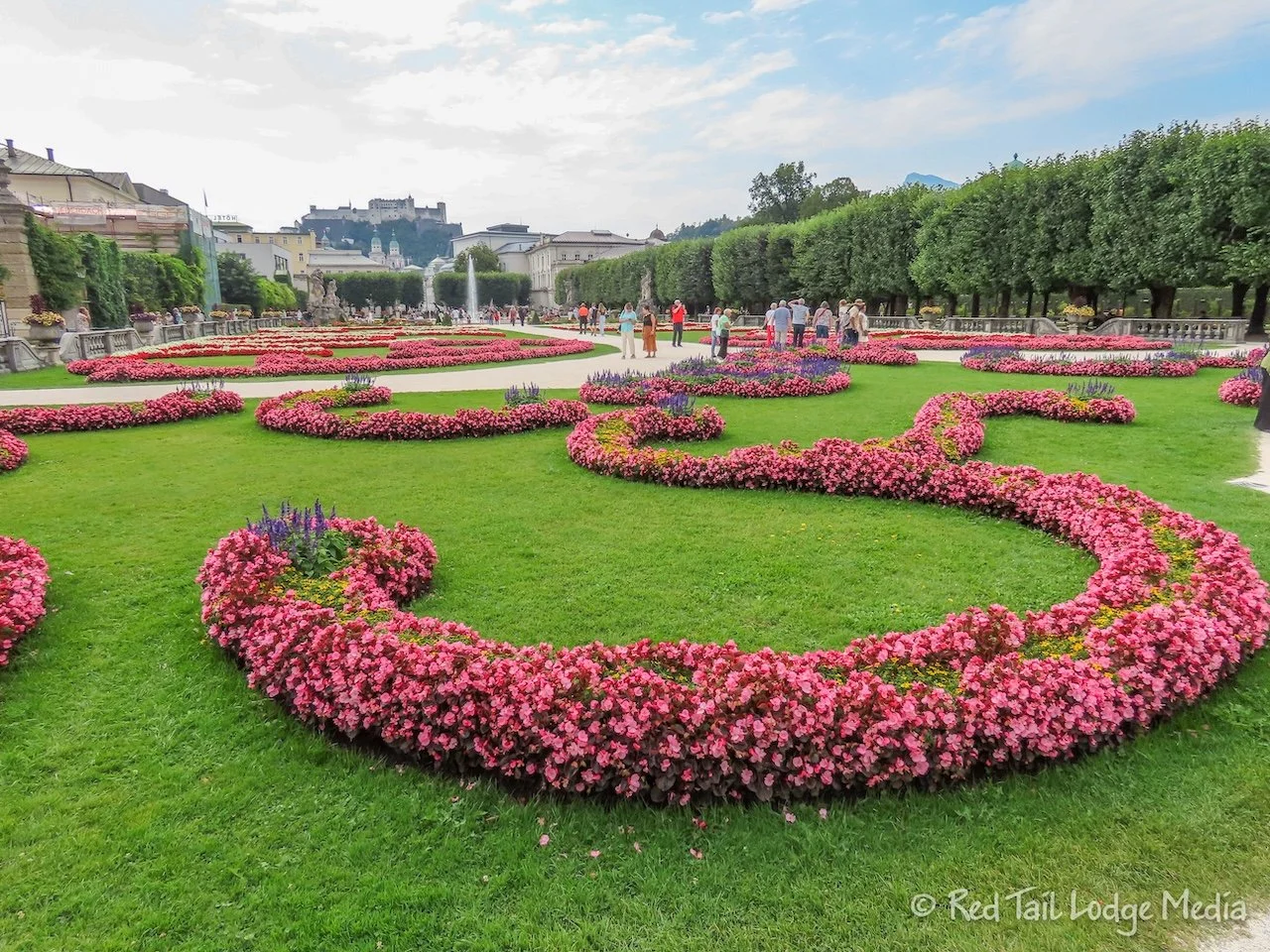
Wednesday we explored Salzburg. After a nice breakfast at the hotel, our first destination was Mirabell Palace (Schloss Mirabell) and Gardens. It was free to enter. We had been there before, but that was 35 years ago. The gardens are beautiful, with flower beds arranged in flowing shapes that formed their own art. From the gardens, there is a view up to Festung Hohensalzburg, the fortress which sits up on the mountain Mönchsberg.
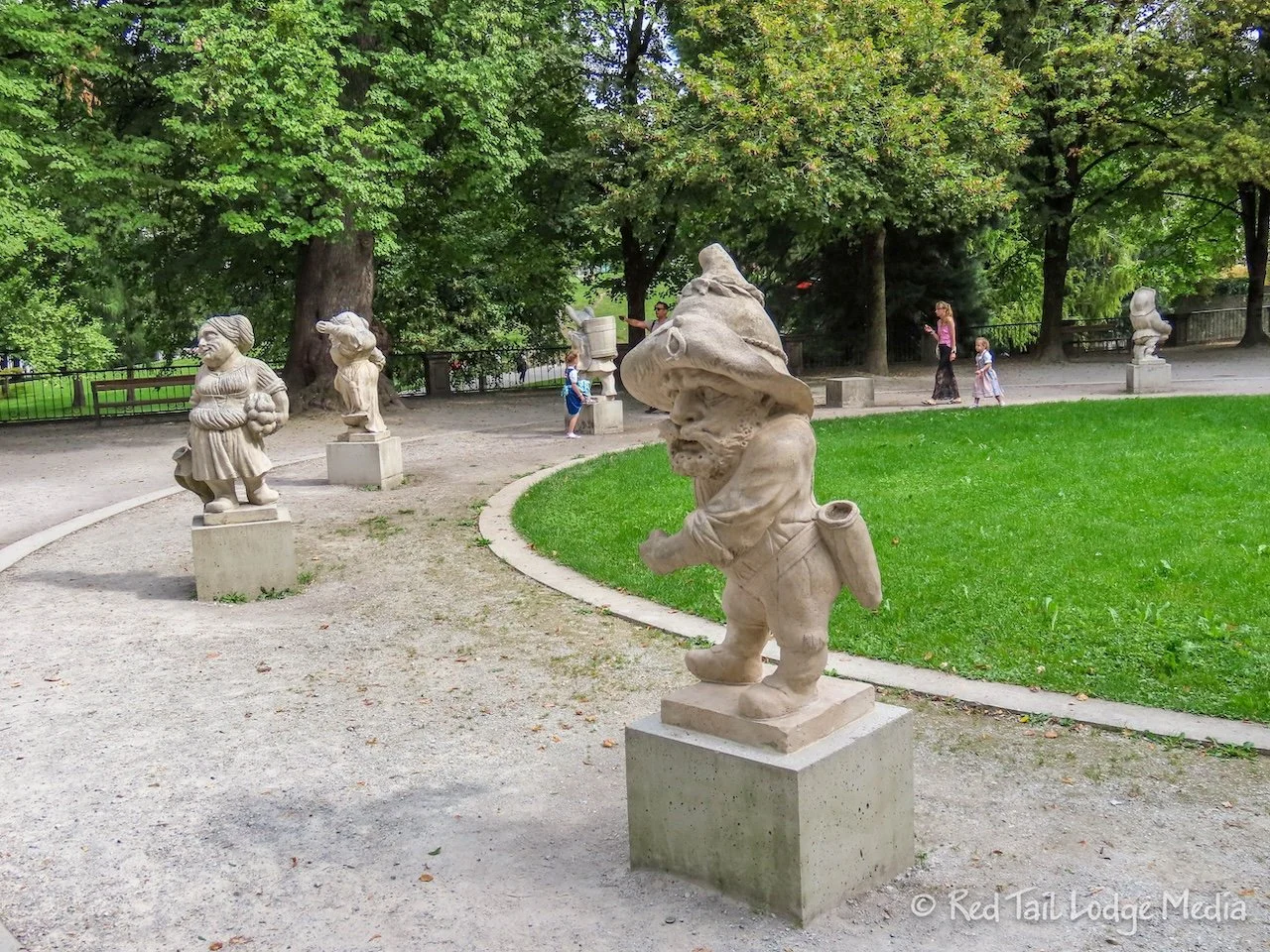
The Dwarf Garden (Zwergerlgarten) is a collection of statues of dwarfs, created in the 17th century. Each dwarf has its own, well-illustrated character. Only 17 of the original 28 stand in the garden today, but they each seem to have a story to tell. (https://www.salzburg.info/en/magazin/scenes/in-the-realm-of-the-dwarfs-the-salzburg-dwarf-garden_a_274269)
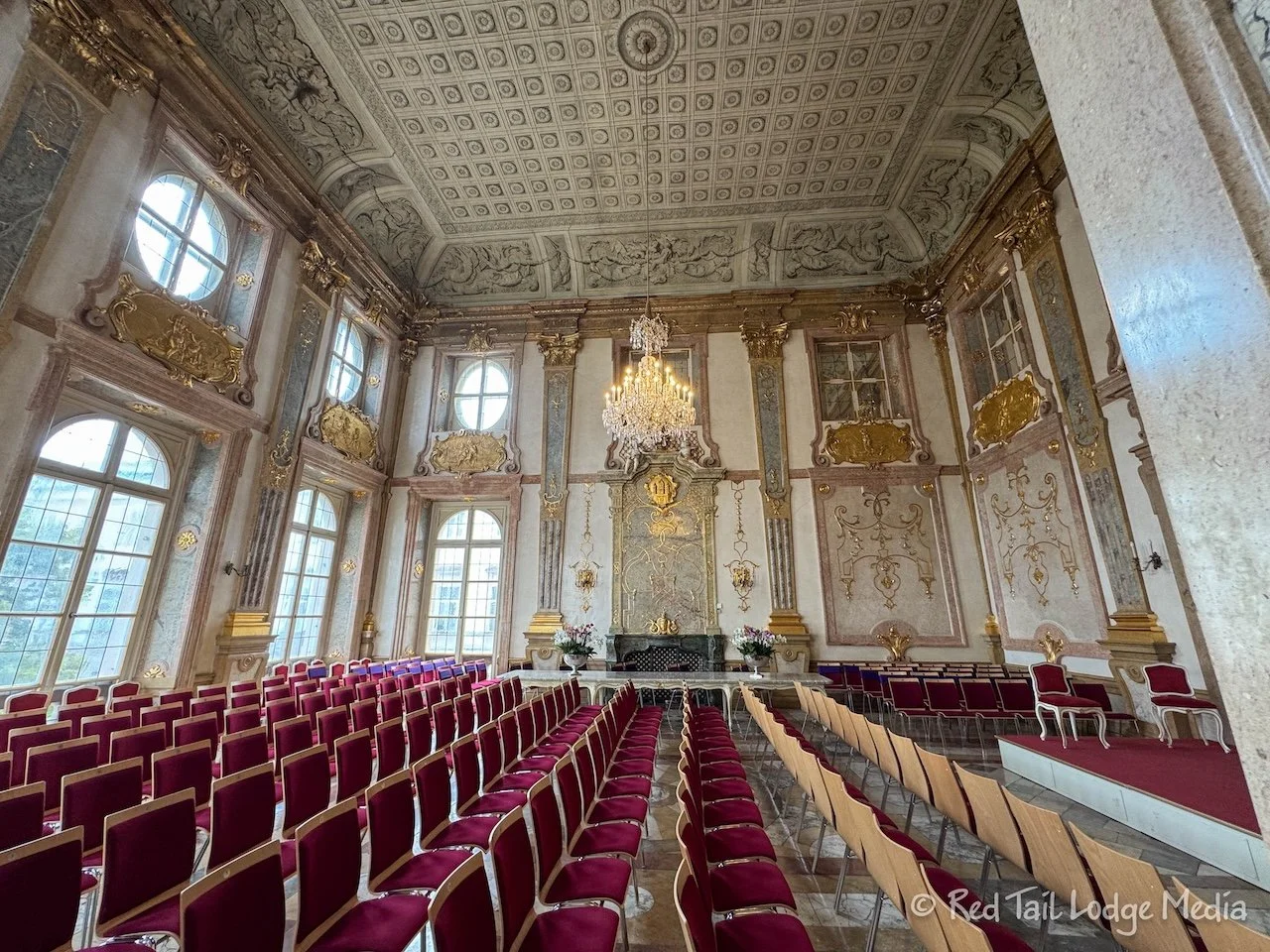
Inside the Palace, we admired the Angel Staircase and peered into the baroque Marble Hall. Concerts are held in the Marble Hall, but you can’t go inside the hall otherwise; you can just view it from the doorway.
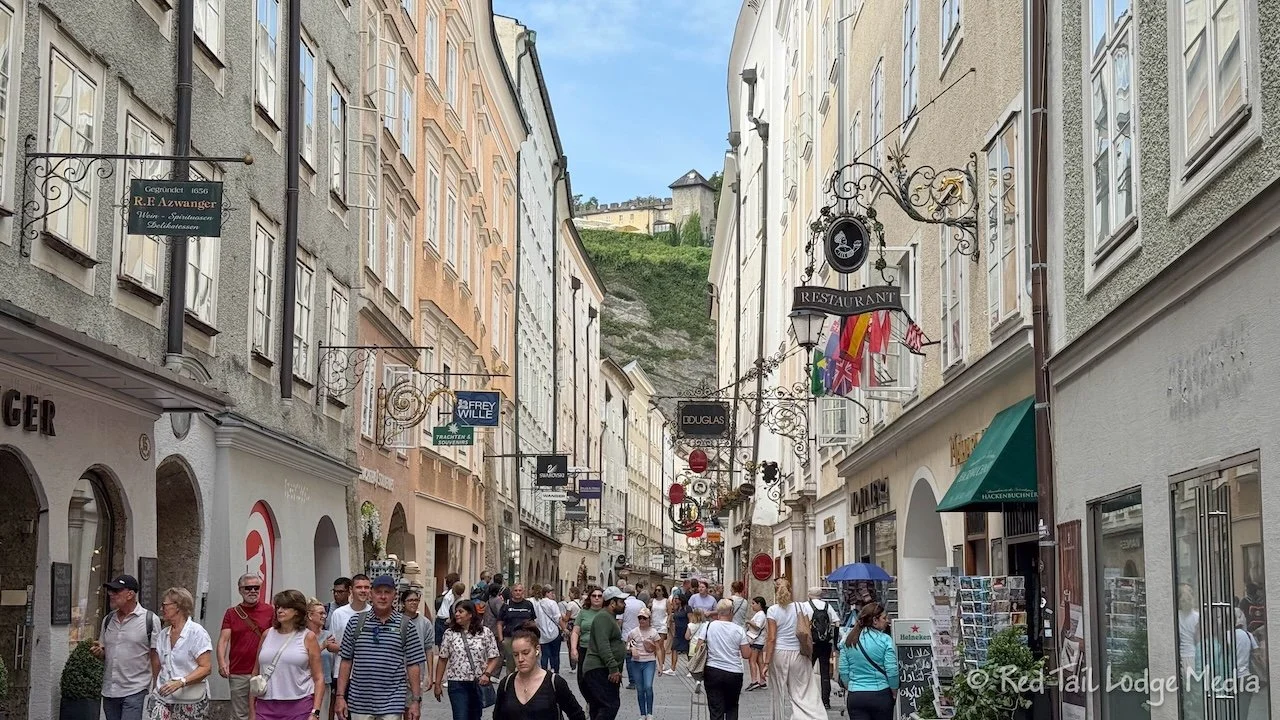
From Mirabell, we crossed over the Salzach River on the Marko-Feingold-Steg, a Love Lock pedestrian bridge. Then we wandered around the streets of the Altstadt (Old City) before ending up at Arkadengarten Sternbräu for lunch.
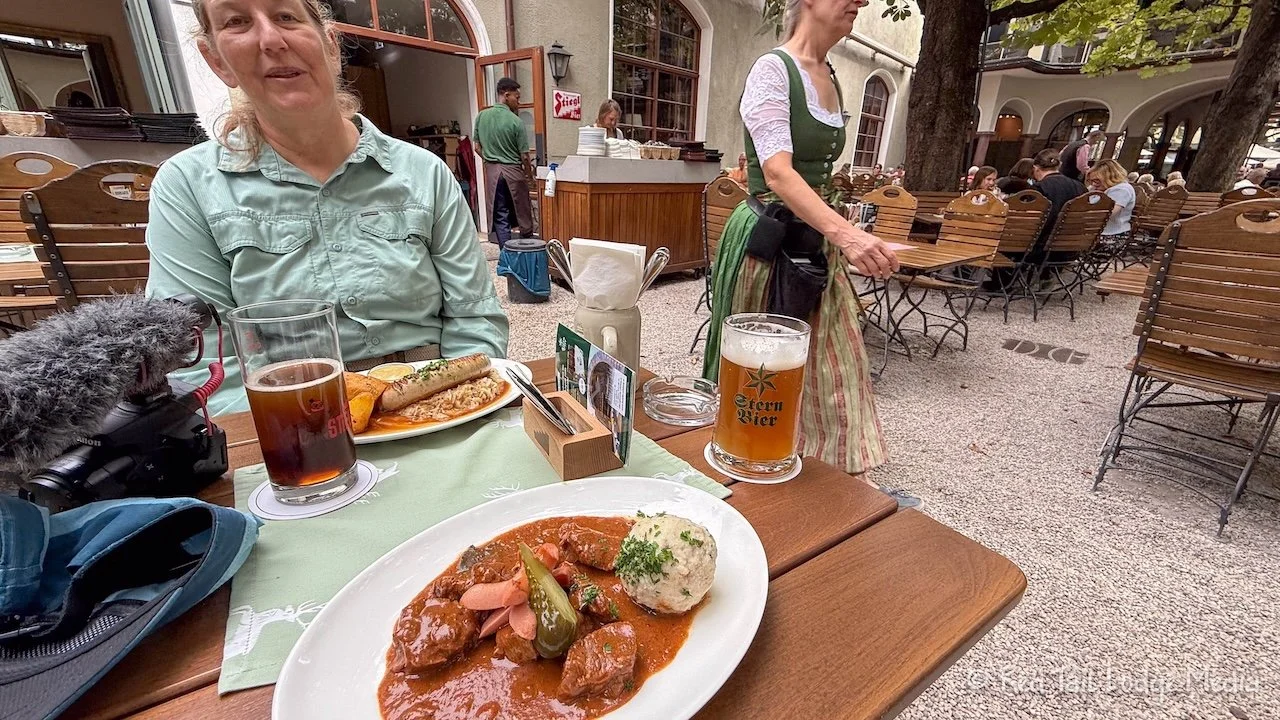
The beer garden was wonderful, with shaded tables in a courtyard. Ann had the bratwurst with sauerkraut and roasted potatoes while Keith had the beef goulash with a Knödel (large dumpling). To drink, Ann had a Spezi (cola mixed with lemonade) while Keith drank a Radler (beer mixed with lemonade). The food was delicious and filling. We were too full to have dessert.
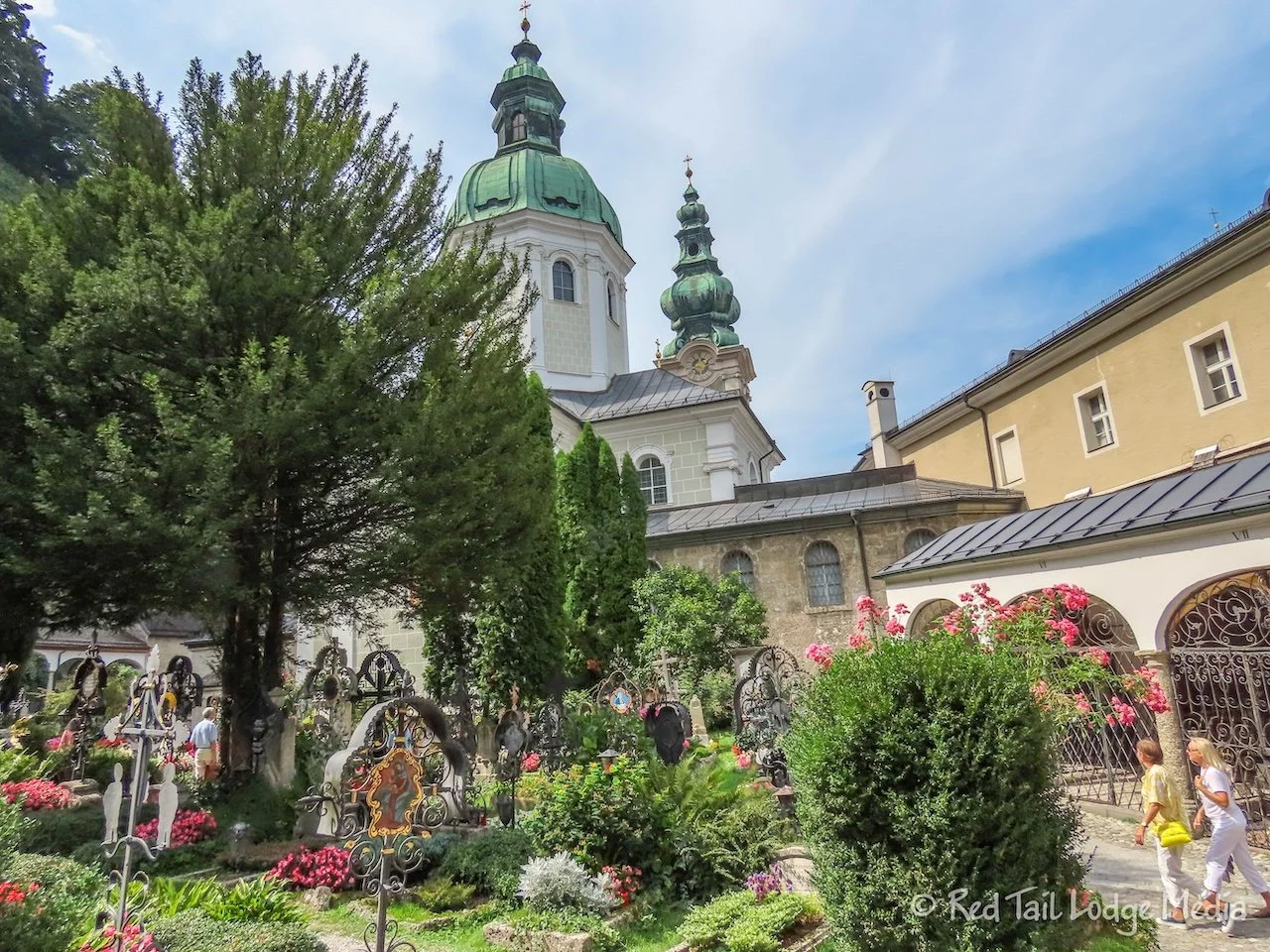
Then we decided to tour the Festung Hohensalzburg. On the way there, we strolled through more of the Altstadt, including Petersfriedhof (St. Peter’s cemetery).
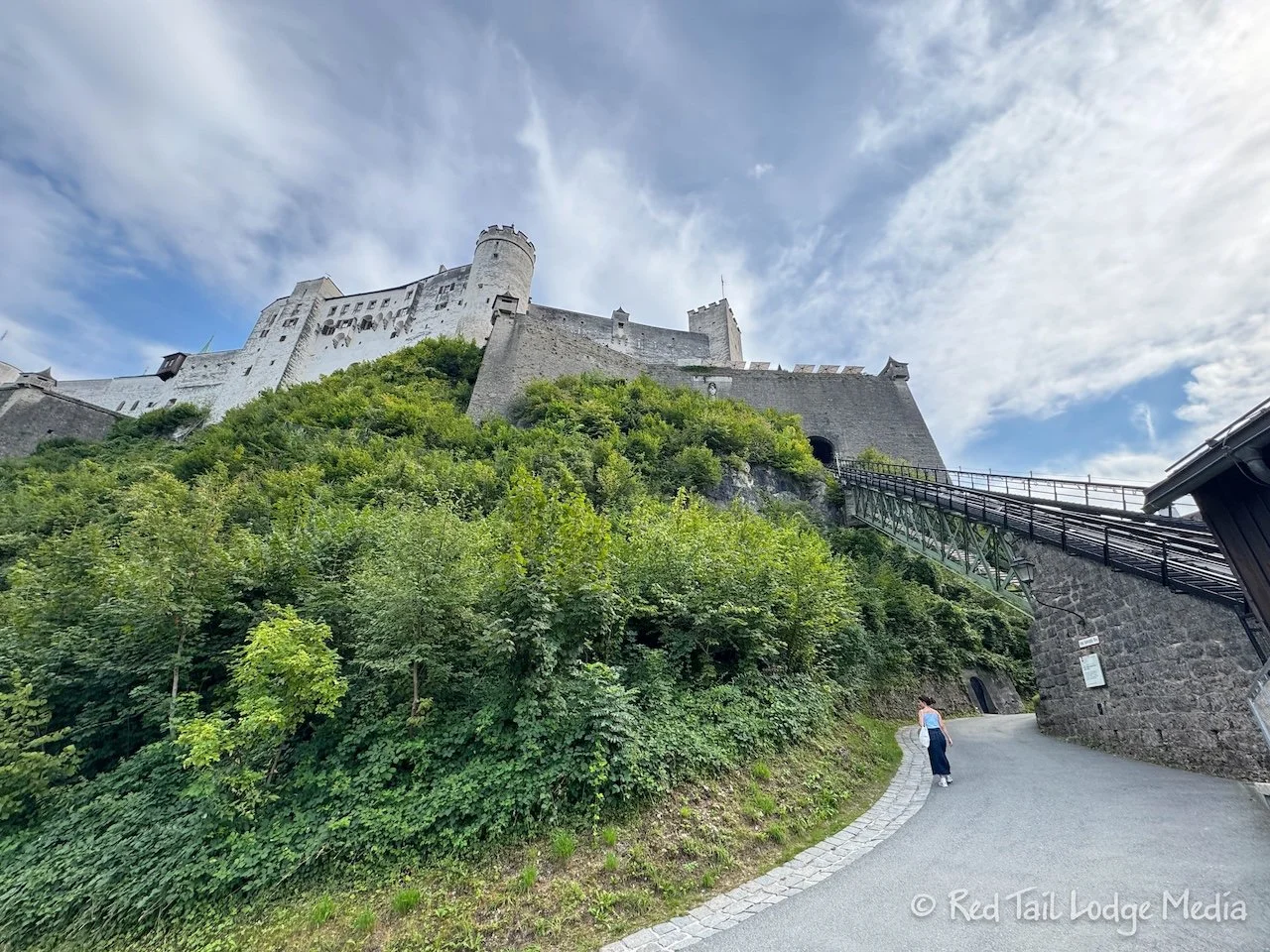
There are two ways to reach Festung Hohensalzburg. You can walk up the mountain to it or ride the funicular (Festungsbahn) up. There is an admission fee to visit the castle. The price varies depending on whether you ride the Festungsbahn or walk and whether you want the basic ticket or one that includes State Rooms and Magic Theater. We chose to ride the Festungsbahn with the basic ticket.
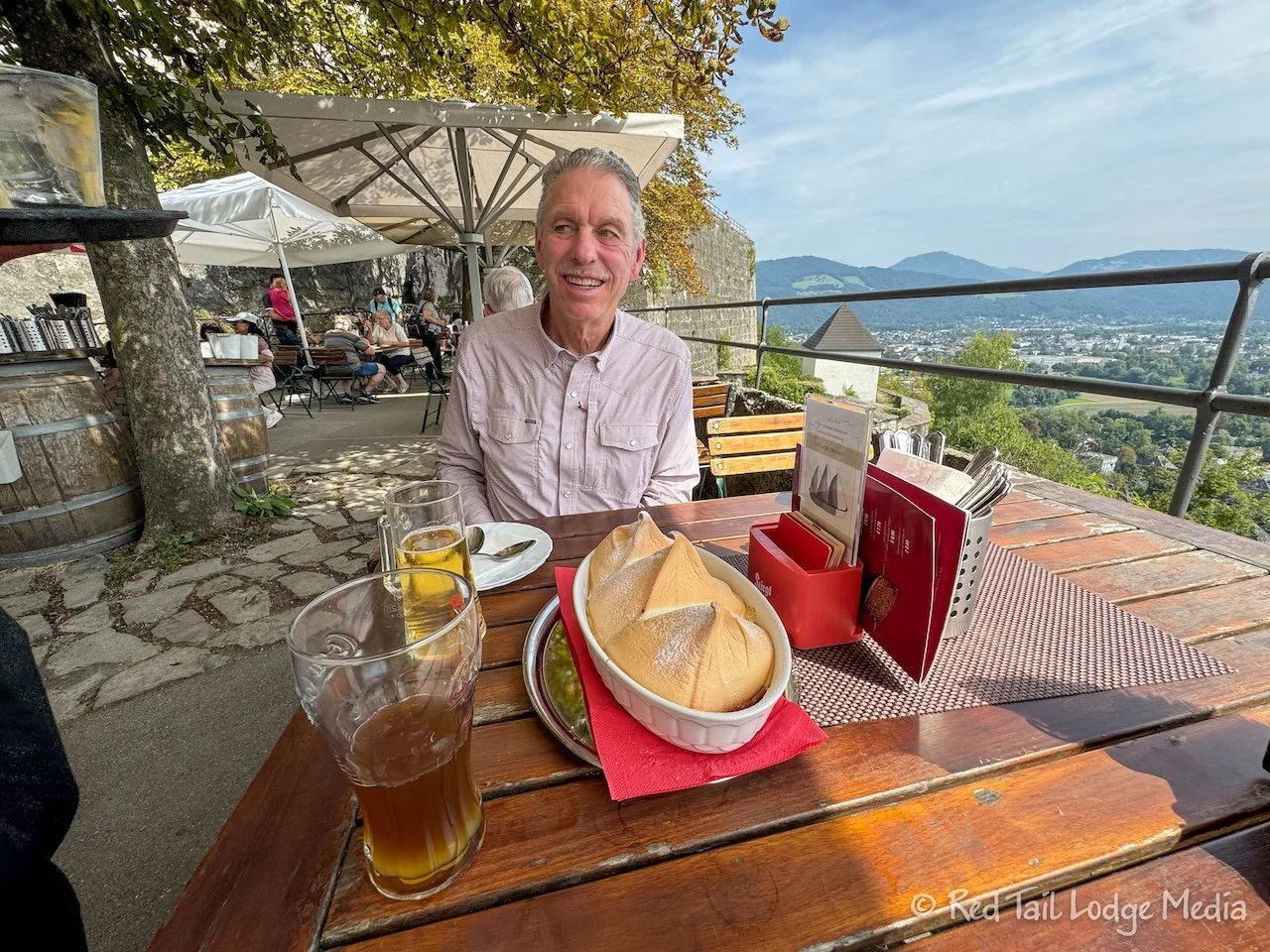
By the time we reached Festung Hohensalzburg, we were thirsty. So we sat down at a table at Panorama Restaurant zur Festung Hohensalzburg, right next to where we got off the funicular. We were sitting on a terrace, with wonderful views out over the city.
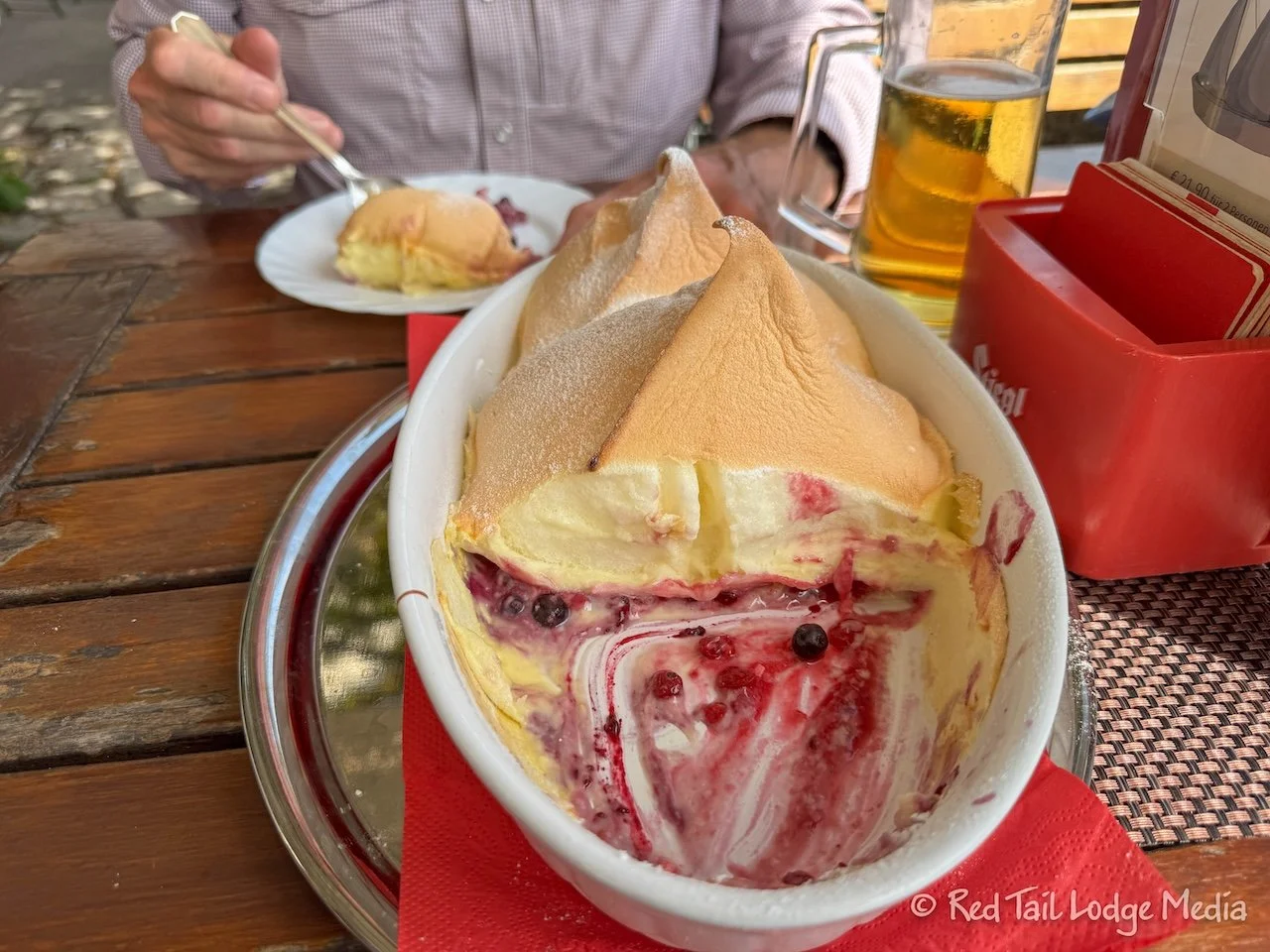
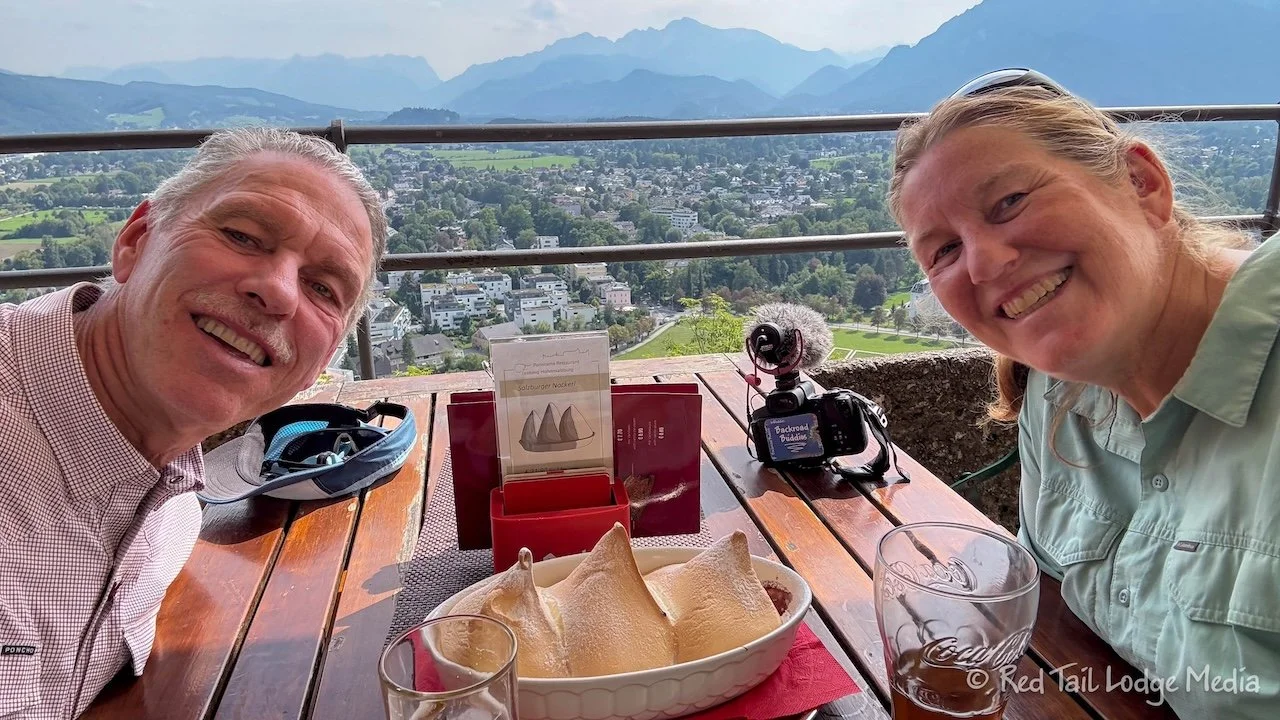
Well, instead of just getting drinks, we decided to try the Salzburger Nockerl in addition to our Radler and Spezi. We had seen several places advertising they served it, including Arkadengarten Sternbräu. Nockerl is a sweet soufflé with fruit spread on the bottom, served hot. Our waiter explained that the three peaks of the Nockerl represent the three hills of Salzburg, Mönchsberg (the hill we were currently on), Kapunzinerberg (the hill on the other side of the river), and Gaisberg (the mountain east of the city). Each of the three peaks of our Nockerl had a different bottom layer. One was red currants, another was black currants, while the third was a vanilla cream sauce. We split one order, which was meant for two people. It was delicious and surprisingly not as filling as it looks. If we had been hungrier, we probably could have each eaten one, but it was probably better that we didn’t.
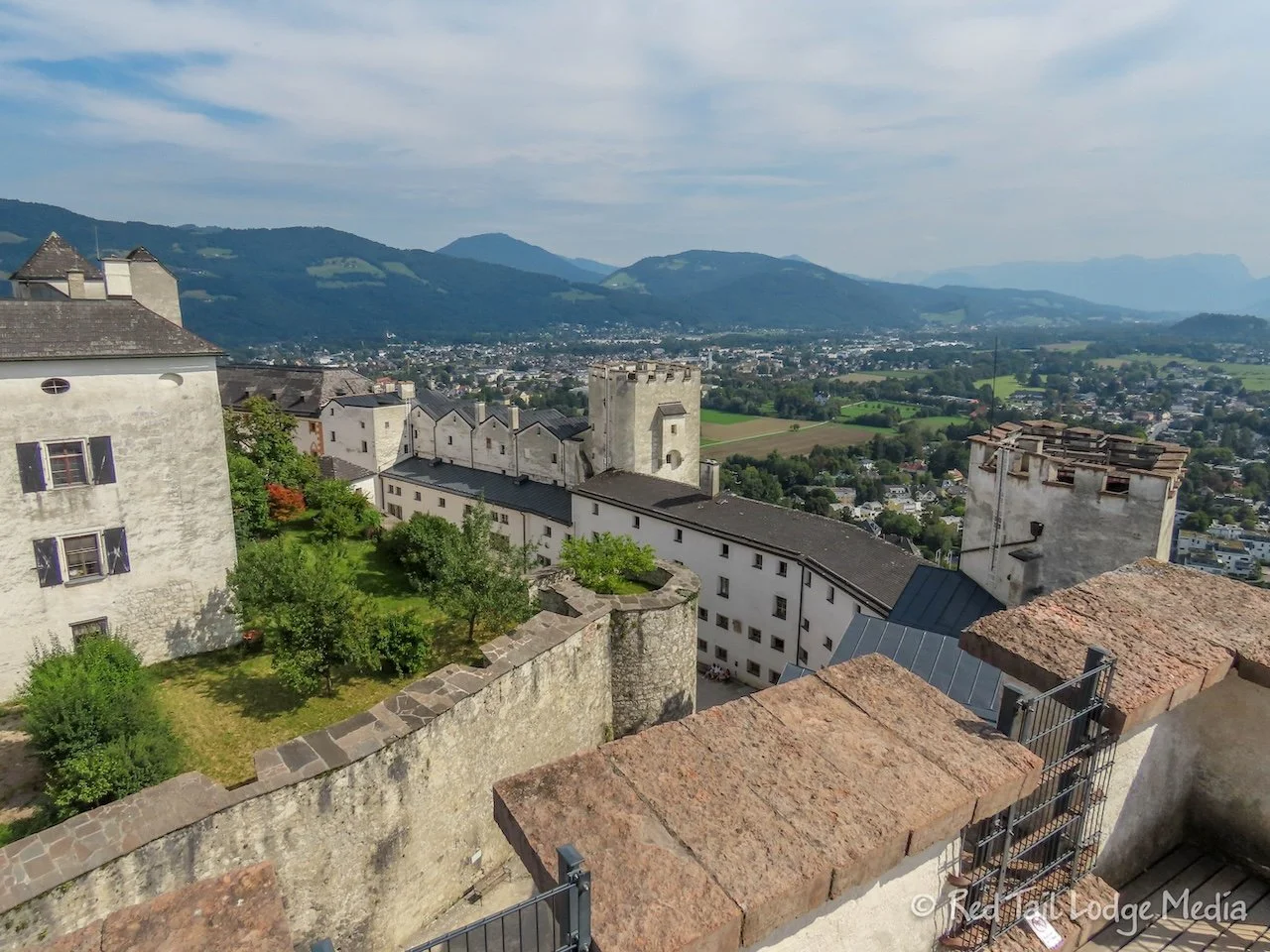
After filling our bellies (again), we wandered around the fortress trying to burn off some of those calories. We didn’t go into any of the museums, but just wandered around the courtyards and bastions. There was a wonderful view from on top of one of the towers, but there was also a large swarm of insects. We’re not sure, but they could have been flying ants. We haven’t seen that many bugs in Europe, so the swarm was rather unexpected. Ann manage to take a few pictures, before scurrying away, swatting at the bugs as she went.
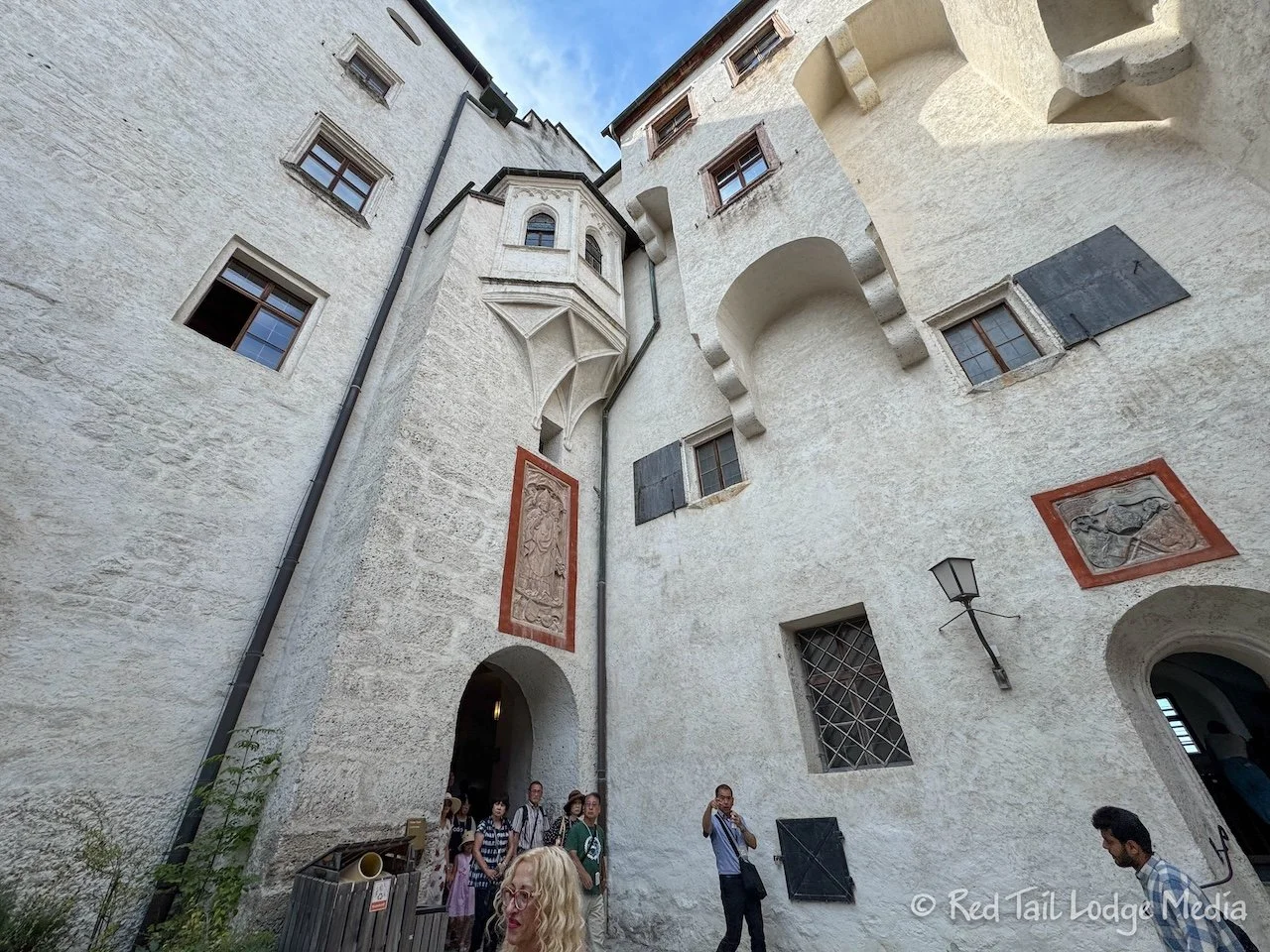
Keith didn’t sleep very well the night before. There is no air-conditioning in our apartment, so we had the windows open all night. There are a couple of bars along our street, so it was a little noisy for a while. Keith was done touring the fortress, but Ann wanted to figure out how to explore the trails on Mönchsberg. So Keith took the Festungsbahn back down and returned to the hotel for a nap, while Ann walked out of the Festung and wandered some paths.
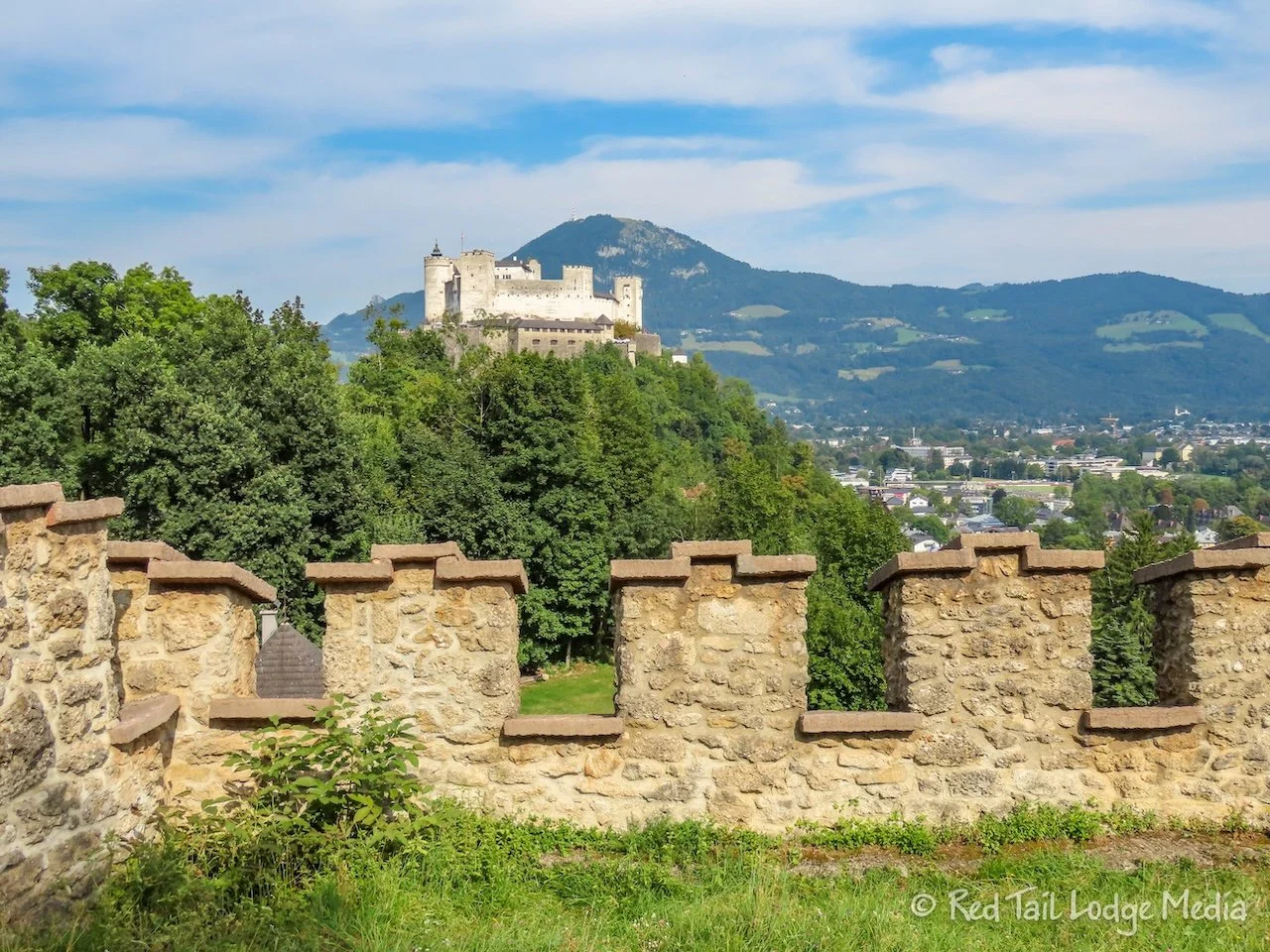
Ann followed the Dr. Ludwig Prähauser Weg over to Richterhöhe, where there were nice views, especially looking back at Festung Hohensalzburg. The path was very pleasant, mostly in the shade of trees.
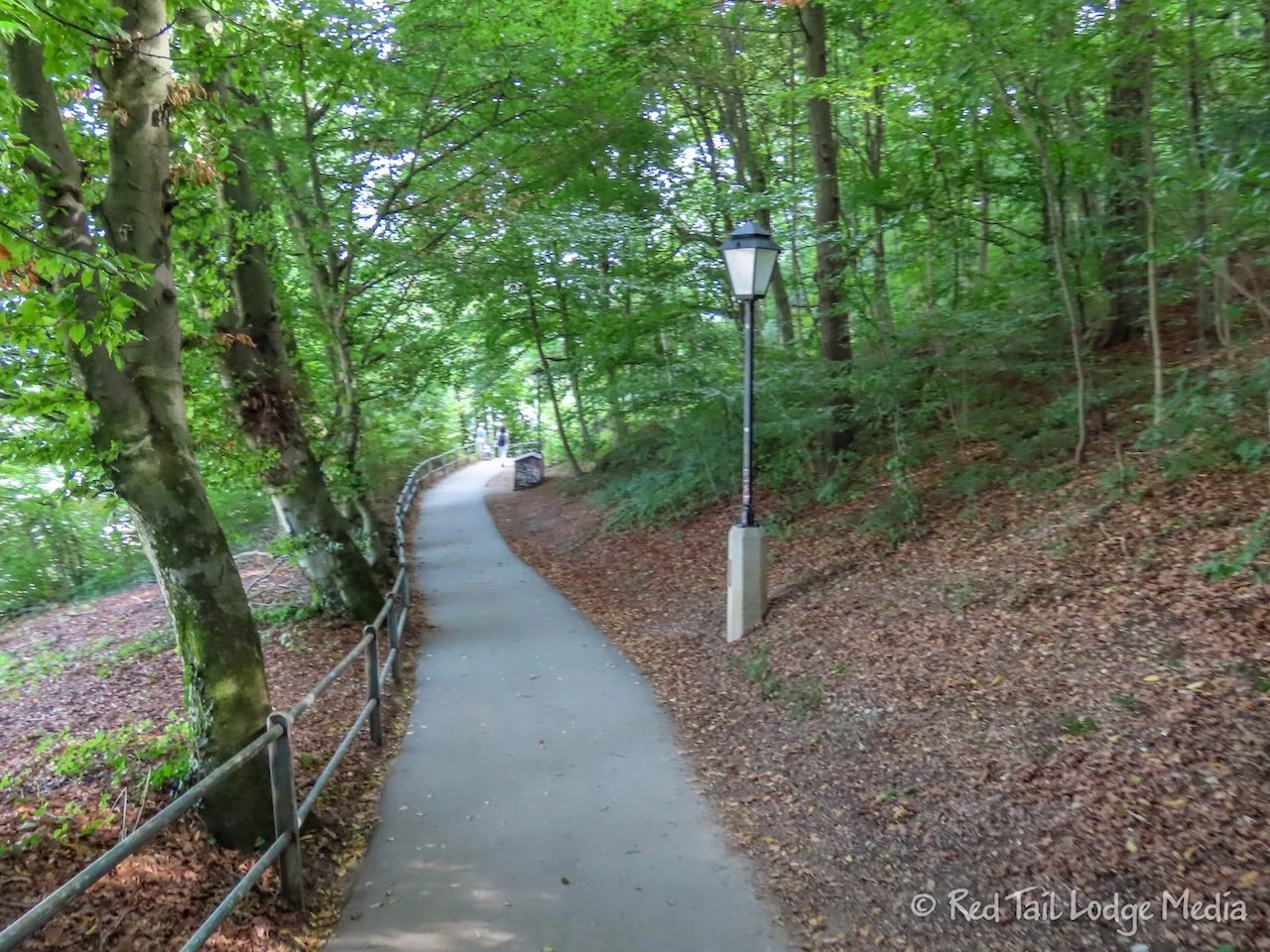
Ann continued along the trail until she saw signs that pointed back to the Altstadt, which brought her down to Max-Reinhart-Platz. Then she made her way back to our apartment.
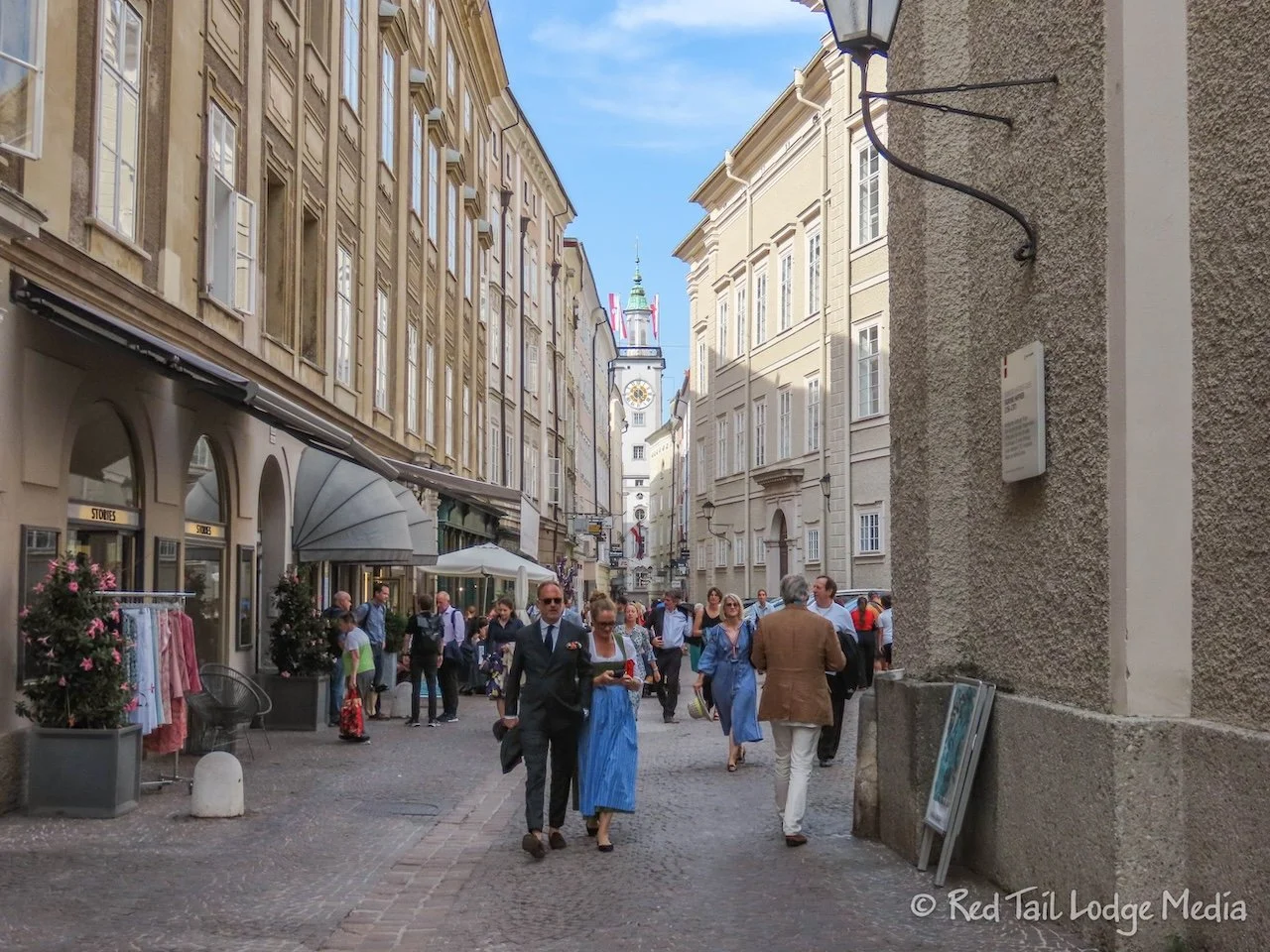
After a refreshing shower, we headed out again. We had tickets for a “Best of Mozart and Strauss” concert back up at the Festung at 8:30 pm. Believe it or not, we wanted some dinner before the concert. We were concerned that we wouldn’t have enough time for a sit down dinner, so take-away sounded like a better option.
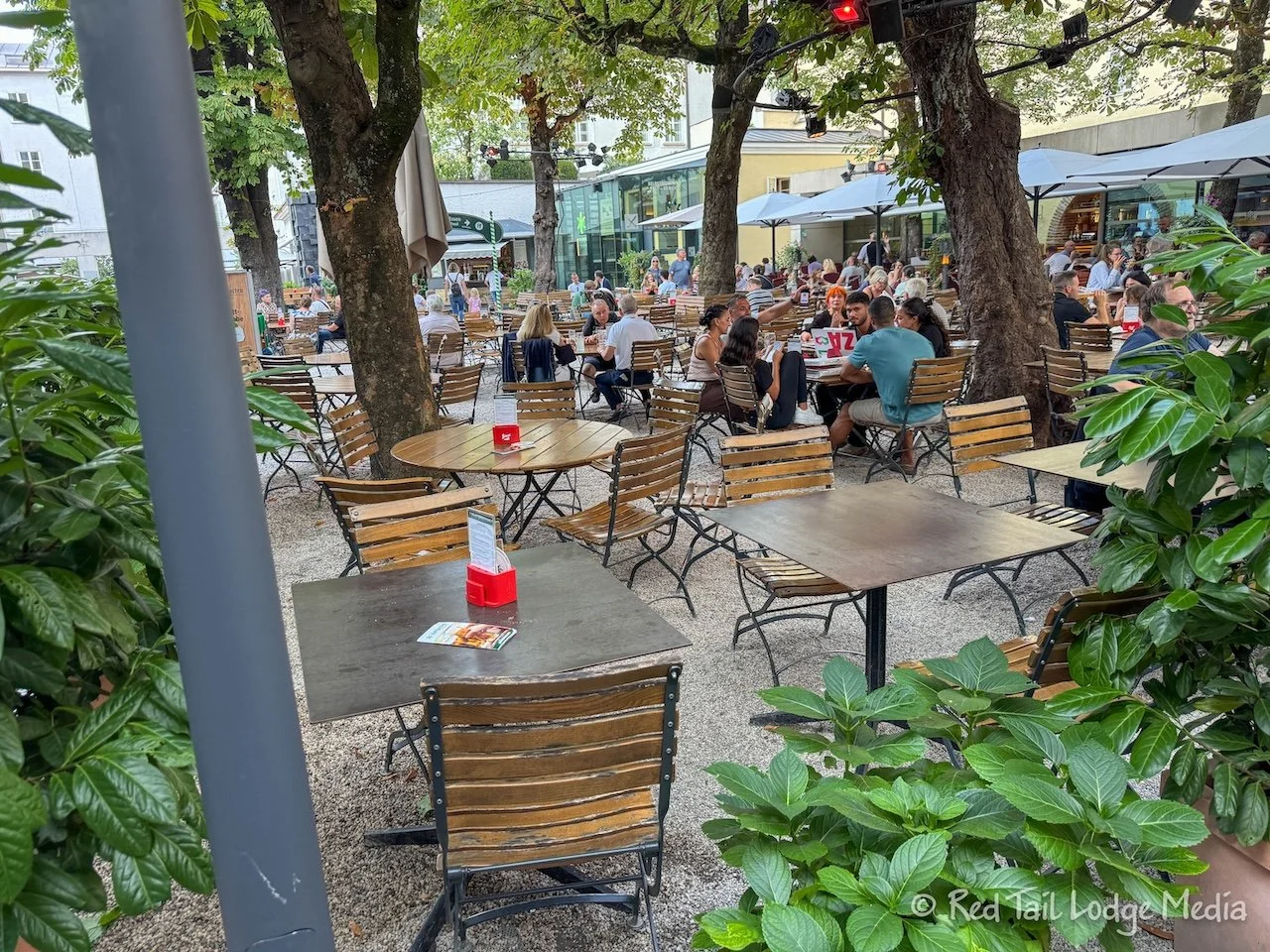
We actually went back to the Stern beer gardens. Like many beer gardens in Austria and Germany, there is usually a section where food is served at the tables (with table cloths) and a section of tables (without table cloths) where you can bring your own food as long as you purchase a drink. At lunch, we were in the courtyard with full table service. For dinner, we went to the other courtyard with self-service. There was a self-service food counter called Stöckl where we could buy food.
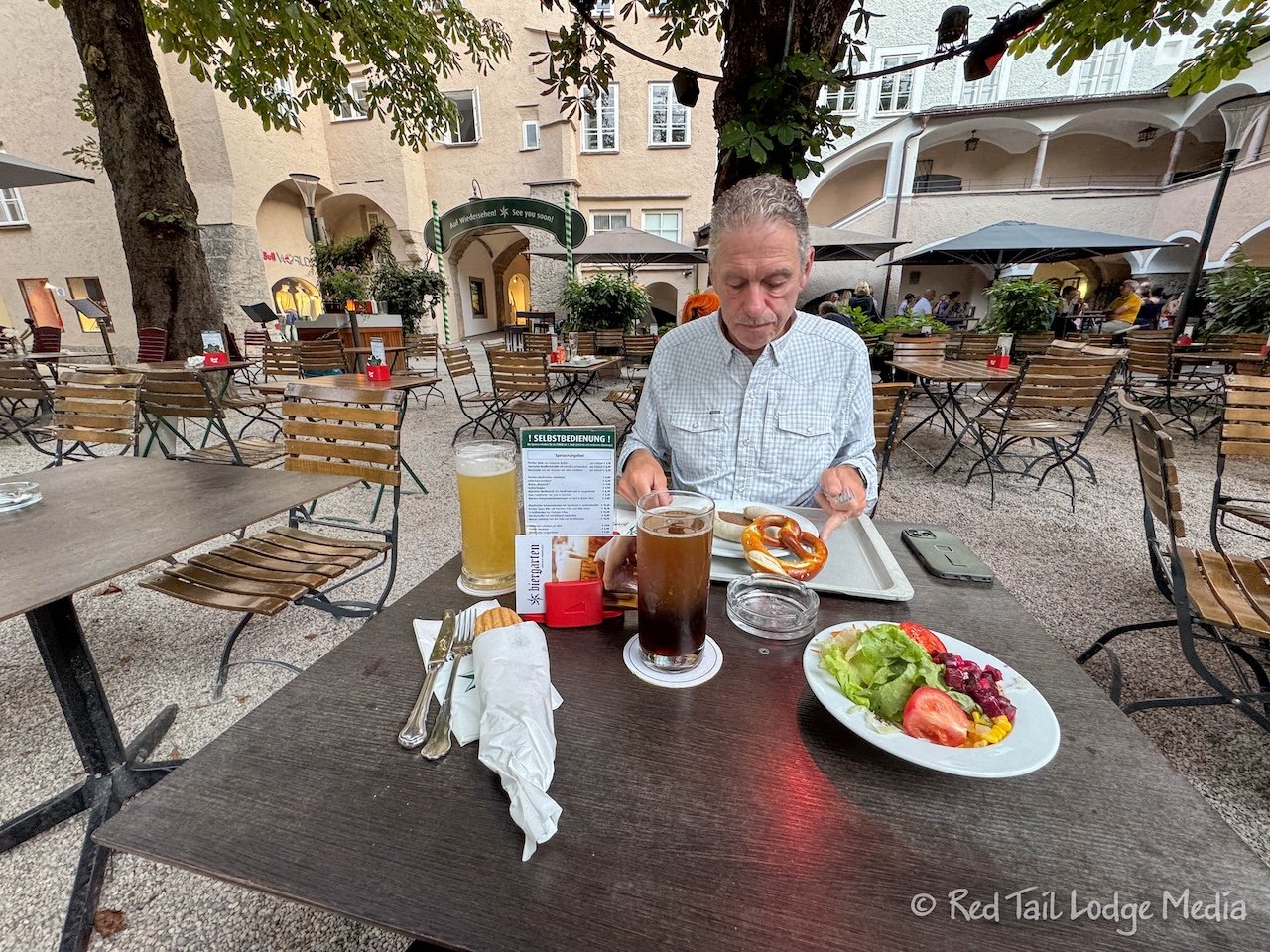
Stöckl was a cafeteria style counter. Ann went and bought our food while Keith got our drinks at a different stand, although it turned out that Stöckl also served drinks. Keith had the Weißwurt (white sausage) with a large Brezeln (pretzel). Ann tried the “Bosna Klassisch” along with a salad. Of course, our drinks were a Radler and Spezi again. The Bosna is a local fast food dish, invented in Salzburg back in 1949. It consists of a bratwurst on grilled bread with a sauce comprised of mustard, ketchup, and curry powder. It was rather tasty.
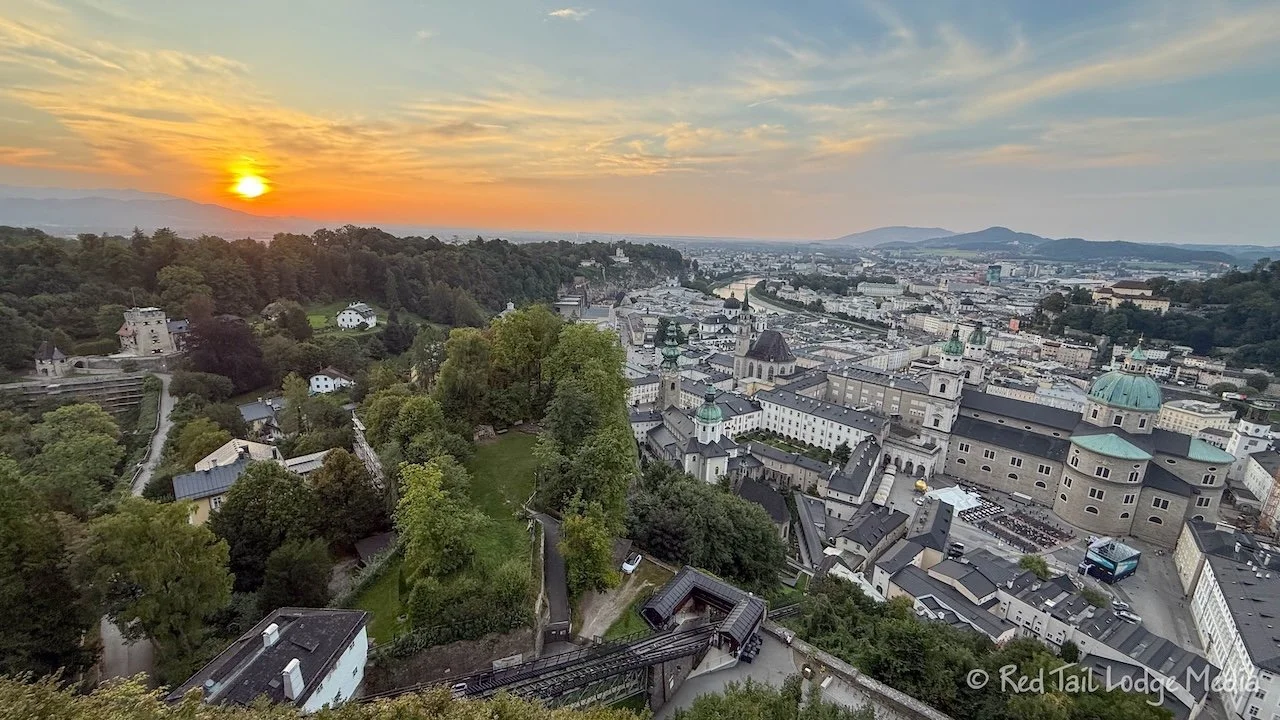
Our concert tickets let us ride the Festungsbahn starting at 7:30 pm. We rode up to the Festung, just in time to watch the sun set. Then we headed inside for the concert. First we walked up a short ramp to an elevator, which took us up one floor. Then there were several flights of stairs after that, along with some walks through some hallways before we reach the concert venue. If you have trouble with stairs, be sure to allow plenty of time to reach the venue.
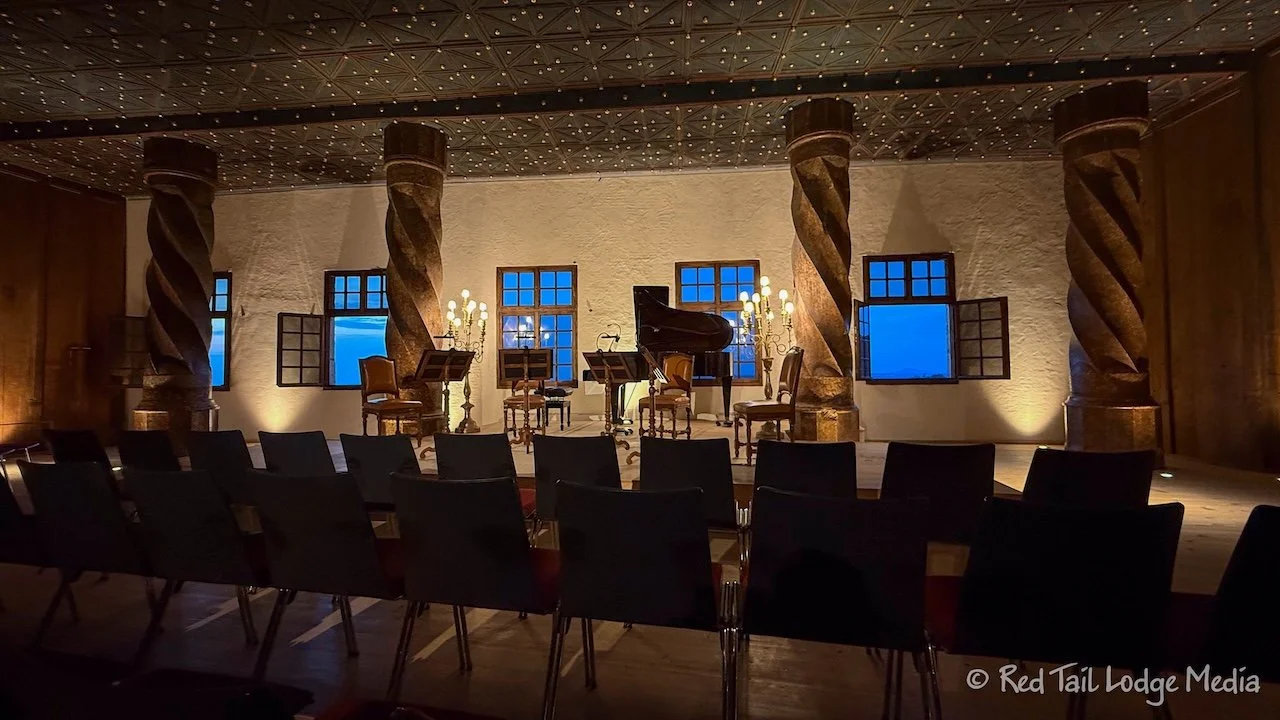
The concert was held in a room with seating for about 200 people. It was a rather intimate setting, in a room with interesting wooden details in the ceiling, walls, and columns.
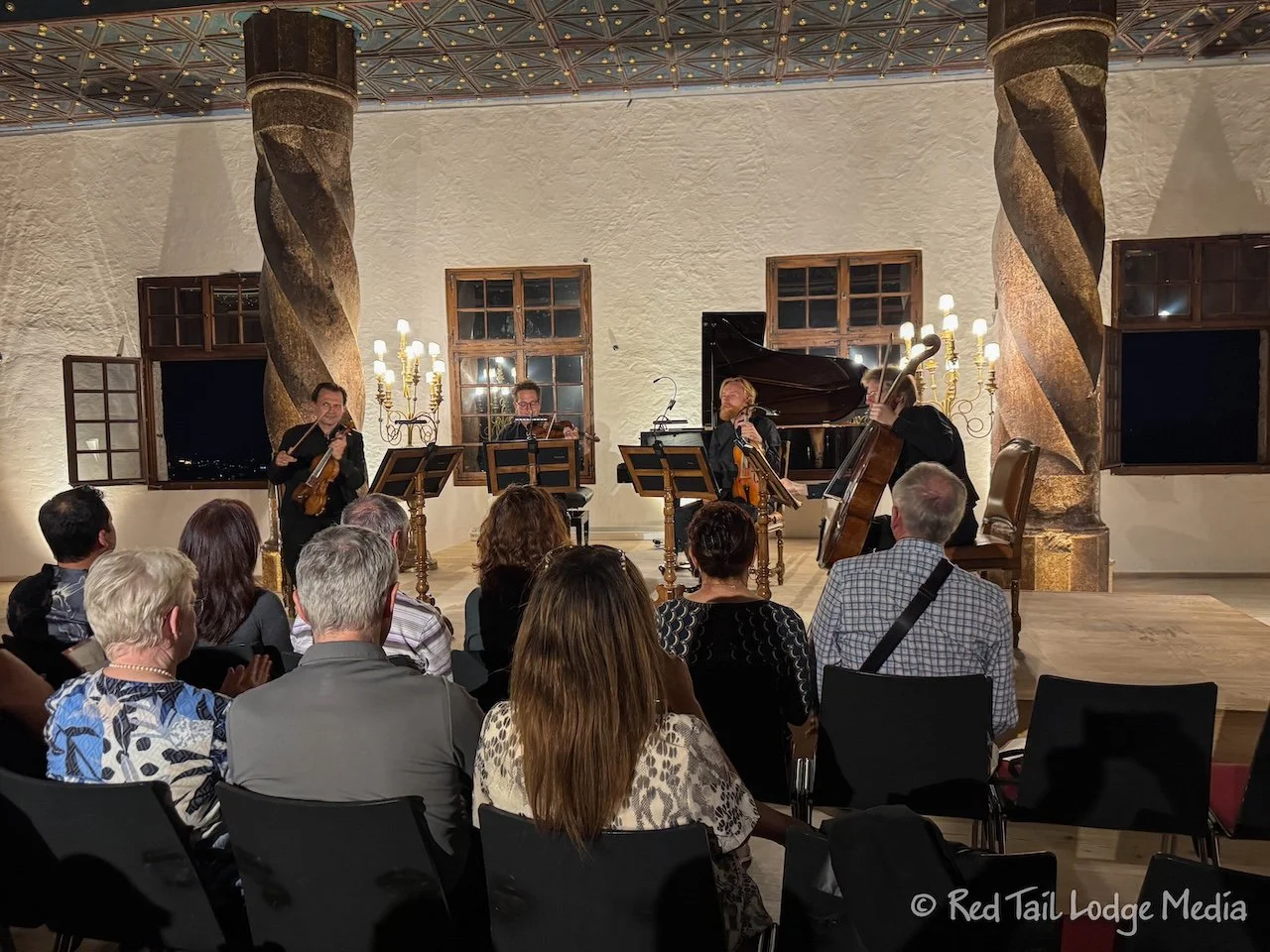
Most of the concert was a string quartet. But one of the pieces included a pianist. All of the musicians were very talented and the music selection was lively. It was a very enjoyable concert.
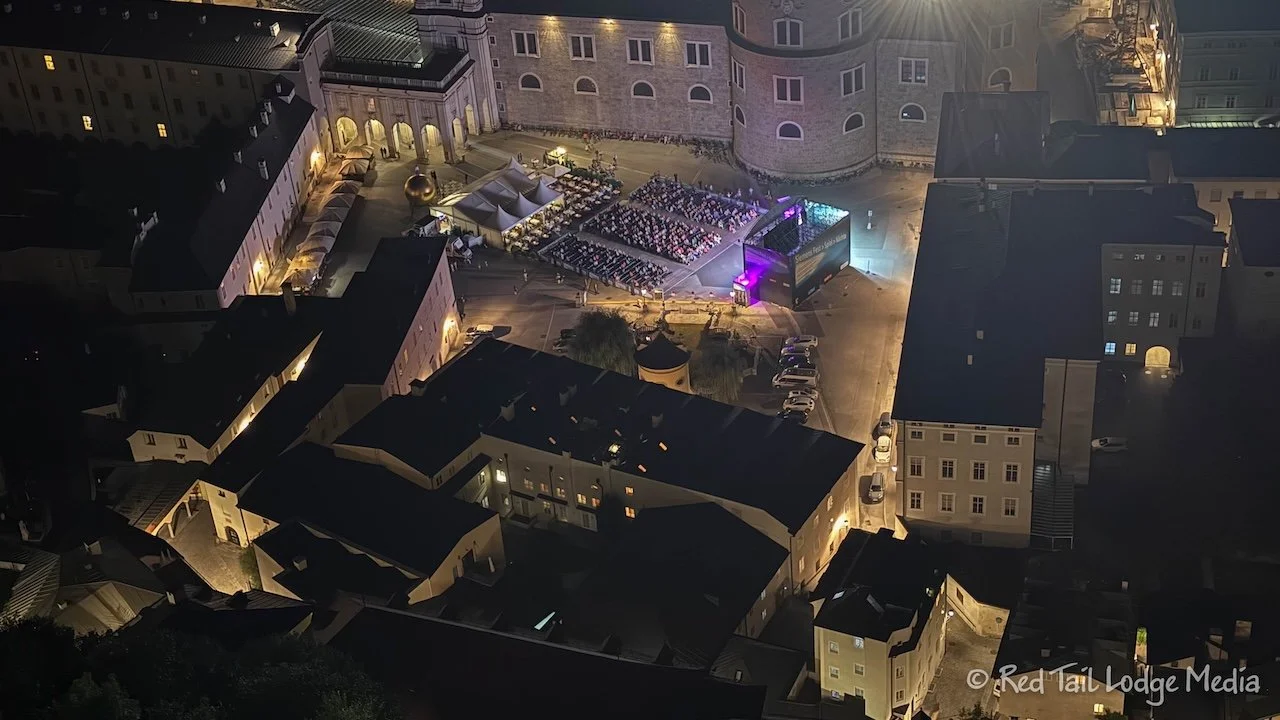
After the concert, we took the Festungsbahn back down and walked back to our hotel. There was a venue set up near the cathedral. It wasn’t a live performance, but a huge screen showing an Italian opera, with German subtitles. A rather curious event.
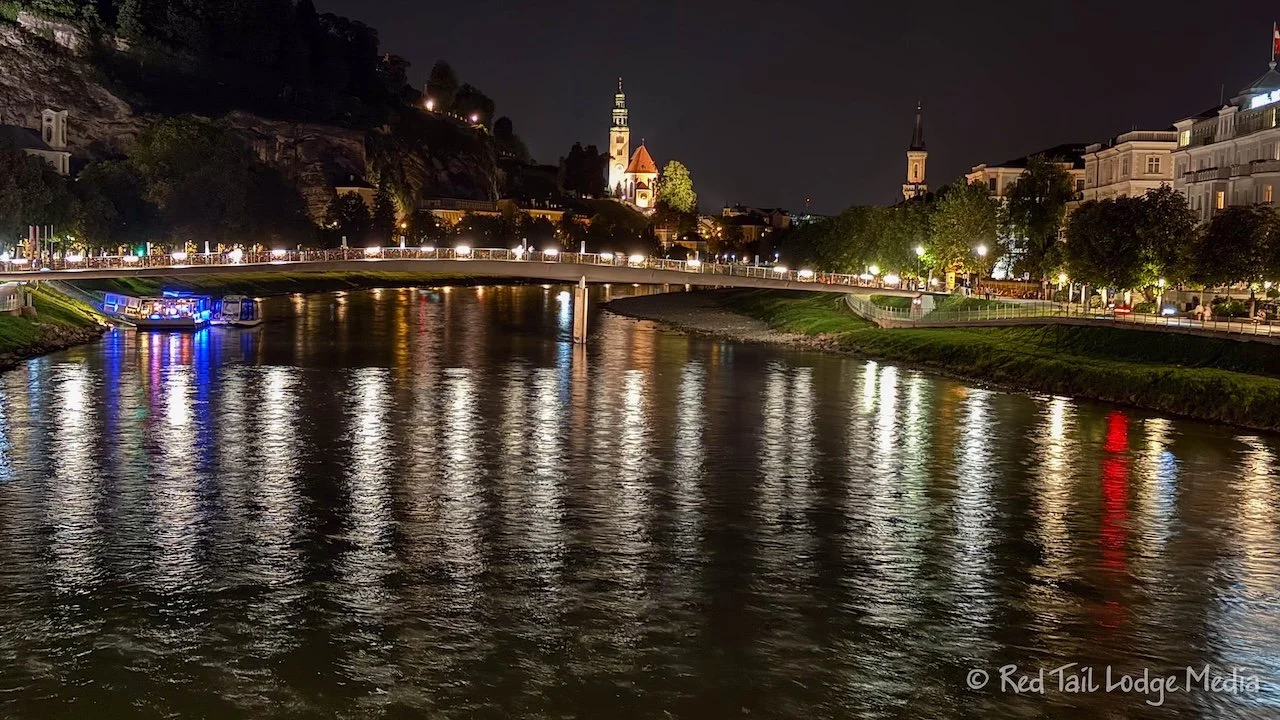
It was surprisingly quiet as we walked back through town. It was around 10:30 pm. There were still a few restaurants and bars open, but everyone was keeping the noise level down, so it was quite peaceful in the city.
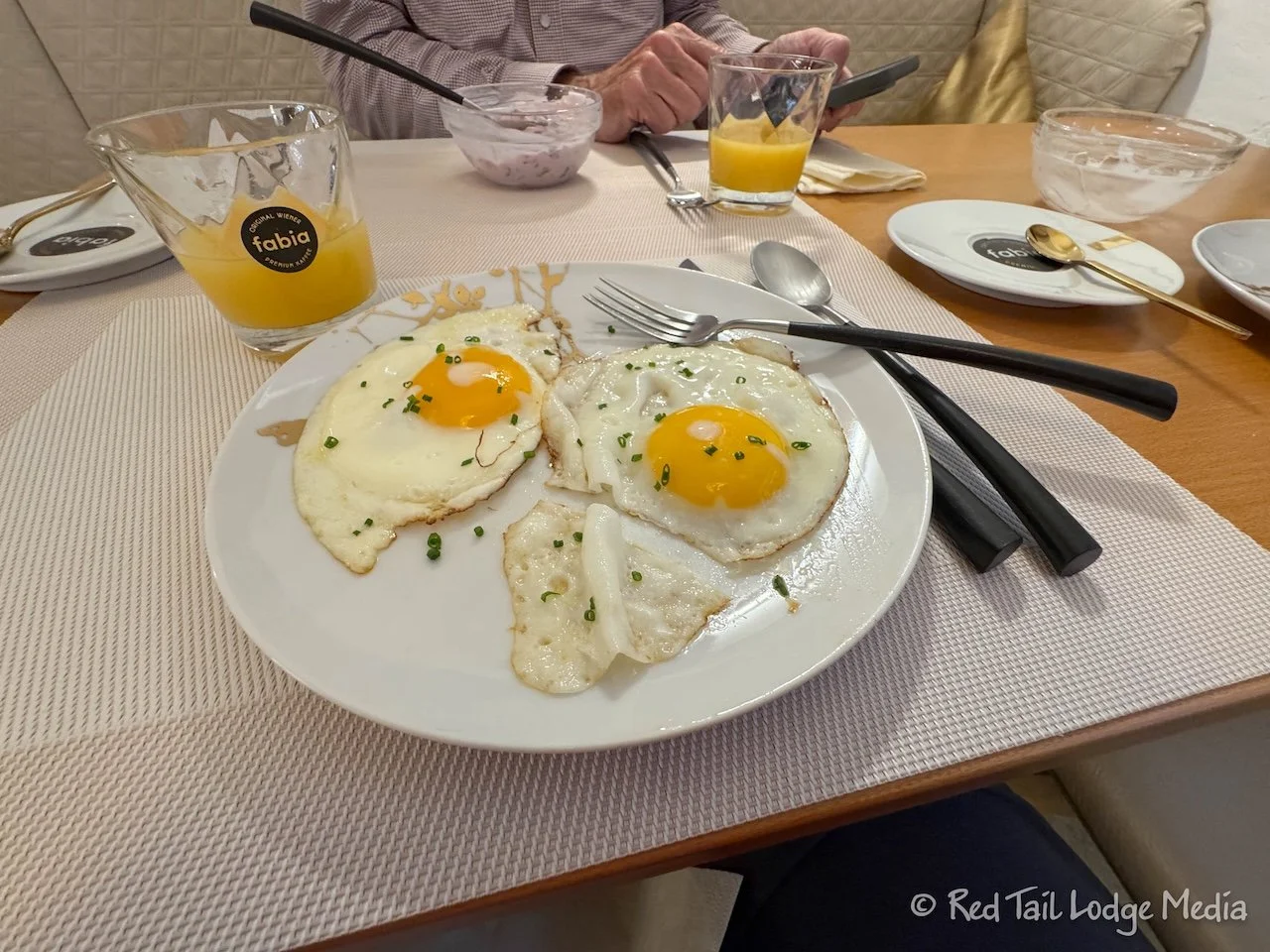
After a late night the evening before (late for us anyway), we relaxed in the morning, having a leisurely breakfast. What we didn’t realize the first morning at breakfast, was that the hotel will prepare eggs and bacon to order. So Ann got two Spiegeleier (fried eggs) this time.
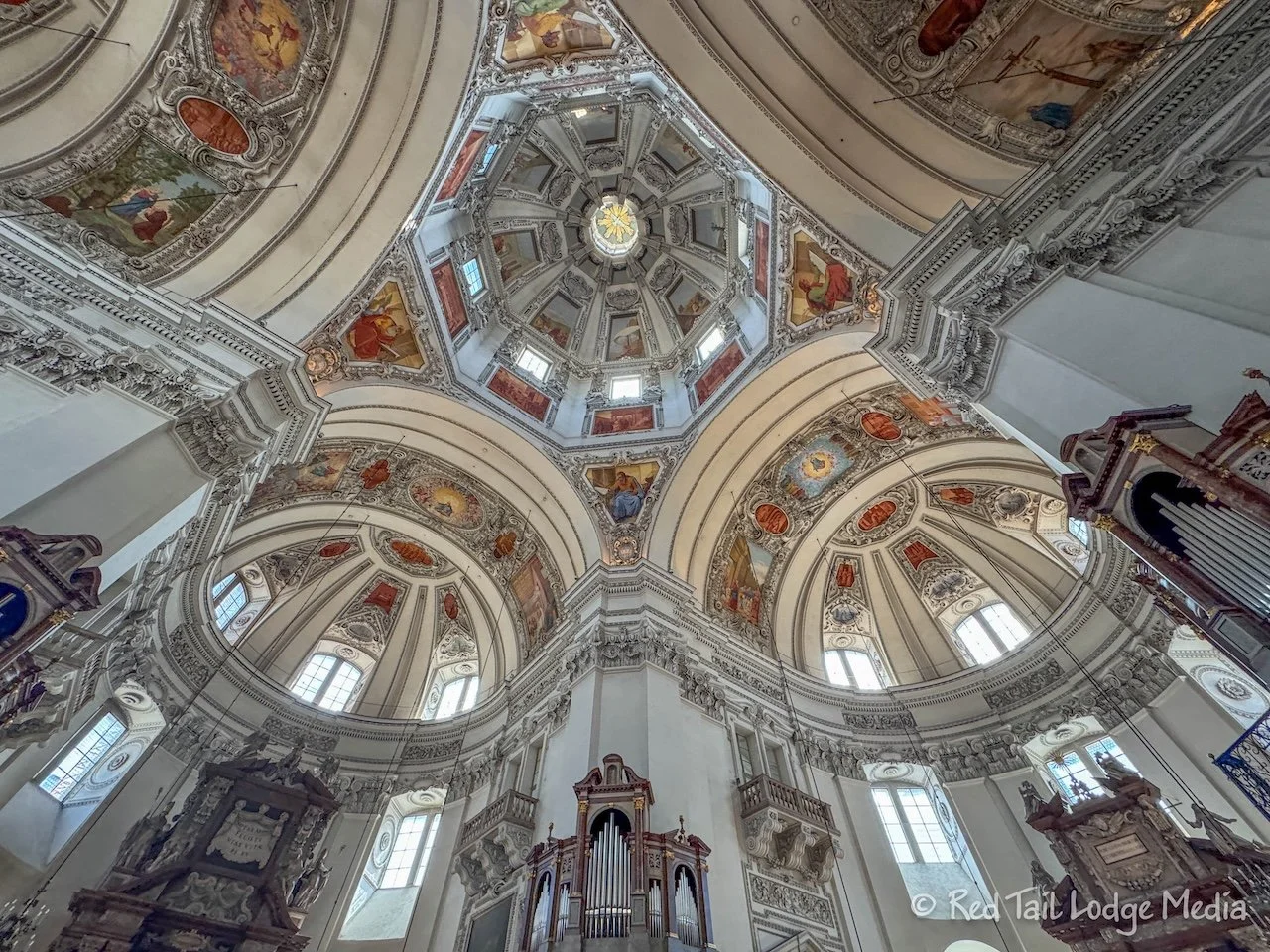
Every noon, except Sundays, there is a 30 minute organ recital in the Dom (cathedral). It costs 9 euros per adult (the normal entrance fee is five euros). We arrived a little early so we could walk around inside the Dom before the concert. Ann remembers visiting the Dom the previous time we were in Salzburg, 35 years ago. She loved its bright interior, a welcomed contrast to many other dark and dingy cathedrals. The white stone or plaster with colorful painted panels makes for a wonderful aesthetic.
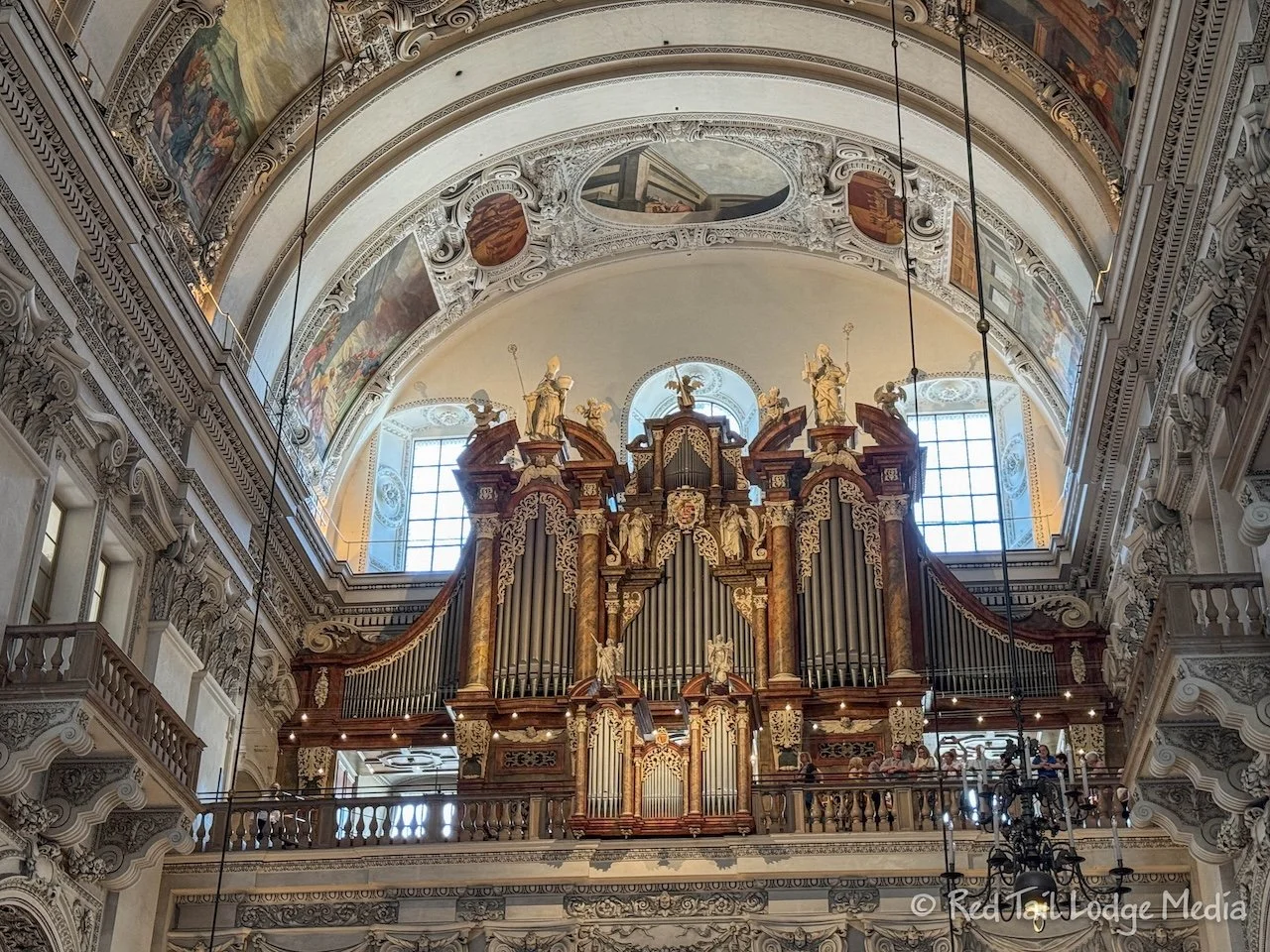
There are seven different organs inside the Dom, but we only counted five of them. The main and largest organ is at the back of the cathedral, above the doors as you enter. We only saw four organs, one on each of the four pillars where the center of the cross is. However, we’ve read that there are five independent organs there. The seventh one is a portable chest organ, so we don’t know where that was located at the time.
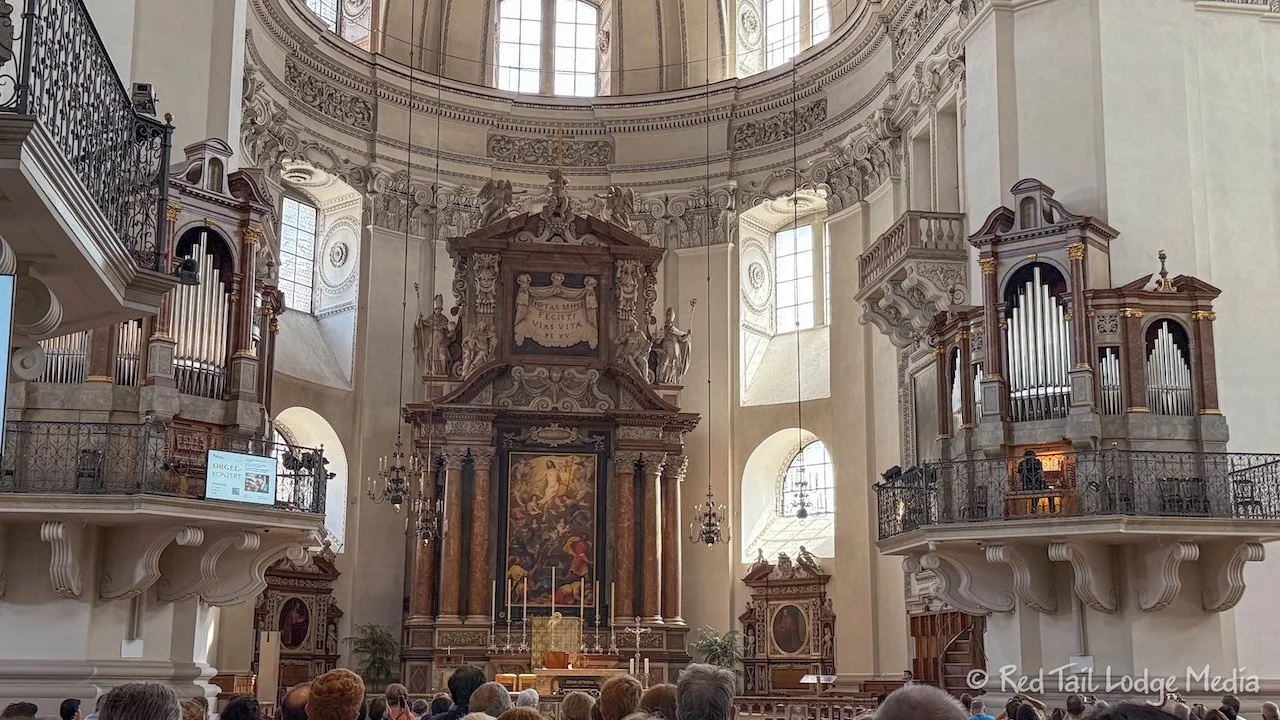
For the noon recital, the organist played four of the organs for us, the main organ and three of the pillar organs. Between each piece, the organist had to walk over to the next organ. Each organ had a different sound, but that may have been at least partially due to the settings the organist selected for the piece she was playing.
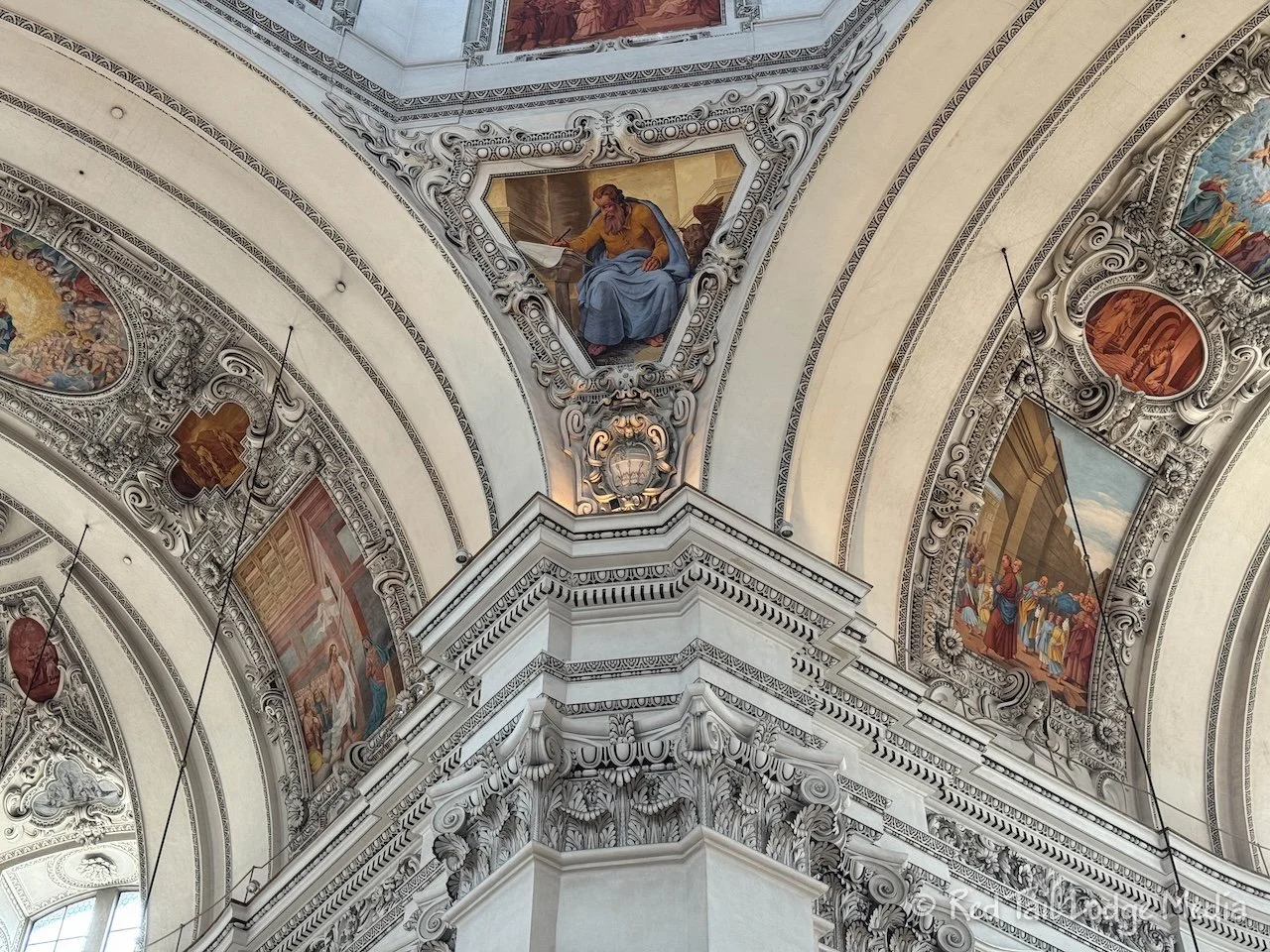
Keith really enjoyed the concert, as his mother used to be a church organist. Ann, who is not a big fan of organ music, appreciated the way the music filled the cathedral. There were also longer evening organ concerts which we could have attended, but 30 minutes was more to Ann’s liking.
After the concert, we walked over to Wirtshaus Elefant at Hotel Elefant for lunch. Ann ordered the Pinzgauer Kasnock’n while Keith had the Elefant’s Erdäpfelgröst’l. This time we both drank Spezi. The English description for the Pinzgauer Kasnock’n was cheese spätzle. Since Ann loves Käsespätzle, she thought that this must be similar. Pinzgauer Kasnock’n is Salzburg’s variant on Käsespätzle. The dish was cooked in a skillet until the cheese formed a golden brown, crispy layer. Very delicious.
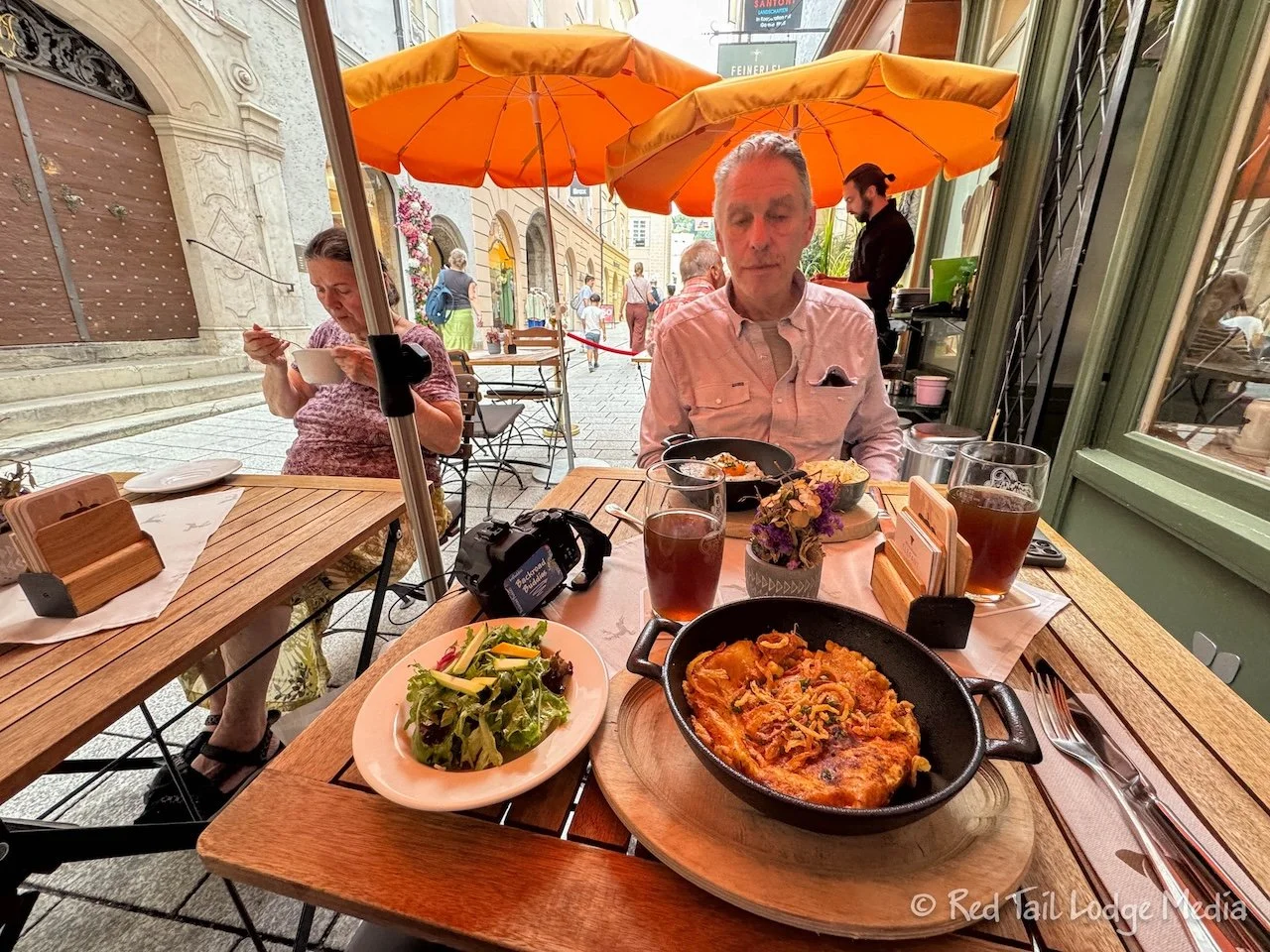
Erdäpfelgröst’l is a southern Tirolean dish. It consists of pan-fried potatoes with usually a few other ingredients mixed in. In this case, it was made with pieces of roasted meats and a fried egg on top. It was served with a side of cabbage salad. Tasty.
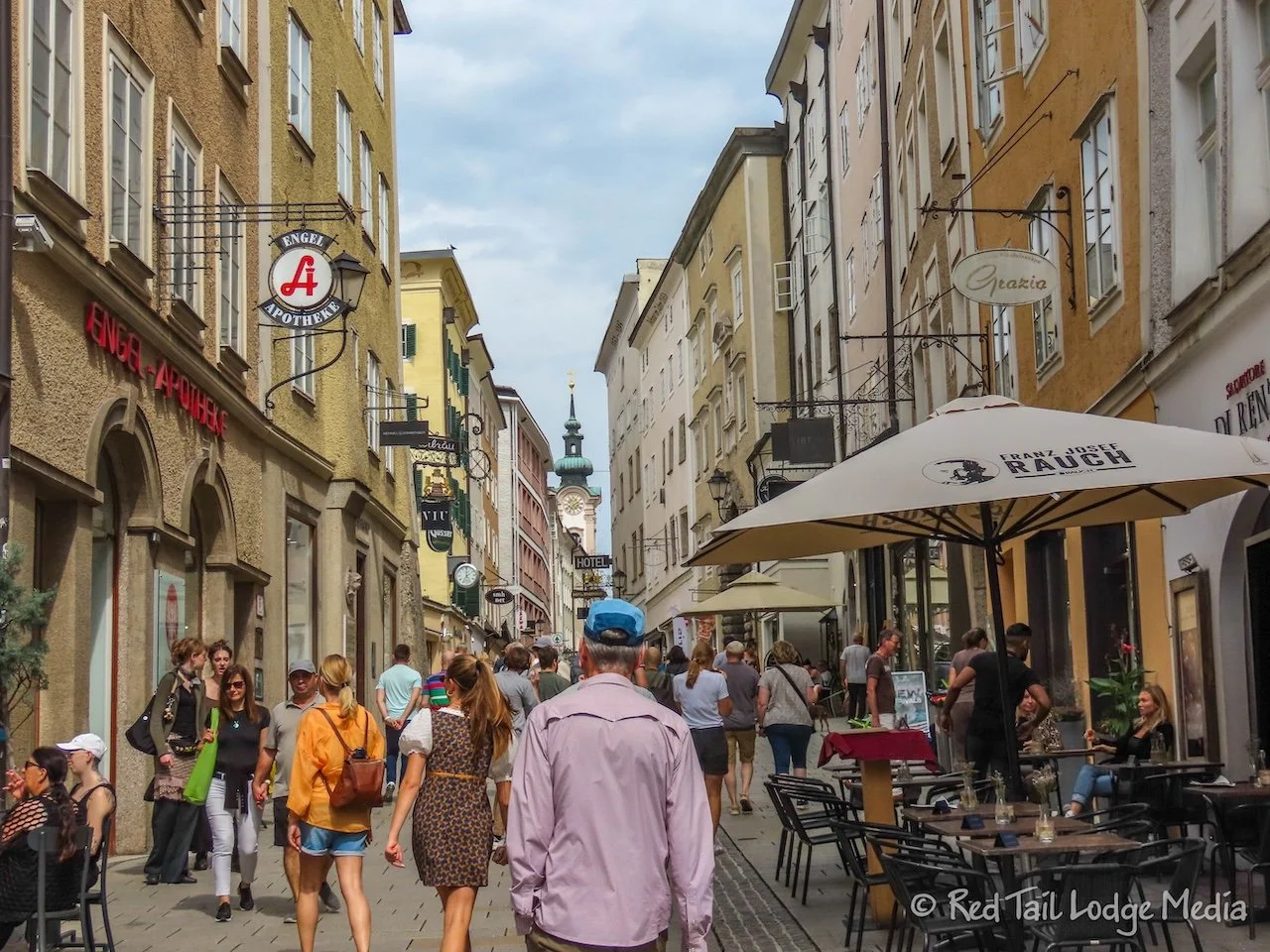
While we were eating our lunch, it started to rain, but not hard. We were sitting at an outside table, but the table umbrella protected us and kept us dry. By the time we finished our lunch, the rain stopped.
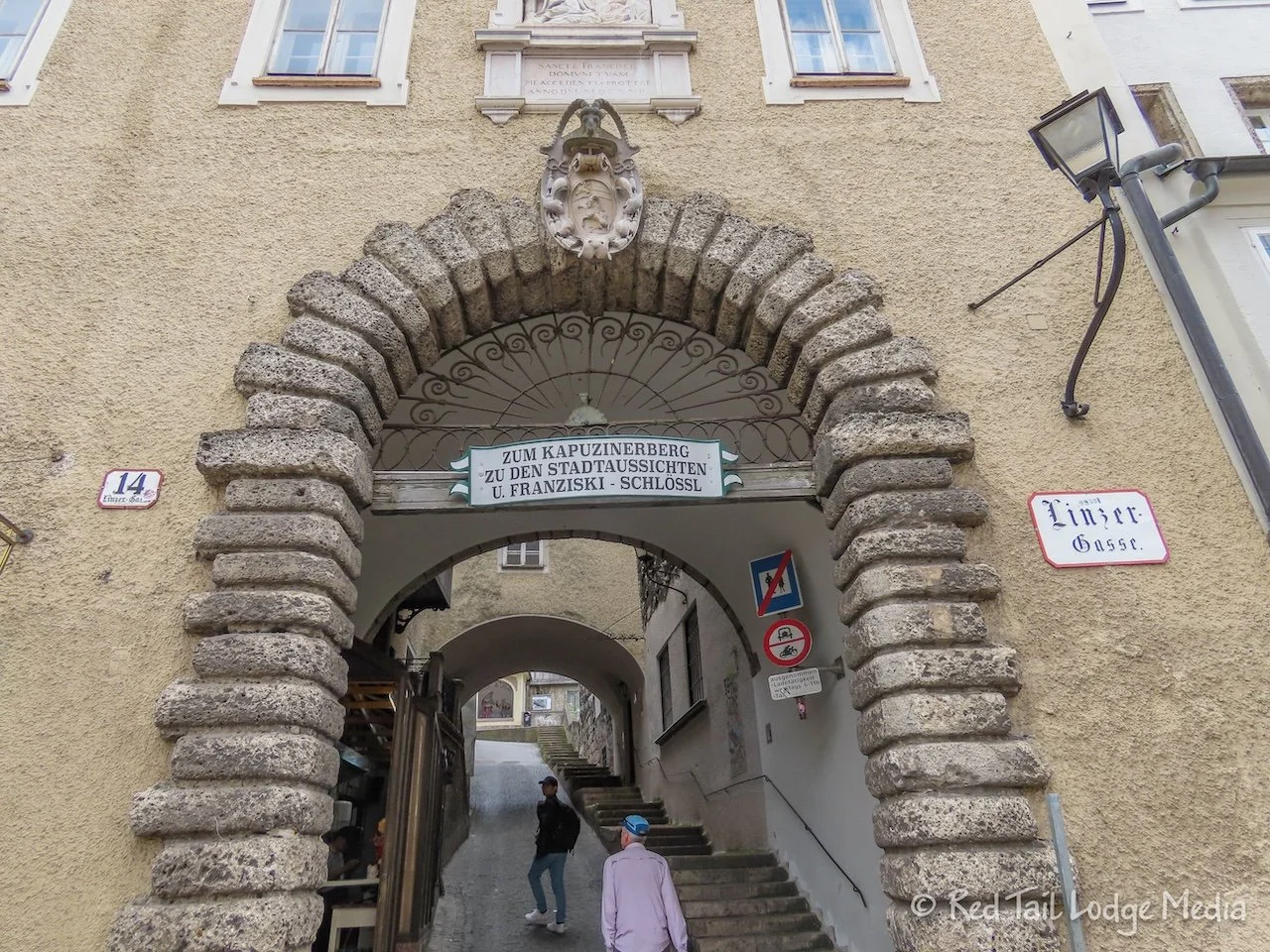
After freshening up back in our room, we took a walk up to Franziskischlössl on Kapuzinerberg. Franziskischlössl is a former fortification built in 1629. It has been an inn since the 19th century. In addition to the inn, there is a tavern which is open on clear days. It didn’t appear to be open when we were there.
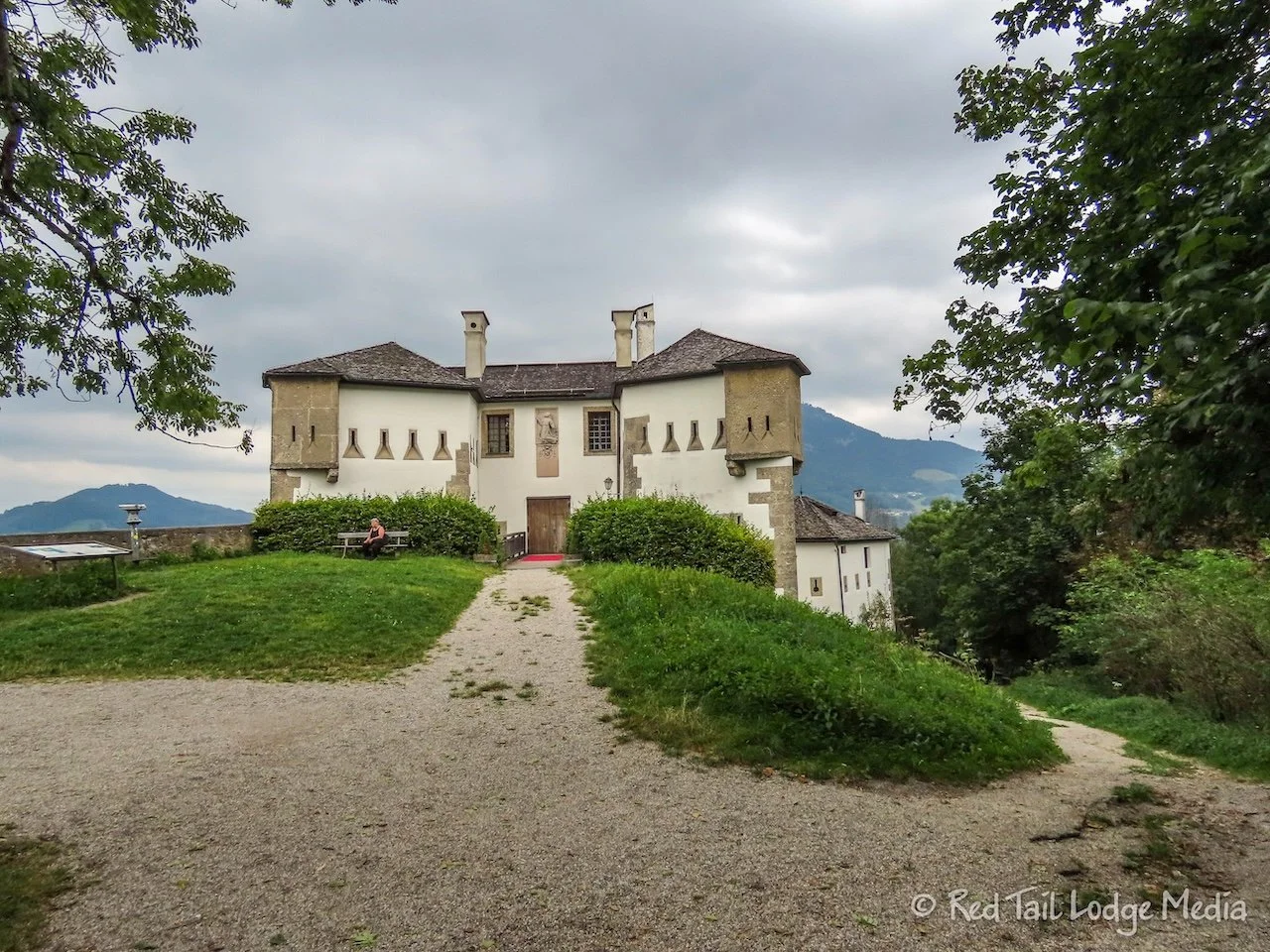
There is a paved path called Stefan-Zweig-Weg which leads from Linzer Gasse all the way up to the Schössl. However, we followed a track in AllTrails (Kapuzinerberg from Mirabellplatz) which deviated from the paved path part way up, which went by an overlook with a view to the north. After reaching Franziskischlössl from the dirt path crossed by lots of tree roots, we returned on Stefan-Zweig-Weg.
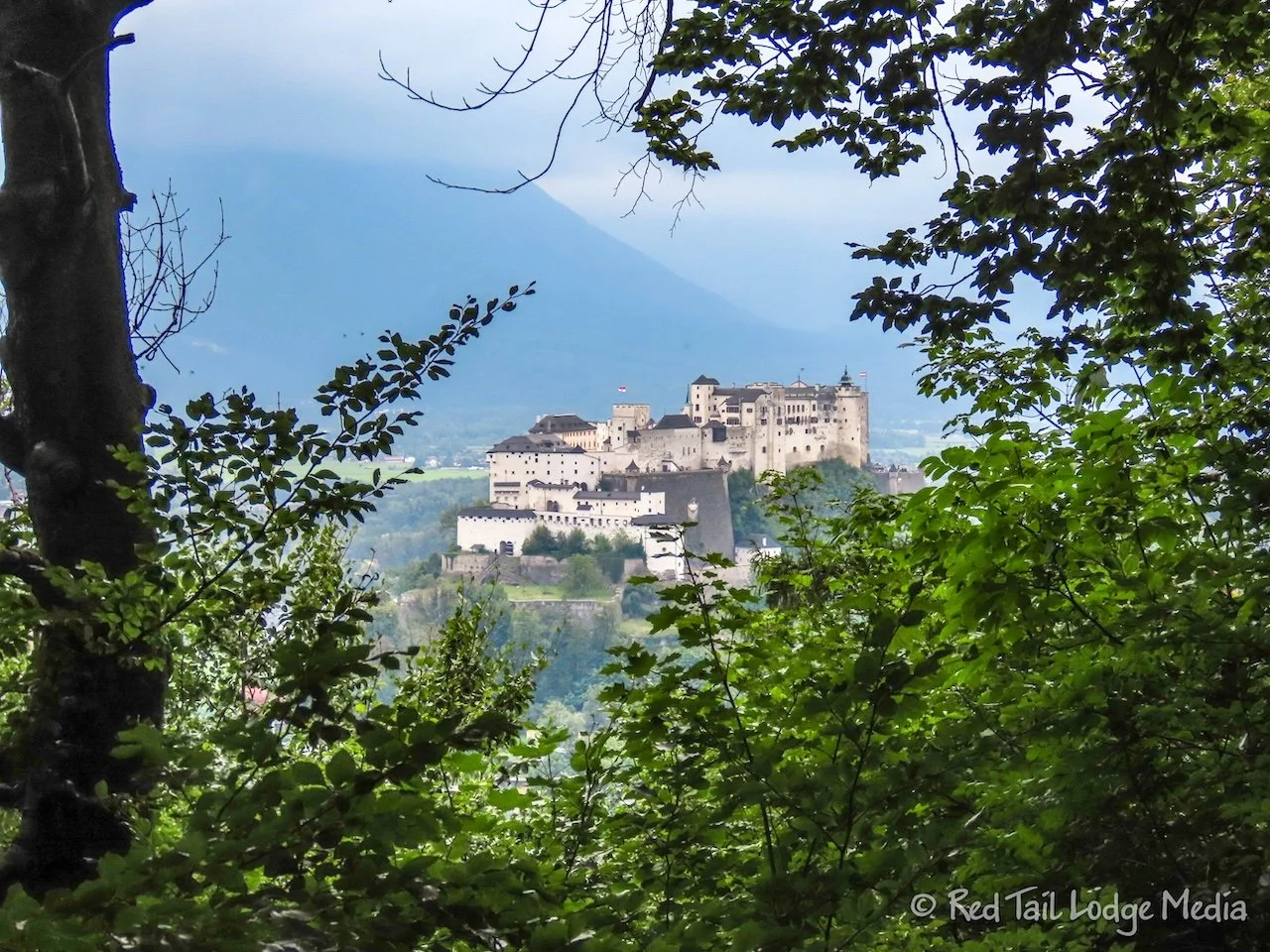
Part way down, there is a nice view of Festung Hohensalzburg which sits on the other side of the river. It took us about an hour to walk the three kilometers (1.9 miles), with an elevation gain of 205 meters (670 feet). It felt more like a hike than a stroll around town, especially since most of the trail was through the woods.
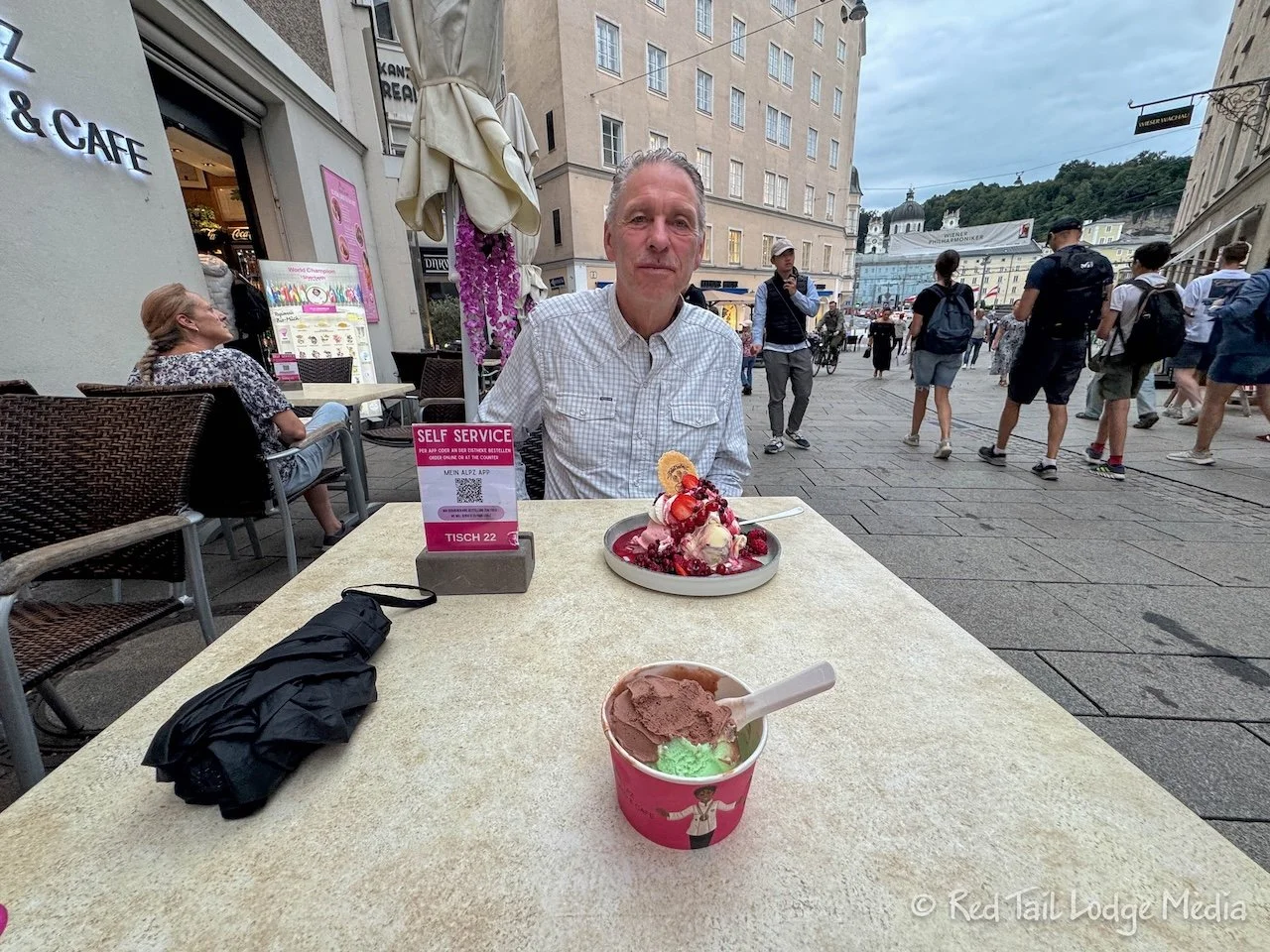
The dark clouds started rolling in, so we headed back to our apartment. We hung out, waiting for the rain to start, but it never did. After taking showers and changing into a little nicer clothing, mainly clean clothes, we headed over to the Großes Festspielhaus (Great Festival House) for a concert. Since we had a big lunch, we decided to just stop for ice cream for dinner on the way. We tried a different place this time, Alpz Gelato & Cafe. Keith had a wild berry sundae. Ann, who didn’t realize Keith ordered a sundae, just had a cone with two scoops of ice cream, chocolate and “After Eight” (mint). She was a little jealous watching Keith finish his sundae with fresh berries.
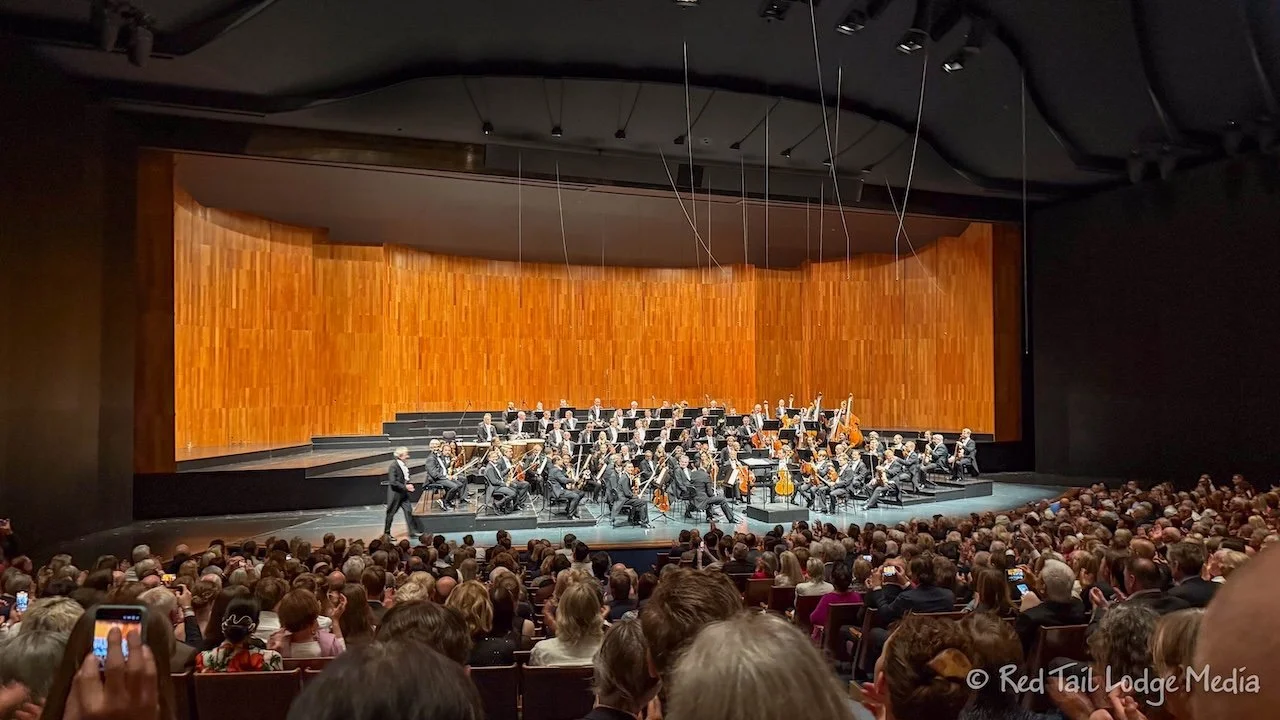
The annual Salzburger Festspiele was still going on in Salzburg while we were there (it ran from July 18th to August 31st). Even though we didn’t look for tickets until just a few days before arriving in Salzburg, we managed to snag two seats to the Wiener Philharmoniker (Vienna Philharmonic). The concert started at 8:30 pm. Even though the music selection was not our style of music, we appreciated the talent of the musicians.
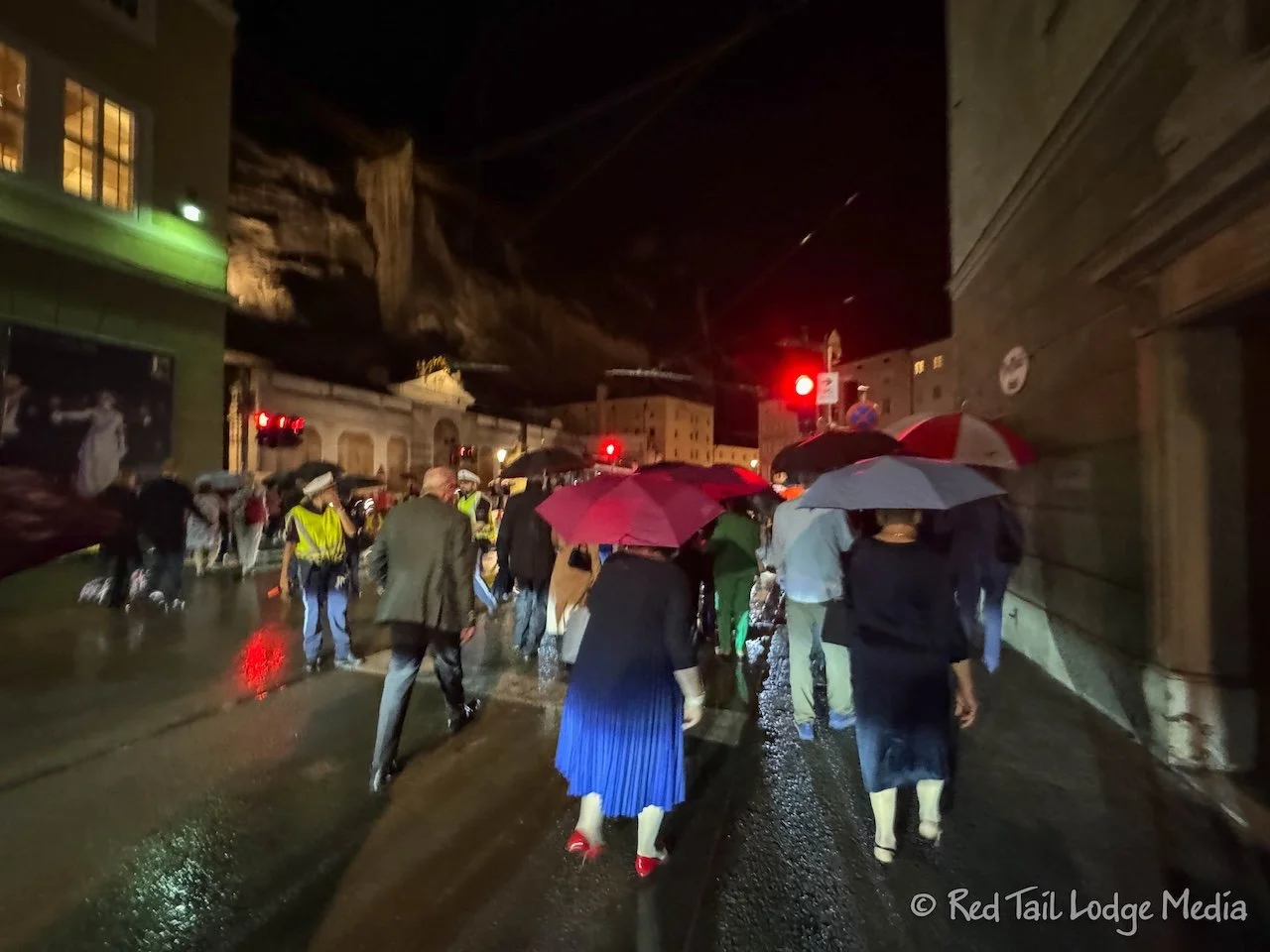
At the end of the concert, around 9:40 pm, it was raining outside. However, we both brought along our umbrellas. Since it wasn’t raining very hard and it wasn’t windy, our umbrellas kept us dry and comfortable on our walk back to the hotel.
Friday, we spent another relaxing morning in our room before heading out. We wanted to make sure the rain had stopped for the day and Keith’s energy was a little low, as he felt he was catching a cold. The nearby DM drug store was a great place to get some needed supplies, like immune boost, toothpaste, deodorant, and an electric razor. Keith was getting tired of cutting himself with his manual razor.
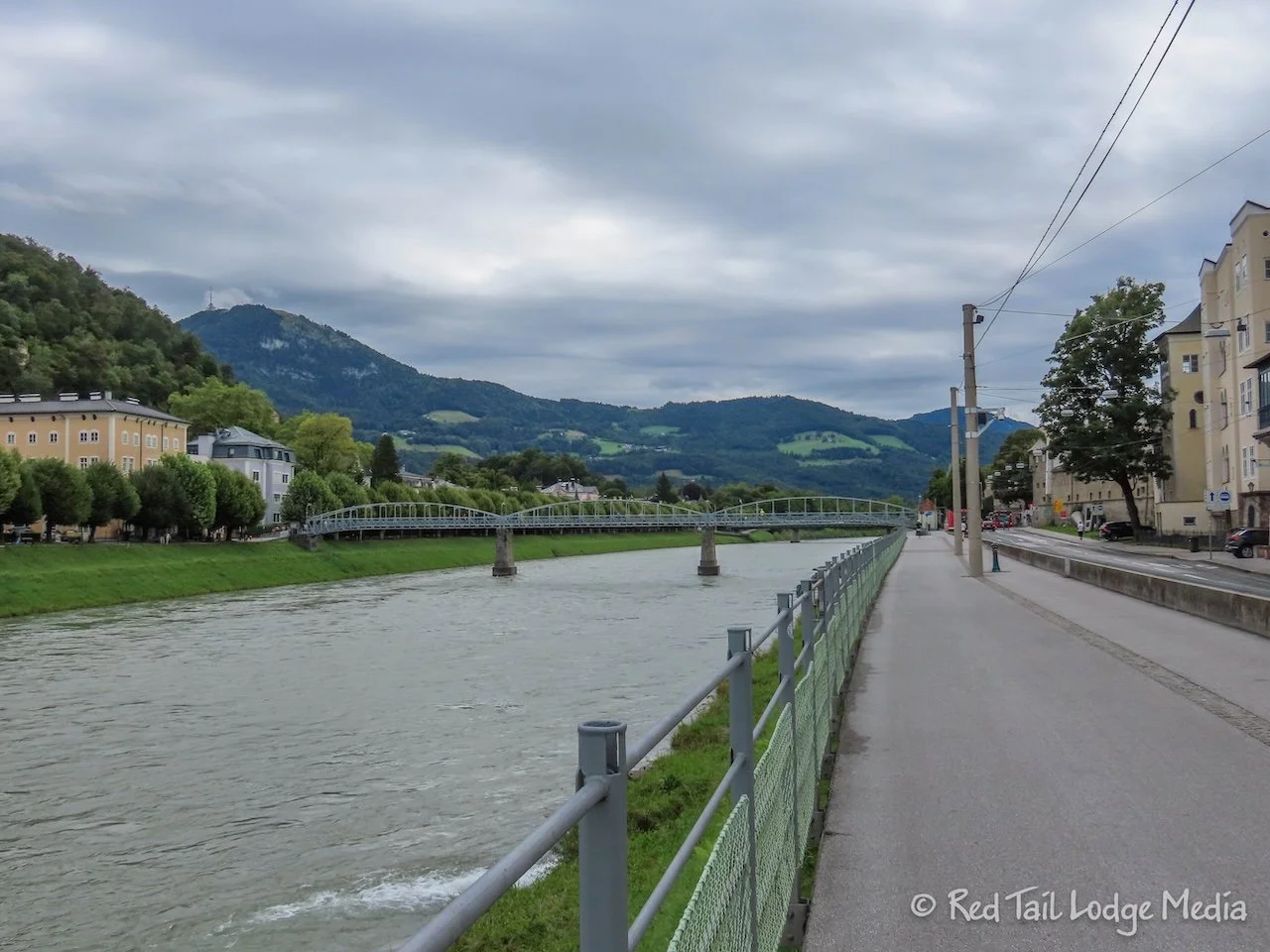
At 11 am, we walked over to the aVelo Radverleih stand (bike rental stand) along the river near the Altstadt. Our plan was to ride bikes over to the Schloß Hellbrunn (Hellbrunn Palace). It was about a 20 minute ride from the Altstadt. The stand was supposed to open at 9 am, but at 11 am, there was no one around. So we decided to just walk to Hellbrunn, about an hour and a half by foot.
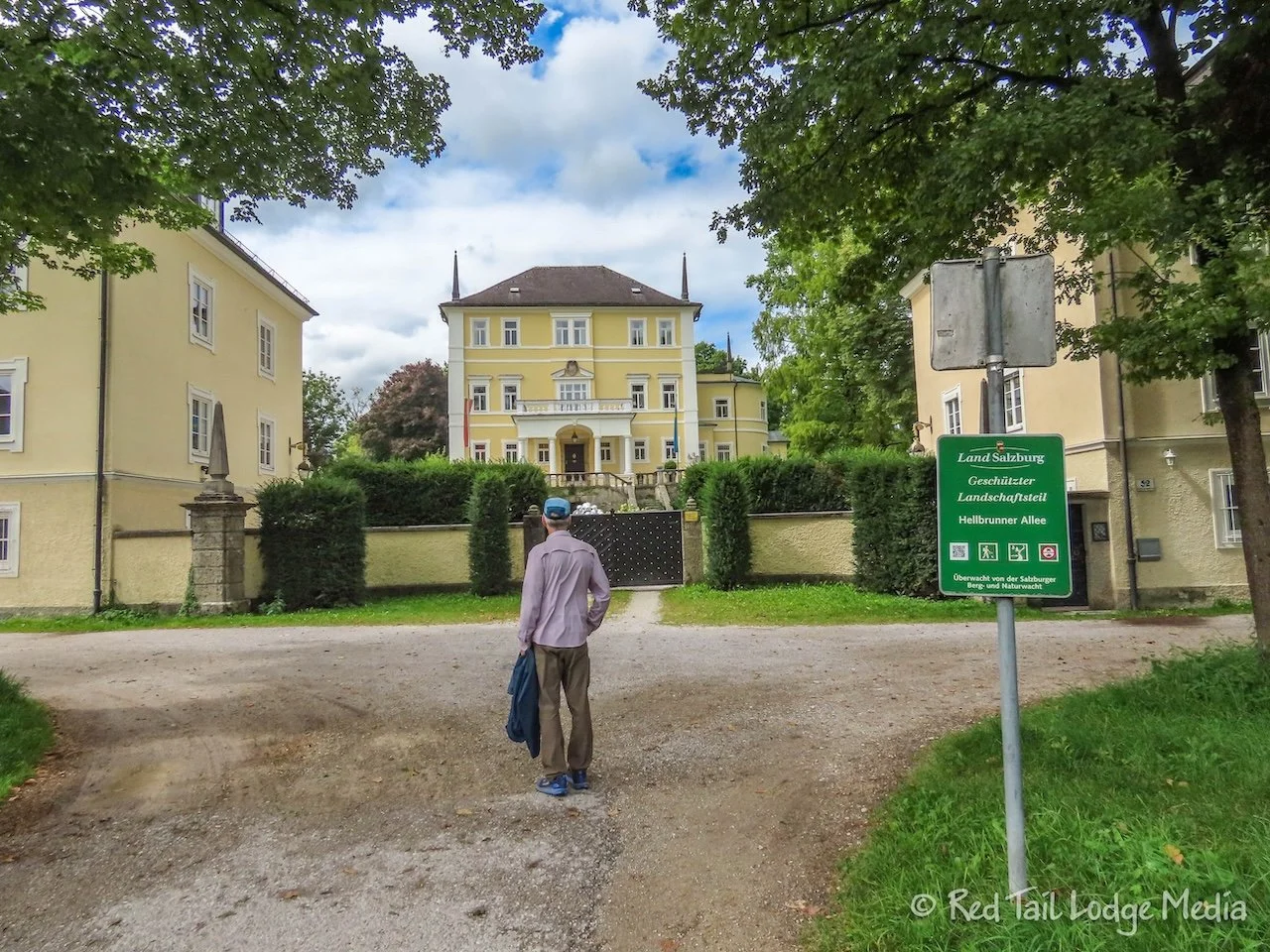
On the way to Hellbrunn, we walked along the Salzach River most of the way. There was a short section of trail that went through a nature preserve. The trail was a little muddy from the rain, but we managed not to get our shoes dirty and it was nice to be in the woods. At Franz Wallack Straße, we followed the signs over to Hellbrunner Allee via Kreuzhofweg. Then Hellbrunner Allee, a nice tree-lined paved pedestrian and bike path, took us straight to Hellbrunn.
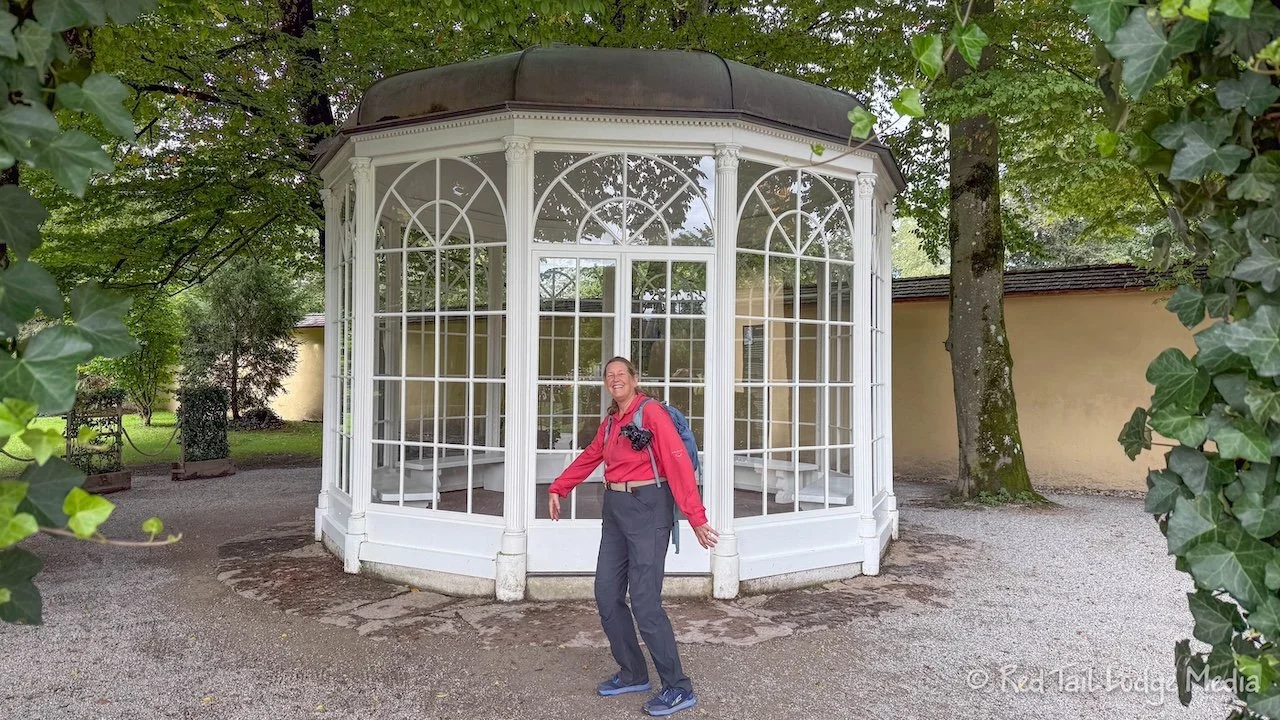
It took us about an hour and a half to cover the flat 6.3 kilometers (3.9 miles) to reach Schloß Hellbrunn. Near the entrance is the Sound of Music Pavilion. This is a movie prop that was originally located at Schloß Leopoldskron, but was moved to Hellbrunn to make it easier for fans to visit it.
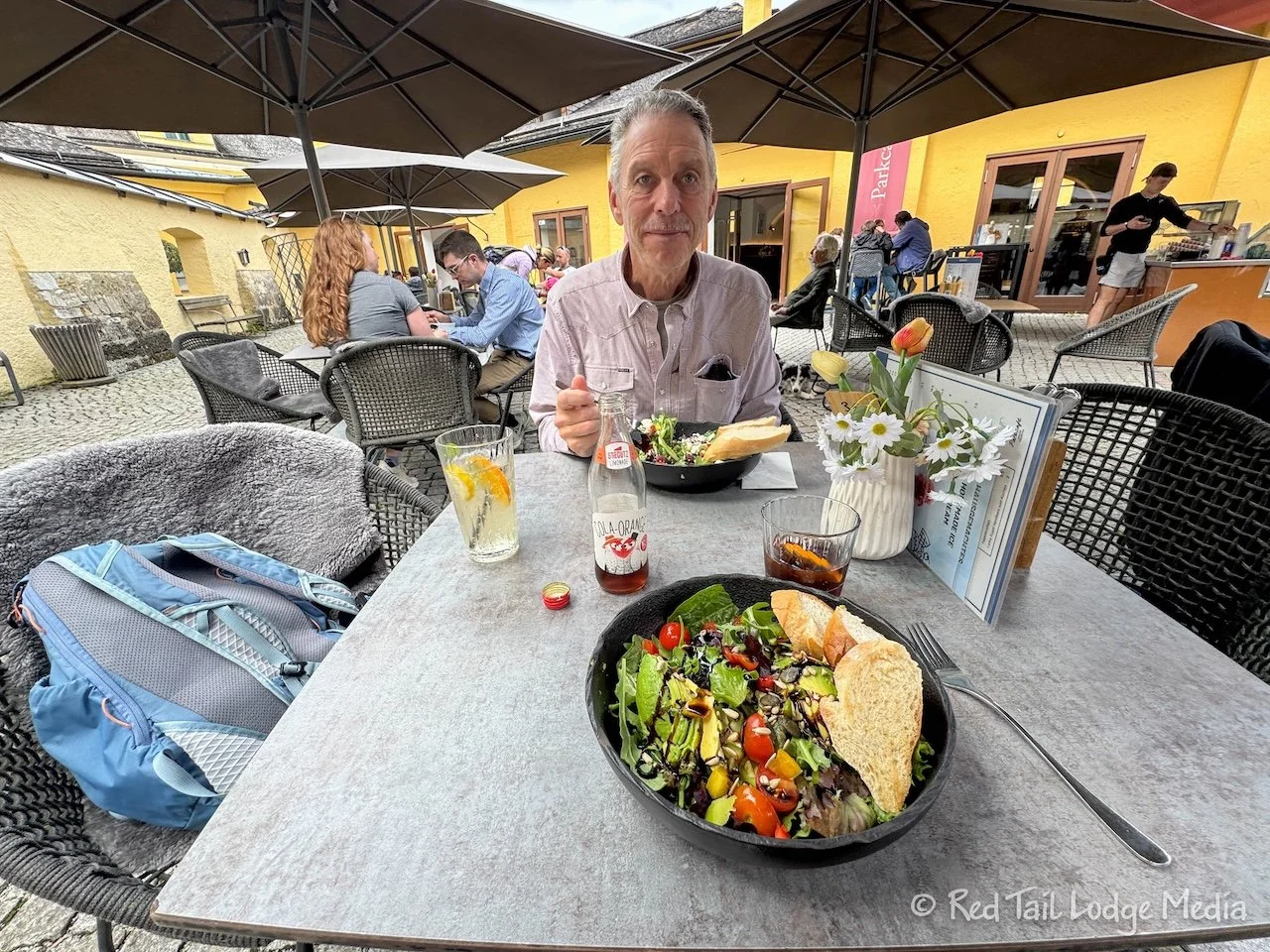
First, we stopped at the Parkcafe for lunch. The outside tables at the cafe had nice views of the palace park. Keith had the feta salad while Ann ordered the avocado salad. Of course, she drank a Spezi while Keith had a lemonade.
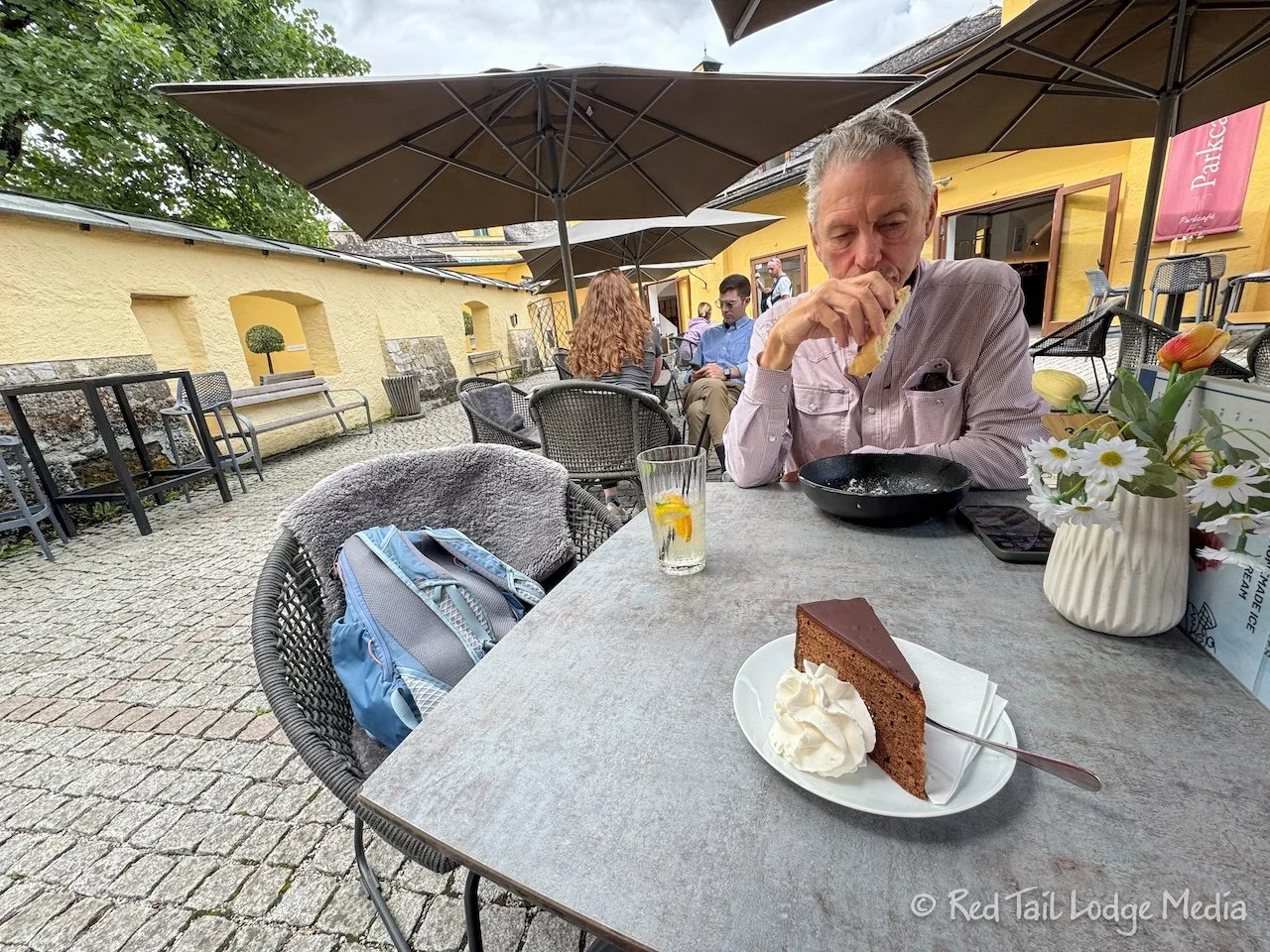
For dessert, Ann ate a Sachertorte. Sachertorte was invented by Franz Sacher in the 1800’s. It was added to the menu at Hotel Sacher in Vienna when his son, Eduard, opened the hotel in 1876. There is also a Hotel Sacher in Salzburg, which serves the “Original Sacher-Torte”, but sachertorte can be found on the menu of just about every restaurant in Salzburg. A Sachertorte is layered chocolate sponge cake, with apricot jam between the layers and covered with a chocolate glaze. It was very yummy.
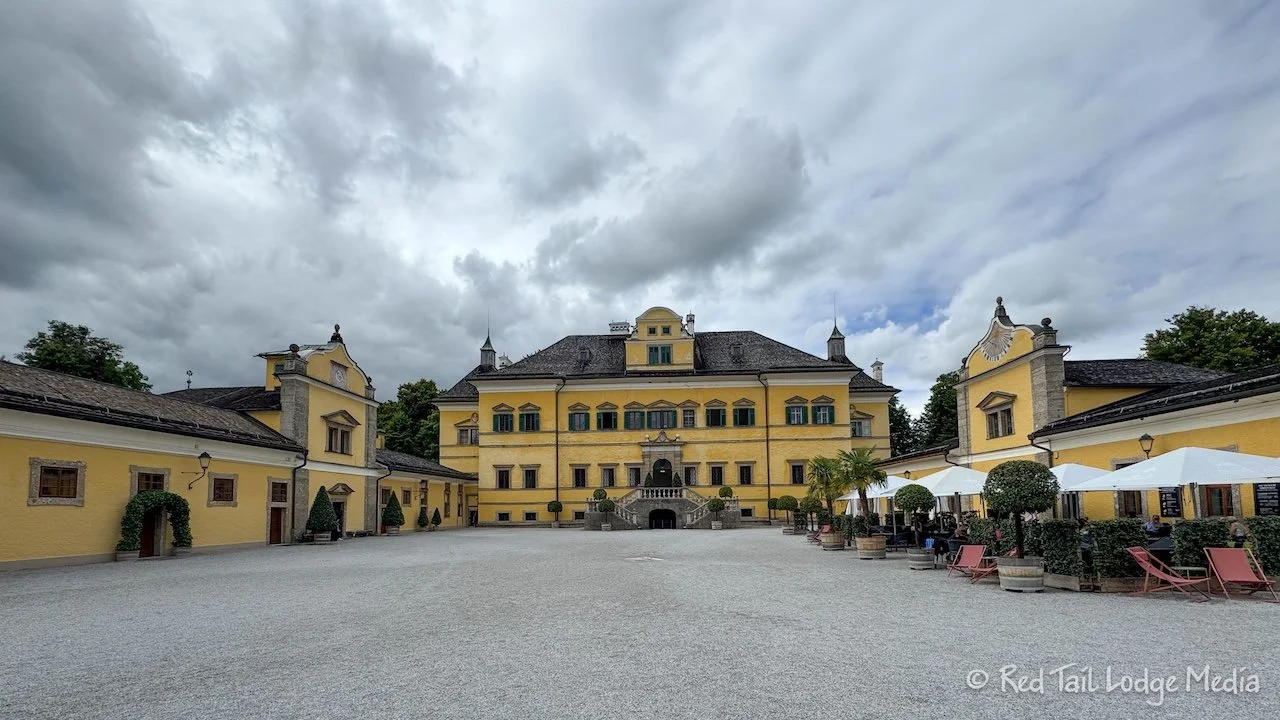
After lunch, we bought tickets for the palace. The tickets included the Wasserspiele (trick water fountains) tour, the Ausstellung Schaulust: Die unerwartete Welt des Markus Sittikus (an exhibit inside the palace about Markus Sittikus, who built the palace), and the Volkskunde Museum (Folk Museum) in the Jagdschloß (hunting lodge) up on the hill. Only the Wasserspiele had a timed entry, which was assigned to you when you bought your ticket.
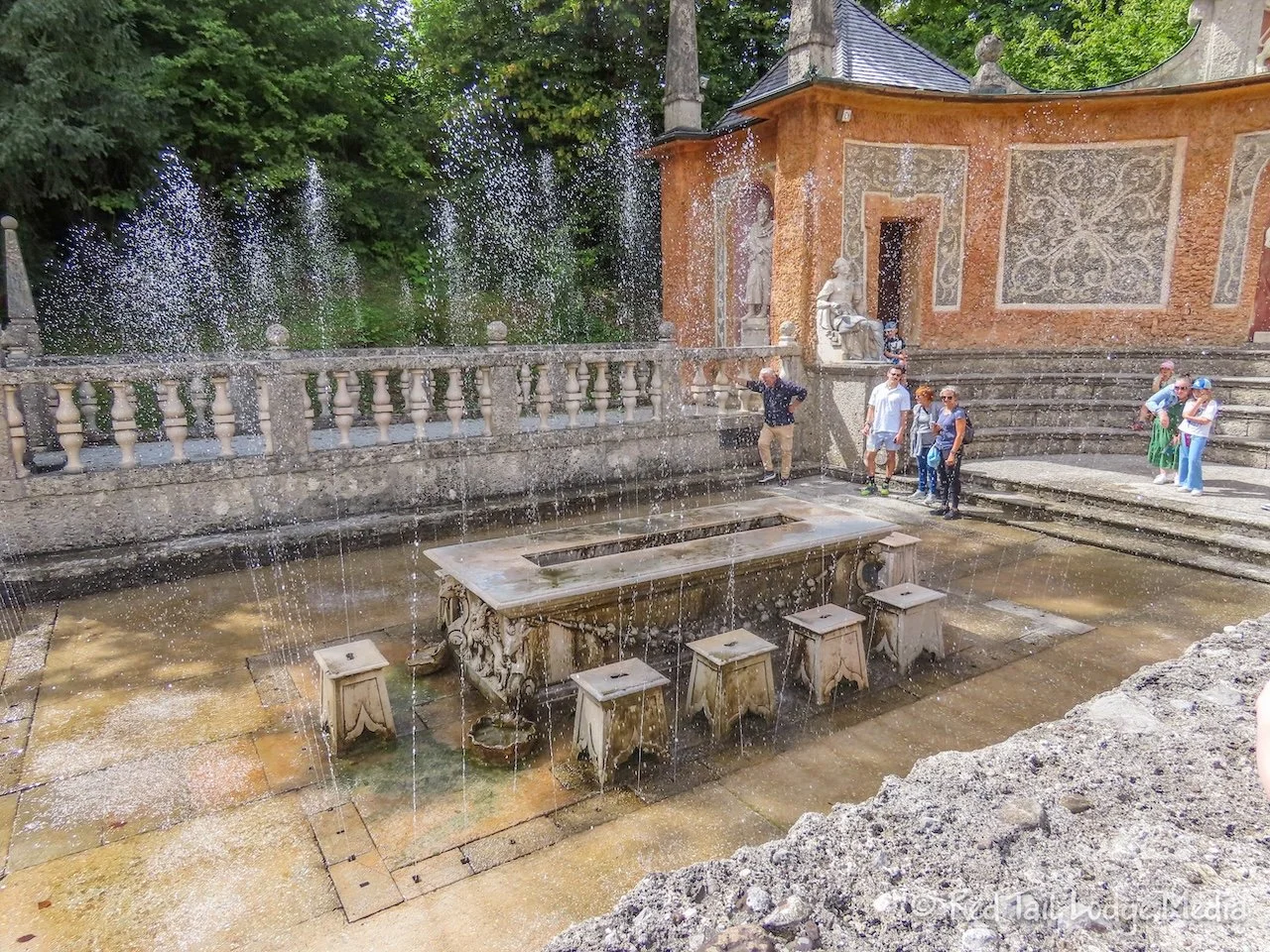
We were on the 2 pm tour of the Wasserspiele. An audio guide, which you could download to your phone or use one of their hand-held audio devices, would describe each numbered location as you went along on the tour. You should expect to get a little wet while on the tour. Water comes unexpectedly from all kinds of directions. We managed not to get soaked and only get our pant legs wet on several occasions, but they dried fairly quickly. However, we’re not sure we would want to go on the tour on a cold day.
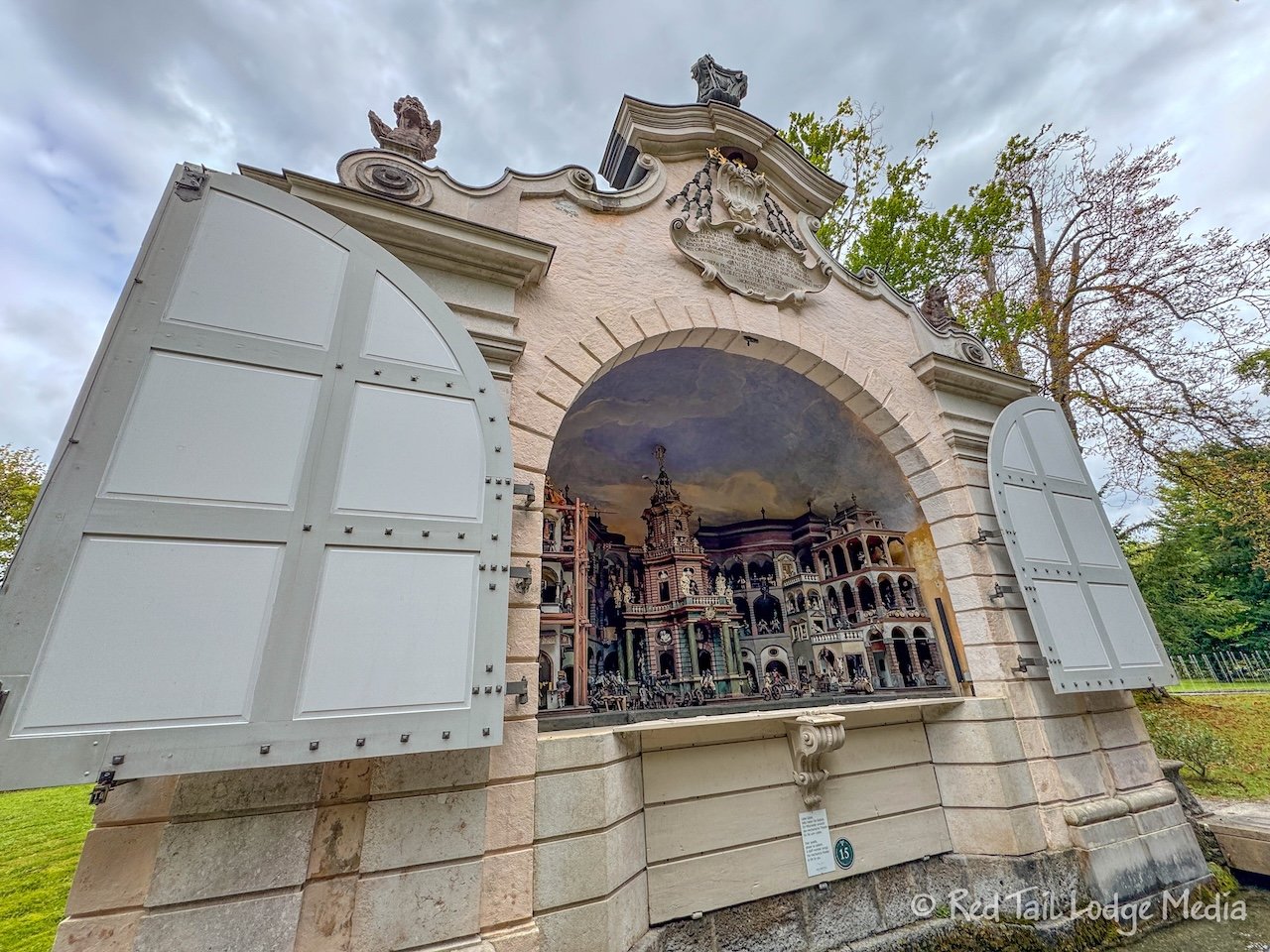
The trick fountains, which were built in the 17th and 18th centuries not only sprayed jets of water, but also used water to play sounds and move mechanical automata. We found the tour very entertaining, interesting, and fun.
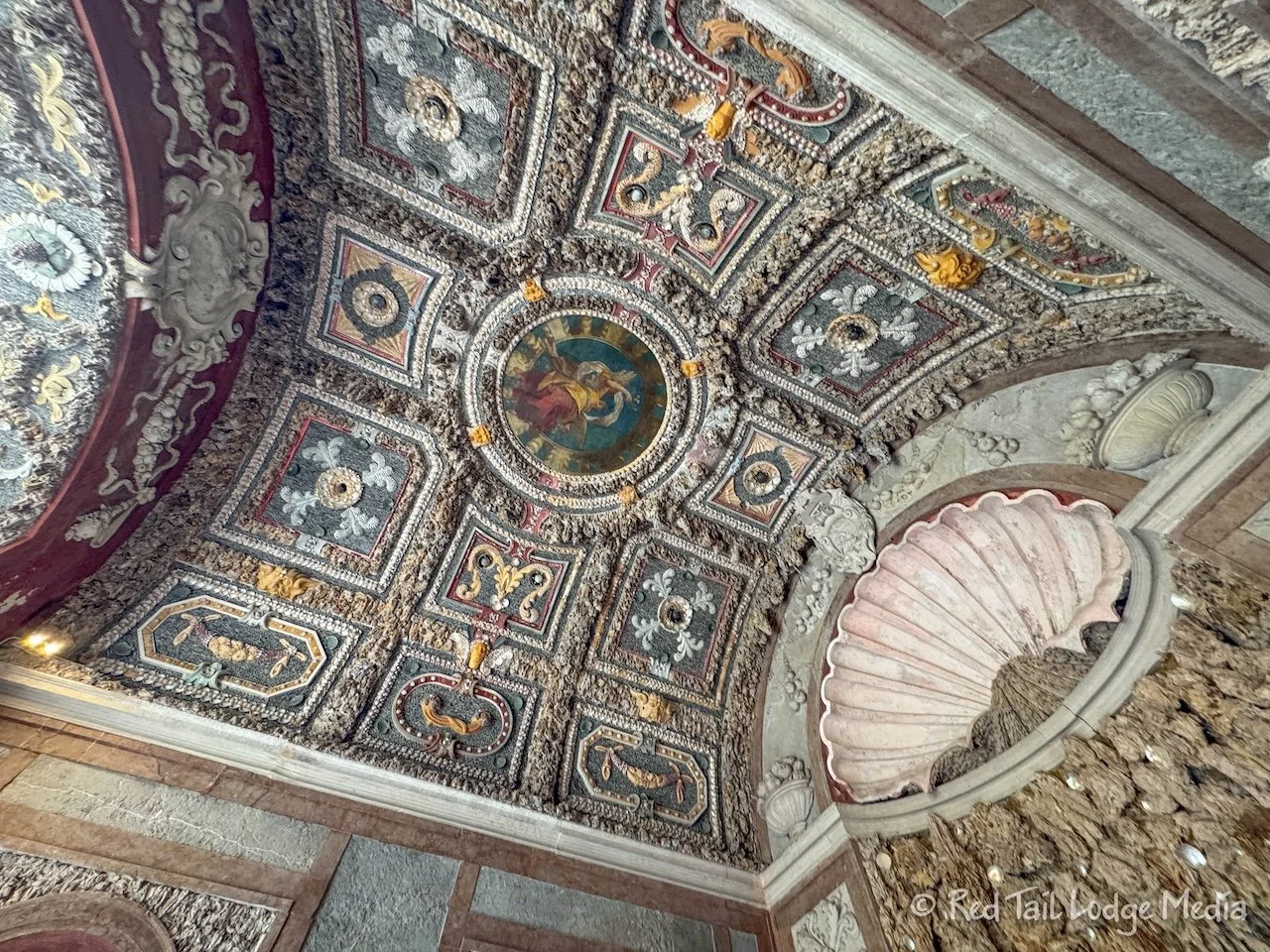
We decided to skip the two museums that were included with our ticket. Instead, we bought a couple of Cokes from the gift shop, then found a shaded bench in the park where we could enjoy our drinks and watch the fish and ducks in the pond.
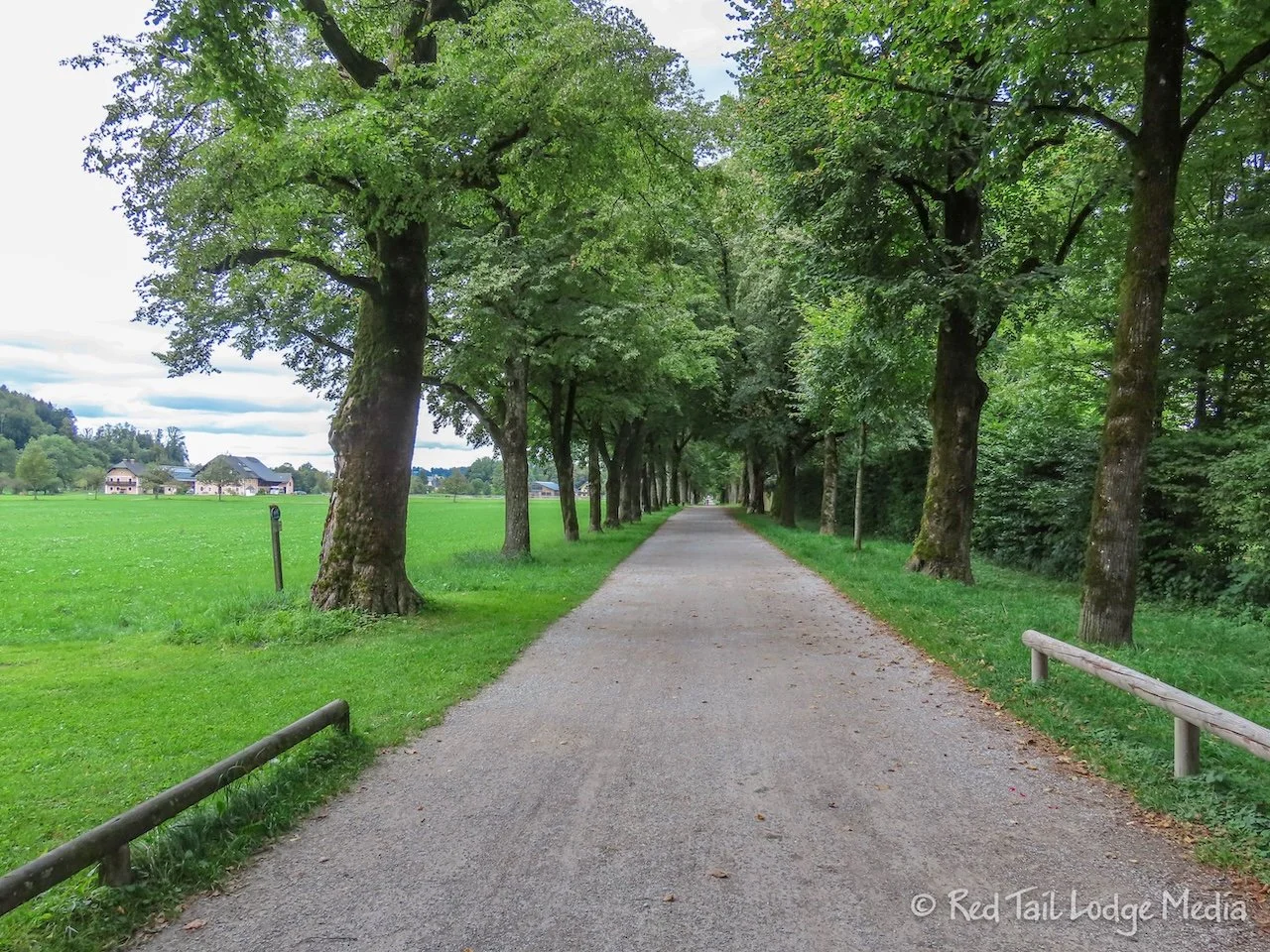
On our walk back to the Altstadt, we took a different route. This time we stayed on Hellbrunner Allee all the way to the end and then some. It was almost a straight path to the Karolinenbrücke (bridge). There were nice views of the Festung Hohensalzburg in the distance above us along the way.
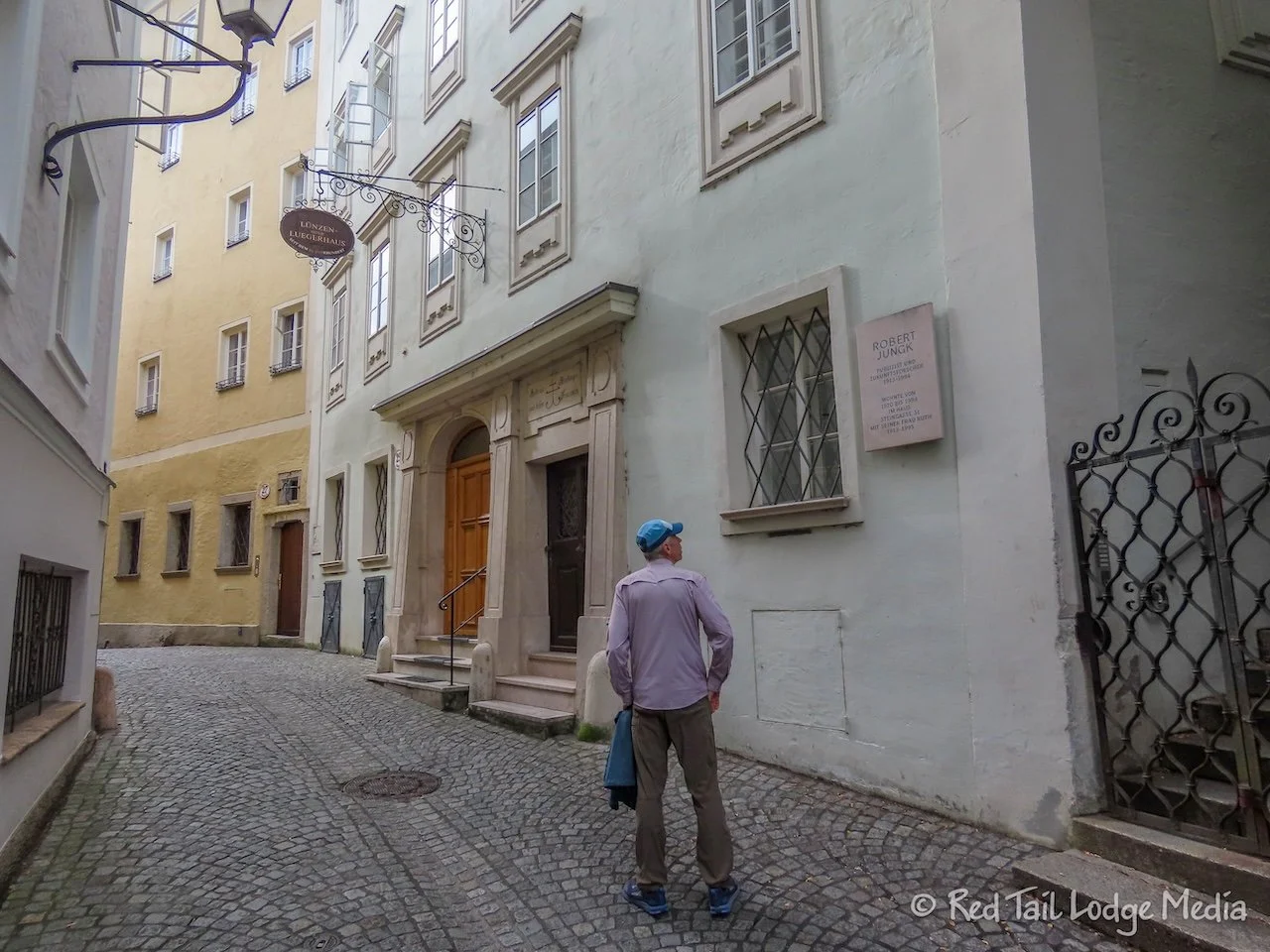
After crossing the bridge, we took Steingasse over to Staatsbrücke where we crossed back over the Salzach River, back into the Altstadt. Steingasse is a narrow street from medieval times. There isn’t much along the street, but it was different scenery that we hadn’t seen yet.
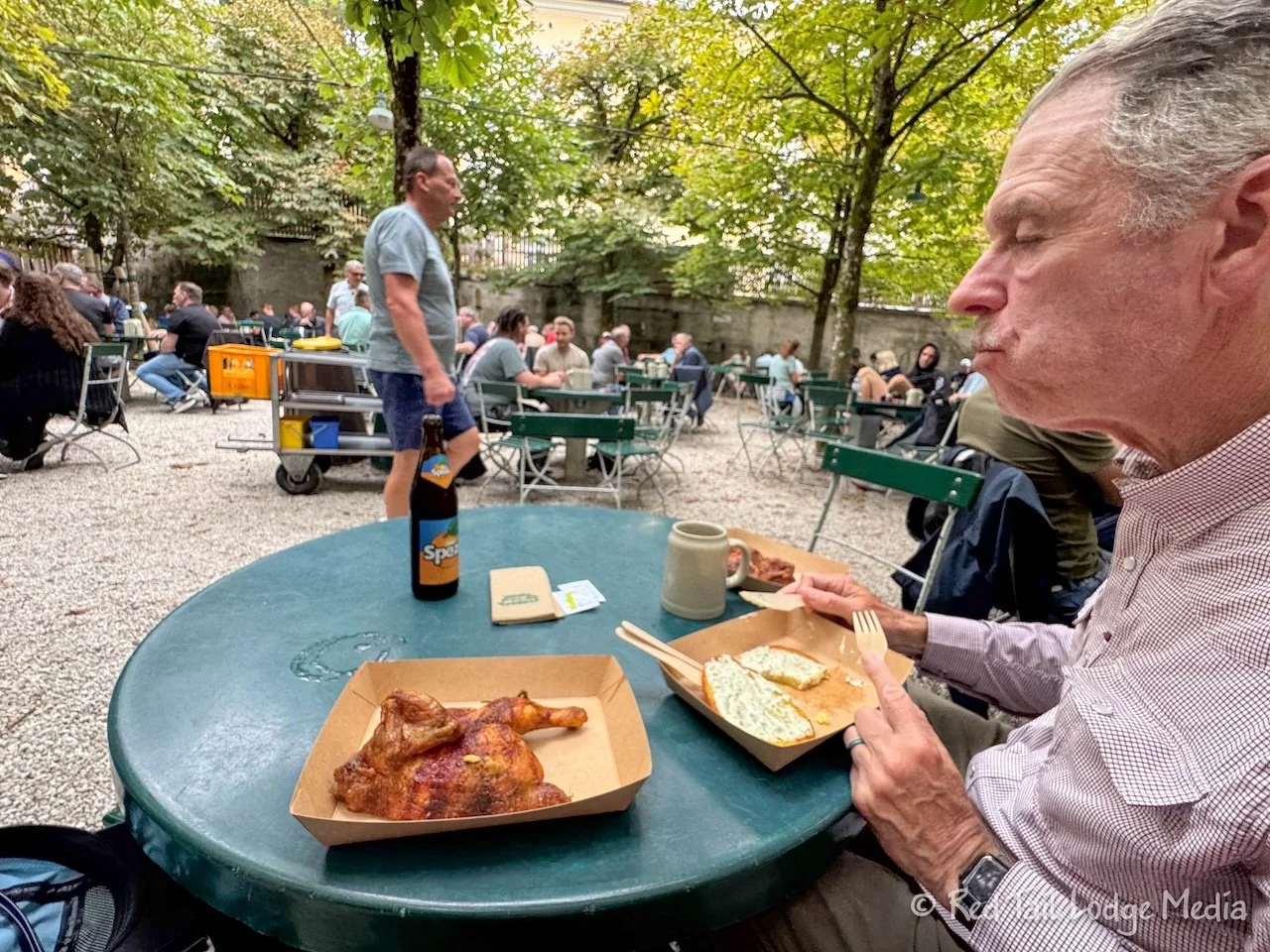
From there we continued along the river over to Augustinerbräu Salzburg for dinner. Augustinerbräu is not known for their food, but is a lively set of beer halls and a beer garden. There are several food stands with quite a variety of food. We opted for the halbes Hendl (half a chicken) along with Rösti and sour cream. Roasted half chicken is a typical dish served in beer gardens and at beer festivals. The crispy, salty skin of the chicken along with the flavor of the herbs which made its way from the inside of the chicken into the meat makes for a wonderful flavor. They tasted just like we remembered. Rösti is like a potato pancake or hash brown. These were not as good as they looked, but they filled our bellies.
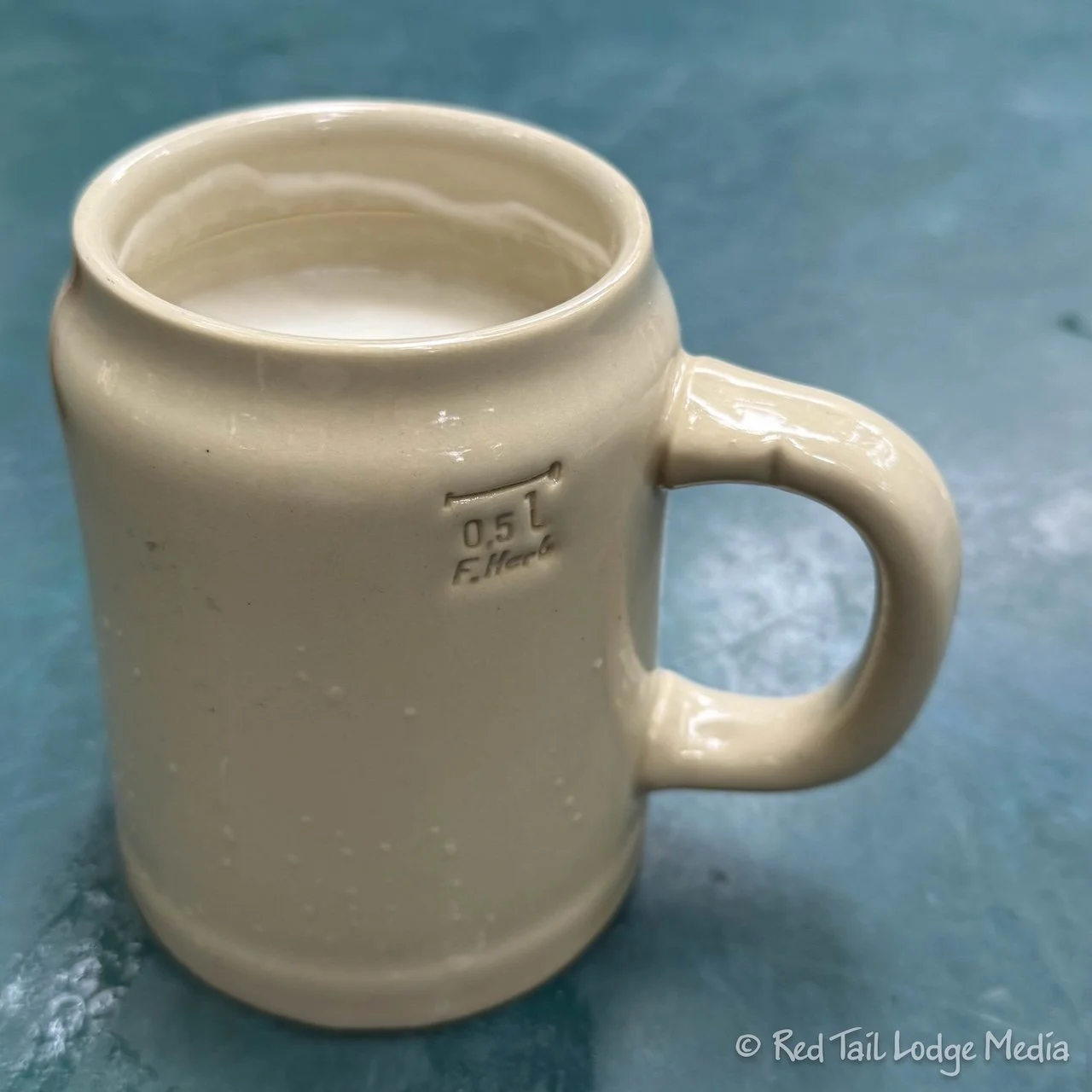
Drinks at the beer garden worked a little differently. First, you went to the cashier and paid for the drinks you wanted. Then you grabbed the size beer mug that you ordered, wash it out at a wash station, then hand your clean mug and ticket to the staff behind the counter who fill the mug for you. The non-alcoholic drinks are in bottles that you grab. Keith, of course, had a beer while Ann had a Spezi.
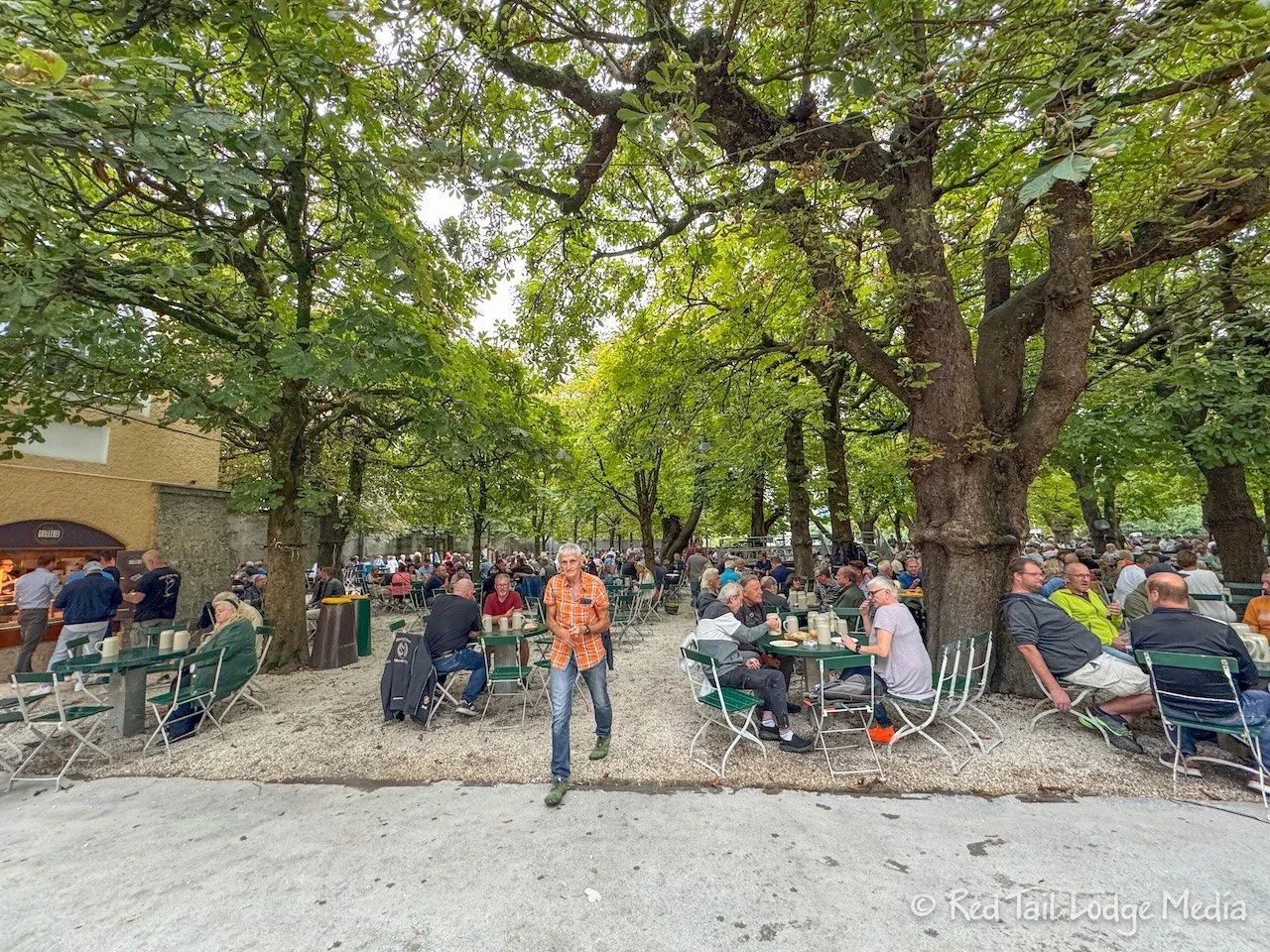
The place was hopping, but, surprisingly, it was not that loud given the number of people there. What was even more surprising, was when we left and got outside the building, you couldn’t hear any of the noises from the beer garden. You need to know that the beer garden exists and search for it, because you could walk by the building and not even know the beer garden was there.
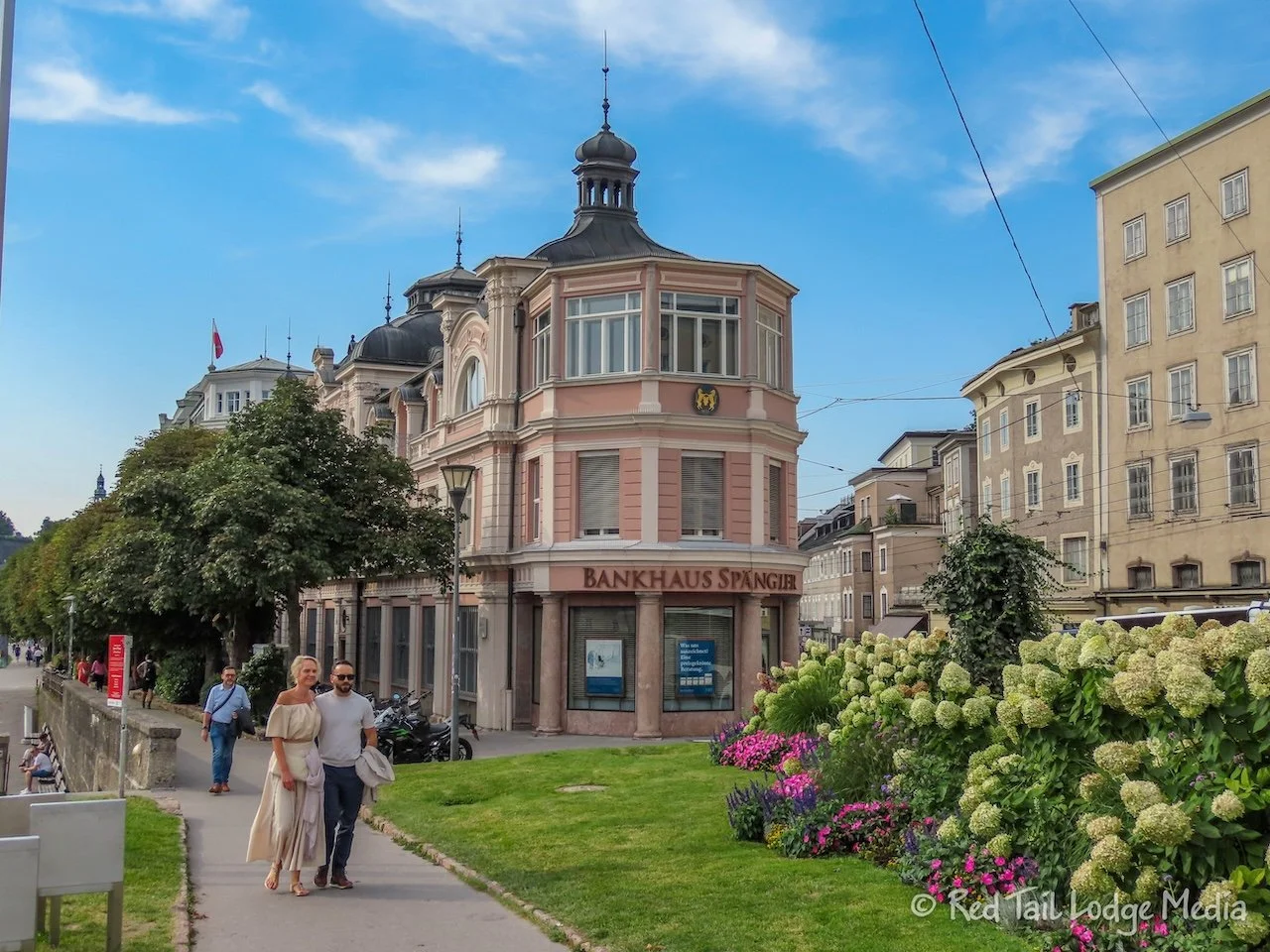
What we remember the most from our first visit to Salzburg was how rushed we were, trying to fit it as much as we could with the little amount of time we had. This time, we felt more relaxed, letting the place soak in, and getting to know the city better. You might even say that we adopted a more European approach to exploring the town.
Check out our related video: Salzburg, Austria
(Ann)