
Vienna, Austria - August 30th to September 2nd, 2025
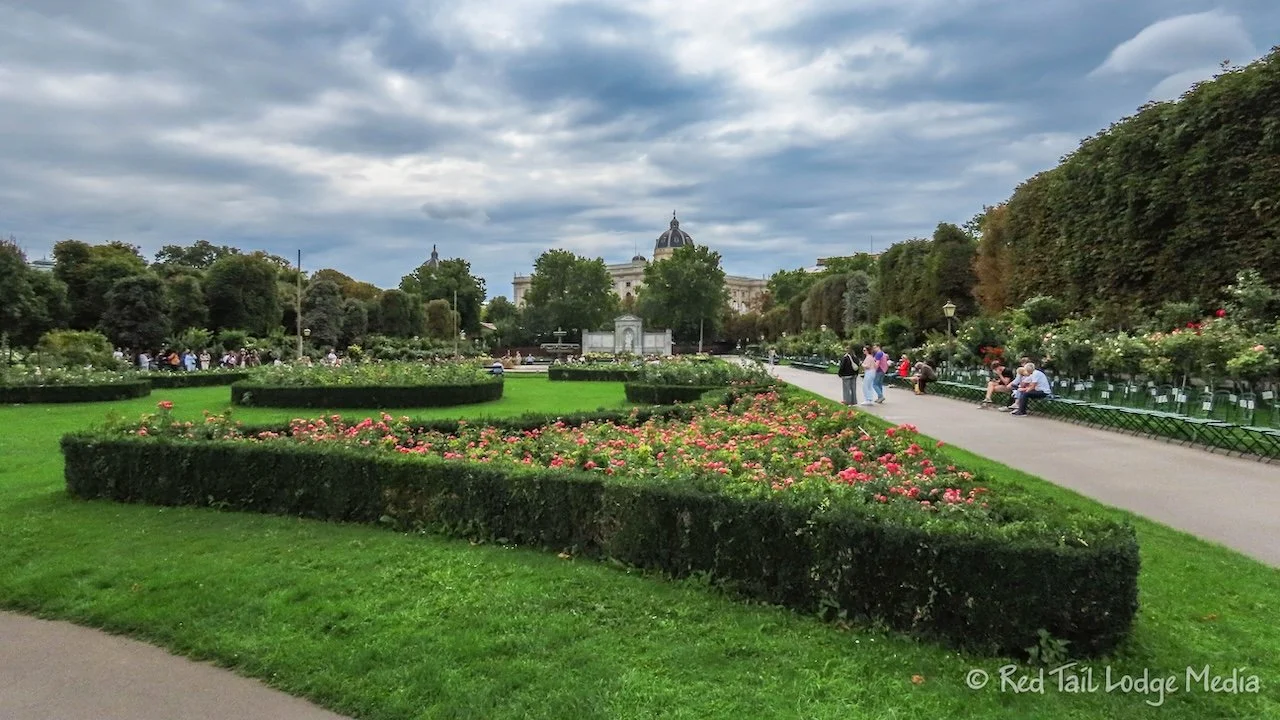
Vienna is the capital and largest city of Austria. Despite its large size, the historic inner city feels intimate and approachable. The old buildings, with their beautiful architecture, are interspersed with green spaces and parks, with ample seating, inviting you to come sit and relax for a while. We stayed for four nights right in the middle of it all, in Pension Neuer Markt, not far from Stephansdom (St. Stephen’s cathedral).
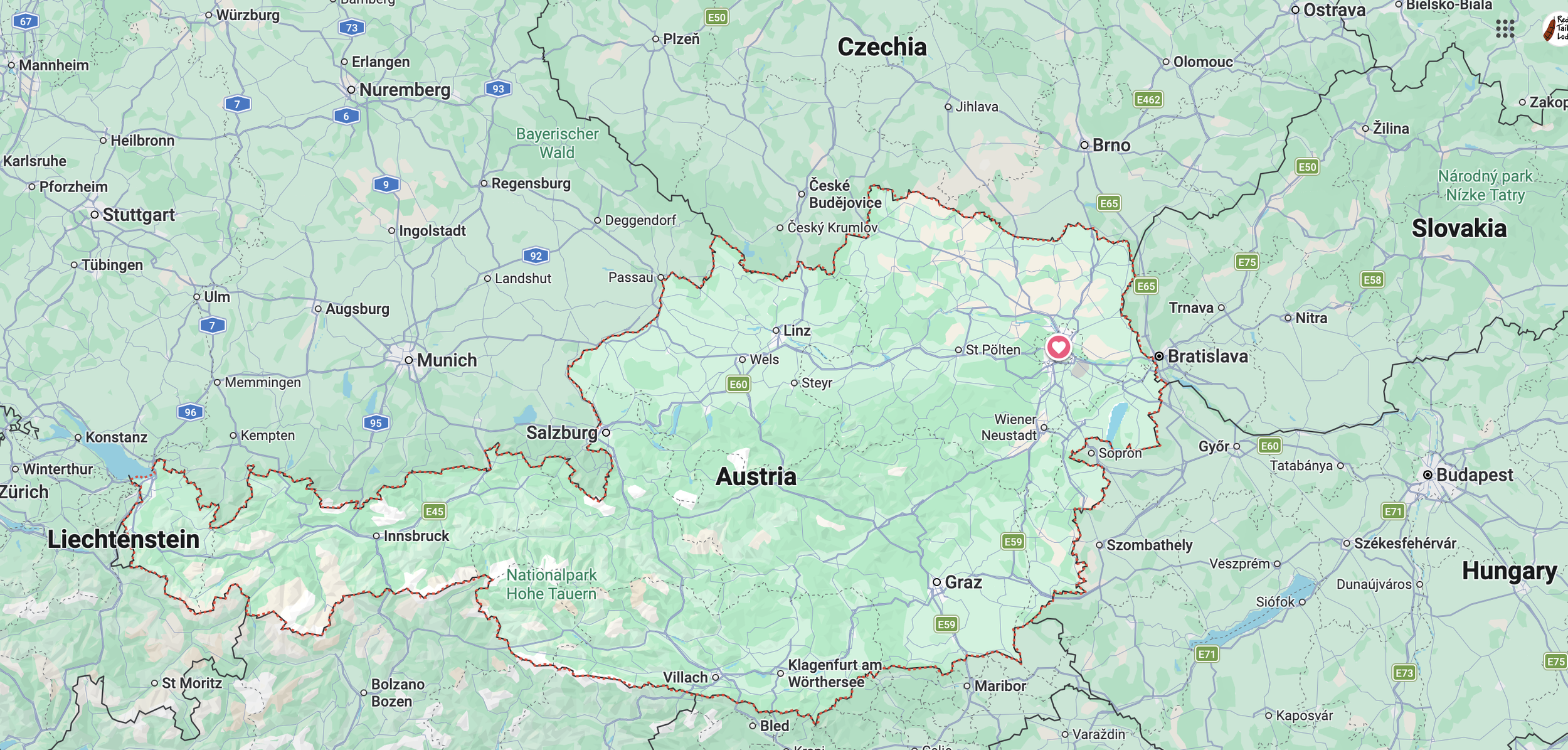
Saturday was a travel day from Salzburg to Vienna (Wien), both in Austria. Our train was scheduled to depart around noon, so we had a relaxing morning. We didn’t have to leave our room until 11 am.
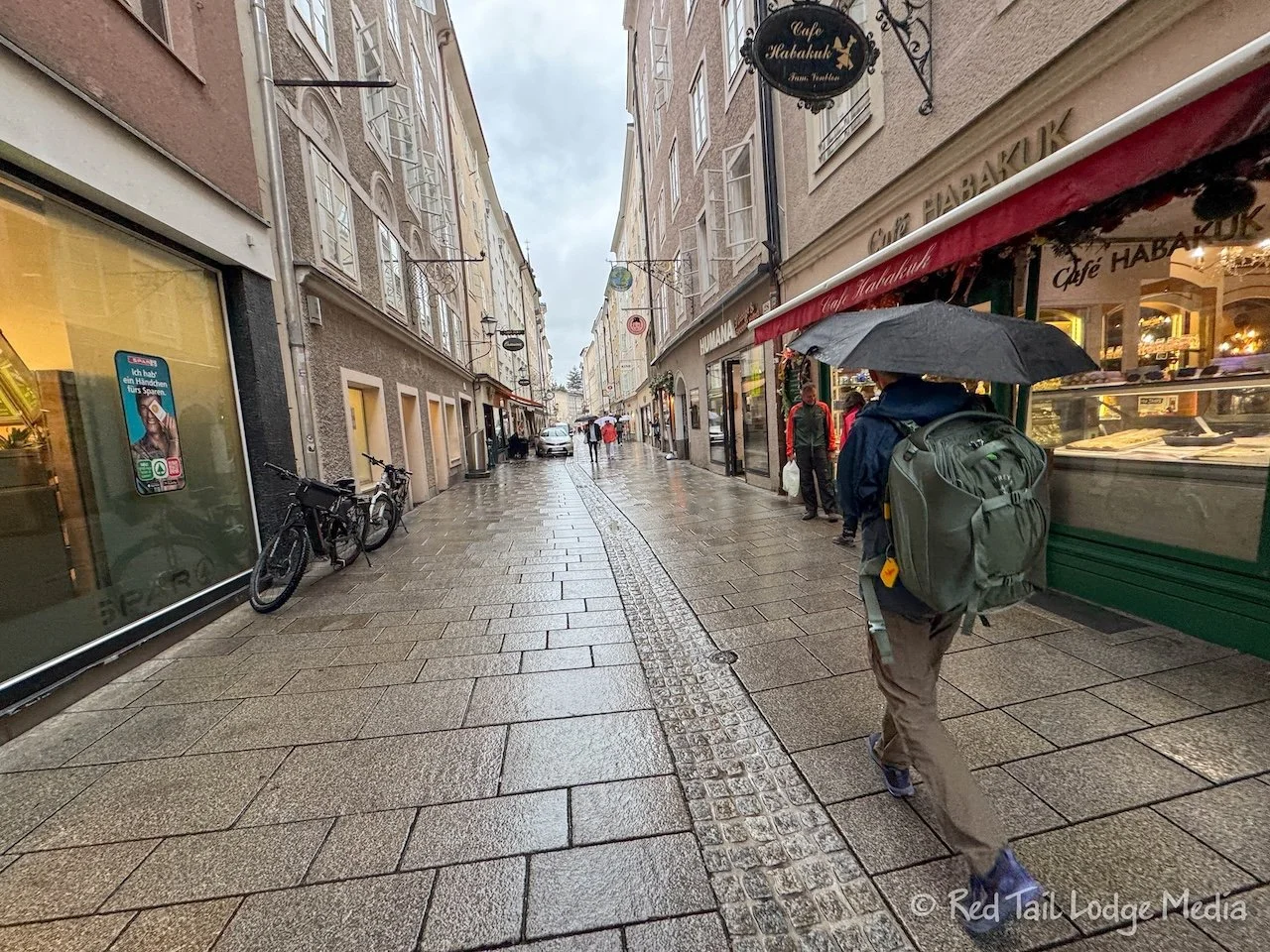
We checked out about 10:45 am and started our walk over to the Hauptbahnhof (main train station). It should have only been a 15 minute walk. However, Ann was looking at the map the day before and thought we could head up Linzer Gasse. It was pouring down rain, so we didn’t bother pulling out our phones to double check. When we finally did pull out our phones, we realized that Ann had misread the map and we were heading in the wrong direction. So it took us twice as long to get to the train station, in the pouring down rain. Even with our umbrellas, we got pretty wet, including our luggage. Of course, once we arrived at the station and were under roof protection, the rain stopped.
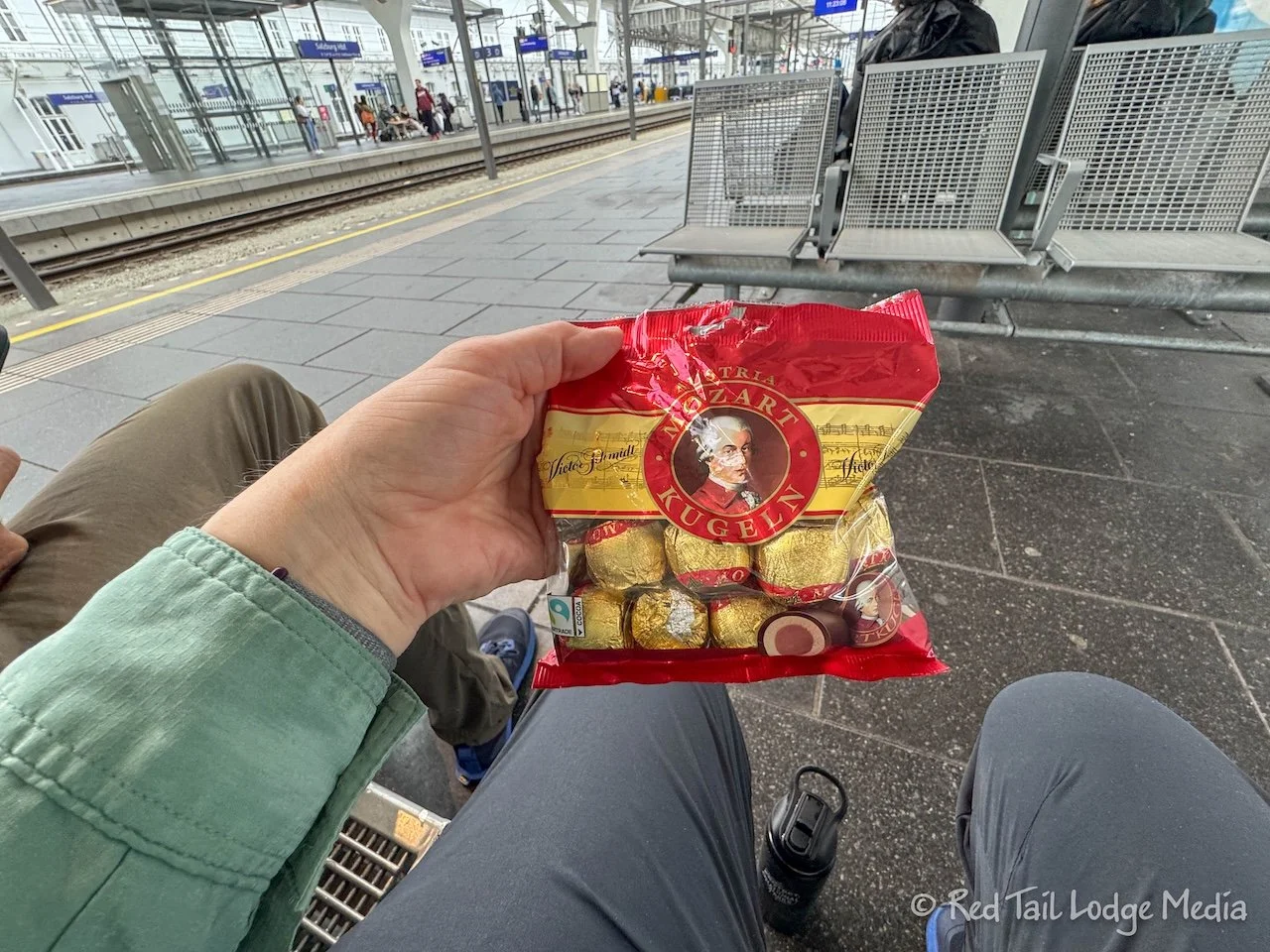
At least Ann was able to stop along the way and pick up a small bag of Mozart Kugeln (balls). Mozart Kugeln are a confection consisting of a nougat, wrapped inside marzipan mixed with pistachios, then coated with dark chocolate. Marzipan is a sweetened almond paste popular in European candies and treats. Mozart Kugeln were created in Salzburg in 1890 by Paul Fürst. They are still made by his descendants.
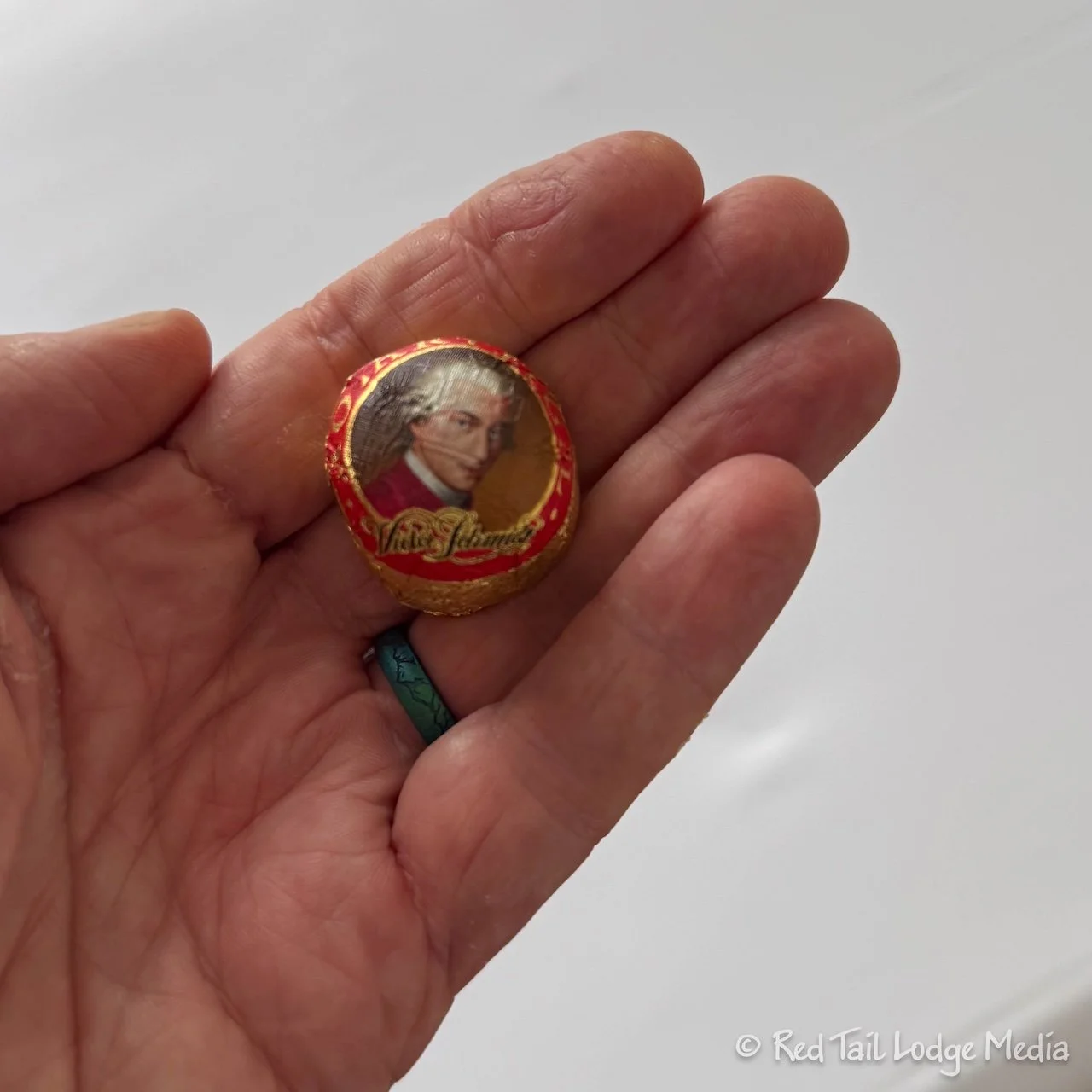
There seemed to be at least one shop in every block of Salzburg selling Mozart Kugeln. In our opinion, the predominant flavor of Mozart Kugeln is marzipan. And we didn’t have to buy them in Salzburg, as we later saw many shops in Vienna also selling them.
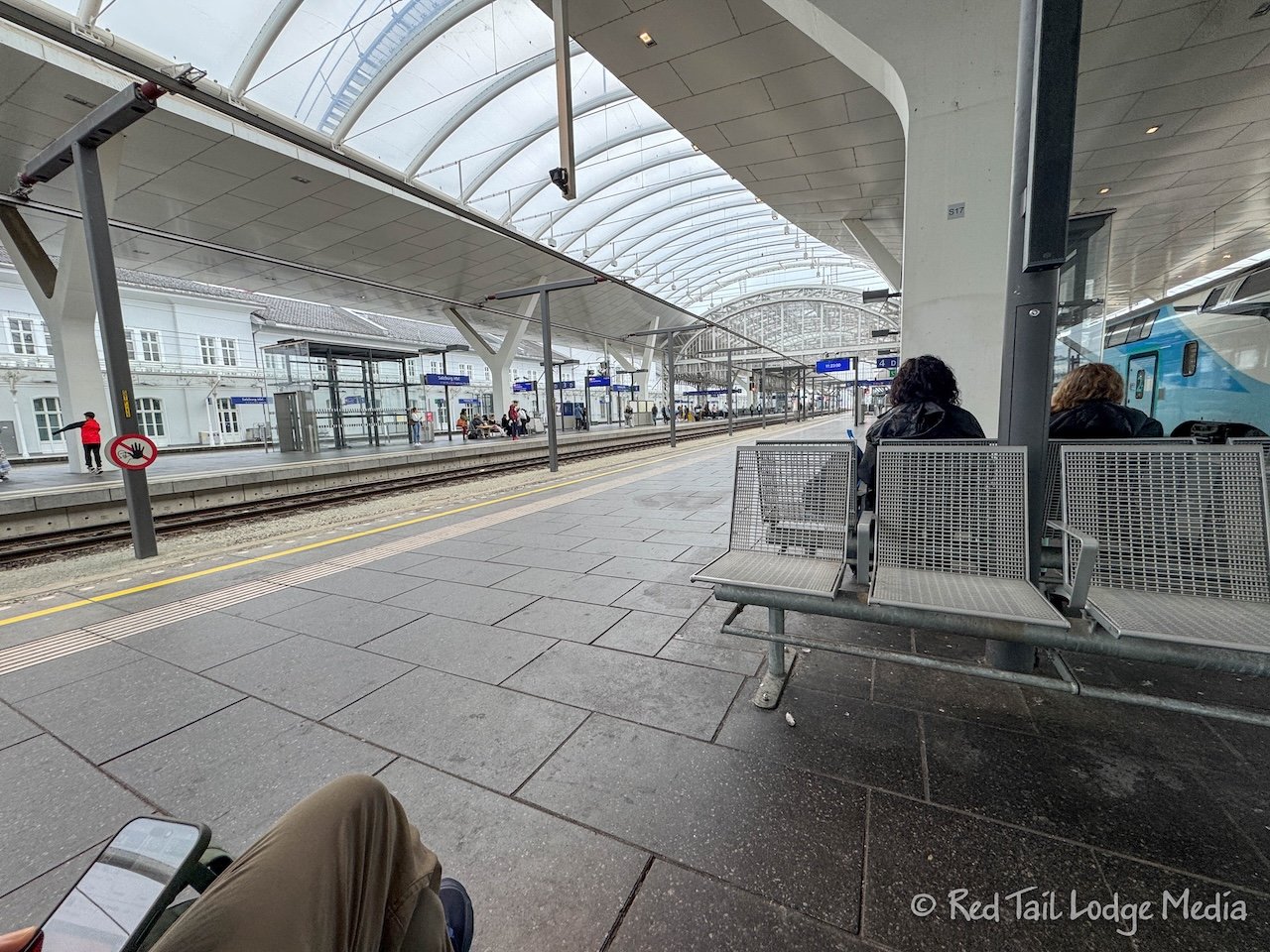
Thank goodness we had left with plenty of time to spare, so we were not in danger of missing our train. In fact, the train was 30 minutes late, so we sat on a bench on the platform, trying to dry out.
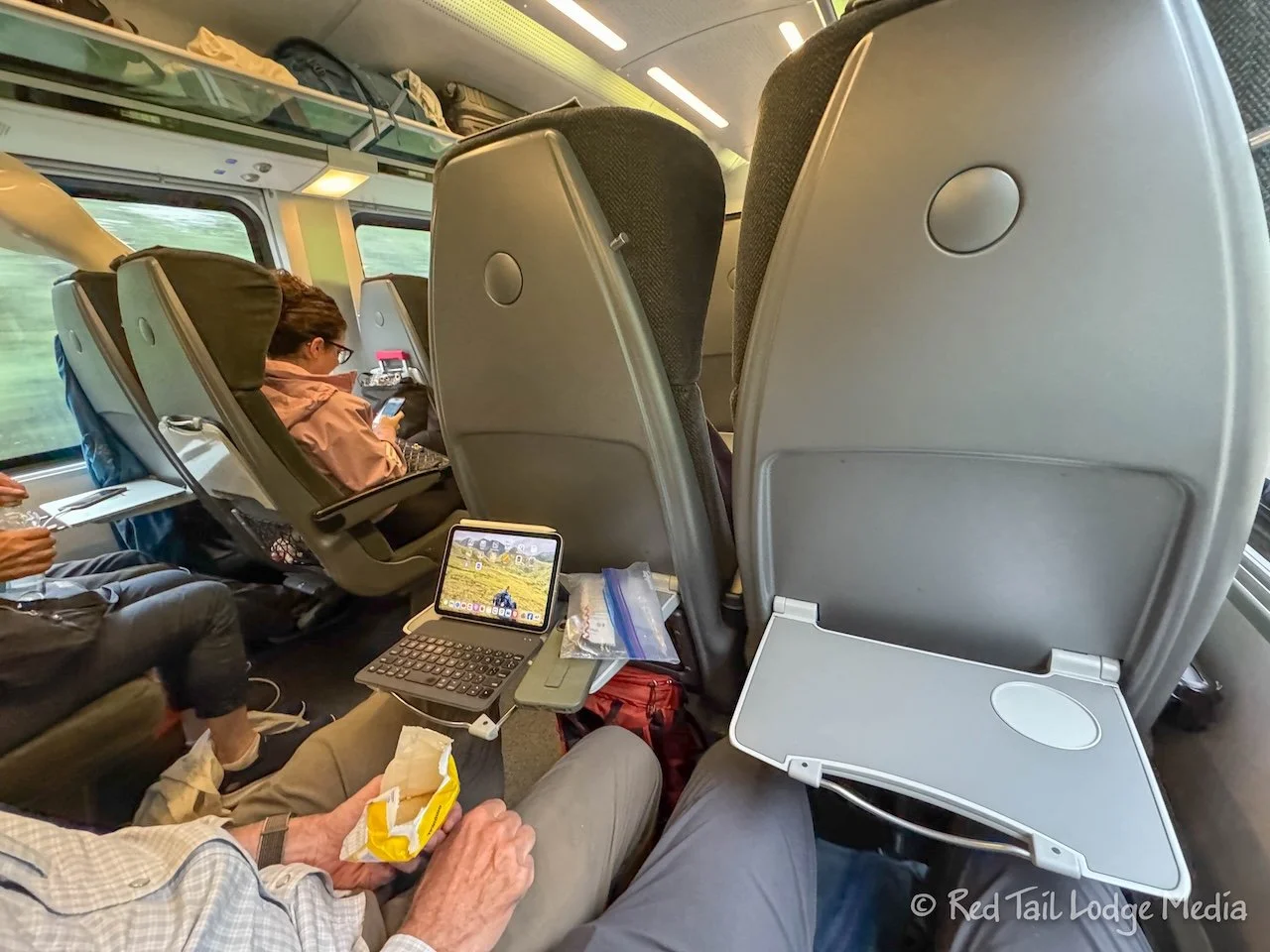
Our train left the station 30 minutes late, then, instead of making up time on our way to Wien, we lost time. So we arrived in Wien almost an hour late. Thankfully, it was a direct train, so we didn’t need to worry about missing any connections.
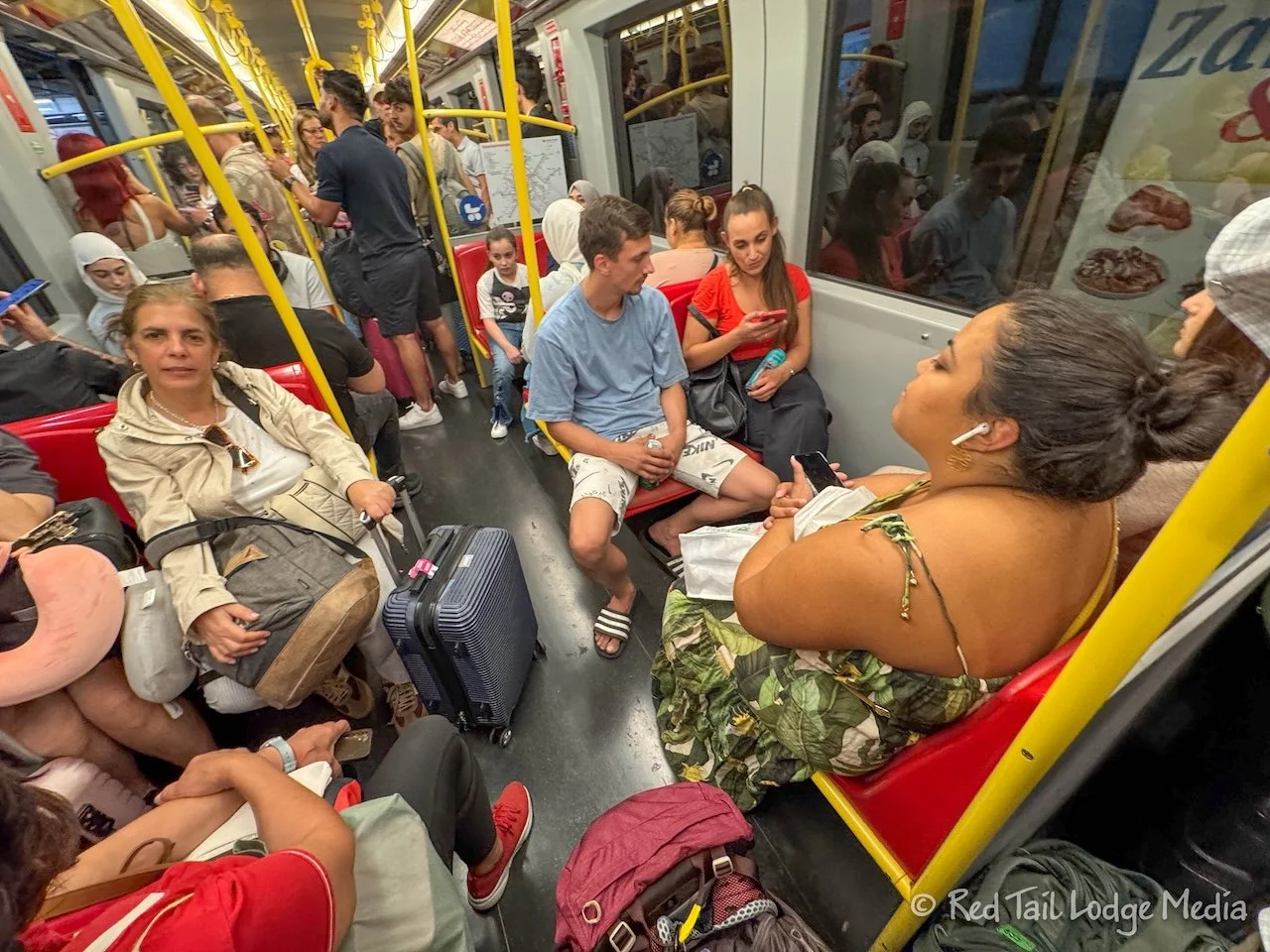
The Wien Hauptbahnhof is not located in the center of town where our hotel was, so we had to take a short U-Bahn ride to get to Stephansplatz (Stephan’s Square). It was easy enough to get a ticket from the machine before boarding.
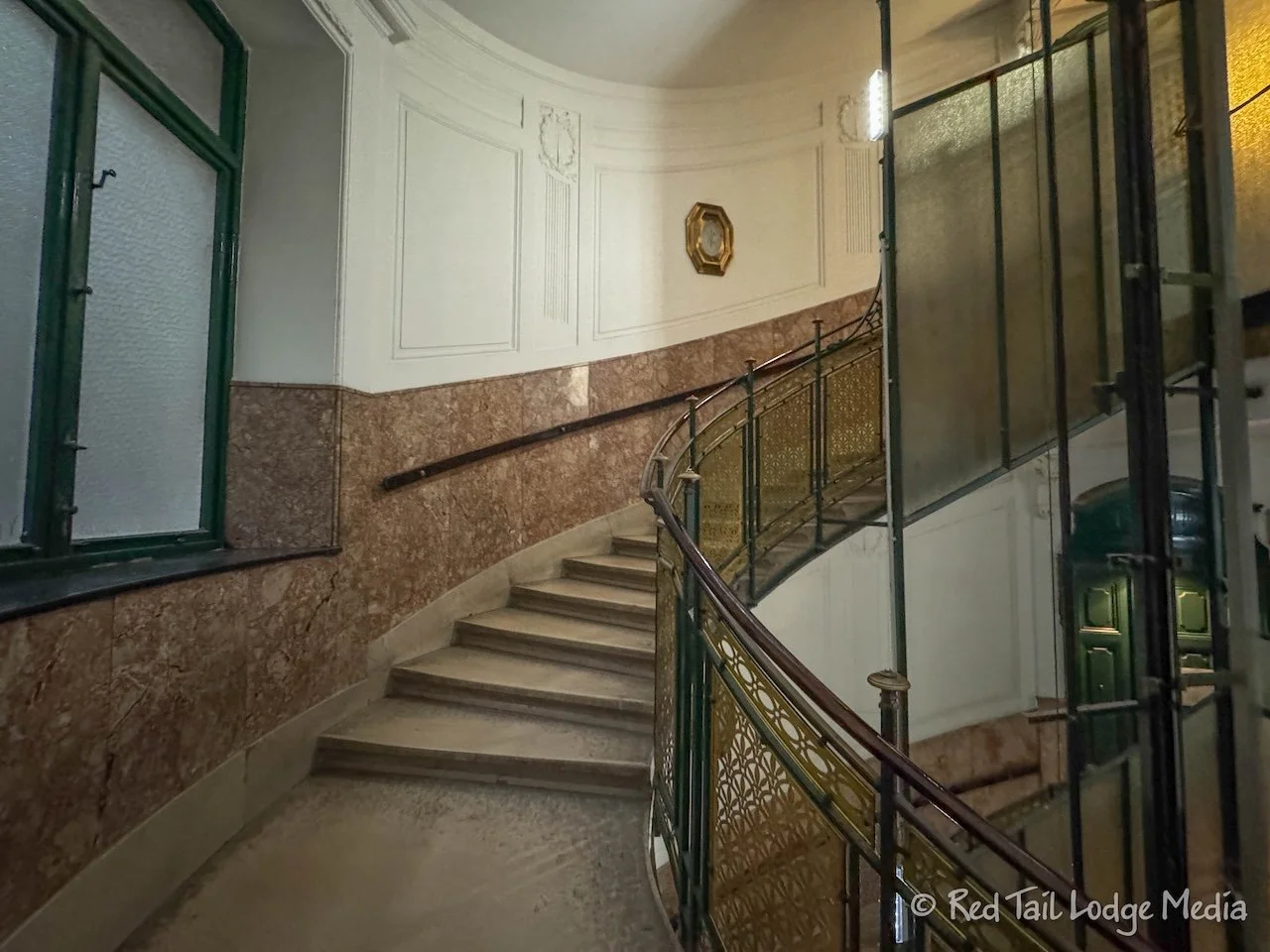
Our accommodations for the next four nights was Pension Neuer Markt. It is located in one of the old, tall buildings just a few blocks from Stephansplatz. Once inside the building, it was three flights of stairs up to the hotel reception. There was a small elevator in the middle of the large spiral staircase, but we just walked up.
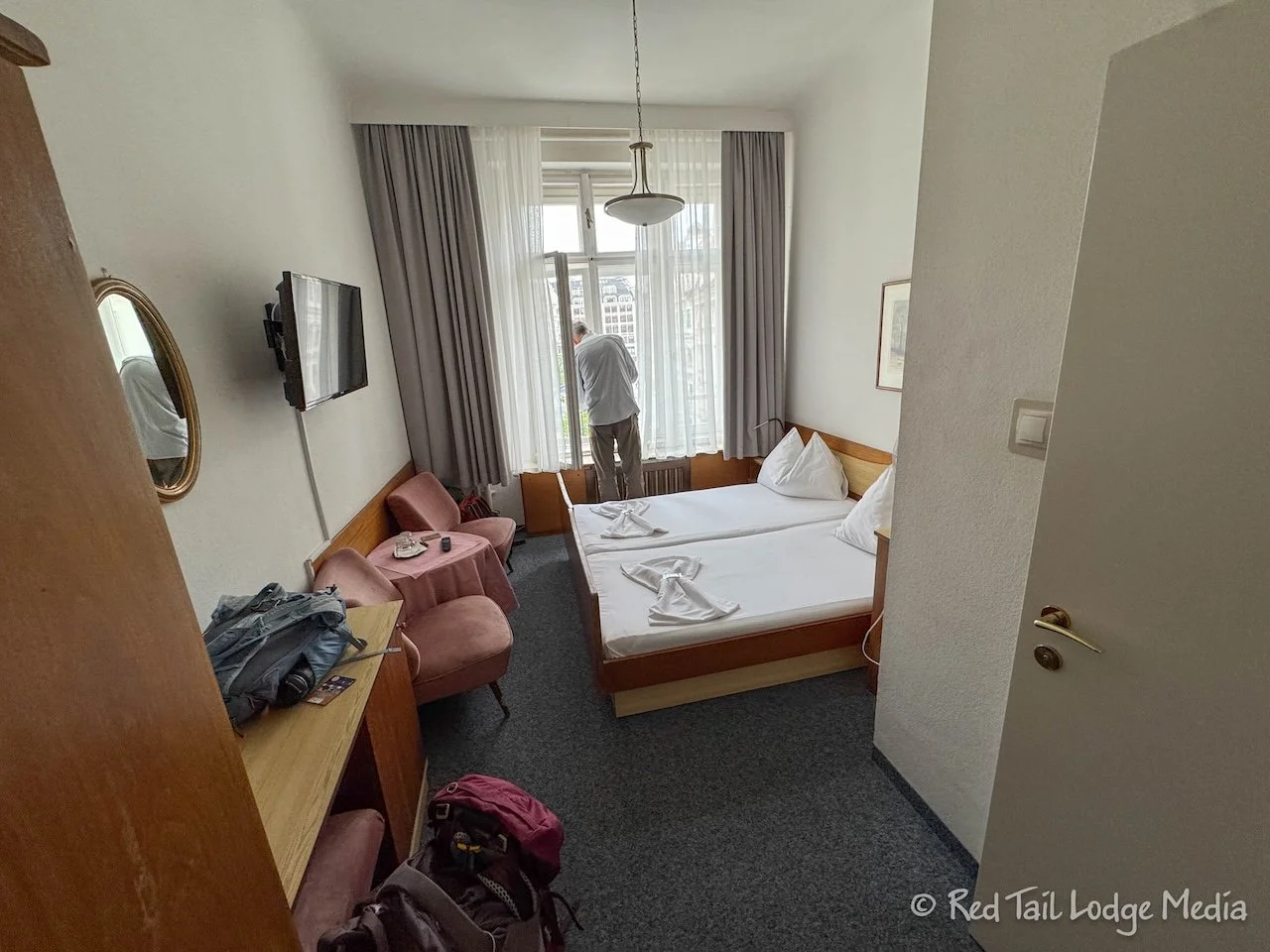
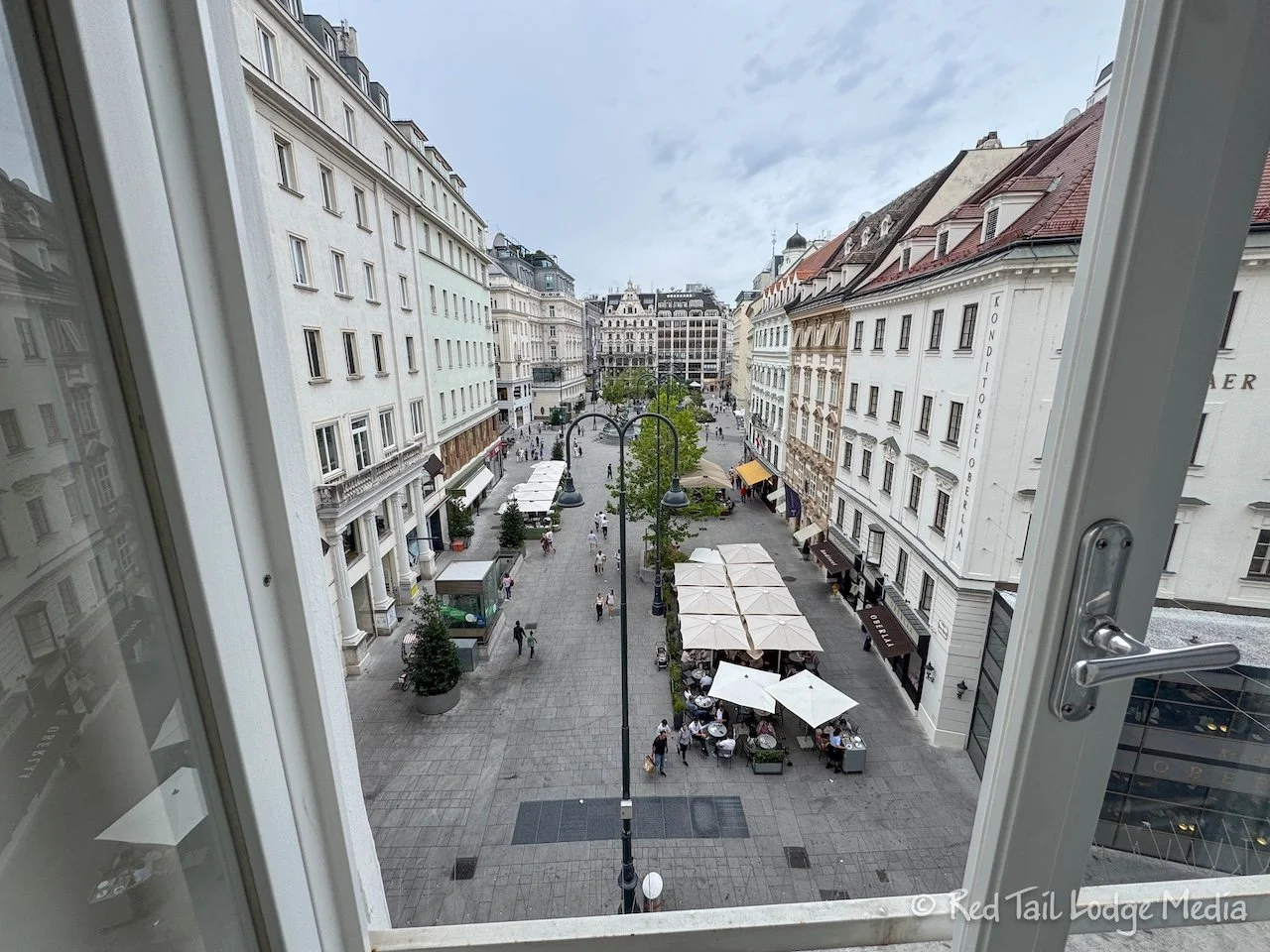
Our room was small, especially the bathroom, and well worn, but it was clean and functional. There was no air conditioning, just like Salzburg, but there was a fan and large windows that opened. The view out the windows looked down onto the street Neuer Markt, with a large decorative fountain in the middle.
While in Vienna, Keith wanted to attend another music concert. He looked up the concerts in Stephansdom (Stephan’s Cathedral). The only night there was an available ticket was later that evening at 8:30 pm. So he bought them.
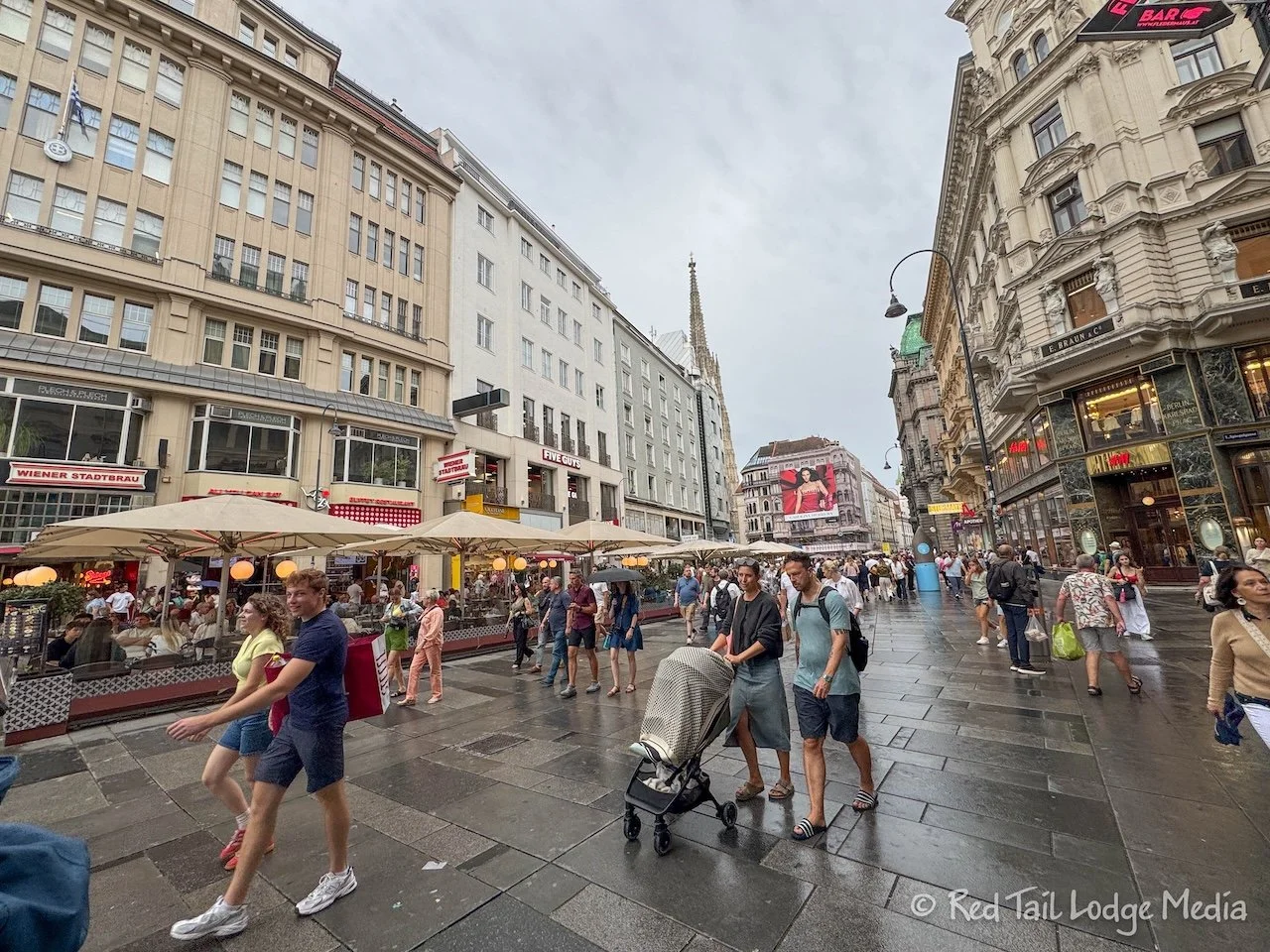
For dinner, we walked over to Reinthaler’s Beisl, a traditional Austrian restaurant just a few blocks away. We sat at an outside table. It rained a little bit while we ate, but the table umbrella’s protected us fairly well.
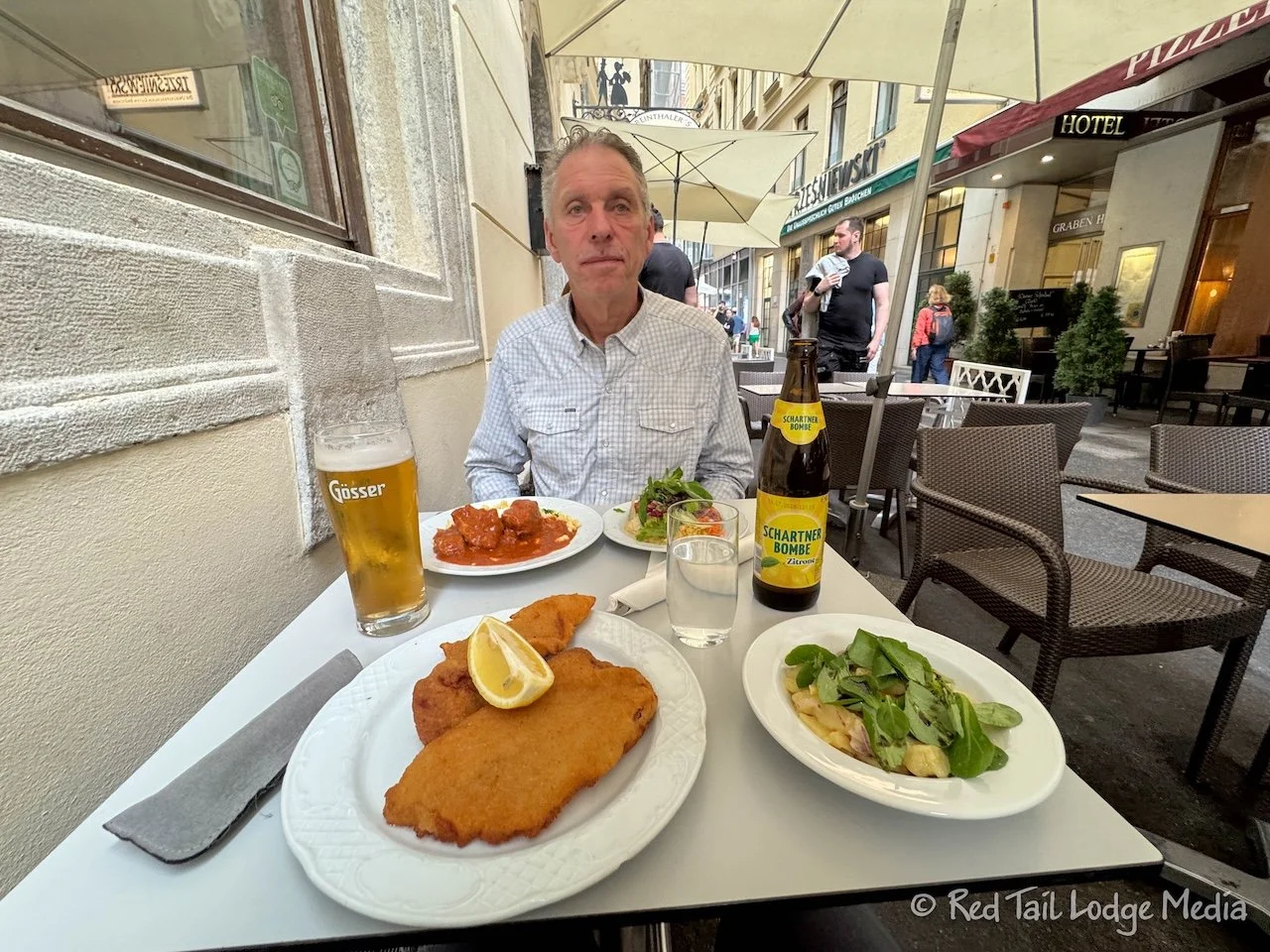
Keith had the Kalbgulasch (veal goulash) with spätzle along with a gemischter Salat (mixed salad). Ann ordered the Wiener Schnitzel (Viennese cutlet) which came with a potato salad. It seemed like the thing to order in Wien. Spätzle is a small dumpling which is a common side dish in Austria, Switzerland, and southern Germany. Wiener Schnitzel is a veal cutlet, breaded and fried. The veal is pounded out thin and the breading puffed up from being fried. The potato salad was different from any kind Ann’s had before. She believes it was mixed with onions along with spinach leaves on top with pumpkin seed oil. The food was tasty.
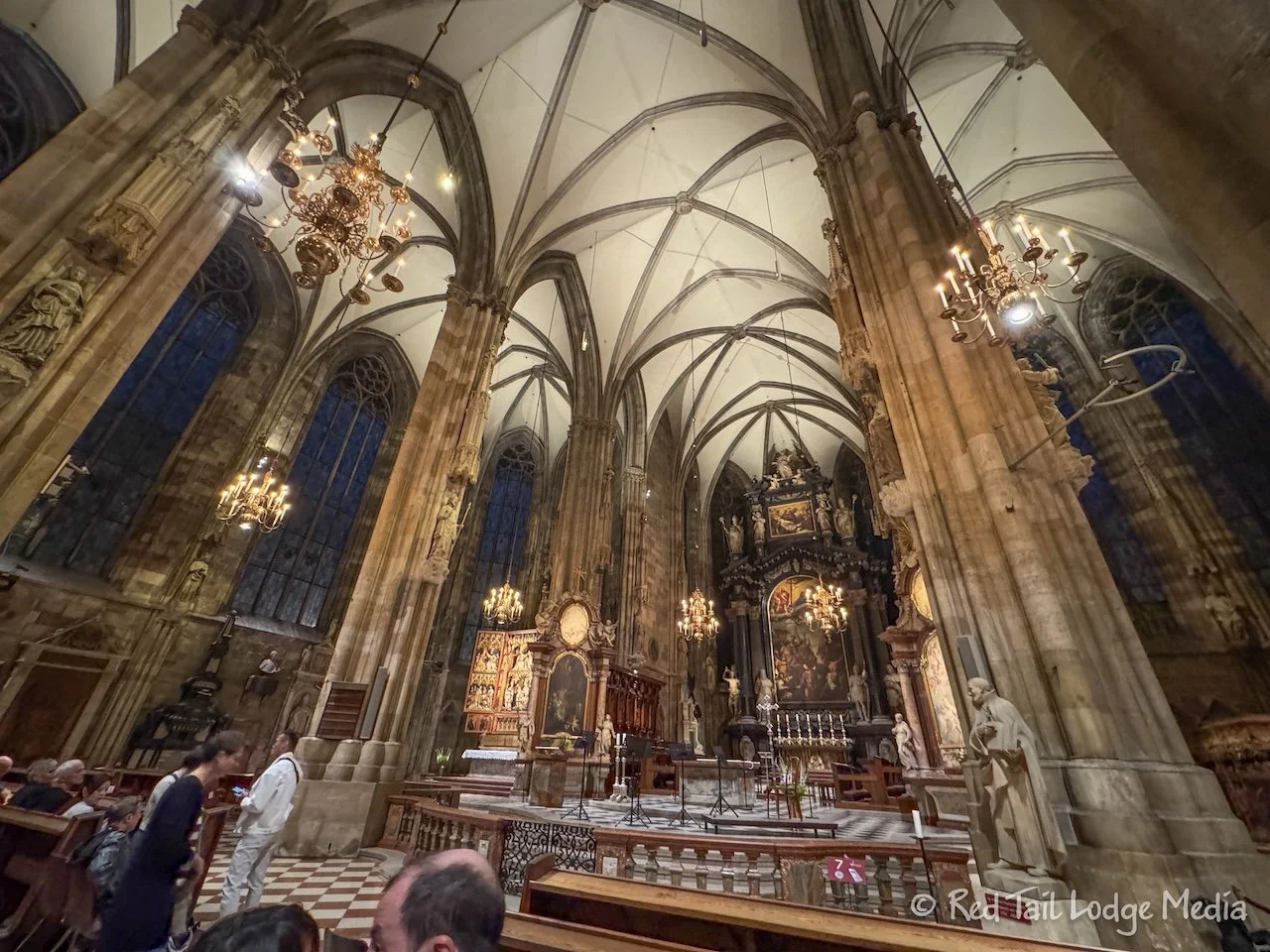
The concert was the Antonio Vivaldi Die Vier Jahrezeiten (Vivaldi’s Four Seasons) performed by Harmonia Ensemble Wien. The musicians were a talented string quintet. The music lasted about an hour. Keith thoroughly enjoyed the concert as he is a fan of Vivaldi. Ann appreciated the music, but classical music is not her style, and the uncomfortable church pews are not her style either. An hour satisfied us both.
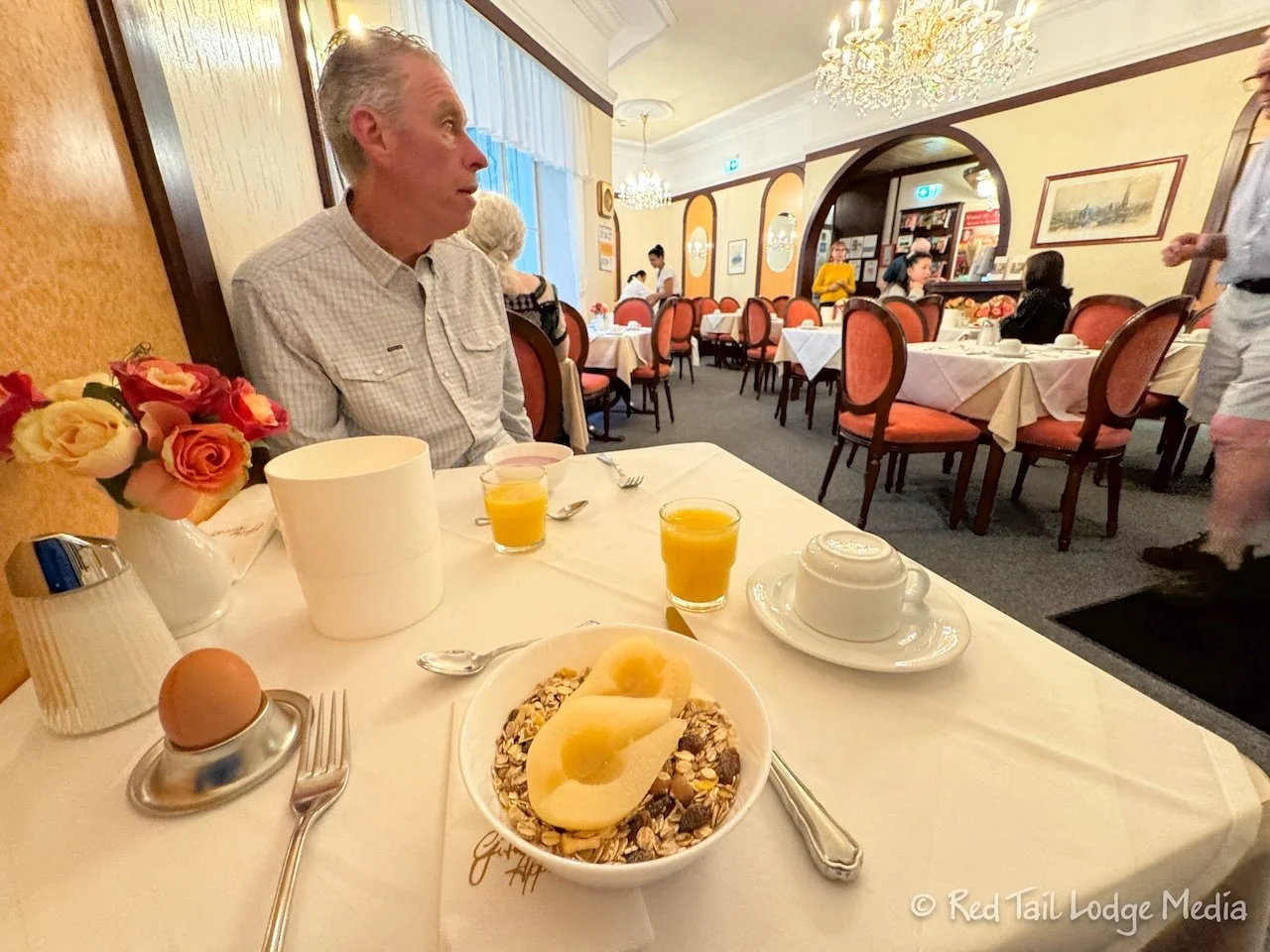
Sunday, our first full day in Wien, we spent most of the day walking the Ring Strasse. We took our time in the morning, enjoying a nice breakfast at our hotel, so it was almost lunch time by the time we got started. So our first order of business was lunch.
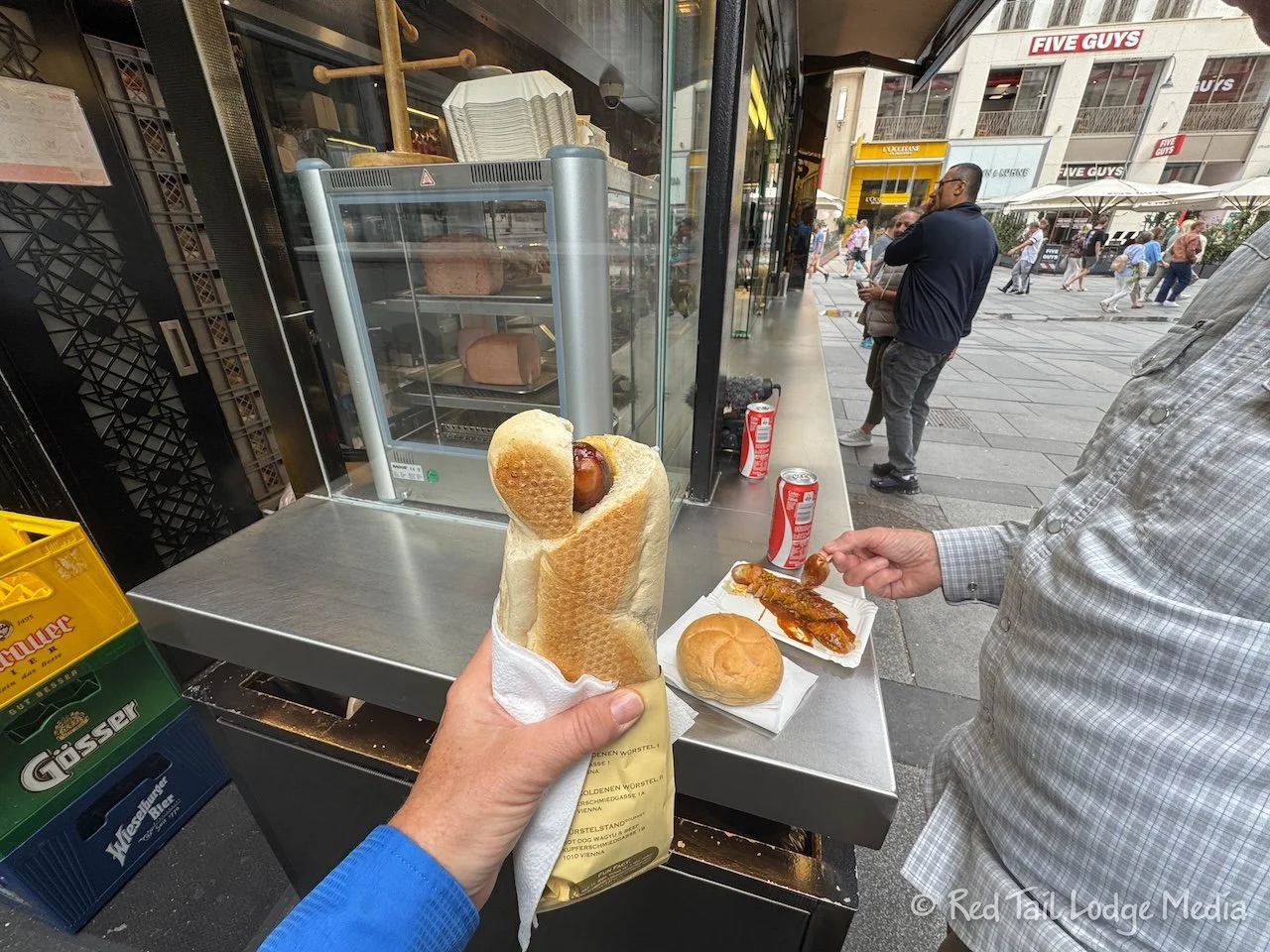
There are a couple of wurst stands about a block from our hotel (as well as all over the city). The one we picked out was called “Zum goldenen Würstel” (“to the golden sausage”). Keith ordered a curry wurst, which is a sausage sliced up on a plate and covered with a curry sauce, which is a mixture of ketchup and curry powder. Curry wurst is very popular in Berlin. Ann got the Waldviertler Wurst, which was a local, smokey sausage. She had hers in a bun. The end of a long bread roll was cut off, then the bread was stuck onto a long metal spike, which we’re assuming toasted the inside of the bread a little. Then your desired condiments, such as mustard, were squeezed into the hole of the bread, and the sausage was then stuffed into the hole and the little piece of bread that was cut off was stuck on top. It was pretty tasty and the sausage had a nice “snap” to it.
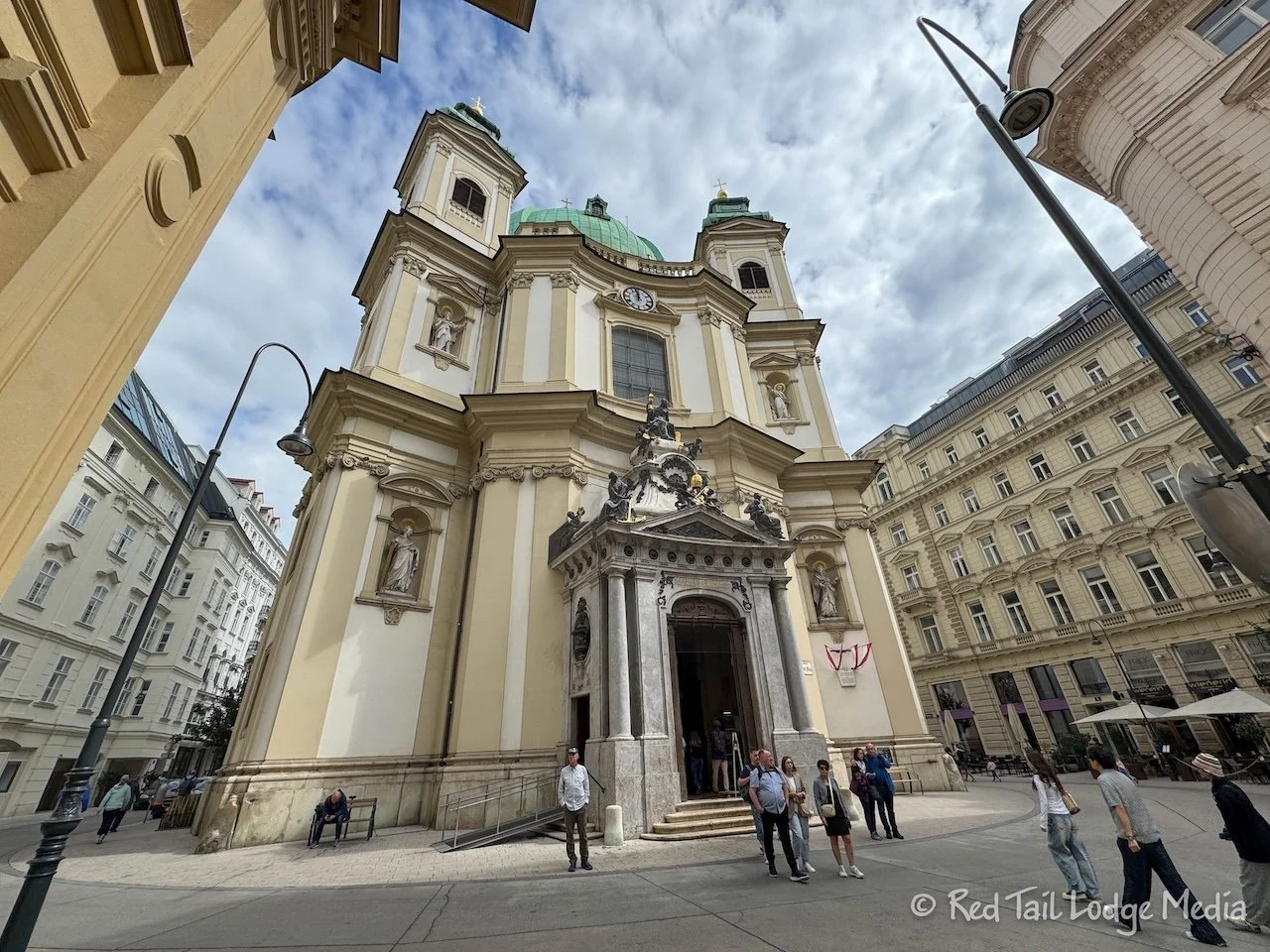
From there, we visited Peterskirche (St. Peter’s Church), then headed for Schloß Hofburg (Hofburg Palace). Most of the palace contains museums and government offices along with the Spanish Riding School known for the Ballett der Weißen Hengste (Ballet of the White Stallions) on their Lipizzanner horses. We skipped the museums and continued on to the Ring Strasse after taking a peak at the excavated Roman ruins in Michaelerplatz.
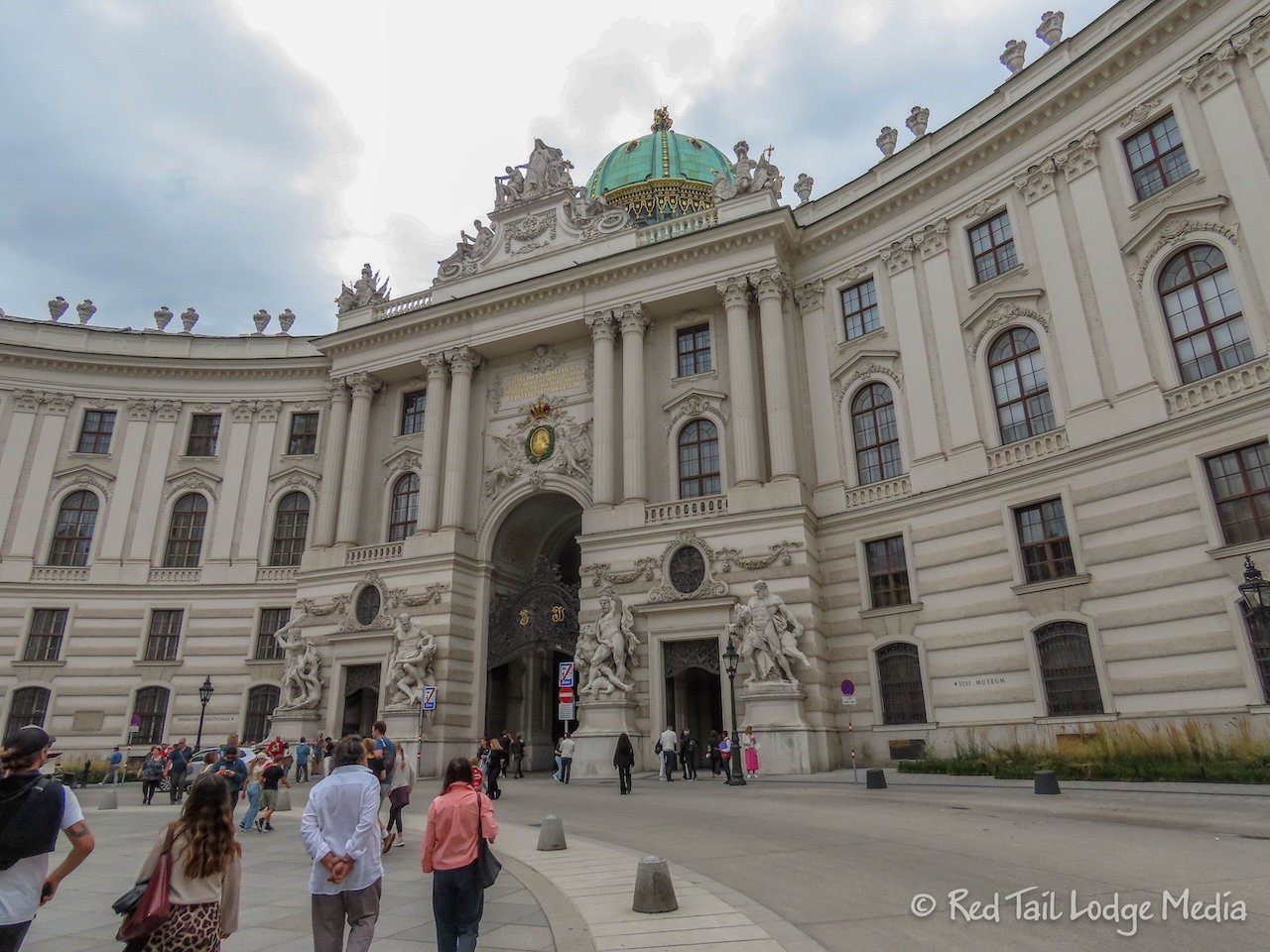
There is no single street named Ring Strasse, but it is a serious of streets that form a ring around the old inner city. By Hofburg, the street is named Burgring (castle ring). Going in the clockwise direction, the streets are Universitätsring (university ring), Schottenring (Scotts ring), Franz-Josefs-Kai, Stubenring (shops ring), Parkring (park ring), Schubertring, Kärntnerring (Carinthian ring), and Opernring (opera ring). The name of the street reflects the sights that you are going by.
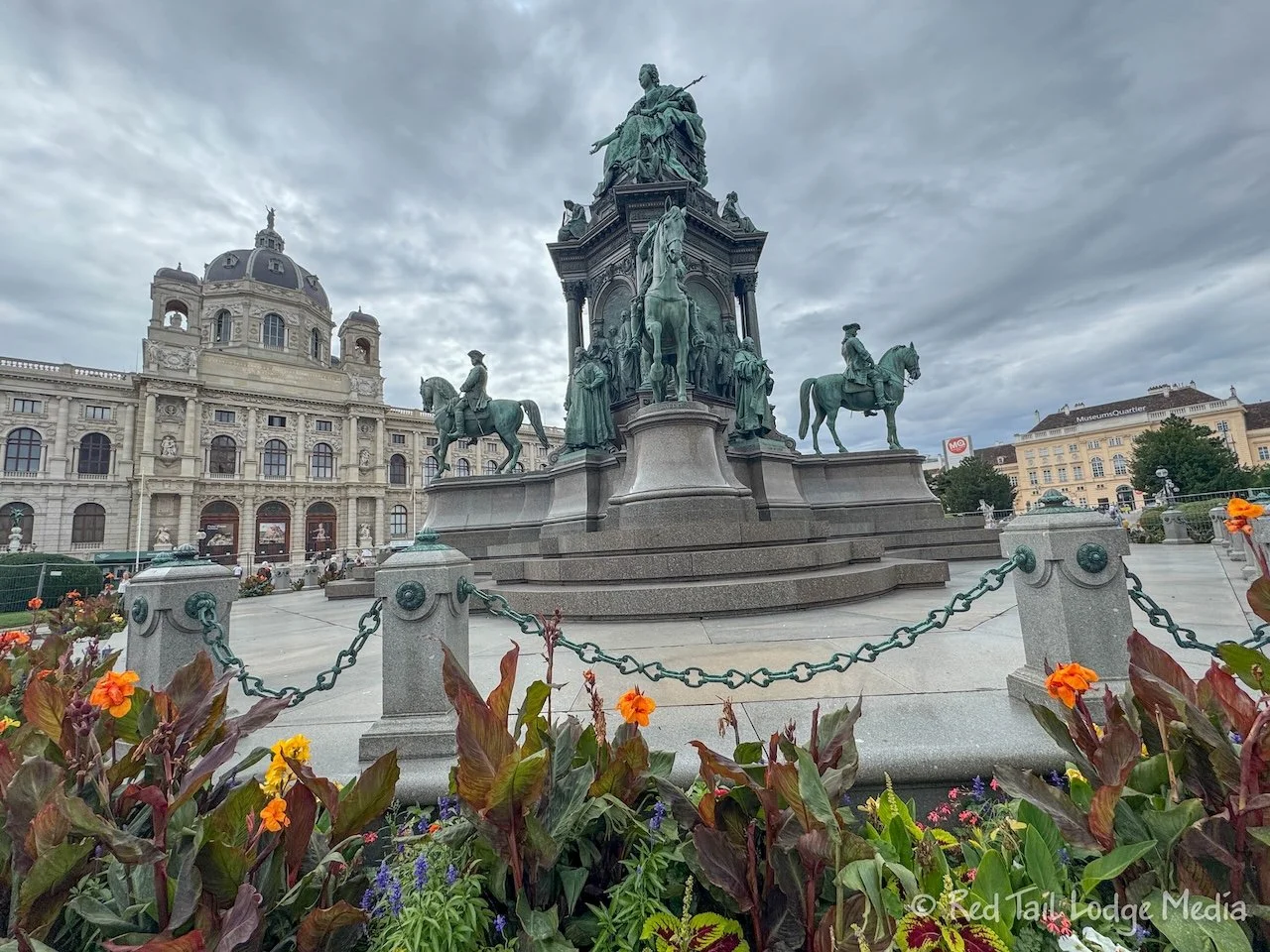
Just by walking the 3.5 miles around the ring, you can see most of the points of interest of the city. Across the street from Hofburg is the Museums District of Maria-Theresien-Platz. Next is the Parlament Österreich (Austrian Parliament) on one side and the Volksgarten (people’s garden) on the other.
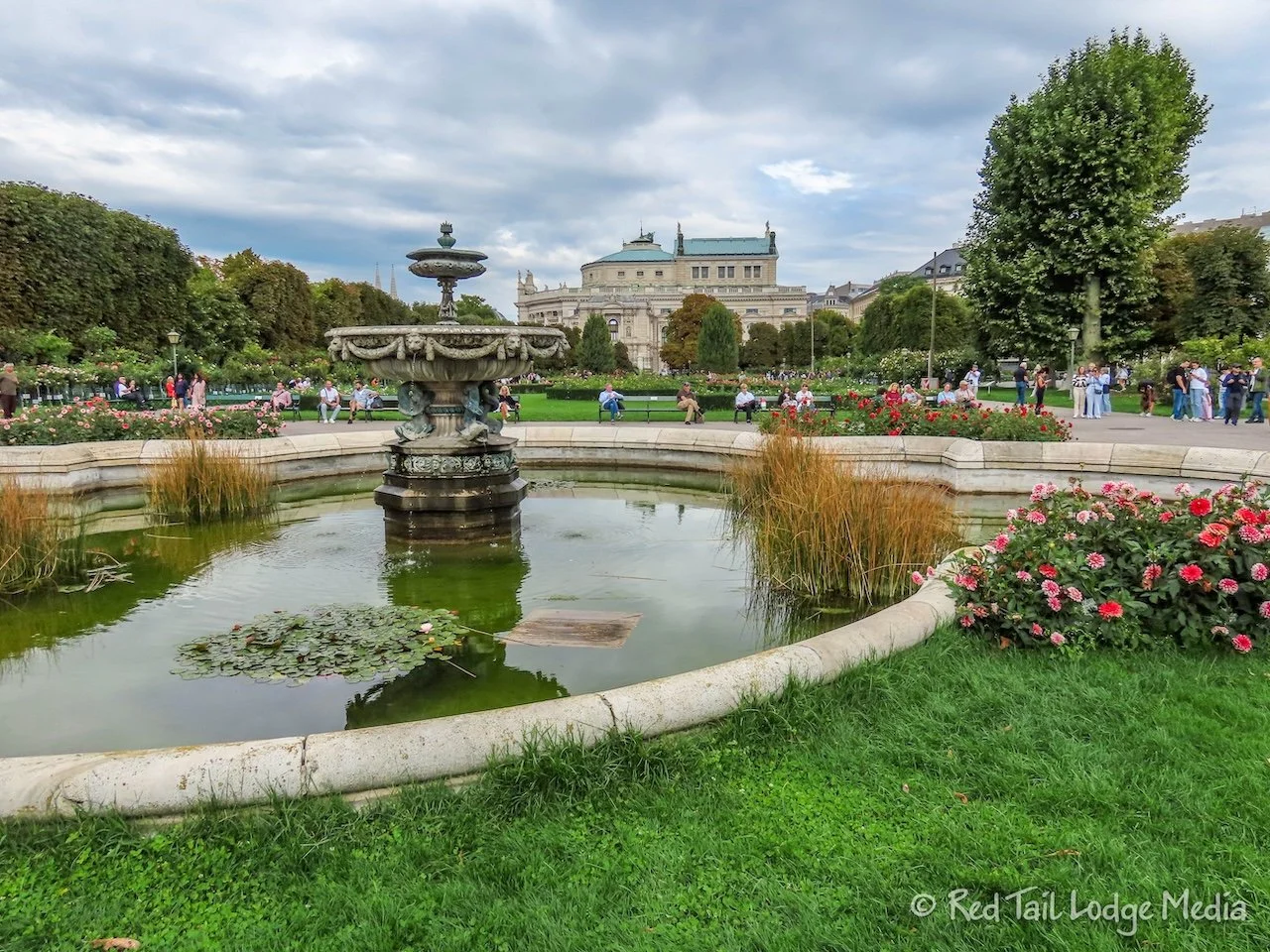
We wandered through the Volksgarten. A keyboard player was playing soothing music, which seemed to set the mood for the garden. The park was filled with trees, rose bushes, and park benches, many of them with dedications on them. We were impressed by the sheer number of places to sit and relax, fulfilling the main purpose for a park or garden.
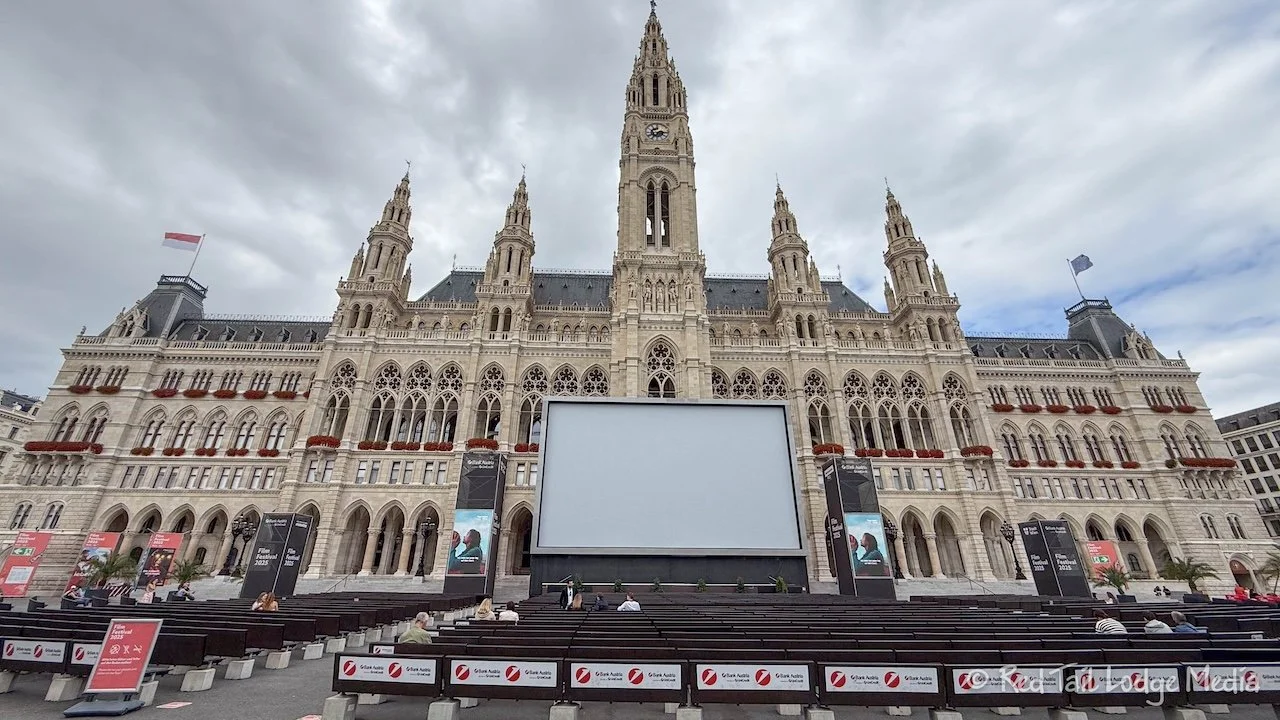
Next up was the Rathaus and Rathauspark (city hall and park). It was the last day for the Vienna Film Festival, so there was still a large screen in front of the Rathaus and the park was filled with vendor booths.
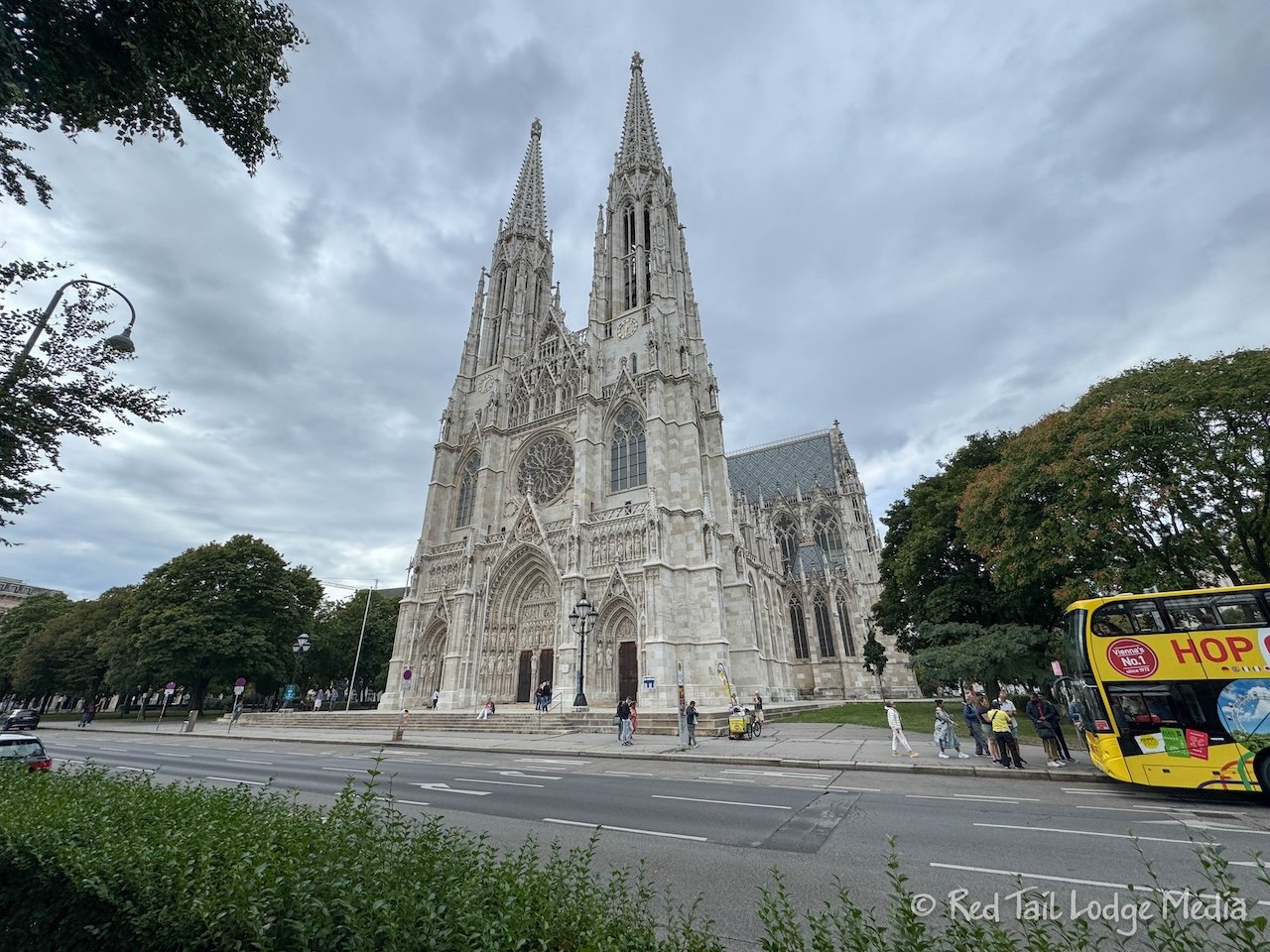
On our way down Schottenring, we took a little detour over to take a peek at Votivkirche (Votive Church), then made our way over to the Donaukanal (Danube Canal).
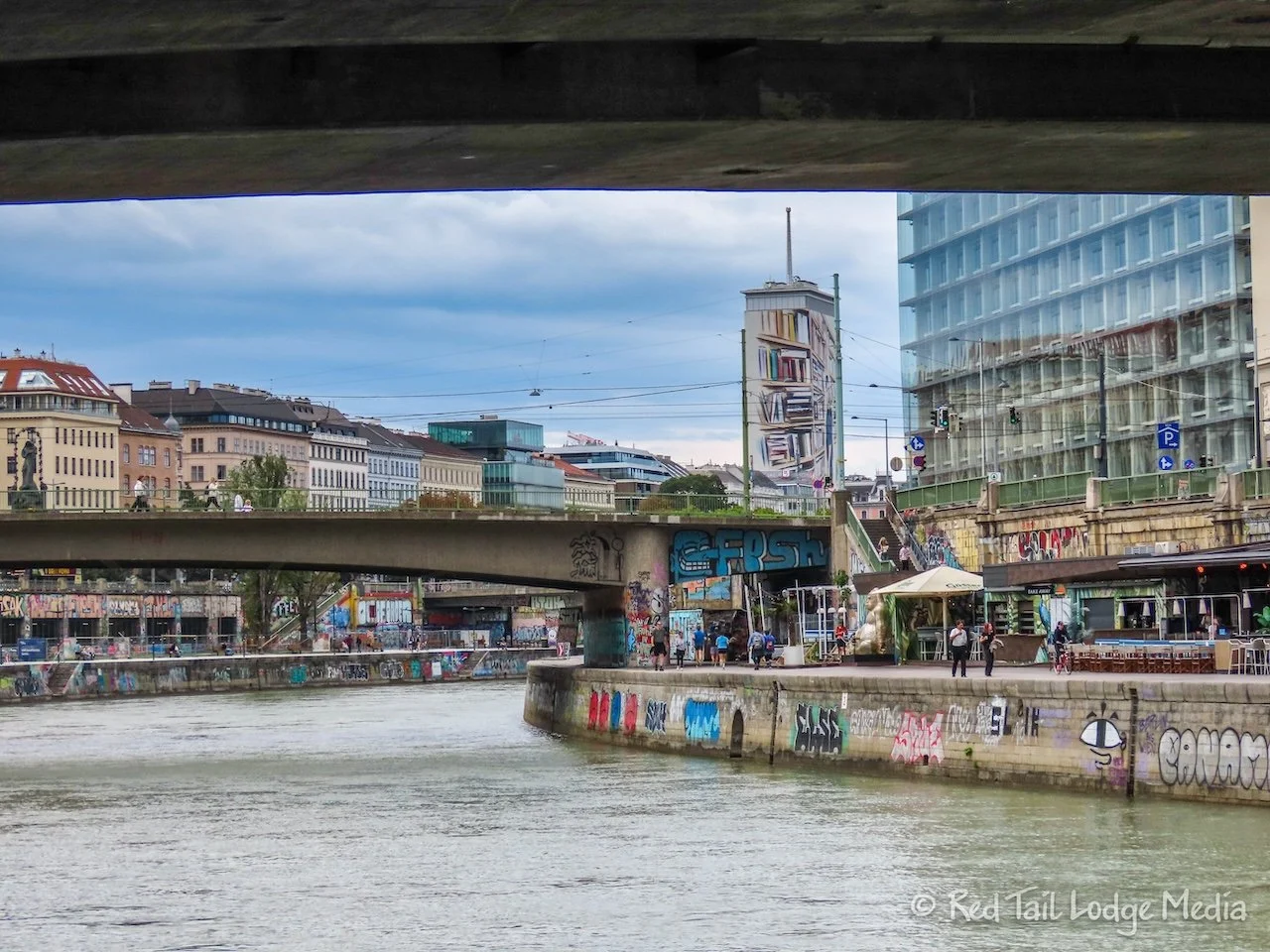
When we reached Salztorbrücke (bridge) along Franz-Josefs-Kai, we dropped down to the path along the canal. The graffiti painted walls of the canal were a stark contrast to all of the opulent buildings, monuments, and fountains of the inner ring. It was the grittier side of Vienna, but we found it interesting.
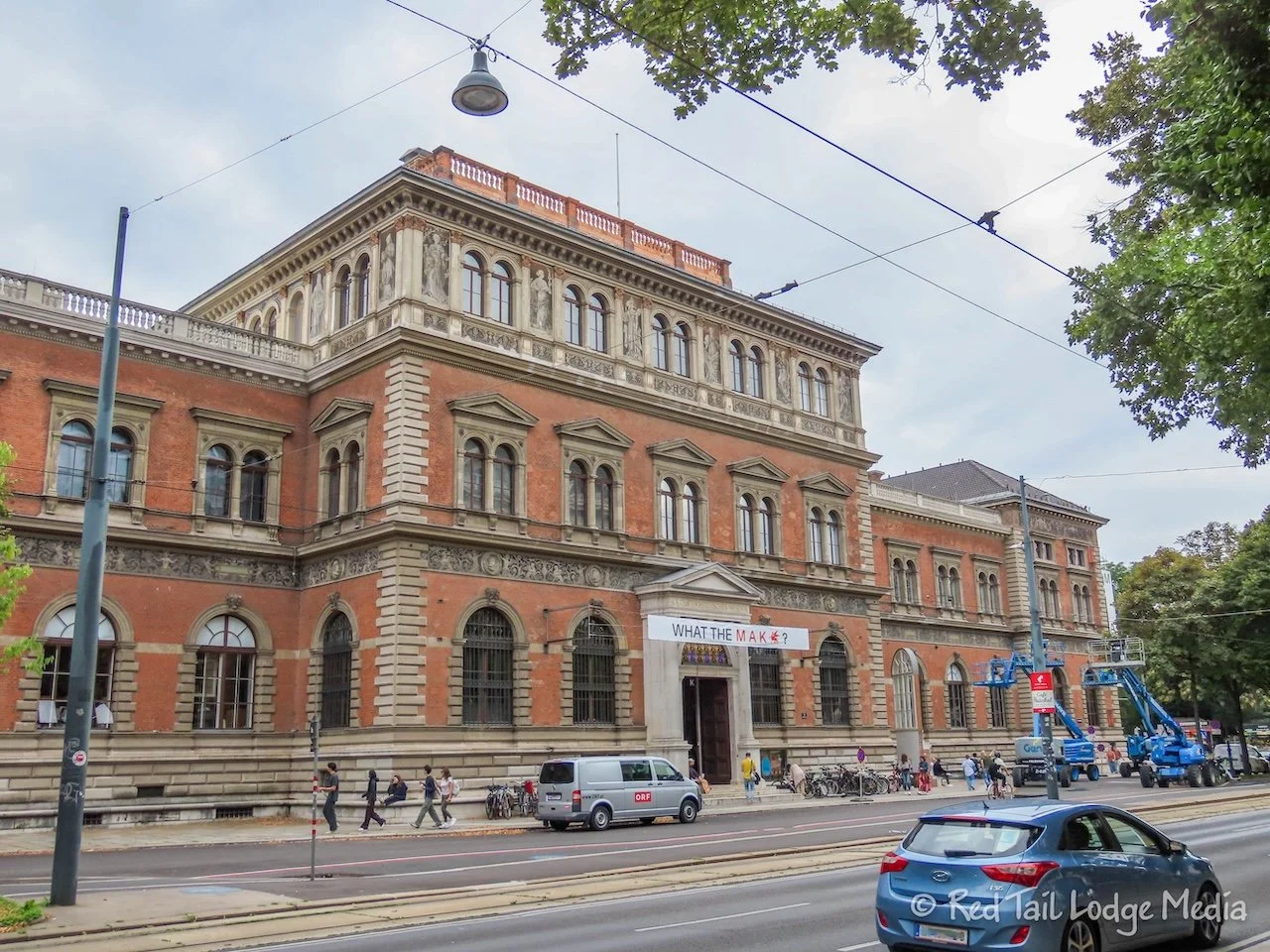
When we returned to Stubenring, we were back in the land of buildings with lavish architectural details. After passing the MAKK (Museum für angewandte Kunst - or Museum of Applied Arts), we ducked into the Stadtpark (City Park). On the way in, we stopped at a food truck for a couple of Cokes. There was no problem finding an open park bench to sit and enjoy our drinks, as again, the park had plenty of seating.
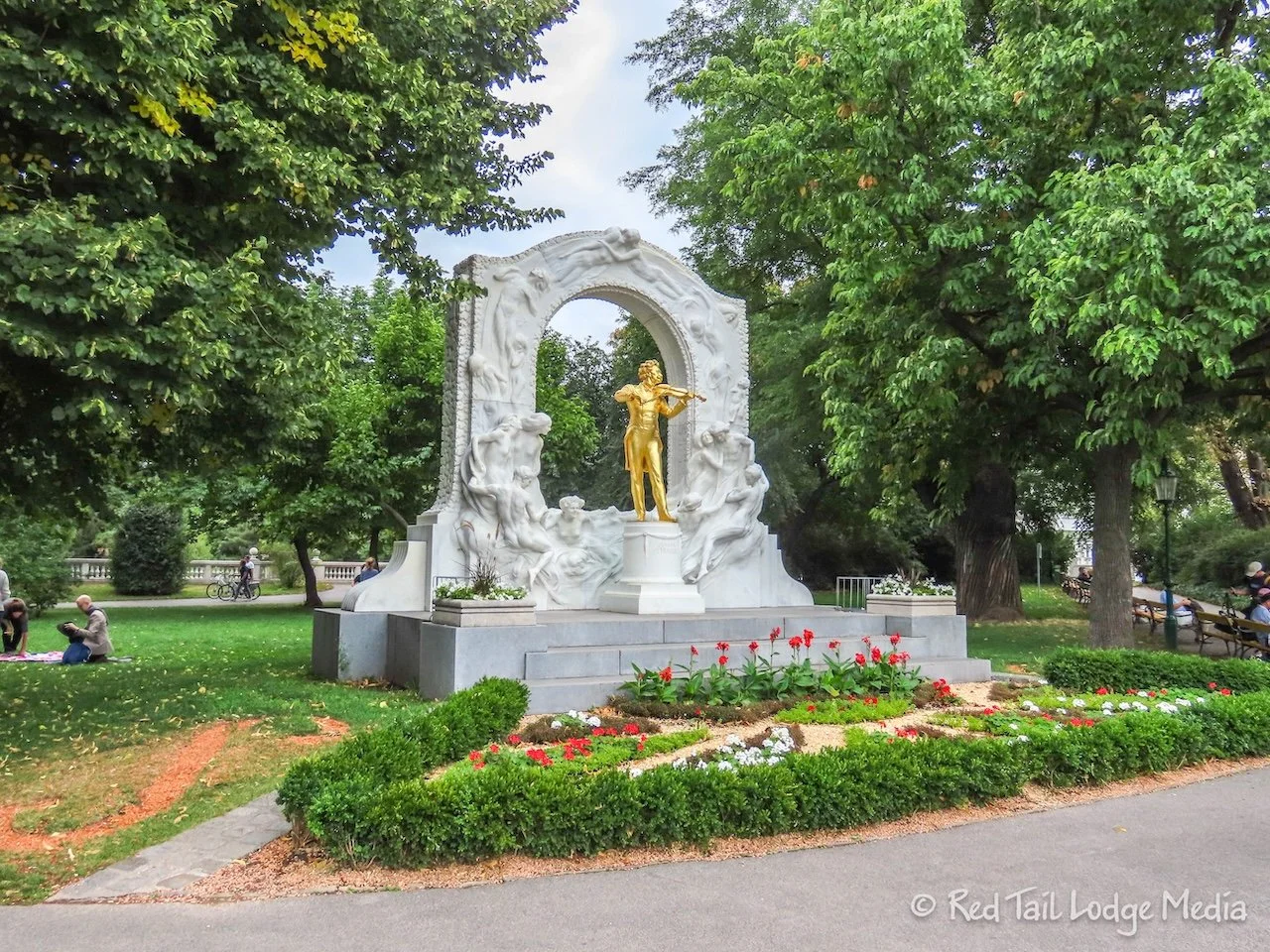
After our refreshments, we wandered past the Johann-Strauss-Denkmal (monument) and the Kursalon Hübner (a former spa house). The Kursalon was under renovations. From the signage, it looked like Lindt was installing another chocolate museum. They have several already around Europe. We saw one previously in Köln (Rhine Cruise Day 3: Cologne, Germany - July 5th, 2025).
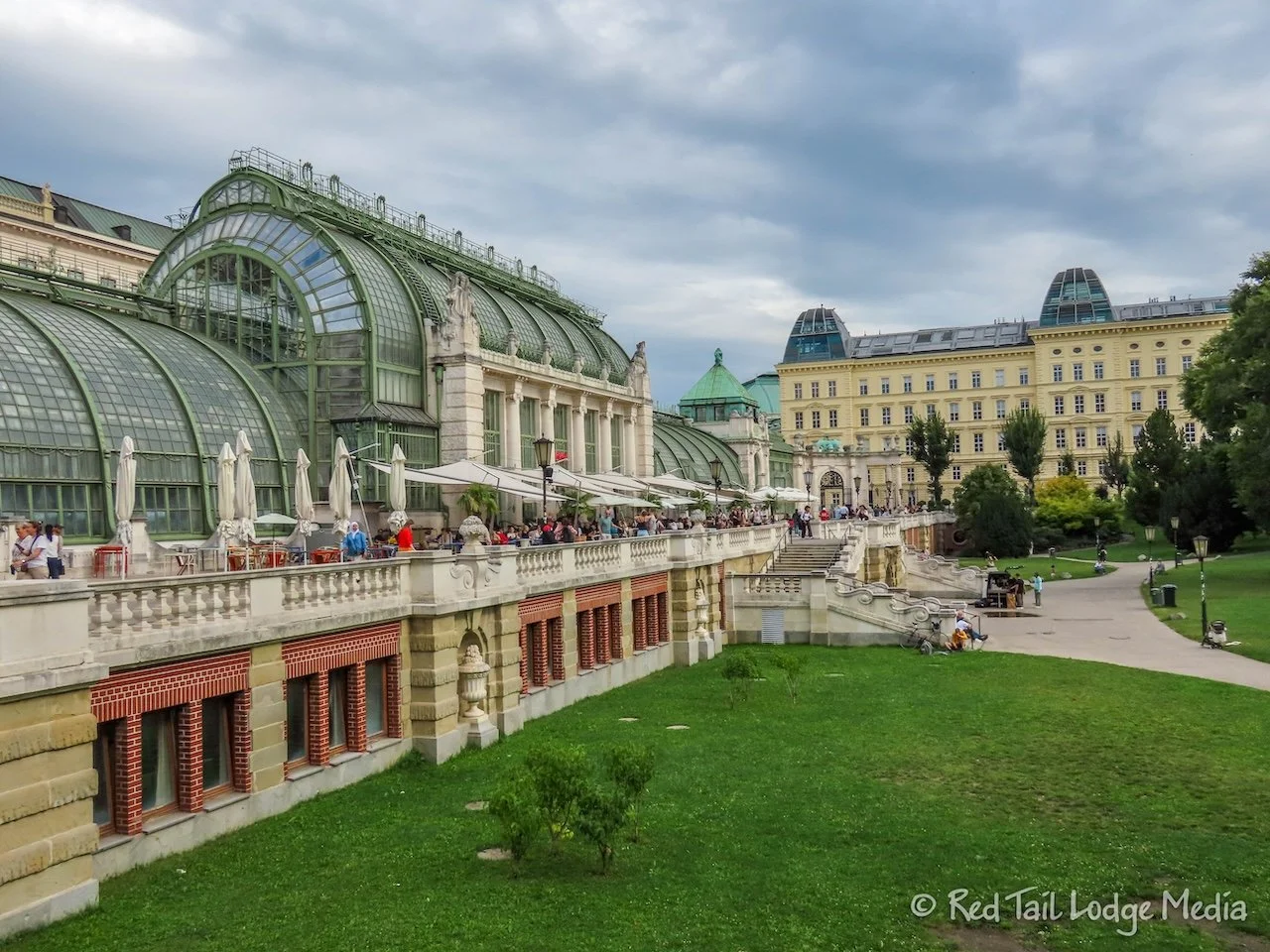
We completed the ring by walking around Wiener Staatsoper (Vienna State Opera House) and strolling through the Burggarten (castle garden) with its Schmetterlinghaus (butterfly house). Then we went back to our room to relax before dinner.
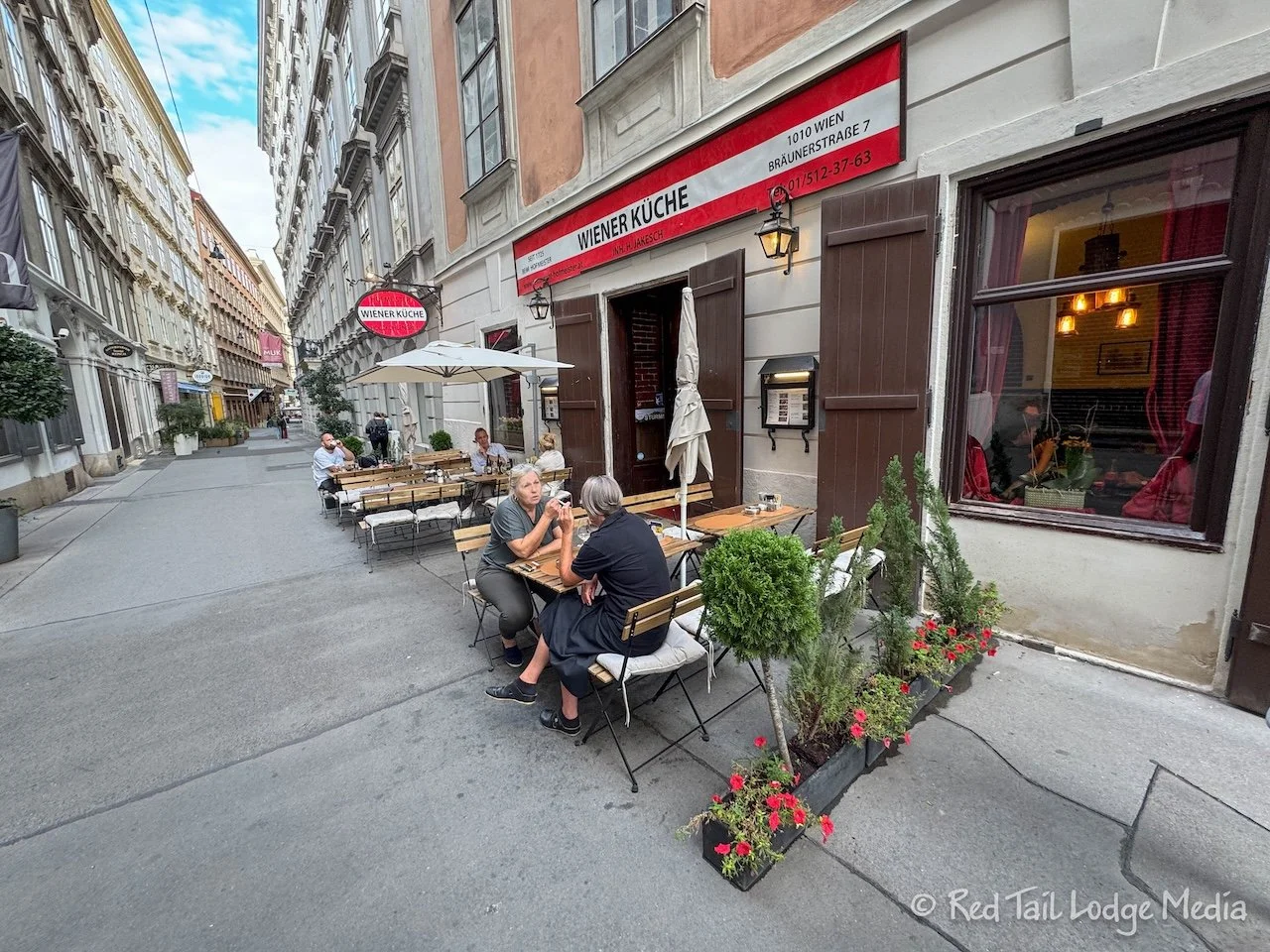
For dinner, we picked out another Austrian restaurant, Restaurant beim Hofmeister. For starters, Ann had a Gemischter Salat (mixed salad) while Keith had the Grillkäse auf Salat (grilled cheese salad). Our Gemischter Salat were more like American tossed salads than traditional Gemischter Salat that we were used to getting.
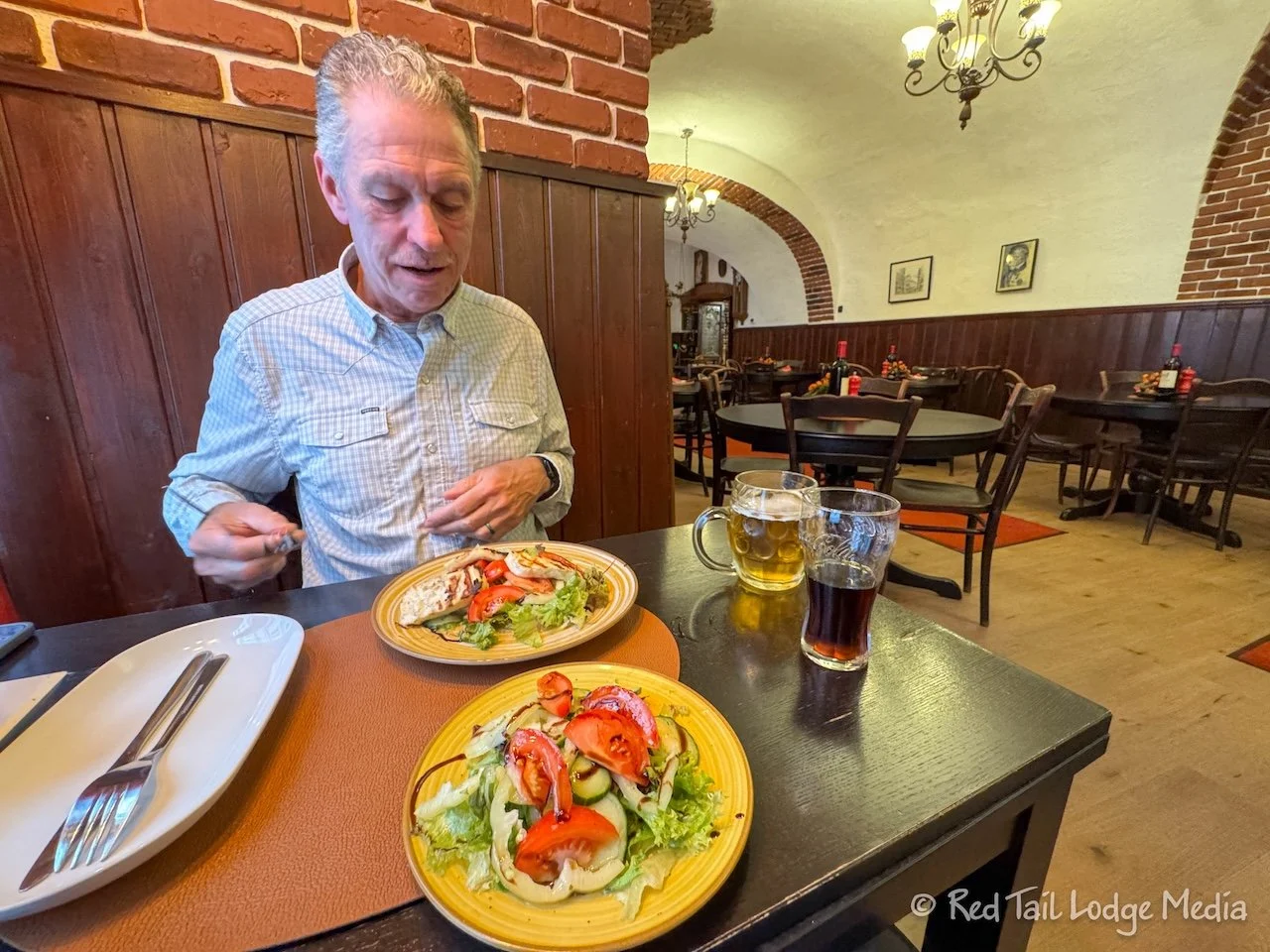
For our mains, Ann ordered the Zwiebelrostbraten while Keith had Schweins Lungenbraten. Zwiebelrostbraten is roast beef with crispy roasted onions on top. It was served with roasted potatoes. Even though Lungen means lung in German, the Schweins Lungenbraten is pork tenderloin. It was grilled and served with mushrooms and roasted potatoes. The tenderloin had a nice smoky flavor, but, unfortunately, it was overcooked and dry.
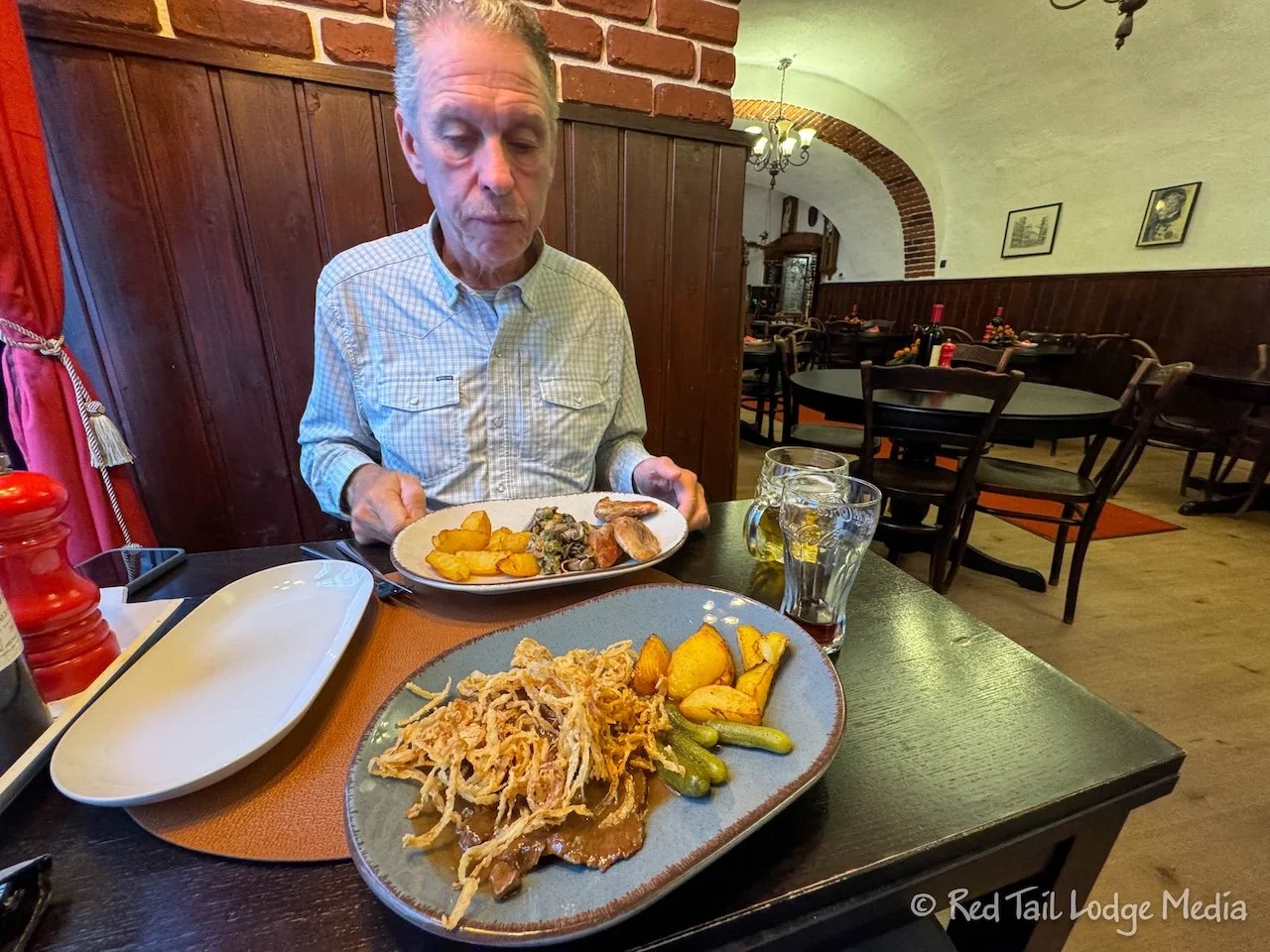
To drink, Keith had a Radler while Ann ordered a Coke. She asked if they had Spezi, but the waiter didn’t seem to know what that was. Ann hadn’t see Spezi on any menus since we arrived in Wien. The waiter suggested Mezzo Mix, but Ann didn’t know what that was, so she just had a Coke. Later, she looked up what a Mezzo Mix was and it was indeed a Spezi. It was made by Coca-cola by mixing Coke with an orange soda. Good to know.
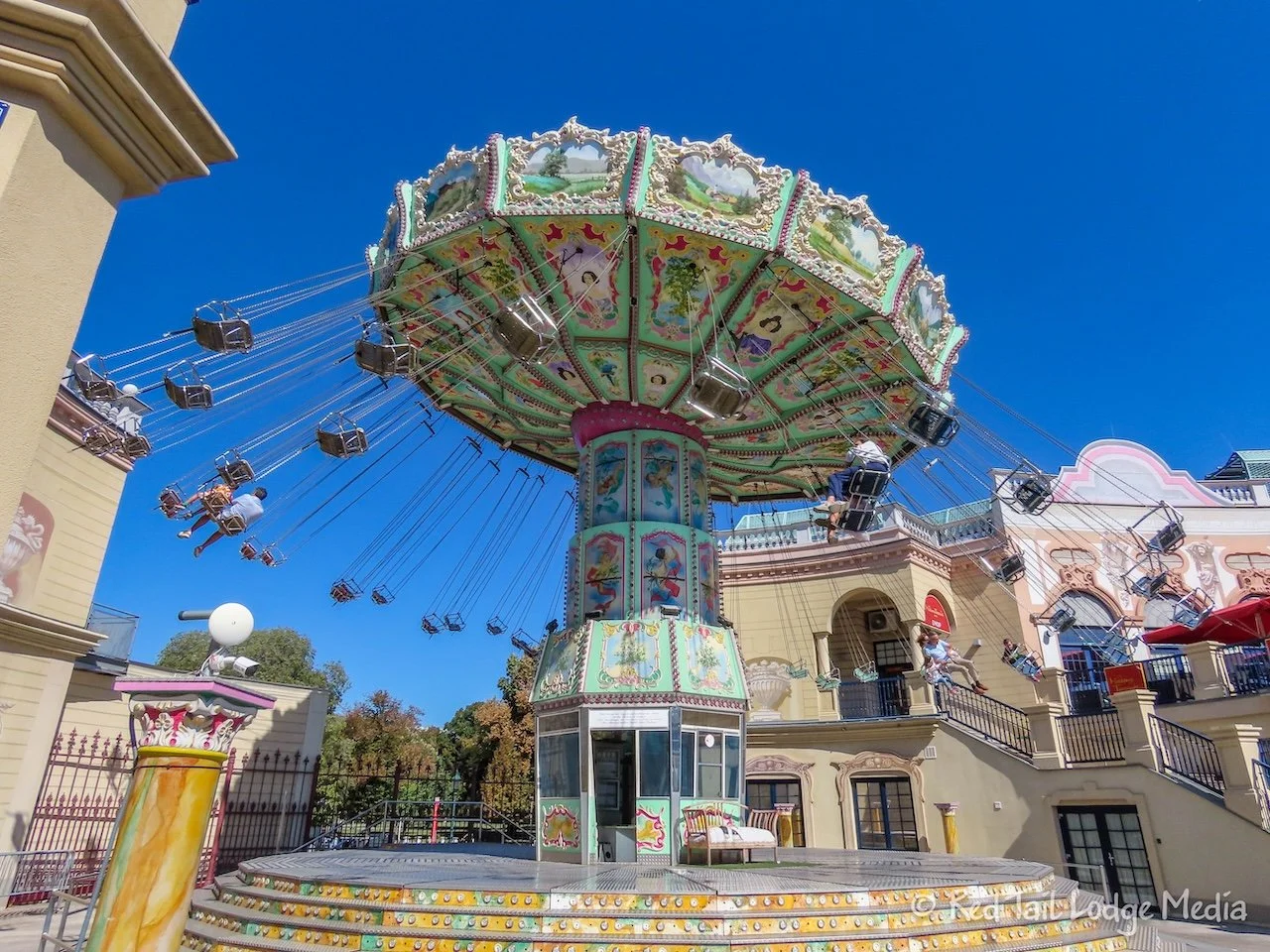
Monday was another long walking day. First, we started out by walking over to Prater. It is a park, outside the ring, across the canal to the east. Part of it is a large amusement park with roller coasters, water rides, and other rides, games, and attractions. It was free to walk through the amusement park. You just paid when you wanted to go on a ride or play a game.
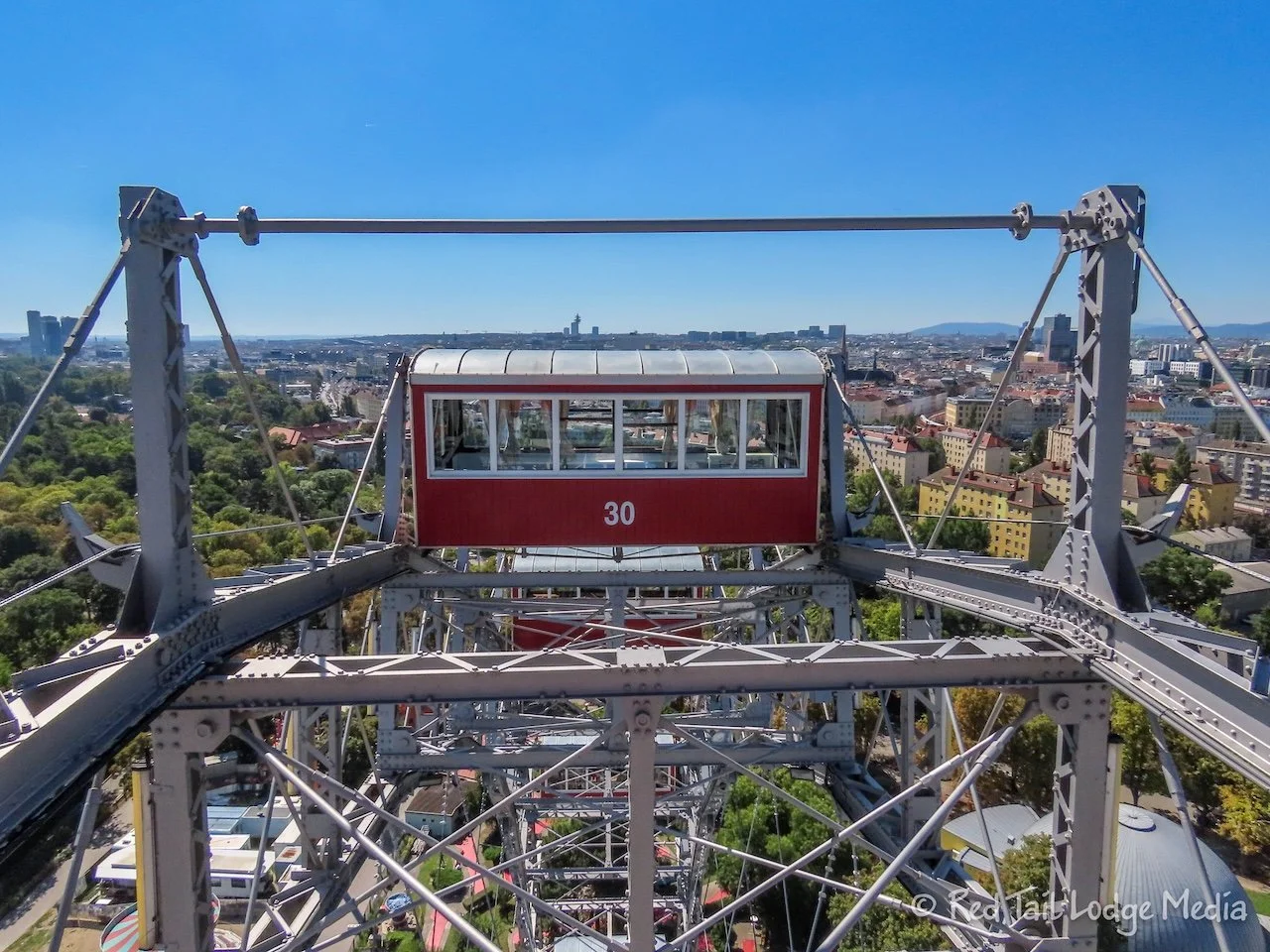
The ferris wheel in Prater (Wiener Riesenrad) was originally built in 1897 and rebuilt in 1945 a year after it burned down. It stands about 65 meters (213 feet) above the ground. We paid to take the ride so we could get views out over Wien. Each of the 15 wagons are pretty large. Our wagon did not have any place to sit, but that was OK with us, as we wanted to be able to walk around the wagon and look out the windows in different directions.
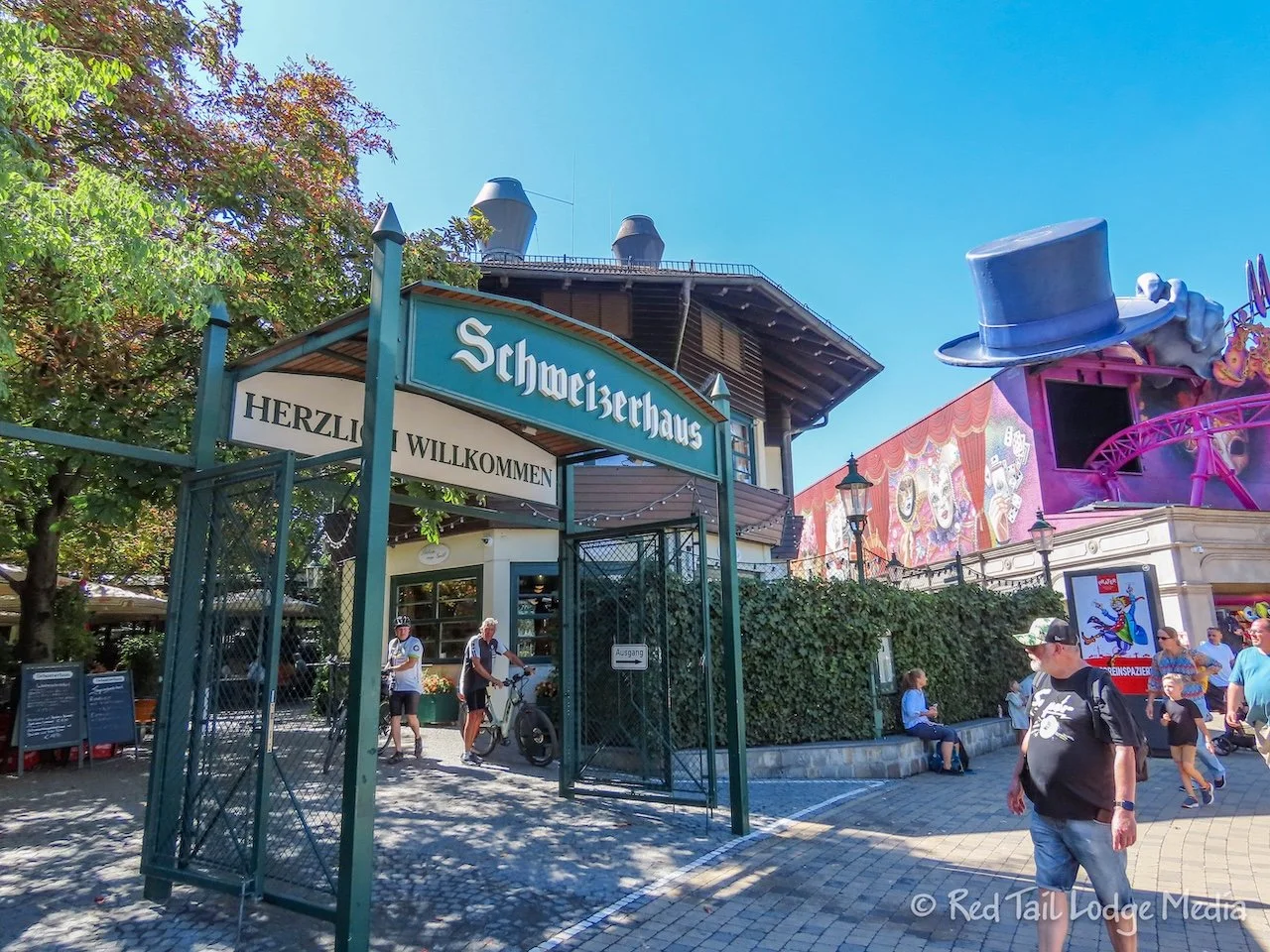
For lunch, we stopped at the Schweizerhaus inside the amusement park. The main reason for picking it was that one of our friends’ last name is Schweizer. The beer garden is large, but, unfortunately, all of the tables were reserved, but we were able to get a table inside.
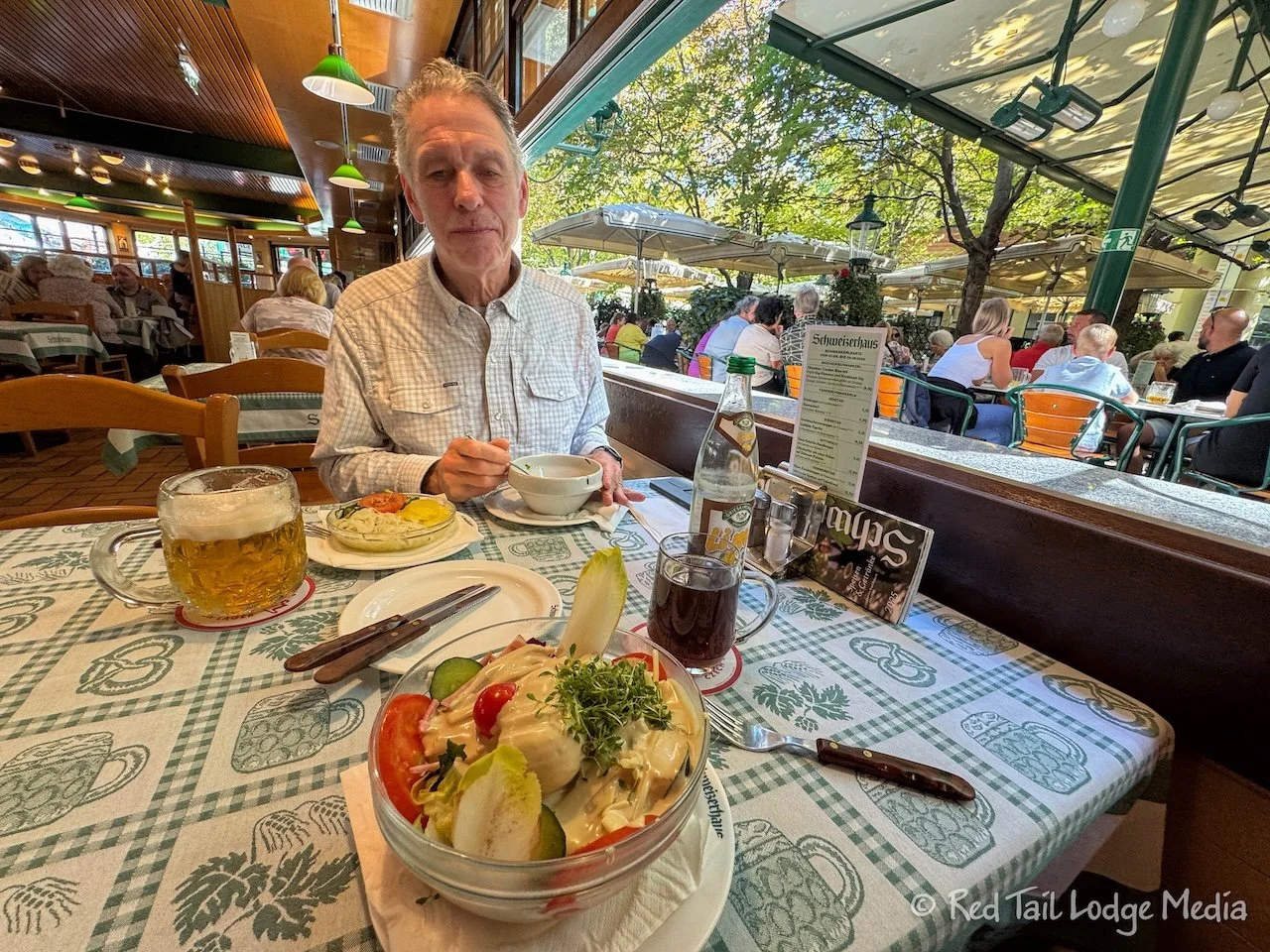
Keith ordered the Rindsuppe mit Grießnockerln (beef broth soup with semolina dumplings) along with a gemischte Salat (mixed salad). Ann ordered the Schweizerhaus-salatschüssel mit Schinkenstreifen, Emmentaler, und Ei (salad bowl with ham strips, cheese, and egg). The waiter brought out Keith’s order, but he brought out some kind of schnitzel and French fries for Ann. That’s not what she thought she ordered. When she questioned the waiter, he went through the order slip, realized he made a mistake and quickly came back with the right food. He was very apologetic. The place seemed to be understaffed and they were running around, staying very busy, the whole time we were there.
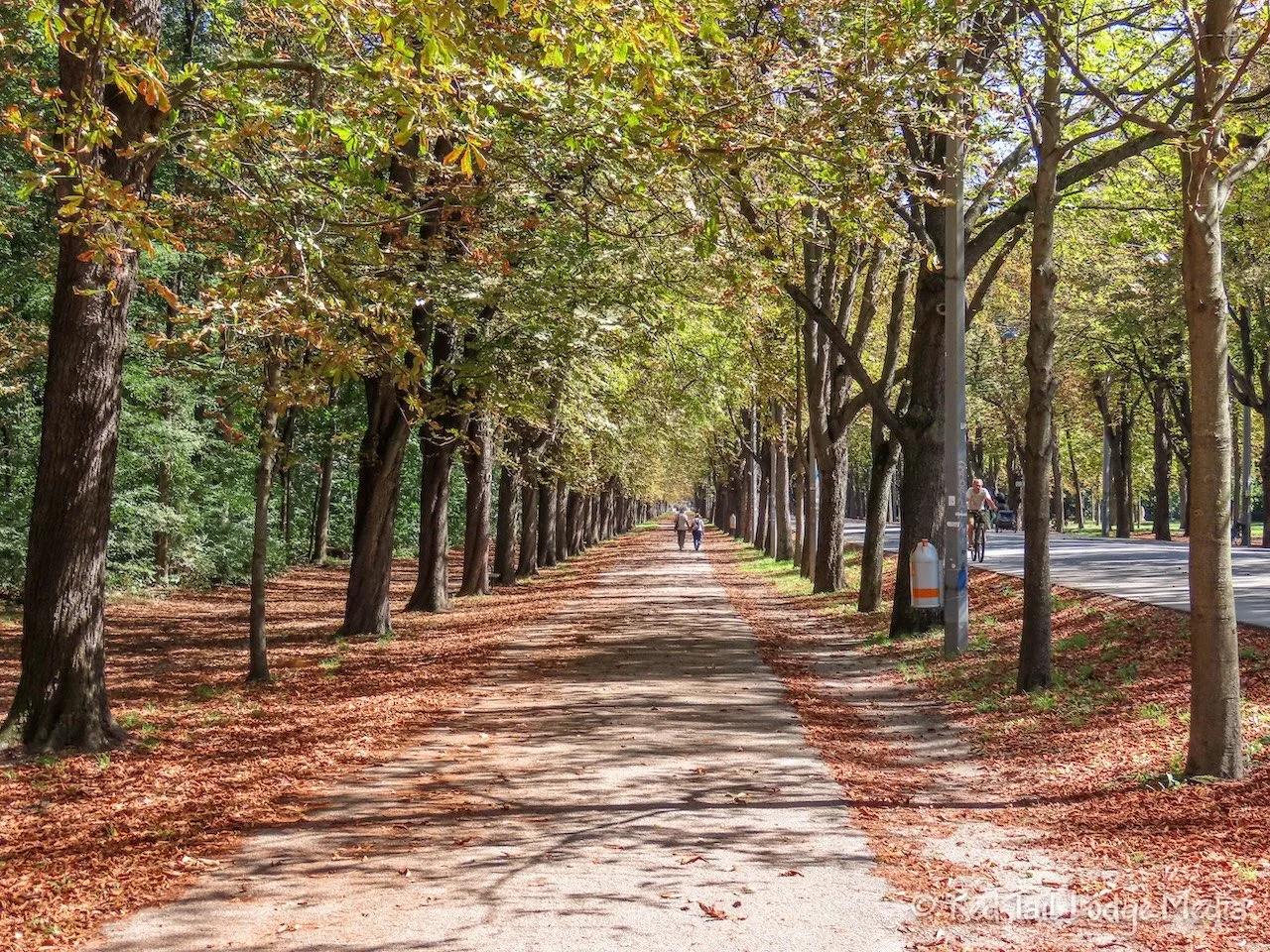
The beer garden didn’t work out as we had envisioned, so we were glad to check out the rest of Prater park, away from the crowds and noise of the amusement park. The main attraction in the park is the Hauptallee, which is tree-lined pedestrian and bike path 4.4 kilometers (2.7 miles) long, that runs most of the length of the park. It was a lovely, peaceful path to stroll along, despite all of the pedestrian and bike traffic.
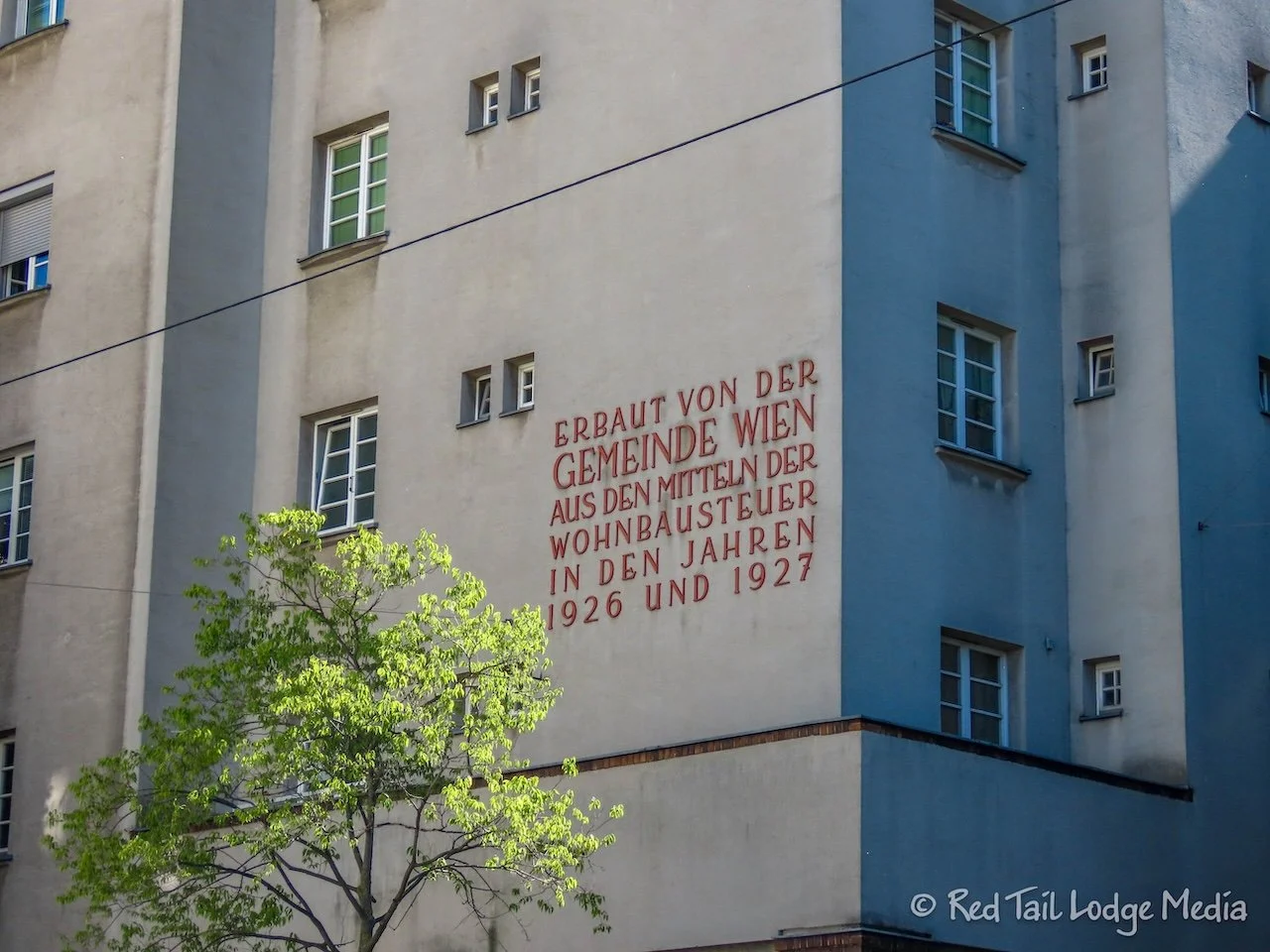
We did not walk the full length of the park, but turned onto Stadionallee to cross back over the Donaukanal and work our way over to Schweizergarten and Belvedere Schloßgarten. Along the way, we saw how the other half of Wien lived. It seemed like we were passing through mostly residential areas. Many of the buildings had signs on them with the words “Wohnhausanlage der Gemeinde Wien” along with the years that the building was erected. We believe that this meant they were built by the city and rented out as public housing. We saw dates ranging from the 1920’s to the 1960’s.
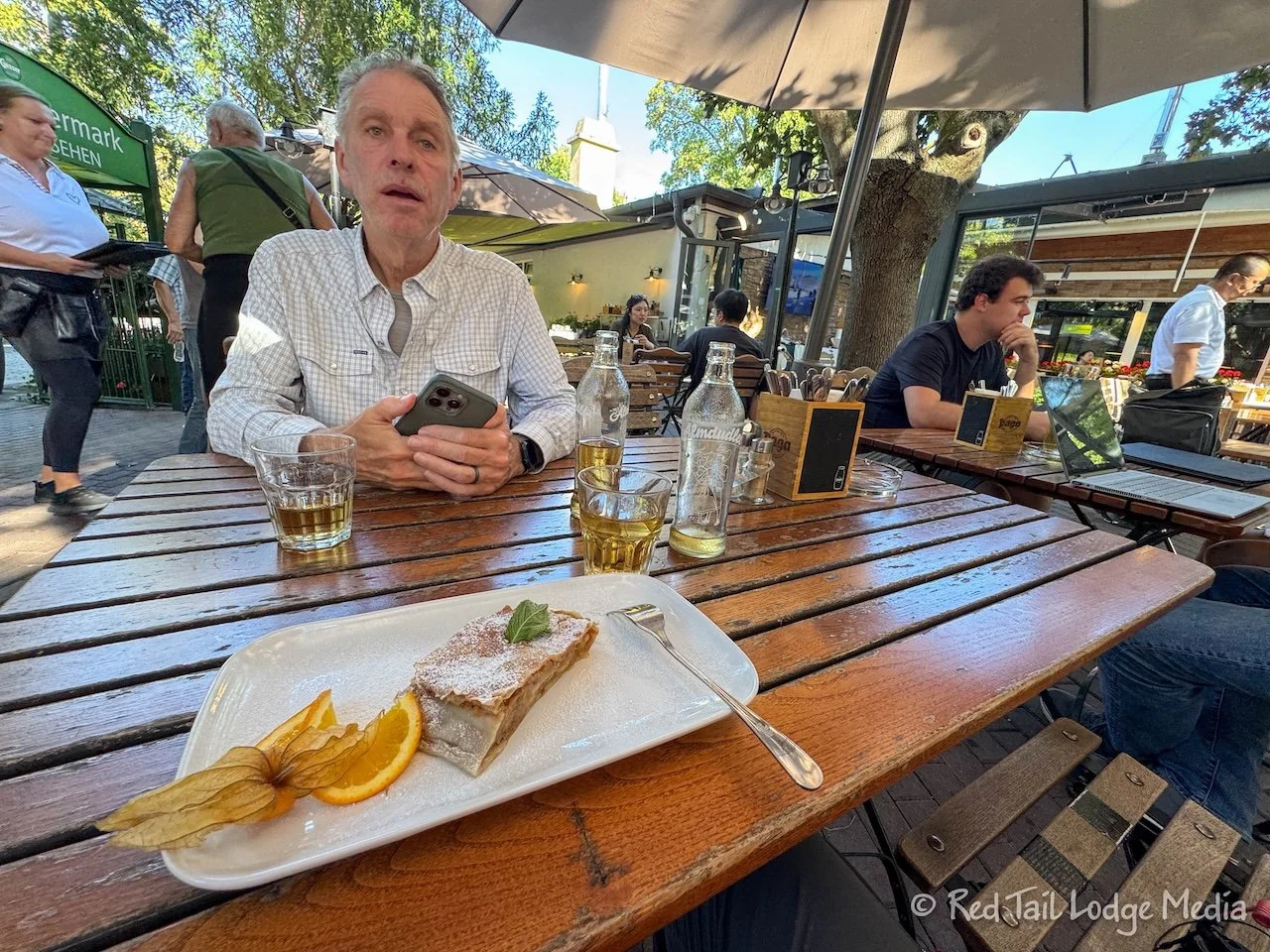
In Schweizergarten, we stopped at Klein Steiermark for drinks. We both tried the Almdudler, while Ann also had an Apfelstrudel. Almdudler is a soda made in Vienna, starting back in 1957. It is made with beet sugar, citric acid, and herbal extracts. It has a rather unique taste. We both enjoyed it.
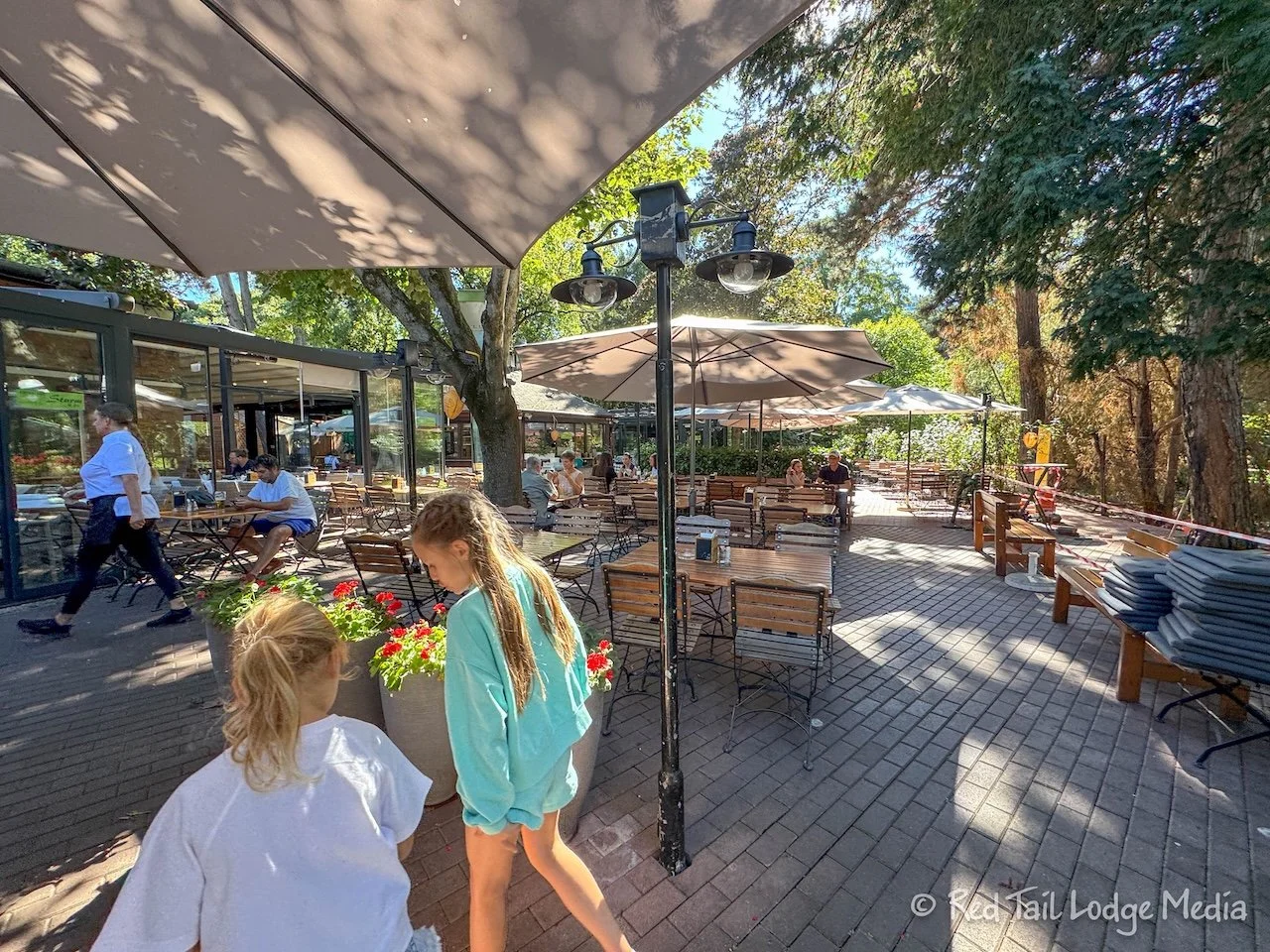
Steiermark (Styria) is one of Austria’s nine states (Bundesländer). It is known as the “green heart of Austria”. The wait staff at Klein Steiermark had green hearts on their shirts.
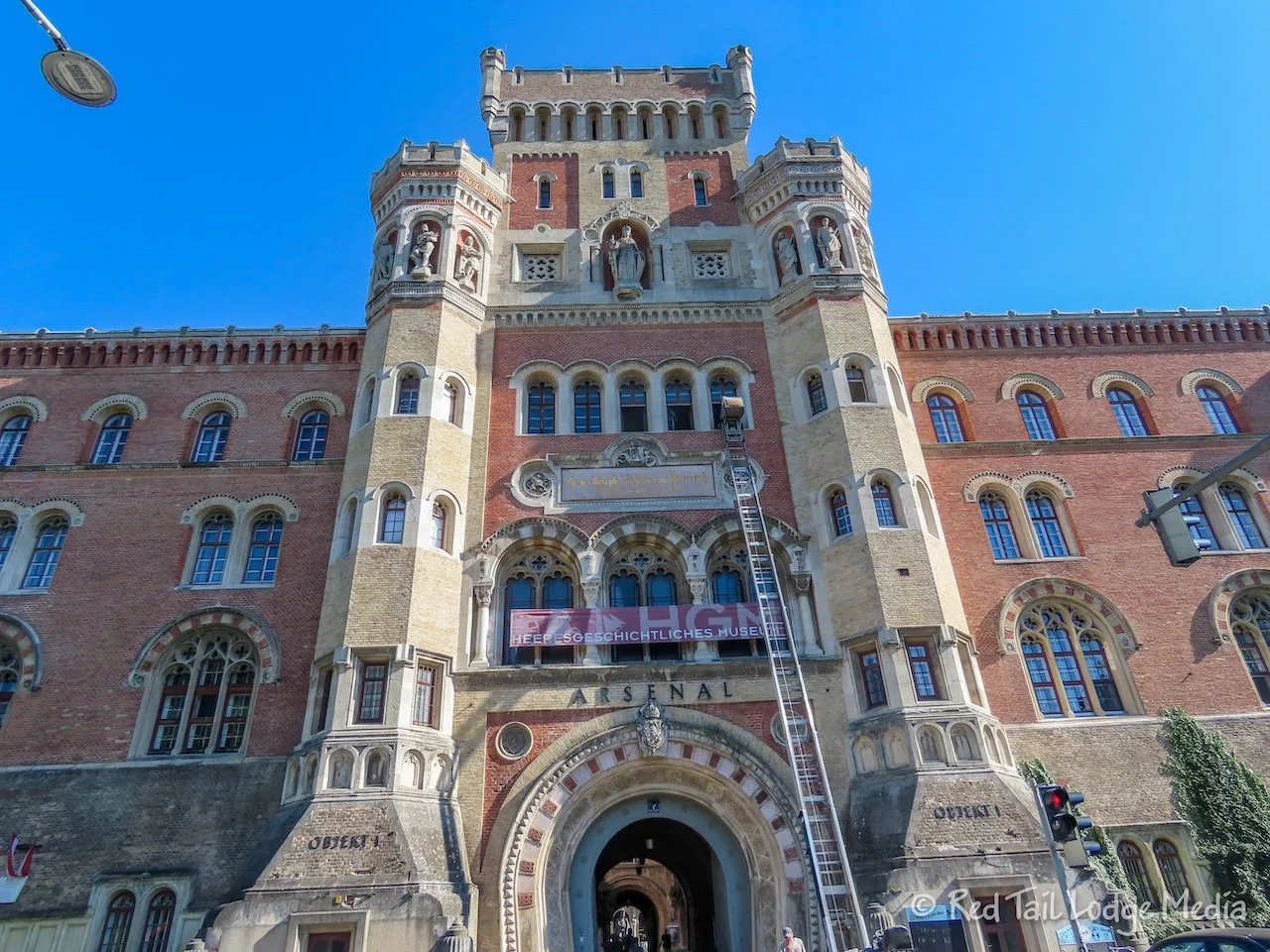
A building just southeast of Klein Steiermark caught our eye, so we walked over to check it out. It was an old building with a courtyard that looked like a city gate. Walking through the gate to the other side we came to the Heeresgeschichtliches Museum (Museum of Military History). They were both impressive buildings.
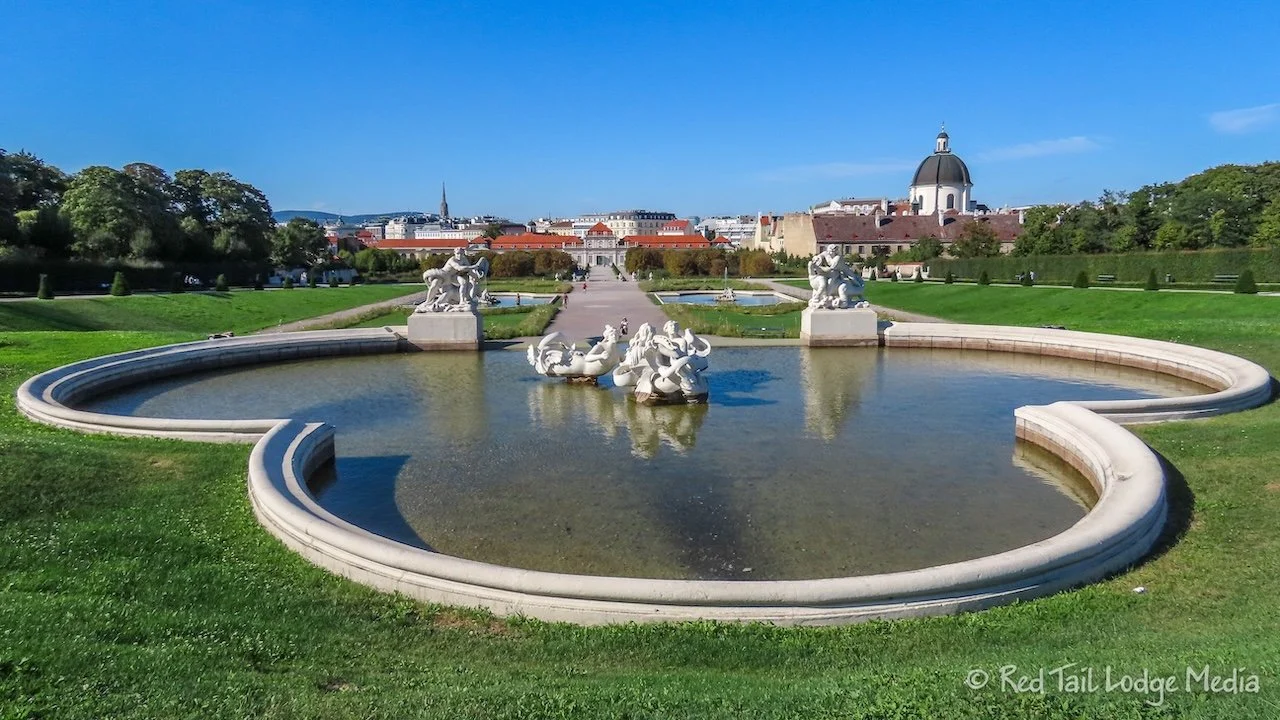
From there, we turned around and made our way up to Belvedere Schloßgarten. Belvedere consists of two palaces with a baroque garden in between. The Lower Belvedere palace was constructed in the early 1700’s while the Upper Belvedere palace was built just a few years after Lower Belvedere. They both were used as summer residences for Prince Eugene of Savoy. They currently house the art galleries of Österreichische Galerie Belvedere. We didn’t go inside any of the museums, we just walked the full length of the gardens. The gardens are open and free to the public.
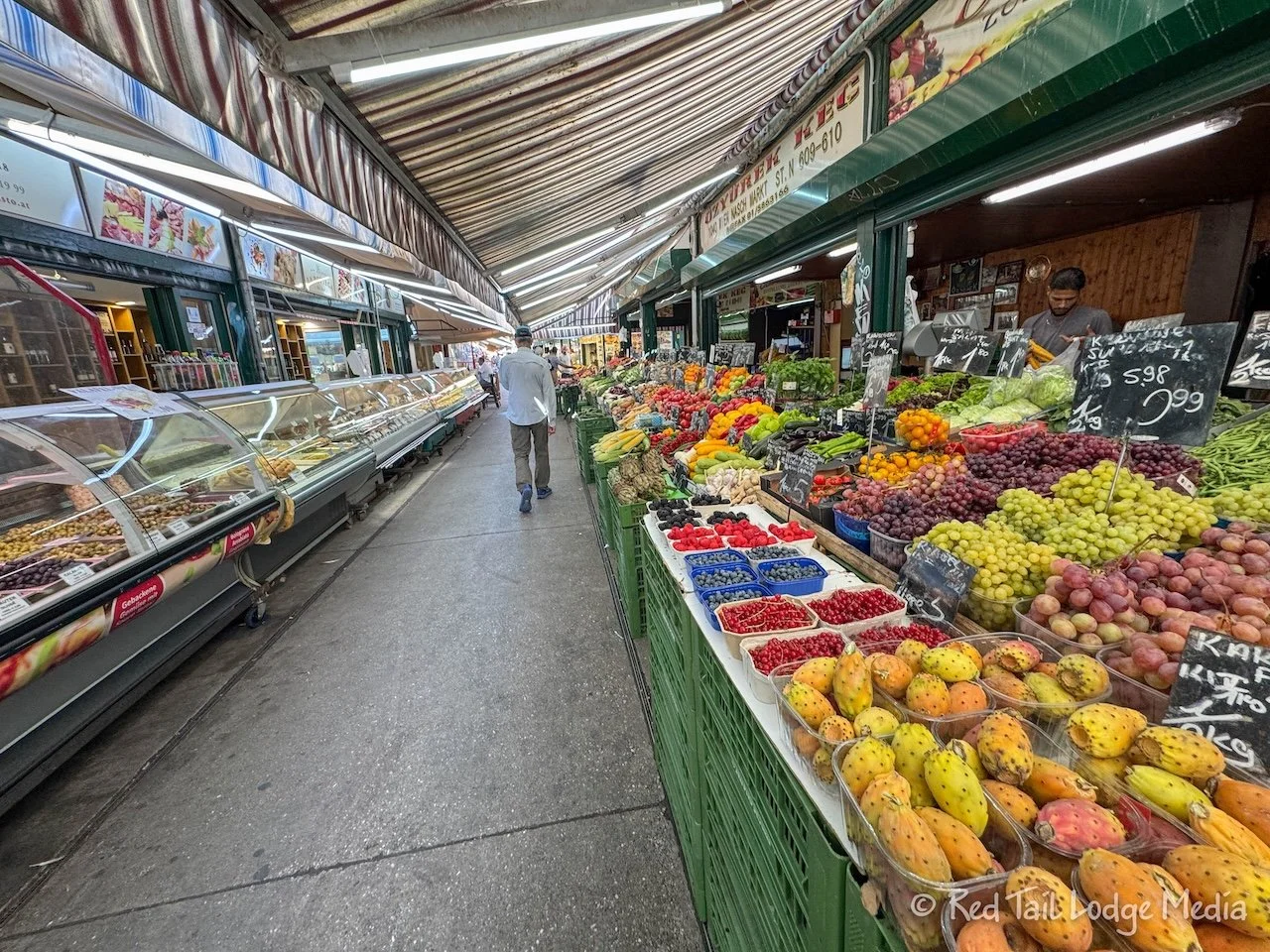
After exiting the gardens, we worked our way over to Naschmarkt, passing by Karlskirche along the way. Naschmarkt sits in the wide median of Wienzeile, between Linken Wienzeile and Rechten Wienzeile. There had been a market in Wien for centuries, but it was named Naschmarkt in 1905. The market stalls in its current location are pretty permanent. The vendors include all kinds of food and wares from around the world along with some restaurants.
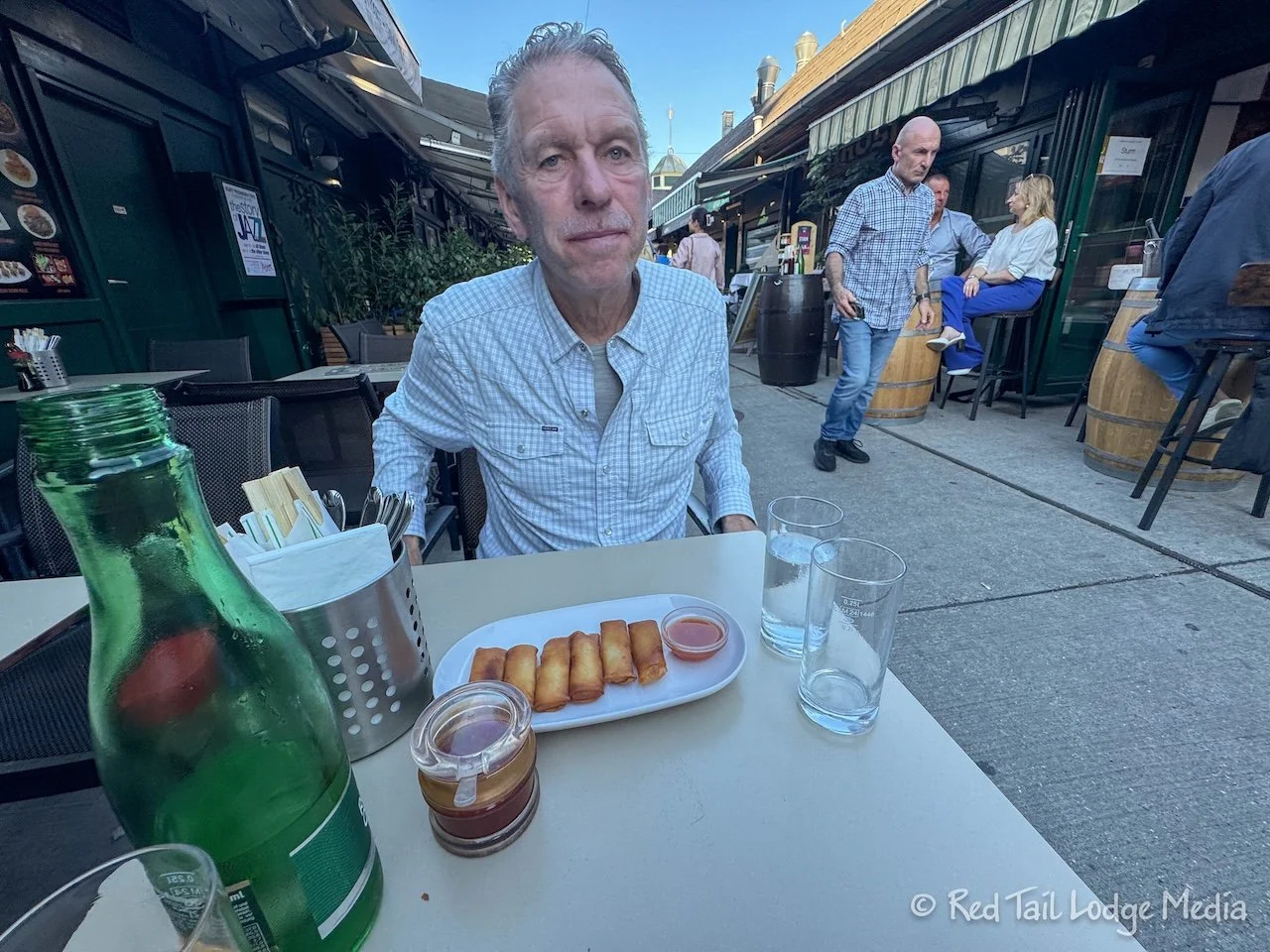
The Yumi Dim Sum Teppanyaki Restaurant in Naschmarkt was our choice for dinner. They served Thai, Japanese, Chinese, Croatian, and Vietnamese dishes. It was a nice change from the traditional Austrian food we had been eating. We started off with the mini spring rolls. They were tasty, but a little bit on the greasy side.
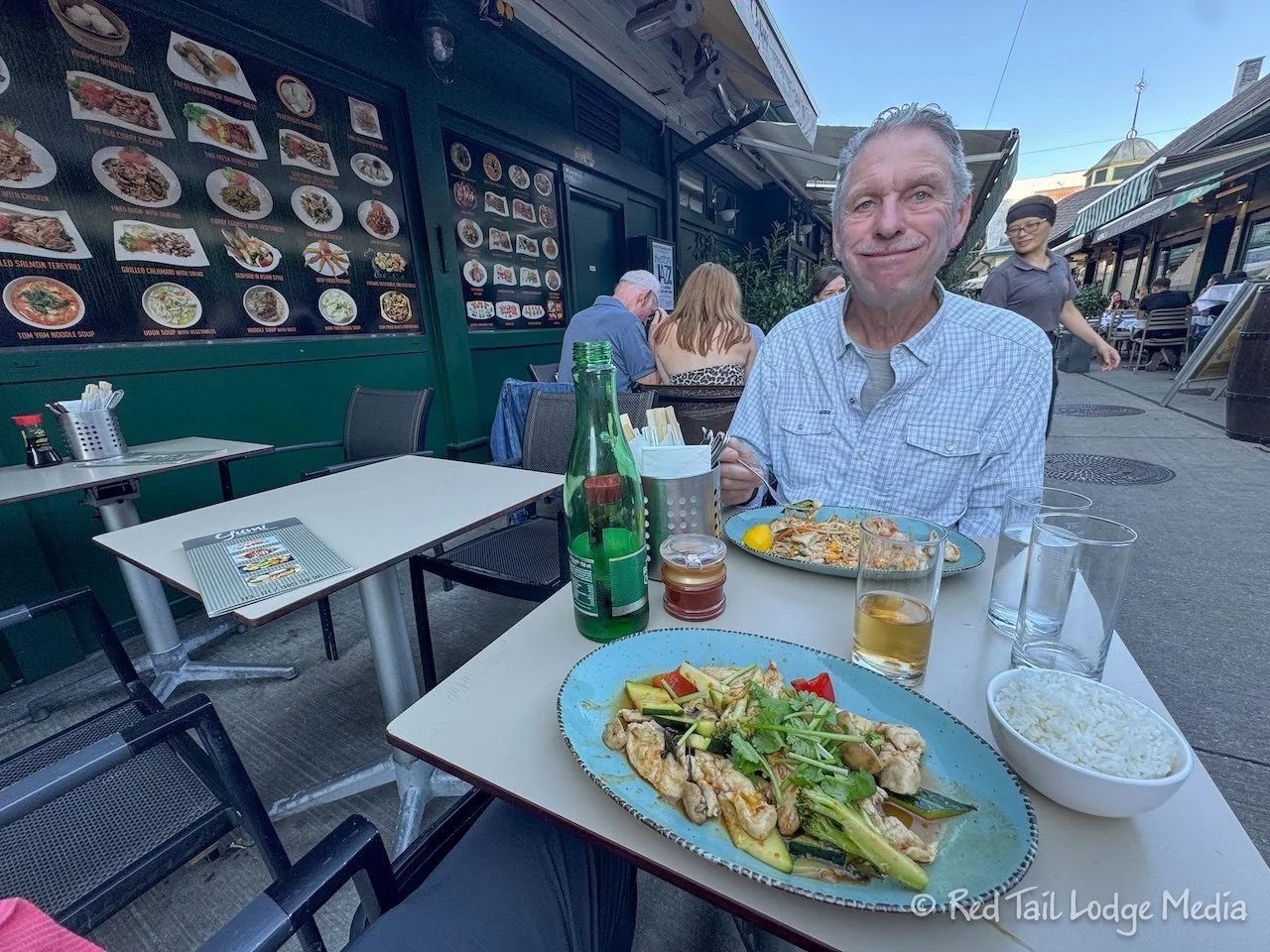
For our mains, Keith ordered the chicken Pad Thai while Ann had the Saigon-style fresh vegetables and chicken with a side order of white rice. The food was delicious. Ann was thankful for the healthy portion of vegetables.
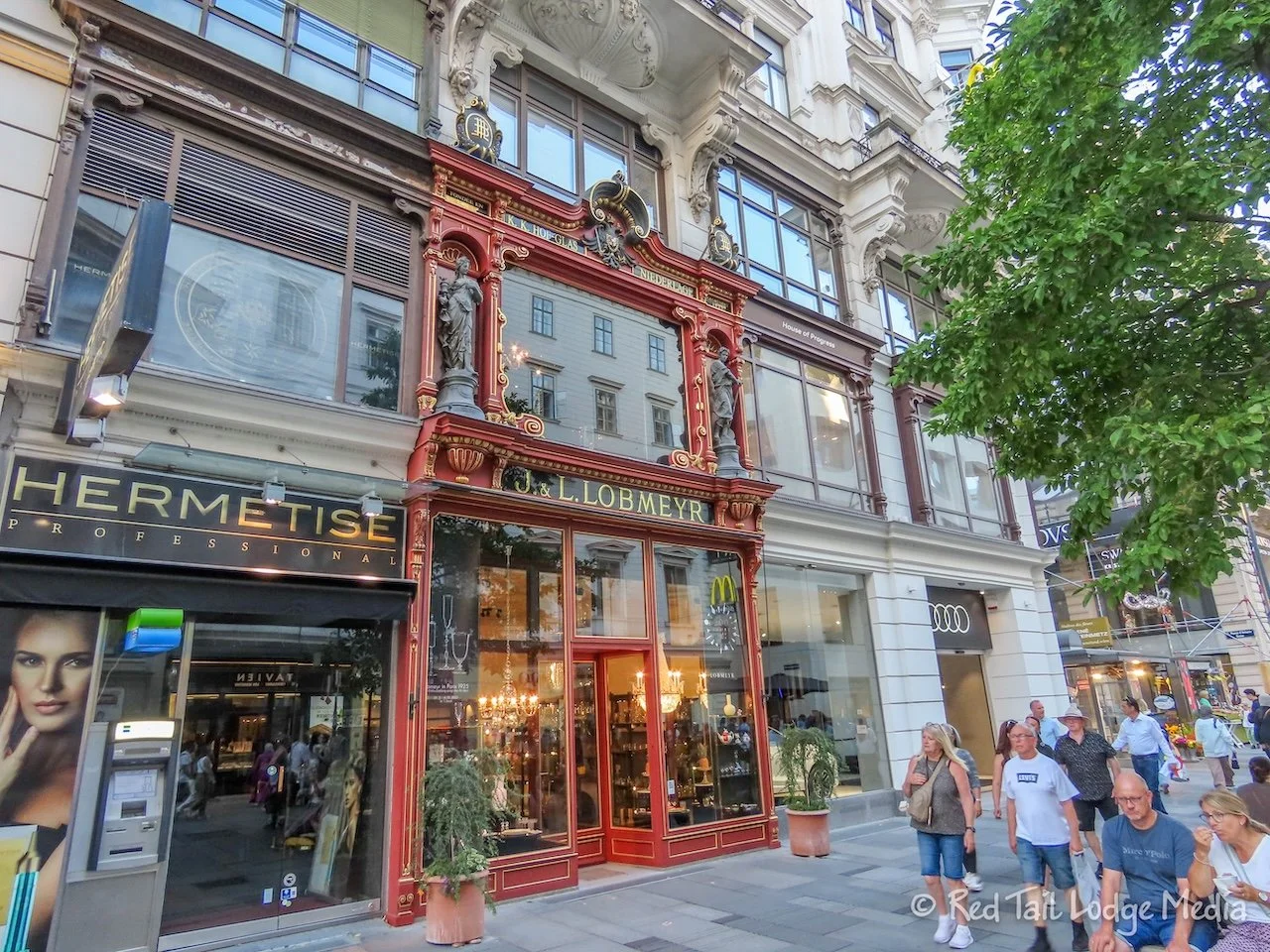
From the Naschmarkt, it was only about a 15 minute walk back to our hotel. It had been another long day of walking and we were glad to get back to our room. We had covered about 18.8 kilometers (11.7 miles) that day.
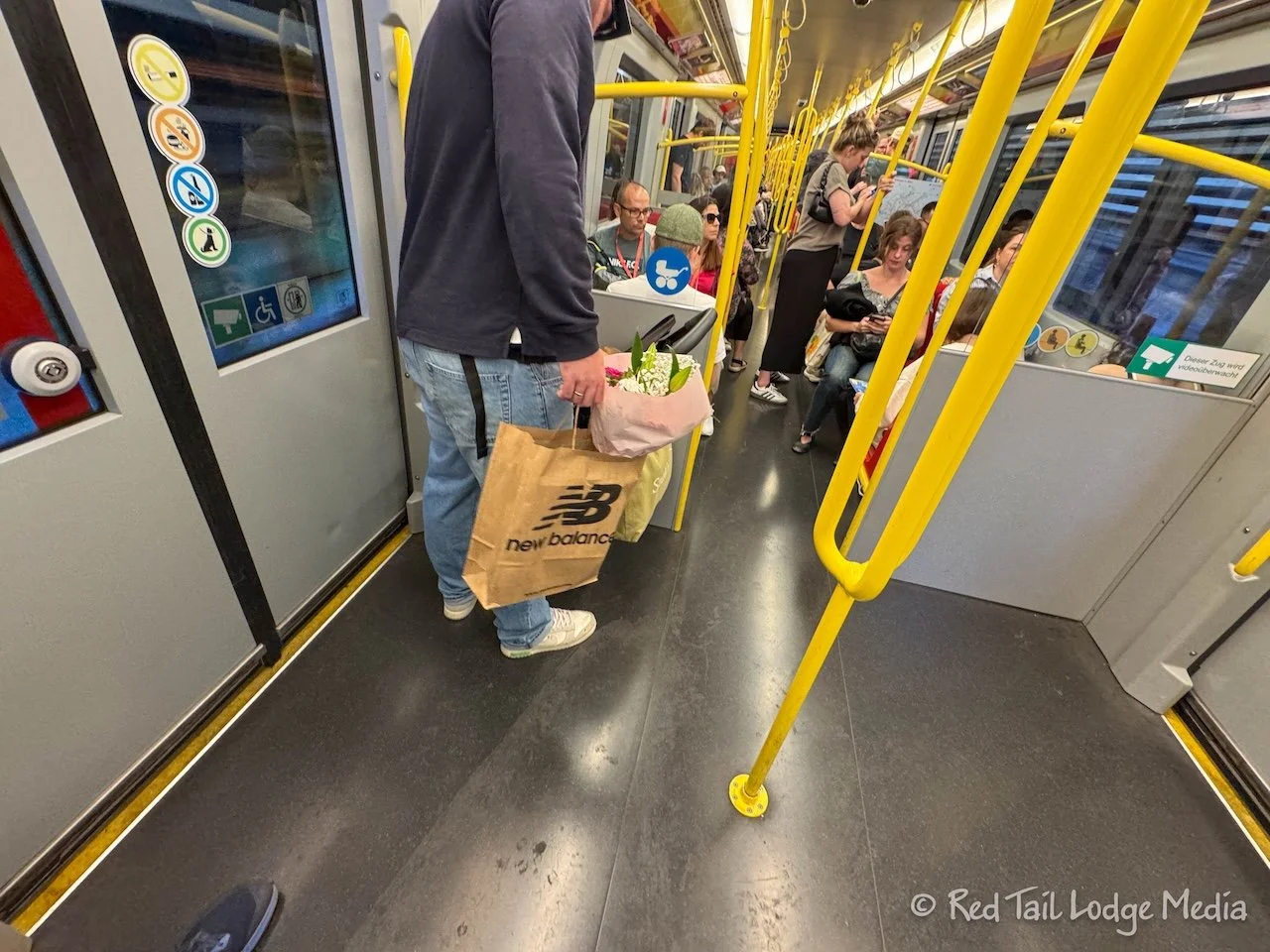
We spent most of Tuesday at Schloß Schönbrunn. The palace was a little too far from our hotel to walk there, so we took an U-Bahn. It was about a 15 minute walk to the Karlsplatz station to catch the U4 to Schönbrunn, so it was close to half an hour from our hotel to the palace entrance. The U4 runs about every five minutes, there is no need to look at a schedule, just show up and hop on the next train. Since buying single tickets was so cheap and easy at each U-Bahn station, we just bought single tickets and didn’t worry about day passes.
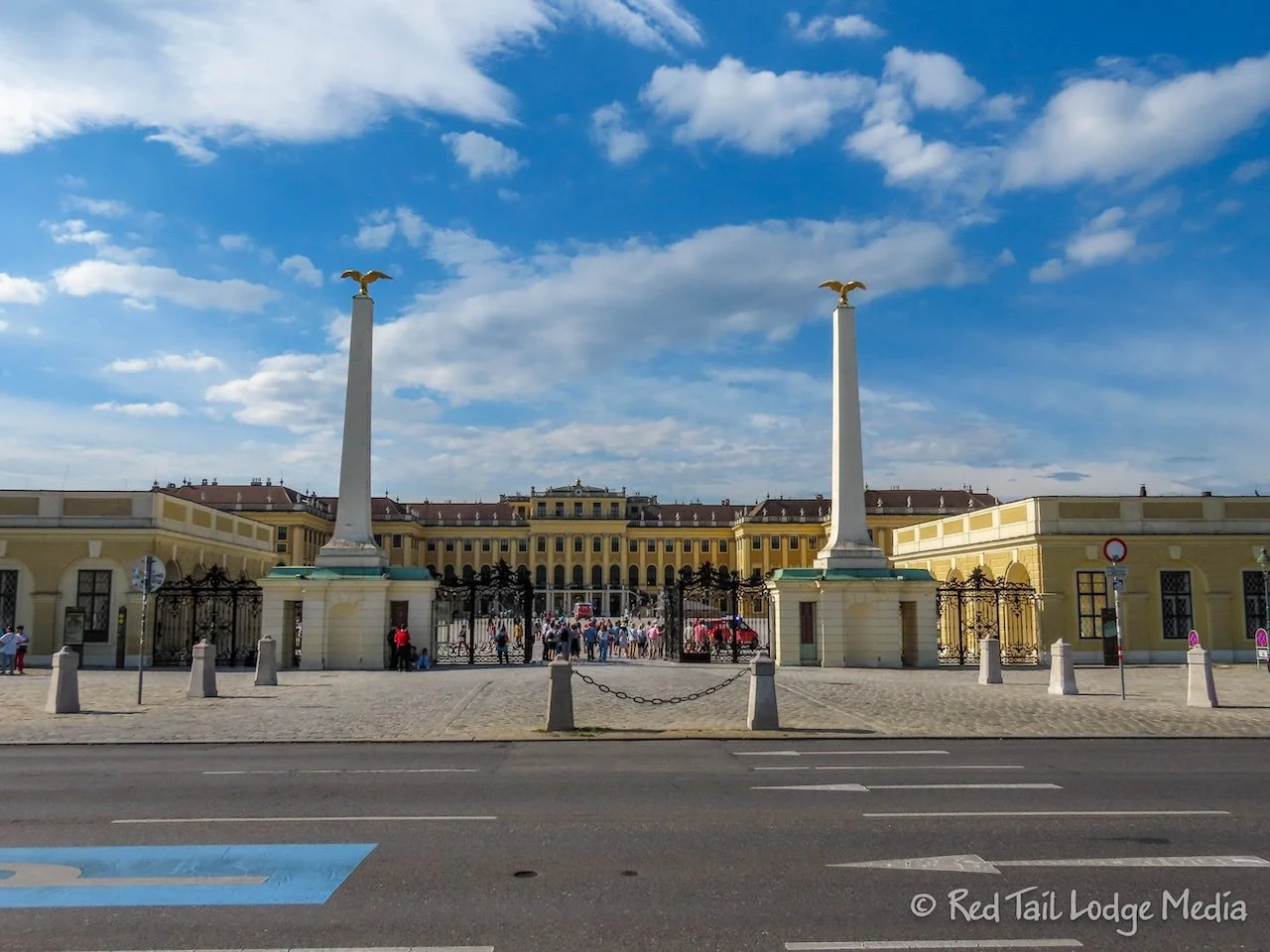
Schloß Schönbrunn is a 1,441-room Baroque palace, built in the 17th century as the summer residence for the Habsburg dynasty (also known as the House of Austria), which ruled from the 11th century to 1918.
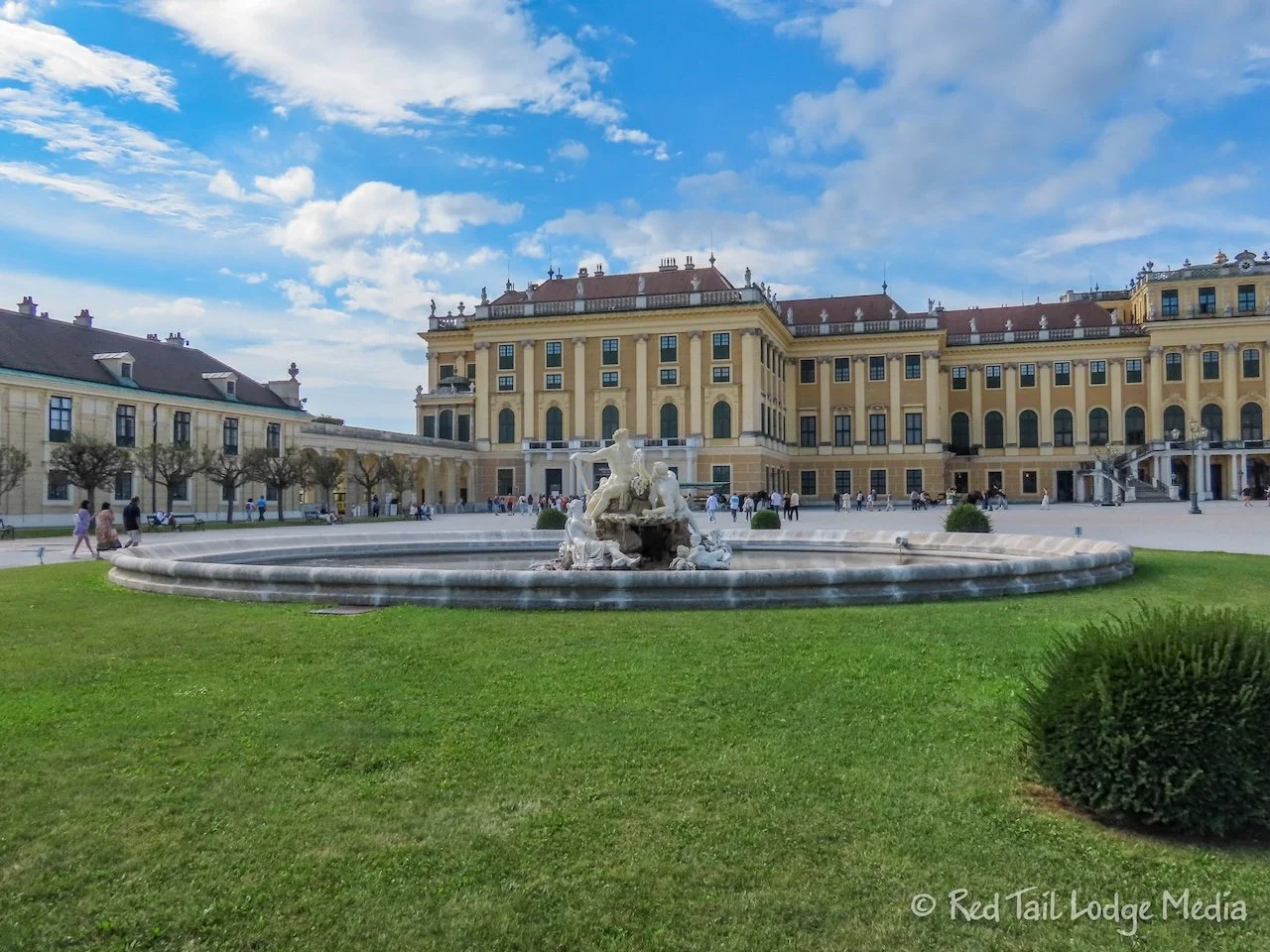
We bought our Classic Pass online with a timed entry for 10:30 am to 10:45 am. The Classic Pass included the palace, the Privy Garden (Kronprinzengarten - Crown Prince Garden), the Orangery Garden, the Maze, and Gloriette. The timed entry was for the palace tour with a hand-held audio guide.
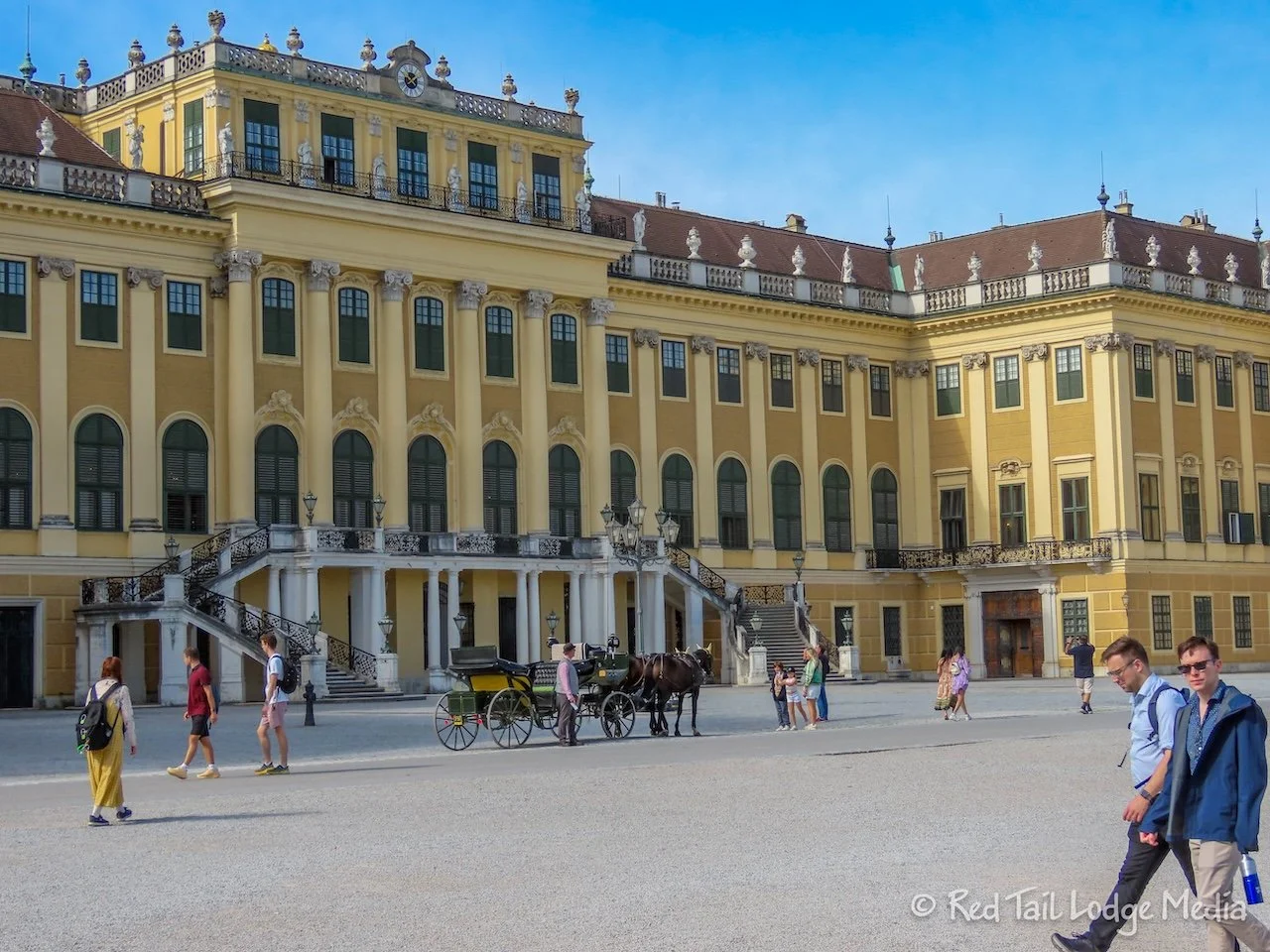
We arrived at the palace a little early, so we bought a couple of drinks from the gift shop and sat on a bench, enjoying the view of the palace from the entrance courtyard (Ehrenhof).
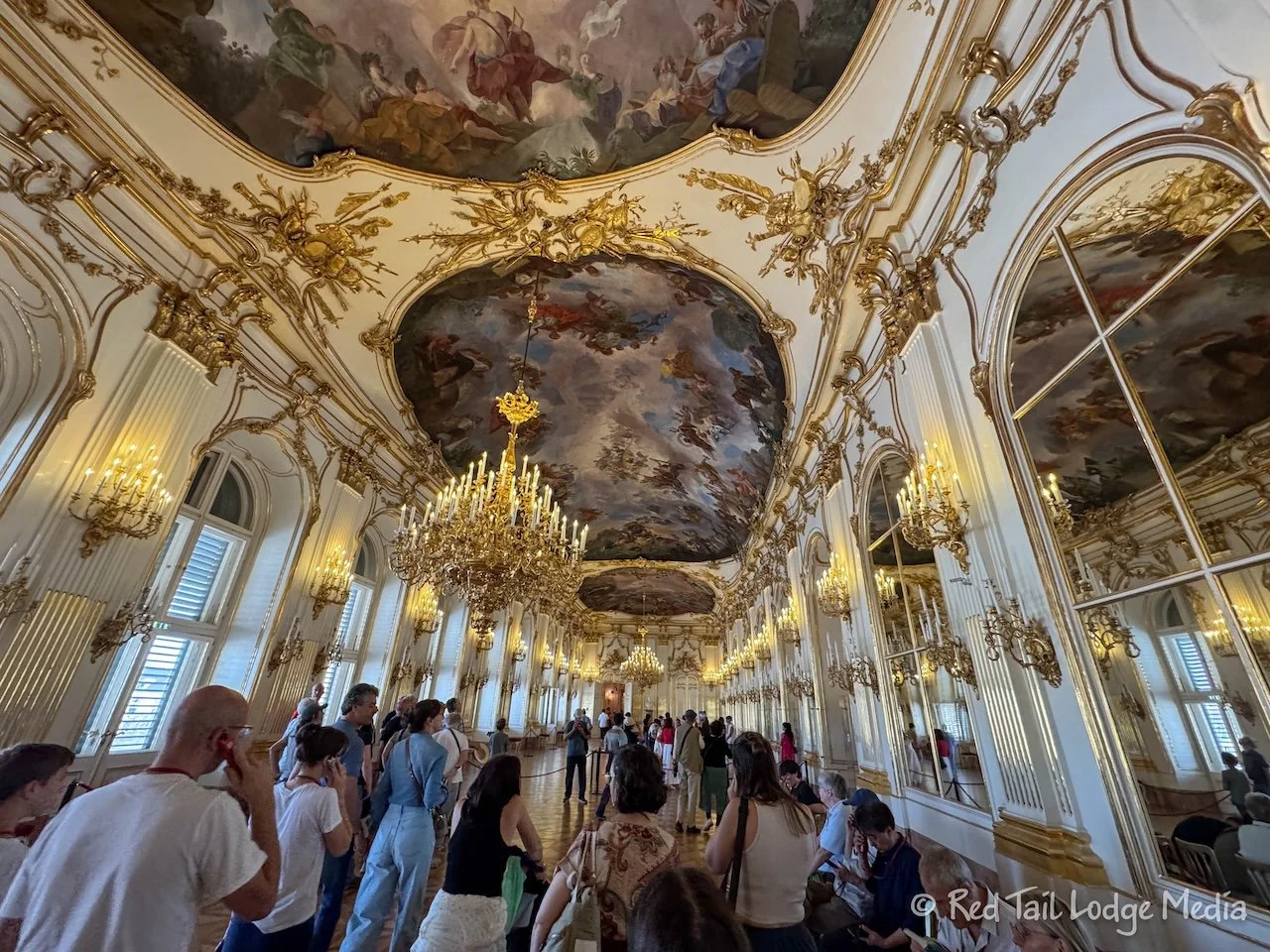
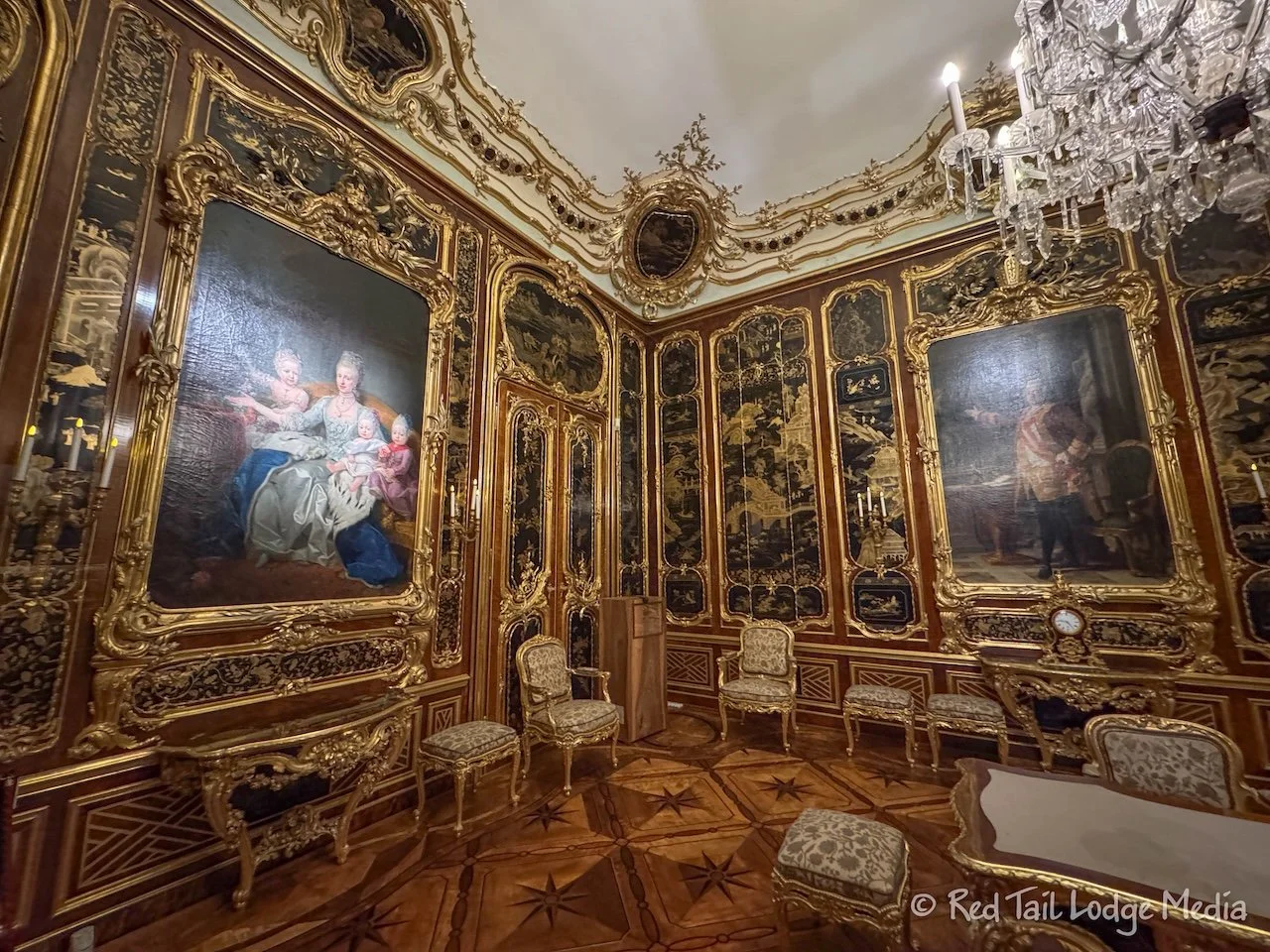
The tour of the palace took us about an hour to complete. We appreciate the hand-held audio devices because you can walk around, looking at the different points of interest as we listened. The tour was pretty interesting.
After the tour, we stopped at the café just outside the palace tour entrance for a light lunch. To drink, Keith had their Ingwer-Zitronen-Limonade (ginger, lemon, mint & soda water), while Ann had the Blutorange-Basilikum-Limonade (blood orange, basil, sugar, and soda water). They were both very refreshing.
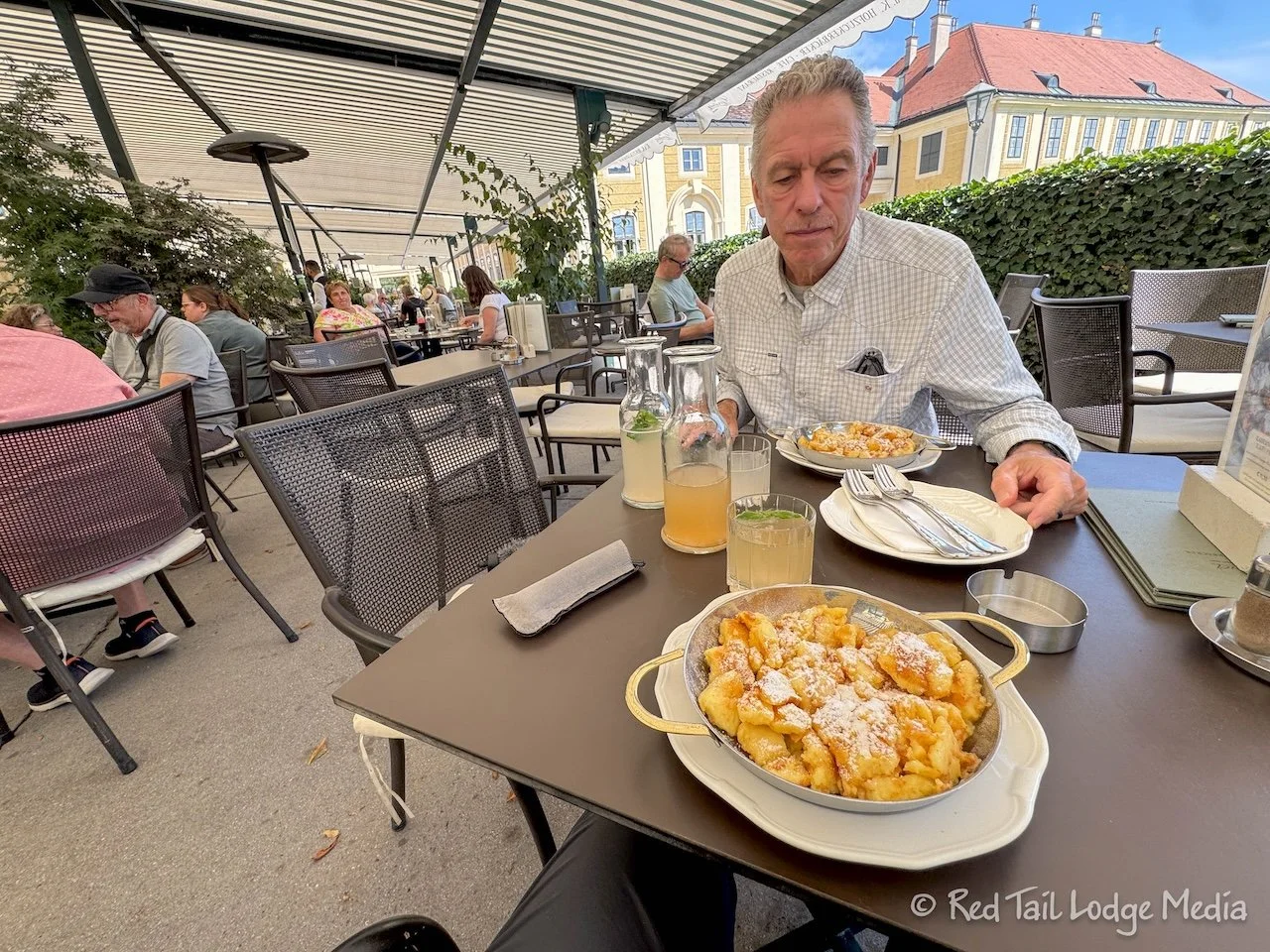
To eat, we both had Kaiserschmarrn. Kaiserschmarrn is a popular dish in Bavaria and Austria. It was first prepared for Emperor Francis Joseph I of the Habsburg dynasty. The dish is described as shredded pancakes, with the original recipe also containing rum-soaked raisins. We would not describe it as American style pancakes, but more like German pancakes or Dutch Babies, which has a higher ratio of eggs to flour. It more closely resembles a custard than an American pancake. The Kaiserscharrn at the cafe did not have raisins, but had the option of adding stewed plum, which we both declined. We both enjoyed the dish.
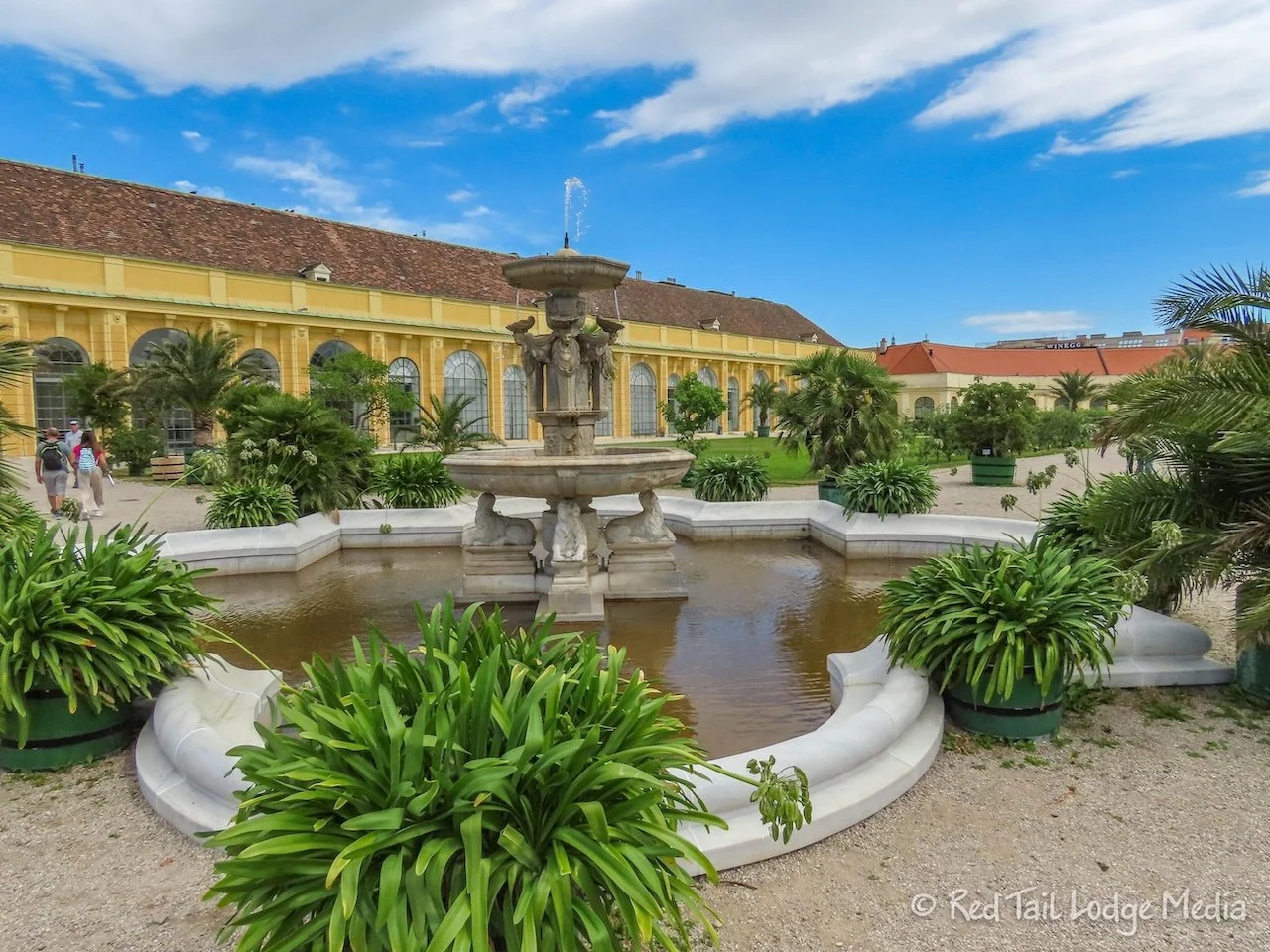
After lunch, we toured the Kronzprinzengarten and the Orangery. They were not all that exciting. It looked like the Kronzprinzengarten used to be a more formal garden, but that it was being transitioned to more natural plantings. The Orangery is the building where the delicate plants are housed over the winter, so it was empty. Only half of it is used for its traditional function while the other half is where they hold concerts.
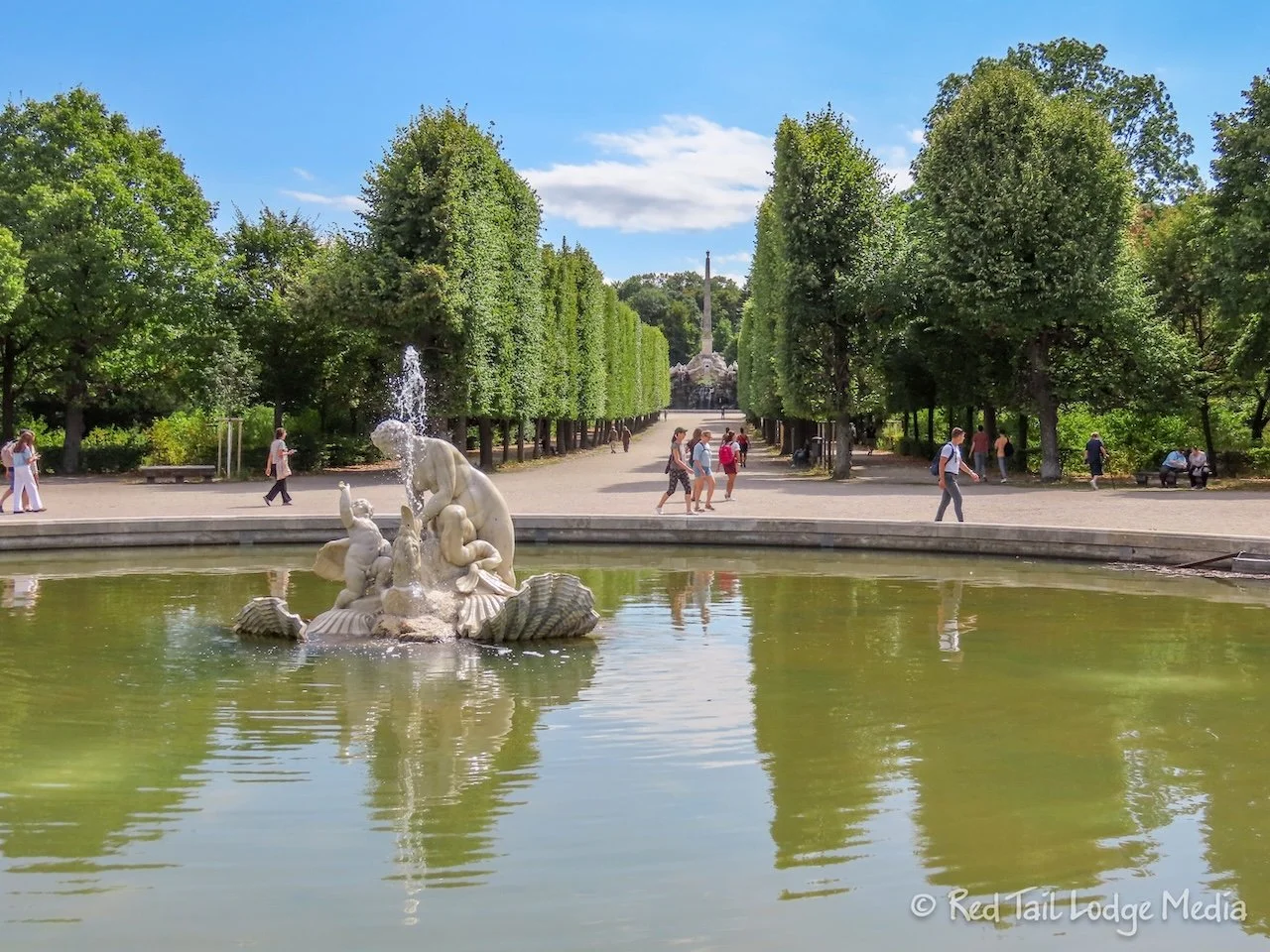
From there, we strolled through the park and up to Gloriette. The very large park is free and open to the public. There are also carriage rides and a little sight-seeing train (Panoramabahn) if you don’t care to walk so much.
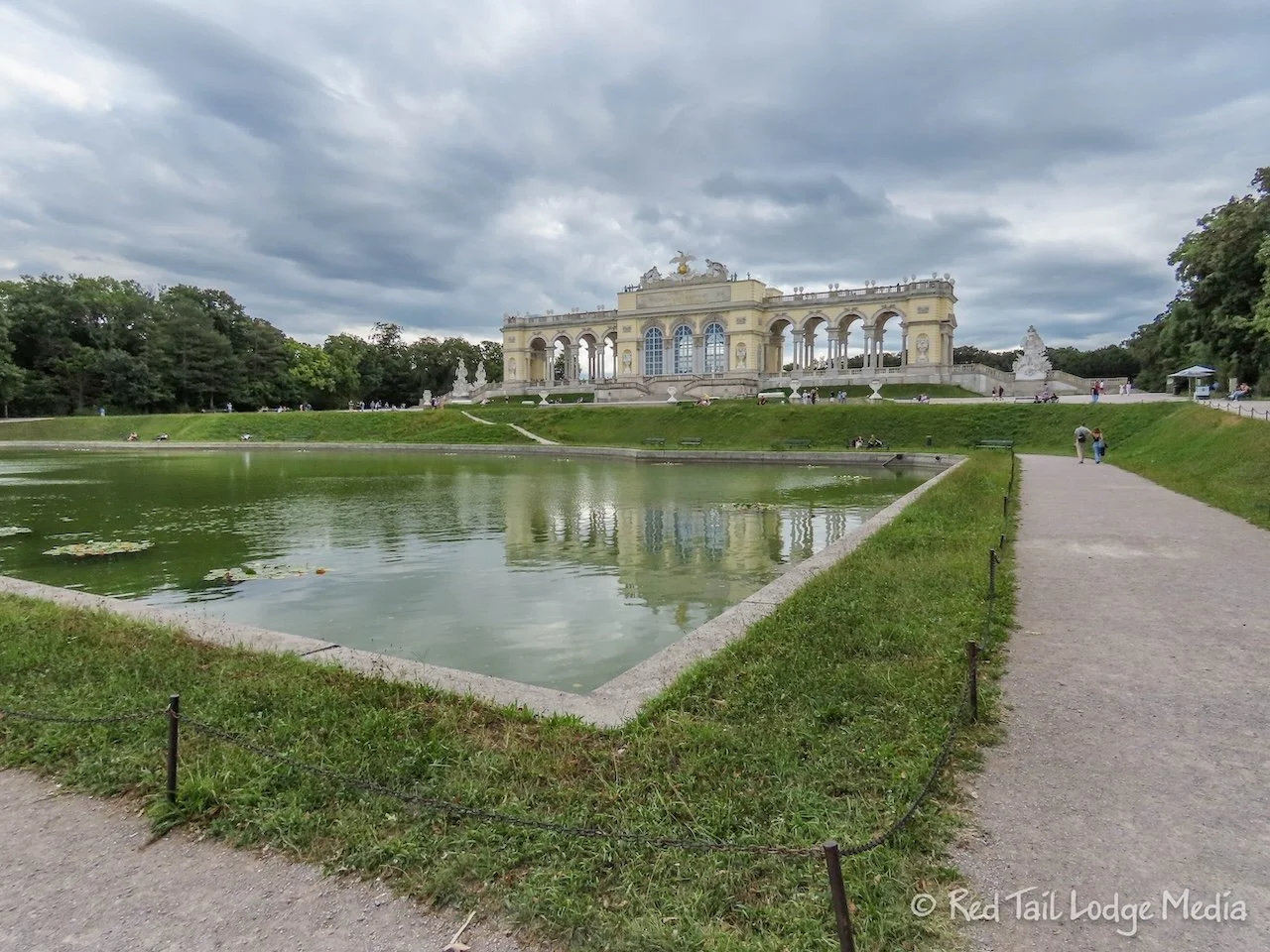
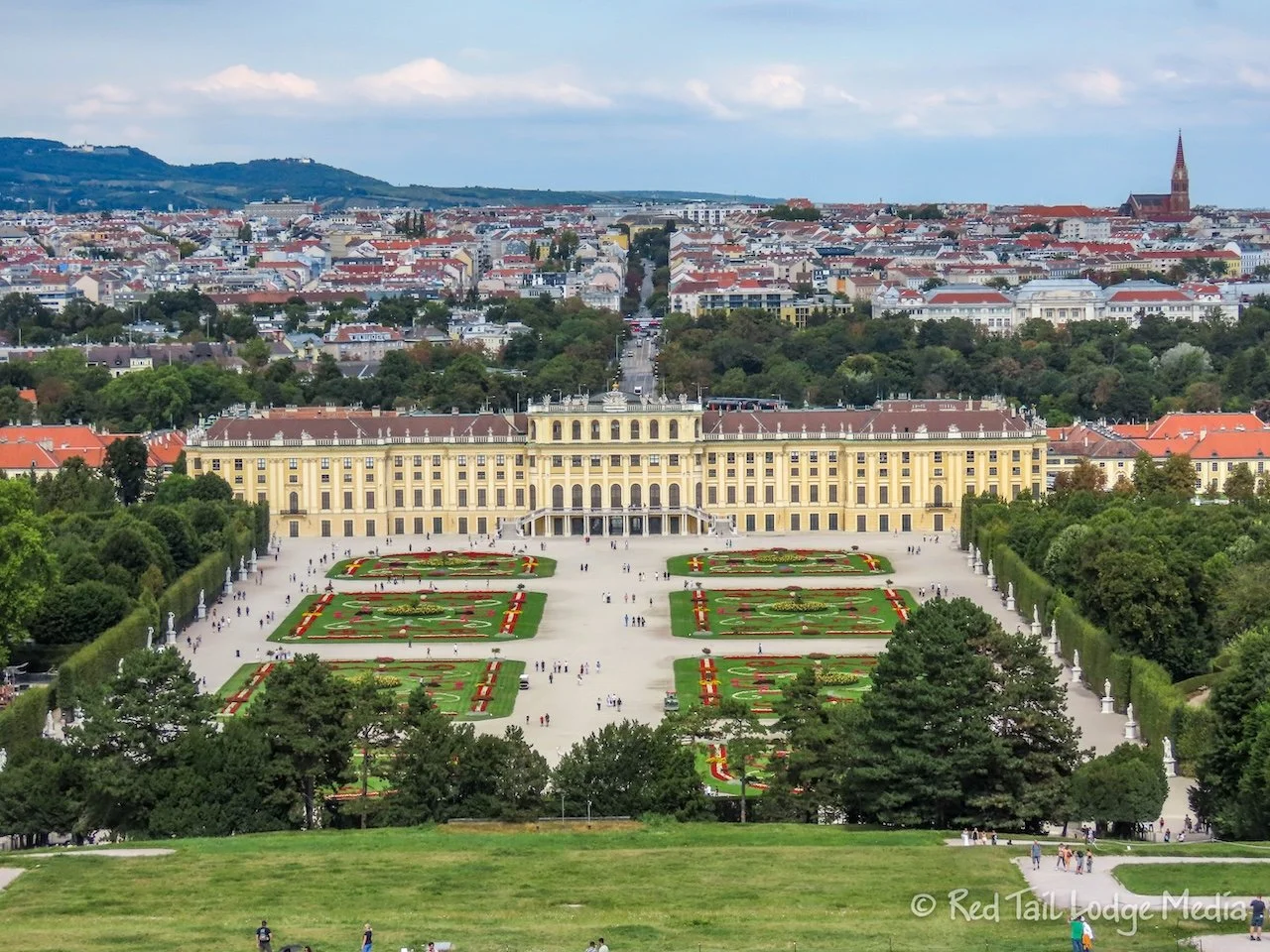
The Gloriette, built in 1775, is a Classicistic colonnaded pavilion set on top of a hill, opposite the gardens from the palace. Our Classic Pass gave us access to the stairs up to the roof. From top, there are nice views of the palace, out over the garden, and out over the whole city. We could even make out the Praterturm ride at the amusement park in Prater.
As we made our way through the garden back towards the palace, we stopped at the Irrgarten (Maze), the last place included with our Classic Pass. There was both a maze (where you decided which path to take) and a few labyrinths, which winds you around on a single path. They were not all that special, but they were fun.
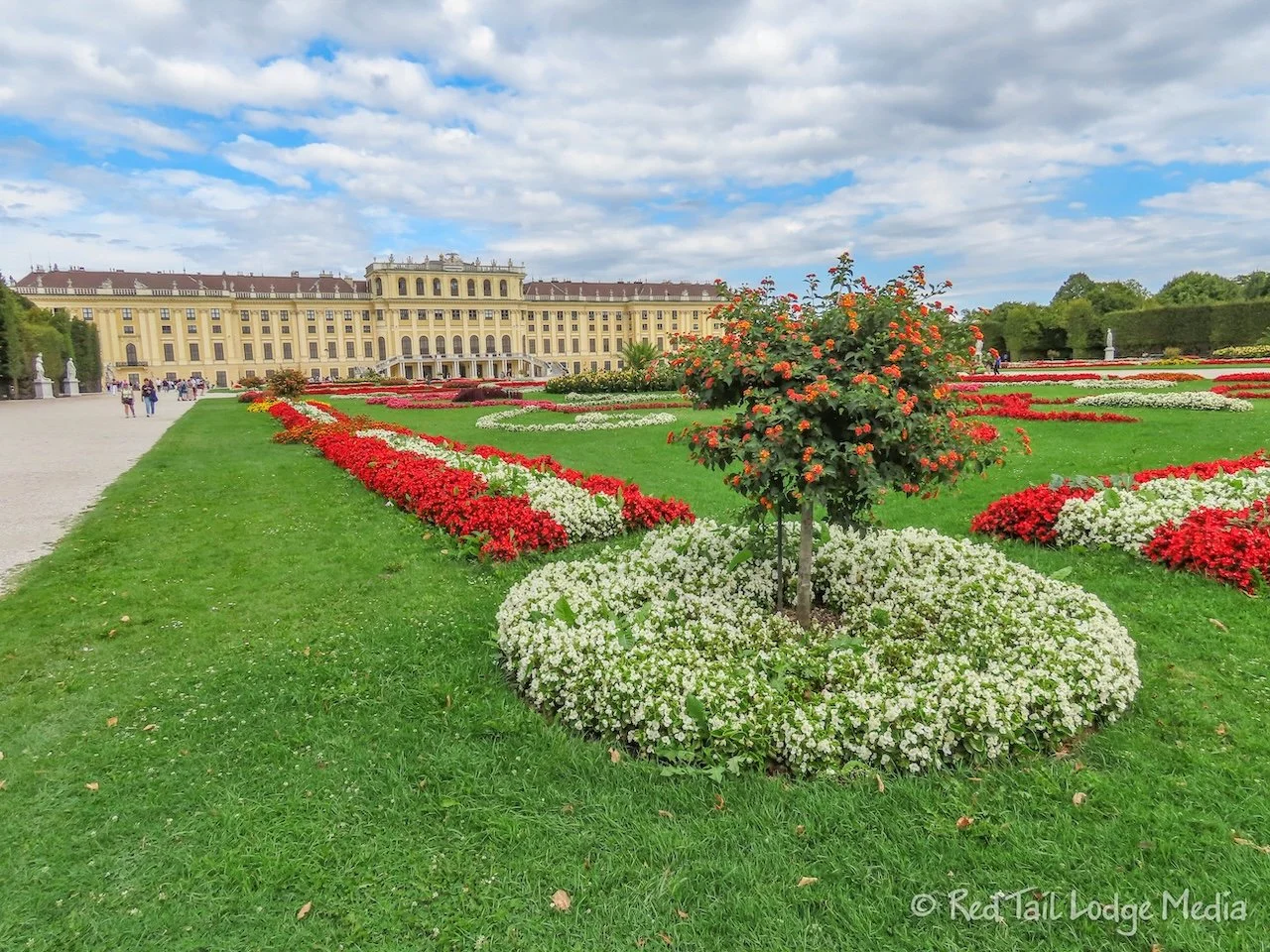
After returning to the palace, we stopped again at the gift shop for a couple of drinks and sat on the benches again in the Ehrenhof. As we sat there, it started to rain. There was more to see at Schönbrunn, but we decided it was a good time to end our visit. We would like to say it was because of the rain, but it was more due to getting tired of touring, after three full days in Salzburg and three full days in Wien. We were done.
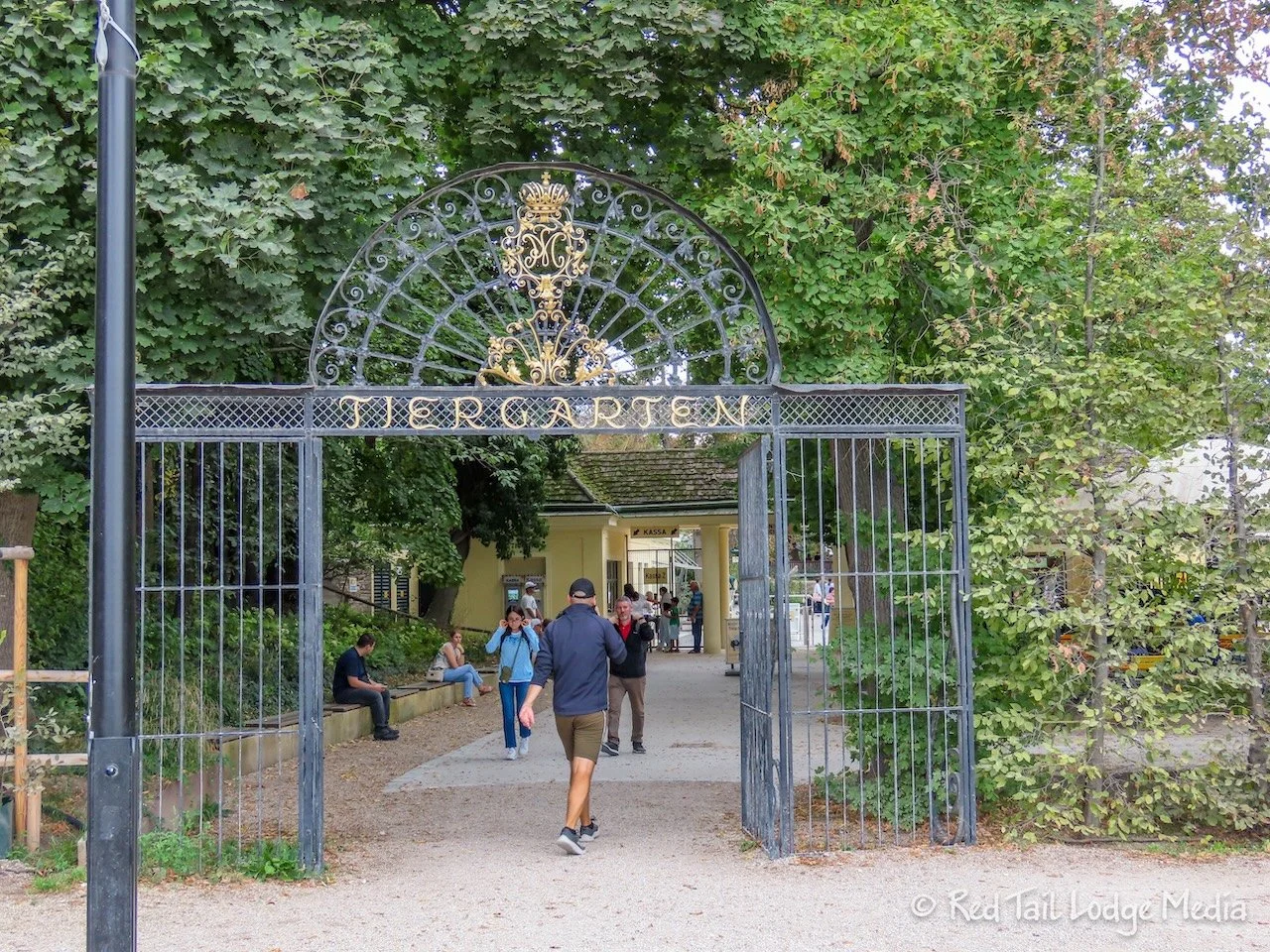
The things we skipped were mainly in the western half of the park. In addition to the various gardens, statues, and fountains in the western half of the park, the other things we missed included the Tiergarten (zoo), the Palmenhaus (palm house), the Wüstenhaus (a desert botanical exhibit), the carriage museum, the puppet theater, and the children’s museum, most of which cost extra to visit.
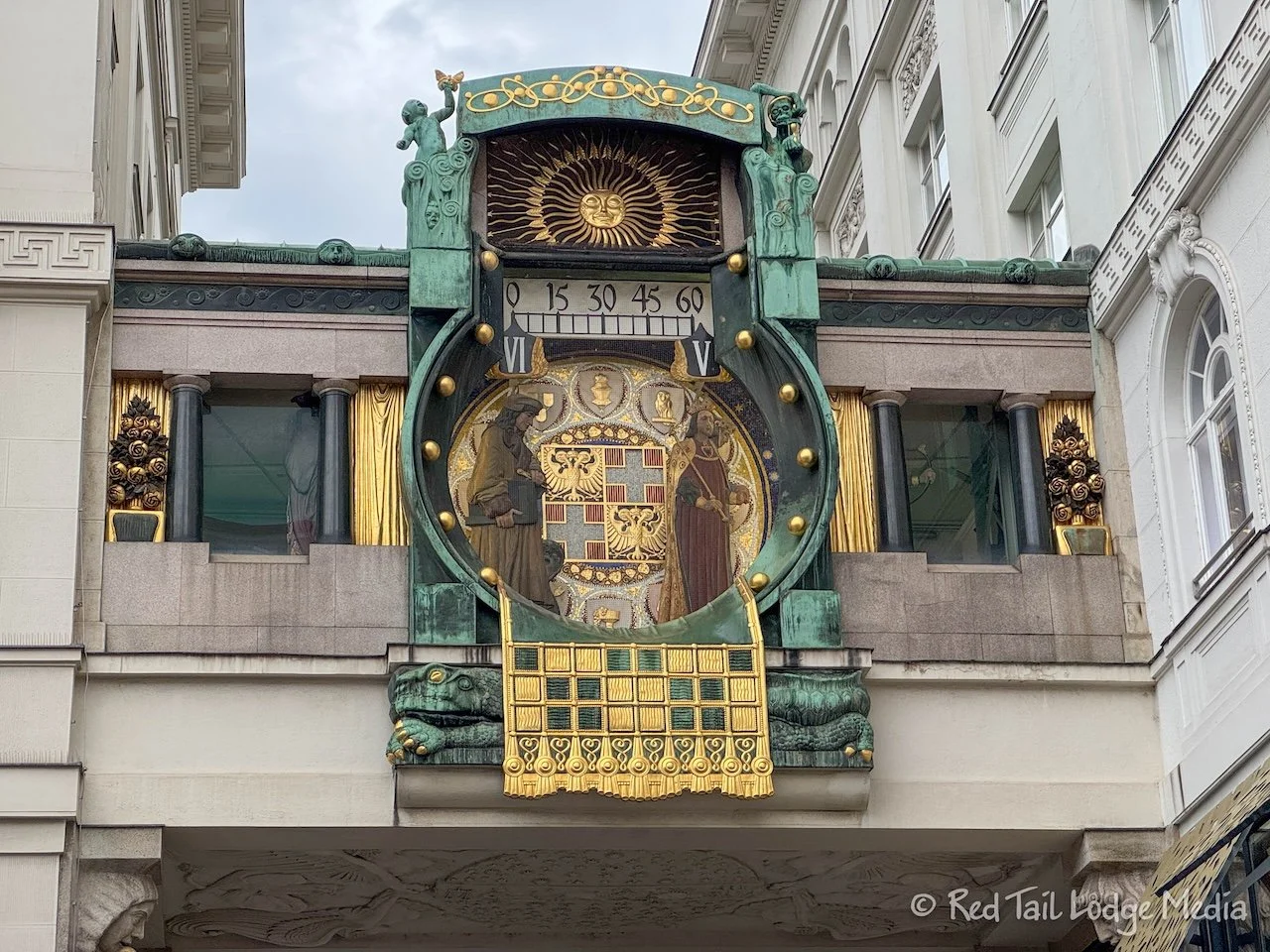
After returning to our hotel via the U-Bahn, we hung out in our room while it rained most of the rest of the day. The rain let up a little when we ventured out for dinner. On our way, we went by the Ankeruhr. It is an elaborate, historic clock that Ann remembers seeing during our previous visit to Wien, 35 years ago. The figures move a few inches every minute. We waited for quarter past the hour, hoping it would do a little more movement, but it just rang once, not very exciting. Perhaps it does more on the hour, but we didn’t stick around to find out.
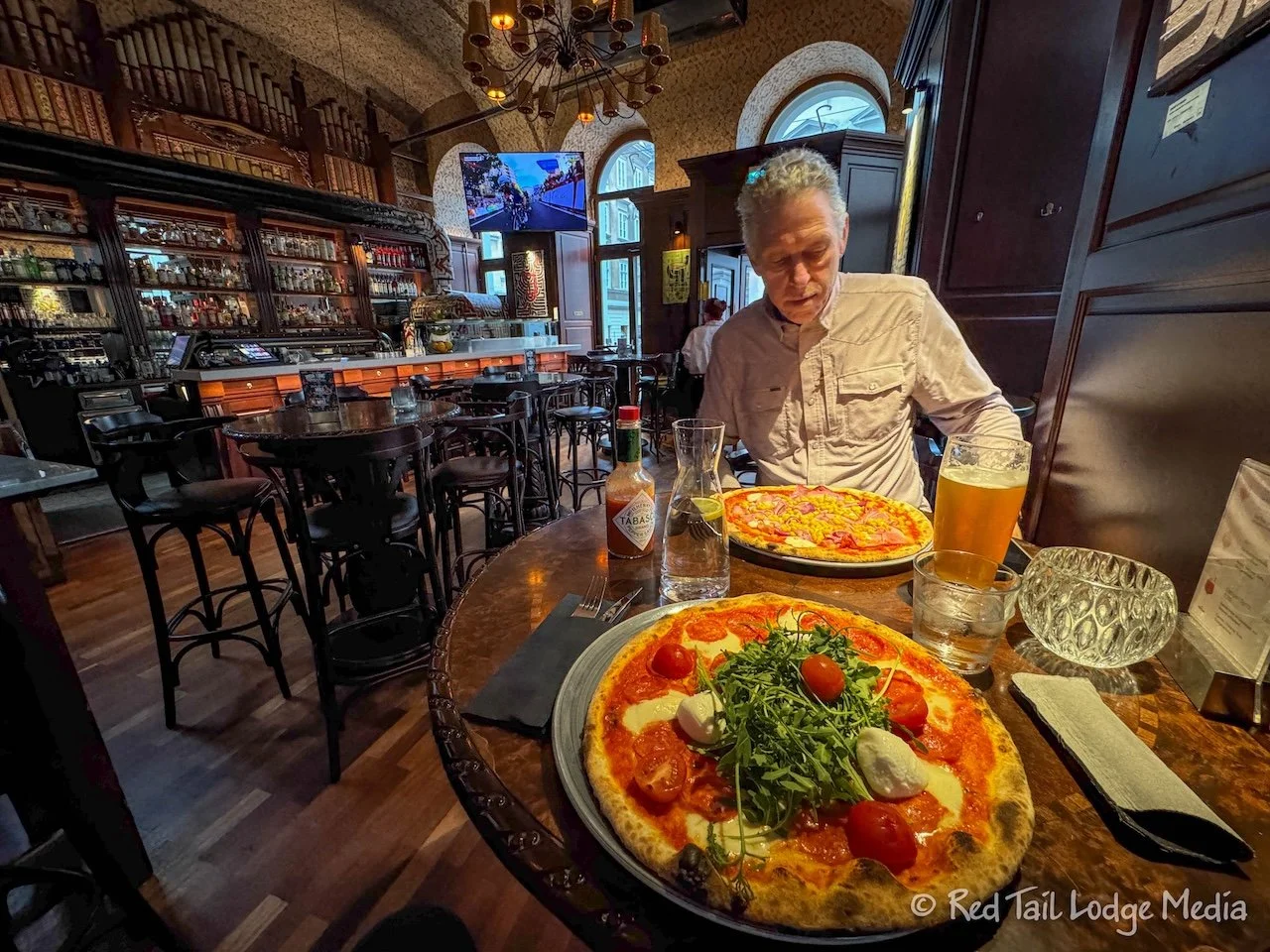
For dinner, pizza sounded good, so we went to Joe’s Bar & Pizza nearby. The atmosphere was fine, but we didn’t really care for the selection of ingredients for the pizza. Keith had the Tricky Gammon which was ham, onions, and corn. Ann ordered the Winter Garden which was spicy salami, tomatoes, rucola (arugula) and buffalo mozzarella. The pizza tasted fine, but it was not our favorite.
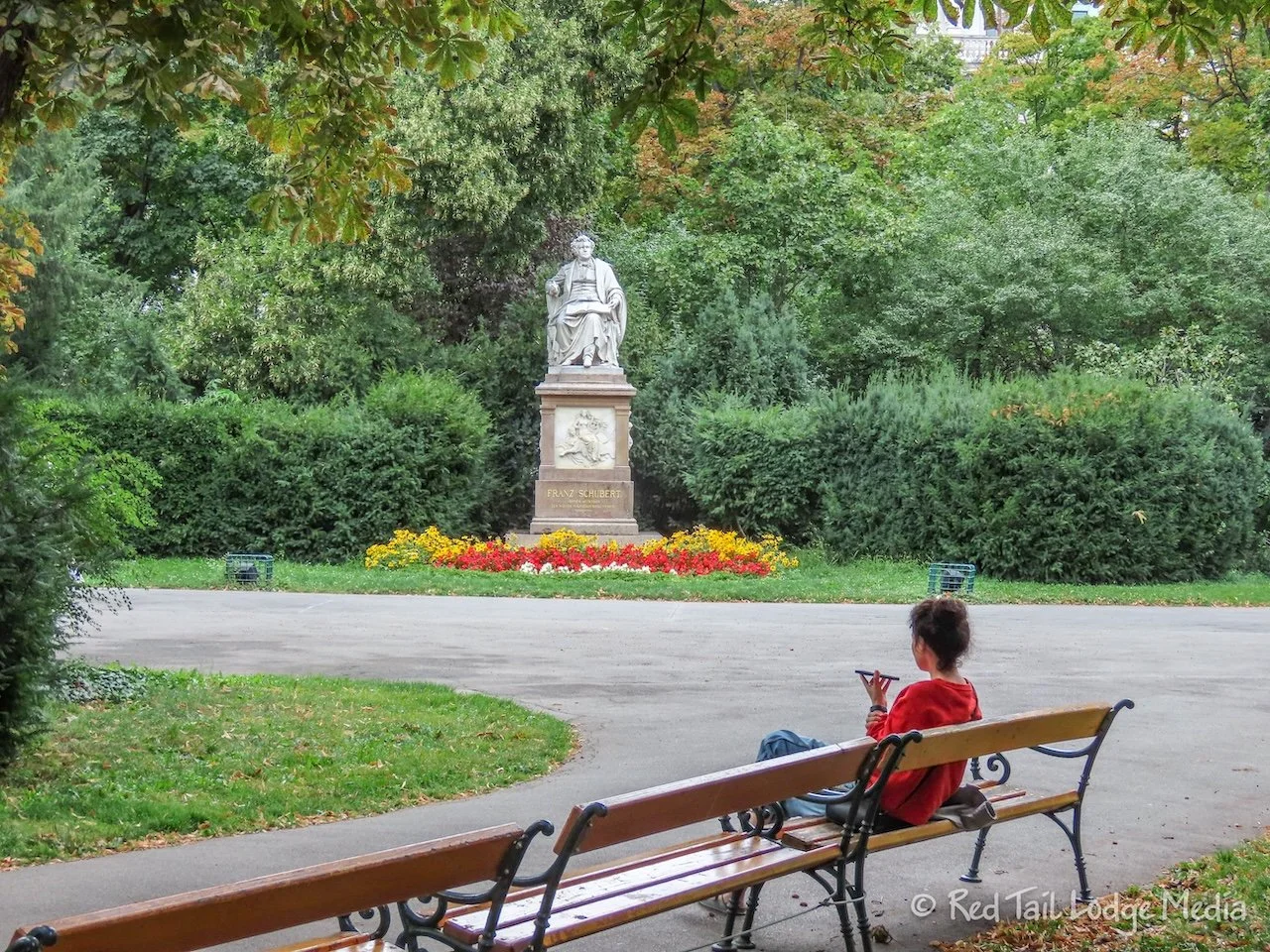
Even though we had visited Vienna before, it was long enough ago, that almost everything seemed like a new experience, with a vaguely familiar feel. We do not prefer big cities, but Vienna has enough green spaces for us to escape to, which made the city very enjoyable.
Check out our related video: Vienna, Austria
(Ann)